期中复习之单元语法综合练(Units 1-4)-2025-2026学年八年级英语下学期期中复习冲刺满分(人教版)
2026-03-19
|
2份
|
21页
|
806人阅读
|
17人下载
内容正文:
期中复习之单元语法综合练
(Units 1-4)
Unit 1 Time to Relax 动词不定式作状语和宾语补足语
Unit 2 Stay Healthy 表建议的情态动词(should、could)和反身代词
Unit 3 Growing Up 连词 although、until 和 so that的用法
Unit 4 The Wonders of Nature 形容词副词的比较级和最高级和大数量的表达
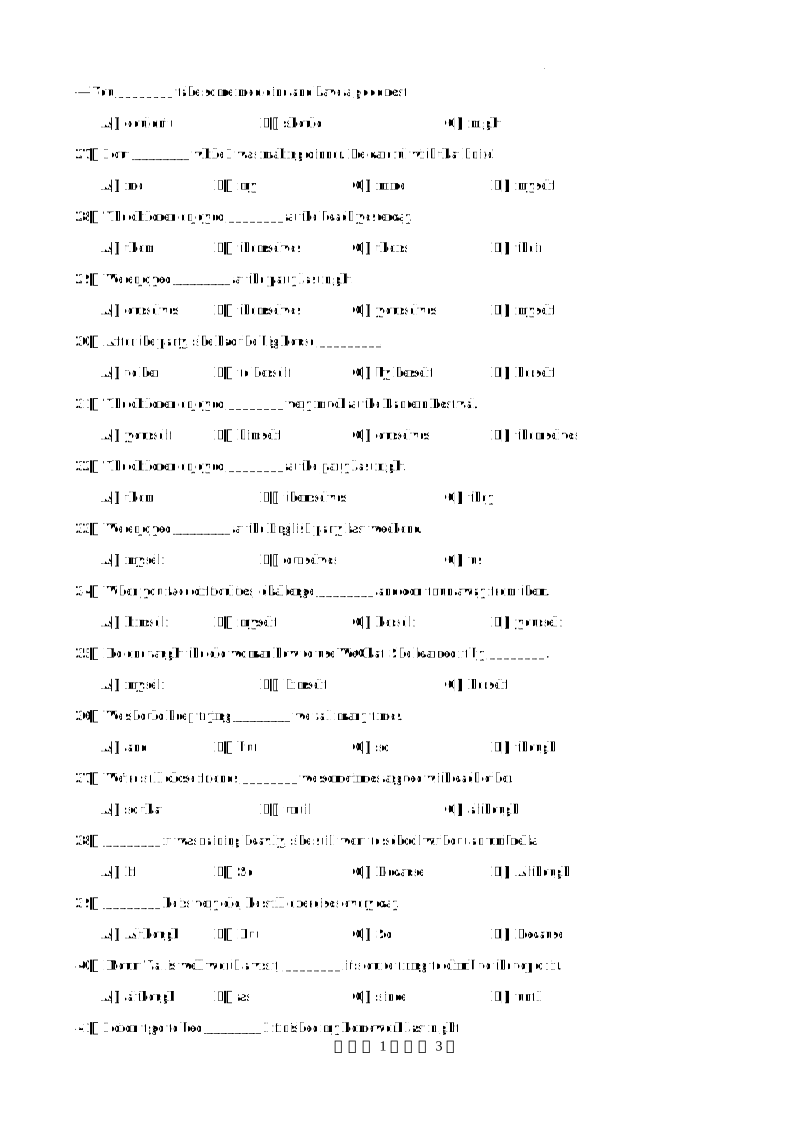
1.My parents always encourage me ________ hard in all my subjects.
A.study B.to study C.studying D.studies
【答案】B
【详解】句意:我的父母总是鼓励我在所有科目上努力学习。
固定搭配encourage sb. to do sth.意为“鼓励某人做某事”,此处是动词不定式作宾语补足语。应填to study。
2.The teacher told us ________ late for the meeting.
A.not to be B.to not be C.don’t be D.not be
【答案】A
【详解】句意:老师告诉我们开会不要迟到。
固定搭配tell sb. not to do sth.意为“告诉某人不要做某事”,应填动词不定式的否定形式not to be。
3.The teacher allows us students ________ our different opinions in class.
A.expressing B.expresses C.to express
【答案】C
【详解】句意:老师允许我们学生在课堂上表达不同的观点。
考查固定搭配。express是动词,意为“表达”,allow sb. to do sth.是固定结构,意为“允许某人做某事”,空处需要用动词不定式“to express”。故选C。
4.The teacher asked us ________ a plan for helping the homeless animals in the park.
A.make B.to make C.making D.made
【答案】B
【详解】句意:老师要求我们制定一个帮助公园里无家可归动物的计划。
根据“asked us...a plan”可知,此处是ask sb. to do sth.“要求某人做某事”,空处应用不定式形式作宾补,故选to make。
5.Let’s ________ a budget plan to avoid wasting money on unnecessary things.
A.make B.makes C.making D.to make
【答案】A
【详解】句意:让我们制定一个预算计划,以避免在不必要的东西上浪费钱。
let sb. do sth.“让某人做某事”,固定搭配,这里应用动词原形,应填make。
6.I expect all of you ________ in your homework on time.
A.hand B.handing C.to hand
【答案】C
【详解】句意:我期望你们所有人都按时交作业。
考查非谓语动词。expect sb. to do sth.表示“期望某人做某事”,是固定用法,其中动词不定式to do作宾语补足语。expect doing sth.无此固定搭配;动词原形不能直接作expect的宾语补足语。本句中宾语是“all of you”,需要用动词不定式来补充说明对大家的期望,因此应选to hand。故选C。
7.My mother warned me ________ alone in the river, because it’s too deep and dangerous.
A.not to swim B.to not swim C.not swimming D.don’t swim
【答案】A
【详解】句意:我妈妈警告我不要独自在那条河里游泳,因为它太深太危险了。
考查动词warn的用法。warn sb. not to do sth.意为“警告某人不要做某事”,是固定搭配。故选A。
8.My mother advised me ________ more books about history to open my mind.
A.read B.to read C.reading D.reads
【答案】B
【详解】句意:我妈妈建议我多读一些关于历史的书来开阔我的思维。
考查动词advise的用法。advise sb. to do sth.是固定搭配,意为“建议某人做某事”,因此空格处应填入不定式形式“to read”。故选B。
9.My mother often tells me ________ more water.
A.drink B.to drink C.drinking
【答案】B
【详解】句意:我妈妈经常告诉我多喝水。
考查非谓语动词。动词tell常用于tell sb. to do sth.结构,表示“告诉某人做某事”,其中to do为动词不定式作宾语补足语。故选B。
10.We should try our best ________ English well because it’s useful.
A.learn B.to learn C.learning D.learned
【答案】B
【详解】句意:我们应该尽最大努力学好英语,因为它很有用。
考查非谓语动词。try one’s best to do sth.“尽最大努力做某事”,用动词不定式作目的状语。故选B。
11.—What do you usually do to ________ when you are tired?
—I listen to pop music.
A.relax B.relaxing C.relaxed
【答案】A
【详解】句意:——当你累的时候你通常做什么来放松?——我听流行音乐。
relax放松;relaxing令人放松的;relaxed感到放松的。由“to”可知此处表示目的,后接动词原形。应填relax。
12.Robert struggled ________ up after he hurt his foot.
A.to get B.get C.getting D.got
【答案】A
【详解】句意:罗伯特脚受伤后挣扎着站了起来。
“struggle to do sth.‘努力做某事;挣扎着做某事’”,此处需要用动词不定式形式;get动词原形、getting现在分词、got过去式均不符合该搭配规则,因此应填to get。
13.He got up early ________ the first bus.
A.catch B.to catch C.catching
【答案】B
【详解】句意:他早起是为了赶上第一班公交车。
考查非谓语动词。catch赶上,动词原形;to catch动词不定式;catching动名词。此处要用不定式to catch表示目的,故选B。
14.He went to the library ________ some books on history.
A.borrow B.borrowing C.to borrow
【答案】C
【详解】句意:他去图书馆借了一些历史书。
考查动词不定式作目的状语。根据“He went to the library...some books on history.”可知,他去图书馆的目的是“借书”,应用动词不定式表示目的。故选C。
15.I go to the park every morning ________.
A.run B.to run C.running
【答案】B
【详解】句意:我每天早上都去公园跑步。
考查非谓语动词。run,跑,动词原形;to run动词不定式;running动名词/现在分词。根据句意,每天早上去公园的目的是为了跑步,应用动词不定式作目的状语。故选B。
16.I’m sorry ________ that you are ill.
A.hear B.hearing C.to hear
【答案】C
【详解】句意:听到你生病的消息,我很难过。
hear听,动词原形;hearing动名词;to hear动词不定式。be sorry to do sth.对做某事而感到抱歉或难过,这里是不定式to hear作原因状语。
17.She is old enough ________ her own decisions now.
A.make B.to make C.making D.makes
【答案】B
【详解】句意:她现在足够大了,可以自己做决定了。
根据“old enough”可知,此处是固定结构“形容词+enough+to do sth”,意为“足够……去做某事”,空处应填不定式to make。
18.He ________ ride a bike when he was six, and now he rides very well.
A.can B.could C.must D.should
【答案】B
【详解】句意:他六岁时就会骑自行车了,现在骑得很好。
can能,会;could能,会(can的过去式);must必须;should应该。根据“when he was six”可知是过去的时间,应用can的过去式could,表示过去的能力,因此应填could。
19.—I can’t sleep at night. What should I do?
—You ________ drink warm milk before bed. It helps.
A.could B.shouldn’t C.must D.won’t
【答案】A
【详解】句意:——我晚上睡不着。我该做什么?——你可以睡前喝温牛奶。它有帮助。
could可以;shouldn’t不应该;must必须;won’t将不会。根据问句“What should I do?”可知,是在寻求建议,结合后句“It helps.”可知,喝牛奶是有益的,排除否定选项B和D。must语气过于强硬,could表示委婉的建议,符合语境。
20.You ________ bow when you meet someone for the first time in Japan.
A.should B.could C.may D.might
【答案】A
【详解】句意:在日本,当你第一次见到某人时,你应该鞠躬。
考查情态动词辨析。should应该;could可以,表示能力或许可;may可能,表示允许或推测;might可能,may的过去式,语气更弱。根据“in Japan”和“for the first time”可知,此处描述的是日本的文化礼仪,表示一种建议或应当遵循的规范,强调“应该”这样做。故选A。
21.—I have a fever and a runny nose.
—You ________ go to school today. You should rest at home.
A.should B.shouldn’t C.could
【答案】B
【详解】句意:——我发烧还流鼻涕。——你今天不应该去上学。你应该在家休息。
考查情态动词辨析。should应该;shouldn’t不应该;could可以。根据答语后半句“You should rest at home.”可知,说话者建议对方不要去上学,因此用shouldn’t表示“不应该”。故选B。
22.—Does he have a sore back?
—Yes, he does. He _________ have carried heavy boxes yesterday.
A.shouldn’t B.should C.must D.can
【答案】A
【详解】句意:——他背疼吗?——是的,他背疼。他昨天不应该搬重箱子。
考查情态动词辨析。shouldn’t不应该;should应该;must必须;can能。根据“Does he have a sore back?”和“Yes, he does.”以及“carry heavy boxes”可知,昨天搬重箱子是不应该做的事,这导致了背疼的结果。故选A。
23.You ________ study harder so that you can get better grades.
A.can B.should C.could
【答案】B
【详解】句意:你应该更加努力学习,以便能取得更好的成绩。
考查情态动词辨析。can能够;should应该;could可以(can的过去式)。根据“so that you can get better grades”可知,此处表示提出建议或劝告,意为“应该”。故选B。
24.You ________ eat too much junk food. It’s bad for your health.
A.shouldn’t B.should C.must D.need
【答案】A
【详解】句意:你不应该吃太多垃圾食品。这对你的健康有害。
考查情态动词。shouldn’t不应该;should应该;must必须;need需要。根据“It’s bad for your health.”可知,垃圾食品对健康有害,所以不应该吃太多。故选A。
25.If you want to be healthy, you ________ exercise every day.
A.should B.shouldn’t C.will D.won’t
【答案】A
【详解】句意:如果你想健康,你应该每天锻炼。
考查情态动词辨析。should应该;shouldn’t不应该;will将会;won’t将不会。根据“If you want to be healthy, you...exercise every day.”可知,为了保持健康,每天锻炼是必要的建议,should表示义务或建议。故选A。
26.—I have a bad headache.
—You ________ take some medicine and have a good rest.
A.couldn’t B.should C.might
【答案】B
【详解】句意:——我头疼得厉害。——你应该吃点药,好好休息一下。
考查情态动词辨析。couldn’t不可以,不能够;should应该;might可能。根据语境,对方头疼,此处是给出合理的建议,表示“应该”做某事,用should。故选B。
27.I cut ________ while I was making dinner. Be careful with that knife!
A.me B.my C.mine D.myself
【答案】D
【详解】句意:我在做晚饭时割伤了我自己。小心那把刀!
me我,宾格;my我的,形容词性物主代词;mine我的,名词性物主代词;myself我自己。根据主语“I”可知动作的承受者也是主语本人,表示“我自己”应用反身代词myself。
28.The children enjoyed ________ at the beach yesterday.
A.them B.themselves C.theirs D.their
【答案】B
【详解】句意:孩子们昨天在海滩上玩得很开心。
them他们(宾格);themselves他们自己(反身代词);theirs他们的(名词性物主代词);their他们的(形容词性物主代词)。根据题干“enjoyed ________”可知,enjoy oneself是固定搭配,意为“玩得开心”,主语The children是第三人称复数,应用反身代词themselves。
29.We enjoyed ________ at the party last night.
A.ourselves B.themselves C.yourselves D.myself
【答案】A
【详解】句意:昨晚在派对上我们玩得很开心。
考查反身代词辨析。ourselves我们自己;themselves他们自己;yourselves你们自己;myself我自己。主语是We,对应的反身代词应为ourselves,表示“我们自己玩得开心”。故选A。
30.After the party, she had the big house _________.
A.to her B.to herself C.by herself D.herself
【答案】B
【详解】句意:派对结束后,这所大房子就归她一个人所有了。
考查固定搭配。to her对她来说;to herself独自享用、独自占有;by herself独自地;herself她自己。have sth. to oneself表示“独自拥有或使用某物”,是固定短语。故选B。
31.The children enjoyed ________ very much at the Lantern Festival.
A.yourself B.himself C.ourselves D.themselves
【答案】D
【详解】句意:孩子们在元宵节玩得非常开心。
考查反身代词辨析。yourself你自己;himself他自己;ourselves我们自己;themselves他们自己。根据“The children”可知,此处指孩子们玩得很开心,用themselves。故选D。
32.The children enjoyed ________ at the party last night.
A.them B.themselves C.they
【答案】B
【详解】句意:昨晚在派对上,孩子们玩得开心。
考查反身代词。them他们(宾格);themselves他们自己(反身代词);they他们(主格)。enjoy oneself 是固定搭配,意为“玩得开心”,主语 the children 是复数,对应的反身代词是 themselves。故选B。
33.We enjoyed ________ at the English party last weekend.
A.myself B.ourselves C.us
【答案】B
【详解】句意:上周末我们在英语派对上玩得很开心。
考查反身代词。myself 我自己;ourselves我们自己;us我们。根据主语“We”可知,主语是复数,表示“我们自己玩得开心”应使用与主语对应的反身代词ourselves。故选B。
34.When you face difficulties, challenge ________ and don’t run away from them.
A.himself B.myself C.herself D.yourself
【答案】D
【详解】句意:当你面对困难时,挑战你自己,不要逃避它们。
考查反身代词辨析。himself他自己;myself我自己;herself她自己;yourself你自己。根据“When you face difficulties...”可知,此处是直接对“你”说的话,所以应该是挑战“你自己”,用yourself。故选D。
35.No one taught the old woman how to use WeChat. She learned it by ________ .
A.myself B.himself C.herself
【答案】C
【详解】句意:没有人教这位老太太如何使用微信。她是自学的。
考查反身代词辨析。myself我自己;himself他自己;herself她自己。根据主语She可知,此处指老太太自己学习,应用herself。故选C。
36.We should keep trying ________ we fail many times.
A.and B.but C.so D.though
【答案】D
【详解】句意:尽管我们失败了很多次,我们应该继续努力。
and和;but但是;so所以;though虽然。根据“We should keep trying...we fail many times.”可知,前后句是让步关系,表示“虽然”失败多次仍要尝试,应填though。
37.We’re still close friends ________ we sometimes argued with each other.
A.so that B.until C.although
【答案】C
【详解】句意:尽管有时会争吵,我们仍然是亲密的朋友。
考查连词辨析。so that以便、为了,引导目的状语从句;until直到……为止,引导时间状语从句;although尽管、虽然,引导让步状语从句。根据“We’re still close friends ... we sometimes argued with each other.”可知,此处指虽然会争吵,但依然是好友。前后句意存在转折关系,需用表示尽管的连词引导让步状语从句。故选C。
38.________ it was raining heavily, she still went to school without an umbrella.
A.If B.So C.Because D.Although
【答案】D
【详解】句意:尽管雨下得很大,她仍然没有带伞就去上学了。
If如果;So所以;Because因为;Although尽管。根据后半句“ she still went to school without an umbrella.”可知,前后句存在让步关系,虽然雨大但还是去上学了,Although符合语境,引导让步状语从句,应填Although。
39.________ he is very old, he still exercises every day.
A.Although B.But C.So D.Because
【答案】A
【详解】句意:尽管他年纪很大了,但他仍然每天锻炼。
Although尽管;But但是;So所以;Because因为。根据“he is very old”和“he still exercises every day”可知,前后句之间为转折让步关系,前句表示“尽管他年纪很大了”,应用Although来引导让步状语从句。应填Although。
40.Mount Tai is well worth a visit, ________ it’s quite tiring to climb to the top of it.
A.although B.as C.since D.until
【答案】A
【详解】句意:泰山很值得一游,尽管爬到山顶很累人。
although尽管;as作为;since自从;until直到。前后句是让步关系,应填although。
41.I didn’t go to bed ________ I finished my homework last night.
A.until B.when C.since D.because
【答案】A
【详解】句意:昨晚直到做完作业我才上床睡觉。
until直到;when当……时候;since自从;because因为。not...until为固定搭配,意为“直到……才”,表示主句动作(go to bed)在从句动作(finished homework)之后发生。本句描述过去的事情,主句为否定形式,需用until连接时间状语从句。
42.He didn’t leave the office ________ he finished all the work.
A.as soon as B.until C.because D.if
【答案】B
【详解】句意:他直到完成所有工作才离开办公室。
as soon as一……就;until直到……(用于否定句时常与not连用,表示“直到……才”);because因为;if如果。根据“didn’t leave”(没有离开)和“finished all the work”(完成所有工作)可知,句子表达“直到完成工作才离开”,not...until为固定搭配,until符合语境。
43.I didn’t realize she was a famous singer ________ she took off her sunglasses.
A.until B.when C.after D.while
【答案】A
【详解】句意:直到她摘下墨镜,我才意识到她是一位著名的歌手。
until直到……为止;when当……时;after在……之后;while当……时。根据“I didn’t realize she was a famous singer”以及“she took off her sunglasses”可知,此处表示“直到她摘下墨镜,我才意识到她是一位著名的歌手”,not...until...表示“直到……才……”,所以此处应用until引导时间状语从句,应填until。
44.I won’t go to the movie ________ I finish my homework.
A.when B.because C.after D.until
【答案】D
【详解】句意:我不会去看电影,直到我完成我的作业。
考查连词辨析。when当……时;because因为;after在……之后;until直到。根据“I won’t go to the movie...I finish my homework.”可知,“直到”我完成作业“才”会去看电影。not...until...意为“直到……才……”,固定搭配。故选D。
45.He doesn’t know the details of the class activity ________ you tell him through the class group chat.
A.because B.after C.if D.until
【答案】D
【详解】句意:直到你通过班级群聊告诉他,他才知道班级活动的细节。
考查连词辨析。because因为;after在……之后;if如果;until直到。根据句子结构,前半部分“He doesn’t know”是否定句,表示“不知道”的状态,后半部分“you tell him”表示动作发生,需使用“not...until...”固定结构表达“直到……才……”。故选D。
46.You had better have a talk with her ________ you can know what she thought of this thing.
A.if B.as well as C.so that
【答案】C
【详解】句意:你最好和她谈谈,以便你能知道她对这件事的想法。
考查连词辨析。if如果;as well as以及;so that以便,为了。根据“You had better have a talk with her ... you can know what she thought of this thing.”可知,谈话的目的是为了知道她的想法,so that引导目的状语从句,符合语境。故选C。
47.She saved money ________ she could buy a new laptop.
A.when B.so that C.if D.because
【答案】B
【详解】句意:她存钱是为了她能买一台新笔记本电脑。
when当……时候;so that以便,为了;if如果;because因为。根据前半句“存钱”与后半句“买电脑”的逻辑关系可知,存钱是手段,买电脑是目的,因此用so that引导目的状语从句。
48.Xu Dawei wants to pass the Civilian Mobile Library on to his son ________ it can stay open forever.
A.so that B.but C.before D.or
【答案】A
【详解】句意:徐大伟想把平民移动图书馆传给他的儿子,这样它可以永远开放。
考查连词辨析。so that以便,表示目的;but但是,表示转折;before在……之前,表示时间;or或者,表示选择。根据“Xu Dawei wants to pass the Civilian Mobile Library on to his son ... it can stay open forever.”可知,前半句“传图书馆”是动作,后半句“永远开放”是目的,需用表目的的连词“so that”连接。故选A。
49.Nowadays more and more people take exercise every day ________ they can have healthier bodies.
A.such that B.in order to C.so that
【答案】C
【详解】句意:如今,越来越多的人每天锻炼身体,这样他们才能拥有更健康的身体。
考查so that引导的目的状语从句。such that到这样的程度; in order to do sth.为了做某事;so that以便于,后接从句。“每天锻炼”的目的是“拥有更健康的身体”,空后是句子,用so that引导目的状语从句。故选C。
50.I always write new English words many times ______ I can remember them.
A.as soon as B.because of C.although D.so that
【答案】D
【详解】句意:我总是写很多次新的英语单词,这样我就能记住它们。
考查连词。as soon as一……就……;because of因为;although尽管;so that以便,为了。根据“I always write new English words many times... I can remember them.”可知,写很多遍是为了记住单词。故选D。
51.The Yellow River is ________ than the Yangtze River, but it’s also very important.
A.short B.shorter C.the shortest D.shortest
【答案】B
【详解】句意:黄河比长江更短,但它也很重要。
句中than表示两者之间的比较,应用形容词比较级,应填shorter。
52.Qomolangma is ________ mountain in the world. It’s in the southwest of China.
A.high B.higher C.the highest D.highest
【答案】C
【详解】句意:珠穆朗玛峰是世界上最高的山。它位于中国西部。
根据“in the world”可知是在世界范围内进行比较,应用形容词最高级,且形容词最高级前通常需加定冠词 the。故填 the highest。
53.The more you read, ________ you will be.
A.the wise B.the wiser C.wiser D.the wisest
【答案】B
【详解】句意:你读得越多,你就会越聪明。
考查“the+比较级,the+比较级”固定句型,表示“越……,越……”。the wise定冠词+原级;the wiser定冠词+比较级;wiser比较级,无定冠词;the wisest定冠词+最高级。根据句意和固定句型结构,前后两部分均需用“the+比较级”形式,故选B。
54.— What do you think of this new film you watched at ABC Cinema?
— I have never seen a ________ one. The special effects are so amazing.
A.bad B.good C.worse D.better
【答案】D
【详解】句意:——你觉得你在ABC电影院看的这部新电影怎么样?——我从未看过更好的电影。特效太棒了。
考查形容词辨析。bad坏的;good好的;worse更差的;better更好的。根据“The special effects are so amazing.”可知,说话者对电影评价极高,需用形容词比较级表示最高级含义,且表达积极意义,用better最符合语境。故选D。
55.—China is over 5,000 years old. It’s one of ________ countries in the world.
—Yes, it has a much ________ history than many countries.
A.old; long B.older; longer C.oldest; longest D.the oldest; longer
【答案】D
【详解】句意:——中国有五千多年的历史。它是世界上最古老的国家之一。——是的,它比许多国家的历史要悠久得多。
考查形容词最高级与比较级。第一空:old老的,原级;older更老的,比较级;oldest最老的,最高级;the oldest最老的,最高级带冠词。空处为“one of + the + 最高级 + 复数名词”结构,表示“最……之一”,应用the oldest。第二空:long长的,原级;longer更长的,比较级;longest最长的,最高级。根据关键词“than”可知应用比较级longer。故选D。
56.Among all the literary characters, Sun Wukong is the ________ in my heart.
A.great B.greater C.greatest D.more great
【答案】C
【详解】句意:在所有文学人物中,孙悟空是我心中最伟大的。
根据句中的“in my heart”和定冠词“the”可知,需用形容词最高级,great的最高级形式是greatest。
57.The temperature will reach 40°C tomorrow. It will be the ________ day of the year.
A.hot B.hotter C.hottest D.more hot
【答案】C
【详解】句意:明天温度将达到40摄氏度。这将是今年最热的一天。
句中“of the year”为比较范围,表示三者或三者以上进行比较,需用形容词最高级,hot的最高级为hottest。
58.The weather in the UK is ________ among these countries.
A.changeable B.more changeable
C.the most changeable D.less changeable
【答案】C
【详解】句意:在这些国家中,英国的天气是变化最大的。
考查形容词最高级。根据“among these countries”可知,此处表示三者或以上的比较,需用最高级形式,the most changeable“变化最大”符合语境。故选C。
59.Mount Tai is one of ________ mountains in China. Many tourists visit it every year.
A.famous B.more famous C.most famous D.the most famous
【答案】D
【详解】句意:泰山是中国最著名的山之一。每年都有许多游客参观。
考查形容词最高级。famous著名的;more famous更著名的;most famous最著名的;the most famous最著名的。固定搭配“one of+the+形容词最高级+可数名词复数”,表示“最……之一”,此处表示最著名的山之一。故选D。
60.—What ________ honest boy!
—Yes, and he is one of ________ children in my class.
A.an; the most excellent B.an; the excellentest C.a; the excellentest D.a; the most excellent
【答案】A
【详解】句意:——多么诚实的一个男孩啊!——是的,而且他是我班上最优秀的孩子之一。
考查冠词和形容词最高级。a一个,用于辅音音素开头的单词前,表泛指;an一个,用于元音音素开头的单词前,表泛指;the most excellent最优秀的,形容词的最高级形式; the excellentest最优秀的,形容词最高级形式错误表达。第一个空后的honest以元音音素/ɒ/开头,所以使用不定冠词an;第二个空所在的句子使用了“one of+the+adj.最高级+名词复数”的结构,意为“最……之一”,excellent有三个音节,所以最高级形式为the most excellent。故选A。
61.How to read 85,626 in English?
A.Eight-five thousand, six hundreds and twenty-six.
B.Eighty-five thousand, six hundred and twenty-six.
C.Fifty-eight thousand, six hundred and twenty-six.
D.Eighty-five thousands, six hundred and twenty-six.
【答案】B
【详解】句意:85,626用英语怎么读?
考查数字的英文表达规则。数字85,626应读作“eighty-five thousand, six hundred and twenty-six”,其中“hundred”前有具体数字时不加s,“and”仅用于百位与十位/个位之间。选项A错误地将85读作“Eight-five”,且“hundred”后错误加了s;选项C错误地将85读作“fifty-eight”;选项D错误地在“thousand”后加了s。故选B。
62.—Excuse me, can you tell me how to say 23,813 in English?
—Of course. ________ .
A.Twenty-three thousand and eight hundred and thirteen
B.Twenty-three thousands eight hundred and thirteen
C.Twenty-three thousand eight hundred and thirteen
D.Twenty-three thousands and eight hundred and thirteen
【答案】C
【详解】句意:——打扰一下,你能告诉我怎么用英语说23813吗?——当然。二万三千八百一十三。
考查数字的表达。千位和百位前面有具体的数字时,不加s,百位和十位之间要加and。故选C。
63.The number “23,456” should be read as “________”.
A.twenty-three thousand four hundred and fifty-six
B.twenty-three thousand four hundred fifty-six
C.two three thousand and four five six
D.two three thousand four and five six
【答案】A
【详解】句意:数字“23456”应该读为二万三千四百五十六。
考查数字读法。英文中数字的读法规则为:从右至左每三位数字为一组,用逗号隔开,从右往左依次是thousand(千),million(百万),billion(十亿)等。对于五位数“23,456”,先读万位和千位数字“23”,读作 “twenty-three thousand”;接着读百位数字“4”,读作“four hundred”;然后十位和个位数字“56”,读作“and fifty-six” ,所以“23,456” 应读作“twenty-three thousand four hundred and fifty-six”。故选A。
64.The number 4,058,019 can be read as ________.
A.four million fifty-eight thousand and nineteen
B.four millions fifty-eight thousands and nineteen
C.four million and fifty-eight thousand and nineteen
D.four millions and fifty-eight thousands and nineteen
【答案】A
【详解】句意:4,058,019这个数字可以读作四百零五万八千零一十九。
考查基数词。million和thousand前有具体数词时,不用复数形式;million和thousand之间不加and,所以A项符合。故选A。
65.—Jim, can you read the number 60, 395?
—Yes, I can. It’s ________.
A.sixty thousand three hundreds and ninety five
B.sixty thousand three hundred and ninety-five
C.six and thousand three hundred and ninety five
D.sixty thousand and three hundred and ninety-five
【答案】B
【详解】句意:——Jim,你可以读出数字60, 395吗?——是的,我可以。它是六千三百九十五。
考查数词。表示确切的数量,数词用单数形式,排除A选项;千和百之间不用and连接,排除D选项;C选项应该是sixty thousand。故选B。
试卷第1页,共3页
试卷第1页,共3页
学科网(北京)股份有限公司
$
期中复习之单元语法综合练
(Units 1-4)
Unit 1 Time to Relax 动词不定式作状语和宾语补足语
Unit 2 Stay Healthy 表建议的情态动词(should、could)和反身代词
Unit 3 Growing Up 连词 although、until 和 so that的用法
Unit 4 The Wonders of Nature 形容词副词的比较级和最高级和大数量的表达
1.My parents always encourage me ________ hard in all my subjects.
A.study B.to study C.studying D.studies
2.The teacher told us ________ late for the meeting.
A.not to be B.to not be C.don’t be D.not be
3.The teacher allows us students ________ our different opinions in class.
A.expressing B.expresses C.to express
4.The teacher asked us ________ a plan for helping the homeless animals in the park.
A.make B.to make C.making D.made
5.Let’s ________ a budget plan to avoid wasting money on unnecessary things.
A.make B.makes C.making D.to make
6.I expect all of you ________ in your homework on time.
A.hand B.handing C.to hand
7.My mother warned me ________ alone in the river, because it’s too deep and dangerous.
A.not to swim B.to not swim C.not swimming D.don’t swim
8.My mother advised me ________ more books about history to open my mind.
A.read B.to read C.reading D.reads
9.My mother often tells me ________ more water.
A.drink B.to drink C.drinking
10.We should try our best ________ English well because it’s useful.
A.learn B.to learn C.learning D.learned
11.—What do you usually do to ________ when you are tired?
—I listen to pop music.
A.relax B.relaxing C.relaxed
12.Robert struggled ________ up after he hurt his foot.
A.to get B.get C.getting D.got
13.He got up early ________ the first bus.
A.catch B.to catch C.catching
14.He went to the library ________ some books on history.
A.borrow B.borrowing C.to borrow
15.I go to the park every morning ________.
A.run B.to run C.running
16.I’m sorry ________ that you are ill.
A.hear B.hearing C.to hear
17.She is old enough ________ her own decisions now.
A.make B.to make C.making D.makes
18.He ________ ride a bike when he was six, and now he rides very well.
A.can B.could C.must D.should
19.—I can’t sleep at night. What should I do?
—You ________ drink warm milk before bed. It helps.
A.could B.shouldn’t C.must D.won’t
20.You ________ bow when you meet someone for the first time in Japan.
A.should B.could C.may D.might
21.—I have a fever and a runny nose.
—You ________ go to school today. You should rest at home.
A.should B.shouldn’t C.could
22.—Does he have a sore back?
—Yes, he does. He _________ have carried heavy boxes yesterday.
A.shouldn’t B.should C.must D.can
23.You ________ study harder so that you can get better grades.
A.can B.should C.could
24.You ________ eat too much junk food. It’s bad for your health.
A.shouldn’t B.should C.must D.need
25.If you want to be healthy, you ________ exercise every day.
A.should B.shouldn’t C.will D.won’t
26.—I have a bad headache.
—You ________ take some medicine and have a good rest.
A.couldn’t B.should C.might
27.I cut ________ while I was making dinner. Be careful with that knife!
A.me B.my C.mine D.myself
28.The children enjoyed ________ at the beach yesterday.
A.them B.themselves C.theirs D.their
29.We enjoyed ________ at the party last night.
A.ourselves B.themselves C.yourselves D.myself
30.After the party, she had the big house _________.
A.to her B.to herself C.by herself D.herself
31.The children enjoyed ________ very much at the Lantern Festival.
A.yourself B.himself C.ourselves D.themselves
32.The children enjoyed ________ at the party last night.
A.them B.themselves C.they
33.We enjoyed ________ at the English party last weekend.
A.myself B.ourselves C.us
34.When you face difficulties, challenge ________ and don’t run away from them.
A.himself B.myself C.herself D.yourself
35.No one taught the old woman how to use WeChat. She learned it by ________ .
A.myself B.himself C.herself
36.We should keep trying ________ we fail many times.
A.and B.but C.so D.though
37.We’re still close friends ________ we sometimes argued with each other.
A.so that B.until C.although
38.________ it was raining heavily, she still went to school without an umbrella.
A.If B.So C.Because D.Although
39.________ he is very old, he still exercises every day.
A.Although B.But C.So D.Because
40.Mount Tai is well worth a visit, ________ it’s quite tiring to climb to the top of it.
A.although B.as C.since D.until
41.I didn’t go to bed ________ I finished my homework last night.
A.until B.when C.since D.because
42.He didn’t leave the office ________ he finished all the work.
A.as soon as B.until C.because D.if
43.I didn’t realize she was a famous singer ________ she took off her sunglasses.
A.until B.when C.after D.while
44.I won’t go to the movie ________ I finish my homework.
A.when B.because C.after D.until
45.He doesn’t know the details of the class activity ________ you tell him through the class group chat.
A.because B.after C.if D.until
46.You had better have a talk with her ________ you can know what she thought of this thing.
A.if B.as well as C.so that
47.She saved money ________ she could buy a new laptop.
A.when B.so that C.if D.because
48.Xu Dawei wants to pass the Civilian Mobile Library on to his son ________ it can stay open forever.
A.so that B.but C.before D.or
49.Nowadays more and more people take exercise every day ________ they can have healthier bodies.
A.such that B.in order to C.so that
50.I always write new English words many times ______ I can remember them.
A.as soon as B.because of C.although D.so that
51.The Yellow River is ________ than the Yangtze River, but it’s also very important.
A.short B.shorter C.the shortest D.shortest
52.Qomolangma is ________ mountain in the world. It’s in the southwest of China.
A.high B.higher C.the highest D.highest
53.The more you read, ________ you will be.
A.the wise B.the wiser C.wiser D.the wisest
54.— What do you think of this new film you watched at ABC Cinema?
— I have never seen a ________ one. The special effects are so amazing.
A.bad B.good C.worse D.better
55.—China is over 5,000 years old. It’s one of ________ countries in the world.
—Yes, it has a much ________ history than many countries.
A.old; long B.older; longer C.oldest; longest D.the oldest; longer
56.Among all the literary characters, Sun Wukong is the ________ in my heart.
A.great B.greater C.greatest D.more great
57.The temperature will reach 40°C tomorrow. It will be the ________ day of the year.
A.hot B.hotter C.hottest D.more hot
58.The weather in the UK is ________ among these countries.
A.changeable B.more changeable
C.the most changeable D.less changeable
59.Mount Tai is one of ________ mountains in China. Many tourists visit it every year.
A.famous B.more famous C.most famous D.the most famous
60.—What ________ honest boy!
—Yes, and he is one of ________ children in my class.
A.an; the most excellent B.an; the excellentest C.a; the excellentest D.a; the most excellent
61.How to read 85,626 in English?
A.Eight-five thousand, six hundreds and twenty-six.
B.Eighty-five thousand, six hundred and twenty-six.
C.Fifty-eight thousand, six hundred and twenty-six.
D.Eighty-five thousands, six hundred and twenty-six.
62.—Excuse me, can you tell me how to say 23,813 in English?
—Of course. ________ .
A.Twenty-three thousand and eight hundred and thirteen
B.Twenty-three thousands eight hundred and thirteen
C.Twenty-three thousand eight hundred and thirteen
D.Twenty-three thousands and eight hundred and thirteen
63.The number “23,456” should be read as “________”.
A.twenty-three thousand four hundred and fifty-six
B.twenty-three thousand four hundred fifty-six
C.two three thousand and four five six
D.two three thousand four and five six
64.The number 4,058,019 can be read as ________.
A.four million fifty-eight thousand and nineteen
B.four millions fifty-eight thousands and nineteen
C.four million and fifty-eight thousand and nineteen
D.four millions and fifty-eight thousands and nineteen
65.—Jim, can you read the number 60, 395?
—Yes, I can. It’s ________.
A.sixty thousand three hundreds and ninety five
B.sixty thousand three hundred and ninety-five
C.six and thousand three hundred and ninety five
D.sixty thousand and three hundred and ninety-five
试卷第1页,共3页
试卷第1页,共3页
学科网(北京)股份有限公司
$
资源预览图

1

2
3

相关资源
示范课
由于学科网是一个信息分享及获取的平台,不确保部分用户上传资料的 来源及知识产权归属。如您发现相关资料侵犯您的合法权益,请联系学科网,我们核实后将及时进行处理。