Unit1 What is your daily schedule? Get ready(知识清单) -2025-2026学年沪教版英语四年级下册
2026-03-19
|
6页
|
72人阅读
|
0人下载
资源信息
| 学段 | 小学 |
|---|---|
| 学科 | 英语 |
| 教材版本 | 小学英语沪教版四年级下册 |
| 年级 | 四年级 |
| 章节 | Unit 1 What is your daily schedule? |
| 类型 | 作业-同步练 |
| 知识点 | - |
| 使用场景 | 同步教学-新授课 |
| 学年 | 2026-2027 |
| 地区(省份) | 全国 |
| 地区(市) | - |
| 地区(区县) | - |
| 文件格式 | DOCX |
| 文件大小 | 41 KB |
| 发布时间 | 2026-03-19 |
| 更新时间 | 2026-03-21 |
| 作者 | 🌵.Dщ |
| 品牌系列 | - |
| 审核时间 | 2026-03-19 |
| 下载链接 | https://m.zxxk.com/soft/56906693.html |
| 价格 | 0.50储值(1储值=1元) |
| 来源 | 学科网 |
内容正文:
Unit 1 What is your daily schedule?
⭐Get Ready知识点清单
一、核心词汇(必会)
1. 日常作息类
· get up /ɡet ʌp/ 起床
· have breakfast /hæv ˈbrekfəst/ 吃早餐
· go to school /ɡəʊ tuː skuːl/ 去上学
· have lunch /hæv lʌntʃ/ 吃午餐
· go home /ɡəʊ həʊm/ 回家
· have dinner /hæv ˈdɪnə/ 吃晚餐
· go to bed /ɡəʊ tuː bed/ 上床睡觉
· daily schedule /ˈdeɪli ˈʃedjuːl/ 日常作息表
2. 时间表达类
· a.m. /ˌeɪ ˈem/ 上午
· p.m. /ˌpiː ˈem/ 下午 / 晚上
· at + 时间点:在…… 时刻(例:at 7 a.m.)
3. 其他核心词
· lesson /ˈlesn/ 课(复数 lessons)
· meeting /ˈmiːtɪŋ/ 会议(复数 meetings)
· usually /ˈjuːʒuəli/ 通常
· morning /ˈmɔːnɪŋ/ 早上
· day /deɪ/ 一天;白天
二、核心句型(必背)
1. 描述日常作息
· I get up at 7 a.m. 我早上 7 点起床。
· I have breakfast at 7:30 a.m. 我早上 7:30 吃早餐。
· I go to school at 8 a.m. 我早上 8 点去上学。
· I have lunch at 11:30 a.m. 我中午 11:30 吃午餐。
· I go home at 4:30 p.m. 我下午 4:30 回家。
· I have dinner at 6 p.m. 我晚上 6 点吃晚餐。
· I go to bed at 9 p.m. 我晚上 9 点上床睡觉。
2. 对比他人作息
· Zhong Yu goes to school at 7:30 a.m. 钟宇早上 7:30 去上学。
· Mr Zhong goes to work at 8:30 a.m. 钟先生早上 8:30 去上班。
· Zhong Yu has four lessons in the morning. 钟宇上午有四节课。
· Mr Zhong usually has two meetings in the morning. 钟先生上午通常有两场会议。
· Both Zhong Yu and his father get up at 7 a.m. 钟宇和他爸爸都早上 7 点起床。
3. 单元主题问答
· What is your daily schedule? 你的日常作息是什么?
· What do you do every day? 你每天都做什么?
三、语法重点
1. 一般现在时(描述日常习惯)
· 结构:
· 第一 / 二人称 / 复数主语:主语 + 动词原形 + 其他
· I get up at 7 a.m.
· They have lunch at 11:30 a.m.
· 第三人称单数主语:主语 + 动词原形 + s/es
· He goes to school at 8 a.m.
· She has breakfast at 7:30 a.m.
· 动词变化规则:
· 一般动词加 s:get → gets, go → goes
· 以 s/x/ch/sh/o 结尾加 es:pass → passes, go → goes
· 以辅音字母 + y 结尾,变 y 为 i 加 es:study → studies
· have → has(特殊变化)
2. 时间介词 at 的用法
· 用法:用于具体时刻前
· 例句:
· at 7 a.m.
· at 4:30 p.m.
· at 9 o’clock
3. 频率副词 usually 通常
· 位置:实义动词前,be 动词后
· 例句:
· I usually have lunch at school.
· He usually goes to bed at 9 p.m.
⭐Get ready同步练
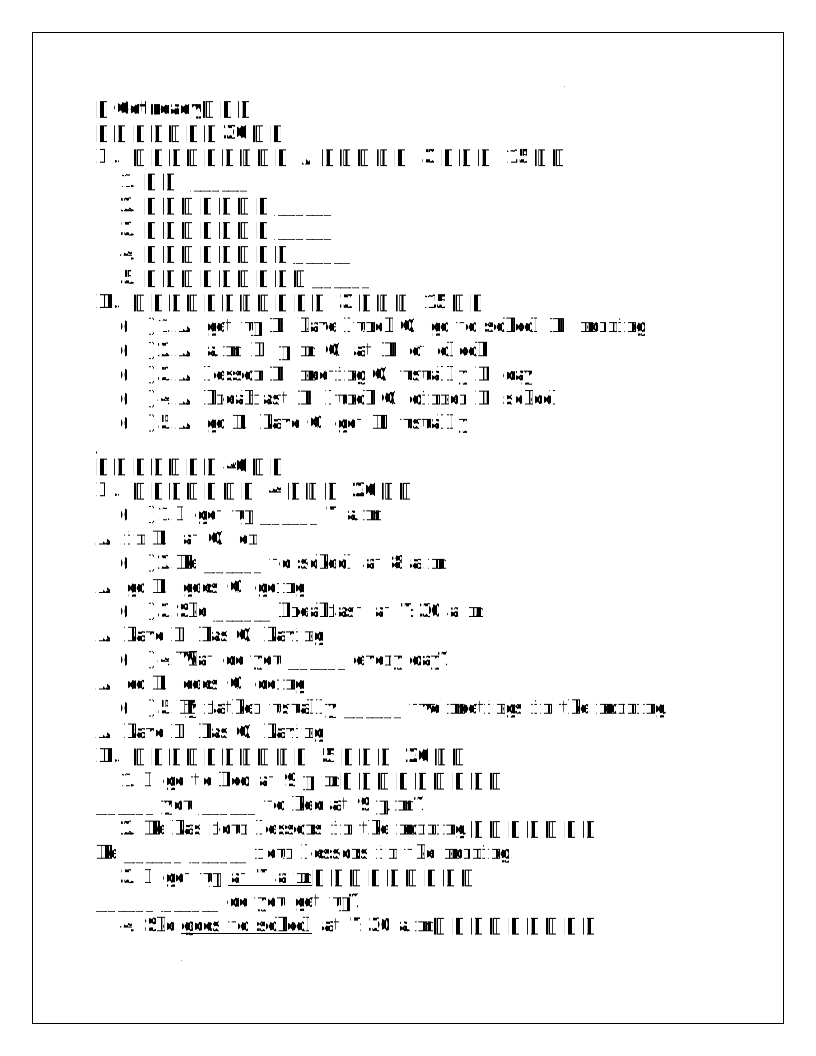
一、词汇小测(30 分)
Ⅰ. 根据汉语提示写单词 / 短语(每空 3 分,共 15 分)
1. 起床 ______
2. 吃早餐(短语)______
3. 去上学(短语)______
4. 上床睡觉(短语)______
5. 日常作息表(短语)______
Ⅱ. 选出不同类的一项(每空 3 分,共 15 分)
( )1.A. get up B. have lunch C. go to school D. morning
( )2.A. a.m. B. p.m. C. at D. o’clock
( )3.A. lesson B. meeting C. usually D. day
( )4.A. breakfast B. lunch C. dinner D. school
( )5.A. go B. have C. get D. usually
二、句式考查(40 分)
Ⅰ. 单项选择(每空 4 分,共 20 分)
( )1.I get up ______ 7 a.m.
A. in B. at C. on
( )2.He ______ to school at 8 a.m.
A. go B. goes C. going
( )3.She ______ breakfast at 7:30 a.m.
A. have B. has C. having
( )4.What do you ______ every day?
A. do B. does C. doing
( )5.My father usually ______ two meetings in the morning.
A. have B. has C. having
Ⅱ. 按要求完成句子(每空 5 分,共 20 分)
1. I go to bed at 9 p.m.(改为一般疑问句)
______ you ______ to bed at 9 p.m.?
2. He has four lessons in the morning.(改为否定句)
He ______ ______ four lessons in the morning.
3. I get up at 7 a.m.(对画线部分提问)
______ ______ do you get up?
4. She goes to school at 7:30 a.m.(对画线部分提问)
______ ______ she ______ at 7:30 a.m.?
三、情景交际(30 分)
Ⅰ. 情景补全对话(每空 3 分,共 15 分)
A: What is your daily schedule?
B: I ______ ______ at 7 a.m. I have breakfast at 7:30 a.m.
A: When do you go to school?
B: I go to school at 8 a.m. I have ______ at 11:30 a.m.
A: When do you go home?
B: I go home at 4:30 p.m. I have dinner at 6 p.m. and ______ ______ at 9 p.m.
Ⅱ. 连词成句(每空 3 分,共 15 分)
1. get, I, up, 7, at, a.m. usually(.)
2. have, She, breakfast, 7:30, at, a.m. (.)
3. goes, He, school, to, 8, at, a.m. (.)
4. do, you, every, What, do, day (?)
5. has, He, two, meetings, morning, the, in (.)
一、词汇小测
Ⅰ. 根据汉语提示写单词 / 短语
1. get up
2. have breakfast
3. go to school
4. go to bed
5. daily schedule
Ⅱ. 选出不同类的一项
1. D(morning 是时间名词,其余是动作短语)
2. C(at 是介词,其余是时间标识)
3. C(usually 是副词,其余是名词)
4. D(school 是地点,其余是餐食)
5. D(usually 是副词,其余是动词)
二、句型小测
Ⅰ. 单项选择
1. B
2. B
3. B
4. A
5. B
Ⅱ. 按要求完成句子
1. Do; go
2. doesn’t have
3. What time
4. What does; do
三、语用与情景小测
Ⅰ. 情景补全对话
1. get up
2. lunch
3. go to bed
Ⅱ. 连词成句
1. I usually get up at 7 a.m.
2. She has breakfast at 7:30 a.m.
3. He goes to school at 8 a.m.
4. What do you do every day?
5. He has two meetings in the morning.
学科网(北京)股份有限公司
$
资源预览图

1

2
3
相关资源
由于学科网是一个信息分享及获取的平台,不确保部分用户上传资料的 来源及知识产权归属。如您发现相关资料侵犯您的合法权益,请联系学科网,我们核实后将及时进行处理。