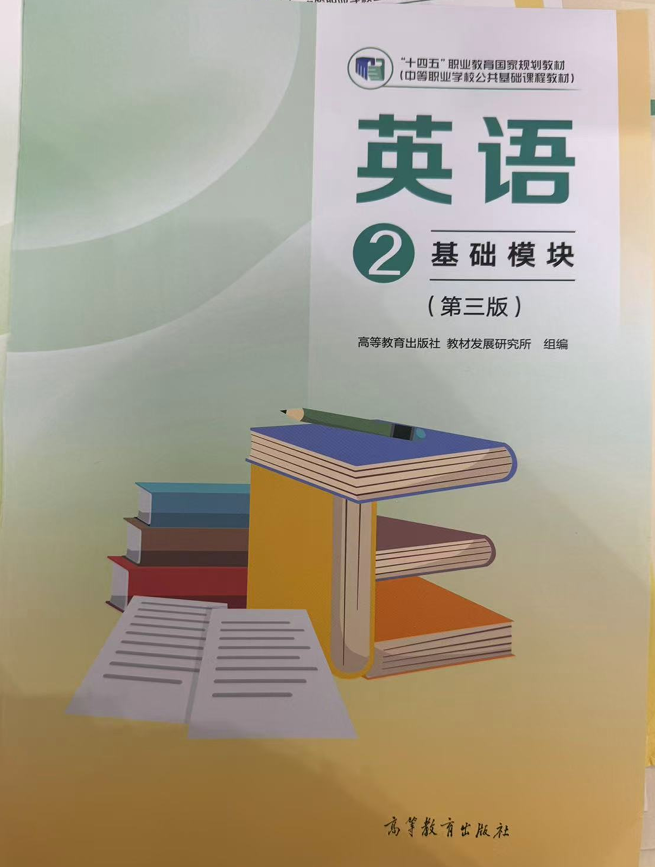
Unit 7 Invention and Innovation(B卷·能力提升)《英语 基础模块2》(高教版第三版)单元过关卷(原卷版+解析版)
2026-03-16
|
2份
|
21页
|
112人阅读
|
3人下载
内容正文:
编写说明:本套试卷紧扣《英语 基础模块2》(高教版第三版)教材,以教材单元为基准精准覆盖核心考点。
每个单元设置AB卷,A卷为基础巩固卷,侧重基础考点训练,帮助学生扎实掌握知识要点;B卷为能力提升卷,注重知识整合与全面检测,引导学生构建知识网络。全书设计4份综合测试卷,模拟实战情境,聚焦解题能力突破,全面提升应试能力与知识应用水平。
《英语 基础模块2》(高教版第三版)《单元过关卷》
Unit 7 Invention and Innovation
(B卷·能力提升)
考试时间:90分钟 满分:100分
班级 姓名 学号 成绩
一、单项选择,从题后所给的 A、B、C、D 四个选项中选出可以填入空白处的最佳选项。(共10小题,每小题2分,满分20分)
1.We can watch ________ and listen to music on digital platforms.
A.videos B.books C.newspapers D.letters
2.—I also want to know about your block. Can you ________ some interesting places?
—Yes. Good idea! I’d love to.
A.introduce B.greet C.manage D.watch
3.It helped to bring Chinese together ________ its cultural influence.
A.besides B.except C.except for D.beside
4.—Mum, could I ________ the TV? I want to watch the news about space.
—Of course. But don’t sit too close.
A.turn on B.turn off C.turn up D.turn down
5.Help others in need, _____________ they will help you when you are in trouble.
A.although B.but C.and D.or
6.Someone once said “Everything has beauty(美), _______ not everyone can see it.”
A.but B.or C.and D.so
7.2018年上海长宁二模Martin didn't eat up all the food he ordered,________he took the rest away.
A.for B.or C.as D.so
8.Hurry up, ________ you will miss the first bus to your school.
A.so B.or C.and D.but
9.—The book about great inventions tells us to study hard and work for our own country.
—________. It’s really a good book.
A.I hope so B.I’m not sure C.I agree D.I’m afraid not
10.—Can you help me think of an invention for my school project?
—________! Let me think. I know! The zipper!
A.Sorry B.With pleasure C.You’re welcome D.Thanks
二、完形填空(共10小题;每小题2分,满分20分)
阅读下列短文,从短文后各题所给的 A、B、C、D 四个选项中,选出可以填入空白处的最佳选项。
Some old Chinese inventions have won wide 11 around the world. Recently, a British woman used an ancient Chinese invention to help her son 12 a math problem.
Dr. Mantri grew up in India. She was taught 13 to use an abacus (算盘) to solve math problems when she was young. After noticing that her son Dhruv had great difficulty with math, she 14 using the same ancient Chinese tool to help him after school.
“My son was in Grade 5 when I noticed he was 15 in math,’’ said Dr. Mantri, “I would ask him 16 very easy like ‘35-13=?’, but he couldn’t work it out.”
“I never thought I would teach him to use such an old tool 17 I realized I could try the Chinese abacus. It is a useful 18 to help kids better understand numbers and basic calculations (计算). Very soon I saw the results. After six days, Dhruv started to make progress 19 with the help of the abacus. He even performed with the abacus at a school meeting.”
Known as the fifth invention of ancient China, Chinese abacus is also considered as the earliest computer. It helped people solve many math problems in ancient China. As long as you remember the 20 , you can easily use it.
So far, the Chinese abacus has been listed as an intangible cultural heritage of human beings (人类非物质文化遗产) for 10 years ever since 2013.
11.A.advantage B.wonder C.show D.popularity
12.A.deal with B.play with C.agree with D.compete with
13.A.what B.how C.where D.when
14.A.liked B.started C.refused D.expected
15.A.creative B.talented C.weak D.successful
16.A.something B.anything C.everything D.nothing
17.A.after B.when C.until D.since
18.A.sign B.method C.report D.symbol
19.A.politely B.loudly C.bravery D.rapidly
20.A.opinions B.rules C.mistakes D.decisions
三、阅读理解(共5小题;每小题2分,满分10分)
阅读下列短文,从题后所给的 A、B、C、D 四个选项中选出最佳答案。
Computer scientist Mary has an idea for a new robot to help her work with children. How should it look? The robot should have arms to be able to lift things. And if it is going to communicate with people, it will also need a face. Scientists believe that giving a robot a face can make it seem more friendly. Humans would also like to pay more attention to robots with faces. But what kind?
For Mary, she wants to make sure that her new robot doesn’t look too much like a human. She wants people to just treat it as a machine-person. If it looks more like a human than a machine, she thinks users might find it a bit creepy and feel afraid. Mary also believes that robot faces don’t need to look a lot like ours. Her research shows that we can enjoy communicating with robots whether or not they look like humans, because our brains are able to look for faces. Just put two circles on top of a robot’s body, and we will see a face.
Dave feels differently. He believes that although at first we might be afraid when seeing a robot with a life-like face, we may soon get used to it. If robots are going to work closely with humans, they should look as much like us as possible. After all, faces are an important part of the way we communicate.
To make his robots look as much like real people as possible, Dave invented a special skin for their faces. With this skin, robots can show human-like expressions and appear to be angry, sad, happy or surprised. Dave’s robots are also programmed to copy expressions. How? Just imagine his robot is looking at you. The cameras in its eyes send pictures of your face to its central computer!
21.Why do scientists think a robot needs a face?
A.It will become more beautiful. B.It can do better in lifting things.
C.It will pay more attention to children. D.It can better communicate with people.
22.What does the underlined word “creepy” mean in paragraph 2?
A.Uncomfortable to look at. B.Impossible to touch.
C.Boring to talk to. D.Difficult to understand.
23.What’s the main idea of paragraph 2?
A.Some types of robot shapes. B.Mary’s ideas on robot faces.
C.People’s ideas about robot bodies. D.The shapes of robot faces.
24.Which of the following would Dave most probably agree with?
A.People should treat robots as humans.
B.Robots need to express their own feelings.
C.Robots shouldn’t look too much like humans.
D.People can easily accept robots with a human face.
25.What is the purpose of the passage?
A.To explain the reasons why robots should have faces.
B.To suggest what humans can do with robots with faces.
C.To share ideas on what kind of faces robots should have.
D.To show how scientists invent robots with different faces.
四、语法填空(共10小题;每小题2分,满分20分)
阅读下列短文,在空白处填入一个适当的词,或填入括号中所给单词的正确形式,并将答案写在对应处。
Electricity From Plants
In Peru, technology joins hands with nature to bring light to people. Hernan Asto Cabezas, a young engineer, managed to develop a system that produces electricity u 26 plants.
Hernan’s invention, called Alinti, gets electricity from plant photosynthesis (光合作用). During photosynthesis, plants produce a kind of waste. The waste can be turned into electrons (电子) w 27 the help of soil microorganisms (微生物). These electrons are then collected and s 28 in a battery system for use. Beyond producing electricity, Alinti also improves indoor air quality by taking in h 29 things. These make it an excellent eco-friendly s 30 for any house.
The invention will be helpful in many places. More than 666 million people w 31 still live without electricity, e 32 in remote areas. In Latin America, for example, about 20 million people are facing the problem.
Hernan knows these facts well. He grew up in a mountainous area of Peru. People there didn’t have the necessary resources, such as electricity. At the age of 14, he had a serious accident while doing his homework by candlelight at home. The candles c 33 a fire, and his house burned to the ground. From that point on, he wanted to help people in need have safe electricity for lighting in their rooms. And now, his dream has come t 34 .
Today, Alinti has already been put in 300 Peruvian families to offer electricity for daily use, w 35 used to seem impossible.
五、 读下面一段对话,从方框中所给的 A、B、C、D、E、F和 G 七个选项中选出可以填入空白处的最佳选项。(共5小题,每小题2分,满分10分)
(Andy and Zhang Lei are visiting some inventions of ancient China at a museum.)
A=Andy B=Zhang Lei
A:Look at the exhibit, Zhang Lei! 36
B:Oh, it’s a great invention of ancient China.
A:Really? 37
B:In the Han Dynasty.
A: 38
B:It was invented by some farmers.
A: 39
B:Guess first!
A:Was it used for getting in the crops?
B:No, it wasn’t. It was used for carrying water.
A:It looks quite special. 40
B:I don’t know. Let’s read what it says here and find out.
A:Good idea.
A.What was it used for?
B.When was it invented?
C.How does it work?
D.It looks so interesting and strange!
E.Who invented it?
F.The machine can work well.
G.The farmers often used it.
六、 书面表达(20分)
41.古往今来,无数的发明创造促进了社会的发展,改变了人们的生活。请你以“My Favorite Invention”为题,根据下面的要点和写作要求,用英语写一篇短文。
写作要点:1.你最喜爱的发明是什么?
2.该发明有哪些用途?
3.你的感受。
写作要求:1.文中不得出现真实姓名和学校名称;
2.词数100左右。
My Favorite Invention
____________________________________________________________________________________________________________________________________________________________________________________________________________________________________________________________________________________
学科网(北京)股份有限公司 (
1
)原创精品资源学科网独家享有版权,侵权必究!
学科网(北京)股份有限公司
$
编写说明:本套试卷紧扣《英语 基础模块2》(高教版第三版)教材,以教材单元为基准精准覆盖核心考点。
每个单元设置AB卷,A卷为基础巩固卷,侧重基础考点训练,帮助学生扎实掌握知识要点;B卷为能力提升卷,注重知识整合与全面检测,引导学生构建知识网络。全书设计4份综合测试卷,模拟实战情境,聚焦解题能力突破,全面提升应试能力与知识应用水平。
《英语 基础模块2》(高教版第三版)《单元过关卷》
Unit 7 Invention and Innovation
(B卷·能力提升)
考试时间:90分钟 满分:100分
班级 姓名 学号 成绩
一、单项选择,从题后所给的 A、B、C、D 四个选项中选出可以填入空白处的最佳选项。(共10小题,每小题2分,满分20分)
1.We can watch ________ and listen to music on digital platforms.
A.videos B.books C.newspapers D.letters
【答案】A
【详解】句意:我们可以在数字平台上观看视频和听音乐。
考查名词辨析。videos视频;books书;newspapers报纸;letters信件。结合“watch”可知,这里是指观看视频。故选A。
2.—I also want to know about your block. Can you ________ some interesting places?
—Yes. Good idea! I’d love to.
A.introduce B.greet C.manage D.watch
【答案】A
【详解】句意:——我也想了解你的街区。你能介绍一些有趣的地方吗?——是的,好主意!我很乐意。
考查动词辨析。introduce介绍;greet问候;manage管理;watch观看。根据“I also want to know about your block. Can you...some interesting places?”及“Yes. Good idea! I’d love to.”可知,此处是请求对方介绍一些有趣的地方,introduce符合语境。故选A。
3.It helped to bring Chinese together ________ its cultural influence.
A.besides B.except C.except for D.beside
【答案】A
【详解】句意:它除了凭借其文化影响力之外,还有助于凝聚中国人。
besides 意为“除……之外(还)”,表示包括在整体之内;except 意为“除……之外”,表示从整体中除去一部分;except for 意为“除……之外”,通常用于对整体中的某个细节进行修正;beside 意为“在……旁边”,是方位介词。根据“It helped to bring Chinese together...its cultural influence.”可知,这里说的是除了凭借文化影响力之外,还有助于凝聚中国人,也就是包括文化影响力这个因素在内还有其他作用,应填besides。
4.—Mum, could I ________ the TV? I want to watch the news about space.
—Of course. But don’t sit too close.
A.turn on B.turn off C.turn up D.turn down
【答案】A
【详解】句意:——妈妈,我可以打开电视吗?我想看关于太空的新闻。——当然可以,但别坐得太近。
考查动词短语辨析。turn on打开;turn off关闭;turn up调高;turn down调低。根据“I want to watch the news”和答句“Of course”可知,说话人想看电视,因此需要“打开”电视。故选A。
5.Help others in need, _____________ they will help you when you are in trouble.
A.although B.but C.and D.or
【答案】C
【详解】试题分析:句意:帮助需要帮助的人,当你有困难时,他们也会帮助你。本题前后句是并列关系。A表示让步B表示转折C表示并列D表示选择。故选C。
6.Someone once said “Everything has beauty(美), _______ not everyone can see it.”
A.but B.or C.and D.so
【答案】A
【详解】试题分析:句意:有人曾经说过:“任何东西都有美,但并不是每个人能看到它的美”。根据句意和前后句逻辑关系,本题前后句是转折关系。故选A。
7.2018年上海长宁二模Martin didn't eat up all the food he ordered,________he took the rest away.
A.for B.or C.as D.so
【答案】D
【详解】句意:马丁没有把他要的所有食物都吃光,所以他把其余的都拿走了。A. for连词,因为,表示原因;B. or连词,或者、否则,通常表示选择,有时也表示转择;C. as连词,引导原因状语从句或时间主语从句;D. so连词,所以,表示结果。“没吃完”与后文“带走”之间是“因与果”的关系。故选D。
8.Hurry up, ________ you will miss the first bus to your school.
A.so B.or C.and D.but
【答案】B
【详解】句意:快点,否则你会赶不上去学校的第一班公共汽车。
考查连词。so因此;or否则;and和;but但是。根据“Hurry up…you will miss the first bus to your school.”可知,此处表示快点,否则就会赶不上去学校的第一班公共汽车。故选B。
9.—The book about great inventions tells us to study hard and work for our own country.
—________. It’s really a good book.
A.I hope so B.I’m not sure C.I agree D.I’m afraid not
【答案】C
【详解】句意:——这本关于伟大发明的书告诉我们要努力学习,为我们自己的国家工作。——我同意。这真是一本好书。
考查情景交际。I hope so我希望如此;I’m not sure我不确定;I agree我同意;I’m afraid not恐怕不。根据“It’s really a good book.”可知,空处应是赞成对方的观点。故选C。
10.—Can you help me think of an invention for my school project?
—________! Let me think. I know! The zipper!
A.Sorry B.With pleasure C.You’re welcome D.Thanks
【答案】B
【详解】句意:——你能帮我给我的学校项目想一个发明吗?——当然愿意啦!让我想想。我知道了!拉链!
考查情景交际。Sorry对不起;With pleasure十分乐意;You’re welcome不用谢;Thanks多谢。根据上文“Can you help me”以及下文答复“I know! The zipper”可知,对方乐意提供帮助,故选B。
二、完形填空(共10小题;每小题2分,满分20分)
阅读下列短文,从短文后各题所给的 A、B、C、D 四个选项中,选出可以填入空白处的最佳选项。
Some old Chinese inventions have won wide 11 around the world. Recently, a British woman used an ancient Chinese invention to help her son 12 a math problem.
Dr. Mantri grew up in India. She was taught 13 to use an abacus (算盘) to solve math problems when she was young. After noticing that her son Dhruv had great difficulty with math, she 14 using the same ancient Chinese tool to help him after school.
“My son was in Grade 5 when I noticed he was 15 in math,’’ said Dr. Mantri, “I would ask him 16 very easy like ‘35-13=?’, but he couldn’t work it out.”
“I never thought I would teach him to use such an old tool 17 I realized I could try the Chinese abacus. It is a useful 18 to help kids better understand numbers and basic calculations (计算). Very soon I saw the results. After six days, Dhruv started to make progress 19 with the help of the abacus. He even performed with the abacus at a school meeting.”
Known as the fifth invention of ancient China, Chinese abacus is also considered as the earliest computer. It helped people solve many math problems in ancient China. As long as you remember the 20 , you can easily use it.
So far, the Chinese abacus has been listed as an intangible cultural heritage of human beings (人类非物质文化遗产) for 10 years ever since 2013.
11.A.advantage B.wonder C.show D.popularity
12.A.deal with B.play with C.agree with D.compete with
13.A.what B.how C.where D.when
14.A.liked B.started C.refused D.expected
15.A.creative B.talented C.weak D.successful
16.A.something B.anything C.everything D.nothing
17.A.after B.when C.until D.since
18.A.sign B.method C.report D.symbol
19.A.politely B.loudly C.bravery D.rapidly
20.A.opinions B.rules C.mistakes D.decisions
【答案】
11.D 12.A 13.B 14.B 15.C 16.A 17.C 18.B 19.D 20.B
【导语】本文主要讲述了一位英国女士用中国古代发明算盘帮助儿子解决数学难题的故事。
11.句意:中国一些古老的发明在世界各地广受欢迎。
advantage优势;wonder奇迹;show展示;popularity普及度,受欢迎程度。根据下文“a British woman used an ancient Chinese invention to help her son”可知,一位英国女性使用了一种古老的中国发明来帮助她的儿子,所以此处是指一些中国古代发明在全世界广受欢迎。故选D。
12.句意:最近,一位英国女性使用了一种古老的中国发明来帮助她的儿子解决一个数学问题。
deal with处理,应对;play with和……一起玩;agree with同意;compete with与……竞争。根据空后“a math problem”可知,此处是指解决数学问题,应用deal with。故选A。
13.句意:她小时候就学会了如何使用算盘来解决数学问题。
what什么;how如何;where在哪里;when什么时候。根据空后“to use an abacus”可知,此处是指如何使用算盘。故选B。
14.句意:在注意到她的儿子德鲁夫在数学上有很大的困难后,她开始在放学后使用同样的古老中国工具来帮助他。
liked喜欢;started开始;refused拒绝;expected期望。根据语境可知,在注意到儿子数学有困难后,她开始使用同样的中国古代工具在放学后帮助他;考查start doing sth.“开始做事”,固定搭配。故选B。
15.句意:“我儿子五年级的时候,我发现他在数学上很薄弱,”曼特里博士说,“我会问他一些非常简单的问题,比如‘35-13=?’,但他解不出来。”
creative有创造力的;talented有天赋的;weak弱的,不擅长的;successful成功的。根据上文“her son Dhruv had great difficulty with math”可知,此处是指儿子数学方面比较薄弱;考查be weak in“在某方面薄弱”,形容词短语。故选C。
16.句意:“我儿子五年级的时候,我发现他在数学上很薄弱,”曼特里博士说,“我会问他一些非常简单的问题,比如‘35-13=?’,但他解不出来。”
something“某事,某物”,通常用于肯定句;anything“任何事,任何物”,通常用于否定句或疑问句;everything每件事,每样物;nothing没有什么。根据语境可知,此处是指问他一些很简单的问题,句子为肯定句,应用“something”,符合语境。故选A。
17.句意:我从未想过我会教他使用如此古老的工具,直到我意识到我可以试试中国的算盘。
after在……之后;when当……时;until直到;since自从。根据“never”可知,此处是指从没想过会教他使用这样一个古老的工具,直到意识到“我”可以试试中国算盘,考查not … until“直到……才……”,固定搭配。故选C。
18.句意:它是一种有用的方法,可以帮助孩子们更好地理解数字和基本的计算。
sign标志,符号;method方法;report报告;symbol象征。根据下文“He even performed with the abacus at a school meeting.”可知,他甚至在学校会议上用算盘进行了表演,所以此处是指算盘是一种帮助孩子们更好地理解数字和基本计算的有用的方法。故选B。
19.句意:六天后,德鲁夫在算盘的帮助下开始迅速取得进步。
politely礼貌地;loudly大声地;bravery勇敢;rapidly迅速地。根据上文“Very soon I saw the results.”可知,很快就看到了效果,所以此处是指儿子开始迅速地取得进步。故选D。
20.句意:只要你记住它的使用规则,你就能很容易地使用它。
opinions观点;rules规则;mistakes错误;decisions决定。根据常识可知,算盘有其使用的规则,记住规则才能操作。故选B。
三、阅读理解(共5小题;每小题2分,满分10分)
阅读下列短文,从题后所给的 A、B、C、D 四个选项中选出最佳答案。
Computer scientist Mary has an idea for a new robot to help her work with children. How should it look? The robot should have arms to be able to lift things. And if it is going to communicate with people, it will also need a face. Scientists believe that giving a robot a face can make it seem more friendly. Humans would also like to pay more attention to robots with faces. But what kind?
For Mary, she wants to make sure that her new robot doesn’t look too much like a human. She wants people to just treat it as a machine-person. If it looks more like a human than a machine, she thinks users might find it a bit creepy and feel afraid. Mary also believes that robot faces don’t need to look a lot like ours. Her research shows that we can enjoy communicating with robots whether or not they look like humans, because our brains are able to look for faces. Just put two circles on top of a robot’s body, and we will see a face.
Dave feels differently. He believes that although at first we might be afraid when seeing a robot with a life-like face, we may soon get used to it. If robots are going to work closely with humans, they should look as much like us as possible. After all, faces are an important part of the way we communicate.
To make his robots look as much like real people as possible, Dave invented a special skin for their faces. With this skin, robots can show human-like expressions and appear to be angry, sad, happy or surprised. Dave’s robots are also programmed to copy expressions. How? Just imagine his robot is looking at you. The cameras in its eyes send pictures of your face to its central computer!
21.Why do scientists think a robot needs a face?
A.It will become more beautiful. B.It can do better in lifting things.
C.It will pay more attention to children. D.It can better communicate with people.
22.What does the underlined word “creepy” mean in paragraph 2?
A.Uncomfortable to look at. B.Impossible to touch.
C.Boring to talk to. D.Difficult to understand.
23.What’s the main idea of paragraph 2?
A.Some types of robot shapes. B.Mary’s ideas on robot faces.
C.People’s ideas about robot bodies. D.The shapes of robot faces.
24.Which of the following would Dave most probably agree with?
A.People should treat robots as humans.
B.Robots need to express their own feelings.
C.Robots shouldn’t look too much like humans.
D.People can easily accept robots with a human face.
25.What is the purpose of the passage?
A.To explain the reasons why robots should have faces.
B.To suggest what humans can do with robots with faces.
C.To share ideas on what kind of faces robots should have.
D.To show how scientists invent robots with different faces.
【答案】21.D 22.A 23.B 24.D 25.C
【导语】本文是一篇议论文,主要讨论了机器人是否需要人脸以及人脸设计的不同观点。
21.推理判断题。根据第一段“Scientists believe that giving a robot a face can make it seem more friendly. Humans would also like to pay more attention to robots with faces.”可知,科学家认为给机器人一张脸可以使其显得更友好,人类也会更关注有脸的机器人,由此推知,人脸设计有助于人机沟通。故选D。
22.词义猜测题。根据第二段“If it looks more like a human than a machine, she thinks users might find it a bit creepy and feel afraid.”和选项可推知,此处应表示如果机器人过于像人,用户可能会感到不适和害怕,因此“creepy”意为uncomfortable to look at“看着不舒服”。故选A。
23.段落大意题。根据第二段“For Mary, she wants to make sure that her new robot doesn’t look too much like a human...If it looks more like a human than a machine, she thinks users might find it a bit creepy and feel afraid. Mary also believes that robot faces don’t need to look a lot like ours.”可知,本段主要讲述了Mary对机器人脸部的看法。故选B。
24.推理判断题。根据第三段“He believes that although at first we might be afraid when seeing a robot with a life-like face, we may soon get used to it.”可知,Dave认为,虽然一开始我们看到一个长着栩栩如生的脸的机器人时可能会害怕,但我们可能很快就会习惯。由此推知,Dave可能会赞同选项D“人们能轻松接受具有人脸的机器人”。故选D。
25.主旨大意题。全文围绕“机器人脸部设计”展开,对比Mary和Dave的不同主张,因此其主旨是分享关于机器人脸部设计的想法。故选C。
四、语法填空(共10小题;每小题2分,满分20分)
阅读下列短文,在空白处填入一个适当的词,或填入括号中所给单词的正确形式,并将答案写在对应处。
Electricity From Plants
In Peru, technology joins hands with nature to bring light to people. Hernan Asto Cabezas, a young engineer, managed to develop a system that produces electricity u 26 plants.
Hernan’s invention, called Alinti, gets electricity from plant photosynthesis (光合作用). During photosynthesis, plants produce a kind of waste. The waste can be turned into electrons (电子) w 27 the help of soil microorganisms (微生物). These electrons are then collected and s 28 in a battery system for use. Beyond producing electricity, Alinti also improves indoor air quality by taking in h 29 things. These make it an excellent eco-friendly s 30 for any house.
The invention will be helpful in many places. More than 666 million people w 31 still live without electricity, e 32 in remote areas. In Latin America, for example, about 20 million people are facing the problem.
Hernan knows these facts well. He grew up in a mountainous area of Peru. People there didn’t have the necessary resources, such as electricity. At the age of 14, he had a serious accident while doing his homework by candlelight at home. The candles c 33 a fire, and his house burned to the ground. From that point on, he wanted to help people in need have safe electricity for lighting in their rooms. And now, his dream has come t 34 .
Today, Alinti has already been put in 300 Peruvian families to offer electricity for daily use, w 35 used to seem impossible.
【答案】
26.using/sing 27.with/ith 28.stored/tored 29.harmful/armful 30.solution/olution 31.worldwide/orldwide 32.especially/specially 33.caused/aused 34.true/rue 35.which/hich
【导语】本文主要讲述了在秘鲁,一位年轻工程师开发出一种利用植物产生电力的系统,该系统不仅环保还能改善室内空气质量,有望为无电地区的人们提供电力支持。
26.句意:年轻的工程师赫尔南·阿斯托·卡贝萨斯成功开发出一种利用植物发电的系统。根据“a system that produces electricity...plants”以及首字母提示可知,此处指利用植物发电,use“使用”,动词,句中有谓语动词,此处用现在分词作后置定语修饰名词system。故填using。
27.句意:在土壤微生物的帮助下,这种废物可以转化为电子。根据“The waste can be turned into electrons...the help of soil microorganisms”以及首字母提示可知,此处指在土壤微生物的帮助下,with the help of“在……的帮助下”,固定短语。故填with。
28.句意:然后收集这些电子并储存在电池系统中以供使用。根据“These electrons are then collected and...in a battery system for use”以及首字母提示可知,此处指电子被收集并储存在电池系统中,store“储存”,动词,根据“are collected”可知,句子时态为一般现在时的被动语态,此处用过去分词stored。故填stored。
29.句意:除了发电,Alinti还能吸收有害物质,改善室内空气质量。根据“Alinti also improves indoor air quality by taking in...things”以及首字母提示可知,此处指吸收有害物质,harmful“有害的”,形容词,作定语修饰名词things。故填harmful。
30.句意:这些使它成为任何房子的绝佳环保解决方案。根据“These make it an excellent eco-friendly...for any house”以及首字母提示可知,此处指绝佳的环保解决方案,solution“解决方案”,可数名词,根据“an”可知,此处用单数形式。故填solution。
31.句意:全球仍有超过6.66亿人生活在无电环境中,尤其是在偏远地区。根据“More than 666 million people...still live without electricity”以及首字母提示可知,此处指全球仍有超过6.66亿人生活在无电环境中,worldwide“全世界”。故填worldwide。
32.句意:全球仍有超过6.66亿人生活在无电环境中,尤其是在偏远地区。根据“More than 666 million people...still live without electricity...in remote areas”以及首字母提示可知,此处指尤其是在偏远地区,especially“尤其”,副词,作状语。故填especially。
33.句意:蜡烛引发了一场火灾,他的房子被烧成了平地。根据“The candles...a fire, and his house burned to the ground”以及首字母提示可知,此处指蜡烛引发了一场火灾,cause“引起”,动词,根据“burned”可知,句子时态为一般过去时,此处用过去式caused。故填caused。
34.句意:现在,他的梦想实现了。根据“From that point on, he wanted to help people in need have safe electricity for lighting in their rooms. And now, his dream has come...”以及首字母提示可知,此处指他的梦想实现了,come true“实现”,固定短语。故填true。
35.句意:如今,Alinti已经被安装在300个秘鲁家庭中,为日常用电提供电力,这在以前似乎是不可能的。根据“Today, Alinti has already been put in 300 Peruvian families to offer electricity for daily use...used to seem impossible”以及首字母提示可知,此处指这在以前似乎是不可能的,句子是非限制性定语从句,修饰前面整个句子,用which引导,在从句中作主语。故填which。
五、 读下面一段对话,从方框中所给的 A、B、C、D、E、F和 G 七个选项中选出可以填入空白处的最佳选项。(共5小题,每小题2分,满分10分)
(Andy and Zhang Lei are visiting some inventions of ancient China at a museum.)
A=Andy B=Zhang Lei
A:Look at the exhibit, Zhang Lei! 36
B:Oh, it’s a great invention of ancient China.
A:Really? 37
B:In the Han Dynasty.
A: 38
B:It was invented by some farmers.
A: 39
B:Guess first!
A:Was it used for getting in the crops?
B:No, it wasn’t. It was used for carrying water.
A:It looks quite special. 40
B:I don’t know. Let’s read what it says here and find out.
A:Good idea.
A.What was it used for?
B.When was it invented?
C.How does it work?
D.It looks so interesting and strange!
E.Who invented it?
F.The machine can work well.
G.The farmers often used it.
【答案】36.D 37.B 38.E 39.A 40.C
【分析】情境对话:主要围绕博物馆的展览品的发明时间、发明者、用途及如何操作展开的话题。
36.根据前一句“Look at the exhibit, Zhang Lei!”和后一句“Oh,it’s a great invention of ancient China.”,可推知这里是在感叹展览品,选项D“它看起来很有趣和奇怪!”符合上下文,故选D。
37.根据答语“In the Han Dynasty.”可知是问什么时候发明的,选项B“它是什么时候发明的?”符合上下文,故选B。
38.根据答语“It was invented by some farmers.”可知是问谁发明的,选项E“谁发明了它?”符合上下文,故选E。
39.根据下文“Was it used for getting in the crops?”和“No,it wasn’t. It was used for carrying water.”,可知是问这个发明用来做什么,选项A“它是用来做什么的?”符合上下文,故选A。
40.根据下文“Let’s read what it says here and find out.”让我们来看看上面是怎么说的,再结合选项,可推知应该是问怎样工作或者操作的,选项C“它是如何工作的?”符合上下文,故选C。
六、 书面表达(20分)
41.古往今来,无数的发明创造促进了社会的发展,改变了人们的生活。请你以“My Favorite Invention”为题,根据下面的要点和写作要求,用英语写一篇短文。
写作要点:1.你最喜爱的发明是什么?
2.该发明有哪些用途?
3.你的感受。
写作要求:1.文中不得出现真实姓名和学校名称;
2.词数100左右。
My Favorite Invention
____________________________________________________________________________________________________________________________________________________________________________________________________________________________________________________________________________________
【答案】例文
My Favorite Invention
Among many inventions, I like the smartphone best.
The smartphone is very useful. First, it makes it easy for us to talk with others, even if they are far away. We can call them, send messages, or have video chats. Second, it’s a good tool for learning. There are lots of apps that help us study different subjects like English, math, and science. It also gives us fun. We can listen to music, watch movies, or play games to relax.
In short, the smartphone is very important in our lives and brings us much convenience and makes our lives easier and more convenient.
【详解】[总体分析]
①题材:本文是一篇材料作文;
②时态:是“一般现在时”;
③提示:写作要点已给出,考生应注意不要遗漏提示,并适当添加细节,注意字母大小写以及标点符号。
[写作步骤]
第一步,开门见山点明最爱的发明;
第二步,介绍该发明有哪些用途;
第三步,介绍自己的感受。
[亮点词汇]
①far away遥远
②listen to music听音乐
③in short总之;简言之
[高分句型]
There are lots of apps that help us study different subjects like English, math, and science. (that引导的定语从句)
学科网(北京)股份有限公司 (
1
)原创精品资源学科网独家享有版权,侵权必究!
学科网(北京)股份有限公司
$
资源预览图

1

2

3
由于学科网是一个信息分享及获取的平台,不确保部分用户上传资料的 来源及知识产权归属。如您发现相关资料侵犯您的合法权益,请联系学科网,我们核实后将及时进行处理。