Unit 6 Presenting ideas课件- 2025-2026学年八年级下学期外研版英语
2026-03-13
|
27页
|
171人阅读
|
3人下载
普通
资源信息
| 学段 | 初中 |
|---|---|
| 学科 | 英语 |
| 教材版本 | 初中英语外研版八年级下册 |
| 年级 | 八年级 |
| 章节 | Presenting ideas |
| 类型 | 课件 |
| 知识点 | - |
| 使用场景 | 同步教学-新授课 |
| 学年 | 2026-2027 |
| 地区(省份) | 全国 |
| 地区(市) | - |
| 地区(区县) | - |
| 文件格式 | PPTX |
| 文件大小 | 56.00 MB |
| 发布时间 | 2026-03-13 |
| 更新时间 | 2026-03-13 |
| 作者 | FJCRE |
| 品牌系列 | - |
| 审核时间 | 2026-03-13 |
| 下载链接 | https://m.zxxk.com/soft/56803952.html |
| 价格 | 2.00储值(1储值=1元) |
| 来源 | 学科网 |
内容正文:
Unit 6
Presenting ideas
Living with nature
Learning objectives
In this lesson, we will be able to:
1.lead students to explore humanity’s connection with nature through listening exercises, scene-choice discussion and cultural analysis.
2.understand exemplary cases of humans’ harmonious coexistence with nature by analysing their ecological principles and cultural significance.
3.use key expressions to describe sustainable practices.
4.use the reflection checklist to self-assess abilities in discussing the relationship between humans and nature, applying object clauses and describing humans living in harmony with nature.
5.learn the new phrases and expressions and use them in context correctly.
2
Lead in
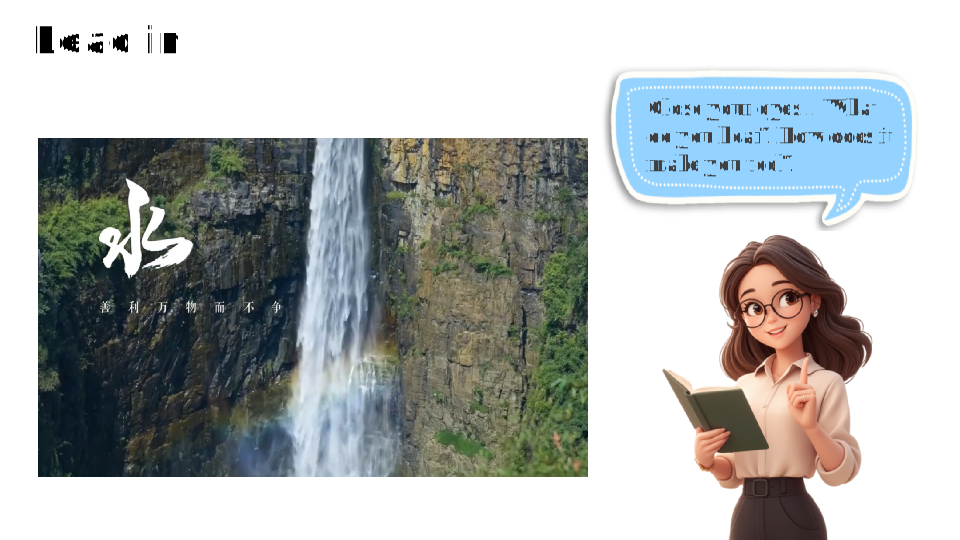
Close your eyes... What do you hear? How does it make you feel?
Lead in
Which scene would you choose to live in? Why?
Lead in
人法地,地法天,天法道,道法自然
Humans follow Earth's law,
Earth follows Heaven's law,
Heaven follows Dao's law,
Dao follows its own nature.
Can you name any Chinese traditions that show respect for nature?
Let’s make a slide presentation about humans living in harmony with nature. Are you ready?
Yes!
Step
1
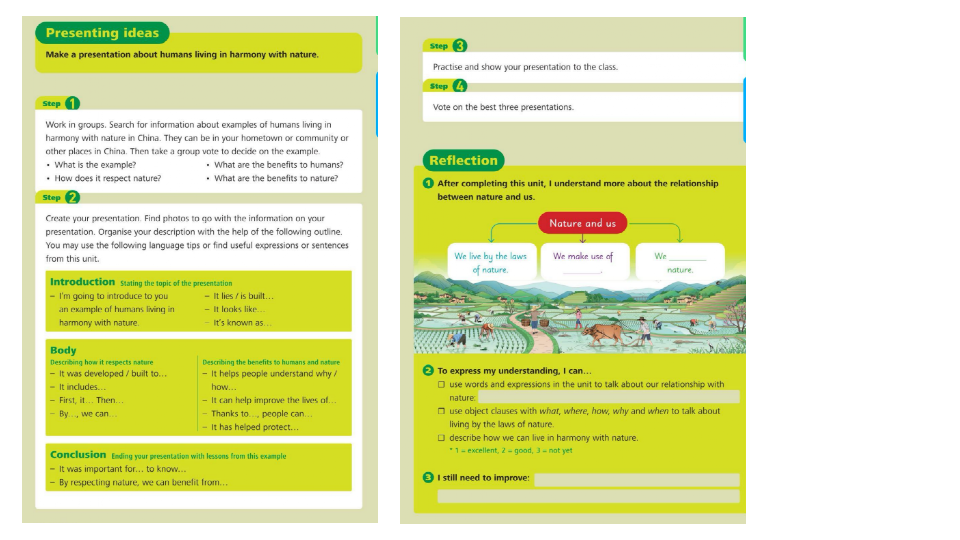
Work in groups. Search for information about examples of humans living in harmony with nature in China. They can be in your hometown or community or other places in China. Then take a group, vote to decide on the example.
What is the example?
How does it respect nature?
What are the benefits to humans?
What are the benefits to nature?
Presenting ideas
Step 1
What is the example?
The Hani Rice Terraces in southern Yunnan are a 1,300-year-old agricultural system where local communities farm in perfect sync with mountain ecosystems.
How does it respect nature?
The terraces follow natural contours to prevent soil erosion.
What are the benefits to nature?
Less soil gets washed away by rain.
The terraces are homes of many plants and animals, and they save local rice types.
What are the benefits to humans?
The terraces grow stable rice crops. Locals also raise fish and ducks. This gives people enough food and extra money.
·
Presenting ideas
Make a slide presentation about humans living in harmony with nature.
Step
2
Create your presentation. Find photos to go with the information on your presentation.Organise your description with the help of the following outline. You may use the following language tips or find useful expressions or sentences from this unit.
Presenting ideas
Make a slide presentation about humans living in harmony with nature.
Introduction Stating the topic of the presentation
—I’m going to introduce to you an example of humans living in harmony with nature.
—It lies / is built...
—It looks like...
—It's known as...
Presenting ideas
Make a slide presentation about humans living in harmony with nature.
Body
Describing how it respects nature
—It was developed / built to...
—It includes…
—First, it... Then...
—By..., we can...
Describing the benefits to humans and nature
—It helps people understand why /how...
—It can help improve the lives of...
—Thanks to..., people can...
—It has helped protect...
Conclusion Ending your presentation with lessons from this example
—It was important for... to know..
—By respecting nature, we can benefit from...
Presenting ideas
Make a slide presentation about humans living in harmony with nature.
Step
3
Practise and show your presentation to the class.
Step
4
Vote on the best three presentations.
Check your presentation
Present your poster to the class.
language correct form(形式正确)
accurate meaning(意义精确)
proper use(使用恰当)
poster design creativity(创意)
performance confidence(自信)
OK Good Excellent
表演过后让学生进行投票
Reflection
Nature and us
We live by the laws of nature.
We make use of __________.
We ___________ nature.
1 After completing this unit, I understand more about the relationship between nature and us.
Reflection
2 To express my understanding, I can...
use words and expressions in the unit to talk about our relationship with nature:
use object clauses with what, where, how, why and when to talk about living by the laws of nature.
describe how we can live in harmony with nature.
*1=excellent, 2=good, 3=not yet
3 I still need to improve:
Nature's wisdom is humanity's timeless teacher.
1.What are the benefits to humans?
结构: benefit (to sb / sth) 对…… 的好处
结构: benefit from...” 表示 “从…… 中受益”
例句:
Planting trees has many benefits to the environment.
种树对环境有很多好处。
We can benefit from protecting natural resources.
我们能从保护自然资源中受益。
19
2.How does it respect nature?
结构: respect sth 尊重...
show respect for... 对…… 表示尊重
例句:
We must respect the laws of nature.
我们必须尊重自然规律。
20
3.We live by the laws of nature.
结构: live by +rules/laws 依照规则 / 法律生活 / 行事
解释: 依照…… 生活 / 行事
例句:
Farmers live by the seasons to grow crops.
农民依照季节规律种植庄稼。
21
22
一、汉译英
live in harmony with...
be known as...
look like
benefit from...
thanks to...
与……和谐共处
作为……而著名
看上去像
从……受益
多亏了
23
二、根据汉语意思完成句子
这个村庄以梯田系统闻名。
This village ___ _____________ ____ its terrace system.
2.通过节约用水,我们可以保护河流。
_____ _______ water, we can protect rivers.
3.人类应该与自然和谐共处。
Humans should _____ ___ _________ with nature.
is known/famous for
By saving
live in harmony
24
三、 英译汉
1.Living in harmony with nature makes our planet healthier.
与自然和谐共处能让我们的星球更健康。
2.Protecting wetlands benefits both wildlife and local people.
保护湿地既有利于野生动物,也惠及当地居民。
3.By following natural laws, ancient Chinese created long-lasting farming systems.
通过遵循自然法则,中国古代人民创造了可持续的农耕系统。
25
26
Document ONE traditional or local practice showing humans living in harmony with nature in your community.
Basic homework
Practical homework
Review and copy all key expressions about the relationship between humans and nature from this unit.
Create a bilingual "Ecological Wisdom Brochure".
Extended homework
27
$
资源预览图

1
2
3
4

5

6
相关资源
由于学科网是一个信息分享及获取的平台,不确保部分用户上传资料的 来源及知识产权归属。如您发现相关资料侵犯您的合法权益,请联系学科网,我们核实后将及时进行处理。