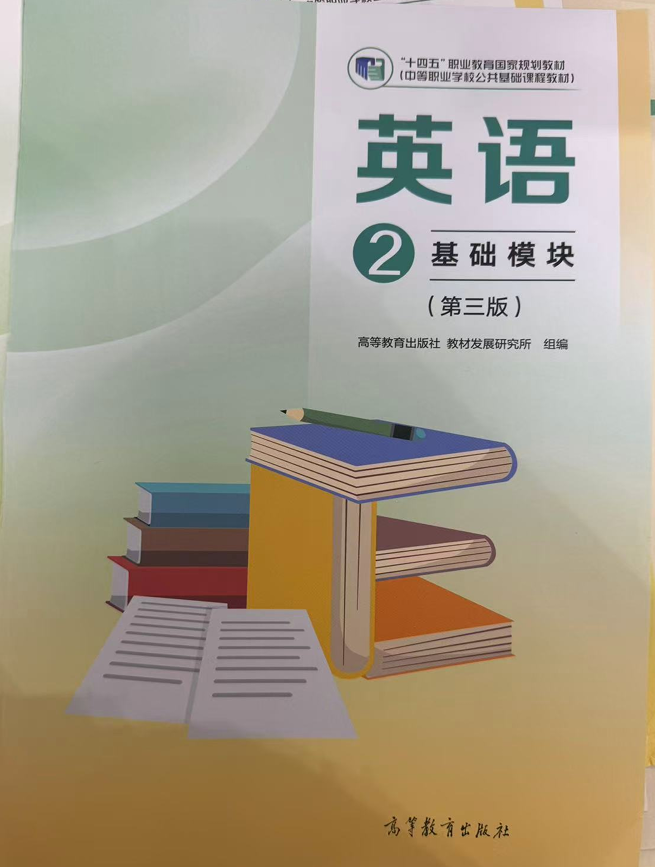
1.3 Travel-Language Practice(课件)-《英语 基础模块2》(高教版 第三版)【上好课】
2026-03-09
|
27页
|
1285人阅读
|
4人下载
精品
内容正文:
《英语 基础模块2》(高教版 第三版)
Unit 1 Travel
Language Practice
一般过去时
When he was 19, his father died and he had to take
care of his mother.
He avoided traveling comfortably.
Xu set off for the first time at 22 and took four major
trips in his lifetime.
Although he experienced all sorts of difficulties, Xu
never thought of quitting.
实义动词的过去式:一般过去时的谓语动词要用动词的过去式。动词过去式的构成有规则变化和不规则变化两种形式。
规则变化:
①一般动词后加-ed。如:
finish →finished
play→played
一般过去时(2)——实义动词
enjoy →enjoyed
实义动词的过去式:一般过去时的谓语动词要用动词的过去式。动词过去式的构成有规则变化和不规则变化两种形式。
规则变化:
②在以字母e结尾的动词后,只加-d。如:
shave→shaved
like→liked
一般过去时(2)——实义动词
arrive→arrived
实义动词的过去式:一般过去时的谓语动词要用动词的过去式。动词过去式的构成有规则变化和不规则变化两种形式。
规则变化:
③在以“辅+y”结尾的动词后,改y为i, 再加-ed。如:
empty→emptied
study→studied
一般过去时(2)——实义动词
实义动词的过去式:一般过去时的谓语动词要用动词的过去式。动词过去式的构成有规则变化和不规则变化两种形式。
规则变化:
④在以重读闭音节结尾且末尾只有一个辅音字母的动词后,双写最后一个辅音字母,再加-ed。如:
chat→chatted
plan→planned
一般过去时(2)——实义动词
shop→shopped
不规则变化:
are→were
is/am→was
一般过去时(2)——实义动词
say→ said
get → got
have→ had
come→came
break→broke
drive→drove
keep→kept
feel→felt
stand→stood
read→read
begin→began
buy→bought
句式:①肯定句:主语+ 动词过去式+其他
We visited the Great Wall last summer.
去年夏天我们参观了长城。
一般过去时(2)——实义动词
Mary dusted her bedroom just now.
玛丽刚刚擦了她的卧室。
句式:②否定句:主语 +didn’t/ did not +动词原形 +其他
I didn’t go to the cinema last Saturday.
上周六我没有去看电影。
一般过去时(2)——实义动词
Lucy did not have a good time last weekend.
露西上周末过得不开心。
句式:③一般疑问句:Did +主语+ 动词原形+ 其他?
Did you go fishing yesterday?
你昨天去钓鱼了吗?
一般过去时(2)——实义动词
Yes, I did./ No, I didn’t.
是的,我去了。/ 不,我没去。
句式:④特殊疑问句:疑问词+ 一般疑问句?
Where did you go last Sunday?
你上个周日去哪里了?
一般过去时(2)——实义动词
I was at home.
我在家。
句式:④特殊疑问句:疑问词+ 一般疑问句?
When did you clean the window?
你什么时候擦的窗户?
一般过去时(2)——实义动词
I cleaned it his morning.
我今天早上擦的。
用法:①表示过去某时或某段时间所发生的动作或存在的状态。
I planted a tree in front of my house yesterday.
昨天我在我家房前栽了一棵树。
一般过去时(2)——实义动词
John studied Chinese in Beijing last year.
约翰去年在北京学习汉语。
用法:②表示过去一段时间经常或反复发生的动作。如:
My grandpa often read newspapers after breakfast years ago.
多年前,我爷爷经常早餐后看报纸。
一般过去时(2)——实义动词
Mike went swimming twice a week when he was young.
麦克年轻的时候一周游泳两次。
<1> 用所给动词的正确形式填空
1.They ________(walk) along the bank of the river yesterday.
2.John ________(stay) at home last night.
3.We ________(watch) TV yesterday evening.
4.My sister often________(get) up at eight o’clock last year.
5.I ________(rain) half an hour ago.
6.He ________(join) the army in 2017.
walked
stayed
watched
got
rained
joined
<2> 单项选择
( ) 1. The bus ______ and an old lady ______off.
A.stopped; get B. stopped; got C. stops; got
( ) 2.______ you ______ your homework yesterday?
A.Did; do B. Do; do C. Did; did
( ) 3. David is a tennis player. He ______ to play tennis when he was six.
A.begins B.begin C. began
B
A
C
<2> 单项选择
( ) 4.They don’t live here any more. They _____ to Chengdu last month.
A.move B. will move C. moved
( ) 5. Oh, it’s you. Sorry, I ______ know you ______here.
A.don’t ; are B. didn’t; are C. didn’t; were
( ) 6.Jane ______ a new dress every month when she was in Shanghai.
A.buys B. bought C. is buying
C
C
B
last night/ week/ month/ year 昨夜/ 上周/ 上个月/ 去年
一般过去时通常与表示确切的过去时间的短语连用。这些短语主要有以下几种形式:
last +表示时间的名词
一般过去时与时间状语
Did you see the movie last night? 你昨晚看电影了吗?
two minutes/ hours/ days/ weeks/ months/ years ago
两分钟/ 小时/ 天/ 周/ 月/ 年以前
一段时间+ago
She bought the house two months ago.
她两个月前买的房子。
in +过去某一年 on +过去某一天 at+过去的时刻
一般过去时通常与表示确切的过去时间的短语连用。这些短语主要有以下几种形式:
介词+过去的某个时间
一般过去时与时间状语
I first met him in 2010. 我在2010年初次见到他。
yesterday 昨天
一些直接表示过去的时间词或短语
yesterday evening 昨天晚上
the day before yesterday
前天
the year before last 前年
the week before last 上上周
just now 刚刚
My mother cleaned the house the day before yesterday.
我妈妈前天打扫了屋子。
<1> 用所给词的正确形式填空
1.Jenny __________(not go) to bed until 10 o’clock last night.
2.Danny ________(read) a fashion magazine five minutes ago.
3.I ______(see) Jack going out just now.
4.He ________(do) his homework everyday. But he ________ (not do) it yesterday.
5.Did he ________(have) supper at home yesterday?
6.When I was young, I often____________(play) football with my friends.
didn’t
read
saw
does
didn’t
have
played
<2> 单项选择
( ) 1. My mother ______ to work half an hour ago.
A.went B. go C. goes
( ) 2.He ______ a little boy in WenChuan Earthquake in 2008.
A.save B. saves C. saved
( ) 3. ---You can’t smoke here.
--- Sorry, I ______the sign.
A.don’t see B.didn’t see C. won’t see
( ) 4.---What’s wrong with Amy?
--- She ______ herself badly two days ago.
A.cut B. cut C. cutted
( ) 5. ---When ______ you ______ this book?
--- I wrote it last year.
A.do; wrote B. do; write C. did; write
A
C
B
A
C
1) Xu Xiake never gave up his dream of traveling.
2) Due to his effort, this diary of over 500 000 words finally became
The Travel Notes of Xu Xiake.
3) Xu Xiake became interested in books about different places at an
early age and wanted to travel.
4) Marco Polo spent 24 years traveling and he set off for his first trip at 17.
5) How was your short visit to Australia, Mr. Ma?
15. Read and underline. 阅读句子,找出不同动词的过去式。
16. Read and complete. 用所给动词的适当形式补全句子。
1) We often (go) to school by bus last year.
2) Mr. Ma (travel) a lot and read a lot when he was young.
3) Xu Xiake (spend) over 30 years traveling throughout the country.
4) Luckily, the student (catch) the bus and (arrive)
at the practice base in time.
5) Marco Polo (write) about his travels along the Silk Road and
different places that he (pass) through, especially those in China.
went
traveled
spent
caught
arrived
wrote
passed
17. Read and complete. 用所给动词的适当形式补全短文。
Last Sunday, my class had a school trip. I 1) (feel) very excited, and even 2) (can’t) fall asleep on Saturday night. The next day I got up late and 3) (fail) to catch the school bus. I had to take the subway by myself. After getting off the subway, I 4) . (walk) and got lost. Then it 5) (begin) to rain and 6) . (force) me to run to a shelter. When I 7) (meet) my classmates
at the zoo, it 8) (be) almost noon.
felt
couldn’t
failed
walked
began
forced
met
was
1) We need to our bodies.
2) The clock said four minutes past eleven when we for London.
3) There are rooms in this hotel.
4) When things aren’t going well, my father encourages me, telling me not
to .
5) She arrived early get a good seat.
18. Choose and complete. 选择合适的短语,用其适当形式补全句子。
all sorts of in order to give up set off take care of
take care of
set off
all sorts of
give up
in order to
19. Read and complete.
阅读一篇有关徐霞客的短文,用所给单词的适当形式填空。
finally
major
experience
travel
record
Xu Xiake was a native of Jiangyin, Jiangsu Province. In his youth he showed great interest in travel and began his 1) trips. Over 30 years, he 2) throughout the country and wrote about every place he visited. Although Xu 3) all sorts of difficulties on the way, he never quit.
As Si Ku Quan Shu states, Xu 4) what he saw and heard with his own eyes and ears. After Xu’s death, his diary was edited and 5) became The Travel Notes of Xu Xiake.
major
traveled
experienced
recorded
finally
Thank You
$
资源预览图

1

2

3

4

5

6
由于学科网是一个信息分享及获取的平台,不确保部分用户上传资料的 来源及知识产权归属。如您发现相关资料侵犯您的合法权益,请联系学科网,我们核实后将及时进行处理。