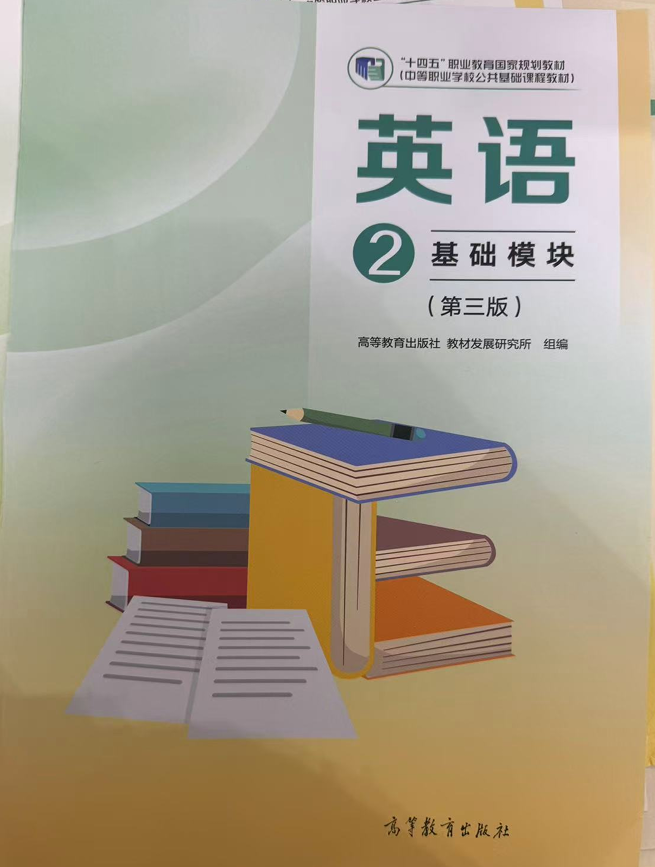
2.1 Health and Fitness-Warming up&Listening and Speaking(教案)-《英语 基础模块2》(高教版第三版)【上好课】
2026-03-06
|
8页
|
863人阅读
|
2人下载
精品
内容正文:
课 题
《英语 基础模块2》
(高教版第三版)
Unit 2 Health and Fitness
课 型
Warming up &Listening and Speaking
课 时
2
授课班级
授课时间
80mins
授课教师
教材分析
(Textbook Analysis)
本单元以“健康与健身”为核心主题,Warm up&Listening and Speaking板块是单元的基础语言输入与输出环节。内容围绕常见健康问题、就医场景展开,包含丰富的日常交际句型、健康相关词汇,既贴合中职学生的日常生活实际,又注重培养其英语听说实用能力。教材通过视频、听力、对话、角色扮演等多样形式,将语言知识与生活场景结合,符合中职英语“实用为主,应用为目的”的教学理念,为后续的阅读和写作板块做好语言铺垫。
学情分析
(Study situation analysis)
本次授课对象为中职高一下学期学生,该阶段学生已掌握基础的英语日常交际词汇和简单句型,具备一定的听说理解能力,但在复杂句型运用、话题性口语表达上仍存在不足。学生对贴近生活的健康话题兴趣较高,乐于参与互动和角色扮演类活动,但部分学生存在英语表达自信心不足、词汇量有限的问题。同时,中职学生更注重知识的实用性,对与生活、职业相关的英语场景学习积极性更高,教学中需结合具象化场景和趣味活动降低学习难度。
教学目标
(Learning objectives)
Knowledge objectives
1. Master the vocabulary related to health problems: fever, toothache, sore throat, cough, pressure, overweight, etc.
2. Grasp the key sentence patterns for asking about health problems and giving suggestions: What’s wrong with you? I have a…; How long have you been like this? Since…; You should/’d better…
3. Understand the basic expressions in the doctor-patient communication scene, such as appointment number, take medicine, have a good rest, etc.
Ability objectives
1. Be able to listen to and understand the dialogues about health problems, and finish the listening tasks such as judgment, blank filling and scene judgment.
2. Be able to ask about others’ health problems and give corresponding suggestions in English fluently.
3. Be able to role-play the doctor-patient communication and school health center consultation scenes with partners.
Emotional objectives
1. Cultivate the awareness of paying attention to physical and mental health and forming good living habits.
2. Improve the confidence of English oral expression and develop the cooperation awareness through group and pair work.
教学重难点
(Key and difficult points)
Key points
1. The vocabulary and phrases about common health problems and doctor-patient communication.
2. The key sentence patterns for inquiring about health conditions and putting forward suggestions.
3. Understanding the listening materials about health pressure and doctor-patient dialogue, and completing related listening tasks.
Difficult points
1. Flexible use of the key sentence patterns in different real-life health communication scenes.
2. Smoothly carrying out role-play of doctor-patient communication and health consultation with accurate language expression.
3. Mastering the usage of fixed collocations and structures such as pay attention to doing sth, ask sb for help.
教学方法
(Teaching methods)
小组讨论法、任务教学法、练习法、情境教学法、听说法
课前准备(Preparation before class)
1. 制作与健康主题相关的PPT课件,包含健康问题图片、核心词汇、句型、听力材料、对话范例、角色扮演任务单等;
2. 准备健康问题相关的图片、情境卡片(如医务室、医院场景);
3. 整理拓展练习素材,如词汇匹配题、句型选择题、对话仿写题;
4. 调试好听力音频、教学视频等多媒体资源;
5. 为学生分组,准备小组合作学习的任务单。
教学媒体
(Teaching media)
PPT课件、多媒体设备、听力音频、教学视频、拓展资源包、健康主题图片/情境卡片
教学过程
(Teaching process)
教学环节(Teaching)
教师活动设计
(Teacher Activity)
学生活动设计(Student Activity)
设计意图
(Design Purpose)
Step 1:
Warm up
1. Play the teaching video about health problems, and ask students two questions: What’s wrong with Shelton? Do you know any other healthy problems? Guide students to answer briefly.
2. Show pictures of different health problems (fever, toothache, under pressure, stomachache, etc.), present the corresponding vocabulary, and lead students to read and memorize.
3. Organize a “match the picture and health problem” game, and check students’ mastery of vocabulary in time.
4. Lead students to practice the basic sentence pattern: What’s wrong with you? I have a… / I am…, and ask students to practice in pairs with the health problems they have learned.
1. Watch the video carefully and try to answer the teacher’s questions with simple words or phrases.
2. Read the new vocabulary following the teacher, and memorize the words with the help of pictures.
3. Participate in the matching game actively, and correct the wrong answers in time according to the teacher’s prompt.
4. Practice the key sentence patterns in pairs, and try to use different health problem vocabulary to make dialogues.
1. 借助教学视频导入健康主题,能够快速吸引学生的注意力,激发学生的学习兴趣,让课堂导入更自然。
2. 将健康问题图片与词汇结合教学,利用视觉化方式帮助学生理解和记忆词汇,契合中职学生的认知特点,降低词汇学习难度。
3. 设计图片与健康问题匹配的小游戏,让词汇巩固环节更具趣味性,让学生在轻松的氛围中强化新学词汇的记忆。
4. 以结对形式练习基础句型,让学生初步运用新学词汇和句型进行表达,为后续的听力和口语环节做好语言铺垫。
Step 2:
Listening
Pre-listening
1. Raise three questions about pressure: Do you have any pressure in your life? What kind of pressure do you have? What symptoms will you have when under pressure? Guide students to discuss in groups and share their answers.
2. Present the key words and phrases related to pressure (too much homework, feel tired, lose temper, etc.) and explain their meanings.
While-listening
1. Play the listening audio for the first time, and ask students to tick the possible place of the dialogue (Nurse’s Station).
2. Play the audio for the second time, let students judge the true or false of the three sentences about Jack’s situation, and check the answers and explain them.
3. Play the audio for the third time, ask students to complete the medical record form of Jack (fill in the blanks of symptoms, duration, reasons and suggestions), and guide students to check the answers together.
Post-listening
1. Play the listening text audio again, and lead students to read after the tape, paying attention to the pronunciation and intonation.
2. Organize students to practice the listening dialogue in pairs, and walk around to guide and correct the wrong expressions.
Pre-listening
1. Discuss the questions about pressure in groups of 4-5, and share the group’s ideas with the whole class.
2. Learn and memorize the key words and phrases about pressure, and try to make simple sentences with them.
While-listening
1. Listen to the audio carefully and tick the correct scene according to the listening content.
2. Listen to the audio again, judge the true or false of the sentences, and mark the basis in the listening material.
3. Listen to the audio for the third time, fill in the blanks of the medical record form carefully, and check the answers with the teacher.
Post-listening
1. Read after the tape, imitate the teacher’s pronunciation and intonation, and pay attention to the stress and pause of sentences.
2. Practice the listening dialogue in pairs, and try to simulate the tone of the characters in the dialogue.
1. 听前围绕压力展开小组讨论,将教学内容与学生的日常生活结合,激活学生已有的知识储备,同时让学生提前熟悉听力相关话题,为理解听力材料做好铺垫。
2. 设计多遍听的任务,且每遍任务各有侧重,让学生逐步捕捉听力中的关键信息,降低听力理解的难度,层层递进地培养学生的听力理解能力。
3. 让学生完成就诊记录单的填空任务,针对性培养学生在听力中提取具体信息的能力,同时强化学生对健康问题相关表达的认知。
4. 听后安排跟读和结对对话练习,既帮助学生纠正发音、培养语感,又能让学生在练习中巩固听力内容,为后续的口语表达积累素材。
Step 3:
Speaking
1. Play the teaching video about Jack’s seeing a doctor, and ask students to watch and answer the questions about symptoms, duration and suggestions, then check the answers.
2. Play the audio of the doctor-patient dialogue, lead students to read after the tape, and ask them to underline the key sentences of doctor-patient communication, then explain the key structures (pay attention to doing sth, take medicine three times a day, etc.).
3. Organize students to translate the doctor-patient dialogue in groups, and ask each group to send a representative to share the translation results, then correct and supplement the translation.
4. Present four multiple-choice questions about key sentence patterns and fixed collocations, let students answer them orally, and explain the key points of grammar and collocation.
5. Provide two situational materials (toothache, under pressure), and guide students to imitate the doctor-patient dialogue to practice in pairs, walk around to guide and give feedback.
6. Design two role-play tasks (school health center consultation: overweight, sore neck&dry eyes), assign tasks to each group, and provide corresponding prompt words and sentence patterns; guide each group to prepare for 5 minutes, then invite 2-3 groups to perform in front of the class, and make comments and evaluations.
1. Watch the video carefully, write down the answers to the questions, and share them with the whole class.
2. Read after the tape, underline the key sentences of doctor-patient communication, and take notes of the key structures explained by the teacher.
3. Translate the doctor-patient dialogue in groups, discuss the difficult sentences together, and send a representative to share the translation results.
4. Answer the multiple-choice questions orally, and take notes of the key points of grammar and collocation explained by the teacher.
5. Practice the dialogue in pairs according to the situational materials of toothache and under pressure, and use the key sentence patterns flexibly.
6. Prepare the role-play task of school health center consultation in groups, assign the roles of staff and student, and use the prompt words and sentence patterns to make dialogues; perform in front of the class bravely and listen to the teacher’s comments.
1. 播放就医相关视频并设计问题,进一步巩固学生对健康问题相关词汇、句型的掌握,同时自然导入就医交际场景,让学生对口语环节的主题形成初步认知。
2. 让学生勾画就医核心句型并讲解重点句式结构,帮助学生精准掌握口语环节的核心语言知识,为后续的口语表达筑牢基础。
3. 开展小组翻译对话活动,培养学生的合作学习能力和语言理解能力,同时让学生在翻译中深化对就医对话的理解,厘清中英文表达差异。
4. 设计句型和固定搭配的选择题,及时巩固学生对重点句型、语法和搭配的掌握,针对性解决学生在语言运用中的难点问题。
5. 提供牙痛、压力大的情境让学生模仿对话练习,让学生在简单场景中尝试运用核心句型,积累口语表达经验,为复杂的角色扮演做好过渡。
6. 设计贴合学生校园生活的医务室咨询角色扮演任务,充分调动学生的参与积极性,让学生在真实的情境中灵活运用所学语言,同时培养学生的合作能力和语言表达能力,实现英语知识的实用化。
Step 4:
Summary
Step 5:
Homework
板书设计
教学反思
(留白)
学科网(北京)股份有限公原创精品资源学科网独家享有版权,侵权必究!
学科网(北京)股份有限公司
学科网(北京)股份有限公司
$
资源预览图

1

2

3
由于学科网是一个信息分享及获取的平台,不确保部分用户上传资料的 来源及知识产权归属。如您发现相关资料侵犯您的合法权益,请联系学科网,我们核实后将及时进行处理。