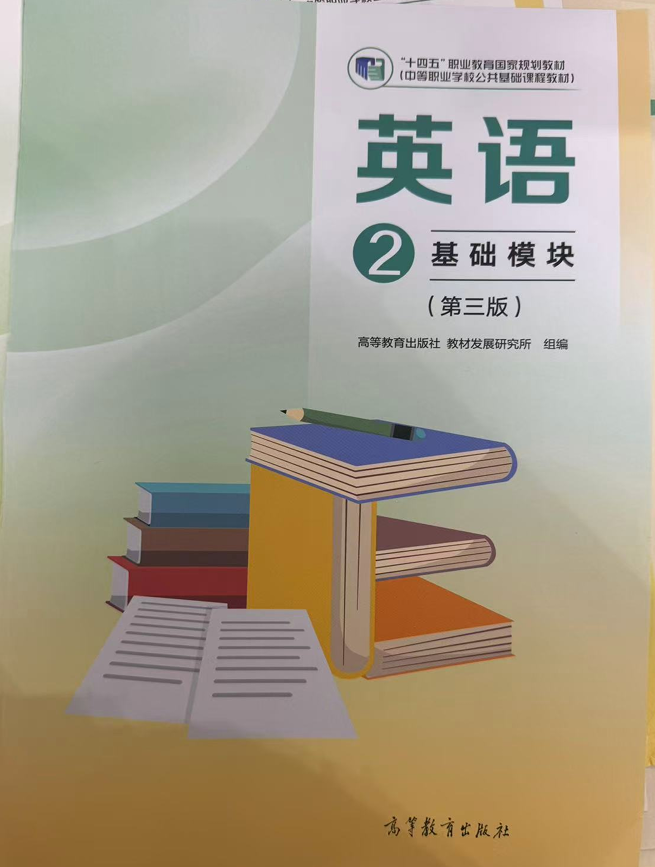
1.3 Travel-Language Practice(教案)-《英语 基础模块2》(高教版第三版)【上好课】.pptx
2026-03-05
|
7页
|
621人阅读
|
2人下载
精品
内容正文:
课 题
《英语 基础模块2》
(高教版第三版)
Unit 1 Travel
课 型
Language Practice
课 时
2
授课班级
授课时间
80mins
授课教师
教材分析
(Textbook Analysis)
本课时是《英语 基础模块2》Unit 1 Travel的语言练习课,核心围绕一般过去时展开,依托徐霞客、马可·波罗的旅行主题素材,将语法知识与旅行话题结合,既贴合单元主题,又让语法学习有具体的语境支撑。教材通过歌曲、例句、练习层层递进,从过去式识别、规则到一般过去时的句式结构逐步讲解,符合中职英语“实用为主,够用为度”的教学原则,同时融入中外旅行家素材,兼顾语言学习与文化渗透,为学生后续旅行相关的英语表达和写作奠定语法基础。
学情分析
(Study situation analysis)
授课对象为中职高一下学期学生,已掌握一般现在时、现在进行时等基础时态,具备简单的英语词汇和句型运用能力,能读懂简单的英语语篇。但学生普遍存在语法学习兴趣不高、对时态的时间标志和动词形式变化掌握不扎实、易混淆规则和不规则动词过去式的问题;同时,中职学生好动,喜欢互动和情境化的学习活动,对纯理论的语法讲解接受度较低,适合通过任务、练习、情境体验的方式开展语法教学。
教学目标
(Learning objectives)
Knowledge objectives
1. Students can master the time adverbs of the Simple Past Tense, such as last year, yesterday, …ago, just now, once upon a time.
2. Students can grasp the regular and irregular changes of verb past tense forms.
3. Students can understand and master the sentence structures of the Simple Past Tense (be verbs and action verbs), including affirmative, negative, interrogative and special interrogative sentences.
4. Students can identify the Simple Past Tense in travel-related sentences and passages.
Ability objectives
1. Students can correctly use the Simple Past Tense to fill in the blanks, make sentences and rewrite sentences in practical exercises.
2. Students can apply the Simple Past Tense to describe simple travel experiences or events in the past.
3. Improve students’ reading and comprehension ability of travel-related English materials with the Simple Past Tense.
Emotional objectives
1. Cultivate students’ interest in English grammar learning through travel-themed materials and interactive exercises.
2. Let students know about the travel stories of Xu Xiake and Marco Polo, and cultivate their spirit of perseverance and exploration.
3. Encourage students to communicate in English about travel experiences and enhance their confidence in English expression.
教学重难点
(Learning objectives)
Key points
1. Master the common time adverbs of the Simple Past Tense and their application.
2. Grasp the regular change rules of verb past tense and the common irregular verb past tense forms.
3. Master the basic sentence structures of the Simple Past Tense for be verbs and action verbs.
Difficult points
1. Distinguish and correctly use the irregular verb past tense forms (e.g. go-went, take-took, write-wrote).
2. Flexibly use the sentence structures of the Simple Past Tense (especially negative and interrogative sentences of action verbs).
3. Apply the Simple Past Tense to describe past events or travel experiences in a simple and coherent way.
教学方法
(Teaching methods)
小组讨论法、任务教学法、练习法、情境教学法、游戏教学法
课前准备(Preparation before class)
1. 制作与旅行主题相关的PPT课件,包含英文歌曲填空素材、徐霞客相关英文图片/视频、一般过去时知识点解析、课堂练习题、旅行主题语篇素材等;
2. 准备旅行相关的英文图片、世界地图素材,以及徐霞客生平的英文时间轴空白卡片;
3. 整理拓展练习素材,如词汇填空题、句型仿写题、旅行家介绍仿写练习单、一般过去时选择题题库;
4. 准备小组合作任务单,包含课文句子翻译、语法问题讨论、过去式造句、旅行经历小描述等分层任务;
5. 调试好听力音频、英文歌曲视频、徐霞客相关教学视频等多媒体资源,确保课堂播放顺畅;
6. 准备一般过去时语法小卡片(包含动词原形和过去式),用于课堂互动游戏。
教学媒体
(Teaching media)
PPT课件、多媒体设备、听力音频、教学视频、拓展资源包、旅行主题图片/地图
教学过程
(Teaching process)
教学环节(Teaching)
教师活动设计
(Teacher Activity)
学生活动设计(Student Activity)
设计意图
(Design Purpose)
Step 1:
导入
1. Play an English song Yesterday Once More, and present the lyric with blanks (about verb past tense) on the PPT. Guide students to fill in the blanks while listening.
2. Check the answers with students, and ask them to find the common feature of the filled words (all are past tense).
3. Show sentences about Xu Xiake’s travel experience on the PPT, ask students to read the sentences and circle the past tense verbs, then lead in the topic of the Simple Past Tense.
1. Listen to the English song and fill in the blanks in the lyric actively.
2. Check the answers with the teacher, and discuss the common feature of the filled words in pairs.
3. Read the sentences about Xu Xiake, circle the past tense verbs and try to figure out the meaning of the sentences.
1.借助英文歌曲激发学生学习兴趣,营造轻松的英语学习氛围,让学生在趣味体验中初步感知过去式;
2.结合徐霞客旅行相关句子,让学生进一步感知一般过去时的动词形式,为新课学习做好铺垫;
3.将语法学习与单元旅行主题紧密结合,让语法知识有具体的语境依托,避免纯理论讲解的枯燥性。
Step 2:
标志词
1. Present the definition of the Simple Past Tense on the PPT: Express an action or a state that happened at a specific time in the past.
2. Classify and explain the common time adverbs of the Simple Past Tense on the PPT: last series, ago series, yesterday series, this/that series and others (in + past year, just now, once upon a time).
3. Design a quick response game: Show different time phrases on the PPT in random order, ask students to stand up and shout “Yes” if it is the time adverb of the Simple Past Tense, and “No” if not.
4. Assign Exercise 1 (finding time adverbs) and Exercise 2 (filling in the blanks with correct verbs according to time adverbs), and walk around to guide students.
1. Read the definition of the Simple Past Tense carefully and take notes.
2. Learn the classified time adverbs, memorize the common ones and take notes of the key points.
3. Participate in the quick response game actively, and react to the time phrases on the PPT in time.
4. Finish the assigned exercises independently, and check the answers with the teacher after finishing.
1.先让学生理解一般过去时的核心定义,建立基础认知概念,为后续知识点学习奠定理论基础;
2.对时间标志词进行分类讲解,帮助学生有条理地记忆和区分,让学生掌握判断一般过去时的关键依据;
3.设计快速反应游戏,增加课堂互动性,让学生在游戏中快速巩固时间标志词的记忆,提升课堂参与度;
4.通过针对性练习,让学生将时间标志词与动词形式结合,初步实现知识的应用,感知时态与时间标志的关联。
Step 3:
过去式规则
1. Explain the regular changes of verb past tense on the PPT with examples: add -ed directly, add -d with silent e at the end, change y to i and add -ed with consonant + y at the end, double the final consonant and add -ed with stressed closed syllable (consonant-vowel-consonant).
2. Explain the irregular changes of verb past tense, and summarize the memory skills with jingles (e.g. keep-kept, feel-felt; sit-sat, sing-sang). List common irregular verbs (go, take, write, see, come, spend) and their past tense forms, and ask students to read after the teacher.
3. Design a group competition: Divide students into 4 groups, give each group verb cards (including regular and irregular verbs), ask students to write the past tense forms on the cards, and the group with the most correct answers wins.
4. Assign exercises of changing verbs into past tense forms (including regular and irregular), and check the answers with the whole class, focusing on explaining the wrong points of students.
1. Learn the regular change rules of verb past tense, take notes with examples and master the rules.
2. Read the jingles for irregular verb memory, memorize the common irregular verb past tense forms, and read after the teacher repeatedly to strengthen memory.
3. Participate in the group competition actively, cooperate with group members to finish the verb past tense transformation, and strive for the best result for the group.
4. Finish the verb transformation exercises independently, check the answers with the teacher, and correct the wrong answers in time, marking the difficult irregular verbs.
1.对动词过去式的规则变化分类讲解并搭配实例,将抽象的语法规则具象化,符合中职学生的认知特点,便于理解和掌握;
2.用顺口溜总结不规则动词的记忆技巧,降低记忆难度,通过领读让学生强化口语层面的记忆,攻克语法学习的难点;
3.开展小组竞赛活动,激发学生的竞争意识和团队协作能力,让学生在合作与竞争中巩固动词过去式的变形知识;
4.通过课堂练习及时检测学生的掌握情况,针对共性错误进行重点讲解,查漏补缺,为后续句式结构学习打好词汇基础。
Step 4:
一般过去时
结构
Be verbs (was/were)
1. Present the affirmative, negative, general interrogative and special interrogative sentence structures of be verbs in the Simple Past Tense on the PPT with examples, and explain the key points (subject-verb agreement, first person changes to second person in interrogative sentences).
2. Assign sentence transformation exercises (affirmative → negative / interrogative), and guide students to finish them.
Action verbs
1. Present the four sentence structures of action verbs in the Simple Past Tense on the PPT with examples, and emphasize the key points (use didn’t + original form for negative sentences, Did + subject + original form for interrogative sentences, some changes to any).
2. Design a “sentence transformation relay” game: Divide students into groups, the teacher gives an affirmative sentence, and students take turns to transform it into negative and interrogative sentences orally.
3. Show multiple-choice questions about sentence structures on the PPT, ask students to answer orally and explain the reasons.
1. Learn the sentence structures of be verbs in the Simple Past Tense, take notes with examples, and master the transformation methods of different sentence types.
2. Finish the sentence transformation exercises independently, and check and correct the answers with the teacher.
3. Learn the sentence structures of action verbs, focus on the key points of negative and interrogative sentences, and take notes carefully.
4. Participate in the sentence transformation relay game actively, and cooperate with group members to finish the relay task.
5. Answer the multiple-choice questions orally, and explain the reasons for the answers combined with the learned sentence structures.
1.将be动词和实义动词的句式结构分开讲解,让复杂的语法知识形成层级,由浅入深引导学生学习,降低理解难度;
2.搭配句式转换练习,让学生在实操中掌握不同句式的变换方法,强化对语法规则的记忆和应用;
3.设计句式转换接力游戏,将口语练习与语法学习结合,提升学生的口语表达能力,同时让学生在互动中熟练掌握句式变换技巧;
4.通过选择题检测学生对句式结构的灵活运用能力,要求学生讲解答题理由,倒逼学生深入理解语法规则,深化知识掌握。
Step 5:
练习
1. Present travel-related sentences and short passages on the PPT, ask students to underline the past tense verbs first, then complete the blanks with the correct past tense forms of the given verbs.
2. Assign group cooperation tasks: Let students use the Simple Past Tense to describe a simple travel experience (2-3 sentences) on the task sheet, and cooperate with group members to modify and improve it.
3. Invite several students to share their travel experience descriptions in front of the class, and comment and correct them timely.
4. Summarize the key knowledge points of this class: time adverbs, verb past tense forms, sentence structures of the Simple Past Tense.
1. Read the travel-related sentences and passages, underline the past tense verbs and complete the blank-filling exercises independently.
2. Cooperate with group members to write simple travel experience descriptions with the Simple Past Tense, and modify each other’s sentences to ensure the correct use of grammar.
3. Volunteer to share the writing results in front of the class, and listen to the teacher’s comments and corrections carefully.
4. Review the key knowledge points summarized by the teacher, and sort out the notes to form a complete knowledge system.
1.将语法知识与单元旅行主题结合开展综合练习,让学生在具体的话题语境中应用所学知识,实现语法知识与实际语境的融合,体现中职英语“实用为主”的原则;
2.设计小组写作任务,培养学生的团队协作能力,要求写2-3句话的简单旅行经历,贴合中职学生的英语水平,降低写作难度,提升学生的写作信心;
3.邀请学生分享写作成果,为学生提供展示平台,增强学生的英语表达信心,教师及时点评纠错,帮助学生规范语法使用;
4.对本节课核心知识点进行总结,引导学生梳理笔记,形成完整的一般过去时知识体系,帮助学生构建系统的语法认知。
板书设计
教学反思
(留白)
学科网(北京)股份有限公原创精品资源学科网独家享有版权,侵权必究!
学科网(北京)股份有限公司
学科网(北京)股份有限公司
$
资源预览图

1

2

3
由于学科网是一个信息分享及获取的平台,不确保部分用户上传资料的 来源及知识产权归属。如您发现相关资料侵犯您的合法权益,请联系学科网,我们核实后将及时进行处理。