2026年贵州省高职(专科)院校分类考试《英语全真模拟卷》(六)(原卷版+解析版)
2026-02-25
|
2份
|
19页
|
43人阅读
|
1人下载
资源信息
| 学段 | 中职 |
|---|---|
| 学科 | 英语 |
| 教材版本 | - |
| 年级 | - |
| 章节 | - |
| 类型 | 题集-综合训练 |
| 知识点 | 语音知识,词汇知识,词法知识,句法知识,语篇范围 |
| 使用场景 | 中职复习-三轮冲刺 |
| 学年 | 2026-2027 |
| 地区(省份) | 贵州省 |
| 地区(市) | - |
| 地区(区县) | - |
| 文件格式 | ZIP |
| 文件大小 | 339 KB |
| 发布时间 | 2026-02-25 |
| 更新时间 | 2026-02-25 |
| 作者 | 清风徐来,水波不起 |
| 品牌系列 | 学易金卷·中职全真模拟卷 |
| 审核时间 | 2026-02-25 |
| 下载链接 | https://m.zxxk.com/soft/56554505.html |
| 价格 | 5.00储值(1储值=1元) |
| 来源 | 学科网 |
内容正文:
贵州省2026年高职院校分类考试招生(中职类)
文化综合考试
全真模拟卷(六)
班级 姓名 学号 成绩
注意事项:
1.试卷分为语文、数学、英语三部分。全卷均为客观题,共300 分,其中语文 120分、数学100分、英语80分。
2.答题前,考生务必将姓名、准考证号填在答题卡上,认真核对条形码上的姓名、准考证号,并将条形码粘贴在答题卡指定位置。
3.答题时,请使用2B铅笔在答题卡上填涂答案,如需改动,须用橡皮擦干净后,再填涂其他答案。
4.务必保持答题卡平整,不能折叠。考试结束,监考员将试卷、答题卡一并收回。
第三部分 英语试题
一、语音辨析题(本题有5小题,每小题2分,共10分)
找出划线部分发音不相同的选项。
1.A.high B.night C.weight D.bright
【答案】C
【解析】考查元音字母和辅音字母组合的发音。A. high /haɪ/;B. night /naɪt/;C. weight /weɪt/;D. bright /braɪt/。结合单词音标可知,C项划线部分发音是/eɪ/,其余各项划线部分发音都是/aɪ/。故选C。
2.A.tall B.hall C.half D.wall
【答案】C
【解析】考查元音字母和辅音字母组合的发音。A. tall /tɔːl/;B. hall /hɔːl/;C. half /hɑːf/;D. wall /wɔːl/。结合单词音标可知,C项划线部分发音是/ɑː/,其余各项划线部分发音都是/ɔː/。故选C。
3.A.first B.third C.bird D.tired
【答案】D
【解析】考查元音字母和辅音字母组合的发音。A. first /fɜːst/;B. third /θɜːd/;C. bird /bɜːd/;D. tired /ˈtaɪəd/。结合单词音标可知,D项划线部分发音是/aɪə/,其余各项划线部分发音都是/ɜː/。故选D。
4.A.class B.glass C.has D.pass
【答案】C
【解析】考查元音字母的发音。A. class /klɑːs/;B. glass /ɡlɑːs/;C. has /hæz/;D. pass /pɑːs/。结合单词音标可知,C项划线部分发音是/æ/,其余各项划线部分发音都是/ɑː/。故选C。
5.A.year B.near C.bear D.dear
【答案】C
【解析】考查元音字母和辅音字母组合的发音。A. year /jɪə(r)/;B. near /nɪə(r)/;C. bear /beə(r)/;D. dear /dɪə(r)/。结合单词音标可知,C项划线部分发音是/eə/,其余各项划线部分发音都是/ɪə/。故选C。
二、选择填空题(本题有15小题,每小题2分,共30分,从A、B、C、D四个选项中选出最佳答案)
6.He behaves ________ a gentleman.
A.like B.as C.than D.so
【答案】A
【详解】考查介词辨析。句意:他表现得像个绅士。A. like像;B. as作为;C. than比;D. so所以。本句表达“他的行为举止像一位绅士”,是描述行为方式的相似,而非强调 “他作为绅士的身份”,介词like符合语境。故选A。
7.The light is off. They ________ have gone to bed.
A.can B.might C.must D.should
【答案】C
【详解】考查情态动词词义辨析。句意:灯灭了。他们一定已经上床睡觉了。A. can能;B. might可能;C. must一定;D. should应该。根据“The light is off.”可知,灯灭了,由此可推测出他们一定已经上床睡觉了,这是对过去情况的肯定推测,空处表示“一定”。故选C。
8.The meeting will be held _______ the morning of May 10th.
A.in B.at C.on D.for
【答案】C
【详解】考查介词的时间用法。句意:会议将在 5 月 10 日上午举行。A. in后接泛指的上午、下午等,不具体到某一天;B. at后接具体时刻;C. on后接具体某一天的上午、下午等;D. for后接时间段,表持续时长。结合“the morning of May 10th”这一具体日期的上午,需用介词on。故选C。
9.The cake ________ delicious. I can’t wait to eat it.
A.tastes B.smells C.sounds D.feels
【答案】A
【详解】考查动词词义辨析。句意:蛋糕味道鲜美。我等不及要吃了。A. tastes尝起来;B. smells闻起来;C. sounds听起来;D. feels感觉起来。根据后文“I can’t wait to eat it”可知,应是闻起来很美味,才会想吃。故选A。
10.The old man ________ in the city, but now he ________ in the countryside.
A.used to live; is used to live B.used to living; is used to living C.used to live; is used to living D.used to living; is used to live
【答案】C
【详解】考查used to do与be used to doing的固定搭配辨析。句意:这位老人过去住在城市,但现在他习惯了住在乡村。根据句意可知第一空表示“过去常常做某事”,应用used to do结构,即used to live;第二空表示“现在习惯于做某事”,应用be used to doing结构,即is used to living。根据固定搭配,故选C。
11.The _____ of the party was wonderful.
A.atmosphere B.mood C.spirit D.all of the above
【答案】A
【详解】考查名词辨析。句意:聚会的气氛很棒。A. atmosphere气氛,侧重于周围环境、场合所具有的感觉或情调;B. mood心情,情绪,更强调个人内在的情感状态;C. spirit精神,可指人的精神状态、意志等;D. all of the above以上所有。根据“... of the party was wonderful”可知,派对很热闹,是指事件或场所的整体环境感觉,需用atmosphere。故选A。
12.________ he is rich, he lives a simple life.
A.Because B.Though C.If D.As
【答案】B
【详解】考查状从连词词义辨析。句意:尽管他很富有,但他过着简朴的生活。A. Because因为;B. Though尽管;C. If如果;D. As当……时候,因为。根据“he is rich”和“he lives a simple life”可知,前后句之间存在转折关系,即尽管他很富有,却过着简朴的生活,所以应用Though引导让步状语从句。故选B。
13.The ________ of this word is different from that one.
A.mean B.meaning C.means D.meant
【答案】B
【详解】考查词性及词义辨析。句意:这个单词的意思和那个单词的不同。A. mean动词,意为“意思是”;B. meaning名词,意为“意思、含义”;C. means动词第三人称单数形式(mean的第三人称单数),也可作名词表示“方式”;D. meant动词过去式/过去分词形式(mean的过去式)。根据“the...of this word”的结构可知,此处需要名词来表示“单词的含义”,应用meaning。故选B。
14.The ________ of the house is very high.
A.price B.cost C.value D.worth
【答案】A
【详解】考查名词词义辨析。句意:这所房子的价格非常高。A. price价格(通常指商品或服务的标价);B. cost成本(侧重于生产、购买某物所花费的金钱、时间、精力等成本);C. value价值(强调事物的内在价值、重要性等);D. worth价值(名词用法较少,常作形容词,表示“值得的” )。根据“is very high”可知,这里说的是房子的标价高,price符合语境。故选A。
15.He is looking forward to ______ his old friend.
A.meet B.meeting C.met D.meets
【答案】B
【详解】考查动词短语。句意:他期待见到他的老朋友。短语look forward to doing意为“期待做某事”,to为介词,设空处应用动名词作宾语。故选B。
16.— I feel tired. What should I do?
— ________
A.You should go to bed early. B.You shouldn’t eat too much.
C.I agree with you. D.That’s all right.
【答案】A
【详解】考查情景交际用语。句意:——我感觉很累。我该怎么办?——你应该早点睡觉。A. You should go to bed early.你应该早点睡觉;B. You shouldn’t eat too much.你不应该吃太多;C. I agree with you.我同意你的看法;D. That’s all right.没关系。根据问句是在寻求缓解疲劳的建议,“You should go to bed early.”是针对“疲劳”给出的合理建议,符合语境。故选A。
17.— Would you like to go to the cinema with me?
— ________ I have to finish my homework.
A.Yes, I’d love to. B.That’s a good idea.
C.I’m sorry, but... D.No, I don’t like it.
【答案】C
【详解】考查情景交际用语。句意:——你想和我一起去看电影吗?——我很抱歉,但是我得完成我的家庭作业。A. Yes, I’d love to.是的,我很想去;B. That’s a good idea.好主意;C. I’m sorry, but ...我很抱歉,但是……;D. No, I don’t like it.不,我不喜欢。根据答句中“I have to finish my homework”可知,说话人无法接受邀请,“I’m sorry, but ...”是礼貌拒绝并说明原因的常用表达,符合语境。故选C。
18.________ he will come tomorrow.
A.Maybe B.May be C.probable D.Possible
【答案】A
【详解】考查副词。句意:也许他明天会来。A. Maybe也许,副词;B. May be也许是,情态动词+动词原形;C. probable可能的,形容词;D. Possible可能的,形容词。分析句子结构可知,此处应填副词作状语,修饰整个句子,Maybe符合语境。故选A。
19._______ is the capital of China.
A.beijing B.Beijing C.beijing city D.Beijing City
【答案】B
【详解】考查专有名词。句意:北京是中国的首都。“北京”是专有名词,首字母必须大写,Beijing本身已表示城市,无需再加City(除非特定语境强调)。故选B。
20._______ is a popular sport in America.
A.baseball B.Baseball C.the baseball D.a baseball
【答案】B
【详解】考查普通名词。句意:棒球是美国一项受欢迎的运动。baseball表示球类运动时是普通名词,此处表泛指,首字母大写(强调项目时常用),且不加冠词。故选B。
三、完型填空题(本题有10小题,每小题2分,共20分,从A、B、C、D四个选项中选出最佳答案)
The ability to effectively communicate our message can often be a challenge. Sometimes, others might not understand what we’re trying to say. To avoid these situations, we can follow these suggestions.
Be clear. It’s important to express ourselves clearly when speaking or writing. We need to say what needs to be told and what others need to 21 rather than what we think they should know. Sometimes we pay more attention to unimportant things, but 22 to focus on what is important.
The 23 results are miscommunication and misunderstandings. If necessary, 24 what you said to make yourself understood.
Keep honest. We need to say what we mean and mean what we say. Be 25 no matter who we are talking to. In every situation, we must always communicate with others with heart.
Communicate often. Communication builds 26 among us. People remember those who spend time having a 27 with them. When we communicate more, whether in personal or working relationships, people will know more 28 about us.
Make eye contact(眼神交流). Eye contact is a powerful tool in communication. Eye contact helps to 29 trust and connections with others. It 30 we want to join them, and we are interested in them. Eye contact also helps us know how others answer our messages.
21.A.avoid B.know C.bear D.study
22.A.decide B.forget C.hope D.want
23.A.important B.necessary C.natural D.sudden
24.A.spread B.repeat C.remember D.choose
25.A.honest B.proud C.silent D.excited
26.A.habits B.experiences C.thoughts D.relationships
27.A.meeting B.conversation C.problem D.fight
28.A.clearly B.patiently C.politely D.simply
29.A.give off B.set up C.take on D.put away
30.A.happens B.appears C.means D.Believes
【答案】
21.B 22.B 23.C 24.B 25.A 26.D 27.B 28.A 29.B 30.C
【导语】本文介绍了为了避免沟通信息不顺畅,或者别人不理解我们说的话,文中给出了几个建议。
【解析】21.句意:我们需要说需要说的话和别人需要知道的,而不是我们认为他们应该知道的。
avoid避免;know知道;bear承受;study学习。根据“rather than what we think they should know.”可知,此处说的是“别人需要知道的”。故选B。
22.句意:有时我们更多地关注不重要的事情,却忘记了关注重要的事情。
decide决定;forget忘记;hope希望;want想要。根据“Sometimes we pay more attention to unimportant things, but...to focus on what is important.”可知,此处是指关注了不重要的,却忘记关注重要的事情。故选B。
23.句意:其自然结果是沟通错误和误解。
important重要的;necessary必要的;natural自然的;sudden突然的。根据“Sometimes we pay more attention to unimportant things, but...to focus on what is important.”可知,沟通不畅和误解是自然而然的结果。故选C。
24.句意:如果有必要,重复你所说的,让别人明白你的意思。
spread传播;repeat重复;remember记住;choose选择。根据“what you said to make yourself understood.”可知,要去重复自己的话,尽量让别人能听得懂。故选B。
25.句意:不管我们在和谁说话,都要诚实。
honest诚实的;proud骄傲的;silent沉默的;excited激动的。根据“In every situation, we must always communicate with others with heart.”可知,说话要诚实。故选A。
26.句意:沟通可以建立我们之间的关系。
habits习惯;experiences经历;thoughts思想;relationships关系。根据“People remember those who spend time having a...with them. When we communicate more, whether in personal or working relationships, people will know more...”可知,沟通可以建立关系。故选D。
27.句意:人们会记住那些花时间和他们交谈的人。
meeting会议;conversation谈话;problem问题;fight打架。根据“When we communicate more, whether in personal or working relationships”可知,此处指和他们“交谈”的人,故选B。
28.句意:当我们在人际关系或工作关系中进行更多沟通时,人们会更清楚地了解我们。
clearly清楚地;patiently耐心地;politely礼貌地;simply简单地。根据“When we communicate more, whether in personal or working relationships, people will know more...about us.”及常识可知,沟通越多了解得越清楚。故选A。
29.句意:眼神交流有助于与他人建立信任和联系。
give off发出;set up建立;take on承担;put away放好。根据“trust and connections with others”可知,眼神交流可以帮助建立信任和联系。故选B。
30.句意:这意味着我们想加入他们,而且我们对他们很感兴趣。
happens发生;appears出现;means意味着;believes相信。根据“It...we want to join them”可知,眼神交流意味着想加入对方谈话。故选C。
四、阅读理解题(本题有10小题, 每小题2分, 共20分)。从A、B、C、D四个选项中选出最佳答案, 并将其填在答题卡上相应位置。
A
In England, people often talk about the weather because you can experience four seasons in one day. In the morning the weather is warm just like in spring. An hour later black clouds come and then it rains hard. The weather gets a little cold. In the late afternoon the sky will be sunny, the sun will begin to shine, and it will be summer at this time of a day.
In England, you can also have summer in winter, or have winter in summer. So in winter you can swim sometimes, and in summer sometimes you should take warm clothes.
When you go to England, you will see that some English people usually take an umbrella or a raincoat with them on a sunny morning, but you should not laugh at them. If you don’t take an umbrella or a raincoat, you will regret later in the day.
31.Why do people in England often talk about the weather?
A.Because they are interested in it.
B.Because the weather changes a lot in a day.
C.Because the weather is always good.
D.Because they don’t like other topics.
32.What does “experience four seasons in one day” mean?
A.The weather changes quickly and greatly in one day.
B.There are really four seasons in one day.
C.English people enjoy the four seasons.
D.The seasons are very short in England.
33.What might you need in an English summer?
A.Only T-shirts and shorts.
B.Only warm clothes.
C.Both an umbrella and warm clothes.
D.Only an umbrella.
34.Why do English people often take an umbrella on a sunny day?
A.Because they are afraid of the sun.
B.Because it might rain later.
C.Because it is a fashion.
D.Because they always forget to put it down.
35.What is the best title for this passage?
A.The Four Seasons in England
B.The Weather in England
C.English People’s Habits
D.How to Talk about Weather
【答案】31.B 32.A 33.C 34.B 35.B
【导语】这是一篇说明文。文章主要介绍了英国多变的天气。
【解析】31.细节理解题。根据第一段中“In England, people often talk about the weather because you can experience four seasons in one day. (在英国,人们经常谈论天气,因为你可以在一天内经历四个季节。)”可知,在英国,一天内会经历四个季节,所以人们经常谈论天气。故选B。
32.细节理解题。根据第一段中“In the morning the weather is warm just like in spring. An hour later black clouds come and then it rains hard. The weather gets a little cold. In the late afternoon the sky will be sunny, the sun will begin to shine, and it will be summer at this time of a day. (早晨的天气就像春天一样温暖。一小时后乌云密布,接着下起了大雨。天气变得有点冷了。在下午晚些时候,天空将是晴朗的,太阳将开始照耀,这将是一天中的夏季时刻。)”可知,英国的天气在一天中会发生剧烈、快速的变化,所以一天内会经历四个季节。故选A。
33.细节理解题。根据第二段中“in summer sometimes you should take warm clothes (在夏天,有时你应该带暖和的衣服)”和第三段中“you will see that some English people usually take an umbrella or a raincoat with them on a sunny morning (你会看到一些英国人通常在阳光明媚的早晨带着雨伞或雨衣)”可知,在英国的夏天,雨伞和暖和一些的衣服都是可能需要带的。故选C。
34.细节理解题。根据第三段中“you will see that some English people usually take an umbrella or a raincoat with them on a sunny morning, but you should not laugh at them. If you don’t take an umbrella or a raincoat, you will regret later in the day. (你会看到一些英国人通常在阳光明媚的早晨带着雨伞或雨衣,但你不应该嘲笑他们。如果你不带雨伞或雨衣,晚些时候你会后悔的。)”可知,在英国,人们出门时,经常会带着雨伞是因为出门时可能是晴天,但一会可能就下雨了。故选B。
35.主旨大意题。通读全文可知,文章的核心是“英国天气的多变性”,因此选项B精准概括全文主题,作为文章标题最合适。故选B。
B
Cultural differences are everywhere, and greetings are a prime example. In Western cultures like the United States, a firm handshake is common when meeting someone. People usually maintain eye contact and smile while shaking hands. It’s a straightforward way to show respect and friendliness.
In contrast, in Japan, bowing is the traditional greeting. The depth of the bow often indicates the level of respect. A deeper bow is given to someone of higher status. Facial expressions are also important; a polite smile is always expected.
In some Middle Eastern cultures, a kiss on the cheek is a typical greeting between friends. However, the number of kisses can vary from one to three, depending on the region and the relationship between the people.
These differences in greetings show how unique each culture is. Understanding them helps us communicate better and avoid misunderstandings when interacting with people from different backgrounds.
36.What is a common greeting in the United States?
A.Bowing. B.Kissing on the cheek. C.A firm handshake. D.Hugging.
37.In Japan,what does the depth of a bow represent?
A.The person’s mood. B.The level of respect.
C.The person’s age. D.The person’s height.
38.How many kisses might there be in a Middle-Eastern greeting?
A.From two to five. B.From one to five.
C.From one to three. D.From three to five.
39.Why is it important to understand cultural differences in greetings?
A.To make more money. B.To communicate better and avoid misunderstandings.
C.To show off. D.To change other cultures.
40.Which of the following statements is true according to the passage?
A.All cultures have the same greeting.
B.In Japan, a shallow bow is for someone of higher status.
C.Cultural differences in greetings are significant.
D.There are no facial expressions in greetings.
【答案】36.C 37.B 38.C 39.B 40.C
【导语】这是一篇说明文。文章介绍不同文化中问候方式的差异,包括美国、日本、中东文化的问候习惯,及了解差异的重要性 。
【解析】36.细节理解题。根据第一段“In Western cultures like the United States, a firm handshake is common when meeting someone. (在像美国这样的西方文化中,见面时有力的握手很常见。)”可知,美国常见的问候方式是有力的握手,故选C。
37.细节理解题。根据第二段“In contrast, in Japan, bowing is the traditional greeting. The depth of the bow often indicates the level of respect. (相反,在日本,鞠躬是传统问候方式。鞠躬的深度通常表示尊重程度。)”可知,在日本,鞠躬深度代表尊重程度,故选B。
38.细节理解题。根据第三段“In some Middle Eastern cultures, a kiss on the cheek is a typical greeting between friends. However, the number of kisses can vary from one to three, depending on the region and the relationship between the people. (在一些中东文化中,亲吻脸颊是朋友间典型问候。然而,亲吻次数从 1 到 3 次不等,取决于地区和人们之间的关系。)”可知,中东问候中可能有1 到 3 次亲吻,故选C。
39.细节理解题。根据第四段“Understanding them helps us communicate better and avoid misunderstandings when interacting with people from different backgrounds. (了解它们有助于我们更好交流,在与不同背景的人互动时避免误解。)”可知,了解问候文化差异很重要是因为 更好交流并避免误解,故选B。
40.细节理解题。根据第一段“Cultural differences are everywhere, and greetings are a prime example. (文化差异无处不在,问候就是一个主要例子。)”可知,这里说明问候中的文化差异很显著,故选C。
学科网(北京)股份有限公司原创精品资源学科网独家享有版权,侵权必究!
学科网(北京)股份有限公司
$
贵州省2026年高职院校分类考试招生(中职类)
文化综合考试
全真模拟卷(六)
班级 姓名 学号 成绩
注意事项:
1.试卷分为语文、数学、英语三部分。全卷均为客观题,共300 分,其中语文 120分、数学100分、英语80分。
2.答题前,考生务必将姓名、准考证号填在答题卡上,认真核对条形码上的姓名、准考证号,并将条形码粘贴在答题卡指定位置。
3.答题时,请使用2B铅笔在答题卡上填涂答案,如需改动,须用橡皮擦干净后,再填涂其他答案。
4.务必保持答题卡平整,不能折叠。考试结束,监考员将试卷、答题卡一并收回。
第三部分 英语试题
一、语音辨析题(本题有5小题,每小题2分,共10分)
找出划线部分发音不相同的选项。
1.A.high B.night C.weight D.bright
2.A.tall B.hall C.half D.wall
3.A.first B.third C.bird D.tired
4.A.class B.glass C.has D.pass
5.A.year B.near C.bear D.dear
二、选择填空题(本题有15小题,每小题2分,共30分,从A、B、C、D四个选项中选出最佳答案)
6.He behaves ________ a gentleman.
A.like B.as C.than D.so
7.The light is off. They ________ have gone to bed.
A.can B.might C.must D.should
8.The meeting will be held _______ the morning of May 10th.
A.in B.at C.on D.for
9.The cake ________ delicious. I can’t wait to eat it.
A.tastes B.smells C.sounds D.feels
10.The old man ________ in the city, but now he ________ in the countryside.
A.used to live; is used to live B.used to living; is used to living C.used to live; is used to living D.used to living; is used to live
11.The _____ of the party was wonderful.
A.atmosphere B.mood C.spirit D.all of the above
12.________ he is rich, he lives a simple life.
A.Because B.Though C.If D.As
13.The ________ of this word is different from that one.
A.mean B.meaning C.means D.meant
14.The ________ of the house is very high.
A.price B.cost C.value D.worth
15.He is looking forward to ______ his old friend.
A.meet B.meeting C.met D.meets
16.— I feel tired. What should I do?
— ________
A.You should go to bed early. B.You shouldn’t eat too much.
C.I agree with you. D.That’s all right.
17.— Would you like to go to the cinema with me?
— ________ I have to finish my homework.
A.Yes, I’d love to. B.That’s a good idea.
C.I’m sorry, but... D.No, I don’t like it.
18.________ he will come tomorrow.
A.Maybe B.May be C.probable D.Possible
19._______ is the capital of China.
A.beijing B.Beijing C.beijing city D.Beijing City
20._______ is a popular sport in America.
A.baseball B.Baseball C.the baseball D.a baseball
三、完型填空题(本题有10小题,每小题2分,共20分,从A、B、C、D四个选项中选出最佳答案)
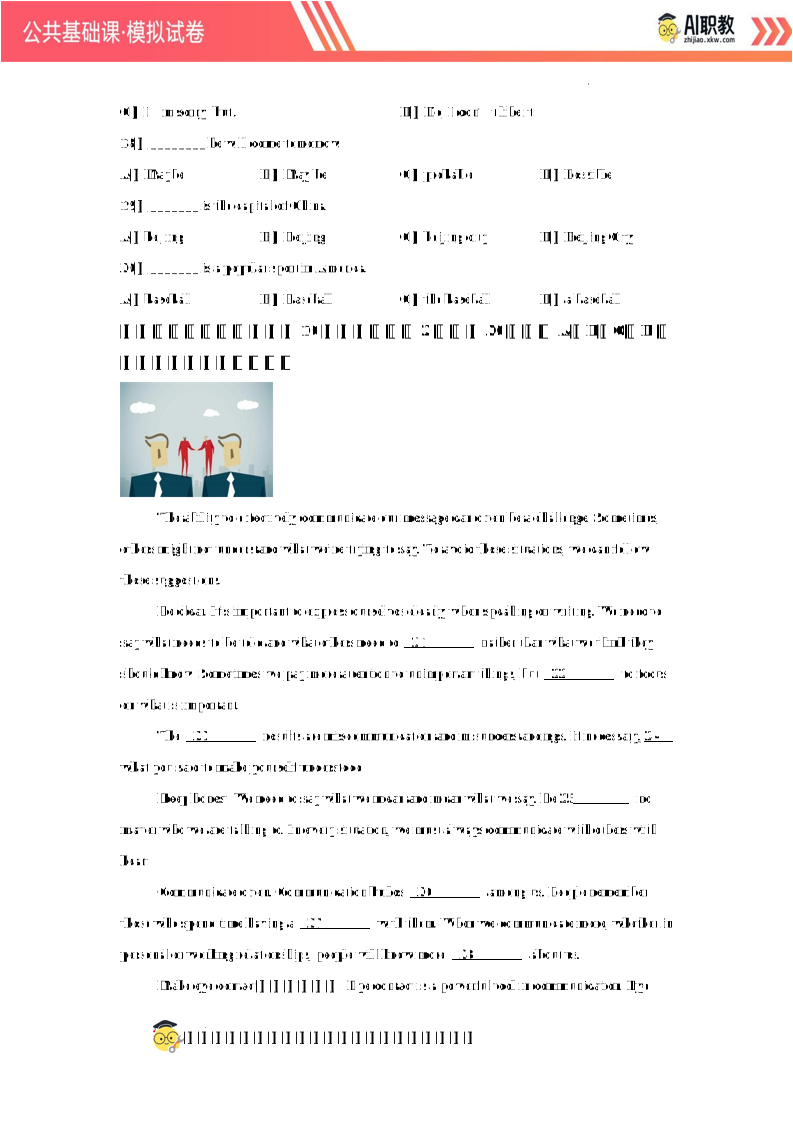
The ability to effectively communicate our message can often be a challenge. Sometimes, others might not understand what we’re trying to say. To avoid these situations, we can follow these suggestions.
Be clear. It’s important to express ourselves clearly when speaking or writing. We need to say what needs to be told and what others need to 21 rather than what we think they should know. Sometimes we pay more attention to unimportant things, but 22 to focus on what is important.
The 23 results are miscommunication and misunderstandings. If necessary, 24 what you said to make yourself understood.
Keep honest. We need to say what we mean and mean what we say. Be 25 no matter who we are talking to. In every situation, we must always communicate with others with heart.
Communicate often. Communication builds 26 among us. People remember those who spend time having a 27 with them. When we communicate more, whether in personal or working relationships, people will know more 28 about us.
Make eye contact(眼神交流). Eye contact is a powerful tool in communication. Eye contact helps to 29 trust and connections with others. It 30 we want to join them, and we are interested in them. Eye contact also helps us know how others answer our messages.
21.A.avoid B.know C.bear D.study
22.A.decide B.forget C.hope D.want
23.A.important B.necessary C.natural D.sudden
24.A.spread B.repeat C.remember D.choose
25.A.honest B.proud C.silent D.excited
26.A.habits B.experiences C.thoughts D.relationships
27.A.meeting B.conversation C.problem D.fight
28.A.clearly B.patiently C.politely D.simply
29.A.give off B.set up C.take on D.put away
30.A.happens B.appears C.means D.Believes
四、阅读理解题(本题有10小题, 每小题2分, 共20分)。从A、B、C、D四个选项中选出最佳答案, 并将其填在答题卡上相应位置。
A
In England, people often talk about the weather because you can experience four seasons in one day. In the morning the weather is warm just like in spring. An hour later black clouds come and then it rains hard. The weather gets a little cold. In the late afternoon the sky will be sunny, the sun will begin to shine, and it will be summer at this time of a day.
In England, you can also have summer in winter, or have winter in summer. So in winter you can swim sometimes, and in summer sometimes you should take warm clothes.
When you go to England, you will see that some English people usually take an umbrella or a raincoat with them on a sunny morning, but you should not laugh at them. If you don’t take an umbrella or a raincoat, you will regret later in the day.
31.Why do people in England often talk about the weather?
A.Because they are interested in it.
B.Because the weather changes a lot in a day.
C.Because the weather is always good.
D.Because they don’t like other topics.
32.What does “experience four seasons in one day” mean?
A.The weather changes quickly and greatly in one day.
B.There are really four seasons in one day.
C.English people enjoy the four seasons.
D.The seasons are very short in England.
33.What might you need in an English summer?
A.Only T-shirts and shorts.
B.Only warm clothes.
C.Both an umbrella and warm clothes.
D.Only an umbrella.
34.Why do English people often take an umbrella on a sunny day?
A.Because they are afraid of the sun.
B.Because it might rain later.
C.Because it is a fashion.
D.Because they always forget to put it down.
35.What is the best title for this passage?
A.The Four Seasons in England
B.The Weather in England
C.English People’s Habits
D.How to Talk about Weather
B
Cultural differences are everywhere, and greetings are a prime example. In Western cultures like the United States, a firm handshake is common when meeting someone. People usually maintain eye contact and smile while shaking hands. It’s a straightforward way to show respect and friendliness.
In contrast, in Japan, bowing is the traditional greeting. The depth of the bow often indicates the level of respect. A deeper bow is given to someone of higher status. Facial expressions are also important; a polite smile is always expected.
In some Middle Eastern cultures, a kiss on the cheek is a typical greeting between friends. However, the number of kisses can vary from one to three, depending on the region and the relationship between the people.
These differences in greetings show how unique each culture is. Understanding them helps us communicate better and avoid misunderstandings when interacting with people from different backgrounds.
36.What is a common greeting in the United States?
A.Bowing. B.Kissing on the cheek. C.A firm handshake. D.Hugging.
37.In Japan,what does the depth of a bow represent?
A.The person’s mood. B.The level of respect.
C.The person’s age. D.The person’s height.
38.How many kisses might there be in a Middle-Eastern greeting?
A.From two to five. B.From one to five.
C.From one to three. D.From three to five.
39.Why is it important to understand cultural differences in greetings?
A.To make more money. B.To communicate better and avoid misunderstandings.
C.To show off. D.To change other cultures.
40.Which of the following statements is true according to the passage?
A.All cultures have the same greeting.
B.In Japan, a shallow bow is for someone of higher status.
C.Cultural differences in greetings are significant.
D.There are no facial expressions in greetings.
学科网(北京)股份有限公司原创精品资源学科网独家享有版权,侵权必究!
学科网(北京)股份有限公司
$
资源预览图

1

2
3

由于学科网是一个信息分享及获取的平台,不确保部分用户上传资料的 来源及知识产权归属。如您发现相关资料侵犯您的合法权益,请联系学科网,我们核实后将及时进行处理。