Unit2 语法讲解及习题:专有名词 & 并列连词 and but so -2025-2026学年沪教版英语七年级下册
2026-02-09
|
6页
|
834人阅读
|
44人下载
普通
摘要:
该初中英语知识清单系统梳理了沪教七下Unit2核心语法,涵盖专有名词和并列连词and/but/so两大知识范畴,搭建了从“定义解析”到“用法规则”再到“高频考点”的递进式学习支架。
清单通过“用法分类表”和“解题技巧口诀”构建知识体系,如专有名词按“基础规则-特定指代-定冠词搭配”分类,并列连词提炼“先判逻辑再选连词”技巧,培养学生语言能力和思维品质。设计“大小写改错”“连词填空”等分层练习,答案附详细解析,助力学生自主学习,教师可直接用于课堂巩固,提升教学效率。
内容正文:
沪教英语七下 Unit2 语法讲解及习题
专有名词 & 并列连词 and / but / so
一、专有名词(Proper Nouns)
1. 定义
专有名词表示特定、唯一的人、地点、机构、节日、月份、星期、历史事件等,与普通名词相对,具有独一性,是七下英语基础语法核心考点。
2. 核心用法
用法分类
规则说明
例句
① 基础规则
专有名词无论在句中任何位置,首字母必须大写;句首单词首字母也需大写
Paris is a beautiful city. 巴黎是一座美丽的城市。
② 特定指代
人名、称呼+人名(如Uncle Li)、国家/城市/地名/街道、月份/星期/中外节日、机构/赛事名称,均需大写
I visited Uncle Li last week. 我上周看望了李叔叔。
The Spring Festival is in January or February. 春节在一月或二月。
③ 定冠词搭配
普通名词构成的专有名词前加the(the不大写),单个专有名词一般不加the
We visited the Palace Museum. 我们参观了故宫博物院。
Paris is in France. 巴黎在法国。
3. 七下高频考点提醒
七下阶段 考查基础大写规则和常见专有名词(月份、星期、节日、常见地名/人名、知名建筑) 。
二、并列连词 and / but / so
1. 定义
并列连词用来连接语法地位平等的词、短语或简单句,表达并列、转折、因果三种核心逻辑关系,是七下连词考查重点。
2. 用法详解
连词
逻辑关系
核心用法
例句
and
并列/顺承
1. 连接并列的名词/形容词/动词 2. 连接连续的动作,表“然后”
I like English and Maths.(并列名词)
We got up early and went to school.(顺承动作)
but
转折/对比
前后语义相反、相对或出乎意料,表“但是、然而”
The bag is old but useful.(形容词转折)
so
因果(结果)
前因后果,前句表原因,后句表结果,表“因此、所以”
It was late, so we went home. 天晚了,所以我们回家了。
3. 解题核心技巧
先判逻辑,再选连词
并列事物/顺承动作 → and
语义相反/出乎意料 → but
前因后果(原因→结果) → so
三、练习题
(一)专有名词大小写改错
1. last month, i went to shanghai to visit aunt wang.
__________ __________ __________ __________ __________ __________ __________ __________ __________ __________ __________ ___
2. we will go to the summer palace this sunday.
__________ __________ __________ __________ __________ __________ __________ __________ __________ __________ __________ ___
3. i learn a lot about the tang dynasty at school.
__________ __________ __________ __________ __________ __________ __________ __________ __________ __________ __________ ___
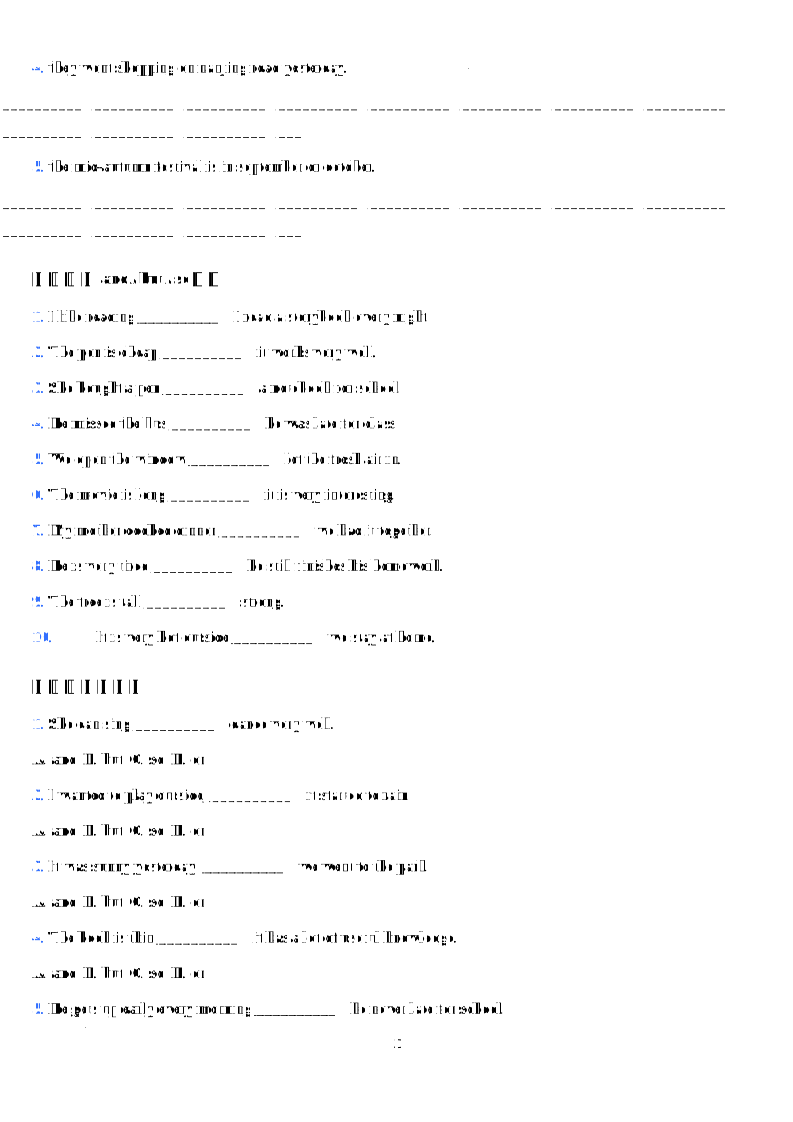
4. they went shopping on nanjing road yesterday.
__________ __________ __________ __________ __________ __________ __________ __________ __________ __________ __________ ___
5. the mid-autumn festival is in september or october.
__________ __________ __________ __________ __________ __________ __________ __________ __________ __________ __________ ___
(二)用 and / but / so 填空
1. I like reading __________ I read a storybook every night.
2. The pen is cheap __________ it works very well.
3. She bought a pen __________ a notebook for school.
4. He missed the bus __________ he was late for class.
5. We open the window __________ let the fresh air in.
6. The movie is long __________ it is very interesting.
7. My mother cooked dinner __________ we had it together.
8. He is very tired __________ he still finishes his homework.
9. The tree is tall __________ strong.
10. It is very hot outside __________ we stay at home.
(三)单项选择
1. She can sing __________ dance very well.
A. and B. but C. so D. or
2. I wanted to play outside, __________ it started to rain.
A. and B. but C. so D. or
3. It was sunny yesterday, __________ we went to the park.
A. and B. but C. so D. or
4. The book is thin __________ it has a lot of useful knowledge.
A. and B. but C. so D. or
5. He gets up early every morning __________ he never late for school.
A. and B. but C. so D. or
6. We finish our homework __________ watch TV for ten minutes.
A. and B. but C. so D. or
7. The classroom is small __________ it’s very clean.
A. and B. but C. so D. or
8. I lost my key, __________ I can’t open the door.
A. and B. but C. so D. or
9. My father likes tea __________ my mother likes coffee.
A. and B. but C. so D. or
10. She studies hard __________ she gets good grades every time.
A. and B. but C. so D. or
(四)同义句转换
1. I was busy, so I didn’t go to the party.
I was busy. __________ I didn’t go to the party.
2. The girl is short, but she can run very fast.
__________ the girl is short, she can run very fast.
3. He is hungry, so he eats a big bowl of rice.
He is hungry. __________ he eats a big bowl of rice.
4. I like playing basketball, and I also like playing football.
I like playing basketball __________ football.
5. The bag is heavy, but she carries it by herself.
__________ the bag is heavy, she carries it by herself.
四、答案与详细解析
(一)专有名词改错
1. Last month, I went to Shanghai to visit Aunt Wang.
解析:月份(month前的具体月份/统称)、句首单词、城市、称呼+人名,均需大写。
2. We will go to the Summer Palace this Sunday.
解析:普通名词构成的景点名称首字母大写,星期首字母大写。
3. I learn a lot about the Tang Dynasty at school.
解析:朝代名称属于专有名词,首字母大写。
4. They went shopping on Nanjing Road yesterday.
解析:街道名称为专有名词,首字母大写。
5. The Mid-Autumn Festival is in September or October.
解析:中国传统节日、月份均为专有名词,首字母大写。
(二)用 and / but / so 填空
1. so 解析:前因(喜欢阅读)后果(每晚读故事书),表因果用so。
2. but 解析:前后语义相反(便宜但好用),表转折用but。
3. and 解析:连接并列名词pen和notebook,表并列用and。
4. so 解析:前因(错过公交)后果(上课迟到),表因果用so。
5. and 解析:连接连续动作open和let,表顺承用and。
6. but 解析:前后语义相反(长但有趣),表转折用but。
7. and 解析:连接连续动作cooked和had,表顺承用and。
8. but 解析:前后语义相反(累但完成作业),表转折用but。
9. and 解析:连接并列形容词tall和strong,表并列用and。
10. so 解析:前因(外面热)后果(待在家),表因果用so。
(三)单项选择
1. A 解析:连接并列动词sing和dance,表并列用and。
2. B 解析:前后语义转折(想出去玩但下雨了),用but。
3. C 解析:前因(晴天)后果(去公园),表因果用so。
4. B 解析:前后语义转折(薄但有很多有用知识),用but。
5. C 解析:前因(每天早起)后果(从不迟到),表因果用so。
6. A 解析:连接连续动作finish和watch,表顺承用and。
7. B 解析:前后语义转折(小但干净),用but。
8. C 解析:前因(丢钥匙)后果(打不开门),表因果用so。
9. B 解析:前后语义对比(爸爸喜欢茶,妈妈喜欢咖啡),用but。
10. C 解析:前因(努力学习)后果(每次考高分),表因果用so。
(四)同义句转换
1. So 解析:前因后果,用So(句首大写)引出结果,贴合七下简单句转换要求。
2. Though / Although 解析:but表转折,可转换为Though/Although(虽然),七下核心转换考点,注意句首大写。
3. So 解析:前因(饿)后果(吃一大碗米饭),用So引出结果。
4. and 解析:连接并列的球类名词,用and替代“and also”,精简句子。
5. Though / Although 解析:but表转折,转换为Though/Although,七下高频转换考点。
(
1
)
学科网(北京)股份有限公司
$
资源预览图

1

2
3

相关资源
示范课
由于学科网是一个信息分享及获取的平台,不确保部分用户上传资料的 来源及知识产权归属。如您发现相关资料侵犯您的合法权益,请联系学科网,我们核实后将及时进行处理。