专题6 动词时态和语态及主谓一致(B卷·能力提升)-2026版山东省(春季高考)二轮复习《英语考纲专题练》(原卷版+解析版)
2026-02-03
|
2份
|
17页
|
145人阅读
|
3人下载
内容正文:
编写说明:2026版山东省(春季高考)二轮复习《英语考纲专题练》依据最新版《中等职业学校英语课程标准》、省编复习指导及历年真题编写。本资料紧扣历年考试趋势和最新考试动态,聚焦高频考点,精讲精练,共覆盖包括各类语法和题型的15个专题,助力考生高效复习。同时,为构建完整学习体系,每个专题均配套对应讲义和AB卷习题,满足多样化学习需求。
本专题是2026版山东省(春季高考)二轮复习《英语考纲专题练》的第6个专题,内容为动词时态和语态及主谓一致。
2026版山东省(春季高考)二轮复习《英语考纲专题练》
专题6 动词时态和语态及主谓一致(B卷·能力提升)
考试时间:20分钟 满分:100分
班级 姓名 学号 成绩
一、单项选择(共20小题;每小题4分,满分 80分)
从每题所给的A、B、C和D四个选项中,选出最佳选项。
1. By the time we arrived at the station, the train _______ for 10 minutes.
A. had left
B. has left
C. left
D. was leaving
2. The teacher, along with her students, _______ the experiment in the lab.
A. conduct
B. conducts
C. is conducting
D. are conducting
3. A new bridge _______ across the river next year to improve transportation.
A. builds
B. will build
C. will be built
D. has been built
4. Neither the students nor the teacher _______ the solution to the problem yet.
A. knows
B. know
C. has known
D. have known
5. Listen! The baby _______ in the next room.
A. cries
B. cried
C. is crying
D. has cried
6. The number of books in the library _______ larger than last year.
A. is B. are C. has D. have
7. When I got home, my mother _______ dinner for the family.
A. cooks
B. cooked
C. was cooking
D. has cooked
8. The injured man _______ to the hospital by ambulance an hour ago.
A. takes
B. took
C. was taken
D. has taken
9. Not only the students but also the teacher _______ the importance of recycling.
A. understands
B. understand
C. is understanding
D. are understanding
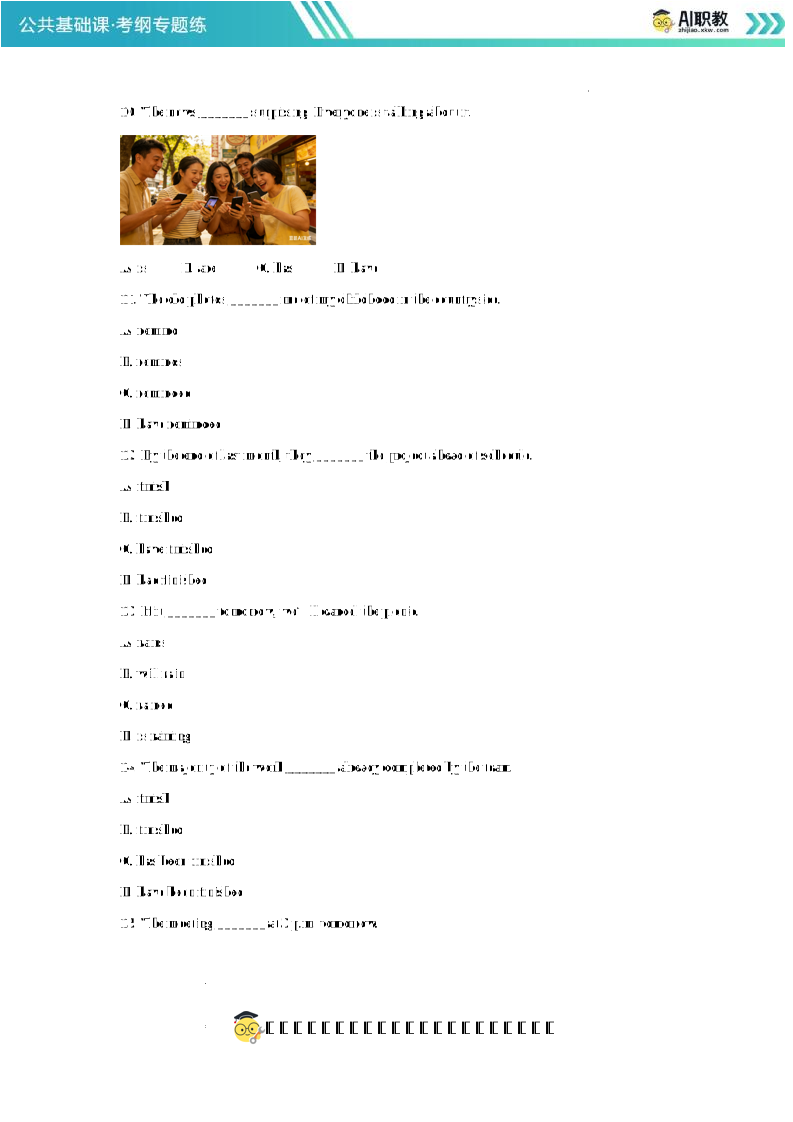
10. The news _______ surprising. Everyone is talking about it.
A. is B. are C. has D. have
11. The old photos _______ me of my childhood in the countryside.
A. remind
B. reminds
C. reminded
D. have reminded
12. By the end of last month, they _______ the project ahead of schedule.
A. finish
B. finished
C. have finished
D. had finished
13. If it _______ tomorrow, we’ll cancel the picnic.
A. rains
B. will rain
C. rained
D. is raining
14. The majority of the work _______ already completed by the team.
A. finish
B. finished
C. has been finished
D. have been finished
15. The meeting _______ at 3 p.m. tomorrow.
A. will hold
B. is held
C. will be held
D. holds
16. The teacher asked us if we _______ the assignment on time.
A. finish
B. finished
C. had finished
D. have finished
17. There _______ a pen, two pencils, and a ruler on the desk.
A. is
B. are
C. was
D. were
18. Neither John nor his friends _______ the movie. They prefer action films.
A. like
B. likes
C. is liking
D. are liking
19. The broken window _______ by the wind last night.
A. breaks
B. broke
C. was broken
D. is broken
20. By 2025, electric cars _______ 50% of all vehicles sold worldwide.
A. will account for
B. account for
C. have accounted for
D. are accounting for
二、阅读理解(阅读下列短文,短文后面有五个小题,从每小题所给的四个选项中,选出一个最佳选项。未选、错选或多选均不得分。共5小题,每小题2分, 满分10分。)
Every school day, we use schoolbags to carry all of our things to school. They are a big part of our lives. But have you ever thought about the history of the schoolbag?
In the Han Dynasty (汉朝)students in old-style private schools used bamboo boxes to carry books to school. People consider the bamboo boxes to be the earliest schoolbags. They were usually two or three layers(层)in the box. Kids put different things like books, brushes,ink stones (砚)and paper in the boxes.
Hundreds of years later, people developed a new kind of schoolbag called the budai, or the "hip-pocket". The budai was lighter than the bamboo box. With the founding (成立) of the People's Republic of China, military rucksacks(军用帆布包)became popular. Many people carried them when they were in school. Ask your grandparents or parents about these bags. Maybe they can tell you about their experiences of carrying them when they were in school.
A new style of schoolbags has appeared in recent years. Many of them have colourful and fashionable designs(时尚的设计)on them, such as pictures of cartoons or pop stars. And they are more comfortable to use. Some students pull wheeled bags filled with heavy textbooks and others carry backpacks.
Schoolbags are still changing. Can you imagine what future schoolbags will be like?
21. Schoolbags in the Han Dynasty were made of
A. cloth B. paper C. plastic D. bamboo
22. Which is NOT true according to the passage?
A. Military rucksacks were popular in the 1950s.
B. The budai was heavier than the bamboo box.
C. There are some pictures on the new style of schoolbags.
D. Schoolbags have changed a lot.
23. To carry heavy textbooks, students would like to use.
A. wheeled bags
B. military rucksacks
C. bamboo boxes
D. the budai
24. We can usually read the article in
A. a letter
C. a newspaper
B. a guidebook
D. a notice
25. The purpose of the article is
A. to tell us how to use schoolbags
B. to explain why we use schoolbags
C. to introduce the importance of schoolbags
D. to introduce the development of schoolbags
三、短文填空: 本题共10小题,每小题1分,共10分。阅读下面短文,在空白处填入1个适当的单词或括号内单词的正确形式。
Last week, our school organized a tree-planting activity to celebrate Arbor Day. On the morning of the event, all the students (26)______ (gather) at the school gate. We (27)______ (divide) into several groups, and each group (28)______ (receive) a sapling and gardening tools.
As we (29)______ (walk) to the park, I noticed some volunteers (30)______ (clean) up the roadside trash. They inspired us to take action. Upon arrival, we (31)______ (start) digging holes and planting trees. The soil was hard, but everyone (32)______ (work) enthusiastically.
By lunchtime, we (33)______ (plant) over 50 trees. The principal praised our efforts and encouraged us to protect the environment in daily life. One student remarked, "It’s meaningful to contribute to our community."This activity taught me that teamwork and perseverance (34)______ (make) a difference. I (35)______ (decide) to join more volunteer programs in the future.
原创精品资源学科网独家享有版权,侵权必究!
学科网(北京)股份有限公司
学科网(北京)股份有限公司
$
编写说明:2026版山东省(春季高考)二轮复习《英语考纲专题练》依据最新版《中等职业学校英语课程标准》、省编复习指导及历年真题编写。本资料紧扣历年考试趋势和最新考试动态,聚焦高频考点,精讲精练,共覆盖包括各类语法和题型的15个专题,助力考生高效复习。同时,为构建完整学习体系,每个专题均配套对应讲义和AB卷习题,满足多样化学习需求。
本专题是2026版山东省(春季高考)二轮复习《英语考纲专题练》的第6个专题,内容为动词时态和语态及主谓一致。
2026版山东省(春季高考)二轮复习《英语考纲专题练》
专题6 动词时态和语态及主谓一致(B卷·能力提升)
考试时间:20分钟 满分:100分
班级 姓名 学号 成绩
一、单项选择(共20小题;每小题4分,满分 80分)
从每题所给的A、B、C和D四个选项中,选出最佳选项。
1. By the time we arrived at the station, the train _______ for 10 minutes.
A. had left
B. has left
C. left
D. was leaving
【答案】A
【解析】考查过去完成时。“By the time we arrived at the station”(当我们到达车站时)是过去时间点,主句动作“火车离开”发生在“到达”之前(过去的过去),且“for 10 minutes”强调动作持续到过去某时,需用过去完成时(had + 过去分词)。leave的过去分词为left,故选A(had left)。(注:leave为短暂性动词,严格应与延续性动词搭配,但选项中无had been away,此处按语法结构选A。)
2. The teacher, along with her students, _______ the experiment in the lab.
A. conduct
B. conducts
C. is conducting
D. are conducting
【答案】C
【解析】考查主谓一致和现在进行时。“along with”连接主语时,谓语与前面的主语(the teacher,单数)一致;“in the lab”暗示动作正在进行,用现在进行时(is/was + 现在分词)。结合语境,描述当前或近期正在发生的动作,用is conducting,选C。
3. A new bridge _______ across the river next year to improve transportation.
A. builds
B. will build
C. will be built
D. has been built
【答案】C
【解析】考查一般将来时的被动语态。“next year”(明年)表将来,桥是“被建造”,需用被动语态。一般将来时被动结构为“will be + 过去分词”,build的过去分词为built,故选C(will be built)。
4. Neither the students nor the teacher _______ the solution to the problem yet.
A. knows
B. know
C. has known
D. have known
【答案】C
【解析】考查主谓一致和现在完成时。“neither...nor...”遵循“就近原则”,谓语与the teacher(单数)一致;“yet”(还)提示动作未完成,用现在完成时(has/have + 过去分词)。主语单数,故选C(has known)。
5. Listen! The baby _______ in the next room.
A. cries
B. cried
C. is crying
D. has cried
【答案】C
【解析】考查现在进行时。“Listen!”(听!)提示动作正在进行,用现在进行时(am/is/are + 现在分词)。主语the baby是第三人称单数,故选C(is crying)。
6. The number of books in the library _______ larger than last year.
A. is B. are C. has D. have
【答案】A
【解析】考查主谓一致。“The number of + 复数名词”作主语时,谓语用单数(表示“数量”)。larger than last year是比较级,系动词用is,选A。
7. When I got home, my mother _______ dinner for the family.
A. cooks
B. cooked
C. was cooking
D. has cooked
【答案】C
【解析】考查过去进行时。“When I got home”(当我到家时)是过去时间点,主句强调“到家时妈妈正在做饭”的持续动作,用过去进行时(was/were + 现在分词)。主语my mother是单数,故选C(was cooking)。
8. The injured man _______ to the hospital by ambulance an hour ago.
A. takes
B. took
C. was taken
D. has taken
【答案】C
【解析】考查一般过去时的被动语态。“an hour ago”(一小时前)表过去,受伤男子“被救护车送往医院”,用被动语态。一般过去时被动结构为“was/were + 过去分词”,主语man是单数,故选C(was taken)。
9. Not only the students but also the teacher _______ the importance of recycling.
A. understands
B. understand
C. is understanding
D. are understanding
【答案】A
【解析】考查主谓一致和一般现在时。“not only...but also...”遵循“就近原则”,谓语与the teacher(单数)一致;陈述客观事实(理解回收的重要性),用一般现在时(动词三单)。understand的三单为understands,选A。
10. The news _______ surprising. Everyone is talking about it.
A. is B. are C. has D. have
【答案】A
【解析】考查主谓一致。news(新闻)是不可数名词,谓语用单数。系动词用is,选A(is)。
11. The old photos _______ me of my childhood in the countryside.
A. remind
B. reminds
C. reminded
D. have reminded
【答案】A
【解析】考查一般现在时。主语the old photos(复数),陈述客观事实(照片让我想起童年),用一般现在时(动词原形)。remind符合,选A。
12. By the end of last month, they _______ the project ahead of schedule.
A. finish
B. finished
C. have finished
D. had finished
【答案】D
【解析】考查过去完成时。“By the end of last month”(到上个月末)是过去时间点,主句动作“完成项目”发生在该时间点之前(过去的过去),用过去完成时(had + 过去分词)。finish的过去分词为finished,选D(had finished)。
13. If it _______ tomorrow, we’ll cancel the picnic.
A. rains
B. will rain
C. rained
D. is raining
【答案】A
【解析】考查条件状语从句的时态。if引导的条件状语从句中,主句用一般将来时(we’ll cancel),从句用一般现在时表将来(rains),即“主将从现”,选A。
14. The majority of the work _______ already completed by the team.
A. finish
B. finished
C. has been finished
D. have been finished
【答案】C
【解析】考查主谓一致和现在完成时的被动语态。“The majority of the work”中work(工作)是不可数名词,谓语用单数;“already”(已经)提示现在完成时,且“工作被完成”用被动语态。结构为“has been + 过去分词”,finish的过去分词为finished,选C(has been finished)。
15. The meeting _______ at 3 p.m. tomorrow.
A. will hold
B. is held
C. will be held
D. Holds
【答案】C
【解析】考查一般将来时的被动语态。“at 3 p.m. tomorrow”(明天下午3点)表将来,会议“被举行”,用被动语态。一般将来时被动结构为“will be + 过去分词”,hold的过去分词为held,选C(will be held)。
16. The teacher asked us if we _______ the assignment on time.
A. finish
B. finished
C. had finished
D. have finished
【答案】C
【解析】考查过去完成时。主句“asked”(过去时),从句动作“按时完成作业”发生在“asked”之前(过去的过去),用过去完成时(had + 过去分词)。finish的过去分词为finished,选C(had finished)。
17. There _______ a pen, two pencils, and a ruler on the desk.
A. is
B. are
C. was
D. Were
【答案】A
【解析】考查there be句型的就近原则。be动词的单复数由最近的名词决定,最近的是“a pen”(单数),且描述当前状态用一般现在时,故选A(is)。
18. Neither John nor his friends _______ the movie. They prefer action films.
A. like
B. likes
C. is liking
D. are liking
【答案】A
【解析】考查主谓一致和一般现在时。“neither...nor...”遵循“就近原则”,谓语与his friends(复数)一致;陈述客观事实(不喜欢这部电影),用一般现在时(动词原形)。like符合,选A。
19. The broken window _______ by the wind last night.
A. breaks
B. broke
C. was broken
D. is broken
【答案】C
【解析】考查一般过去时的被动语态。“last night”(昨晚)表过去,破窗户“被风打破”,用被动语态。一般过去时被动结构为“was/were + 过去分词”,主语window是单数,故选C(was broken)。
20. By 2025, electric cars _______ 50% of all vehicles sold worldwide.
A. will account for
B. account for
C. have accounted for
D. are accounting for
【答案】A
【解析】考查一般将来时。“By 2025”(到2025年)表将来,电动车“将占全球销量的50%”,用一般将来时(will + 动词原形)。account for(占比)符合,选A(will account for)。
二、阅读理解(阅读下列短文,短文后面有五个小题,从每小题所给的四个选项中,选出一个最佳选项。未选、错选或多选均不得分。共5小题,每小题2分, 满分10分。)
Every school day, we use schoolbags to carry all of our things to school. They are a big part of our lives. But have you ever thought about the history of the schoolbag?
In the Han Dynasty (汉朝)students in old-style private schools used bamboo boxes to carry books to school. People consider the bamboo boxes to be the earliest schoolbags. They were usually two or three layers(层)in the box. Kids put different things like books, brushes,ink stones (砚)and paper in the boxes.
Hundreds of years later, people developed a new kind of schoolbag called the budai, or the "hip-pocket". The budai was lighter than the bamboo box. With the founding (成立) of the People's Republic of China, military rucksacks(军用帆布包)became popular. Many people carried them when they were in school. Ask your grandparents or parents about these bags. Maybe they can tell you about their experiences of carrying them when they were in school.
A new style of schoolbags has appeared in recent years. Many of them have colourful and fashionable designs(时尚的设计)on them, such as pictures of cartoons or pop stars. And they are more comfortable to use. Some students pull wheeled bags filled with heavy textbooks and others carry backpacks.
Schoolbags are still changing. Can you imagine what future schoolbags will be like?
21. Schoolbags in the Han Dynasty were made of
A. cloth B. paper C. plastic D. bamboo
22. Which is NOT true according to the passage?
A. Military rucksacks were popular in the 1950s.
B. The budai was heavier than the bamboo box.
C. There are some pictures on the new style of schoolbags.
D. Schoolbags have changed a lot.
23. To carry heavy textbooks, students would like to use.
A. wheeled bags
B. military rucksacks
C. bamboo boxes
D. the budai
24. We can usually read the article in
A. a letter
C. a newspaper
B. a guidebook
D. a notice
25. The purpose of the article is
A. to tell us how to use schoolbags
B. to explain why we use schoolbags
C. to introduce the importance of schoolbags
D. to introduce the development of schoolbags
【答案】21. D;22. B;23. A;24. C;25. D
【导语】本文是一篇说明文,按时间顺序介绍了书包的发展历史:从汉代的竹制书箱,到后来的“布袋”,新中国成立后的军用帆布包,再到近年出现的带轮书包和新款背包,展现了书包从实用到时尚、从笨重到轻便的演变过程,最后提出对未来书包的想象。
【解析】
21. 细节理解题(物品材料识别) 根据第二段“In the Han Dynasty...students...used bamboo boxes to carry books to school. People consider the bamboo boxes to be the earliest schoolbags.”(汉代学生用竹箱装书,竹箱被认为是最早的书包)可知,汉代书包的材料是竹子。选项D(bamboo)正确。
22. 细节判断题(信息正误辨析)A项:原文第三段“With the founding of the People's Republic of China (1949年), military rucksacks became popular.”(新中国成立后军用帆布包流行),可推断20世纪50年代(建国初期)流行,A正确。B项:原文第三段“The budai was lighter than the bamboo box.”(布袋比竹箱轻),B项“布袋比竹箱重”与原文矛盾,错误。C项:第四段“Many of them have...pictures of cartoons or pop stars.”(新款书包有卡通或明星图片),C正确。D项:全文从汉代到现代介绍书包变化,最后“Schoolbags are still changing.”(书包仍在变化),D正确。故选B.
23. 细节理解题(物品用途匹配) 第四段明确提到“Some students pull wheeled bags filled with heavy textbooks”(一些学生拉带轮的书包装重课本),故选A(wheeled bags)。
24. 文章出处题(文体与载体判断) 本文是对书包发展历史的客观介绍,属于说明性文字,常见于报纸(newspaper)的文化或生活栏目。选项C(a newspaper)正确。其他选项:letter(信件)、guidebook(指南)、notice(通知)均不符合文体特征。
25. 主旨大意题(写作目的归纳) 全文围绕“书包的历史发展”展开:汉代竹箱→布袋→军用帆布包→新款带轮书包/背包,最后提及未来书包的想象。核心是“介绍书包的演变过程”。选项D(to introduce the development of schoolbags)正确。其他选项:A(如何使用书包)、B(为何使用书包)、C(书包的重要性)均未体现“历史发展”这一主线。
三、短文填空: 本题共10小题,每小题1分,共10分。阅读下面短文,在空白处填入1个适当的单词或括号内单词的正确形式。
Last week, our school organized a tree-planting activity to celebrate Arbor Day. On the morning of the event, all the students (26)______ (gather) at the school gate. We (27)______ (divide) into several groups, and each group (28)______ (receive) a sapling and gardening tools.
As we (29)______ (walk) to the park, I noticed some volunteers (30)______ (clean) up the roadside trash. They inspired us to take action. Upon arrival, we (31)______ (start) digging holes and planting trees. The soil was hard, but everyone (32)______ (work) enthusiastically.
By lunchtime, we (33)______ (plant) over 50 trees. The principal praised our efforts and encouraged us to protect the environment in daily life. One student remarked, "It’s meaningful to contribute to our community."This activity taught me that teamwork and perseverance (34)______ (make) a difference. I (35)______ (decide) to join more volunteer programs in the future.
【参考答案与解析】:
26.gathered -- 一般过去时 -- 时间状语“On the morning of the event”(活动当天早上)明确动作发生在过去,故用一般过去时。gather的过去式为gathered。
27.were divided -- 一般过去时的被动语态 -- “We”与“divide”是被动关系(被分成小组),动作发生在过去,主语we为复数,故用were divided。
28.received -- 一般过去时 -- 描述过去分组后“每组收到树苗和工具”的动作,主语each group(单数)不影响时态,用一般过去时。receive的过去式为received。
29.were walking -- 过去进行时 -- “As we...to the park”表示“当我们正走向公园时”,强调过去某一动作(noticed)发生时另一动作正在进行,主语we为复数,故用were walking。
30.cleaning -- 现在分词作宾补 -- “notice sb. doing sth.”表示“注意到某人正在做某事”,volunteers与clean是主动关系,故用cleaning。
31.started -- 一般过去时 -- “Upon arrival”(到达后)描述过去立即开始的动作,用一般过去时。start的过去式为started。
32.worked -- 一般过去时 -- 主语everyone(单数)在过去活动中“热情工作”,用一般过去时。work的过去式为worked。
33.had planted -- 过去完成时 -- 时间状语“By lunchtime”(到午餐时间为止)表示“过去的过去”,动作“种树”在午餐前已完成,故用had planted。34.make -- 一般现在时(客观真理) -- “团队合作和毅力能带来改变”是客观事实,主语teamwork and perseverance(复数)用动词原形make。
35.decided -- 一般过去时 -- 描述活动结束后“我决定未来参加更多志愿项目”的过去动作,用一般过去时。decide的过去式为decided。
原创精品资源学科网独家享有版权,侵权必究!
学科网(北京)股份有限公司
学科网(北京)股份有限公司
$
资源预览图

1

2
3

由于学科网是一个信息分享及获取的平台,不确保部分用户上传资料的 来源及知识产权归属。如您发现相关资料侵犯您的合法权益,请联系学科网,我们核实后将及时进行处理。