Unit 8 Let’s Communicate! 知识清单 2025-2026学年人教版八年级英语上册
2026-01-28
|
6页
|
224人阅读
|
61人下载
普通
资源信息
| 学段 | 初中 |
|---|---|
| 学科 | 英语 |
| 教材版本 | 初中英语人教版八年级上册 |
| 年级 | 八年级 |
| 章节 | Unit 8 Let's Communicate! |
| 类型 | 学案-知识清单 |
| 知识点 | - |
| 使用场景 | 同步教学-单元练习 |
| 学年 | 2025-2026 |
| 地区(省份) | 陕西省 |
| 地区(市) | - |
| 地区(区县) | - |
| 文件格式 | DOCX |
| 文件大小 | 37 KB |
| 发布时间 | 2026-01-28 |
| 更新时间 | 2026-01-28 |
| 作者 | xkw_059406787 |
| 品牌系列 | - |
| 审核时间 | 2026-01-27 |
| 下载链接 | https://m.zxxk.com/soft/56180802.html |
| 价格 | 0.00储值(1储值=1元) |
| 来源 | 学科网 |
内容正文:
Unit 8 Let’s Communicate! 知识清单
一、单元核心主题
人际沟通与交流方式——学习不同沟通方式、表达观点、提出建议及解决沟通问题。
二、核心词汇(分主题整理)
1. 沟通方式类
英文
中文
扩展/搭配
communicate
沟通,交流
v. communication (n.)
talk/speak
说话,讲话
talk with/to, speak English
chat
聊天
have a chat, chat online
discuss
讨论
discuss a problem
whisper
低声说,耳语
whisper to sb.
shout
喊叫
shout at sb. (生气)
text (v.)
发短信
text a message
email (v./n.)
发邮件;电子邮件
send an email
call/phone (v.)
打电话
make a phone call
face to face
面对面地
communicate face to face
online
在线地
talk online
2. 沟通问题与障碍
英文
中文
相关表达
misunderstand
误解
misunderstanding (n.)
argue
争论
have an argument
trouble/problem
麻烦/问题
have trouble doing sth.
difficult/hard
困难的
It’s hard to understand.
clear
清楚的
make sth. clear
confused
困惑的
feel confused
silent/quiet
沉默的/安静的
keep silent
noise
噪音
too much noise
3. 沟通态度与技巧
英文
中文
用法说明
polite
有礼貌的
impolite (反义)
patient
耐心的
patience (n.)
honest
诚实的
tell the truth
friendly
友好的
unfriendly (反义)
active
积极的
take an active part in
listen carefully
认真听
listen to sb. carefully
explain
解释
explain sth. to sb.
understand
理解
make oneself understood
agree/disagree
同意/不同意
agree with sb.
suggest
建议
suggest doing sth.
apologize
道歉
apologize to sb.
4. 科技与社交沟通
英文
中文
常见场景
social media
社交媒体
use social media
message
信息
leave a message
voice message
语音信息
send a voice message
video call
视频通话
make a video call
group chat
群聊
in a WeChat group chat
post (v./n.)
发布;帖子
post photos online
comment (v./n.)
评论
comment on sth.
emoji
表情符号
use emojis
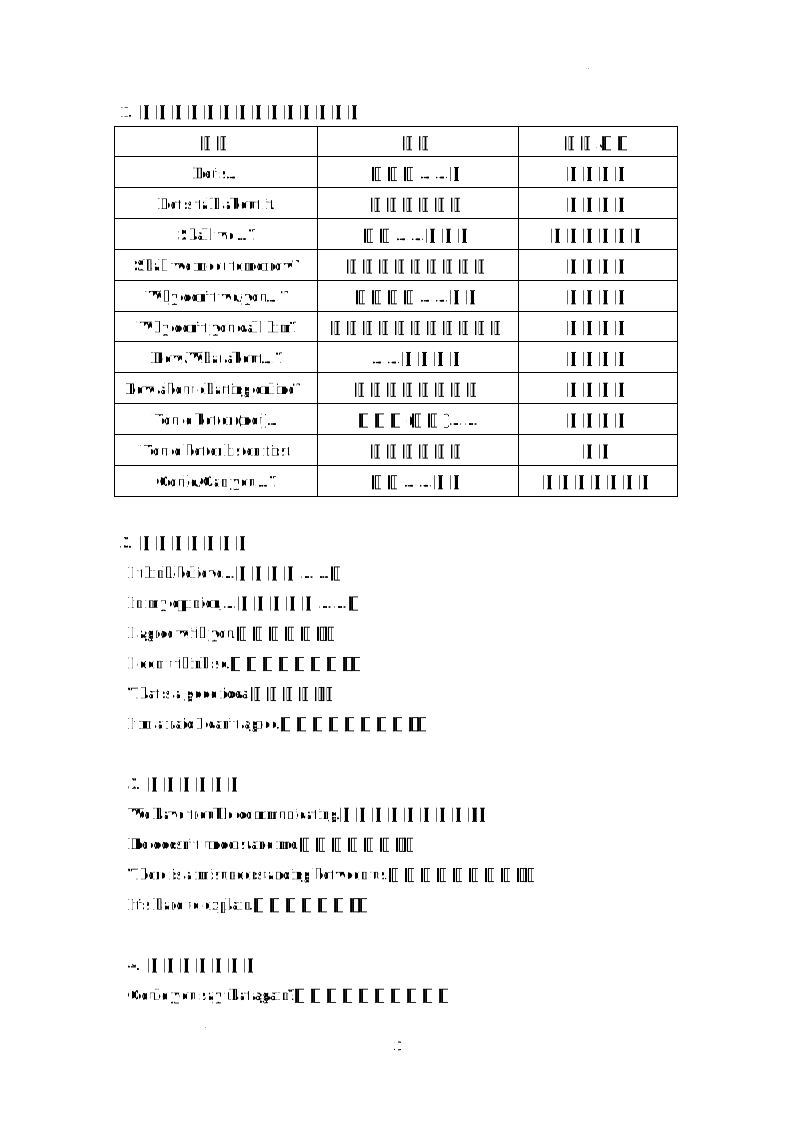
三、重点句型与功能表达
1. 提议与建议(本单元核心功能)
句型
中文
语气/场景
Let’s…
让我们……吧
直接提议
Let’s talk about it.
我们谈谈吧。
解决问题
Shall we…?
我们……好吗?
委婉征求同意
Shall we meet tomorrow?
我们明天见面好吗?
安排见面
Why don’t we/you…?
为什么不……呢?
提出建议
Why don’t you call him?
你为什么不打电话给他?
给出主意
How/What about…?
……怎么样?
提供选择
How about chatting online?
在线聊天怎么样?
建议方式
You’d better (not)…
你最好(不要)……
较强建议
You’d better listen first.
你最好先听。
劝告
Could/Can you…?
你能……吗?
请求对方做某事
2. 表达观点与态度
I think/believe…(我认为……)
In my opinion,…(在我看来……)
I agree with you.(我同意你。)
I don’t think so.(我不这么认为。)
That’s a good idea.(好主意。)
I’m afraid I can’t agree.(恐怕我不能同意。)
3. 描述沟通问题
We have trouble communicating.(我们沟通有困难。)
He doesn’t understand me.(他不理解我。)
There is a misunderstanding between us.(我们之间有误会。)
It’s hard to explain.(这很难解释。)
4. 请求澄清与重复
Could you say that again?(你能再说一遍吗?)
What do you mean?(你是什么意思?)
I didn’t catch that.(我没听清。)
Can you explain it more clearly?(你能解释得更清楚些吗?)
5. 科技沟通常用句
I’ll text you later.(我稍后发短信给你。)
Let’s make a video call.(我们视频通话吧。)
Check your messages.(看看你的信息。)
I posted some photos online.(我在网上发了一些照片。)
四、语法精讲
1. 提建议的多种句型结构(本单元语法重点)
① Let’s + 动词原形
表示“让我们做……”,包括说话者自己。
Let’s discuss this problem together.
Let’s not argue anymore.(否定:Let’s not + 动词原形)
② Shall we + 动词原形?
表示“……好吗?”,征求对方意见,多用于第一人称复数。
Shall we talk after class?
Shall we meet at the park?
③ Why don’t you/we + 动词原形?
表示“为什么不……呢?”,用于提出建议。
Why don’t you call her to apologize?
Why don’t we have a group chat?
④ How/What about + 名词/代词/Ving?
表示“……怎么样?”,提出建议或征求意见。
How about a facetoface talk?
What about sending an email?
⑤ You’d better (not) + 动词原形
表示“你最好(不要)做……”,带有劝告或轻微警告语气。
You’d better listen carefully.
You’d better not shout at others.
2. 连词 so, because, but, and 在沟通中的运用
so(所以):表结果
I was angry, so I didn’t talk to him.
because(因为):表原因
I understood him because he explained clearly.
but(但是):表转折
I want to chat, but I’m busy now.
and(和,而且):表并列或递进
We talked and solved the problem.
注意: because 和 so 不能在同一句中同时使用(中文“因为……所以……”英文二选一)。
3. 动词不定式作宾语
某些动词后常接不定式(to do)作宾语:
want to do, decide to do, try to do, learn to do
I want to talk to you.
We need to communicate better.
五、课本重点情景与语篇分析
Section A 典型对话(解决沟通问题):
A: We had a misunderstanding yesterday.
B: I know. Let’s talk about it now.
A: OK. Why don’t we sit down and have a chat?
B: Good idea. I think we should listen to each other more.
A: I agree. And we’d better not shout next time.
Section B 阅读重点:
主题句识别: “Good communication helps build good relationships.”
细节理解: 有效沟通的技巧(倾听、礼貌、清晰表达等)
观点提炼: 科技如何改变人们的沟通方式
六、易错点与学习提醒
1. “Let’s” 与 “Let us” 的细微区别:
Let’s 包括听话者:Let’s go.(我们一起走。)
Let us 可能不包括听话者:Let us go.(请允许我们走。)
2. “Why don’t you…?” 不是询问原因:
该句型是提建议,不是问“为什么不”。
正确:Why don’t you call him?(建议打电话)
错误回答:Because I’m busy.(应回答:OK, I will.)
3. “How about…?” 与 “What about…?” 的接续:
后接名词、代词或动名词(Ving):
How about you?(代词)
What about going out?(动名词)
4. “had better” 的用法:
后接动词原形,否定为 had better not do。
虽然形式是过去时(had),但表示现在或将来的建议。
缩写:You’d better = You had better
5. “discuss” 的用法:
及物动词,直接接讨论内容:discuss the problem
错误:discuss about the problem(去掉about)
1
学科网(北京)股份有限公司
$
资源预览图

1

2
3

相关资源
由于学科网是一个信息分享及获取的平台,不确保部分用户上传资料的 来源及知识产权归属。如您发现相关资料侵犯您的合法权益,请联系学科网,我们核实后将及时进行处理。