Unit6 知识点讲练2025-2026学年人教版英语七年级上册
2026-01-23
|
6页
|
229人阅读
|
4人下载
普通
资源信息
| 学段 | 初中 |
|---|---|
| 学科 | 英语 |
| 教材版本 | 初中英语人教版七年级上册 |
| 年级 | 七年级 |
| 章节 | Unit 6 A Day in the Life |
| 类型 | 教案-讲义 |
| 知识点 | - |
| 使用场景 | 同步教学-单元练习 |
| 学年 | 2025-2026 |
| 地区(省份) | 安徽省 |
| 地区(市) | 马鞍山市 |
| 地区(区县) | 花山区 |
| 文件格式 | DOCX |
| 文件大小 | 36 KB |
| 发布时间 | 2026-01-23 |
| 更新时间 | 2026-01-23 |
| 作者 | 旻香儿 |
| 品牌系列 | - |
| 审核时间 | 2026-01-23 |
| 下载链接 | https://m.zxxk.com/soft/56109432.html |
| 价格 | 0.50储值(1储值=1元) |
| 来源 | 学科网 |
内容正文:
7A Unit 6 知识点讲练汇编
📚 核心主题:Unit 6 - A Day in the life(一天的生活)
围绕日常作息、时间表达、校园及家庭日常活动展开,聚焦相关词汇、短语、语法及句型的实际运用,助力夯实基础、提升语言应用能力。
一、重点词汇
1. 时间相关
quarter(四分之一;15分钟)、around(大约)、early(早的;早期的)、usually(通常地)、sometimes(有时候)、while(一会儿;一段时间)、weekend(周末)、daily(每日的;日常的)、everyday(每天的;日常的)、bedtime(就寝时间)
2. 动作/物品相关
duty(职责;值班)、shower(淋浴;淋浴器)、dress(穿衣服)、brush((用刷子)刷;刷子)、tooth(牙齿)、breakfast(早餐)、lunch(午餐)、dinner(正餐;主餐)、homework(家庭作业)、stay(停留)、begin(开始)、finish(结束;完成)、prepare(把……准备好;准备)、part(部分)、check(检查)、patient(病人)、free(自由的;有空的)、busy(忙碌的)、quiet(安静的)
3. 其他
routine(常规的;日常的)、saying(谚语;格言)、rise(起床;升起;增长)、raise(抬起;举起;提高)、different(不同的)、special(特殊的)、other(其他的)、profession(职业)、workday(工作日的)、village(乡村)、hospital(医院)、nurse(护士)
二、重点短语动词/固定搭配
✅ 高频必记:
· on duty(值班)、take a shower(淋浴)、get dressed(穿衣服)、be dressed in + 衣服/颜色(穿着……)
· brush one's teeth(刷牙)、have breakfast(吃早餐)、have lunch(吃午饭)、do one's homework(做……的家庭作业)
· go to bed(上床睡觉)、get up(起床)、begin at(开始)、play football(踢足球)、do housework(做家务)
· for a while(暂时;一会儿)、on the weekend/at the weekend(在周末)、on the weekends/at weekends(在周末,泛指)
· have lesson(上课)、take a break/have a rest(休息)、prepare for…(为……做准备)、prepare sth for…(为……把某物准备好)
· an important part of…(……的重要部分)、check on(检查)、be busy with(忙于做某事)、have a good time/have fun(玩得开心)
· pick sb up(接送某人)、on the way(在路上)、try to do something(努力做某事)、keep quiet(保持安静)
· be different from(与……不同)、go to work(去上班)、get off work(下班)、find out(找出;查明)、make use of…(使用……;利用……)
三、重点语法
语法点
具体内容
例句
时间表达法(整点数)
整点数+ o'clock 或直接用整点数
eight o'clock(8点)、10:00(10点)
时间表达法(非正点数-顺读法)
先时后分,分钟数<10时0读字母o音
7:05(seven o five)、1:45(one forty-five)
时间表达法(非正点数-逆读法)
① 分钟数<30→“分钟数+past+整点数”;② 分钟数=30→“half past+整点数”;③ 分钟数>30→“60-分钟数+to+下一个整点数”;④ 15/45可用quarter
a quarter past three(3点15分)、half past four(4点半)、a quarter to two(1点45分)
特殊疑问句(what time)
提问具体时间点,结构:What time + 助动词 + 主语 + 动词原形 + 其他?/ What time + be动词 + 主语 + 其他?
What time do you usually get up?(你通常几点起床?)
特殊疑问句(when)
可提问具体时间点或时间段,句式同what time
When do you go to the park?(你什么时候去公园?)
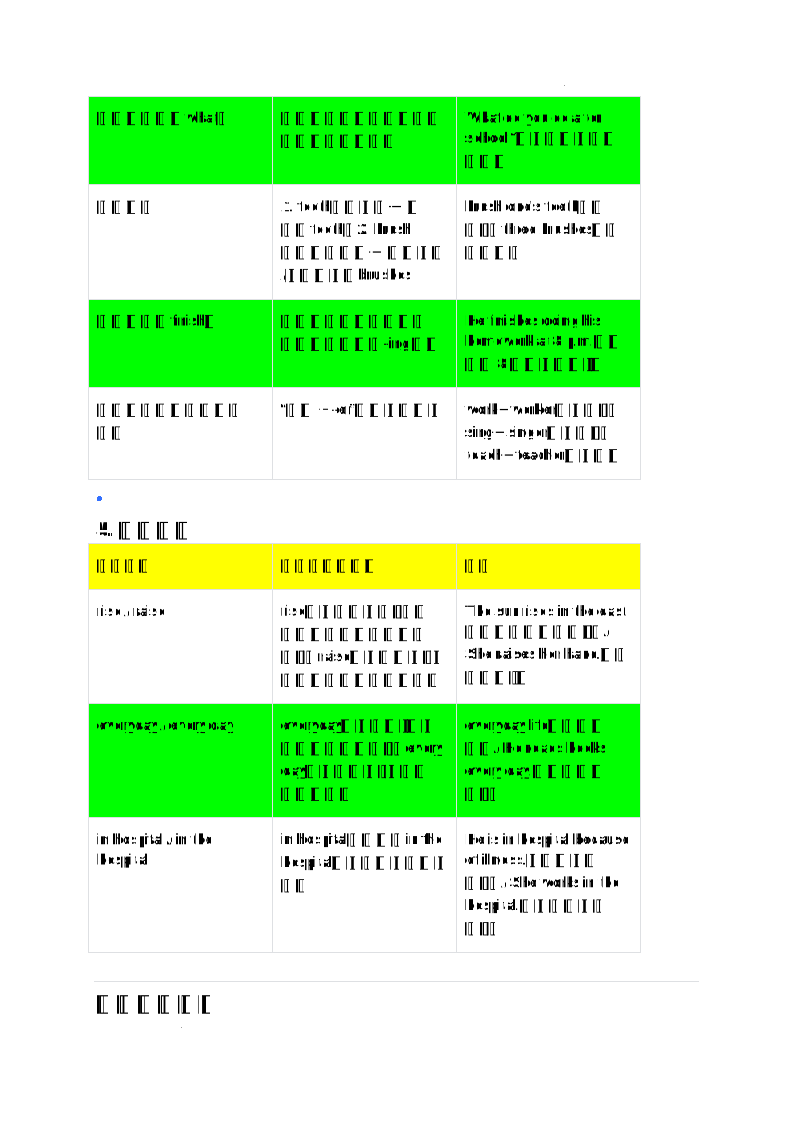
特殊疑问句(what)
询问姓名、爱好等,可单独使用或修饰名词
What do you do after school?(你放学后做什么?)
名词变形
1. tooth(牙齿)→ 复数:teeth;2. brush(刷;刷子)→ 动词三单/名词复数:brushes
brush one's teeth(刷牙)、three brushes(三把刷子)
动词用法(finish)
作及物动词时,后接名词、代词或动词-ing形式
He finishes doing his homework at 8 p.m.(他晚上8点完成作业。)
动词用法(职业名词构成)
“动词 + -er”构成职业名词
work→worker(工人)、sing→singer(歌手)、teach→teacher(教师)
·
5. 词义辨析
辨析词汇
含义及用法区别
例句
rise / raise
rise(不及物动词):升起、增长(如太阳、价格);raise(及物动词):抬起、提高(主语是人)
The sun rises in the east.(太阳从东方升起。)/ She raises her hand.(她举起手。)
everyday / every day
everyday(形容词):日常的(修饰名词);every day(副词短语):每天(作状语)
everyday life(日常生活)/ He reads books every day.(他每天看书。)
in hospital / in the hospital
in hospital:住院;in the hospital:在医院里(非住院)
He is in hospital because of illness.(他因病住院。)/ She works in the hospital.(她在医院工作。)
四、重点句型
1. What time is it?(几点了?)
2. What time do you usually get up?(你通常几点钟起床?)
3. When do you usually go to bed?(你通常什么时候睡觉?)
4. How long does Tom stay at school?(Tom在学校待多久?)
5. Why are you at school so early?(为什么你这么早来学校?)
6. It’s a 10-minute walk.(步行仅需要十分钟。)
7. Each lesson is 45 minutes long, and there’s a break between lessons.(每节课45分钟,两节课之间有休息时间。)
8. To plan time is to save time.(计划时间就是节省时间。)
9. How are Wenwen's and Colin's parents' routines different from your parents'?(文文和科林父母的日常和你父母的有什么不同?)
五、即时自测
一、根据汉语提示或首字母写出下列单词(10分)
1. We usually have b__________ at 7 o'clock in the morning.(早餐)
2. Don't forget to b__________ your teeth before going to bed.(刷)
3. My sister likes to take a s__________ after playing sports.(淋浴)
4. He usually g__________ up at 6:30 a.m. on weekdays.(起床)
5. The meeting will b__________ at 9 a.m. and f__________ at 11 a.m.(开始;结束)
6. It's our d__________ to keep the classroom clean.(职责)
7. There is a 15-minute b__________ between the two classes.(休息)
8. She is p__________ for her trip to Beijing now.(准备)
9. Reading is an important p__________ of my daily life.(部分)
10. The little boy is too young to get d__________ by himself.(穿衣服)
二、用方框里单词或短语的正确形式填空(10分)
(get up, do one's homework, go to bed, have breakfast, brush one's teeth, be busy with, prepare for, on duty, take a shower, play football)
1. He __________ early every morning and exercises for half an hour.
2. After dinner, my brother usually __________ first, then watches TV.
3. My mother __________ her work these days, so she has no time to cook.
4. We __________ the coming exam now, so we study late every night.
5. Tom __________ today, so he has to clean the classroom after school.
6. I __________ at 7:00 a.m. and then go to school at 7:30.
7. After playing basketball, he __________ to relax himself.
8. They often __________ on the playground after school.
9. Before going to bed, everyone should __________.
10. She usually __________ at 10 o'clock because she needs enough sleep.
三、翻译下列句子(10分)
1. 你通常如何度过你的学校生活?(spend one's school day)
2. 我们应该充分利用时间学习。(make use of)
3. 早睡早起对健康有好处。(Early to bed, early to rise)
4. 他每天花一个小时做作业。(spend…doing…)
5. 妈妈正在为我们准备晚餐。(prepare sth for sb)
6. 这个周末我们打算去公园玩。(on the weekend)
7. 她和父母住在一个小村庄里。(live with)
8. 两节课之间有十分钟的休息时间。(between lessons)
9. 他通常晚饭后弹一会儿吉他。(play the guitar, for a while)
10. 我的叔叔是一名医生,他每天都很忙。(doctor, busy)
四、句型转换(10分)
1. He usually gets up at 6:30 a.m.(改为否定句)
2. They have breakfast at 7 o'clock.(改为一般疑问句,并作肯定回答)
3. She is doing her homework now.(对画线部分提问,画线部分为“doing her homework”)
4. Tom goes to bed at 9:30 p.m.(对画线部分提问,画线部分为“at 9:30 p.m.”)
5. We usually play football on weekends.(用now改写句子)
即时自测答案
一、根据汉语提示或首字母写出下列单词
1. breakfast 2. brush 3. shower 4. gets 5. begin; finish
2. duty 7. break 8. preparing 9. part 10. dressed
二、用方框里单词或短语的正确形式填空
1. gets up 2. does his homework 3. is busy with 4. are preparing for 5. is on duty
2. have breakfast 7. takes a shower 8. play football 9. brush their teeth 10. goes to bed
三、翻译下列句子
1. How do you usually spend your school day?
2. We should make full use of time to study.
3. Early to bed and early to rise is good for health.
4. He spends an hour doing his homework every day.
5. Mother is preparing dinner for us.
6. We are going to the park to have fun on the weekend.
7. She lives with her parents in a small village.
8. There is a ten-minute break between lessons.
9. He usually plays the guitar for a while after dinner.
10. My uncle is a doctor, and he is busy every day.
四、句型转换
1. He doesn't usually get up at 6:30 a.m.
2. —Do they have breakfast at 7 o'clock? —Yes, they do.
3. What is she doing now?
4. What time does Tom go to bed?
5. We are playing football now.
学科网(北京)股份有限公司
$
资源预览图

1

2
3
相关资源
由于学科网是一个信息分享及获取的平台,不确保部分用户上传资料的 来源及知识产权归属。如您发现相关资料侵犯您的合法权益,请联系学科网,我们核实后将及时进行处理。