题型2 完形填空(10空)-【题型易-期末复习】2025-2026学年九年级上册 英语 仿真模拟特训 满分冲刺(译林版2012)(江苏专用)
2026-01-20
|
2份
|
46页
|
290人阅读
|
9人下载

资源信息
| 学段 | 初中 |
|---|---|
| 学科 | 英语 |
| 教材版本 | 初中英语译林版(2012)九年级上册 |
| 年级 | 九年级 |
| 章节 | - |
| 类型 | 题集-专项训练 |
| 知识点 | - |
| 使用场景 | 同步教学-期末 |
| 学年 | 2026-2027 |
| 地区(省份) | 江苏省 |
| 地区(市) | - |
| 地区(区县) | - |
| 文件格式 | ZIP |
| 文件大小 | 292 KB |
| 发布时间 | 2026-01-20 |
| 更新时间 | 2026-01-20 |
| 作者 | 乐思英语精品馆 |
| 品牌系列 | - |
| 审核时间 | 2026-01-20 |
| 下载链接 | https://m.zxxk.com/soft/56053758.html |
| 价格 | 2.00储值(1储值=1元) |
| 来源 | 学科网 |
内容正文:
考前特训
题型2完形填空 仿真模拟 考前特训(译林版2012)
2025-2026学年九年级上学期 期末满分冲刺
学校:___________姓名:___________班级:___________考号:___________
内容提要
期末仿真题
期末模拟题
Passage 1
先通读下面的短文,掌握其大意,然后从每小题所给的四个选项中,选出可以填入相应空白处的最佳选项。
When she was very young, Severn Cullis-Suzuki learned that the United Nations Assembly (大会) was going to meet in Brazil, Severn 1 that she wanted not only to go there but also to say something. She started to raise money for the 2 and when she was 12, she had enough for the 11, 000-kilometre journey.
Severn was sure that she had 3 to say, and when she made her five-minute speech 4 the UN Assembly, she tried very hard to make a difference. She talked about 5 problems like pollution and the hunting of animals. She also talked about the 6 of children in many parts of the world, 7 poor children who don’t have enough to eat. She compared them with children in richer countries who have more than they need and throw things 8 . Severn’s questions were a challenge to the world’s leaders—questions about why the grown-ups who run the world don’t take more care of it and of the people who live in it.
Many people who heard her speech were crying at the end, and everyone 9 with thunderous applause (掌声) when she finished.
Severn showed that young people can make a difference 10 they’re brave enough to believe in themselves. Who knows? Perhaps you could be another Severn.
1. A.refused B.decided C.wondered D.doubted
2. A.game B.course C.party D.trip
3. A.something B.anything C.nothing D.everything
4. A.from B.with C.to D.by
5. A.environmental B.physical C.educational D.medical
6. A.location B.vacation C.situation D.communication
7. A.especially B.specially C.certainly D.usually
8. A.on B.up C.over D.away
9. A.broke up B.grew up C.stood up D.gave up
10. A.until B.if C.whether D.though
Passage 2
请认真阅读下面短文,从短文后各题所给的四个选项中,选出一个最佳选项,并在答题卡上将该选项涂黑。
Nowadays, more families are trying to live a greener life. The Greens decided to make a change after watching a documentary about plastic waste. They started by using reusable bags and bottles. Soon, they realized that small actions could make a big 1 .
Mrs. Green began composting (堆肥) kitchen waste. Mr. Green fixed their old bike instead of buying a new one. Their son, Leo, took part in a school project on recycling. He even taught his parents how to sort waste 2 .
At first, it wasn’t easy. They forgot to bring cloth bags to the supermarket sometimes. But they didn’t give up. “It’s not about being perfect,” said Mrs. Green. “It’s about 3 better choices every day.”
After three months, they found their household waste had dropped by nearly 40%. They felt proud and 4 to keep going. “We’re not just helping the planet,” Leo said. “We’re also learning to work as a team.”
This experience brought the family closer. They now plan meals together, share chores, and discuss environmental news at dinner. Living sustainably (可持续地) has become more than a habit—it’s part of their 5 .
One Saturday, they joined a community clean-up event. While picking up litter in the park, Leo met a girl named Mei, who shared his passion for 6 the environment. They exchanged ideas about reducing single-use plastics. “Maybe we can start a school club,” Mei suggested. Leo nodded 7 , already imagining posters and meetings.
When they got home, Leo wrote a proposal. His parents helped him edit it. “You’re becoming quite 8 ,” Dad said proudly. Mom added, “And you’re doing it all by yourself—well, almost!” They all laughed.
The next week, the principal approved the club. At the first meeting, ten students showed up. Leo felt a little nervous but also deeply 9 . He knew this was just the beginning. Together, they could inspire more people to care—and act. After all, saving the Earth isn’t a solo mission; it’s a 10 effort.
1. A.difference B.decision C.discussion D.direction
2. A.quickly B.correctly C.quietly D.carefully
3. A.making B.taking C.giving D.having
4. A.afraid B.surprised C.excited D.worried
5. A.secret B.problem C.lifestyle D.dream
6. A.protecting B.polluting C.exploring D.ignoring
7. A.angrily B.sadly C.eagerly D.nervously
8. A.careless B.responsible C.helpless D.useless
9. A.bored B.tired C.satisfied D.disappointed
10. A.personal B.national C.global D.common
Passage 3
请认真阅读下列短文,从短文后各题所给的A、B、C、D四个选项中,选出最佳选项,并在答题卡上将该项涂黑。
What is a staycation? The clue is in the name. Staycation comes from two words, “stay” and “vacation,” which means staying at home and spending holidays within driving distance of their home.
There are different 1 to choose from. You could be attending an event or visiting a local nature spot. There could be a museum or a theme park in your area. Perhaps it’s a spa or a countryside walk. Or maybe you have decided not to 2 the house at all.
Here are some of the most common 3 for choosing a staycation nowadays.
Cost
Many people choose to take a staycation because they could not afford to travel 4 . People are likely to go on holidays when they have the money to do so. 5 they don’t have enough money, going to other countries becomes the last choice.
Ease (便利性) of travel
Some people do not want the inconvenience of travelling. These people may choose tourist activities close to home or to take a trip in an area that does not require a lot of travelling. The area is easy to 6 . This is especially popular with people who are not able to travel far. For example, they may have young 7 , have a disability or have work close to home.
Taking a staycation is often thought to be easier than travelling further afield. There is likely no language barrier (障碍), no need for money exchange and 8 cultural differences between home and away.
Environment
A staycation can often be 9 for the environment because we are travelling less. No flights and less transport means less CO2 emissions, which can only be a good thing.
Community support
Many people are now 10 the importance of supporting your local community. Instead of travelling to another location, people prefer to spend their money locally, so that the local area can get the rewards of the tourist spend. It is a good way to help improve the local economy.
1. A.reasons B.times C.activities D.people
2. A.clean B.stay C.decorate D.leave
3. A.reasons B.ways C.information D.results
4. A.alone B.freely C.abroad D.lonely
5. A.Where B.If C.As D.Unless
6. A.reach B.arrive C.get D.travel
7. A.partners B.children C.sons D.daughters
8. A.few B.a few C.little D.a little
9. A.good B.better C.bad D.worse
10. A.forgetting B.realizing C.reducing D.requiring
Passage 4
Have you ever read the famous book Little Johannes? It’s said that a new Chinese version (版本) of the book came out in September, over 90 years after Lu Xun’s version.
Written by Frederik van Eeden, Little Johannes is a fairy (仙女) story. One night Johannes finds a 1 in the lake and gets in it. He falls asleep. When he 2 , he sees a fairy who takes him to a strange world. There he meets many characters. All of them are 3 of different periods of life while growing up. He faces hard realities of the world and the emptiness of hopes for a better life.But finally he becomes 4 enough to taste the bitterness (痛苦) and sweetness of the real life.
Little Johannes is a children’s book. It 5 its readers important values about the good and the bad.
Lu Xun first read the book in 1906 and showed great interest in it. He 6 it from German into Chinese. He even won a nomination (提名) for the Nobel Prize because of the book. 7 , he refused it.
In order to encourage (鼓励) more people to enjoy its 8 , Jing Wen decided to translate the work again. Starting in 2015, it took Jing two years to finish. Even the Dutch Fund for Literature (荷兰文学基金会) offered help to her.
“They sent me 9 materials about the writer’s life and opinions (观点) from other writers.” Jing says.
The Netherlands (荷兰) is famous for its children’s stories.25% of the books sold there are children’s books. Now China and the Netherlands have more and more cultural 10 . Since 2011, several Dutch book fairs have been organized in China. Over 200 Dutch children’s books have Chinese versions now.
1. A.book B.boat C.rock D.prize
2. A.eats up B.cheers up C.stays up D.wakes up
3. A.writers B.choices C.symbols D.losers
4. A.brave B.famous C.lucky D.relaxed
5. A.proves B.teaches C.returns D.decides
6. A.prepared B.produced C.translated D.completed
7. A.Therefore B.Otherwise C.However D.Moreover
8. A.meaning B.dreams C.characters D.beauty
9. A.natural B.difficult C.valuable D.present
10. A.groups B.exchanges C.characteristics D.differences
Passage 5
I stood in my grandmother’s garden with my son. He had a bottle of bubbles. You know the 1 : it’s mainly soapy water with a plastic loop on one end. You dip(浸) the loop in the bottle, pull it out, and blow it to make bubbles. My son dipped and dipped and blew and blew but 2 to blow bubbles. He handed me the bottle and loop and asked me, “Daddy, can you make bubbles?”
I hadn’t blown bubbles in years. But I am a chemist by education. I have developed several shampoos, so I 3 the science of bubbles.
But all that knowledge was 4 useful when trying to blow bubbles from a loop with soapy water. I had no more success than my son.
I would dip and blow, but there were no bubbles, the soapy film on the loop would just 5 without forming any bubbles.
After several attempts(尝试), I tried a 6 method. Instead of blowing on the loop of soapy water, I gently breathed on it. My son cried with pleasure as a big beautiful bubble formed and 7 away.
I 8 to him, “Son, you shouldn’t blow hard. Instead, you should breathe gently on the loop to make bubbles.”
He gave up trying to make big bubbles by blowing hard and 9 my advice.
There are some things that you can get with force, but there are other things like love and respect that only come with the gentleness of a soft breath. The 10 something is to higher spirit, the more it is like bubbles; it can’t be forced. Blow beautiful bubbles; breathe easy.
1. A.type B.colour C.size D.standard
2. A.tried B.failed C.learned D.managed
3. A.believe B.realize C.discover D.understand
4. A.hardly B.nearly C.completely D.specially
5. A.fly B.change C.break D.rise
6. A.simple B.traditional C.popular D.different
7. A.flew B.dropped C.jumped D.pushed
8. A.explained B.shouted C.announced D.complained
9. A.offered B.refused C.followed D.needed
10. A.farther B.smaller C.closer D.more
Passage 6
Zhi Nong was born in a small town in Yunnan Province. When he was young, he moved to Kunming with his mother. 1 a caged bird in the big city, he was bored with the busy and noisy city life and looked forward to 2 .
His chance soon came. In 1983, he helped shoot a documentary (拍摄纪录片) about birds. That 3 led him to learn photography and take photos of flying birds.
In the 1980s, the Internet was not that popular in China and cameras were 4 . He managed to borrow a camera and threw himself into studying 5 to use it. During that time, the 6 became his favorite place because he first read some magazines about nature there. It opened a door for him to connect with nature.
In 1992, a research program was organized to protect a type of unusual monkeys which only live in China. Usually the home of these monkeys has half-a-year-long winters. It created great challenges for Zhi Nong’s work, but he never 7 . “I didn’t see the monkeys in the wild 8 I went into the mountains the third time,” said Zhi Nong. He went into the snow mountains six times just to get valuable photos of the monkeys.
Three years 9 , his works won international prizes. People around the world began to realize the importance of protecting wild animals in China. And he is the first Chinese winner of the World Wildlife Photographer of the Year.
In order to call on more people to protect wildlife with 10 , he started “China Wildlife Photography Training Camp”. He hopes that more young people will join in for the nature protection.
1. A.Sounding as B.Feeling like C.Looking like D.Thinking as
2. A.mountains B.earth C.nature D.birds
3. A.advertisement B.influence C.achievement D.experience
4. A.special B.usual C.expensive D.cheap
5. A.when B.how C.where D.why
6. A.library B.museum C.theatre D.restaurant
7. A.gave out B.gave up C.gave off D.gave back
8. A.when B.though C.until D.if
9. A.later B.ago C.after D.before
10. A.skills B.animals C.photos D.cameras
Passage 7
One night I was sitting in my kitchen half-listening as my 15-year-old son Tommy fought with his brother Kevin. I didn’t pay attention when Kevin went upstairs with a look of 1 on his face.
About 20 minutes later, as I was walking upstairs, I 2 Kevin crying in his room. I knocked on the door and asked, “Kevin, do you want to 3 ?”
No 4 . I tried again. Still nothing happened. So, I took a piece of paper from a notepad and wrote, “If you don’t want to talk, we can write notes to each other” and slipped (使滑动) it under the door.
An hour later I was still sitting on the floor outside his door with a stack of (一摞) notes in my hands. As I read one of Kevin’s notes, I couldn’t help crying. It said, “ 5 in this family loves me. I am not the youngest nor the oldest, and I am not the smartest. Tommy thinks I am too weak, and Dad wishes he had the other Kevin as a kid 6 he’s better at basketball. You’re never around to even 7 me.”
He was 8 about my part. Feeling sorry for him, I wrote back, “Kevin, I do love you, and you are loved in this family.” He didn’t reply for a while, but I could hear him crying softly.
Kevin 9 paper, so he wrote “Thanks” on a paper cup. I wrote back “For what?” It was returned to me with the reply “Loving me” written on it.
Since then, I have tried my best to care about my family members. When one of us notices that the other is 10 , we’ll smile and say, “Write it on a paper cup.”
1. A.pride B.impatience C.hurt D.fear
2. A.heard B.saw C.left D.caught
3. A.cry B.shout C.argue D.talk
4. A.talk B.communication C.answer D.worries
5. A.Anybody B.Everybody C.Somebody D.Nobody
6. A.when B.if C.although D.because
7. A.notice B.believe C.realize D.know
8. A.wrong B.unfair C.right D.strict
9. A.ran out of B.made use of C.got tired of D.gave up on
10. A.proud B.quiet C.shy D.unhappy
Passage 8
I came to my ice-cold home as I threw my backpack on the floor and took off my trainers. After seating myself in my room and turning on my computer, I saw a note stuck on my screen. It read, “Don’t turn on your PC. You 1 until 12 o’clock doing your homework last night. Maybe you would have more time if you got home earlier. — Mom” I tore (撕) the note up and 2 it into the wastebasket. “Why do they care?” I thought, “They’re never here.”
Just after high school started, I 3 saw my parents. With all their business trips, they paid the neighbours to watch over me and check my activities. Of course, the neighbours didn’t do such a great job, 4 they had kids of their own to worry about. They usually took notice of when I came home just by looking out of their windows. The only way of communication between me and my parents was 5 notes. The notes would be stuck around the house all the time, for all situations.
Spending about eight hours away from home and coming home to find the house completely 6 , something didn’t fit. I would come home from school to be welcomed by no one, to talk to no one and be watched over by my 7 . That’s when I started joining more clubs and staying after school more often, so I didn’t have to feel so lonely. At school, my friends and teachers are there for me. They were all there to give me a 8 when I was in trouble or talk with me when I wanted to talk. I felt great when I was at school. Yet, something was still 9 — my parents.
I realize that nobody could take the place of my parents. I wish that they would be there, at home, waiting for me to come back from school. I want them to 10 that they’re my parents and I’m their kid and I need them. I wish that my parents actually care about me.
1. A.stayed up B.stayed out C.got up D.got out
2. A.moved B.changed C.threw D.kept
3. A.always B.often C.sometimes D.seldom
4. A.but B.as C.though D.so
5. A.through B.past C.with D.from
6. A.comfortable B.tidy C.noisy D.empty
7. A.grandparents B.teachers C.friends D.neighbours
8. A.smile B.hand C.chance D.gift
9. A.wrong B.broken C.missing D.hidden
10. A.believe B.understand C.consider D.promise
Passage 9
Everyone has got two personalities—one that is shown to the world and 1 that secret and real. You don’t show your secret personality when you’re awake because you can control 2 but when you’re asleep, your sleeping position shows the real you. In a normal night, of course, you often change your 3 positions. The important position that best shows your secret personality is the one that you go to sleep. If you go to sleep on your back, you’re a very open person. You normally trust people and you are 4 influenced by new ideas. You don’t like to make people unhappy, so you never 5 your real feelings. You’re quite shy and you aren’t very 6 .
If you sleep on your stomach, you are a person who likes to keep secrets. You worry a lot and you’re always easily becoming sad. You 7 want to change your ideas, and you are satisfied with your life the way it is. You usually live for today not tomorrow. If you sleep on curled up (蜷缩), you are probably a very nervous person. You have a low opinion of yourself and often protect yourself from 8 so you are very defensive. You’re shy and you don’t usually like meeting people. You like to be 9 .
If you sleep on your side, you have usually got a well-balanced personality. You know your strengths and weaknesses. You’re usually careful. You have a confident personality. You sometimes feel 10 , but you don’t often get unhappy. You always say what you think, even if it makes people angry.
1. A.another B.other C.the other D.others
2. A.myself B.yourself C.himself D.herself
3. A.sleepy B.asleep C.sleeping D.sleep
4. A.easily B.easy C.hard D.hardly
5. A.tell B.keep C.say D.express
6. A.modest B.energetic C.confident D.curious
7. A.often B.sometimes C.never D.usual
8. A.been hurt B.be hurt C.being hurting D.being hurt
9. A.by your own B.on your own C.all by yourselves D.by alone
10. A.worry B.worrying C.worried D.worries
Passage 10
From toothbrushes and shampoo bottles to furniture and toys, plastic is used to make many everyday items—but only about 5% of the plastic we use is recycled. The rest is 1 which releases harmful gases, or thrown away, often ending up in the ocean. There, it can take hundreds of years to break down and 2 marine life. To help solve this problem, scientists have created a new type of plastic that dissolves in seawater.
Regular biodegradable plastics do not fully break down in the ocean. 3 they turn into tiny pieces called microplastics. These small bits can be eaten by fish, birds, and other animals. Scientists 4 that by 2050, there may be more plastic in the ocean than fish. Microplastics also pollute soil, water, and food, eventually 5 human bodies.
Researchers at the RIKEN Centre for Emergent Matter Science in Japan have developed a plastic that dissolves 6 in salty seawater. It breaks down into its basic substances, which bacteria can then digest. Tests show it can break down in seawater within hours and in soil within 10 days. Unlike other plastics, it is nonpoisonous and does not catch fire 7 .
This new plastic can be shaped into different forms when 8 to 248°F. It can be made hard and scratch-resistant, turned into flexible rubber, or used to create strong objects. It could be 9 for 3D printing and making items like medical tools or single-use packaging.
Takuzo Aida, the lead researcher, said, “With this new material, we have created plastics that are strong, stable, and recyclable. They serve many purposes and, most importantly, do not 10 microplastics.”
1. A.buried B.burned C.collected D.reused
2. A.destroy B.harm C.help D.save
3. A.However B.Instead C.Moreover D.In fact
4. A.believe B.hope C.inform D.warn
5. A.attacking B.covering C.entering D.touching
6. A.gradually B.partly C.quickly D.slowly
7. A.easily B.rapidly C.suddenly D.wildly
8. A.cooled B.heated C.frozen D.shaped
9. A.common B.impossible C.popular D.useful
10. A.contain B.increase C.invent D.produce
Passage 11
With the popularity of public welfare(公益), volunteer travel—an old-yet-modern form of travel has attracted more and more attention.
Volunteer travel refers to taking a trip where all or part of the 1 of the trip is to take part in an arranged service chance to help others, according to Wise Tour, an online provider of tourist information.
During the trip, volunteer travelers often provide 2 like teaching, cooking, animal caring, and cultural activities. 3 a reward for their help, the volunteers may get free or discounted(减免的) accommodation, meals and laundry, activities, or classes.
It seems as if these long journeys could only be made 4 in recent years by modern transport. In fact, volunteer travel can date back to the 1960s, when Alec Dickson and his wife Mora from the UK set up Voluntary Service Overseas(VSO), an international volunteer organization.
5 , the volunteer activities take place in a foreign country. 6 , more volunteer trips have taken place within the same countries or areas the volunteers come from in recent years. Sanlian Lifeweek magazine commented that volunteer projects in rural(农村的) areas are now attracting more city visitors as a 7 from the fast and stressful pace of city living. Yang Yan, a founder of a volunteer platform, told the magazine that it has indeed been a growing trend for city residents to volunteer in rural areas.
People try volunteer travel for some 8 . By doing voluntary work while traveling, travelers may make a real, positive(积极的) influence on the world. The services volunteers provide can be through charities with 9 costs for the communities they serve. In addition, volunteer travel is that it helps to get a taste of country life. For those who are sick of city pressure but can’t 10 whether to move to the countryside, volunteer travel can be a solution.
1. A.review B.purpose C.explanation D.recommendation
2. A.rules B.rewards C.services D.talents
3. A.By B.From C.As D.With
4. A.popular B.possible C.difficult D.helpful
5. A.Hopefully B.Luckily C.Traditionally D.Exactly
6. A.Anyway B.However C.Otherwise D.Moreover
7. A.break B.job C.task D.journey
8. A.problems B.results C.difficulties D.reasons
9. A.lower B.higher C.more expensive D.cheaper
10. A.agree B.expect C.decide D.allow
Passage 12
Do you know something about self-control? Do you have self-control? Well, 1 you have a ticket for an exciting film which you want to see very much, and you really want to go, but 2 you will have to prepare for an exam tomorrow, what will you do? See the film or study 3 the exam? If you can 4 the film and work hard at your lessons, we 5 you have self-control.
Self-control is not 6 you have from your birth. It needs to be developed in your 7 . Sometimes you are attracted by some useless novels or some computer games. You shouldn’t waste your time reading such books or playing games, or you will surely feel very sorry later.
Do not go to bed too late 8 a nice film or something else, or you will be late for school. You shouldn’t stay in bed too late on cold winter 9 to think nothing, because it is a waste of time. Even in weekends, you can go out for exercise.
Everyone has some habits, and a few of them 10 stop you from making progress in life. Then we must use our self-control to get them over.
Remember it is necessary for you to have strong self-control. It has a great influence on you in your future life.
1. A.if B.since C.after D.before
2. A.unkindly B.unusually C.unluckily D.unhappily
3. A.for B.at C.on D.in
4. A.think about B.go on C.deal with D.give up
5. A.tell B.say C.talk D.speak
6. A.anything B.nothing C.everything D.something
7. A.study B.body C.life D.heart
8. A.because of B.instead of C.full of D.in front of
9. A.nights B.mornings C.afternoons D.evenings
10. A.need B.may C.must D.should
Passage 13
Do you have the habit of checking your phone every few minutes? If so, you may lack (缺乏) self-control. Let’s think about a situation: 1 you have an exam tomorrow, but your favorite game is updating tonight. Will you play the game or study for the exam? If you choose to study and 2 the game, you have strong self-control.
Self-control isn’t something you are 3 with. It needs to be developed in your daily 4 . For example, when you feel like eating snacks while doing homework, you should tell yourself to finish the task first. When you want to watch a new TV show 5 reading, you should remind yourself of your reading plan.
It’s not easy to keep self-control. Sometimes you may be 6 by interesting videos or funny posts online. But you shouldn’t 7 your time on these things. Otherwise, you’ll feel sorry later when you can’t finish your work.
Don’t go to bed too late 8 a new episode (集) of your favorite show. You’ll feel tired in class the next day. On winter mornings, don’t stay in bed for too long.
Everyone has some bad habits. A few of them 9 stop you from growing. So we must use our self-control to get rid of (摆脱) them. Remember, strong self-control will help you achieve your goals and make your future 10 . It’s never too late to start training your self-control as long as you want to change.
1. A.if B.since C.though D.unless
2. A.think about B.give up C.deal with D.go on
3. A.filled B.covered C.born D.provided
4. A.study B.life C.work D.heart
5. A.according to B.such as C.along with D.instead of
6. A.surprised B.bored C.attracted D.worried
7. A.save B.spend C.take D.waste
8. A.because of B.next to C.in front of D.full of
9. A.must B.may C.should D.need
10. A.better B.worse C.longer D.shorter
Passage 14
Angela has been crazy about writing since she was young. She got her first lesson in story-telling from her grandfather, who gave her words of love. He set off her imagination and influenced her much. Angela always had stories running 1 her head and as soon as she could write, she put them down on paper.
Angela 2 remembered the call that changed her life. It was Tuesday, February 18th when the telephone rang in the kitchen of her Los Angeles home. On the line was Marty Banderas, a literary agent (代理) to whom she had sent a draft of her novel three weeks earlier. She asked Angela some 3 information, like age and health condition. Angela felt strange and asked what that was about. Banderas only replied, “I’ve just sold your 4 for one and a half million dollars!”
She sat down in shock. She had written over fourteen novels in twenty years, but each one had been 5 by publishers (出版商). Many people would have been discouraged (气馁的), 6 not her. Each time, she just got down to writing another one. Her husband advised her to find something else to do, but she 7 gave up. Seeing this book published was the most 8 thing that has ever happened to her.
Now she is a mother of three children, but she has never stopped writing, turning out novels between kids and dishes. She is writing another novel now, and she expects another success. Yes, her belief has brought her 9 , and it has changed her life in 10 . Angela is fully confident that she will enjoy a more successful and meaningful life as long as she keeps on with her dream.
1. A.through B.with C.along D.across
2. A.hardly B.probably C.clearly D.usually
3. A.local B.public C.personal D.national
4. A.painting B.novel C.newspaper D.magazine
5. A.accepted B.agreed C.refused D.enjoyed
6. A.so B.or C.and D.but
7. A.never B.always C.seldom D.sometimes
8. A.boring B.tiring C.exciting D.interesting
9. A.freedom B.success C.friendship D.beauty
10. A.time B.public C.return D.surprise
Passage 15
Some people think homework is good, but others think homework is bad. In my opinion, homework is good 1 students.
First, homework helps to make sure you understand the lesson taught at school. 2 to an article, doing homework is a good way to study for your tests. After you do homework, you should be able to 3 answer questions about the lesson all by yourself. It gives you a better 4 of getting good grades on your tests.
Second, homework 5 because it helps you remember materials for a long time. 6 your study takes practice. That’s where homework comes in! You can also have your work 7 by your teachers, which helps you know what you need to do.
Finally, homework helps you 8 in life after you leave school. Jobs that are fun and that pay well will require you to know math, language, science and so on. Homework teaches you how to work on your own and stay focused (专注的). You would have a hard time knowing how to work eight hours a day when you are a grown-up, 9 you never did any homework.
So be 10 about your homework and make sure you understand the material. Together we can make the world smart!
1. A.at B.to C.for D.with
2. A.Including B.According C.Regarding D.Thinking
3. A.really B.exactly C.actively D.correctly
4. A.choice B.change C.chance D.charity
5. A.matters B.makes C.means D.marks
6. A.Imagining B.Improving C.Insisting D.Influencing
7. A.reported B.checked C.praised D.created
8. A.succeed B.cancel C.suppose D.control
9. A.until B.whether C.unless D.if
10. A.careful B.curious C.serious D.special
Passage 16
Noah sat on the front steps of his family’s flat building. He kept looking at the sky and didn’t even 1 his brother coming down the street until Daniel stood right in front of him.
“Where were you, Noah?” Daniel asked his brother. “It seemed that you were a million miles away. You did not 2 hear me calling you, did you?”
Noah 3 his head. “Daniel, have you ever had stage fright (怯场)?” he finally asked.
“Sure.” said Daniel. “Plenty of times. Do you remember that play I was in a few years ago? I knew my lines, but I was afraid to have to say them 4 the audience (观众). I also have a bit of stage fright right before my basketball games start. As soon as I we the people in the stands, my heart beats so fast that it feels like popcorn popping (爆裂) in my body.”
“I know just what you 5 . That’s how I feel just thinking about the spelling competition next week.”
“I didn’t know you made it to the finals,” said Daniel. “Good job!”
“It’s not 6 at all,” said Noah. “I’m worried I’ll get nervous and freeze (吓呆) on stage.”
“I might forget how to spell everything—even my own name! I don’t know what To do.”
“Noah, I’ll help you get 7 this. You just have to practice as much as possible. I can go to the hall with you to practice. That way you’ll feel comfortable there.”
Noah began to look a little less nervous. “Then, I’ll teach you this exercise my basketball coach taught me,” continued Daniel. “You close your eyes and imagine 8 doing what you’re worried about. You go through the whole situation in your 9 so you see what it feels like to do it and do it well. It might sound 10 . But believe me, it works.”
“Thanks, Daniel. I’m still nervous but I feel much better. You’re a pretty good brother.”
1. A.catch B.notice C.stop D.keep
2. A.even B.still C.already D.only
3. A.touched B.turned C.lost D.shook
4. A.behind B.beside C.before D.beyond
5. A.mean B.matter C.wish D.want
6. A.funny B.hard C.good D.right
7. A.of B.from C.into D.through
8. A.yourself B.you C.itself D.it
9. A.dreams B.mind C.memory D.eyes
10. A.clever B.easy C.common D.strange
14 / 14乐思英语
学科网(北京)股份有限公司
$考前特训
题型2完形填空 仿真模拟 考前特训(译林版2012)
2025-2026学年九年级上学期 期末满分冲刺
学校:___________姓名:___________班级:___________考号:___________
内容提要
期末仿真题
期末模拟题
Passage 1
先通读下面的短文,掌握其大意,然后从每小题所给的四个选项中,选出可以填入相应空白处的最佳选项。
When she was very young, Severn Cullis-Suzuki learned that the United Nations Assembly (大会) was going to meet in Brazil, Severn 1 that she wanted not only to go there but also to say something. She started to raise money for the 2 and when she was 12, she had enough for the 11, 000-kilometre journey.
Severn was sure that she had 3 to say, and when she made her five-minute speech 4 the UN Assembly, she tried very hard to make a difference. She talked about 5 problems like pollution and the hunting of animals. She also talked about the 6 of children in many parts of the world, 7 poor children who don’t have enough to eat. She compared them with children in richer countries who have more than they need and throw things 8 . Severn’s questions were a challenge to the world’s leaders—questions about why the grown-ups who run the world don’t take more care of it and of the people who live in it.
Many people who heard her speech were crying at the end, and everyone 9 with thunderous applause (掌声) when she finished.
Severn showed that young people can make a difference 10 they’re brave enough to believe in themselves. Who knows? Perhaps you could be another Severn.
1. A.refused B.decided C.wondered D.doubted
2. A.game B.course C.party D.trip
3. A.something B.anything C.nothing D.everything
4. A.from B.with C.to D.by
5. A.environmental B.physical C.educational D.medical
6. A.location B.vacation C.situation D.communication
7. A.especially B.specially C.certainly D.usually
8. A.on B.up C.over D.away
9. A.broke up B.grew up C.stood up D.gave up
10. A.until B.if C.whether D.though
【答案】
1. B 2. D 3. A 4. C 5. A 6. C 7. A 8. D 9. C 10. B
【导语】本文是一篇记叙文,主要讲述了年轻女孩Severn Cullis-Suzuki在得知联合国大会将在巴西召开后,决定前往并发表演讲的经历。她通过演讲呼吁关注环境问题和全球儿童的困境,展现了年轻人的力量和对未来的希望。文章通过Severn的故事,鼓励读者相信自己的能力,勇于发声,为改变世界贡献自己的力量。
1. 句意:当她很小的时候,Severn Cullis-Suzuki得知联合国大会将在巴西召开,她决定她不仅要去那里,而且要说些什么。
refused拒绝;decided决定;wondered想知道;doubted怀疑。根据“she wanted not only to go there but also to say something”可知,她“决定”要做这件事,故选B。
2. 句意:她开始为这次旅行筹集资金,当她12岁时,她已经有了足够的钱进行这次11000公里的旅程。
game游戏;course课程;party聚会;trip旅行。根据“she had enough for the 11,000-kilometre journey”可知,此处指的是“旅行”,故选D。
3. 句意:Severn确信她有一些事情要说,当她在联合国大会上发表五分钟演讲时,她非常努力地去改变现状。
something一些事情;anything任何事情;nothing没有事情;everything每件事情。根据“she tried very hard to make a difference”可知,她确信自己有话要说,故选A。
4. 句意:Severn确信她有一些事情要说,当她在联合国大会上发表五分钟演讲时,她非常努力地去改变现状。
from来自;with和……一起;to到;by通过。根据“she made her five-minute speech”和“the UN Assembly”可知,此处表示她在联合国大会上发表演讲,因此用介词to,表示“向……发表演讲”,故选C。
5. 句意:她谈论了像污染和猎杀动物这样的环境问题。
environmental环境的;physical身体的;educational教育的;medical医疗的。根据“like pollution and the hunting of animals”可知,此处指的是“环境问题”,故选A。
6. 句意:她还谈到了世界上许多地方儿童的状况,尤其是那些没有足够食物吃的贫困儿童。
location位置;vacation假期;situation状况;communication交流。根据“poor children who don’t have enough to eat”可知,此处指的是儿童的“状况”,故选C。
7. 句意:她还谈到了世界上许多地方儿童的状况,尤其是那些没有足够食物吃的贫困儿童。
especially尤其;specially特别地;certainly当然;usually通常。根据“poor children who don’t have enough to eat”可知,此处表示“尤其是”那些贫困儿童,故选A。
8. 句意:她把他们与富裕国家的孩子进行比较,那些孩子拥有超过他们需要的东西,并把东西扔掉。
on在……上;up向上;over超过;away离开。根据“who have more than they need”可知,这些孩子拥有很多,所以会把东西扔掉,throw sth away表示“扔掉某物”,故选D。
9. 句意:当她结束时,每个人都站起来给予雷鸣般的掌声。
broke up分手;grew up长大;stood up站起来;gave up放弃。根据“with thunderous applause”可知,此处表示大家都站起来鼓掌,故选C。
10. 句意:Severn表明,如果年轻人足够勇敢地相信自己,他们就能有所作为。
until直到;if如果;whether是否;though尽管。根据“young people can make a difference”和“they’re brave enough to believe in themselves”可知,前后两句之间为条件关系,因此用if引导条件状语从句,表示“如果”,故选B。
Passage 2
请认真阅读下面短文,从短文后各题所给的四个选项中,选出一个最佳选项,并在答题卡上将该选项涂黑。
Nowadays, more families are trying to live a greener life. The Greens decided to make a change after watching a documentary about plastic waste. They started by using reusable bags and bottles. Soon, they realized that small actions could make a big 1 .
Mrs. Green began composting (堆肥) kitchen waste. Mr. Green fixed their old bike instead of buying a new one. Their son, Leo, took part in a school project on recycling. He even taught his parents how to sort waste 2 .
At first, it wasn’t easy. They forgot to bring cloth bags to the supermarket sometimes. But they didn’t give up. “It’s not about being perfect,” said Mrs. Green. “It’s about 3 better choices every day.”
After three months, they found their household waste had dropped by nearly 40%. They felt proud and 4 to keep going. “We’re not just helping the planet,” Leo said. “We’re also learning to work as a team.”
This experience brought the family closer. They now plan meals together, share chores, and discuss environmental news at dinner. Living sustainably (可持续地) has become more than a habit—it’s part of their 5 .
One Saturday, they joined a community clean-up event. While picking up litter in the park, Leo met a girl named Mei, who shared his passion for 6 the environment. They exchanged ideas about reducing single-use plastics. “Maybe we can start a school club,” Mei suggested. Leo nodded 7 , already imagining posters and meetings.
When they got home, Leo wrote a proposal. His parents helped him edit it. “You’re becoming quite 8 ,” Dad said proudly. Mom added, “And you’re doing it all by yourself—well, almost!” They all laughed.
The next week, the principal approved the club. At the first meeting, ten students showed up. Leo felt a little nervous but also deeply 9 . He knew this was just the beginning. Together, they could inspire more people to care—and act. After all, saving the Earth isn’t a solo mission; it’s a 10 effort.
1. A.difference B.decision C.discussion D.direction
2. A.quickly B.correctly C.quietly D.carefully
3. A.making B.taking C.giving D.having
4. A.afraid B.surprised C.excited D.worried
5. A.secret B.problem C.lifestyle D.dream
6. A.protecting B.polluting C.exploring D.ignoring
7. A.angrily B.sadly C.eagerly D.nervously
8. A.careless B.responsible C.helpless D.useless
9. A.bored B.tired C.satisfied D.disappointed
10. A.personal B.national C.global D.common
【答案】
1. A 2. B 3. A 4. C 5. C 6. A 7. C 8. B 9. C 10. D
【导语】本文介绍了格林一家在观看关于塑料污染的纪录片后,全家开始参与环保实践,不仅减少了家庭垃圾,还增强了团队合作。最终,他们将可持续生活融入家庭日常。在父母的协助下,利奥还创办了校环保俱乐部。
1. 句意:很快,他们意识到小小的行动可以带来巨大的改变。
difference差异;decision决定;discussion讨论;direction方向。结合下文可知,格林全家参与环保实践,不仅减少了家庭垃圾,还增强了团队合作,由此可见,小小的行动能带来巨大的改变,make a big difference“产生很大的影响”。故选A。
2. 句意:他甚至教会父母如何正确分类垃圾。
quickly快速地;correctly正确地;quietly安静地;carefully认真地。根据“He even taught his parents how to sort waste”可知,此处指正确分类垃圾。故选B。
3. 句意:“这不在于追求完美,”格林太太说,“而在于每天做出更好的选择。”
making做;taking带走;giving给;having有。根据“better choices”可知,此处指做出更好的选择。故选A。
4. 句意:他们感到自豪和兴奋,继续坚持下去。
afraid害怕的;surprised惊讶的;excited兴奋的;worried担心的。根据“After three months, they found their household waste had dropped by nearly 40%. ”可知,经过三个月的努力,家庭垃圾减少了近40%,他们应该感到自豪和兴奋。故选C。
5. 句意:可持续生活已不仅仅是一种习惯——它已成为他们生活方式的一部分。
secret秘密;problem问题;lifestyle生活方式;dream梦想。根据“Living sustainably (可持续地) has become more than a habit—it’s part of their”可知, 格林一家通过环保行动将可持续生活融入日常,这不仅仅是一种习惯,更成为他们生活方式的一部分。故选C。
6. 句意:在公园捡垃圾时,利奥遇到了一个名叫梅的女孩,她和他一样热爱保护环境。
protecting保护;polluting污染;exploring探索;ignoring忽视。根据“who shared his passion for…the environment.”和“They exchanged ideas about reducing single-use plastics.”可知,两人就减少一次性塑料制品的使用交换了意见,可见利奥遇见的是和他一样热爱环保的女孩。故选A。
7. 句意:利奥热切地点头,已经想象着海报和会议的场景了。
angrily生气地;sadly伤心地;eagerly热切地;nervously紧张地。根据“already imagining posters and meetings”可知,利奥已经想象着海报和会议的场景了,可见对创办俱乐部的期待和热情,eagerly符合语境。故选C。
8. 句意:你变得很有责任感了。
careless不小心的;responsible负有责任的;helpless无助的;useless无用的。根据“Leo wrote a proposal.”和“Dad said proudly.”可知,利奥写了一份提案,爸爸很自豪,此处应填一个表示积极意义的词,responsible符合语境,体现了利奥在环保行动中的主动性和责任感。故选B。
9. 句意:利奥有点紧张,但也感到深深的满足。
bored无聊的;tired疲劳的;satisfied满意的;disappointed失望的。根据“At the first meeting, ten students showed up.”可知,利奥看到十名学生到场,感到满意,知道这是一个好的开始。故选C。
10. 句意:毕竟,拯救地球不是一个人的使命,而是一场共同的努力。
personal个人的;national全国的;global全球的;common共同的。根据“saving the Earth isn’t a solo mission”可知,拯救地球单靠一个人是不行的,需要大家共同努力。故选D。
Passage 3
请认真阅读下列短文,从短文后各题所给的A、B、C、D四个选项中,选出最佳选项,并在答题卡上将该项涂黑。
What is a staycation? The clue is in the name. Staycation comes from two words, “stay” and “vacation,” which means staying at home and spending holidays within driving distance of their home.
There are different 1 to choose from. You could be attending an event or visiting a local nature spot. There could be a museum or a theme park in your area. Perhaps it’s a spa or a countryside walk. Or maybe you have decided not to 2 the house at all.
Here are some of the most common 3 for choosing a staycation nowadays.
Cost
Many people choose to take a staycation because they could not afford to travel 4 . People are likely to go on holidays when they have the money to do so. 5 they don’t have enough money, going to other countries becomes the last choice.
Ease (便利性) of travel
Some people do not want the inconvenience of travelling. These people may choose tourist activities close to home or to take a trip in an area that does not require a lot of travelling. The area is easy to 6 . This is especially popular with people who are not able to travel far. For example, they may have young 7 , have a disability or have work close to home.
Taking a staycation is often thought to be easier than travelling further afield. There is likely no language barrier (障碍), no need for money exchange and 8 cultural differences between home and away.
Environment
A staycation can often be 9 for the environment because we are travelling less. No flights and less transport means less CO2 emissions, which can only be a good thing.
Community support
Many people are now 10 the importance of supporting your local community. Instead of travelling to another location, people prefer to spend their money locally, so that the local area can get the rewards of the tourist spend. It is a good way to help improve the local economy.
1. A.reasons B.times C.activities D.people
2. A.clean B.stay C.decorate D.leave
3. A.reasons B.ways C.information D.results
4. A.alone B.freely C.abroad D.lonely
5. A.Where B.If C.As D.Unless
6. A.reach B.arrive C.get D.travel
7. A.partners B.children C.sons D.daughters
8. A.few B.a few C.little D.a little
9. A.good B.better C.bad D.worse
10. A.forgetting B.realizing C.reducing D.requiring
【答案】
1. C 2. D 3. A 4. C 5. B 6. A 7. B 8. A 9. B 10. B
【导语】本文主要介绍了“宅度假”的含义、可以选择的不同活动以及选择宅度假的原因,包括费用、旅行的便利性、对环境的好处和对社区的支持。
1. 句意:有不同的活动可供选择。
reasons原因;times次数;activities活动;people人们。根据下文“You could be attending an event or visiting a local nature spot.”可知,此处指可以选择不同的活动。故选C。
2. 句意:或者你已经决定根本不离开家。
clean打扫;stay停留;decorate装饰;leave离开。根据下文“choosing a staycation”可知,此处指不离开家,选择宅度假。故选D。
3. 句意:以下是如今选择宅度假的一些最常见的原因。
reasons原因;ways方法;information信息;results结果。根据下文“Cost、Ease of travel、Environment、Community support”可知,此处指选择宅度假的原因。故选A。
4. 句意:许多人选择宅度假是因为他们负担不起出国旅行的费用。
alone独自;freely自由地;abroad在国外;lonely孤独的。根据下文“going to other countries becomes the last choice”可知,此处指负担不起出国旅行的费用。故选C。
5. 句意:如果他们没有足够的钱,去其他国家就成了最后的选择。
Where在哪里;If如果;As当……时;Unless除非。根据“they don’t have enough money”可知,此处是条件状语从句,表示“如果”,用if引导。故选B。
6. 句意:这个地区很容易到达。
reach到达,及物动词;arrive到达,不及物动词;get得到;travel旅行。根据上文“These people may choose tourist activities close to home or to take a trip in an area that does not require a lot of travelling.”可知,此处指这个地区很容易到达,reach是及物动词,后面直接接宾语。故选A。
7. 句意:例如,他们可能有年幼的孩子,有残疾,或者在家附近工作。
partners同伴;children孩子;sons儿子;daughters女儿。根据“they may have young”可知,此处指有年幼的孩子,用children表示泛指。故选B。
8. 句意:在家和外出之间很可能没有语言障碍,不需要兑换货币,文化差异也很小。
few很少,修饰可数名词复数;a few一些,修饰可数名词复数;little很少,修饰不可数名词;a little一些,修饰不可数名词。根据“no language barrier (障碍), no need for money exchange”可知,此处指文化差异也很小,用few修饰可数名词复数cultural differences。故选A。
9. 句意:宅度假通常对环境更有好处,因为我们旅行更少。
good好的;better更好的;bad坏的;worse更坏的。根据“because we are travelling less”可知,此处指宅度假对环境更有好处,用good的比较级better。故选B。
10. 句意:许多人现在意识到支持当地社区的重要性。
forgetting忘记;realizing意识到;reducing减少;requiring需要。根据“the importance of supporting your local community”可知,此处指意识到支持当地社区的重要性,用realize表示“意识到”。故选B。
Passage 4
Have you ever read the famous book Little Johannes? It’s said that a new Chinese version (版本) of the book came out in September, over 90 years after Lu Xun’s version.
Written by Frederik van Eeden, Little Johannes is a fairy (仙女) story. One night Johannes finds a 1 in the lake and gets in it. He falls asleep. When he 2 , he sees a fairy who takes him to a strange world. There he meets many characters. All of them are 3 of different periods of life while growing up. He faces hard realities of the world and the emptiness of hopes for a better life.But finally he becomes 4 enough to taste the bitterness (痛苦) and sweetness of the real life.
Little Johannes is a children’s book. It 5 its readers important values about the good and the bad.
Lu Xun first read the book in 1906 and showed great interest in it. He 6 it from German into Chinese. He even won a nomination (提名) for the Nobel Prize because of the book. 7 , he refused it.
In order to encourage (鼓励) more people to enjoy its 8 , Jing Wen decided to translate the work again. Starting in 2015, it took Jing two years to finish. Even the Dutch Fund for Literature (荷兰文学基金会) offered help to her.
“They sent me 9 materials about the writer’s life and opinions (观点) from other writers.” Jing says.
The Netherlands (荷兰) is famous for its children’s stories.25% of the books sold there are children’s books. Now China and the Netherlands have more and more cultural 10 . Since 2011, several Dutch book fairs have been organized in China. Over 200 Dutch children’s books have Chinese versions now.
1. A.book B.boat C.rock D.prize
2. A.eats up B.cheers up C.stays up D.wakes up
3. A.writers B.choices C.symbols D.losers
4. A.brave B.famous C.lucky D.relaxed
5. A.proves B.teaches C.returns D.decides
6. A.prepared B.produced C.translated D.completed
7. A.Therefore B.Otherwise C.However D.Moreover
8. A.meaning B.dreams C.characters D.beauty
9. A.natural B.difficult C.valuable D.present
10. A.groups B.exchanges C.characteristics D.differences
【答案】
1. B 2. D 3. C 4. A 5. B 6. C 7. C 8. D 9. C 10. B
【分析】本文主要讲的是2017年出版了童话故事《Little Johannes》一个新的汉语版本,大约在鲁迅版本后90年。鲁迅是在1906年读了这本书并且对它很感兴趣,于是他就把它从德语翻译成了汉语。为了鼓励更多的人欣赏它的美,Jing Wen决定再次翻译这部作品。Jing Wen2015年开始翻译,完成它花费了她两年的时间。现在中国和荷兰有越来越多的文化交流。
1. 句意:一天晚上,Johannes在湖里发现了一条船,就上了船。
book书;boat船;rock石头;prize奖。由“in the lake and gets in it”可知是船。故选B。
2. 句意:当他醒来时,他看到一个仙女把他带到一个陌生的世界。
eats up吃光;cheers up欢呼;stays up熬夜;wakes up醒来。由前文“He falls asleep. ”可知此处应该是醒来。故选D。
3. 句意:它们都是成长过程中不同时期的象征。
writers作家;choices选择;symbols象征;losers失败者。由前文的“he meets many characters”可知是这些任务是象征。故选C。
4. 句意:但最后他变得勇敢起来,尝到了现实生活的酸甜苦辣。
brave勇敢的;famous著名的;lucky幸运的;relaxed放松的。由“to taste the bitterness and sweetness of the real life”可知是足够的勇敢,才能去面对。故选A。
5. 句意:它教导读者关于善与恶的重要价值观。
proves证明;teaches教;returns归还;decides决定。由“its readers important values about the good and the bad”可知是教会了读者这些。故选B。
6. 句意:他把它从德语翻译成汉语。
prepared准备;produced生产;translated翻译;completed完成。由“from German into Chinese”可知是从德语翻译成汉语。故选C。
7. 句意:然而,他拒绝了。
Therefore因此;Otherwise 否则;However然而;Moreover此外。根据“he refused it”可知语境发生了转折,且空后有逗号,故选C。
8. 句意:为了鼓励更多的人欣赏它的美,Jing Wen决定再次翻译这部作品。
meaning意思;dreams梦想;characters性格;beauty美。根据“He even won a nomination for the Nobel Prize because of the book. ”可知这部作品是美好的。故选D。
9. 句意:他们给我寄来了关于这位作家的生活和其他作家的观点的宝贵资料。
natural自然的;difficult不同的;valuable宝贵的;present当前的。根据前文“Even the Dutch Fund for Literature offered help to her.”可知这些帮助是宝贵的。故选C。
10. 句意:现在,中荷两国的文化交流越来越多。
groups组;exchanges交流;characteristics特征;differences区别。根据“Since 2011, several Dutch book fairs have been organized in China.”可知是文化交流越来越多。故选B。
Passage 5
I stood in my grandmother’s garden with my son. He had a bottle of bubbles. You know the 1 : it’s mainly soapy water with a plastic loop on one end. You dip(浸) the loop in the bottle, pull it out, and blow it to make bubbles. My son dipped and dipped and blew and blew but 2 to blow bubbles. He handed me the bottle and loop and asked me, “Daddy, can you make bubbles?”
I hadn’t blown bubbles in years. But I am a chemist by education. I have developed several shampoos, so I 3 the science of bubbles.
But all that knowledge was 4 useful when trying to blow bubbles from a loop with soapy water. I had no more success than my son.
I would dip and blow, but there were no bubbles, the soapy film on the loop would just 5 without forming any bubbles.
After several attempts(尝试), I tried a 6 method. Instead of blowing on the loop of soapy water, I gently breathed on it. My son cried with pleasure as a big beautiful bubble formed and 7 away.
I 8 to him, “Son, you shouldn’t blow hard. Instead, you should breathe gently on the loop to make bubbles.”
He gave up trying to make big bubbles by blowing hard and 9 my advice.
There are some things that you can get with force, but there are other things like love and respect that only come with the gentleness of a soft breath. The 10 something is to higher spirit, the more it is like bubbles; it can’t be forced. Blow beautiful bubbles; breathe easy.
1. A.type B.colour C.size D.standard
2. A.tried B.failed C.learned D.managed
3. A.believe B.realize C.discover D.understand
4. A.hardly B.nearly C.completely D.specially
5. A.fly B.change C.break D.rise
6. A.simple B.traditional C.popular D.different
7. A.flew B.dropped C.jumped D.pushed
8. A.explained B.shouted C.announced D.complained
9. A.offered B.refused C.followed D.needed
10. A.farther B.smaller C.closer D.more
【答案】
1. A 2. B 3. D 4. A 5. C 6. D 7. A 8. A 9. C 10. C
【导语】本文通过讲述自己教儿子吹肥皂泡泡的经历,告诉人们:在生活中,有些事情要温柔对待,用力过大则适得其反。
1. 句意:你知道它的类型:它基本上是肥皂水,一端有一个塑料环。
type类型;colour颜色;size 尺寸,大小;standard标准,榜样,水准。根据“it’s mainly soapy water with a plastic loop on one end. You dip(浸) the loop in the bottle, pull it out, and blow it to make bubbles.”可知,他的类型主要是肥皂水,一端有一个塑料圈。把塑料环浸在瓶子里,拉出来,然后吹起泡泡。故选A。
2. 句意:我儿子不停地吹,又吹,又吹,但吹不出泡泡。
tried尝试;failed失败;learned学会;managed管理,根据句中的“but”一词表转折,可知应该是不停吹,但是吹不出泡泡。故选B。
3. 句意:我已经开发了几种洗发水,所以我了解泡泡的原理。
believe相信;realize意识到;discover发现;understand明白,理解。根据前面提到我已经开发了几种洗发水,可知应该是明白泡泡的科学原理。故选D。
4. 句意:但是,当试图用肥皂水吹出塑料圈中的气泡时,所有这些知识几乎是无用的。
hardly几乎不;nearly接近,几乎;completely完全地,全部地;specially特别地。根据下文“I had no more success than my son.”可知,我没有比我儿子更成功,应该是几乎无用的。故选A。
5. 句意:我会蘸着吹,但没有气泡,圈上的肥皂膜只会破裂,不会形成任何气泡。
fly飞;change改变;break打破;rise上升,增强。跟据“without forming any bubbles”,不会形成任何气泡,可知应该是破裂。故选C。
6. 句意:在几次尝试之后,我尝试了一种不同的方法。
simple简单的;traditional传统的;popular受欢迎的;different不同的。根据下文“Instead of blowing on the loop of soapy water, I gently breathed on it.”并结合句意可知,在几次尝试之后,尝试了另一种不同的方法。故选D。
7. 句意:当一个又大又漂亮的泡泡形成并飞走时,我儿子高兴地哭了起来。
flew飞;dropped 使落下,投下;jumped跳跃,使跳跃;pushed推动,增加。结合短文可知,这里讲述的是吹泡泡并且高兴地哭了起来,那么应该是泡泡飞了起来。故选A。
8. 句意:我向他解释说:“儿子,你不应该吹得太厉害。取而代之的是,你应该轻轻地在塑料环上呼吸,以产生气泡。”
explained解释;shouted大喊;announced宣布;complained抱怨。上文提到的是成功的吹出来泡泡,那么这里应该是解释给儿子听,怎样可以产生出泡泡。故选A。
9. 句意:他放弃了用力吹肥皂泡的尝试,听从了我的建议。
offered提供;refused拒绝;followed按照做,跟随;needed需要。根据“He gave up trying to make big bubbles by blowing hard”可知,他放弃用力吹肥皂泡,应该是听从了“我”的建议。故选C。
10. 句意:越接近更高的精神,它就越像泡沫,不能强迫。
farther更远的;smaller更小的;closer更接近的;more更多。观察句子可知,这里用的是比较级句型“the+比较级……,the+比较级……”,结合选项可知应该是越接近更高的精神,它就越像泡沫,不能强迫。故选C。
Passage 6
Zhi Nong was born in a small town in Yunnan Province. When he was young, he moved to Kunming with his mother. 1 a caged bird in the big city, he was bored with the busy and noisy city life and looked forward to 2 .
His chance soon came. In 1983, he helped shoot a documentary (拍摄纪录片) about birds. That 3 led him to learn photography and take photos of flying birds.
In the 1980s, the Internet was not that popular in China and cameras were 4 . He managed to borrow a camera and threw himself into studying 5 to use it. During that time, the 6 became his favorite place because he first read some magazines about nature there. It opened a door for him to connect with nature.
In 1992, a research program was organized to protect a type of unusual monkeys which only live in China. Usually the home of these monkeys has half-a-year-long winters. It created great challenges for Zhi Nong’s work, but he never 7 . “I didn’t see the monkeys in the wild 8 I went into the mountains the third time,” said Zhi Nong. He went into the snow mountains six times just to get valuable photos of the monkeys.
Three years 9 , his works won international prizes. People around the world began to realize the importance of protecting wild animals in China. And he is the first Chinese winner of the World Wildlife Photographer of the Year.
In order to call on more people to protect wildlife with 10 , he started “China Wildlife Photography Training Camp”. He hopes that more young people will join in for the nature protection.
1. A.Sounding as B.Feeling like C.Looking like D.Thinking as
2. A.mountains B.earth C.nature D.birds
3. A.advertisement B.influence C.achievement D.experience
4. A.special B.usual C.expensive D.cheap
5. A.when B.how C.where D.why
6. A.library B.museum C.theatre D.restaurant
7. A.gave out B.gave up C.gave off D.gave back
8. A.when B.though C.until D.if
9. A.later B.ago C.after D.before
10. A.skills B.animals C.photos D.cameras
【答案】
1. B 2. C 3. D 4. C 5. B 6. A 7. B 8. C 9. A 10. D
【导语】本文主要讲述了志农拍摄野生动物的经历,呼吁人们保护自然。
1. 句意:他感觉自己像一只关在大城市里的鸟,厌倦了繁忙吵闹的城市生活,向往大自然。
Sounding as听起来像;Feeling like感觉像;Looking like看起来像;Thinking as像……一样想。根据句意可知,他感觉自己像一只关在大城市里的鸟。故选B。
2. 句意:他感觉自己像一只关在大城市里的鸟,厌倦了繁忙吵闹的城市生活,向往大自然。
mountains山;earth地球;nature自然;birds鸟。根据“he was bored with the busy and noisy city life”可知,他厌倦了繁忙吵闹的城市生活,可以推测他向往大自然。故选C。
3. 句意:这段经历让他开始学习摄影,拍摄飞鸟。
advertisement广告;influence影响;achievement成就;experience经历。根据“In 1983, he helped shoot a documentary (拍摄纪录片) about birds.”可知,协助拍摄纪录片的这段经历开始让他学习摄影。故选D。
4. 句意:20世纪80年代,互联网在中国还没有那么普及,相机也很贵。
special特别的;usual通常的;expensive昂贵的;cheap便宜的。根据“He managed to borrow a camera”可知,他设法借相机,可以推断当时相机很贵。故选C。
5. 句意:他设法借了一台相机,埋头研究如何使用它。
when什么时候;how怎么;where哪里;why为什么。根据“He managed to borrow a camera and threw himself into studying ... to use it.”可知,他借来相机后,埋头研究如何使用它。故选B。
6. 句意:在那段时间,图书馆成了他最喜欢的地方,因为他第一次在那里读到一些关于自然的杂志。
library图书馆;museum博物馆;theatre剧院;restaurant餐馆。根据“he first read some magazines about nature there”可知,他在那里读到了关于自然的杂志,可以推断是在图书馆。故选A。
7. 句意:这给志农的创作带来了巨大的挑战,但他从未放弃。
gave out分发;gave up放弃;gave off散发;gave back归还。根据“It created great challenges for Zhi Nong’s work, but he never ...”可知,这给他的创作带来了巨大的挑战,但他从未放弃。故选B。
8. 句意:“直到第三次进山,我才在野外看到猴子”,志农说。
when当……时;though虽然;until直到;if如果。根据句意可知,直到第三次进山,他才在野外看到猴子。故选C。
9. 句意:三年后,他的作品获得了国际奖项。
later后来;ago以前;after在……之后;before在……之前。根据“Three years ...”可知,需填入later表示“之后”。故选A。
10. 句意:为了号召更多人用相机保护野生动物,他创办了“中国野生动物摄影训练营”。
skills技巧;animals动物;photos照片;cameras相机。根据“he started ‘China Wildlife Photography Training Camp’ ”可知,他号召更多人用相机来保护野生动物。故选D。
Passage 7
One night I was sitting in my kitchen half-listening as my 15-year-old son Tommy fought with his brother Kevin. I didn’t pay attention when Kevin went upstairs with a look of 1 on his face.
About 20 minutes later, as I was walking upstairs, I 2 Kevin crying in his room. I knocked on the door and asked, “Kevin, do you want to 3 ?”
No 4 . I tried again. Still nothing happened. So, I took a piece of paper from a notepad and wrote, “If you don’t want to talk, we can write notes to each other” and slipped (使滑动) it under the door.
An hour later I was still sitting on the floor outside his door with a stack of (一摞) notes in my hands. As I read one of Kevin’s notes, I couldn’t help crying. It said, “ 5 in this family loves me. I am not the youngest nor the oldest, and I am not the smartest. Tommy thinks I am too weak, and Dad wishes he had the other Kevin as a kid 6 he’s better at basketball. You’re never around to even 7 me.”
He was 8 about my part. Feeling sorry for him, I wrote back, “Kevin, I do love you, and you are loved in this family.” He didn’t reply for a while, but I could hear him crying softly.
Kevin 9 paper, so he wrote “Thanks” on a paper cup. I wrote back “For what?” It was returned to me with the reply “Loving me” written on it.
Since then, I have tried my best to care about my family members. When one of us notices that the other is 10 , we’ll smile and say, “Write it on a paper cup.”
1. A.pride B.impatience C.hurt D.fear
2. A.heard B.saw C.left D.caught
3. A.cry B.shout C.argue D.talk
4. A.talk B.communication C.answer D.worries
5. A.Anybody B.Everybody C.Somebody D.Nobody
6. A.when B.if C.although D.because
7. A.notice B.believe C.realize D.know
8. A.wrong B.unfair C.right D.strict
9. A.ran out of B.made use of C.got tired of D.gave up on
10. A.proud B.quiet C.shy D.unhappy
【答案】
1. C 2. A 3. D 4. C 5. D 6. D 7. A 8. C 9. A 10. D
【导语】本文主要讲述了作者通过与孩子写纸条的方式解开对方心结的故事。
1. 句意:我没有注意到凯文上楼时脸上带着受伤的表情。
pride自豪的;impatience不耐烦;hurt受伤的;fear害怕。根据“I … Kevin crying in his room.”可知,凯文在房间里哭,因此是受伤的表情。故选C。
2. 句意:大约20分钟后,当我上楼时,我听到凯文在他的房间里哭。
heard听见;saw看见;left离开;caught捕捉。根据“I knocked on the door”可知,门没有开,因此应指听见凯文在房间里哭。故选A。
3. 句意:凯文,你想谈谈吗?
cry哭;shout喊叫;argue争吵;talk交谈。根据“If you don’t want to talk, we can write notes to each other”可知,此处应指想谈谈吗。故选D。
4. 句意:没有回答。
talk交谈;communication沟通;answer回答;worries担心。根据“I tried again. Still nothing happened.”可知,此处应指没有回答。故选C。
5. 句意:在这个家里没有人爱我。
Anybody任何人;Everybody每个人;Somebody某人;Nobody没有人。根据“I am not the youngest nor the oldest, and I am not the smartest.”可知,此处应指凯文认为自己很多缺点,因此觉得是没人爱他。故选D。
6. 句意:汤米认为我太弱了,爸爸希望他有另一个凯文作为孩子,因为他更擅长篮球。
when当……时候;if如果;although尽管;because因为。根据“Dad wishes he had the other Kevin as a kid”以及“he’s better at basketball”可知,空格前后表示原因,他更擅长篮球是父亲希望有别人作为孩子的原因。故选D。
7. 句意:你从来都没注意过我。
notice注意;believe相信;realize意识到;know知道。根据“… in this family loves me.”与“You’re never around to even … me.”可知,此处应指作者都没有注意过凯文。故选A。
8. 句意:关于我的部分,他说的对。
wrong错的;unfair不公平的;right对的;strict严格的。根据“Feeling sorry for him”可知,此处表示凯文说的是对的。故选C。
9. 句意:凯文的纸用完了,所以他在一个纸杯上写了“谢谢”。
ran out of用完;made use of利用;got tired of厌倦;gave up on放弃。根据“so he wrote ‘Thanks’ on a paper cup”可知,此处应指凯文的纸用完了,所以在一个纸杯上写了“谢谢”。故选A。
10. 句意:当我们中的一个人注意到另一个人不开心时,我们会笑着说:“把它写在纸杯上。”
proud自豪的;quiet安静的;shy害羞的;unhappy不开心的。根据“we’ll smile and say, ‘Write it on a paper cup.’ ”可知,会微笑着说把它写在纸杯上,因此是遇到不开心的事情的时候。故选D。
Passage 8
I came to my ice-cold home as I threw my backpack on the floor and took off my trainers. After seating myself in my room and turning on my computer, I saw a note stuck on my screen. It read, “Don’t turn on your PC. You 1 until 12 o’clock doing your homework last night. Maybe you would have more time if you got home earlier. — Mom” I tore (撕) the note up and 2 it into the wastebasket. “Why do they care?” I thought, “They’re never here.”
Just after high school started, I 3 saw my parents. With all their business trips, they paid the neighbours to watch over me and check my activities. Of course, the neighbours didn’t do such a great job, 4 they had kids of their own to worry about. They usually took notice of when I came home just by looking out of their windows. The only way of communication between me and my parents was 5 notes. The notes would be stuck around the house all the time, for all situations.
Spending about eight hours away from home and coming home to find the house completely 6 , something didn’t fit. I would come home from school to be welcomed by no one, to talk to no one and be watched over by my 7 . That’s when I started joining more clubs and staying after school more often, so I didn’t have to feel so lonely. At school, my friends and teachers are there for me. They were all there to give me a 8 when I was in trouble or talk with me when I wanted to talk. I felt great when I was at school. Yet, something was still 9 — my parents.
I realize that nobody could take the place of my parents. I wish that they would be there, at home, waiting for me to come back from school. I want them to 10 that they’re my parents and I’m their kid and I need them. I wish that my parents actually care about me.
1. A.stayed up B.stayed out C.got up D.got out
2. A.moved B.changed C.threw D.kept
3. A.always B.often C.sometimes D.seldom
4. A.but B.as C.though D.so
5. A.through B.past C.with D.from
6. A.comfortable B.tidy C.noisy D.empty
7. A.grandparents B.teachers C.friends D.neighbours
8. A.smile B.hand C.chance D.gift
9. A.wrong B.broken C.missing D.hidden
10. A.believe B.understand C.consider D.promise
【答案】
1. A 2. C 3. D 4. B 5. A 6. D 7. D 8. B 9. C 10. B
【导语】本文主要介绍了很多父母忙于工作忽视了对自己孩子的教育,不够关心孩子,本文通过一个孩子的口吻控诉了一些不负责任的父母的行为,也提出了自己的希望。
1. 句意:你昨晚做作业一直到12点。
stayed up熬夜;stayed out待在户外;got up起床;got out离开,逃脱。根据“... until 12 o’clock doing your homework last night”可知,晚上做作业做到12点,故是熬夜了。故选A。
2. 句意:我把纸条撕了,扔进了废纸篓。
moved移动;changed改变;threw扔;kept保持。根据“... it into the wastebasket”可知,是扔进了废纸篓。故选C。
3. 句意:高中刚开学,我就很少见到父母。
always总是;often经常;sometimes有时;seldom很少。根据上文“They’re never here”和下文“With all their business trips, they paid the neighbours to watch over me and check my activities”可知,是很少见到父母。故选D。
4. 句意:当然,邻居们没有做得这么好,因为他们有自己的孩子要担心。
but但是;as因为;though虽然;so所以。根据“the neighbours didn’t do such a great job... they had kids of their own to worry about”可知,空格前后句子为因果关系,前果后因,应用as引导原因状语从句。故选B。
5. 句意:我和父母之间唯一的沟通方式是通过纸条。
through通过;past经过;with和,有;from来自。根据“The only way of communication between me and my parents was... notes”可知,作者和父母之间唯一的沟通方式是通过纸条,此处表示一种手段,应用through。故选A。
6. 句意:离家大约8个小时,回到家发现房子空无一人,有些东西不适应。
comfortable舒服的;tidy整洁的;noisy吵闹的;empty空的。根据“I came to my ice-cold home”可知,家里应该是没有人。故选D。
7. 句意:我从学校回到家,没有人欢迎我,没有人和我说话,也没有邻居照看我。
grandparents祖父母/外祖父母;teachers老师;friends朋友;neighbours邻居。根据“With all their business trips, they paid the neighbours to watch over me and check my activities. Of course, the neighbours didn’t do such a great job”可知,本来父母是让邻居照看作者。故选D。
8. 句意:当我遇到麻烦的时候,他们都在那里帮助我,或者在我想说话时与我交谈。
smile微笑;hand手;chance机会;gift礼物。根据“give me a... when I was in trouble”可知,give sb. a hand表示“帮助某人”。故选B。
9. 句意:然而,我仍然缺少一些东西——我的父母。
wrong有问题的;broken破碎的;missing缺少的;hidden隐秘的。根据“my parents”及上文提到家里没人,可推出是觉得缺少了父母。故选C。
10. 句意:我想让他们明白,他们是我的父母,我是他们的孩子,我需要他们。
believe相信;understand明白,理解;consider思考;promise承诺。根据“I want them to... that they’re my parents and I’m their kid and I need them”可知,作者希望父母能够明白孩子是需要父母的。故选B。
Passage 9
Everyone has got two personalities—one that is shown to the world and 1 that secret and real. You don’t show your secret personality when you’re awake because you can control 2 but when you’re asleep, your sleeping position shows the real you. In a normal night, of course, you often change your 3 positions. The important position that best shows your secret personality is the one that you go to sleep. If you go to sleep on your back, you’re a very open person. You normally trust people and you are 4 influenced by new ideas. You don’t like to make people unhappy, so you never 5 your real feelings. You’re quite shy and you aren’t very 6 .
If you sleep on your stomach, you are a person who likes to keep secrets. You worry a lot and you’re always easily becoming sad. You 7 want to change your ideas, and you are satisfied with your life the way it is. You usually live for today not tomorrow. If you sleep on curled up (蜷缩), you are probably a very nervous person. You have a low opinion of yourself and often protect yourself from 8 so you are very defensive. You’re shy and you don’t usually like meeting people. You like to be 9 .
If you sleep on your side, you have usually got a well-balanced personality. You know your strengths and weaknesses. You’re usually careful. You have a confident personality. You sometimes feel 10 , but you don’t often get unhappy. You always say what you think, even if it makes people angry.
1. A.another B.other C.the other D.others
2. A.myself B.yourself C.himself D.herself
3. A.sleepy B.asleep C.sleeping D.sleep
4. A.easily B.easy C.hard D.hardly
5. A.tell B.keep C.say D.express
6. A.modest B.energetic C.confident D.curious
7. A.often B.sometimes C.never D.usual
8. A.been hurt B.be hurt C.being hurting D.being hurt
9. A.by your own B.on your own C.all by yourselves D.by alone
10. A.worry B.worrying C.worried D.worries
【答案】
1. C 2. B 3. C 4. A 5. D 6. C 7. C 8. D 9. B 10. C
【导语】本文主要介绍了睡姿和性格之间的关系。
1. 句意:每个人都有两种性格—— 一种是向世界展示的,另一种是秘密而真实的。
another另一个;other其他的;the other两者中的另一个;others其他人或物。根据“Everyone has got two personalities”可知,此处表示两种性格中的另一种。故选C。
2. 句意:你醒着的时候不会表现出你的秘密个性,因为你可以控制自己,但当你睡着的时候,你的睡姿显示了真实的你。
myself我自己;yourself你自己;himself他自己;herself她自己。根据“you can control”可知,你可以控制住你自己。故选B。
3. 句意:当然,在正常的夜晚,你经常改变你的睡眠姿势。
sleepy困倦的;asleep睡着的;sleeping睡觉,动名词;sleep睡觉,动词原形。根据“your sleeping position”可知,是睡姿。故选C。
4. 句意:你通常信任别人,很容易受到新想法的影响。
easily容易地,副词;easy容易的,形容词;hard难的,形容词;hardly几乎不,副词。根据“You normally trust people”可知,很信任别人,很容易受到新想法的影响,修饰动词用副词。故选A。
5. 句意:你不喜欢让别人不开心,所以你从不表达你的真实感受。
tell告诉;keep保持;say说;express表达。根据“your real feelings.”可知,是表达你的真实感受。故选D。
6. 句意:你很害羞,也不太有自信。
modest谦虚的;energetic精力充沛的;confident自信的;curious好奇的。根据“You’re quite shy and you aren’t very”可知,很害羞,不那么自信。故选C。
7. 句意:你永远不想改变你的想法,你对现在的生活很满意。
often经常;sometimes有时;never从不;usual平常的。根据“and you are satisfied with your life the way it is.”可知,你对现在的生活很满意,所以永远不想改变想法。故选C。
8. 句意:你对自己评价不高,经常保护自己不受伤害,所以你很有防御性。
been hurt受伤,完成时的被动;be hurt受伤,be动词是原形;being hurting正在受伤,进行时;being hurt受伤,动名词的被动式。介词后加动名词,排除AB;根据“protect yourself from...”可知,是保护自己不被伤害。故选D。
9. 句意:你喜欢独处。
by your own错误形式;on your own独自;all by yourselves全靠你们自己;by alone错误形式。根据“You like to be”可知,是喜欢自己独处,此处指自己一个人,用on your own。故选B。
10. 句意:你有时会感到担心,但你并不经常不开心。
worry担心,动词原形;worrying令人担忧的,修饰物;worried担心的,修饰人;worries担心,动词单三。作feel的表语用形容词,形容人用worried。故选C。
Passage 10
From toothbrushes and shampoo bottles to furniture and toys, plastic is used to make many everyday items—but only about 5% of the plastic we use is recycled. The rest is 1 which releases harmful gases, or thrown away, often ending up in the ocean. There, it can take hundreds of years to break down and 2 marine life. To help solve this problem, scientists have created a new type of plastic that dissolves in seawater.
Regular biodegradable plastics do not fully break down in the ocean. 3 they turn into tiny pieces called microplastics. These small bits can be eaten by fish, birds, and other animals. Scientists 4 that by 2050, there may be more plastic in the ocean than fish. Microplastics also pollute soil, water, and food, eventually 5 human bodies.
Researchers at the RIKEN Centre for Emergent Matter Science in Japan have developed a plastic that dissolves 6 in salty seawater. It breaks down into its basic substances, which bacteria can then digest. Tests show it can break down in seawater within hours and in soil within 10 days. Unlike other plastics, it is nonpoisonous and does not catch fire 7 .
This new plastic can be shaped into different forms when 8 to 248°F. It can be made hard and scratch-resistant, turned into flexible rubber, or used to create strong objects. It could be 9 for 3D printing and making items like medical tools or single-use packaging.
Takuzo Aida, the lead researcher, said, “With this new material, we have created plastics that are strong, stable, and recyclable. They serve many purposes and, most importantly, do not 10 microplastics.”
1. A.buried B.burned C.collected D.reused
2. A.destroy B.harm C.help D.save
3. A.However B.Instead C.Moreover D.In fact
4. A.believe B.hope C.inform D.warn
5. A.attacking B.covering C.entering D.touching
6. A.gradually B.partly C.quickly D.slowly
7. A.easily B.rapidly C.suddenly D.wildly
8. A.cooled B.heated C.frozen D.shaped
9. A.common B.impossible C.popular D.useful
10. A.contain B.increase C.invent D.produce
【答案】
1. B 2. B 3. B 4. D 5. C 6. C 7. A 8. B 9. D 10. D
【导语】本文是说明文。主要介绍了塑料污染的现状、危害,以及日本科学家研发的一种可在海水中溶解的新型塑料,以应对海洋塑料污染问题。
1. 句意:其余的塑料要么被焚烧,释放有害气体,要么被丢弃,通常最终会进入海洋。
buried埋葬;burned焚烧;collected收集;reused重复使用。根据后文“which releases harmful gases”可知,只有焚烧塑料会产生有害气体。故选B。
2. 句意:在那里,塑料可能需要数百年才能分解,并危害海洋生物。
destroy摧毁;harm危害;help帮助;save拯救。塑料在海洋中难以分解,会对海洋生物造成不良影响,harm符合塑料污染对生物产生负面影响的语境。故选B。
3. 句意:相反,它们会变成被称为微塑料的微小碎片。
However然而;Instead相反;Moreover此外;In fact事实上。根据“Regular biodegradable plastics do not fully break down in the ocean.”可知,后文说明其最终形态是微塑料,前后句是“未能完全分解”与“变成微塑料”的替代关系,Instead符合逻辑,故选B。
4. 句意:科学家们警告说,到2050年,海洋中的塑料可能会比鱼还多。
believe相信;hope希望;inform通知;warn警告。“海洋中塑料比鱼多”是负面且严峻的预测,科学家对此情况应是发出警示,warn更能体现该预测的严重性。故选D。
5. 句意:微塑料还污染土壤、水和食物,最终进入人体。
attacking攻击;covering覆盖;entering进入;touching触摸。根据“Microplastics also pollute soil, water, and food, eventually ... human bodies.”可知,微塑料通过污染土壤、水和食物,会随着人类的饮食等途径进入体内,entering符合其进入人体的过程。故选C。
6. 句意:日本理化学研究所新型物质科学中心的研究人员开发了一种能在咸海水中快速溶解的塑料。
gradually逐渐地;partly部分地;quickly快速地;slowly缓慢地。根据“Tests show it can break down in seawater within hours and in soil within 10 days.”可知,测试表明它能在数小时内在海水中分解,10天内在土壤中分解,可见其溶解速度快。故选C。
7. 句意:与其他塑料不同,它无毒且不易燃烧。
easily容易地;rapidly迅速地;suddenly突然地;wildly疯狂地。根据“Unlike other plastics, it is nonpoisonous and does not catch fire...”可知,此处强调新型塑料的安全性,“不易燃烧”是重要特性,does not catch fire easily符合安全属性描述。故选A。
8. 句意:这种新型塑料在加热到248华氏度时,可以被塑造成不同的形状。
cooled冷却;heated加热;frozen冻结;shaped塑形。塑料通常需要加热到一定温度才会软化,从而被塑造成不同形态,heated to 248°F“加热到248华氏度”是塑形的前提条件。故选B。
9. 句意:它可用于3D打印和制造医疗工具或一次性包装等物品。
common常见的;impossible不可能的;popular受欢迎的;useful有用的。根据“for 3D printing and making items like medical tools or single-use packaging.”可知,3D打印、制造医疗工具等说明这种塑料有实际用途,be useful for“对……有用”符合其应用价值的表述。故选D。
10. 句意:它们有多种用途,最重要的是,不会产生微塑料。
contain包含;increase增加;invent发明;produce产生。根据“With this new material, we have created plastics that are strong, stable, and recyclable. They serve many purposes and, most importantly”可知,普通塑料会变成微塑料,而新型塑料的优势在于解决了这一问题,即不会产生微塑料,produce符合“产生、生成”微塑料的语境。故选D。
Passage 11
With the popularity of public welfare(公益), volunteer travel—an old-yet-modern form of travel has attracted more and more attention.
Volunteer travel refers to taking a trip where all or part of the 1 of the trip is to take part in an arranged service chance to help others, according to Wise Tour, an online provider of tourist information.
During the trip, volunteer travelers often provide 2 like teaching, cooking, animal caring, and cultural activities. 3 a reward for their help, the volunteers may get free or discounted(减免的) accommodation, meals and laundry, activities, or classes.
It seems as if these long journeys could only be made 4 in recent years by modern transport. In fact, volunteer travel can date back to the 1960s, when Alec Dickson and his wife Mora from the UK set up Voluntary Service Overseas(VSO), an international volunteer organization.
5 , the volunteer activities take place in a foreign country. 6 , more volunteer trips have taken place within the same countries or areas the volunteers come from in recent years. Sanlian Lifeweek magazine commented that volunteer projects in rural(农村的) areas are now attracting more city visitors as a 7 from the fast and stressful pace of city living. Yang Yan, a founder of a volunteer platform, told the magazine that it has indeed been a growing trend for city residents to volunteer in rural areas.
People try volunteer travel for some 8 . By doing voluntary work while traveling, travelers may make a real, positive(积极的) influence on the world. The services volunteers provide can be through charities with 9 costs for the communities they serve. In addition, volunteer travel is that it helps to get a taste of country life. For those who are sick of city pressure but can’t 10 whether to move to the countryside, volunteer travel can be a solution.
1. A.review B.purpose C.explanation D.recommendation
2. A.rules B.rewards C.services D.talents
3. A.By B.From C.As D.With
4. A.popular B.possible C.difficult D.helpful
5. A.Hopefully B.Luckily C.Traditionally D.Exactly
6. A.Anyway B.However C.Otherwise D.Moreover
7. A.break B.job C.task D.journey
8. A.problems B.results C.difficulties D.reasons
9. A.lower B.higher C.more expensive D.cheaper
10. A.agree B.expect C.decide D.allow
【答案】
1. B 2. C 3. C 4. B 5. C 6. B 7. A 8. D 9. A 10. C
【导语】本文主要介绍了近年来越来越受关注的旅行方式——志愿旅行的形式和优点。
1. 句意:根据在线旅游信息提供商Wise Tour的说法,志愿旅行是指旅行的全部或部分目的是参加一个安排好的服务机会来帮助别人。
review评论;purpose目的,意图;explanation解释;recommendation正式建议,提议。根据“to take part in an arranged service chance to help others”及语境可知,这是志愿旅行的目的,故选B。
2. 句意:在旅途中,志愿者旅行者经常提供教学、烹饪、动物护理和文化活动等服务
rules规则;rewards奖励;services服务;talents人才。根据上文“...the trip is to take part in an arranged service chance to help others”和“like teaching, cooking, animal caring, and cultural activities”可知,空后的教学、烹饪等是提供的服务,故选C。
3. 句意:作为对他们帮助的奖励,志愿者可以获得免费或打折的住宿、餐饮、洗衣、活动或课程。
By通过;From从……起;As作为;With和……一起。根据“...a reward for their help”可知,此处指作为他们提供帮助的奖励,as符合语境,故选C。
4. 句意:似乎只有在最近几年,现代交通工具才能使这些长途旅行成为可能。
popular受欢迎的;possible可能的;difficult困难的;helpful有帮助的。根据“these long journeys could only be made ... in recent years by modern transport”可知,此处指现代交通工具使长途旅行变为可能,故选B。
5. 句意:传统上,志愿者活动是在国外进行的。
Hopefully有希望地;Luckily幸运地;Traditionally传统上;Exactly精确地,确切地。 根据“when Alec Dickson and his wife Mora from the UK set up Voluntary Service Overseas(VSO), an international volunteer organization.”可知,这是一个海外志愿服务组织,所以传统上这些活动是在国外进行,故选C。
6. 句意:然而,近年来,越来越多的志愿者旅行发生在志愿者来自的国家或地区。
Anyway无论如何;However然而;Otherwise否则;Moreover 此外,而且。上文讲述了“活动是在国外进行”,与空后的“近年来,越来越多的志愿者旅行发生在志愿者来自的国家或地区”形成转折关系,且空后由逗号隔开,所以用副词however,故选B。
7. 句意:《安联生活周刊》评论说,农村志愿者项目现在吸引了越来越多的城市游客,让他们暂时逃离快节奏、紧张的城市生活。
break停顿、暂停,小憩;job工作; task任务;journey旅行,旅程。 根据“attracting more city visitors as a ... from the fast and stressful pace of city living”可知,应是吸引很多城市游客从快节奏、紧张的城市生活中停歇一下,故选A。
8. 句意:人们尝试志愿者旅行是有原因的。
problems问题;results结果;difficulties困难;reasons原因。根据“By doing voluntary work while traveling, travelers may make a real, positive(积极的) influence on the world”可知,此处是介绍人们志愿旅行的原因,故选D。
9. 句意:志愿者提供的服务可以通过慈善机构为他们所服务的社区提供成本较低的服务。
lower较下的,较低的;higher更高的;more expensive更贵的;cheaper更便宜的。 根据“through charities with... costs for the communities they serve”及常识可知,通过慈善机构,志愿者提供的服务成本会低一点,故选A。
10. 句意:对于那些厌倦了城市压力但又无法决定是否搬到农村的人来说,志愿者旅行可以是一个解决方案。
agree同意;expect期待;decide决定;allow允许。根据“ but can’t... whether to move to the countryside”可知,应是无法决定是否搬到农村,故选C。
Passage 12
Do you know something about self-control? Do you have self-control? Well, 1 you have a ticket for an exciting film which you want to see very much, and you really want to go, but 2 you will have to prepare for an exam tomorrow, what will you do? See the film or study 3 the exam? If you can 4 the film and work hard at your lessons, we 5 you have self-control.
Self-control is not 6 you have from your birth. It needs to be developed in your 7 . Sometimes you are attracted by some useless novels or some computer games. You shouldn’t waste your time reading such books or playing games, or you will surely feel very sorry later.
Do not go to bed too late 8 a nice film or something else, or you will be late for school. You shouldn’t stay in bed too late on cold winter 9 to think nothing, because it is a waste of time. Even in weekends, you can go out for exercise.
Everyone has some habits, and a few of them 10 stop you from making progress in life. Then we must use our self-control to get them over.
Remember it is necessary for you to have strong self-control. It has a great influence on you in your future life.
1. A.if B.since C.after D.before
2. A.unkindly B.unusually C.unluckily D.unhappily
3. A.for B.at C.on D.in
4. A.think about B.go on C.deal with D.give up
5. A.tell B.say C.talk D.speak
6. A.anything B.nothing C.everything D.something
7. A.study B.body C.life D.heart
8. A.because of B.instead of C.full of D.in front of
9. A.nights B.mornings C.afternoons D.evenings
10. A.need B.may C.must D.should
【答案】
1. A 2. C 3. A 4. D 5. B 6. D 7. C 8. A 9. B 10. B
【导语】本文是一篇说明文。文章主要介绍什么是“自我控制”。自我控制不是天生的,它需要在你的生活中培养。
1. 句意:好吧,如果你有一张你非常想看的激动人心的电影的票,你真的很想去,但不幸的是你明天要准备考试,你会怎么做?
if如果;since自……以来;after在……之后;before在……之前。根据分析句子“…you have a ticket for an exciting film which you want to see very much, and you really want to go, but…you will have to prepare for an exam tomorrow, what will you do?”可知,此处应该用从属连词if,引导条件状语从句,意为“如果”符合语境。故选A。
2. 句意:好吧,如果你有一张你非常想看的激动人心的电影的票,你真的很想去,但不幸的是你明天要准备考试,你会怎么做?
unkindly不亲切地,刻薄地;unusually不同寻常地;unluckily不幸运地;unhappily不开心地。根据句中“but”可知,此处前后表转折,所以此处应该表达但是不幸的是,你要为明天考试做准备。故选C。
3. 句意:看电影还是为了考试而学习?
for为了;at 在;on在……上;in在……里。根据“See the film or study…the exam?”可知,此处指为考试而学习,需介词for。故选A。
4. 句意:如果你能放弃电影,努力学习功课,我们说你有自制力。
think about考虑;go on继续;deal with处理;give up放弃。根据“...the film and work hard at your lessons”可知,应该是放弃看电影,而投入到学习中。故选D。
5. 句意:如果你能放弃电影,努力学习功课,我们说你有自制力。
tell告诉;say说;talk谈论;speak讲(某种语言)。根据“...work hard at your lessons, we...you have self-control.”可知,此处应该指放弃看电影投入学习,我们“说”你有自制力。故选B。
6. 句意:自制力不是你生来就有的。
anything任何事情;nothing什么都没有;everything一切,所有;something一些事情。根据“Self- control is not...you have from your birth.”可知,此处应该表达自控力不是一些与生俱来的东西。故选D。
7. 句意:它需要在你的生活中培养。
study学习;body身体;life生活;heart心。根据“It needs to be developed in your...”,结合选项可知,自控力是在你的生活中培养起来的。故选C。
8. 句意:不要因为一部好电影或其他事情而睡得太晚,否则你会上学迟到。
because of由于,因为;instead of而不是 ;full of充满;in front of在……前面。根据“Do not go to bed too late…a nice film or something else, or you will be late for school.”,结合选项可知,此处应该表达不要因为一部好电影或其他事情而睡得太晚,否则你会上学迟到。故选A。
9. 句意:在寒冷的冬天早晨,你不应该躺在床上太晚而什么都不想,因为那是浪费时间。
nights晚上;mornings早上;afternoons下午;evenings晚上。根据“You shouldn’t stay in bed too late on cold winter…”可知,此处指不应该在冬天早上赖床。故选B。
10. 句意:每个人都有一些习惯,其中的一些可能会阻止你在生活中取得进步。
need需要;may可能;must必须,一定;should应该。根据“and a few of them...stop you from making progress in life.”可知,空处表推测,推测可能有些习惯会阻碍进步。故选B。
Passage 13
Do you have the habit of checking your phone every few minutes? If so, you may lack (缺乏) self-control. Let’s think about a situation: 1 you have an exam tomorrow, but your favorite game is updating tonight. Will you play the game or study for the exam? If you choose to study and 2 the game, you have strong self-control.
Self-control isn’t something you are 3 with. It needs to be developed in your daily 4 . For example, when you feel like eating snacks while doing homework, you should tell yourself to finish the task first. When you want to watch a new TV show 5 reading, you should remind yourself of your reading plan.
It’s not easy to keep self-control. Sometimes you may be 6 by interesting videos or funny posts online. But you shouldn’t 7 your time on these things. Otherwise, you’ll feel sorry later when you can’t finish your work.
Don’t go to bed too late 8 a new episode (集) of your favorite show. You’ll feel tired in class the next day. On winter mornings, don’t stay in bed for too long.
Everyone has some bad habits. A few of them 9 stop you from growing. So we must use our self-control to get rid of (摆脱) them. Remember, strong self-control will help you achieve your goals and make your future 10 . It’s never too late to start training your self-control as long as you want to change.
1. A.if B.since C.though D.unless
2. A.think about B.give up C.deal with D.go on
3. A.filled B.covered C.born D.provided
4. A.study B.life C.work D.heart
5. A.according to B.such as C.along with D.instead of
6. A.surprised B.bored C.attracted D.worried
7. A.save B.spend C.take D.waste
8. A.because of B.next to C.in front of D.full of
9. A.must B.may C.should D.need
10. A.better B.worse C.longer D.shorter
【答案】
1. A 2. B 3. C 4. B 5. D 6. C 7. D 8. A 9. B 10. A
【导语】本文指出频繁看手机或因诱惑耽误正事是缺乏自控力的表现,强调自控力需在日常生活中培养,呼吁人们用自控力戒掉坏习惯,实现人生目标。
1. 句意:让我们设想一种情况:如果你明天有一场考试,但你最喜欢的游戏今晚正在更新。
if如果;since自从;though虽然;unless除非。根据“you have an exam tomorrow”可知此处是设定的假设场景,假设明天有考试。故选A。
2. 句意:如果你选择学习并放弃游戏,你就有很强的自控力。
think about考虑;give up放弃;deal with处理;go on继续。根据“If you choose to study”和“strong self-control”可知选择学习就是放弃游戏,故选B。
3. 句意:自控力不是你与生俱来的东西。
filled充满;covered覆盖;born出生;provided提供。根据“It needs to be developed”可知自控力需要后天培养,不是天生的,固定搭配be born with表示“与生俱来”,故选C。
4. 句意:它需要在你的日常生活中培养。
study学习;life生活;work工作;heart心脏。根据“For example, when you feel like eating snacks while doing homework, you should tell yourself to finish the task first.”可知例子是日常生活中的场景,固定搭配daily life表示“日常生活”,故选B。
5. 句意:当你想看一部新的电视剧而不是读书时,你应该提醒自己你的阅读计划。
according to根据;such as例如;along with伴随;instead of代替。根据“you should remind yourself of your reading plan”可知,此处是建议不要看电视而要读书,故选D。
6. 句意:有时你可能会被网上有趣的视频或搞笑的帖子所吸引。
surprised惊讶;bored无聊;attracted吸引;worried担心。根据“by interesting videos or funny posts online”可知,这些有趣的内容容易吸引人、让人分心,故选C。
7. 句意:但是你不应该在这些事情上浪费时间。
save节省;spend花费;take拿走;waste浪费。根据“you’ll feel sorry later when you can’t finish your work”可知,在这些事上花时间会耽误工作,是浪费时间的行为,故选D。
8. 句意:不要因为你最喜欢的电视剧的新一集而睡得太晚。
because of因为;next to旁边;in front of前面;full of充满。根据“a new episode (集) of your favorite show.”可知,此处是说明晚睡的原因,故选A。
9. 句意:其中一些坏习惯可能会阻碍你的成长。
must必须;may可能;should应该;need需要。根据“Everyone has some bad habits”可知,此处是推测坏习惯对成长存在的潜在影响,不是必然结果,故选B。
10. 句意:记住,强大的自控力会帮助你实现目标,让你的未来更美好。
better更好;worse更差;longer更长;shorter更短。根据“strong self-control will help you achieve your goals”可知,自控力能助人达成目标,会让未来变得更好,故选A。
Passage 14
Angela has been crazy about writing since she was young. She got her first lesson in story-telling from her grandfather, who gave her words of love. He set off her imagination and influenced her much. Angela always had stories running 1 her head and as soon as she could write, she put them down on paper.
Angela 2 remembered the call that changed her life. It was Tuesday, February 18th when the telephone rang in the kitchen of her Los Angeles home. On the line was Marty Banderas, a literary agent (代理) to whom she had sent a draft of her novel three weeks earlier. She asked Angela some 3 information, like age and health condition. Angela felt strange and asked what that was about. Banderas only replied, “I’ve just sold your 4 for one and a half million dollars!”
She sat down in shock. She had written over fourteen novels in twenty years, but each one had been 5 by publishers (出版商). Many people would have been discouraged (气馁的), 6 not her. Each time, she just got down to writing another one. Her husband advised her to find something else to do, but she 7 gave up. Seeing this book published was the most 8 thing that has ever happened to her.
Now she is a mother of three children, but she has never stopped writing, turning out novels between kids and dishes. She is writing another novel now, and she expects another success. Yes, her belief has brought her 9 , and it has changed her life in 10 . Angela is fully confident that she will enjoy a more successful and meaningful life as long as she keeps on with her dream.
1. A.through B.with C.along D.across
2. A.hardly B.probably C.clearly D.usually
3. A.local B.public C.personal D.national
4. A.painting B.novel C.newspaper D.magazine
5. A.accepted B.agreed C.refused D.enjoyed
6. A.so B.or C.and D.but
7. A.never B.always C.seldom D.sometimes
8. A.boring B.tiring C.exciting D.interesting
9. A.freedom B.success C.friendship D.beauty
10. A.time B.public C.return D.surprise
【答案】
1. A 2. C 3. C 4. B 5. C 6. D 7. A 8. C 9. B 10. C
【导语】本文讲述了Angela的故事。Angela小时候受爷爷的影响便爱上了写小说,写作道路上虽然坎坷,但是她并没有放弃,最后收获了成功。
1. 句意:Angela总是有一些故事从脑海中出现,她只要可以写下来就把它们马上写在纸上。
through通过;with随着;along沿着;across穿过。表示抽象上的穿过用through,此处指想法从脑海中掠过。故选A。
2. 句意:Angela清楚地记得改变她生活的那个电话。
hardly几乎不;probably可能地;clearly清楚地;usually通常。结合“It was Tuesday, February 18th when the telephone rang in the kitchen of her Los Angeles home.”可知,Angela记得很清楚,关于通电话的时间地点等,故选C。
3. 句意:她问了Angela一些私人的问题,像年龄和健康状况。
local当地的;public公众的;personal私人的;national国家的。根据本句中的age,可知是私人问题。故选C。
4. 句意:我刚把你的小说卖了150万美元!
painting绘画;novel小说;newspaper报纸;magazine杂志。结合上文“On the line was Marty Banderas, a literary agent (代理) to whom she had sent a draft of her novel three weeks earlier.”可知,三周前她把小说草稿寄给了对方,因此是小说。故选B。
5. 句意:她在20年内写过超过14本小说,每一本都被出版商拒绝出版。
accepted接受;agreed同意;refused拒绝;enjoyed享受,喜欢。根据后文“Many people would have been discouraged”可知,许多人会感到气馁,因此前面指被拒绝。故选C。
6. 句意:许多人都会选择放弃了,但是她从来没有。
so所以;or或者,否则;and并且;but但是。结合文意,可知前后是转折关系。故选D。
7. 句意:她的丈夫让她找些其他的事情做,但是她从不放弃。
never从来没有;always总是;seldom很少;sometimes有时。结合语境可知,虽然被多次被拒绝,丈夫劝她找其他事情,但是她从来没有放弃。故选A。
8. 句意:看到这本书出版是最令她兴奋的事。
boring令人厌烦的;tiring累人的;exciting令人兴奋的;interesting有趣的。结合“this book published”可知,书出版了,她很兴奋,故选C。
9. 句意:她的信念给她带来了成功,反过来也改变了她的生活。
freedom自由;success成功;friendship友谊;beauty美丽。结合前文可知她的小说卖了150万美元,因此她成功了。故选B。
10. 句意:她的信念给她带来了成功,反过来也改变了她的生活。
in time及时;in public公众;in return作为报答;in surprise惊讶。结合“she keeps on with her dream”可知她将享受更成功和更有意义的生活,书写改变了她的命运,这是对她努力和坚持的馈赠与报答。故选C。
Passage 15
Some people think homework is good, but others think homework is bad. In my opinion, homework is good 1 students.
First, homework helps to make sure you understand the lesson taught at school. 2 to an article, doing homework is a good way to study for your tests. After you do homework, you should be able to 3 answer questions about the lesson all by yourself. It gives you a better 4 of getting good grades on your tests.
Second, homework 5 because it helps you remember materials for a long time. 6 your study takes practice. That’s where homework comes in! You can also have your work 7 by your teachers, which helps you know what you need to do.
Finally, homework helps you 8 in life after you leave school. Jobs that are fun and that pay well will require you to know math, language, science and so on. Homework teaches you how to work on your own and stay focused (专注的). You would have a hard time knowing how to work eight hours a day when you are a grown-up, 9 you never did any homework.
So be 10 about your homework and make sure you understand the material. Together we can make the world smart!
1. A.at B.to C.for D.with
2. A.Including B.According C.Regarding D.Thinking
3. A.really B.exactly C.actively D.correctly
4. A.choice B.change C.chance D.charity
5. A.matters B.makes C.means D.marks
6. A.Imagining B.Improving C.Insisting D.Influencing
7. A.reported B.checked C.praised D.created
8. A.succeed B.cancel C.suppose D.control
9. A.until B.whether C.unless D.if
10. A.careful B.curious C.serious D.special
【答案】
1. C 2. B 3. D 4. C 5. A 6. B 7. B 8. A 9. D 10. C
【导语】本文主要介绍作业的重要性,建议我们要认真对待作业。
1. 句意:在我看来,家庭作业对学生有好处。
at在;to到;for对……来说;with和。根据“homework is good... students”可知,作业对学生有好处,be good for“对……有好处”,故选C。
2. 句意:根据一篇文章,做家庭作业是为考试学习的好方法。
Including包括;According根据;Regarding认为;Thinking想。根据“...to an article, doing homework is a good way to study for your tests.”可知,此处是according to短语,意为“根据”,故选B。
3. 句意:做完家庭作业后,你应该能够自己正确回答有关这节课的问题。
really真地;exactly确切地;actively积极地;correctly正确地。根据“After you do homework, you should be able to...answer questions about the lesson all by yourself.”可知,是能正确回答问题,故选D。
4. 句意:它让你有更好的机会在考试中取得好成绩。
choice选择;change改变;chance机会;charity慈善。根据“It gives you a better...of getting good grades on your tests.”可知,作业让你在考试中有更好的机会取得好成绩。故选C。
5. 句意:第二,家庭作业很重要,因为它可以帮助你长时间记住材料。
matters重要,要紧;makes制作;means意思;marks记号。根据“homework...because it helps you remember materials for a long time”可知,作业可以帮助你长时间记住材料。故选A。
6. 句意:提高学习成绩需要练习。
Imagining想象;Improving提升;Insisting坚持;Influencing影响。根据“...your study takes practice.”可知,提高学习成绩需要练习。故选B。
7. 句意:你也可以让你的老师检查你的工作,这有助于你知道你需要做什么。
reported报道;checked检查;praised赞扬;created创造。根据“You can also have your work...by your teachers, which helps you know what you need to do.”可知,让你的老师检查可以知道自己需要做什么。故选B。
8. 句意:最后,家庭作业可以帮助你在毕业后的生活中取得成功。
succeed成功;cancel删除;suppose假定;control控制。根据“homework helps you...in life after you leave school”可知,作业可以帮助你在毕业后的生活中取得成功,succeed in sth“在某事上成功”。故选A。
9. 句意:如果你从来没有做过家庭作业,当你是一个成年人时,你就很难知道如何每天工作8小时。
until直到;whether是否;unless除非;if如果。“you never did any homework”是“You would have a hard time knowing how to work eight hours a day when you are a grown-up”的条件,用if引导条件状语从句。故选D。
10. 句意:所以认真对待你的家庭作业,确保你理解了材料。
careful仔细的;curious好奇的;serious严肃的;special特殊的。根据“So be...about your homework and make sure you understand the material.”可知,要认真对待作业,be serious about“对……认真”。故选C。
Passage 16
Noah sat on the front steps of his family’s flat building. He kept looking at the sky and didn’t even 1 his brother coming down the street until Daniel stood right in front of him.
“Where were you, Noah?” Daniel asked his brother. “It seemed that you were a million miles away. You did not 2 hear me calling you, did you?”
Noah 3 his head. “Daniel, have you ever had stage fright (怯场)?” he finally asked.
“Sure.” said Daniel. “Plenty of times. Do you remember that play I was in a few years ago? I knew my lines, but I was afraid to have to say them 4 the audience (观众). I also have a bit of stage fright right before my basketball games start. As soon as I we the people in the stands, my heart beats so fast that it feels like popcorn popping (爆裂) in my body.”
“I know just what you 5 . That’s how I feel just thinking about the spelling competition next week.”
“I didn’t know you made it to the finals,” said Daniel. “Good job!”
“It’s not 6 at all,” said Noah. “I’m worried I’ll get nervous and freeze (吓呆) on stage.”
“I might forget how to spell everything—even my own name! I don’t know what To do.”
“Noah, I’ll help you get 7 this. You just have to practice as much as possible. I can go to the hall with you to practice. That way you’ll feel comfortable there.”
Noah began to look a little less nervous. “Then, I’ll teach you this exercise my basketball coach taught me,” continued Daniel. “You close your eyes and imagine 8 doing what you’re worried about. You go through the whole situation in your 9 so you see what it feels like to do it and do it well. It might sound 10 . But believe me, it works.”
“Thanks, Daniel. I’m still nervous but I feel much better. You’re a pretty good brother.”
1. A.catch B.notice C.stop D.keep
2. A.even B.still C.already D.only
3. A.touched B.turned C.lost D.shook
4. A.behind B.beside C.before D.beyond
5. A.mean B.matter C.wish D.want
6. A.funny B.hard C.good D.right
7. A.of B.from C.into D.through
8. A.yourself B.you C.itself D.it
9. A.dreams B.mind C.memory D.eyes
10. A.clever B.easy C.common D.strange
【答案】
1. B 2. A 3. D 4. C 5. A 6. A 7. D 8. A 9. B 10. B
【导语】本文主要介绍了诺亚感到怯场,哥哥回来了都没有注意到,哥哥给了他一个主意,让他在脑海里过一遍整个情形,这样就会感觉轻松一点。
1. 句意:他一直在看天空,他甚至没有注意到他哥哥沿街走来,直到丹尼尔站在他面前。
catch抓住;notice注意到;stop停止;keep保持。根据前半句“He kept looking at the sky”可知,他一直在看天空,他甚至没有注意到他哥哥沿街走来,直到丹尼尔站在他面前。故选B。
2. 句意:你甚至没有听见我叫你。
even甚至;still仍然;already已经;only仅仅。空格后面的词语是“hear me calling you”可知,你甚至没有听见我叫你。故选A。
3. 句意:诺亚他摇了摇头。
touched触摸;turned翻书;lost丢失;shook摇动。空格后面的词语是“his head”可知,诺亚摇了摇头。故选D。
4. 句意:我害怕在观众面前说台词。
behind在……的后面;beside在……旁边;before在……以前;beyond超过。空格后面的词语是“the audience”可知,我害怕在观众面前说台词。故选C。
5. 句意:我知道你的意思了。
mean意思是;matter有关系;wish希望;want想要。根据“That’s how I feel just thinking about the spelling competition next week.”可知,我知道你的意思了。故选A。
6. 句意:一点也不有趣。
funny有趣的;hard艰难的;good好的;right正确的。根据“I’m worried I’ll get nervous and freeze (吓呆) on stage.”可知,一点也不有趣。故选A。
7. 句意:诺亚,我帮你度过这个难关。
of……的;from来自;into在……的里面;through通过。get through固定短语,度过。故选D。
8. 句意:你合上眼睛,想象你自己正在做你担心的事情。
yourself你自己;you你;itself它自己;it它。句子的主语是you,所以要用yourself来填空。故选A。
9. 句意:你可以在你脑海里过一遍整个情形。
dreams梦想;mind大脑;memory记忆;eyes眼睛。根据“imagine”可知,你可以在你脑海里过一遍整个情形。故选B。
10. 句意:这可能听起来很容易。
clever聪明的;easy容易的;common普通的;strange奇怪的。根据“But believe me, it works.”可知,这可能听起来很容易。故选B。
30 / 32乐思英语
学科网(北京)股份有限公司
$
资源预览图

1
2
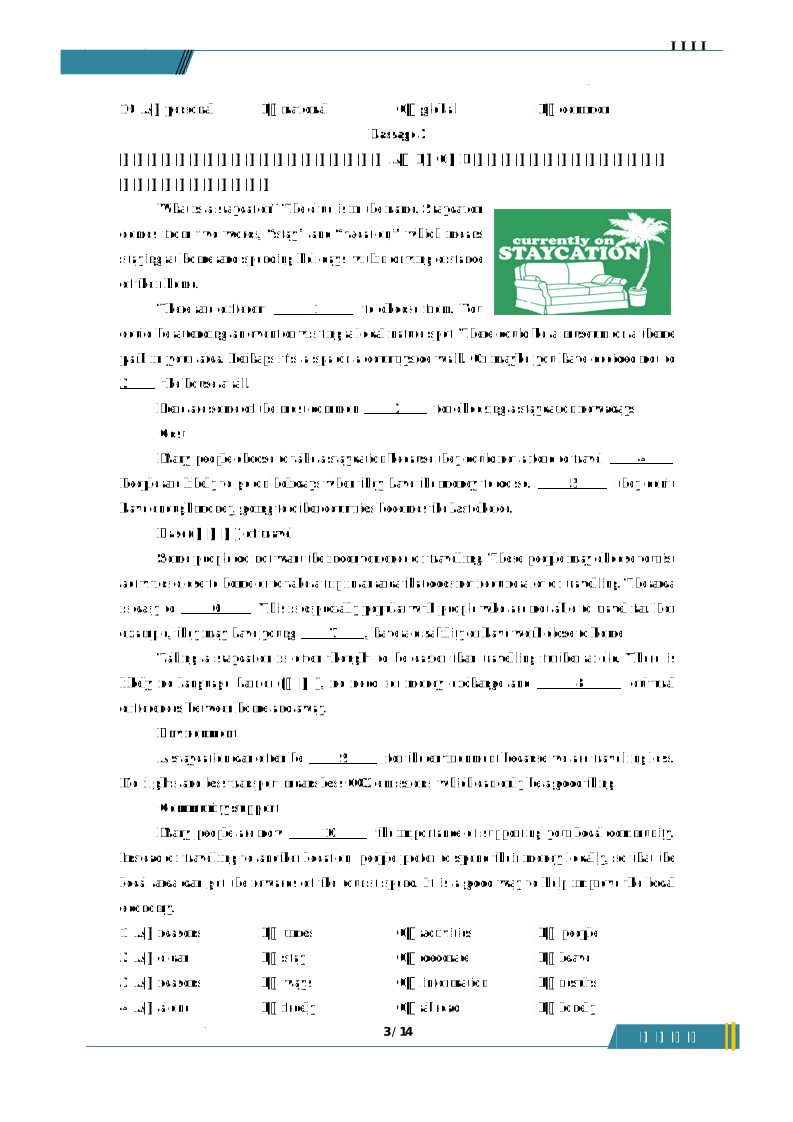
3

相关资源
由于学科网是一个信息分享及获取的平台,不确保部分用户上传资料的 来源及知识产权归属。如您发现相关资料侵犯您的合法权益,请联系学科网,我们核实后将及时进行处理。