寒假作业04 一般将来时(巩固培优)七年级英语新教材外研版
2026-01-04
|
2份
|
19页
|
576人阅读
|
26人下载
资源信息
| 学段 | 初中 |
|---|---|
| 学科 | 英语 |
| 教材版本 | 初中英语外研版七年级上册 |
| 年级 | 七年级 |
| 章节 | - |
| 类型 | 题集-专项训练 |
| 知识点 | 一般将来时 |
| 使用场景 | 寒暑假-寒假 |
| 学年 | 2026-2027 |
| 地区(省份) | 全国 |
| 地区(市) | - |
| 地区(区县) | - |
| 文件格式 | ZIP |
| 文件大小 | 543 KB |
| 发布时间 | 2026-01-04 |
| 更新时间 | 2026-01-12 |
| 作者 | Luciabc |
| 品牌系列 | 上好课·寒假轻松学 |
| 审核时间 | 2026-01-04 |
| 下载链接 | https://m.zxxk.com/soft/55774757.html |
| 价格 | 3.00储值(1储值=1元) |
| 来源 | 学科网 |
内容正文:
限时练习:40min 完成时间: 月 日 天气:
寒假作业04 一般将来时
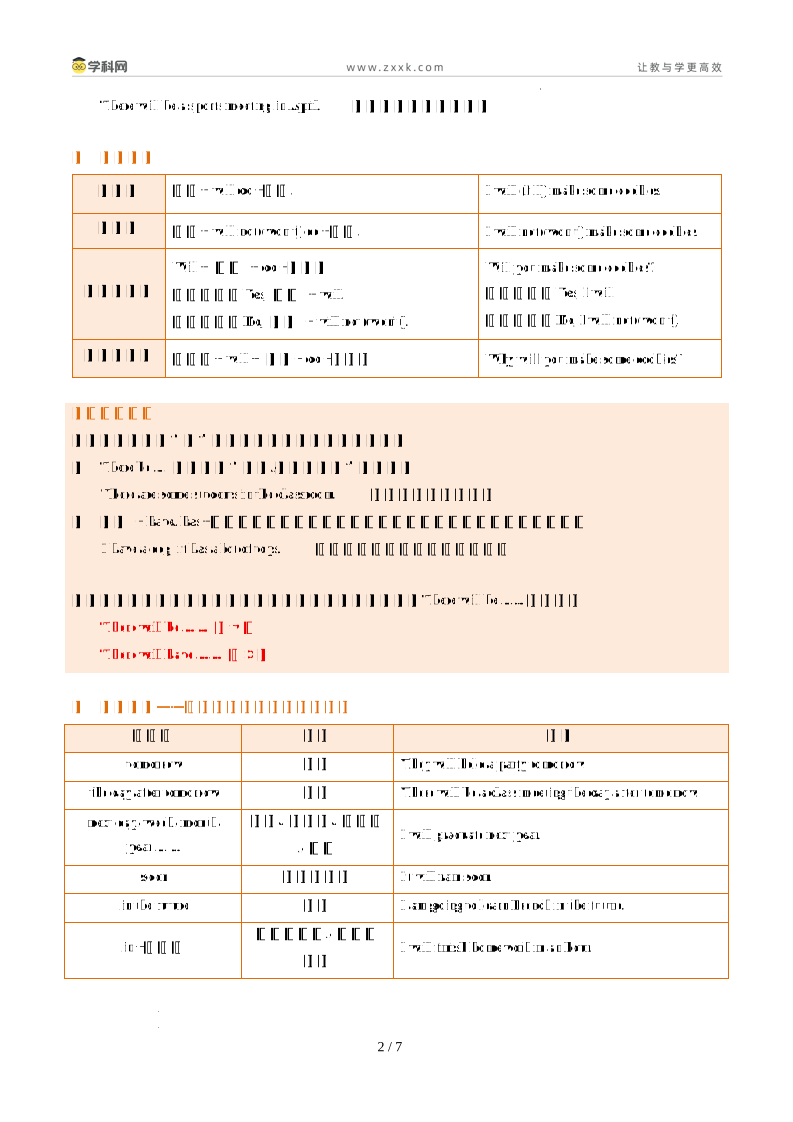
· 时态概述
一般将来时表示将来某一时间发生的动作或状态,或将来某一时间段内经常发生的动作或状态。 通常有两种表达方式。
考点一 be going to结构
be going to do sth 的结构用于表达打算做某事、计划做某事,例如:
I’m going to take excise this evening. 我打算今晚做锻炼。
Lingling is going to have an English class tomorrow. 玲玲明天有一堂英语课。
We are going to have a picnic this weekend. 周末我们会去野餐。
· 基本句型
肯定句
主语+ am/ is/ are going to do +其他.
I’m going to visit my grandparents.
否定句
主语+ am/ is/ are not going to do +其他.
I’m not going to visit my grandparents.
一般疑问句
Am/ Is/ Are + 主语 + going to do +其他?
肯定回答:Yes, 主语 + am/ is/ are.
否定回答:No, 主语 + am/ is/ are not.
Are you going to visit your grandparents?
肯定回答:Yes, I am.
否定回答:No, I am not.
特殊疑问句
疑问词+ am/ is/ are + 主语+ going to do +其他?
When are you going to visit your grandparents?
【易错提醒】
如若表达计划或打算到某地去,一般只说 be going to somewhere,省略掉to之后的go,例如:
She is going to London for winter holiday. 她打算去伦敦过寒假。
考点二 will结构
除了上述的结构之外,还可以用“will + 动词原型”的结构来表达,例如:
Maybe it will be very cold next winter. 明年冬天也许会很冷。
There will be a sports meeting in April. 四月将有一场运动会。
· 基本句型
肯定句
主语+ will do +其他.
I will (I’ll) make some cookies.
否定句
主语+ will not (won’t) do +其他.
I will not (won’t) make some cookies.
一般疑问句
Will + 主语 + do +其他?
肯定回答:Yes, 主语 + will.
否定回答:No, 主语 + will not (won’t).
Will you make some cookies?
肯定回答:Yes, I will.
否定回答:No, I will not (won’t).
特殊疑问句
疑问词+ will + 主语+ do +其他?
Why will you make some cookies?
【易错提醒】
英语中想要表达“有”有两种表达,但他们的用法不同
· There be … 句型表示“某地/某时有某物”,例如:
There are some students in the classroom. 教室里有一些学生。
· 主语 + have/ has +其他,这种结构强调某人(物)拥有某物,有归属权。例如:
I have a dog, it has a lot of toys. 我有一只小狗,它有许多玩具。
所以当我们想要表达未来某地或某时存在某物时,要用到There will be ……的句型。
There will be …… (√)
There will have …… (×)
· 方法归纳——一般将来时的时间标志词、
标志词
词义
例句
tomorrow
明天
They will hold a party tomorrow.
the day after tomorrow
后天
There will be a class meeting the day after tomorrow.
next day/ week/ month/ year ……
明天/ 下一周/ 下个月/ 明年
I will graduate next year.
soon
很快,不久
It will rain soon.
in the future
未来
I am going to learn French in the future.
in +时间段
一段时间内/ 一段时间后
I will finish homework in an hour.
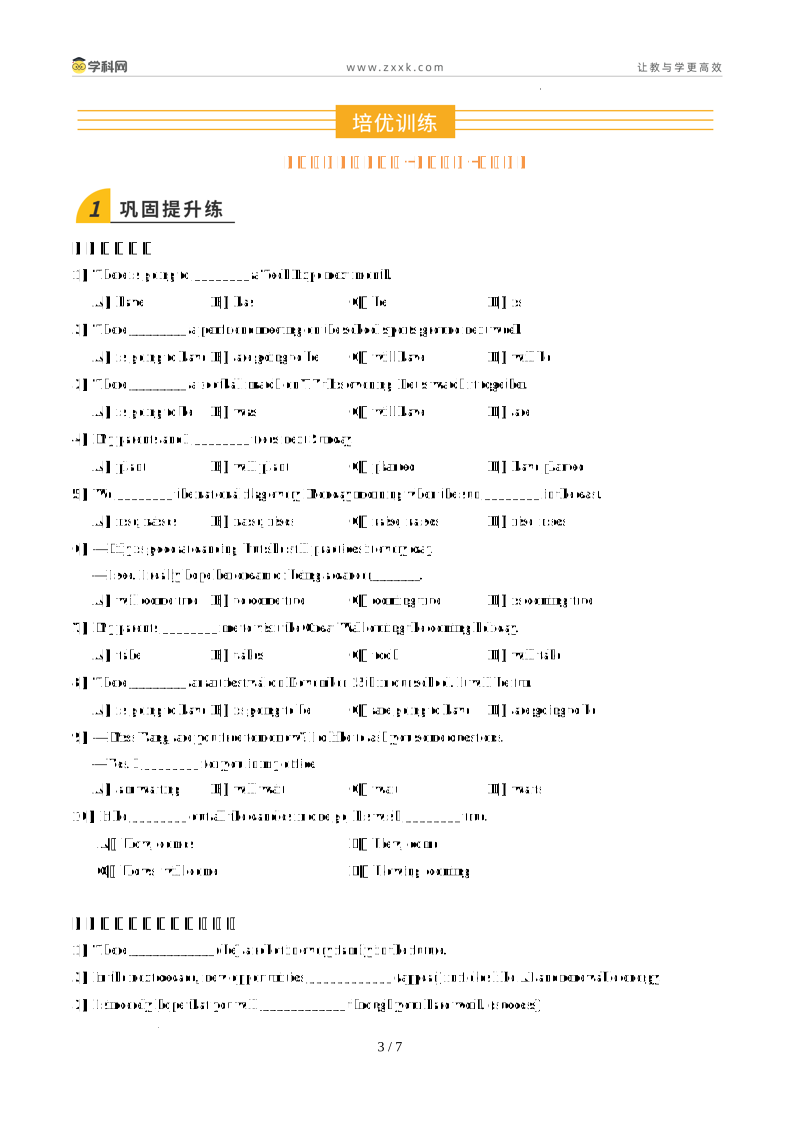
三层必刷:巩固提升+能力培优+创新题型
一、单项选择
1.There is going to ________ a Tech Expo next month.
A.have B.has C.be D.is
2.There ________ a penfriend meeting on the school sports ground next week.
A.is going to have B.are going to be C.will have D.will be
3.There ________ a football match on TV this evening. Let’s watch it together.
A.is going to be B.was C.will have D.are
4.My parents and I ________ trees next Sunday.
A.plant B.will plant C.planted D.have planted
5.We ________ the national flag every Monday morning when the sun ________ in the east.
A.rise; raises B.raise; rises C.raise; raises D.rise; rises
6.—Lily is good at dancing, but she still practices it every day.
—I see. I really hope her dream of being a dancer_______.
A.will come true B.to come true C.coming true D.is coming true
7.My parents ________ me to visit the Great Wall during the coming holiday.
A.take B.takes C.took D.will take
8.There ________ an art festival on November 15th in our school. It will be fun.
A.is going to have B.is going to be C.are going to have D.are going to be
9.—Miss Yang, are you free tomorrow? I’d like to ask you some questions.
—Yes. I ________ for you in my office.
A.am waiting B.will wait C.wait D.waits
10.If he ________ out all the candles in one go, his wish ________ true.
A.blow; comes B.blew; come
C.blows; will come D.blowing; coming
二、用所给词适当形式填空
1.There ____________ (be) a robot in every family in the future.
2.In the next decade, new opportunities ____________ (appear) in fields like AI and renewable energy.
3.I sincerely hope that you will ____________ through your hard work. (success)
4.Mr. Chen hopes we ____________ (become) the models of kindness next year.
5.I ____________ (do) morning exercises tomorrow with my sister. She also wants to ____________ (see) a film.
6.I feel terrible. I think I ____________ (be) sick.
7.Thanks for lending me the money. I ____________ (pay) you back on Friday.
8.There are some clouds in the sky. It ____________ (rain) soon.
9.I ____________ (travel) with my grandparents next month.
10.Next Spring Festival, I ____________ (go) to Harbin. It’s too cold.
一、阅读理解
A
Have you heard of dodos? The dodo was a large bird. You might not think it was a bird at all, for the dodo could not fly. It was a member of the pigeon family. It lived happily and safely until humans arrived in 1505. European sailors discovered the bird in 1507 on Mauritius Island in the Indian Ocean.
When the sailors found the strange bird could not fly, they were surprised. The Europeans on Mauritius Island and the pigs they brought with them found the birds very good to eat. So large numbers of dodos were killed and by 1681 no living dodos were found on the island. A few dodos were brought to England in the 17th century. Humans didn’t know how to protect the birds. They caused the dodos’ extinction. This is how the phrase “as dead as a dodo” came. Because they died out completely, dodos became very well-known. It gave humans a big lesson.
1.Why did the Europeans kill so many dodos?
A.Because they had no pigs to eat. B.Because they didn’t like the birds.
C.Because they found the birds scary. D.Because they found the birds good to eat.
2.The underlined word “extinction” has the same meaning as “________”.
A.a big lesson B.dying out C.protection D.living
3.What’s the right order about dodos?
a. European sailors were surprised when they found dodos couldn’t fly.
b. The Europeans and the pigs found dodos very good to eat.
c. European sailors discovered dodos on Mauritius Island.
d. Large numbers of dodos were killed on the island.
A.a-b-c-d B.c-b-a-d C.c-a-b-d D.b-a-c-d
4.Why did the writer write this passage?
A.To tell us it’s important to protect animals.
B.To remember the dodo was popular once.
C.To point out the dodo was very famous.
D.To show no living dodos were found.
B
There are more than 400,000 kinds of plants on Earth. Some plants are as big as tall buildings; others are as small as rice. Plants are an important part in nature because they give out oxygen. All animals need it for breathing.
What is a plant? Most people can find the differences between an animal and a plant. That is because animals can move around, but plants can’t. What makes a plant? Like animals, plants are living things with lots of cells (细胞). Unlike animals, plants make their own food with water, CO2 and sunlight. Most plants have roots, stems, and leaves, and most plants reproduce by growing flowers and making seeds.
How does a plant grow? For most animals, genes (基因) control (控制) their growth. That means when they are small, it’s easy to know what they will look like after they grow up. Plants are different. Genes controlled their growth too, but their final shapes may be different because of the place they live. For example, a tree can be big and round if it grows up in an open space, but taller and thinner if it grows with many other trees around it. Plants can’t move from one place to another, so it is important for them to fit (适应) in the place they live.
1.What can we learn in Paragraph 1?
A.Parts of plants. B.Number of plants.
C.Colors of plants. D.Food of plants.
2.How does the writer talk about the plants in Paragraph 2?
A.By comparing. B.By telling stories.
C.By giving numbers. D.By drawing pictures.
3.What can we know about plants from the passage?
A.Trees grow tall and thin in an open place.
B.Plants and animals grow in different ways.
C.Only environment controls the plants’ growth.
D.The same kind of plants grow into the same shape.
4.Which can be the best title for the passage?
A.The Magic Plants B.Life of an Animal
C.The Growth of Animals D.Plants and Sunlight
二、完形填空
阅读短文,理解大意,从A、B、C、D四个选项中选出可以填入空白处的最佳选项。
One spring, a teacher gave each student a small seed. “Plant it and see what happens,” she said.
Tim received his seed excitedly. He found a nice pot, filled it with good soil, and planted the seed carefully. He watered it every day and waited for it to 1 .
After two weeks, nothing happened. Tim saw that his classmates’ plants were already growing. He felt 2 but decided to keep trying.
One month passed, and Tim’s pot was still 3 . His friends laughed at him. “Your seed must be dead,” they said. Tim felt like giving up, but something inside him said, “Don’t 4 .”
He continued to 5 the empty pot. He made sure it got enough sunlight and water. Then one morning, Tim saw a small green sprout (新芽). He was so happy. The plant grew stronger each day. Two months later, it became the most 6 plant in the classroom—a sunflower.
The teacher smiled and told everyone,“Tim’s plant took longer because it was a sunflower. It needed deeper roots before it could grow 7 .”
She continued, “This teaches us an important 8 . Some of the best things in life need more 9 to grow. Never give up on your 10 , even if they take longer than others.”
1.A.die B.grow C.change D.disappear
2.A.happy B.proud C.worried D.excited
3.A.empty B.full C.wet D.dry
4.A.stop B.cry C.worry D.hurry
5.A.look for B.look out C.look into D.look after
6.A.expensive B.common C.beautiful D.strange
7.A.taller B.smaller C.weaker D.shorter
8.A.story B.joke C.lesson D.knowledge
9.A.water B.space C.time D.care
10.A.dreams B.friends C.grades D.games
短文填空
Bamboo is one of the most useful plants. Many people call this plant a tree—a tall tree, but it 1 (be) a kind of grass.
There are more than 500 2 (kind) of bamboo; some are tall but some are not. This plant grows well in warm places. It 3 (come) in a lot of colors, from yellow to black.
The Chinese people are very good 4 using bamboo. They use it to make many things, 5 as boxes and cooking tools. They even use it to build buildings because it is 6 (real) strong. They also use it to make paper. A lot of Chinese singers write beautiful songs about bamboo 7 many artists draw it in pictures.
Now, farmers in many poor countries are 8 (learn) how to find water by using bamboo. These farmers need many easy 9 (way) to get water because they have little money, and their crops can’t live without rain or water. Bamboo can help 10 (they) bring water to their crops without spending much money.
7 / 10
学科网(北京)股份有限公司
$
限时练习:40min 完成时间: 月 日 天气:
寒假作业04 一般将来时
· 时态概述
一般将来时表示将来某一时间发生的动作或状态,或将来某一时间段内经常发生的动作或状态。 通常有两种表达方式。
考点一 be going to结构
be going to do sth 的结构用于表达打算做某事、计划做某事,例如:
I’m going to take excise this evening. 我打算今晚做锻炼。
Lingling is going to have an English class tomorrow. 玲玲明天有一堂英语课。
We are going to have a picnic this weekend. 周末我们会去野餐。
· 基本句型
肯定句
主语+ am/ is/ are going to do +其他.
I’m going to visit my grandparents.
否定句
主语+ am/ is/ are not going to do +其他.
I’m not going to visit my grandparents.
一般疑问句
Am/ Is/ Are + 主语 + going to do +其他?
肯定回答:Yes, 主语 + am/ is/ are.
否定回答:No, 主语 + am/ is/ are not.
Are you going to visit your grandparents?
肯定回答:Yes, I am.
否定回答:No, I am not.
特殊疑问句
疑问词+ am/ is/ are + 主语+ going to do +其他?
When are you going to visit your grandparents?
【易错提醒】
如若表达计划或打算到某地去,一般只说 be going to somewhere,省略掉to之后的go,例如:
She is going to London for winter holiday. 她打算去伦敦过寒假。
考点二 will结构
除了上述的结构之外,还可以用“will + 动词原型”的结构来表达,例如:
Maybe it will be very cold next winter. 明年冬天也许会很冷。
There will be a sports meeting in April. 四月将有一场运动会。
· 基本句型
肯定句
主语+ will do +其他.
I will (I’ll) make some cookies.
否定句
主语+ will not (won’t) do +其他.
I will not (won’t) make some cookies.
一般疑问句
Will + 主语 + do +其他?
肯定回答:Yes, 主语 + will.
否定回答:No, 主语 + will not (won’t).
Will you make some cookies?
肯定回答:Yes, I will.
否定回答:No, I will not (won’t).
特殊疑问句
疑问词+ will + 主语+ do +其他?
Why will you make some cookies?
【易错提醒】
英语中想要表达“有”有两种表达,但他们的用法不同
· There be … 句型表示“某地/某时有某物”,例如:
There are some students in the classroom. 教室里有一些学生。
· 主语 + have/ has +其他,这种结构强调某人(物)拥有某物,有归属权。例如:
I have a dog, it has a lot of toys. 我有一只小狗,它有许多玩具。
所以当我们想要表达未来某地或某时存在某物时,要用到There will be ……的句型。
There will be …… (√)
There will have …… (×)
· 方法归纳——一般将来时的时间标志词、
标志词
词义
例句
tomorrow
明天
They will hold a party tomorrow.
the day after tomorrow
后天
There will be a class meeting the day after tomorrow.
next day/ week/ month/ year ……
明天/ 下一周/ 下个月/ 明年
I will graduate next year.
soon
很快,不久
It will rain soon.
in the future
未来
I am going to learn French in the future.
in +时间段
一段时间内/ 一段时间后
I will finish homework in an hour.
三层必刷:巩固提升+能力培优+创新题型
一、单项选择
1.There is going to ________ a Tech Expo next month.
A.have B.has C.be D.is
【答案】C
【解析】句意:下个月将有一个科技博览会。
考查there be句型的一般将来时结构。在there be句型的一般将来时中,固定搭配为“there is/are going to be”,表示“将会有”,其中“going to”后必须接动词原形“be”。故选C。
2.There ________ a penfriend meeting on the school sports ground next week.
A.is going to have B.are going to be C.will have D.will be
【答案】D
【解析】句意:下周学校运动场上将有一场笔友见面会。
考查there be句型的一般将来时。there be句型表示“有”,其一般将来时结构为“there will be”或“there is/are going to be”;主语“a penfriend meeting”是单数,be动词用is,选项中无“is going to be”,应用“will be”。故选D。
3.There ________ a football match on TV this evening. Let’s watch it together.
A.is going to be B.was C.will have D.are
【答案】A
【解析】句意:今晚电视上将有一场足球比赛。我们一起看吧。
考查there be句型的将来时用法。主语a football match为单数,且时间状语this evening表示将来,因此需用there be句型的一般将来时结构:there is/are going to be或there will be。故选A。
4.My parents and I ________ trees next Sunday.
A.plant B.will plant C.planted D.have planted
【答案】B
【解析】句意:我的父母和我下周日将要种树。
考查动词时态。根据时间状语“next Sunday”可知,动作发生在将来,需用一般将来时。其结构为“will+动词原形”。故选B。
5.We ________ the national flag every Monday morning when the sun ________ in the east.
A.rise; raises B.raise; rises C.raise; raises D.rise; rises
【答案】B
【解析】句意:我们每周一早上在太阳在东方升起时升国旗。
考查动词辨析。rise上升;raise举起。根据题干可知,第一个空需要用及物动词,宾语为“国旗”,表示人为动作的“升起”,应该用raise;第二个空需用不及物动词,主语为“太阳”,表示自然现象“升起”,故用rises。故选B。
6.—Lily is good at dancing, but she still practices it every day.
—I see. I really hope her dream of being a dancer_______.
A.will come true B.to come true C.coming true D.is coming true
【答案】A
【解析】句意:——Lily擅长跳舞,但她仍然每天练习。——我明白了。我真的希望她成为舞者的梦想会实现。
考查一般将来时。will come true一般将来时;to come true动词不定式短语;coming true现在分词短语或动名词短语;is coming true现在进行时。根据“I really hope her dream of being a dancer…”可知,该句是一个主从复合句,空格处是从句的谓语部分;说话者希望Lily的梦想未来实现,应用一般将来时。故选A。
7.My parents ________ me to visit the Great Wall during the coming holiday.
A.take B.takes C.took D.will take
【答案】D
【解析】句意:我父母将在即将到来的假期带我去参观长城。
考查动词时态辨析。take带;takes带,第三人称单数形式,;took带,过去式;will take带,将来时。根据“during the coming holiday”可知,事情发生在将来,应该用一般将来时。故选D。
8.There ________ an art festival on November 15th in our school. It will be fun.
A.is going to have B.is going to be C.are going to have D.are going to be
【答案】B
【解析】句意:11月15日我们学校将有一个艺术节。
考查there be句型的一般将来时。there be句型表示“有”时需用be动词,不能用have,故排除A项和C项。主语“an art festival”是单数,故be动词用单数形式is,排除D项。故选B。
9.—Miss Yang, are you free tomorrow? I’d like to ask you some questions.
—Yes. I ________ for you in my office.
A.am waiting B.will wait C.wait D.waits
【答案】B
【解析】句意:——杨老师,你明天有空吗?我想问你几个问题。——有空。我将在办公室等你。
考查动词时态。根据问句“are you free tomorrow?”可知,询问的是明天是否有空,因此答句应该用将来时态,表示“我将在办公室等你”,所以应该用will wait。故选B。
10.If he ________ out all the candles in one go, his wish ________ true.
A.blow; comes B.blew; come
C.blows; will come D.blowing; coming
【答案】C
【解析】句意:如果他一次吹灭所有蜡烛,他的愿望就会实现。
考查时态。句子是if引导的条件状语从句,遵循“主将从现”原则,即if从句用一般现在时,主句用一般将来时。从句主语“he”是第三人称单数,故动词用blows;主句用will come true。故选C。
二、用所给词适当形式填空
1.There ____________ (be) a robot in every family in the future.
【答案】will be
【解析】句意:未来每个家庭都会有一个机器人。句中“in the future”是一般将来时的标志,there be句型的将来时结构为“there will be”。故填will be。
2.In the next decade, new opportunities ____________ (appear) in fields like AI and renewable energy.
【答案】will appear
【解析】句意:在未来十年,人工智能和可再生能源等领域将出现新的机遇。appear“出现”,根据“In the next decade”可知,句子时态为一般将来时,其结构为“will+动词原形”。故填will appear。
3.I sincerely hope that you will ____________ through your hard work. (success)
【答案】succeed
【解析】句意:我真诚地希望你能通过努力工作取得成功。根据句子结构可知,此处使用动词作谓语,success是名词,其动词形式为succeed,意为“成功”,will后接动词原形。故填succeed。
4.Mr. Chen hopes we ____________ (become) the models of kindness next year.
【答案】will become
【解析】句意:陈先生希望我们明年成为善良的榜样。根据“hopes”和“next year”可知,主句动词“hopes”使用了一般现在时,表示现在的愿望。而从句中有明确的时间状语“next year”(明年),表示动作发生在将来。在表达“希望某人将来做某事”时,英语常用“hope (that) + 主语 + will do”结构。因此,此处应使用一般将来时“will become”。故填will become。
5.I ____________ (do) morning exercises tomorrow with my sister. She also wants to ____________ (see) a film.
【答案】 will do/am going to do see
【解析】句意:我明天要和妹妹一起做早操。她也想去看电影。do“做”;see“看见”;根据“tomorrow”可知,应使用将来时,主语是I,因此空1填will do或am going to do;wants to do sth“想要做某事”,因此空2填原形see。故填will do/am going to do;see。
6.I feel terrible. I think I ____________ (be) sick.
【答案】am going to be
【解析】句意:我感觉很糟糕。我认为我要生病了。根据“I feel terrible.”可知,此处指“我”感觉很糟糕,感觉要生病了,应用一般将来时,表示将要发生的动作,其结构为“be going to do”,表示基于迹象和计划的预测和打算;从句中,“I”作主语,be动词应用am,从句为主系表结构,to后接系动词原形be。故填am going to be。
7.Thanks for lending me the money. I ____________ (pay) you back on Friday.
【答案】will pay
【解析】句意:谢谢你借给我钱。我将在星期五还给你。根据“…you back on Friday”和句子语境可知,句子描述的是将来的事情,应用一般将来时,结构为“will+动词原形”,故填will pay。
8.There are some clouds in the sky. It ____________ (rain) soon.
【答案】is going to rain
【解析】句意:天空中有一些云。马上就要下雨了。根据“There are some clouds in the sky.”可知,这是当前的迹象;结合soon可知,此处表示将要发生的事件,当句子表达基于当前迹象的将来事件时,常用“be going to+动词原形”结构,强调预测或推断。主语It是第三人称单数,因此be动词需用is,空处应填is going to rain。故填is going to rain。
9.I ____________ (travel) with my grandparents next month.
【答案】will travel
【解析】句意:下个月我将和我的祖父母一起去旅行。根据“next month”可知,时态是一般将来时,故填will travel。
10.Next Spring Festival, I ____________ (go) to Harbin. It’s too cold.
【答案】won’t go/will not go
【解析】句意:明年春节,我不去哈尔滨。那里太冷了。根据“It’s too cold.”可知,此处表示因为太冷所以不去,用一般将来时的否定形式,其结构为“will not do”,缩写为won’t do,go“去”。故填won’t go/will not go。
一、阅读理解
A
Have you heard of dodos? The dodo was a large bird. You might not think it was a bird at all, for the dodo could not fly. It was a member of the pigeon family. It lived happily and safely until humans arrived in 1505. European sailors discovered the bird in 1507 on Mauritius Island in the Indian Ocean.
When the sailors found the strange bird could not fly, they were surprised. The Europeans on Mauritius Island and the pigs they brought with them found the birds very good to eat. So large numbers of dodos were killed and by 1681 no living dodos were found on the island. A few dodos were brought to England in the 17th century. Humans didn’t know how to protect the birds. They caused the dodos’ extinction. This is how the phrase “as dead as a dodo” came. Because they died out completely, dodos became very well-known. It gave humans a big lesson.
1.Why did the Europeans kill so many dodos?
A.Because they had no pigs to eat. B.Because they didn’t like the birds.
C.Because they found the birds scary. D.Because they found the birds good to eat.
2.The underlined word “extinction” has the same meaning as “________”.
A.a big lesson B.dying out C.protection D.living
3.What’s the right order about dodos?
a. European sailors were surprised when they found dodos couldn’t fly.
b. The Europeans and the pigs found dodos very good to eat.
c. European sailors discovered dodos on Mauritius Island.
d. Large numbers of dodos were killed on the island.
A.a-b-c-d B.c-b-a-d C.c-a-b-d D.b-a-c-d
4.Why did the writer write this passage?
A.To tell us it’s important to protect animals.
B.To remember the dodo was popular once.
C.To point out the dodo was very famous.
D.To show no living dodos were found.
【答案】1.D 2.B 3.C 4.A
【解析】本文围绕渡渡鸟展开叙述,核心内容是其从被发现到灭绝的过程,以及这一事件带来的警示。
1.细节理解题。根据“The Europeans on Mauritius Island and the pigs they brought with them found the birds very good to eat. So large numbers of dodos were killed”可知,欧洲人杀很多渡渡鸟是因为他们发现渡渡鸟很好吃。故选D。
2.词句猜测题。根据“They caused the dodos’ extinction. This is how the phrase ‘as dead as a dodo’ came. Because they died out completely”可知,“extinction”意思是灭绝,和“dying out”意思相同。故选B。
3.细节理解题。根据“European sailors discovered the bird in 1507 on Mauritius Island in the Indian Ocean.”可知,欧洲水手在毛里求斯岛上发现了渡渡鸟,c排第一;根据“When the sailors found the strange bird could not fly, they were surprised.”可知,欧洲水手发现渡渡鸟不会飞时很惊讶,a排第二;根据“The Europeans on Mauritius Island and the pigs they brought with them found the birds very good to eat.”可知,欧洲人和猪发现渡渡鸟很好吃,b排第三;根据“So large numbers of dodos were killed”可知,大量渡渡鸟被杀,d排第四。所以正确顺序是c-a-b-d。故选C。
4.推理判断题。根据“It gave humans a big lesson.”以及全文内容可知,作者写这篇文章是为了告诉我们保护动物很重要。故选A。
B
There are more than 400,000 kinds of plants on Earth. Some plants are as big as tall buildings; others are as small as rice. Plants are an important part in nature because they give out oxygen. All animals need it for breathing.
What is a plant? Most people can find the differences between an animal and a plant. That is because animals can move around, but plants can’t. What makes a plant? Like animals, plants are living things with lots of cells (细胞). Unlike animals, plants make their own food with water, CO2 and sunlight. Most plants have roots, stems, and leaves, and most plants reproduce by growing flowers and making seeds.
How does a plant grow? For most animals, genes (基因) control (控制) their growth. That means when they are small, it’s easy to know what they will look like after they grow up. Plants are different. Genes controlled their growth too, but their final shapes may be different because of the place they live. For example, a tree can be big and round if it grows up in an open space, but taller and thinner if it grows with many other trees around it. Plants can’t move from one place to another, so it is important for them to fit (适应) in the place they live.
1.What can we learn in Paragraph 1?
A.Parts of plants. B.Number of plants.
C.Colors of plants. D.Food of plants.
2.How does the writer talk about the plants in Paragraph 2?
A.By comparing. B.By telling stories.
C.By giving numbers. D.By drawing pictures.
3.What can we know about plants from the passage?
A.Trees grow tall and thin in an open place.
B.Plants and animals grow in different ways.
C.Only environment controls the plants’ growth.
D.The same kind of plants grow into the same shape.
4.Which can be the best title for the passage?
A.The Magic Plants B.Life of an Animal
C.The Growth of Animals D.Plants and Sunlight
【答案】1.B 2.A 3.B 4.A
【解析】本文是一篇说明文,介绍了植物的种类、习性、基因等方面的知识。
1.细节理解题。根据第一段中的“There are more than 400,000 kinds of plants on Earth.”可知,我们可以了解到关于植物数量的信息。故选B。
2.推理判断题。根据第二段中的“That is because animals can move around, but plants can’t.”可知,本段作者通过与动物比较来描述植物,故选A。
3.推理判断题。根据第二段中的“That is because animals can move around, but plants can’t.”可知,植物和动物以不同的方式生长,故选B。
4.标题归纳题。通读全文可知,本文介绍了植物的种类、习性、基因等方面的知识,“神奇的植物”适合作本文标题,故选A。
二、完形填空
阅读短文,理解大意,从A、B、C、D四个选项中选出可以填入空白处的最佳选项。
One spring, a teacher gave each student a small seed. “Plant it and see what happens,” she said.
Tim received his seed excitedly. He found a nice pot, filled it with good soil, and planted the seed carefully. He watered it every day and waited for it to 1 .
After two weeks, nothing happened. Tim saw that his classmates’ plants were already growing. He felt 2 but decided to keep trying.
One month passed, and Tim’s pot was still 3 . His friends laughed at him. “Your seed must be dead,” they said. Tim felt like giving up, but something inside him said, “Don’t 4 .”
He continued to 5 the empty pot. He made sure it got enough sunlight and water. Then one morning, Tim saw a small green sprout (新芽). He was so happy. The plant grew stronger each day. Two months later, it became the most 6 plant in the classroom—a sunflower.
The teacher smiled and told everyone,“Tim’s plant took longer because it was a sunflower. It needed deeper roots before it could grow 7 .”
She continued, “This teaches us an important 8 . Some of the best things in life need more 9 to grow. Never give up on your 10 , even if they take longer than others.”
1.A.die B.grow C.change D.disappear
2.A.happy B.proud C.worried D.excited
3.A.empty B.full C.wet D.dry
4.A.stop B.cry C.worry D.hurry
5.A.look for B.look out C.look into D.look after
6.A.expensive B.common C.beautiful D.strange
7.A.taller B.smaller C.weaker D.shorter
8.A.story B.joke C.lesson D.knowledge
9.A.water B.space C.time D.care
10.A.dreams B.friends C.grades D.games
【答案】
1.B 2.C 3.A 4.A 5.D 6.C 7.A 8.C 9.C 10.A
【解析】本文讲述了蒂姆种植种子的经历,通过向日葵需要更长时间扎根生长的故事,传达了“不要放弃梦想”的道理。
1.句意:他每天浇水,等待它生长。
die死亡;grow生长;change改变;disappear消失。根据“Planted the seed carefully. He watered it every day and waited for it to…”可知,此处是指等待种子生长,grow符合语境。故选B。
2.句意:他感到担心,但决定继续尝试。
happy开心的;proud骄傲的;worried担心的;excited兴奋的。根据“After two weeks, nothing happened. Tim saw that his classmates’ plants were already growing.”可知,自己的种子没发芽而同学的已经生长,蒂姆会感到担心,worried符合语境。故选C。
3.句意:一个月过去了,蒂姆的花盆仍然是空的。
empty空的;full满的;wet湿的;dry干的。根据前文“nothing happened”以及后文“the empty pot”可知,种子没发芽,花盆还是空的,empty符合语境。故选A。
4.句意:蒂姆想要放弃,但他内心有个声音说:“不要停止。”
stop停止;cry哭泣;worry担心;hurry匆忙。根据“Tim felt like giving up, but something inside him said”可知,此处是内心的声音劝他不要停止,stop符合语境。故选A。
5.句意:他继续照料这个空花盆。
look for寻找;look out小心;look into调查;look after照料。根据“He made sure it got enough sunlight and water.”可知,此处是指照料花盆,look after符合语境。故选D。
6.句意:两个月后,它成了教室里最漂亮的植物——一株向日葵。
expensive昂贵的;common普通的;beautiful漂亮的;strange奇怪的。根据“it became the most…plant in the classroom—a sunflower”可知,向日葵长成后是漂亮的,beautiful符合语境。故选C。
7.句意:它需要更深的根才能长得更高。
taller更高的;smaller更小的;weaker更弱的;shorter更矮的。根据“it needed deeper roots before it could grow”可知,深根是为了长得更高,taller符合语境。故选A。
8.句意:这给我们上了重要的一课。
story故事;joke笑话;lesson课,教训;knowledge知识。根据“This teaches us an important…”可知,此处是指学到的教训,lesson符合语境。故选C。
9.句意:生活中一些最好的事物需要更多时间来成长。
water水;space空间;time时间;care关心。根据“Tim’s plant took longer because it was a sunflower.”可知,前文蒂姆的种子用了更长时间生长,可知此处是指需要更多时间,time符合语境。故选C。
10.句意:永远不要放弃你的梦想,即使它们比别人的需要更长时间。
dreams梦想;friends朋友;grades成绩;games游戏。根据“Never give up on your…”可知,此处是指不要放弃梦想,dreams符合语境。故选A。
短文填空
Bamboo is one of the most useful plants. Many people call this plant a tree—a tall tree, but it 1 (be) a kind of grass.
There are more than 500 2 (kind) of bamboo; some are tall but some are not. This plant grows well in warm places. It 3 (come) in a lot of colors, from yellow to black.
The Chinese people are very good 4 using bamboo. They use it to make many things, 5 as boxes and cooking tools. They even use it to build buildings because it is 6 (real) strong. They also use it to make paper. A lot of Chinese singers write beautiful songs about bamboo 7 many artists draw it in pictures.
Now, farmers in many poor countries are 8 (learn) how to find water by using bamboo. These farmers need many easy 9 (way) to get water because they have little money, and their crops can’t live without rain or water. Bamboo can help 10 (they) bring water to their crops without spending much money.
【答案】
1.is 2.kinds 3.comes 4.at 5.such 6.really 7.and 8.learning 9.ways 10.them
【解析】本文主要介绍了竹子的属性、种类,以及它在生活、建筑、艺术和农业中的实用价值。
1.句意:很多人把这种植物叫做树——一棵高大的树,但它是一种草。句子为一般现在时,根据主语“it”(第三人称单数),结合一般现在时的be动词用法,此处填“is”。故填is。
2.句意:竹子有500多种;有些很高,有些不高。根据“more than 500(超过500)”,“kind”需用复数形式表示“种类”。故填kinds。
3.句意:它有很多颜色,从黄色到黑色。根据主语“it”(第三人称单数),结合一般现在时的动词变化规则,“come”需用第三人称单数形式“comes”。故填comes。
4.句意:中国人很擅长利用竹子。根据固定搭配“be good at(擅长)”,此处填“at”。故填at。
5.句意:他们用它做很多东西,比如盒子和炊具。根据固定搭配“such as(比如)”,可知此处填“such”。故填such。
6.句意:他们甚至用它来建房子,因为它真的很坚固。根据“strong(坚固的)”是形容词,需用副词修饰,“real”的副词形式是“really”。故填really。
7.句意:很多中国歌手写关于竹子的优美歌曲,很多艺术家把它画在画里。根据前后两个句子是并列关系,此处填并列连词“and”。故填and。
8.句意:现在,很多贫困国家的农民正在学习如何用竹子找水。根据“Now(现在)”,句子用现在进行时(be+doing),“learn”的现在分词是“learning”。故填learning。
9.句意:这些农民需要很多简单的方法来取水,因为他们没什么钱,而且他们的庄稼离不开雨水或水。根据“many(很多)”,“way”需用复数形式“ways”。故填ways。
10.句意:竹子可以帮助他们不用花很多钱就能给庄稼引水。根据“help(帮助)”后接宾格,“they”的宾格是“them”。故填them。
7 / 10
学科网(北京)股份有限公司
$
资源预览图

1
2
3
相关资源
由于学科网是一个信息分享及获取的平台,不确保部分用户上传资料的 来源及知识产权归属。如您发现相关资料侵犯您的合法权益,请联系学科网,我们核实后将及时进行处理。