Unit 2 Great inventions and discoveries 感叹句(单元核心语法精练)英语新教材沪教版(五四学制)八年级下册
2026-01-04
|
2份
|
18页
|
1215人阅读
|
56人下载
内容正文:
Unit 2 Great inventions and discoveries
核心语法精练(感叹句 )
目录
A 考点概览·知识回顾 1
B 考点夯基·专项突破 3
一、单项选择 3
二、完成句子 9
C 综合攻坚·能力跃升 10
题型一 语法填空 10
题型二 语法选择 13
用来表达喜悦、愤怒、悲哀、惊奇等不同的感情色彩。一般用 what 或 how 引导。
What
what 引导的感叹句中心词为名词
1. What + a/an + 形容词 + 可数名词单数(+ 主语 + 谓语)!
What a cute girl (she is)! / What an interesting story(it is)!
2. What + 形容词 + 可数名词复数(+ 主语 + 谓语)!
What beautiful flowers (these are)!
3. What + 形容词 + 不可数名词(+ 主语 + 谓语)!
What fine weather it is today!
How
how 引导的感叹句中心词为形容词或副词
1. How + 形容词/副词 + 主语 + 谓语 + 其他成分!
How lovely the cat is!/ How hard she works!
2. How + 主语 + 谓语!
How time flies!
做题口诀
去主谓 定末尾 名词what 形副 how
a/an 出现要注意 形名相连就用 what 形名不连就用 how
how a / how an 永不选 副词只能用 how
一、单项选择
1.—Jane is going to hold a concert here in July.
—Really? ________ exciting news!
A.How B.What an C.What D.How an
2.— Guess what? Our class won the first place in the school rope jumping competition!
— ________ exciting news it is! We are happy about it.
A.What an B.How an C.What D.How
3.—________ exciting news report it is!
—Yes, it says there is a new zoo near our home!
A.What an B.What C.How an D.How
4.________ convenient it is to send and receive emails on the cell phone!
A.What B.What a C.How D.How a
5.—Taizhou Team won the Jiangsu Super League final in Nanjing in November, 2025.
—________ exciting news it is!
A.What B.What an C.How D.How an
6.________ hard work it is to clean the room!
A.What a B.What C.How a D.How
7.—Look at Panda Ya Ya! ________ happy she is!
—Yes. There is enough fresh bamboo for her to eat now.
A.How B.What C.How a D.What a
8.—________ good weather! Shall we go for a picnic on the beach?
—That sounds like a good idea.
A.What a B.What C.How D.How a
9.________ huge information gap we have got between generations!
A.How B.What a C.What D.How a
10.—We like to make friends with Annie because she always tells the truth and never tells lies.
—________ honest girl!
A.What a B.What an C.How D.What
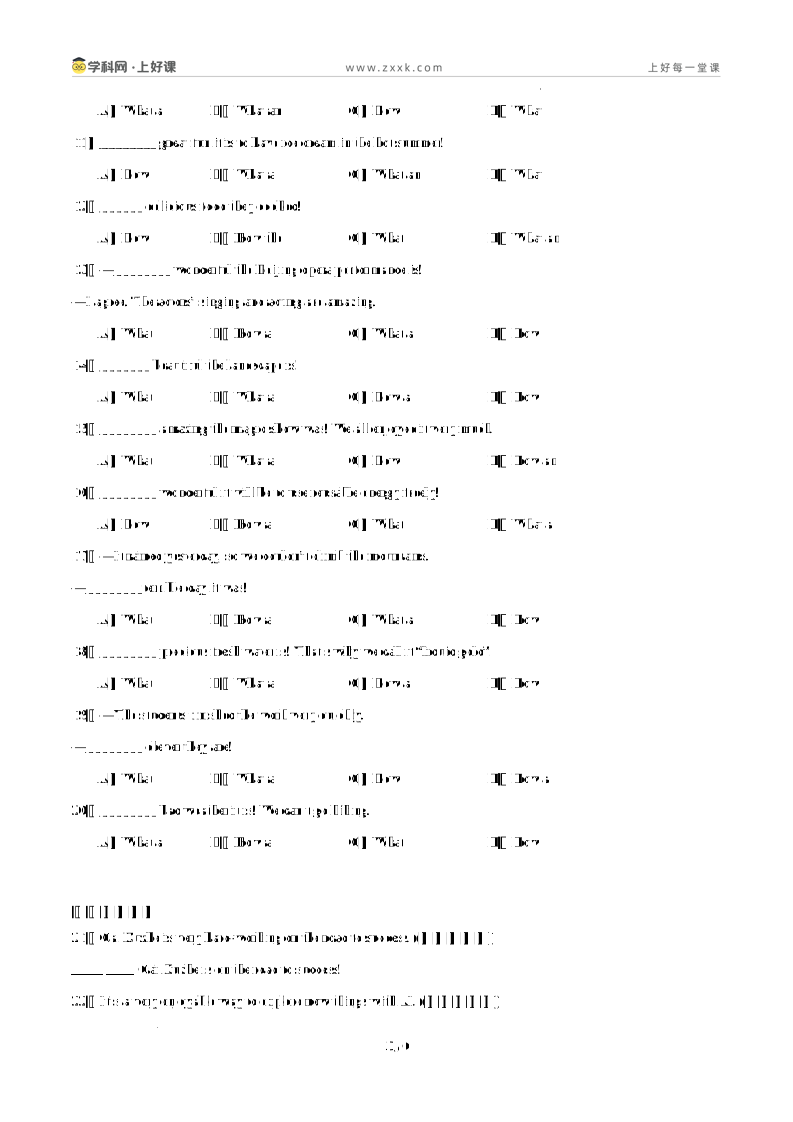
11.________ great fun it is to have ice cream in the hot summer!
A.How B.What a C.What an D.What
12.______ delicious food they cooked!
A.How B.How the C.What D.What an
13.—________ wonderful the Beijing opera performance is!
—I agree. The actors’ singing and acting are amazing.
A.What B.How a C.What a D.How
14._______ beautiful the landscape is!
A.What B.What a C.How a D.How
15.________ amazing the magic show was! We all enjoyed it very much.
A.What B.What a C.How D.How an
16.________ wonderful it will be to use reusable energy freely!
A.How B.How a C.What D.What a
17.—It rained yesterday, so we couldn’t climb the mountains.
—________terrible day it was!
A.What B.How a C.What a D.How
18.________ precious fresh water is! That’s why we call it “liquid gold”.
A.What B.What a C.How a D.How
19.—The students finished the work very quickly.
—________ clever they are!
A.What B.What a C.How D.How a
20.________ bad weather it is! We can’t go hiking.
A.What a B.How a C.What D.How
二、完成句子
21.Cai Xuzhe is very hard-working on the road to success. (改为感叹句)
Cai Xuzhe is on the road to success!
22.It’s a very enjoyable way to explore new things with AI. (改为感叹句)
enjoyable way it is to explore new things with AI!
23.It is an incredibly beautiful and peaceful sunset over the calm sea. (改为感叹句)
incredibly beautiful and peaceful sunset it is over the calm sea!
24.The girl has told us a very exciting story. (改为感叹句)
exciting story she has told us!
25.The sign language is a very useful tool for communication. (改为感叹句)
useful tool for communication the sign language is!
26.Jack looked foolish in the end. (改为感叹句)
Jack looked in the end!
27.She swims very quickly.(改为感叹句)
she swims!
28.I have a very interesting encyclopedia. (改为感叹句)
interesting encyclopedia I have!
29.Jack lives a peaceful life in the countryside. (改为感叹句)
peaceful life Jack lives in the countryside!
30.My classmates were so excited because we won the game in the end. (改为感叹句)
my classmates were because we won the game in the end!
题型一 语法填空
阅读下面短文,在空白处填入一个适当的词,或填入括号中所给单词的正确形式。
An AI canteen opened at the Hongqiao community in the Changning district of Shanghai recently. 1 is China’s first community canteen powered by an AI system.
The canteen 2 (normal) offers all the eight great cuisines (菜系) of China, and more than 30 kinds 3 breakfast for local old people and office workers.
The canteen’s 4 (smart) cooking system and robotic arms can fry, bake, steam, or boil ingredients according to customers’ different 5 (wish). Robotic arms then pack the dishes and change the temperature for dine-in or takeaway.
What the diners need 6 (do) is to put their dishes on a smart cashier desk and the system will automatically (自动地) figure out the cost of the meal. Different kinds of payment choices 7 (accept) in the canteen, including facial recognition (人脸识别), bank card, QR codes and digital RMB.
The AI system makes sure that the dishes taste nice 8 helps make service better, according to Li Ming, the 9 (own) of Shanghai Xixiang Company. Li explained that a waiter in a traditional canteen can serve dishes for 35 to 100 diners, but with 10 help of the AI system the number increases to 200.
题型二 语法选择
请通读下面短文,掌握其大意,根据语法和上下文连贯的要求,从每小题所给的三个选项中选出一个最佳答案,并在答题卡上将对应选项涂黑。
Dennis Hong and his students design human-like robots. Among the robots, there is a cooking robot called Project YORI. YORI is only the latest of Hong’s robot 1 . Another invention, DAVID, is the world’s first and only car that can be driven 2 the blind. And SAFFIR is a two-legged robot that 3 do dangerous work that humans are often unable to do. Hong is finding plenty of work for his robots.
When he 4 about his biggest success, Hong chose the robot called DARwIn-OP. He thought it was one of 5 used human-like robots for research and education. Hong’s team made DARwIn’s design free for anyone to use. They 6 many projects using the design so far. And they consider it 7 gift to the robotics community.
“Many people only want to see our successes and not the failures that came before those, 8 failure is simply a stepping stone in developing new technology. If you’re too afraid of failure, then you only get to walk on the safer side, and then 9 no innovation (创新),” said Hong. “I tell my students 10 breaking the robot. If the robot doesn’t fall or break, we don’t get to learn anything.”
1.A.invention B.inventions C.inventions’
2.A.in B.with C.by
3.A.can B.must C.should
4.A.asked B.was asked C.asking
5.A.widely B.more widely C.the most widely
6.A.are seeing B.have seen C.will see
7.A.a B.an C.the
8.A.and B.but C.or
9.A.it’s B.that’s C.there’s
10.A.try B.to try C.trying
1 / 12
学科网(北京)股份有限公司
$
Unit 2 Great inventions and discoveries
核心语法精练(感叹句 )
目录
A 考点概览·知识回顾 1
B 考点夯基·专项突破 3
一、单项选择 3
二、完成句子 9
C 综合攻坚·能力跃升 10
题型一 语法填空 10
题型二 语法选择 13
用来表达喜悦、愤怒、悲哀、惊奇等不同的感情色彩。一般用 what 或 how 引导。
What
what 引导的感叹句中心词为名词
1. What + a/an + 形容词 + 可数名词单数(+ 主语 + 谓语)!
What a cute girl (she is)! / What an interesting story(it is)!
2. What + 形容词 + 可数名词复数(+ 主语 + 谓语)!
What beautiful flowers (these are)!
3. What + 形容词 + 不可数名词(+ 主语 + 谓语)!
What fine weather it is today!
How
how 引导的感叹句中心词为形容词或副词
1. How + 形容词/副词 + 主语 + 谓语 + 其他成分!
How lovely the cat is!/ How hard she works!
2. How + 主语 + 谓语!
How time flies!
做题口诀
去主谓 定末尾 名词what 形副 how
a/an 出现要注意 形名相连就用 what 形名不连就用 how
how a / how an 永不选 副词只能用 how
一、单项选择
1.—Jane is going to hold a concert here in July.
—Really? ________ exciting news!
A.How B.What an C.What D.How an
【答案】C
【详解】句意:——简打算七月在这里举办一场音乐会。——真的吗?多么令人兴奋的消息啊!
考查感叹句。此句为感叹句,中心词“news”为不可数名词,符合结构为“What + 形容词 + 不可数名词 + 主语 + 谓语!”的感叹句。故选C。
2.— Guess what? Our class won the first place in the school rope jumping competition!
— ________ exciting news it is! We are happy about it.
A.What an B.How an C.What D.How
【答案】C
【详解】句意:——猜猜看!我们班在学校跳绳比赛中获得了第一名!——这是多么令人兴奋的消息啊!我们为此感到高兴。
考查感叹句。根据“... exciting news it is!”可知,该句为感叹句,感叹句句型为“What+(a/an)+形容词+名词+主语+谓语!”或“How+形容词/副词+主语+谓语!”;句中“news”为不可数名词,所以应该用“What+形容词+不可数名词+主语+谓语!”的结构,所以此处应用What。故选C。
3.—________ exciting news report it is!
—Yes, it says there is a new zoo near our home!
A.What an B.What C.How an D.How
【答案】A
【详解】句意:——多么令人兴奋的新闻报道啊!——是的,它说我们家附近有一个新动物园。
考查感叹句。感叹句结构为“What+(a/an)+形容词+名词+主语+谓语!”或“How+形容词/副词+主语+谓语!”。分析句子结构可知,此句中心词“report”是可数名词单数,且“exciting”是以元音音素开头的单词,所以用“What an”引导感叹句。故选A。
4.________ convenient it is to send and receive emails on the cell phone!
A.What B.What a C.How D.How a
【答案】C
【详解】句意:在手机上收发电子邮件是多么方便啊!
考查感叹句。What引导的感叹句,修饰的中心词是名词;How引导的感叹句,修饰的中心词是形容词或副词。分析句子结构可知,本句中心词是形容词convenient,所以用How引导感叹句,其结构为“How+形容词+主谓!”。故选C。
5.—Taizhou Team won the Jiangsu Super League final in Nanjing in November, 2025.
—________ exciting news it is!
A.What B.What an C.How D.How an
【答案】A
【详解】句意:——2025年11月,泰州队在南京赢得了江苏超级联赛决赛。——这是多么令人兴奋的消息啊!
考查感叹句的引导词。What引导感叹句修饰名词;What an修饰可数名词单数,元音音素开头;How引导感叹句修饰形容词或副词;How an为错误表达。根据“exciting news it is”可知,news是不可数名词,需用“What+形容词+不可数名词+主语+谓语!”的结构,What符合语境。故选A。
6.________ hard work it is to clean the room!
A.What a B.What C.How a D.How
【答案】B
【详解】句意:打扫房间是多么辛苦的工作啊!
考查感叹句。What a后接单数可数名词;What后接不可数名词或可数名词复数;How a表达有误;How后接形容词或副词。“hard work”是不可数名词,用What引导感叹句。故选B。
7.—Look at Panda Ya Ya! ________ happy she is!
—Yes. There is enough fresh bamboo for her to eat now.
A.How B.What C.How a D.What a
【答案】A
【详解】句意:——看熊猫丫丫!她是多么开心啊!——是的。现在有足够的新鲜竹子供她吃。
考查感叹句。分析句子可知,中心词是形容词happy,所以此处是“How+形容词+主语+谓语!”结构;中心词是名词时,用what引导感叹句。故选A。
8.—________ good weather! Shall we go for a picnic on the beach?
—That sounds like a good idea.
A.What a B.What C.How D.How a
【答案】B
【详解】句意:——多好的天气啊!我们去海滩野餐好吗?——听起来是个好主意。
考查感叹句的用法。A项用于可数名词单数;B项用于不可数名词;C项用于修饰形容词或副词;D项语法错误。“weather”为不可数名词,感叹句结构应为“What+形容词+不可数名词”。故选B。
9.________ huge information gap we have got between generations!
A.How B.What a C.What D.How a
【答案】B
【详解】句意:我们在代际之间存在着多么巨大的信息鸿沟啊!
考查感叹句。根据“huge information gap”可知,中心词是可数名词单数information gap,huge是形容词,且以辅音音素开头,应用“What a + 形容词 + 可数名词单数 + 主谓”结构。故选B。
10.—We like to make friends with Annie because she always tells the truth and never tells lies.
—________ honest girl!
A.What a B.What an C.How D.What
【答案】B
【详解】句意:——我们喜欢和安妮交朋友,因为她总是说实话,从不说谎。——多么诚实的女孩啊!
考查感叹句用法。根据“honest girl”可知,中心词是可数名词单数“girl”,用what引导感叹句,且“honest”以元音音素开头,用an,故选B。
11.________ great fun it is to have ice cream in the hot summer!
A.How B.What a C.What an D.What
【答案】D
【详解】句意:在炎热的夏天吃冰淇淋是多么大的乐趣啊!
考查感叹句的用法。How多么,后加形容词/副词;What a好一个,后加形容词(辅音音素开头)+名词单数;What an好一个,后加形容词(元音音素开头)+名词单数;What多么,后加形容词+可数名词复数/不可数名词。根据“fun”可知,其为不可数名词,意为“乐趣”,前面不能用冠词a或an。故选D。
12.______ delicious food they cooked!
A.How B.How the C.What D.What an
【答案】C
【详解】句意:他们做的食物真好吃!
考查感叹句。由于“delicious food” 是一个名词短语(形容词 + 名词),其中 “food” 是不可数名词。 对于不可数名词的名词短语,感叹句应使用 “What” 开头,直接修饰整个短语,无需加冠词(如 “a” 或 “an”)。故选C。
13.—________ wonderful the Beijing opera performance is!
—I agree. The actors’ singing and acting are amazing.
A.What B.How a C.What a D.How
【答案】D
【详解】句意:——京剧表演多么精彩啊!——我同意。演员们的唱和演都令人惊叹。
考查感叹句的引导词。感叹句常用“What”和“How”引导,二者结构不同:“What”引导的感叹句结构为:① What + a/an + 形容词 + 可数名词单数 + (主语 + 谓语)! ② What + 形容词 + 可数名词复数/不可数名词 + (主语 + 谓语)! ;“How”引导的感叹句结构为:How + 形容词/副词 + (主语 + 谓语)! 分析句子可知,空格后“wonderful”是形容词,“the Beijing opera performance is”是主谓部分,应用How引导感叹句。故选D。
14._______ beautiful the landscape is!
A.What B.What a C.How a D.How
【答案】D
【详解】句意:这风景多美啊!
考查感叹句用法。根据句末标点可知,此句为感叹句。本题中“beautiful”为形容词,符合结构“How+形容词/副词+主语+谓语”。故选D。
15.________ amazing the magic show was! We all enjoyed it very much.
A.What B.What a C.How D.How an
【答案】C
【详解】句意:多么精彩的一场魔术表演啊!我们都非常喜欢它。
考查感叹句。 根据感叹句句型结构“How+形容词+主语+谓语!”可知,此处应填副词how修饰形容词amazing。故选C。
16.________ wonderful it will be to use reusable energy freely!
A.How B.How a C.What D.What a
【答案】A
【详解】句意:能够自由地使用可再生的能源将会是多么美妙啊!
考查感叹句。分析句子结构可知,此句为感叹句,中心词为形容词“wonderful”,应用“How+形容词+主语+谓语!”结构。故选A。
17.—It rained yesterday, so we couldn’t climb the mountains.
—________terrible day it was!
A.What B.How a C.What a D.How
【答案】C
【详解】句意:——昨天下雨了,所以我们没能去爬山。——多么糟糕的一天啊!
考查感叹句。感叹句常用How和What引导,结构为:“How+形容词 / 副词+主语+谓语!”或者“What+(a/an)+形容词+名词+主语+谓语!”句中day是可数名词单数,且terrible是以辅音音素开头的单词,需用What a引导。故选C。
18.________ precious fresh water is! That’s why we call it “liquid gold”.
A.What B.What a C.How a D.How
【答案】D
【详解】句意:淡水多么珍贵啊!这就是我们称它为“液态黄金”的原因。
考查感叹句的用法。感叹句的结构分为两类:How + 形容词/副词 + 主语 + 谓语!和What + (a/an) + 形容词 + 名词 + 主语 + 谓语!空格后是形容词 precious“珍贵的”,符合How + 形容词 的结构。故选D。
19.—The students finished the work very quickly.
—________ clever they are!
A.What B.What a C.How D.How a
【答案】C
【详解】句意:——学生们很快完成了这项工作。——他们是多么聪明啊!
考查感叹句。根据“...clever they are!”可知,该句为How引导的感叹句,其结构“How+形容词+主语+谓语”。故选C。
20.________ bad weather it is! We can’t go hiking.
A.What a B.How a C.What D.How
【答案】C
【详解】句意:天气真糟糕!我们不能去徒步了。
考查感叹句结构。感叹句通常由“What”或“How”引导:“What+(a/an)+形容词+名词+主语+谓语”或“How+形容词/副词+主语+谓语”。weather“天气”,是不可数名词,所以此处是what引导的感叹句,不需要冠词。故选C。
二、完成句子
21.Cai Xuzhe is very hard-working on the road to success. (改为感叹句)
Cai Xuzhe is on the road to success!
【答案】 How hard-working
【详解】句意:蔡旭哲在成功的道路上非常勤奋。根据题干可知,此感叹句应用“How+形容词+主语+谓语+其他!”结构;根据原句可知,第二空应填形容词hard-working。故填How;hard-working。
22.It’s a very enjoyable way to explore new things with AI. (改为感叹句)
enjoyable way it is to explore new things with AI!
【答案】 What an
【详解】句意:这是利用AI探索新事物的一种非常有趣的方式。此处改为感叹句,What a/an+形容词+单数名词+主语+谓语;enjoyable是元音音素开头的单词,因此用不定冠词an修饰,故填What;an。
23.It is an incredibly beautiful and peaceful sunset over the calm sea. (改为感叹句)
incredibly beautiful and peaceful sunset it is over the calm sea!
【答案】 What an
【详解】句意:在平静的海面上,这是一个极其美丽而宁静的日落。根据感叹句结构“What+(a/an)+形容词+可数名词单数+主语+谓语!”以及“... incredibly beautiful and peaceful sunset it is...”可知,此处名词为“sunset”,且“incredibly”是以元音音素开头的单词,所以用“what an”来引导感叹句。故填What;an。
24.The girl has told us a very exciting story. (改为感叹句)
exciting story she has told us!
【答案】 What an
【详解】句意:这个女孩给我们讲了一个非常激动人心的故事。改为感叹句时中心词是story,为可数名词单数,因此应用“What a/an+形容词+可数名词单数+主语+谓语”结构,exciting以元音音素开头,前边用不定冠词an。故填What;an。
25.The sign language is a very useful tool for communication. (改为感叹句)
useful tool for communication the sign language is!
【答案】 What a
【详解】句意:手语是一种非常有用的交流工具。分析所给句子,可数名词单数tool前有形容词直接修饰。因此选what引导感叹句,useful是辅音音素开头的形容词,前面用a不用an。故填What;a。
26.Jack looked foolish in the end. (改为感叹句)
Jack looked in the end!
【答案】 How foolish
【详解】句意:杰克最终看起来多么愚蠢啊!在原句中,foolish是形容词,Jack是主语,looked是谓语。所以改为感叹句时,用How引导,其结构为“How + 形容词+ 主语 + 谓语!” ,故填How;foolish。
27.She swims very quickly.(改为感叹句)
she swims!
【答案】 How quickly
【详解】句意:她游泳游得很快。感叹句结构为:how+形容词/副词+主语+谓语+其他;what a/an+形容词+名词+主语+谓语+其他。quickly“快速地”,副词。所以此处用how quickly,首字母大写。故填How;quickly。
28.I have a very interesting encyclopedia. (改为感叹句)
interesting encyclopedia I have!
【答案】 What an
【详解】句意:我有一本非常有趣的百科全书。陈述句改为感叹句,中心词为encyclopedia,应用“What+不定冠词a/an+形容词+可数名词单数+主语+谓语!”结构的感叹句,interesting以元音音素开头,不定冠词应用an。故填What;an。
29.Jack lives a peaceful life in the countryside. (改为感叹句)
peaceful life Jack lives in the countryside!
【答案】 What a
【详解】句意:杰克在乡村过着宁静的生活。感叹句的中心词是可数名词单数life,peaceful以辅音音素开头,用感叹句结构what a adj. n.+主谓。故填What;a。
30.My classmates were so excited because we won the game in the end. (改为感叹句)
my classmates were because we won the game in the end!
【答案】 How excited
【详解】句意:因为我们最终赢得了比赛,我的同学们非常激动。此处作be动词的表语用形容词excited“兴奋的”,在感叹句中,修饰形容词excited使用how,结构为“How + 形容词 + 主语 + 谓语!” 故填How;excited。
题型一 语法填空
阅读下面短文,在空白处填入一个适当的词,或填入括号中所给单词的正确形式。
An AI canteen opened at the Hongqiao community in the Changning district of Shanghai recently. 1 is China’s first community canteen powered by an AI system.
The canteen 2 (normal) offers all the eight great cuisines (菜系) of China, and more than 30 kinds 3 breakfast for local old people and office workers.
The canteen’s 4 (smart) cooking system and robotic arms can fry, bake, steam, or boil ingredients according to customers’ different 5 (wish). Robotic arms then pack the dishes and change the temperature for dine-in or takeaway.
What the diners need 6 (do) is to put their dishes on a smart cashier desk and the system will automatically (自动地) figure out the cost of the meal. Different kinds of payment choices 7 (accept) in the canteen, including facial recognition (人脸识别), bank card, QR codes and digital RMB.
The AI system makes sure that the dishes taste nice 8 helps make service better, according to Li Ming, the 9 (own) of Shanghai Xixiang Company. Li explained that a waiter in a traditional canteen can serve dishes for 35 to 100 diners, but with 10 help of the AI system the number increases to 200.
【答案】
1.It 2.normally 3.of 4.smart 5.wishes 6.to do 7.are accepted 8.and 9.owner 10.the
【导语】本文主要讲述了上海长宁区虹桥社区开设的中国首个 AI 社区食堂,介绍了其运营模式、功能及优势。
1.句意:它是中国首个由AI系统驱动的社区食堂。根据前文“An AI canteen opened…”可知,此处指代这个AI食堂,应用人称代词主格It。故填It。
2.句意:这个食堂通常提供中国八大菜系,还有30多种早餐供当地老人和上班族选择。此处修饰动词“offers”,应用副词形式,normal的副词是normally。故填normally。
3.句意:这个食堂通常提供中国八大菜系,还有30多种早餐供当地老人和上班族选择。“more than 30 kinds of…”是固定搭配,意为“30 多种……”,故填of。
4.句意:食堂的智能烹饪系统和机械臂可以根据顾客的不同需求煎、烤、蒸或煮食材。此处修饰名词“cooking system”,应用形容词形式,smart本身就是形容词,意为“智能的”。故填smart。
5.句意:食堂的智能烹饪系统和机械臂可以根据顾客的不同需求煎、烤、蒸或煮食材。“different”后接可数名词复数形式,“wish”的复数是“wishes”。故填wishes。
6.句意:用餐者所需要做的就是把菜放在智能收银台上,系统会自动算出餐费。“need to do sth.”是固定搭配,意为“需要做某事”,此“what”引导的主语从句中,“need”后需接不定式“to do”作宾语。故填to do。
7.句意:食堂接受多种支付方式,包括人脸识别、银行卡、二维码或数字人民币。主语“Different kinds of payment choices”和动词“accept”是被动关系,应用被动语态;文章是一般现在时,故填are accepted。
8.句意:上海西厢公司的所有者李明表示,AI系统确保菜品味道好,还能提升服务质量。此处连接“makes sure that the dishes taste nice”和“helps make service better”两个并列的内容,应用并列连词“and”。故填and。
9.句意:上海西厢公司的所有者李明表示,AI系统确保菜品味道好,还能提升服务质量。根据“the….of Shanghai Xixing Company”可知,此处指“所有者”,应用own的名词形式“owner”。故填owner。
10.句意:李解释说,传统食堂的服务员能为35到100名食客上菜,但在AI系统的帮助下,这个数字能增加到200。“with the help of…” 是固定搭配,意为“在……的帮助下”。故填the。
题型二 语法选择
请通读下面短文,掌握其大意,根据语法和上下文连贯的要求,从每小题所给的三个选项中选出一个最佳答案,并在答题卡上将对应选项涂黑。
Dennis Hong and his students design human-like robots. Among the robots, there is a cooking robot called Project YORI. YORI is only the latest of Hong’s robot 1 . Another invention, DAVID, is the world’s first and only car that can be driven 2 the blind. And SAFFIR is a two-legged robot that 3 do dangerous work that humans are often unable to do. Hong is finding plenty of work for his robots.
When he 4 about his biggest success, Hong chose the robot called DARwIn-OP. He thought it was one of 5 used human-like robots for research and education. Hong’s team made DARwIn’s design free for anyone to use. They 6 many projects using the design so far. And they consider it 7 gift to the robotics community.
“Many people only want to see our successes and not the failures that came before those, 8 failure is simply a stepping stone in developing new technology. If you’re too afraid of failure, then you only get to walk on the safer side, and then 9 no innovation (创新),” said Hong. “I tell my students 10 breaking the robot. If the robot doesn’t fall or break, we don’t get to learn anything.”
1.A.invention B.inventions C.inventions’
2.A.in B.with C.by
3.A.can B.must C.should
4.A.asked B.was asked C.asking
5.A.widely B.more widely C.the most widely
6.A.are seeing B.have seen C.will see
7.A.a B.an C.the
8.A.and B.but C.or
9.A.it’s B.that’s C.there’s
10.A.try B.to try C.trying
【答案】
1.B 2.C 3.A 4.B 5.C 6.B 7.A 8.B 9.C 10.B
【导语】文章主要讲述了Dennis Hong和他的学生设计类人机器人的故事,介绍了他们设计的一些机器人及其用途,还提到了Hong对于失败和创新的看法。
1.句意:YORI只是洪的机器人发明中的最新一款。
invention发明,单数形式;inventions发明,复数形式;inventions’发明的,名词所有格形式。根据下文“Another invention, DAVID…”可知,此处指YORI是洪的机器人发明中的最新一款,应用复数形式表示泛指。故选B。
2.句意:另一项发明DAVID是世界上第一辆也是唯一一辆盲人可以驾驶的汽车。
in在……里面;with和……一起;by由……,被……。根据“the blind”可知,此处指被盲人驾驶的汽车,应用介词by。故选C。
3.句意:SAFFIR是一个两条腿的机器人,它可以做人类经常无法做的危险工作。
can能,会;must必须;should应该。根据“do dangerous work that humans are often unable to do”可知,此处指SAFFIR这个机器人能做人类经常无法做的危险工作。故选A。
4.句意:当他被问及他最大的成功时,洪选择了名为DARwIn-OP的机器人。
asked问,过去式;was asked被问,一般过去时的被动语态;asking问,现在分词形式。根据“about his biggest success”可知,此处指洪被问及他最大的成功,应用被动语态。故选B。
5.句意:他认为这是用于研究和教育的最广泛使用的类人机器人之一。
widely广泛地,副词原级;more widely更广泛地,副词比较级;the most widely最广泛地,副词最高级。根据“one of…used human-like robots”可知,此处指最广泛使用的类人机器人之一,应用副词最高级形式。故选C。
6.句意:到目前为止,他们已经看到了许多使用这个设计的项目。
are seeing正在看到,现在进行时;have seen已经看到,现在完成时;will see将看到,一般将来时。根据“so far”可知,此处指到目前为止,他们已经看到了许多使用这个设计的项目,应用现在完成时。故选B。
7.句意:他们认为这是给机器人社区的一个礼物。
a一个,不定冠词,用于辅音音素开头的单词前;an一个,不定冠词,用于元音音素开头的单词前;the这个,定冠词,表示特指。根据“gift to the robotics community”可知,此处指一个礼物,且gift以辅音音素开头,应用不定冠词a。故选A。
8.句意:许多人只想看到我们的成功,而不想看到成功之前的失败,但失败只是开发新技术的一个垫脚石。
and和,表并列;but但是,表转折;or或者,表选择。根据“Many people only want to see our successes and not the failures…failure is simply a stepping stone in developing new technology.”可知,前后句之间存在转折关系,应用but连接。故选B。
9.句意:如果你太害怕失败,那么你只能走在更安全的一边,然后就没有创新了。
it’s它是;that’s那是;there’s有。根据“…no innovation”可知,此处指没有创新,应用there be句型表示“有”。故选C。
10.句意:我告诉我的学生要尝试弄坏机器人。
try尝试,动词原形;to try尝试,动词不定式;trying尝试,现在分词形式。根据“tell my students…breaking the robot”可知,此处指告诉我的学生要尝试弄坏机器人,tell sb. to do sth.“告诉某人做某事”,应用动词不定式作宾语补足语。故选B。
1 / 12
学科网(北京)股份有限公司
$
资源预览图

1

2
3
所属专辑

相关资源
示范课
由于学科网是一个信息分享及获取的平台,不确保部分用户上传资料的 来源及知识产权归属。如您发现相关资料侵犯您的合法权益,请联系学科网,我们核实后将及时进行处理。