Unit 4 语法:后缀 -less 和 -ful 讲解+练习题 2025-2026学年仁爱科普版英语八年级上册
2026-01-03
|
6页
|
196人阅读
|
4人下载
普通
资源信息
| 学段 | 初中 |
|---|---|
| 学科 | 英语 |
| 教材版本 | 初中英语仁爱科普版八年级上册 |
| 年级 | 八年级 |
| 章节 | Unit 4 Changing and Growing |
| 类型 | 教案-讲义 |
| 知识点 | - |
| 使用场景 | 同步教学-单元练习 |
| 学年 | 2025-2026 |
| 地区(省份) | 全国 |
| 地区(市) | - |
| 地区(区县) | - |
| 文件格式 | DOCX |
| 文件大小 | 33 KB |
| 发布时间 | 2026-01-03 |
| 更新时间 | 2026-01-03 |
| 作者 | 课堂干货铺(关注我,主页搜资料,初中英语各版本,不定时更新) |
| 品牌系列 | - |
| 审核时间 | 2026-01-02 |
| 下载链接 | https://m.zxxk.com/soft/55755202.html |
| 价格 | 0.50储值(1储值=1元) |
| 来源 | 学科网 |
摘要:
该初中英语讲义围绕后缀-ful和-less构建知识体系,通过分类梳理构词规则、注意事项及例句,结合对比表格呈现两者语义对立关系,清晰划分“名词变形容词”的核心规律与拼写要点,突出反义形容词对的内在联系。
讲义亮点在于分层练习设计,基础题通过所给词填空巩固构词规则,提升题结合语境写单词培养语言能力,拓展题以短文填词整合知识。融入思维品质培养,引导学生对比反义后缀语义逻辑,同时助力不同层次学生阶梯式提升,参考答案支持自主核对,为教师精准教学提供清晰反馈。
内容正文:
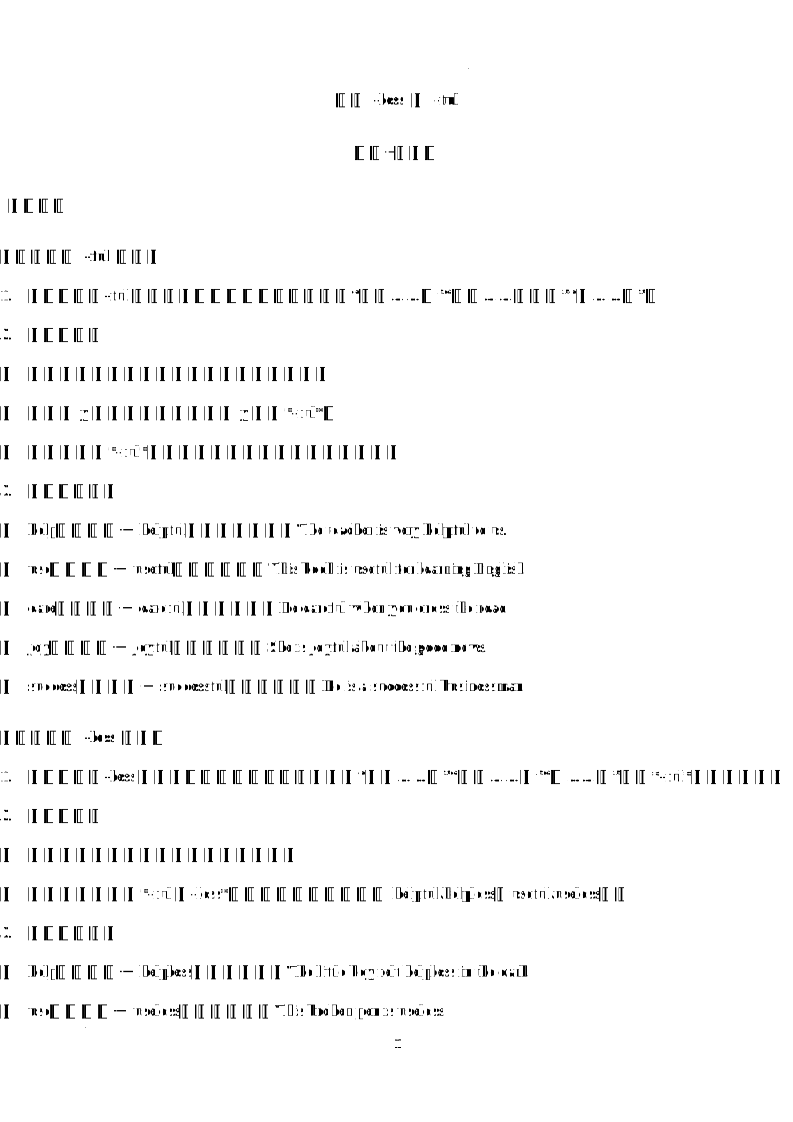
后缀 -less 和 -ful
讲解+练习题
语法讲解
(一)后缀 -ful 的用法
1. 构词规则:-ful加在名词后,构成形容词,表示“充满……的”“具有……特征的”“能……的”。
2. 注意事项:
· 多数情况下直接加在名词后,拼写无变化;
· 少数以y结尾的名词,需保留y再加*-ful*;
· 部分名词加*-ful*后,词义会结合名词本身特征延伸。
3. 例句与例词:
· help(帮助)→ helpful(有帮助的):The teacher is very helpful to us.
· use(用处)→ useful(有用的):This book is useful for learning English.
· care(小心)→ careful(小心的):Be careful when you cross the road.
· joy(快乐)→ joyful(快乐的):She is joyful about the good news.
· success(成功)→ successful(成功的):He is a successful businessman.
(二)后缀 -less 的用法
1. 构词规则:-less加在名词后,构成形容词,表示“没有……的”“缺乏……的”“无……的”,是*-ful*的反义后缀。
2. 注意事项:
· 直接加在名词后,无需改变原词拼写;
· 部分词可同时加*-ful和-less*,形成一对反义词(如helpful/helpless、useful/useless)。
3. 例句与例词:
· help(帮助)→ helpless(无助的):The little boy felt helpless in the dark.
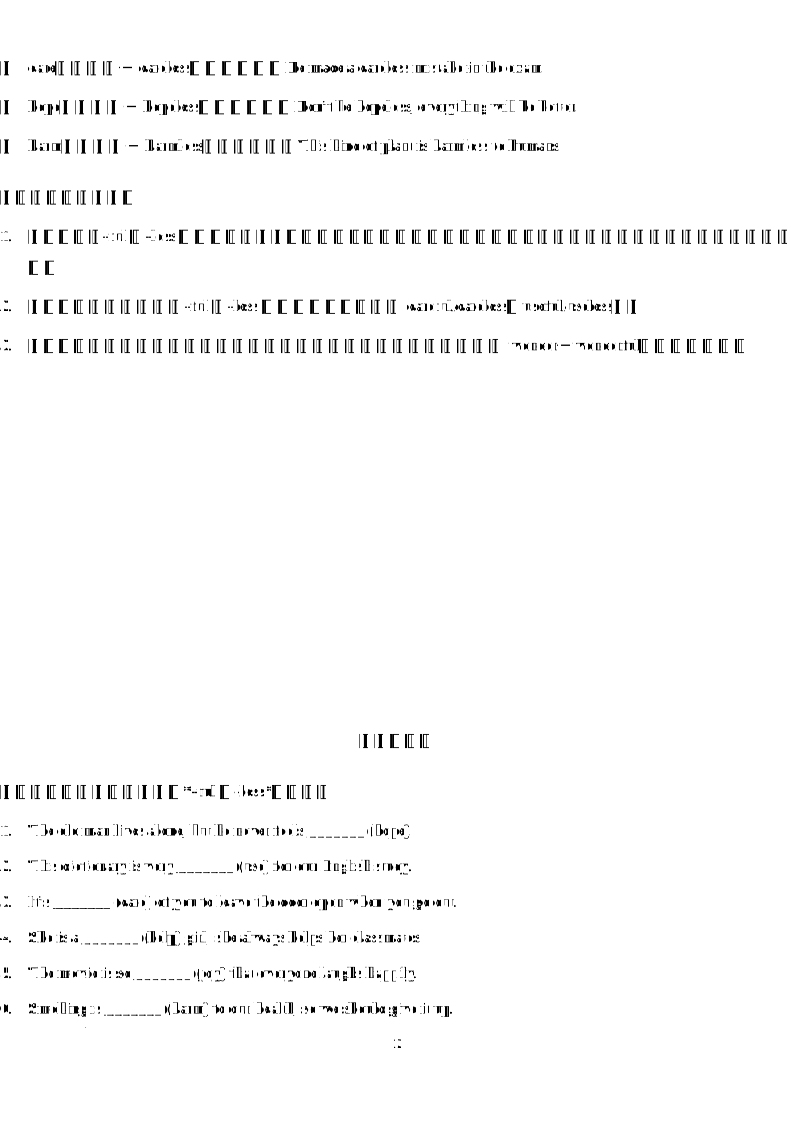
· use(用处)→ useless(无用的):This broken pen is useless.
· care(小心)→ careless(粗心的):He made a careless mistake in the exam.
· hope(希望)→ hopeless(无望的):Don’t be hopeless, everything will be better.
· harm(伤害)→ harmless(无害的):This kind of plant is harmless to humans.
(三)核心规律总结
1. 词性变化:-ful和-less均为名词变形容词的后缀,不改变原词的词根含义,仅通过后缀赋予形容词属性和语义倾向。
2. 语义关系:同一词根加-ful和-less通常构成反义词(如careful/careless、useful/useless)。
3. 拼写规则:绝大多数名词直接加后缀,无需额外变形;特殊词汇(如wonder→wonderful)需牢记拼写。
配套练习题
(一)基础题:用所给词的*-ful或-less*形式填空
1. The old man lives alone, but he never feels _______ (hope).
2. This dictionary is very _______ (use) for our English study.
3. It’s _______ (care) of you to leave the door open when you go out.
4. She is a _______ (help) girl, she always helps her classmates.
5. The movie is so _______ (joy) that everyone laughs happily.
6. Smoking is _______ (harm) to our health, so we should give it up.
7. That broken watch is _______ (use), you can throw it away.
8. He made a lot of _______ (care) mistakes in the math test.
9. The trip to the mountains was _______ (wonder), we all had a good time.
10. When he lost his way, he felt _______ (help) and cried for help.
(二)提升题:根据句意写出含*-ful或-less*的单词
1. My mother is a _______ (充满爱心的) woman, she always cares about others. (love)
2. It’s _______ (无意义的) to argue with him, he never listens to others. (meaning)
3. The _______ (成功的) writer has written many popular books. (success)
4. Don’t be _______ (害怕的) of making mistakes when speaking English. (fear)
5. The medicine is _______ (有用的) for treating a cold. (use)
6. He is a _______ (粗心的) driver, he often breaks the traffic rules. (care)
7. The little girl has a _______ (美丽的) voice, she sings very well. (beauty)
8. Walking in the rain without an umbrella is _______ (无意义的) and will make you wet. (point)
9. The teacher’s words were _______ (有帮助的), I solved the problem quickly. (help)
10. The _______ (无害的) animal is very cute, children like to play with it. (harm)
(三)拓展题:阅读理解填词(用-ful或-less单词完成短文)
My summer vacation was _______ (wonder). I went to the beach with my family and had a _______ (joy) time. The sea was beautiful, and the sand was soft. We played beach volleyball and built sandcastles—it was _______ (care) fun! One day, I lost my phone on the beach and felt _______ (hope). Luckily, a _______ (help) man found it and gave it back to me. I learned that being _______ (care) with my things is very important. Also, I found that small kindnesses are _______ (use) to make the world warmer. This vacation was not only fun but also _______ (meaning), I will never forget it.
参考答案
(一)基础题
1. hopeless
2. useful
3. careless
4. helpful
5. joyful
6. harmful
7. useless
8. careless
9. wonderful
10. helpless
(二)提升题
1. loving
2. meaningless
3. successful
4. fearless
5. useful
6. careless
7. beautiful
8. pointless
9. helpful
10. harmless
(三)拓展题
1. wonderful
2. joyful
3. careless
4. hopeless
5. helpful
6. careful
7. useful
8. meaningful
1
学科网(北京)股份有限公司
$
资源预览图
1
2
相关资源
由于学科网是一个信息分享及获取的平台,不确保部分用户上传资料的 来源及知识产权归属。如您发现相关资料侵犯您的合法权益,请联系学科网,我们核实后将及时进行处理。