寒假作业04 特殊疑问句与连词and but because(巩固培优)七年级英语新教材人教版
2025-12-31
|
2份
|
26页
|
1256人阅读
|
37人下载
资源信息
| 学段 | 初中 |
|---|---|
| 学科 | 英语 |
| 教材版本 | 初中英语人教版七年级上册 |
| 年级 | 七年级 |
| 章节 | - |
| 类型 | 题集-专项训练 |
| 知识点 | 特殊疑问句,连词 |
| 使用场景 | 寒暑假-寒假 |
| 学年 | 2026-2027 |
| 地区(省份) | 全国 |
| 地区(市) | - |
| 地区(区县) | - |
| 文件格式 | ZIP |
| 文件大小 | 216 KB |
| 发布时间 | 2025-12-31 |
| 更新时间 | 2025-12-31 |
| 作者 | 小白博士爱学习 |
| 品牌系列 | 上好课·寒假轻松学 |
| 审核时间 | 2025-12-31 |
| 下载链接 | https://m.zxxk.com/soft/55728916.html |
| 价格 | 3.00储值(1储值=1元) |
| 来源 | 学科网 |
内容正文:
限时练习:40min 完成时间: 月 日 天气:
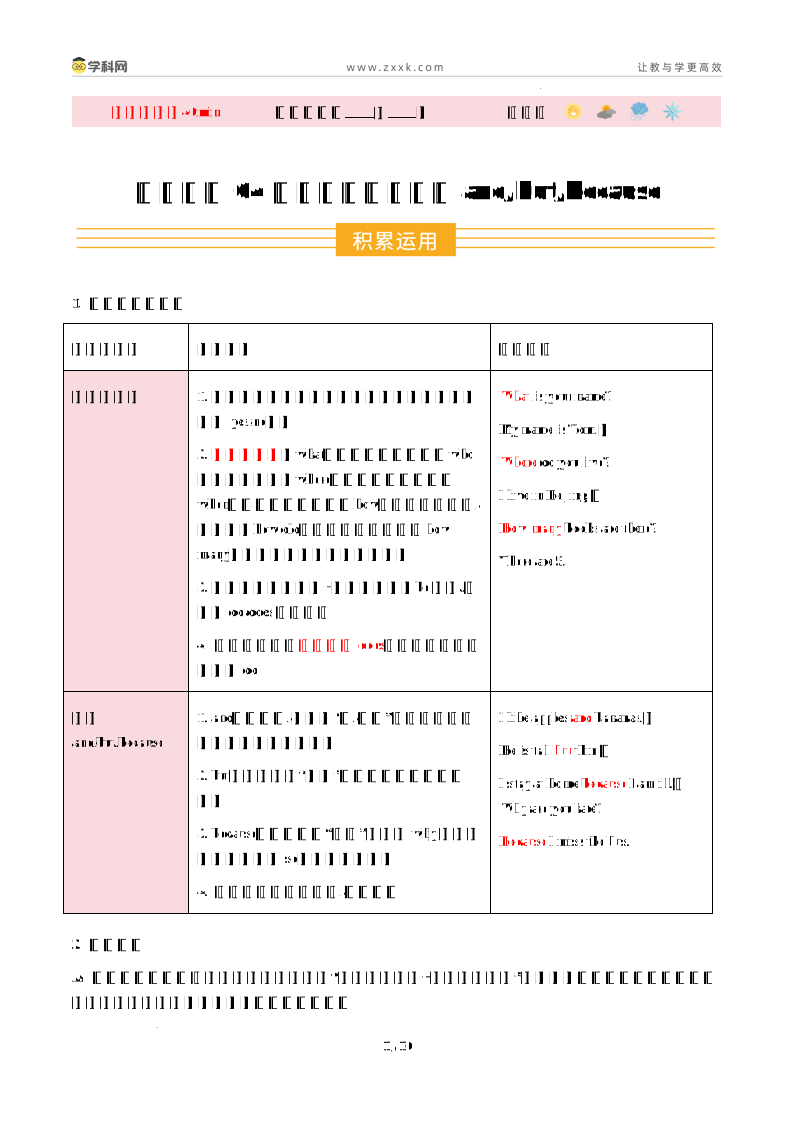
寒假作业04 特殊疑问句与连词and/but/because
1. 核心知识点总结
知识点类别
核心内容
用法示例
特殊疑问句
1. 定义:用疑问词引导,回答需具体信息(不能用yes/no);
2. 常用疑问词:what(什么,问事物)、who(谁,问人)、where(哪里,问地点)、when(何时,问时间)、how(怎样,问方式/状态)、how old(多大,问年龄)、how many(多少,问可数名词数量);
3. 句式结构:疑问词+一般疑问句(be动词/助动词do/does提前);
4. 注意:主语为三单时用does,动词还原;非三单用do
What is your name?
My name is Tom.;
Where do you live?
I live in Beijing.;
How many books are there?
There are 5.
连词and/but/because
1. and:表并列/顺承,“和/并且”,连接两个并列的词、短语或句子;
2. but:表转折,“但是”,连接语义相反的内容;
3. because:表原因,“因为”,回答why引导的问句,不能与so(所以)连用;
4. 用法:连词前后词性/句式一致
I like apples and bananas.;
He is tall but thin.;
I stay at home because I am ill.;Why are you late?
Because I miss the bus.
2. 易错提醒
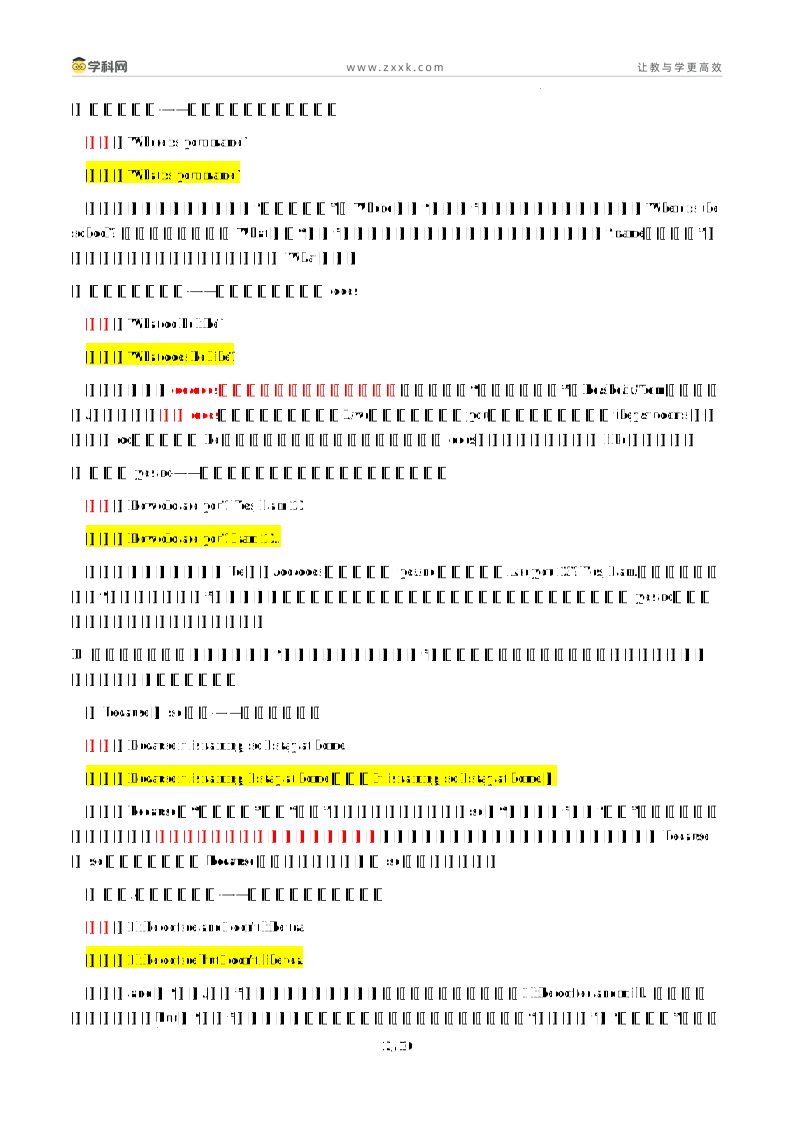
A. 特殊疑问句易错:特殊疑问句的核心是“用正确疑问词+规范句式提问”,常见错误集中在疑问词选择、助动词使用和回答方式三类,具体分析如下:
1 疑问词混淆——未匹配疑问词的语义功能
错误:Where is your name?
正确:What is your name?
解析:疑问词的选择需匹配“询问的内容”。Where表示“在哪里”,专门用于询问地点(如:Where is the school? 学校在哪里?);What表示“什么”,用于询问事物、姓名、职业等具体信息。“name(名字)”是具体事物,而非地点,因此必须用What提问。
2 助动词使用错误——第三人称单数未用does
错误:What do he like?
正确:What does he like?
解析:助动词do/does的选择由主语的人称和数决定。当主语是“第三人称单数”(he/she/it/Tom等单数人名/事物)时,需用does;主语是第一人称(I/we)、第二人称(you)、第三人称复数(they/students等)时,用do。本句主语he是第三人称单数,因此助动词必须用does,且后面的实义动词like要用原形。
3 回答用yes/no——混淆特殊疑问句与一般疑问句的回答规则
错误:How old are you? Yes, I am 13.
正确:How old are you? I am 13..
解析:一般疑问句(以be动词/do/does开头)才用yes/no回答(如:Are you 13? Yes, I am.);特殊疑问句是“对具体信息提问”,回答时需直接给出对应的信息(如年龄、地点、事物等),无需加yes/no。本句询问年龄,直接回答数字即可。
B. 连词用法错误:连词的核心是“准确连接前后语义关系”,常见错误集中在逻辑重复、语义匹配和词性一致三类,具体分析如下:
1 because与so连用——逻辑连词重复
错误:Because it is raining, so I stay at home.
正确:Because it is raining, I stay at home.(或:It is raining, so I stay at home.)
解析:because是“从属连词”,表“原因”,引导原因状语从句;so是“并列连词”,表“结果”,连接两个并列句。英语中不允许同时用两个连词表达因果关系(避免逻辑重复),因此一个句子中只能保留because或so中的一个。保留because时,强调原因;保留so时,强调结果。
2 转折/并列语义混淆——未匹配连词的逻辑功能
错误:I like coffee and I don't like tea.
正确:I like coffee but I don't like tea.
解析:and表“并列/顺承”,用于连接语义一致、方向相同的内容(如:I like coffee and milk. 我喜欢咖啡和牛奶);but表“转折”,用于连接语义相反、方向对立的内容。本句中“喜欢咖啡”和“不喜欢茶”是相反的语义,因此必须用but体现转折关系。
3 词性不一致——and连接的并列成分形式不统一
错误:He likes singing and dance.
正确:He likes singing and dancing.
解析:and作为并列连词,要求连接的前后成分“词性/形式一致”(名词对名词、动名词对动名词、句子对句子等)。本句中,and前的singing是“动名词”(like后接动名词表爱好),因此后面的dance也需改为动名词dancing,保证形式统一。
3. 方法归纳
1)特殊疑问句解题三步法:
第一步:看答语定疑问词——根据回答内容匹配疑问词.
关键规则:答语是“事物/姓名/职业”用what;答语是“地点”用where;答语是“时间”用when;答语是“年龄”用how old;答语是“原因”用why;答语是“方式”用how。
例句:
答语:I like apples. (回答“喜欢的事物”)→ 疑问词用what → 问句:What do you like?
答语:I go to school at 7:00. (回答“时间”)→ 疑问词用when → 问句:When do you go to school?
第二步:看主语定助动词——根据主语人称/数选择do/does/be动词.
关键规则:1. 句子中有实义动词(如like、go、eat)时,主语是三单用does,非三单用do;2. 句子中没有实义动词,只有be动词(am/is/are)时,直接将be动词提前,不用do/does。
例句:
① 主语是三单(he)+ 实义动词(like)→ 用does → What does he like?
② 主语是非三单(you)+ 实义动词(go)→ 用do → When do you go to school?
③ 主语是三单(she)+ be动词(is)→ 提前is → Where is she?
第三步:调整句式为“疑问词+一般疑问句”——将助动词/be动词提前
关键规则:一般疑问句结构=助动词/be动词+主语+实义动词原形(有实义动词时)/表语(有be动词时)。
例句:(以“他喜欢什么?”为例):
原句(陈述句):He likes apples.
第一步定疑问词:what;第二步定助动词:he是三单,用does;第三步调整句式:what + does + 主语(he)+ 实义动词原形(like)→ What does he like?
2)连词选择两步法——准确匹配语义关系
核心思路:先判断前后内容的逻辑关系,再检查并列成分的词性/形式,两步即可选对连词。
第一步:分析前后语义关系——确定用and/but/because
关键规则:1. 前后语义“一致/顺承”(同时存在、先后发生)用and;2. 前后语义“相反/对立”用but;3. 后句是前句的“原因”用because。
例句解析:
① I get up early, ______ I go for a walk. (早起和散步是“顺承关系”)→ 用and → I get up early, and I go for a walk.
② The shirt is cheap, ______ it is nice. (便宜和好看是“相反语义”)→ 用but → The shirt is cheap, but it is nice.
③ I stay at home, ______ I am tired. (累是待在家的“原因”)→ 用because → I stay at home because I am tired.
第二步:检查前后词性/句式是否一致——保证并列成分形式统一
关键规则:and/but连接的成分必须是“同类型”(名词对名词、动名词对动名词、句子对句子),避免词性混乱。
例句:
① 错误:She likes reading and swim. (reading是动名词,swim是动词原形,形式不统一)→ 改正:She likes reading and swimming. (均为动名词)
② 正确:He is a student and he works hard. (and连接两个完整句子,句式统一)
三层必刷:巩固提升+能力培优+创新题型
一. 单项选择(每题1分,共15分)
1. —______ is your favorite teacher? —Ms Wang.
A. What B. Who C. Where D. When
2. I like math ______ it is interesting.
A. and B. but C. because D. so
3. —______ does your father go to work? —By bike.
A. How B. What C. Who D. Where
4. There are 30 students in our class, ______ 15 are boys.
A. and B. but C. because D. or
5. —______ do you have lunch? —At 12:00.
A. Where B. When C. What D. How
6. She likes singing, ______ she doesn't like dancing.
A. and B. but C. because D. so
7. —______ is your school? —It's near my home.
A. What B. Who C. Where D. How old
8. He can't go to school ______ he is ill.
A. and B. but C. because D. or
9. —______ many books are there in your bag? —Five.
A. What B. How C. Who D. Where
10. I have a pen ______ a pencil in my pencil-box.
A. and B. but C. because D. so
11. —______ is your brother? —He is 10 years old.
A. How B. How old C. What D. When
12. The weather is cold, ______ he wears a coat.
A. and B. but C. because D. so
13. —______ does Tom usually do after school? —He plays football.
A. What B. Who C. Where D. How
14. She works hard, ______ she doesn't get good grades.
A. and B. but C. because D. so
15. —______ is this in English? —It's a desk.
A. Who B. Where C. What D. How
二. 单句语法填空(每题1分,共10分)
1. —______ (who) is that girl? —She is my sister.
2. I like reading ______ (and/but) writing.
3. —______ (when) do you get up every morning? —At 6:30.
4. He can't play basketball ______ (because/so) he is too short.
5. —______ (how) does your mother go to the supermarket? —By bus.
6. The film is long, ______ (and/but) it is interesting.
7. —______ (how many) apples are there on the table? —Ten.
8. I have breakfast at home ______ (because/and) I go to school.
9. —______ (what) does your father do? —He is a doctor.
10. She likes cats ______ (but/because) she doesn't like dogs.
三. 完成句子(每题2分,共20分)
1. 你最喜欢的科目是什么?
______ is your favorite ______?
2. 他喜欢音乐,因为它很放松。
He likes music ______ it is ______.
3. 他们什么时候去上学?
______ do they ______ to school?
4. 我有一个苹果和一个橙子。
I have an apple ______ an ______.
5. 她为什么迟到了?因为她错过了公交车。
______ is she late? ______ she misses the bus.
6. 图书馆在哪里?
______ is the ______?
7. 他会游泳,但他不会滑冰。
He can swim, ______ he ______ skate.
8. 你妈妈怎样去上班?
______ does your mother ______ to work?
9. 桌子上有多少本书?
______ ______ books are there on the desk?
10. 我喜欢画画,并且我画得很好。
I like drawing, ______ I draw very ______.
一. 完形填空(每空1分,共10分)
Hello, my name is Kate. I'm a student in Grade 7. I live in a happy family. Today I want to tell you about my daily life.
I usually get up at 6:30 in the morning. First, I wash my face 1 brush my teeth. Then I have breakfast with my parents. I like milk 2 bread for breakfast 3 they are healthy. After breakfast, I go to school by bike. I usually arrive at school at 7:40.
We have four lessons in the morning 4 two lessons in the afternoon. My favorite subject is English 5 it is interesting. My English teacher is Mr Smith. He is kind 6 strict with us. After school, I often play football with my friends. I like playing football 7 it can make me strong.
In the evening, I do my homework first. 8 I finish my homework, I watch TV for 30 minutes. I go to bed at 9:30. I have a busy 9 happy day every day. 10 about you? Do you have a happy daily life?
( )1. A. and B. but C. because D. so
( )2. A. and B. but C. because D. or
( )3. A. and B. but C. because D. so
( )4. A. so B. but C. because D. and
( )5. A. and B. but C. because D. so
( )6. A. and B. but C. because D. or
( )7. A. and B. but C. because D. so
( )8. A. What B. When C. Where D. How
( )9. A. and B. but C. because D. so
( )10. A. What B. Who C. Where D. How
二. 阅读理解(每题2分,共20分)
A
My name is David. I'm 13 years old. I study in No.4 Middle School. I have a busy but happy weekend.
On Saturday morning, I usually do my homework. It takes me two hours. After that, I help my mother clean the house. In the afternoon, I go to the library with my best friend, Tom. We borrow some storybooks there. I like reading storybooks because they are interesting. In the evening, I watch a football match on TV with my father. We both like football.
On Sunday morning, I go to the park to play basketball with my classmates. We play for an hour. In the afternoon, I visit my grandparents. They live in the countryside. My grandmother cooks delicious food for me. In the evening, I go back home and prepare for the new week.
I love weekends because I can do many things I like.
根据短文内容,选择最佳答案。
( )1. What does David usually do on Saturday morning?
A. Clean the house B. Do homework C. Go to the library D. Play basketball
( )2. Why does David like reading storybooks?
A. Because they are easy. B. Because they are interesting.
C. Because his friend likes them. D. Because his mother asks him to read.
( )3. Who does David watch a football match with on Saturday evening?
A. His mother B. His friend C. His father D. His classmates
( )4. Where do David's grandparents live?
A. In the city B. In the countryside C. Near the park D. Near the school
( )5. Why does David love weekends?
A. Because he can stay at home. B. Because he can do many things he likes.
B. Because he doesn't have to do homework. D. Because he can visit his grandparents.
B
Dear Lisa,
How are you? I'm writing to tell you about my school club. I join the music club because I like music very much. The music club is on the second floor of the classroom building. It is big and clean.
We have club activities every Wednesday afternoon. There are 20 students in the club. Our club teacher is Ms Zhang. She teaches us to sing and play the guitar. I can't play the guitar well, but I practice hard every time. My friend Amy is also in the club. She can sing very well. We often practice singing together.
Last week, we had a small concert in the club. I sang a song and Amy played the piano. Many students came to watch. They said we did a good job. I felt very happy.
Do you have any clubs in your school? What club do you want to join? Please write to me soon.
Yours,
Susan
根据短文内容,回答下列问题。
1. Why does Susan join the music club? ________________________________
2. Where is the music club? ________________________________
3. When do they have club activities? ________________________________
4. What does Ms Zhang teach them? ________________________________
5. What did Susan do in the small concert last week? ________________________________
3. 语法填空(每空1分,共10分)
My name is Lily. I'm a student in Grade 7. I have a good friend. Her name is Lucy. We are in the same class 1 we go to school together every day.
Lucy likes sports 2 she is good at playing tennis. She often plays tennis with me after school. I don't like tennis 3 I think it's difficult. I like swimming. Lucy sometimes goes swimming with me 4 she doesn't like it. She says she goes swimming because of me.
5 do we usually do on weekends? We usually go to the library. There are many interesting books in the library. Lucy likes reading history books 6 I like reading storybooks. We often read books for two hours. 7 we finish reading, we go to a snack bar to buy some snacks. I like hamburgers 8 Lucy likes cakes.
Lucy is a good friend. I like her 9 she is kind 10 helpful.
(跨学科情境题)阅读下面短文,完成相关任务。(每题2分,共10分)
Helping Others Makes Us Happy
In our daily life, we often see people in need of help. Helping others is a good habit. It can make us happy and help us make more friends.
Why do people help others? First, because it is a kind thing to do. Second, helping others can make the world warmer. For example, when an old man can't carry his heavy bags, we can help him. When a classmate doesn't understand a math problem, we can explain it to him. These small things are easy, but they are very meaningful.
How can we help others? We can help our parents do housework at home. We can help our classmates with their lessons at school. We can also help old people cross the road on the street. When we help others, we should be polite and patient.
Remember: Helping others is helping ourselves. Let's try our best to help people around us.
任务一:根据短文内容,判断下列句子正(T)误(F)。
1. Helping others can make us happy. ( )
2. Helping others is difficult and meaningless. ( )
任务二:根据短文内容,回答下列问题。
3. Why do people help others? ________________________________
4. What can we do to help others at school? ________________________________
5. The reason why we should help others is that ( )
A. it can make us get good grades B. it is our duty to care for others
C. it can make us rich D. it can help us make more money
1 / 14
学科网(北京)股份有限公司
$
限时练习:40min 完成时间: 月 日 天气:
寒假作业04 特殊疑问句与连词and/but/because
1. 核心知识点总结
知识点类别
核心内容
用法示例
特殊疑问句
1. 定义:用疑问词引导,回答需具体信息(不能用yes/no);
2. 常用疑问词:what(什么,问事物)、who(谁,问人)、where(哪里,问地点)、when(何时,问时间)、how(怎样,问方式/状态)、how old(多大,问年龄)、how many(多少,问可数名词数量);
3. 句式结构:疑问词+一般疑问句(be动词/助动词do/does提前);
4. 注意:主语为三单时用does,动词还原;非三单用do
What is your name?
My name is Tom.;
Where do you live?
I live in Beijing.;
How many books are there?
There are 5.
连词and/but/because
1. and:表并列/顺承,“和/并且”,连接两个并列的词、短语或句子;
2. but:表转折,“但是”,连接语义相反的内容;
3. because:表原因,“因为”,回答why引导的问句,不能与so(所以)连用;
4. 用法:连词前后词性/句式一致
I like apples and bananas.;
He is tall but thin.;
I stay at home because I am ill.;Why are you late?
Because I miss the bus.
2. 易错提醒
A. 特殊疑问句易错:特殊疑问句的核心是“用正确疑问词+规范句式提问”,常见错误集中在疑问词选择、助动词使用和回答方式三类,具体分析如下:
1 疑问词混淆——未匹配疑问词的语义功能
错误:Where is your name?
正确:What is your name?
解析:疑问词的选择需匹配“询问的内容”。Where表示“在哪里”,专门用于询问地点(如:Where is the school? 学校在哪里?);What表示“什么”,用于询问事物、姓名、职业等具体信息。“name(名字)”是具体事物,而非地点,因此必须用What提问。
2 助动词使用错误——第三人称单数未用does
错误:What do he like?
正确:What does he like?
解析:助动词do/does的选择由主语的人称和数决定。当主语是“第三人称单数”(he/she/it/Tom等单数人名/事物)时,需用does;主语是第一人称(I/we)、第二人称(you)、第三人称复数(they/students等)时,用do。本句主语he是第三人称单数,因此助动词必须用does,且后面的实义动词like要用原形。
3 回答用yes/no——混淆特殊疑问句与一般疑问句的回答规则
错误:How old are you? Yes, I am 13.
正确:How old are you? I am 13..
解析:一般疑问句(以be动词/do/does开头)才用yes/no回答(如:Are you 13? Yes, I am.);特殊疑问句是“对具体信息提问”,回答时需直接给出对应的信息(如年龄、地点、事物等),无需加yes/no。本句询问年龄,直接回答数字即可。
B. 连词用法错误:连词的核心是“准确连接前后语义关系”,常见错误集中在逻辑重复、语义匹配和词性一致三类,具体分析如下:
1 because与so连用——逻辑连词重复
错误:Because it is raining, so I stay at home.
正确:Because it is raining, I stay at home.(或:It is raining, so I stay at home.)
解析:because是“从属连词”,表“原因”,引导原因状语从句;so是“并列连词”,表“结果”,连接两个并列句。英语中不允许同时用两个连词表达因果关系(避免逻辑重复),因此一个句子中只能保留because或so中的一个。保留because时,强调原因;保留so时,强调结果。
2 转折/并列语义混淆——未匹配连词的逻辑功能
错误:I like coffee and I don't like tea.
正确:I like coffee but I don't like tea.
解析:and表“并列/顺承”,用于连接语义一致、方向相同的内容(如:I like coffee and milk. 我喜欢咖啡和牛奶);but表“转折”,用于连接语义相反、方向对立的内容。本句中“喜欢咖啡”和“不喜欢茶”是相反的语义,因此必须用but体现转折关系。
3 词性不一致——and连接的并列成分形式不统一
错误:He likes singing and dance.
正确:He likes singing and dancing.
解析:and作为并列连词,要求连接的前后成分“词性/形式一致”(名词对名词、动名词对动名词、句子对句子等)。本句中,and前的singing是“动名词”(like后接动名词表爱好),因此后面的dance也需改为动名词dancing,保证形式统一。
3. 方法归纳
1)特殊疑问句解题三步法:
第一步:看答语定疑问词——根据回答内容匹配疑问词.
关键规则:答语是“事物/姓名/职业”用what;答语是“地点”用where;答语是“时间”用when;答语是“年龄”用how old;答语是“原因”用why;答语是“方式”用how。
例句:
答语:I like apples. (回答“喜欢的事物”)→ 疑问词用what → 问句:What do you like?
答语:I go to school at 7:00. (回答“时间”)→ 疑问词用when → 问句:When do you go to school?
第二步:看主语定助动词——根据主语人称/数选择do/does/be动词.
关键规则:1. 句子中有实义动词(如like、go、eat)时,主语是三单用does,非三单用do;2. 句子中没有实义动词,只有be动词(am/is/are)时,直接将be动词提前,不用do/does。
例句:
① 主语是三单(he)+ 实义动词(like)→ 用does → What does he like?
② 主语是非三单(you)+ 实义动词(go)→ 用do → When do you go to school?
③ 主语是三单(she)+ be动词(is)→ 提前is → Where is she?
第三步:调整句式为“疑问词+一般疑问句”——将助动词/be动词提前
关键规则:一般疑问句结构=助动词/be动词+主语+实义动词原形(有实义动词时)/表语(有be动词时)。
例句:(以“他喜欢什么?”为例):
原句(陈述句):He likes apples.
第一步定疑问词:what;第二步定助动词:he是三单,用does;第三步调整句式:what + does + 主语(he)+ 实义动词原形(like)→ What does he like?
2)连词选择两步法——准确匹配语义关系
核心思路:先判断前后内容的逻辑关系,再检查并列成分的词性/形式,两步即可选对连词。
第一步:分析前后语义关系——确定用and/but/because
关键规则:1. 前后语义“一致/顺承”(同时存在、先后发生)用and;2. 前后语义“相反/对立”用but;3. 后句是前句的“原因”用because。
例句解析:
① I get up early, ______ I go for a walk. (早起和散步是“顺承关系”)→ 用and → I get up early, and I go for a walk.
② The shirt is cheap, ______ it is nice. (便宜和好看是“相反语义”)→ 用but → The shirt is cheap, but it is nice.
③ I stay at home, ______ I am tired. (累是待在家的“原因”)→ 用because → I stay at home because I am tired.
第二步:检查前后词性/句式是否一致——保证并列成分形式统一
关键规则:and/but连接的成分必须是“同类型”(名词对名词、动名词对动名词、句子对句子),避免词性混乱。
例句:
① 错误:She likes reading and swim. (reading是动名词,swim是动词原形,形式不统一)→ 改正:She likes reading and swimming. (均为动名词)
② 正确:He is a student and he works hard. (and连接两个完整句子,句式统一)
三层必刷:巩固提升+能力培优+创新题型
一. 单项选择(每题1分,共15分)
1. —______ is your favorite teacher? —Ms Wang.
A. What B. Who C. Where D. When
答案:B
解析:考查特殊疑问词辨析。根据答语“Ms Wang”(人物)可知,问句询问“谁”,用Who;What询问事物,Where询问地点,When询问时间,均不符合语境。
2. I like math ______ it is interesting.
A. and B. but C. because D. so
答案:C
解析:考查连词用法。后句“it is interesting”(它很有趣)是前句“喜欢数学”的原因,表原因用because;and表并列,but表转折,so表结果,均不符合语义逻辑。
3. —______ does your father go to work? —By bike.
A. How B. What C. Who D. Where
答案:A
解析:考查特殊疑问词辨析。根据答语“By bike”(出行方式)可知,问句询问“怎样去上班”,用How;What询问事物,Who询问人,Where询问地点,均不符合。
4. There are 30 students in our class, ______ 15 are boys.
A. and B. but C. because D. or
答案:A
解析:考查连词用法。前句“班级有30名学生”与后句“15名是男生”是并列补充关系,表并列用and;but表转折,because表原因,or表选择,均不符合语义。
5. —______ do you have lunch? —At 12:00.
A. Where B. When C. What D. How
答案:B
解析:考查特殊疑问词辨析。根据答语“At 12:00”(时间)可知,问句询问“何时吃午饭”,用When;Where询问地点,What询问事物,How询问方式,均不符合。
6. She likes singing, ______ she doesn't like dancing.
A. and B. but C. because D. so
答案:B
解析:考查连词用法。前句“喜欢唱歌”与后句“不喜欢跳舞”是语义转折关系,表转折用but;and表并列,because表原因,so表结果,均不符合逻辑。
7. —______ is your school? —It's near my home.
A. What B. Who C. Where D. How old
答案:C
解析:考查特殊疑问词辨析。根据答语“It's near my home”(地点)可知,问句询问“学校在哪里”,用Where;What询问事物,Who询问人,How old询问年龄,均不符合。
8. He can't go to school ______ he is ill.
A. and B. but C. because D. or
答案:C
解析:考查连词用法。后句“he is ill”(他生病了)是前句“不能上学”的原因,表原因用because;and表并列,but表转折,or表选择,均不符合语义逻辑。
9. —______ many books are there in your bag? —Five.
A. What B. How C. Who D. Where
答案:B
解析:考查特殊疑问词辨析。根据答语“Five”(数量)和空后“many books”(可数名词复数)可知,问句询问“数量”,用How many固定搭配;其他选项无此用法。
10. I have a pen ______ a pencil in my pencil-box.
A. and B. but C. because D. so
答案:A
解析:考查连词用法。“a pen”(一支钢笔)与“a pencil”(一支铅笔)是并列的事物,表并列用and;but表转折,because表原因,so表结果,均不符合语义。
11. —______ is your brother? —He is 10 years old.
A. How B. How old C. What D. When
答案:B
解析:考查特殊疑问词辨析。根据答语“He is 10 years old”(年龄)可知,问句询问“年龄”,用How old;How询问方式,What询问事物,When询问时间,均不符合。
12. The weather is cold, ______ he wears a coat.
A. and B. but C. because D. so
答案:D
解析:考查连词用法。前句“天气冷”是后句“穿外套”的结果,表结果用so;注意because与so不能连用,此处无原因语义,and表并列、but表转折均不符合。
13. —______ does Tom usually do after school? —He plays football.
A. What B. Who C. Where D. How
答案:A
解析:考查特殊疑问词辨析。根据答语“He plays football”(做的事情)可知,问句询问“放学后做什么”,用What;Who询问人,Where询问地点,How询问方式,均不符合。
14. She works hard, ______ she doesn't get good grades.
A. and B. but C. because D. so
答案:B
解析:考查连词用法。前句“努力学习”与后句“没取得好成绩”是语义转折关系,表转折用but;and表并列,because表原因,so表结果,均不符合逻辑。
15. —______ is this in English? —It's a desk.
A. Who B. Where C. What D. How
答案:C
解析:考查特殊疑问词辨析。根据答语“It's a desk”(事物名称)可知,问句询问“这个用英语怎么说”,用What;Who询问人,Where询问地点,How询问方式,均不符合。
二. 单句语法填空(每题1分,共10分)
1. —______ (who) is that girl? —She is my sister.
答案:Who
解析:考查特殊疑问词。根据答语“She is my sister”(人物)可知,问句询问“谁”,用Who,句首首字母大写。
2. I like reading ______ (and/but) writing.
答案:and
解析:考查连词选择。“reading”(阅读)与“writing”(写作)是并列的爱好,表并列用and;but表转折,不符合语义逻辑。
3. —______ (when) do you get up every morning? —At 6:30.
答案:When
解析:考查特殊疑问词。根据答语“At 6:30”(时间)可知,问句询问“何时起床”,用When,句首首字母大写。
4. He can't play basketball ______ (because/so) he is too short.
答案:because
解析:考查连词选择。后句“he is too short”(他太矮了)是前句“不能打篮球”的原因,表原因用because;so表结果,不符合语义逻辑。
5. —______ (how) does your mother go to the supermarket? —By bus.
答案:How
解析:考查特殊疑问词。根据答语“By bus”(出行方式)可知,问句询问“怎样去超市”,用How,句首首字母大写。
6. The film is long, ______ (and/but) it is interesting.
答案:but
解析:考查连词选择。前句“电影很长”与后句“很有趣”是语义转折关系,表转折用but;and表并列,不符合逻辑。
7. —______ (how many) apples are there on the table? —Ten.
答案:How many
解析:考查特殊疑问词。根据答语“Ten”(数量)和空后“apples”(可数名词复数)可知,问句询问“数量”,用How many固定搭配,句首首字母大写。
8. I have breakfast at home ______ (because/and) I go to school.
答案:and
解析:考查连词选择。“在家吃早饭”与“去上学”是顺承的动作,表并列顺承用and;because表原因,此处无因果关系,不符合语义。
9. —______ (what) does your father do? —He is a doctor.
答案:What
解析:考查特殊疑问词。根据答语“He is a doctor”(职业)可知,问句询问“父亲是做什么的”,用What,句首首字母大写。
10. She likes cats ______ (but/because) she doesn't like dogs.
答案:but
解析:考查连词选择。前句“喜欢猫”与后句“不喜欢狗”是语义转折关系,表转折用but;because表原因,此处无因果关系,不符合语义。
三. 完成句子(每题2分,共20分)
1. 你最喜欢的科目是什么?
______ is your favorite ______?
答案:What; subject
解析:考查特殊疑问句。询问“什么”用What,“科目”是subject,favorite后接单数名词,符合“疑问词+一般疑问句”结构。
2. 他喜欢音乐,因为它很放松。
He likes music ______ it is ______.
答案:because; relaxing
解析:考查连词与形容词。表原因用because,“放松的”修饰事物music用relaxing(修饰人用relaxed),符合语义逻辑。
3. 他们什么时候去上学?
______ do they ______ to school?
答案:When; go
解析:考查特殊疑问句。询问“何时”用When,主语they是复数,助动词用do,后接动词原形go,“去上学”是go to school。
4. 我有一个苹果和一个橙子。
I have an apple ______ an ______.
答案:and; orange
解析:考查连词与名词。并列两个事物用and,“橙子”是orange,以元音音素开头,搭配an,符合语法规则。
5. 她为什么迟到了?因为她错过了公交车。
______ is she late? ______ she misses the bus.
答案:Why; Because
解析:考查特殊疑问词与连词。询问“为什么”用Why,回答why引导的问句用Because,两者对应,且句首首字母均需大写。
6. 图书馆在哪里?
______ is the ______?
答案:Where; library
解析:考查特殊疑问句。询问“在哪里”用Where,“图书馆”是library,the后接单数名词,符合“疑问词+一般疑问句”结构。
7. 他会游泳,但他不会滑冰。
He can swim, ______ he ______ skate.
答案:but; can't
解析:考查连词与情态动词。前后句是转折关系用but,“不会”是can't,对应前句的can,符合语义转折逻辑。
8. 你妈妈怎样去上班?
______ does your mother ______ to work?
答案:How; go
解析:考查特殊疑问句。询问“怎样”用How,主语your mother是三单,但助动词does已体现,后接动词原形go,“去上班”是go to work。
9. 桌子上有多少本书?
______ ______ books are there on the desk?
答案:How; many
解析:考查特殊疑问词。询问“可数名词数量”用How many固定搭配,后接可数名词复数books,符合语法规则。
10. 我喜欢画画,并且我画得很好。
I like drawing, ______ I draw very ______.
答案:and; well
解析:考查连词与副词。前后句是并列关系用and,修饰动词draw用副词well(good是形容词,不能修饰动词),符合语法要求。
一. 完形填空(每空1分,共10分)
Hello, my name is Kate. I'm a student in Grade 7. I live in a happy family. Today I want to tell you about my daily life.
I usually get up at 6:30 in the morning. First, I wash my face 1 brush my teeth. Then I have breakfast with my parents. I like milk 2 bread for breakfast 3 they are healthy. After breakfast, I go to school by bike. I usually arrive at school at 7:40.
We have four lessons in the morning 4 two lessons in the afternoon. My favorite subject is English 5 it is interesting. My English teacher is Mr Smith. He is kind 6 strict with us. After school, I often play football with my friends. I like playing football 7 it can make me strong.
In the evening, I do my homework first. 8 I finish my homework, I watch TV for 30 minutes. I go to bed at 9:30. I have a busy 9 happy day every day. 10 about you? Do you have a happy daily life?
( )1. A. and B. but C. because D. so
( )2. A. and B. but C. because D. or
( )3. A. and B. but C. because D. so
( )4. A. so B. but C. because D. and
( )5. A. and B. but C. because D. so
( )6. A. and B. but C. because D. or
( )7. A. and B. but C. because D. so
( )8. A. What B. When C. Where D. How
( )9. A. and B. but C. because D. so
( )10. A. What B. Who C. Where D. How
答案及解析
答案:1.A;2.A;3.C;4.D;5.C;6.B;7.C;8.B;9.B;10.A
解析:
1. 考查连词。“wash my face”(洗脸)与“brush my teeth”(刷牙)是顺承的动作,表并列用and;but表转折,because表原因,so表结果,均不符合。
2. 考查连词。“milk”(牛奶)与“bread”(面包)是并列的早餐食物,表并列用and;but表转折,because表原因,or表选择,均不符合语义。
3. 考查连词。后句“they are healthy”(它们很健康)是前句“喜欢牛奶和面包”的原因,表原因用because;and表并列,but表转折,so表结果,均不符合。
4. 考查连词。“four lessons in the morning”(上午四节课)与“two lessons in the afternoon”(下午两节课)是并列关系,表并列用and;so表结果,but表转折,because表原因,均不符合。
5. 考查连词。后句“it is interesting”(它很有趣)是前句“最喜欢英语”的原因,表原因用because;and表并列,but表转折,so表结果,均不符合。
6. 考查连词。“kind”(和蔼的)与“strict”(严格的)是语义转折关系,表转折用but;and表并列,because表原因,or表选择,均不符合逻辑。
7. 考查连词。后句“it can make me strong”(它能让我变强)是前句“喜欢踢足球”的原因,表原因用because;and表并列,but表转折,so表结果,均不符合。
8. 考查特殊疑问词。根据句意“当我完成作业时,我看30分钟电视”,询问“当……时”用When;What询问事物,Where询问地点,How询问方式,均不符合。
9. 考查连词。“busy”(忙碌的)与“happy”(开心的)是语义转折关系,表转折用but;and表并列,because表原因,so表结果,均不符合逻辑。
10. 考查特殊疑问词。“What about you?”是固定句型,用于询问对方情况,意为“你呢?”;Who询问人,Where询问地点,How询问方式,均无此搭配。
二. 阅读理解(每题2分,共20分)
A
My name is David. I'm 13 years old. I study in No.4 Middle School. I have a busy but happy weekend.
On Saturday morning, I usually do my homework. It takes me two hours. After that, I help my mother clean the house. In the afternoon, I go to the library with my best friend, Tom. We borrow some storybooks there. I like reading storybooks because they are interesting. In the evening, I watch a football match on TV with my father. We both like football.
On Sunday morning, I go to the park to play basketball with my classmates. We play for an hour. In the afternoon, I visit my grandparents. They live in the countryside. My grandmother cooks delicious food for me. In the evening, I go back home and prepare for the new week.
I love weekends because I can do many things I like.
根据短文内容,选择最佳答案。
( )1. What does David usually do on Saturday morning?
A. Clean the house B. Do homework C. Go to the library D. Play basketball
( )2. Why does David like reading storybooks?
A. Because they are easy. B. Because they are interesting.
C. Because his friend likes them. D. Because his mother asks him to read.
( )3. Who does David watch a football match with on Saturday evening?
A. His mother B. His friend C. His father D. His classmates
( )4. Where do David's grandparents live?
A. In the city B. In the countryside C. Near the park D. Near the school
( )5. Why does David love weekends?
A. Because he can stay at home. B. Because he can do many things he likes.
B. Because he doesn't have to do homework. D. Because he can visit his grandparents.
答案:1.B;2.B;3.C;4.B;5.B
解析:
1. 细节理解题。根据第二段“On Saturday morning, I usually do my homework.”可知,David周六早上通常做作业,对应选项B;A是周六上午作业后的事,C是周六下午的事,D是周日上午的事,均不符合。
2. 细节理解题。根据第二段“I like reading storybooks because they are interesting.”可知,David喜欢故事书是因为它们有趣,直接对应选项B。
3. 细节理解题。根据第二段“In the evening, I watch a football match on TV with my father.”可知,David和爸爸一起看足球比赛,对应选项C。
4. 细节理解题。根据第三段“They live in the countryside.”可知,David的祖父母住在乡下,对应选项B。
5. 细节理解题。根据第四段“I love weekends because I can do many things I like.”可知,David喜欢周末是因为能做很多喜欢的事,对应选项B。
B
Dear Lisa,
How are you? I'm writing to tell you about my school club. I join the music club because I like music very much. The music club is on the second floor of the classroom building. It is big and clean.
We have club activities every Wednesday afternoon. There are 20 students in the club. Our club teacher is Ms Zhang. She teaches us to sing and play the guitar. I can't play the guitar well, but I practice hard every time. My friend Amy is also in the club. She can sing very well. We often practice singing together.
Last week, we had a small concert in the club. I sang a song and Amy played the piano. Many students came to watch. They said we did a good job. I felt very happy.
Do you have any clubs in your school? What club do you want to join? Please write to me soon.
Yours,
Susan
根据短文内容,回答下列问题。
1. Why does Susan join the music club? ________________________________
2. Where is the music club? ________________________________
3. When do they have club activities? ________________________________
4. What does Ms Zhang teach them? ________________________________
5. What did Susan do in the small concert last week? ________________________________
答案:
1. Because she likes music very much.
2. It is on the second floor of the classroom building.
3. Every Wednesday afternoon.
4. She teaches them to sing and play the guitar.
5. She sang a song.
解析:
1. 细节理解题。根据第一段“I join the music club because I like music very much.”可知,Susan加入音乐俱乐部是因为非常喜欢音乐,直接摘抄原文原因即可。
2. 细节理解题。根据第一段“The music club is on the second floor of the classroom building.”可知,音乐俱乐部在教学楼二楼,直接提取地点信息即可。
3. 细节理解题。根据第二段“We have club activities every Wednesday afternoon.”可知,俱乐部活动在每周三下午,直接摘抄时间信息即可。
4. 细节理解题。根据第二段“She teaches us to sing and play the guitar.”可知,张老师教他们唱歌和弹吉他,直接提取教学内容即可。
5. 细节理解题。根据第三段“I sang a song and Amy played the piano.”可知,Susan在小型音乐会上唱了一首歌,直接提取她的动作即可。
3. 语法填空(每空1分,共10分)
My name is Lily. I'm a student in Grade 7. I have a good friend. Her name is Lucy. We are in the same class 1 we go to school together every day.
Lucy likes sports 2 she is good at playing tennis. She often plays tennis with me after school. I don't like tennis 3 I think it's difficult. I like swimming. Lucy sometimes goes swimming with me 4 she doesn't like it. She says she goes swimming because of me.
5 do we usually do on weekends? We usually go to the library. There are many interesting books in the library. Lucy likes reading history books 6 I like reading storybooks. We often read books for two hours. 7 we finish reading, we go to a snack bar to buy some snacks. I like hamburgers 8 Lucy likes cakes.
Lucy is a good friend. I like her 9 she is kind 10 helpful.
1. 答案:and
解析:考查连词。“We are in the same class”(我们在同一个班)与“we go to school together”(一起上学)是并列顺承关系,表并列用and。
2. 答案:and
解析:考查连词。“Lucy likes sports”(露西喜欢运动)与“she is good at playing tennis”(擅长打网球)是并列补充关系,表并列用and。
3. 答案:because
解析:考查连词。后句“I think it's difficult”(我觉得它难)是前句“I don't like tennis”(不喜欢网球)的原因,表原因用because。
4. 答案:but
解析:考查连词。前句“Lucy sometimes goes swimming with me”(露西有时和我去游泳)与后句“she doesn't like it”(她不喜欢游泳)是转折关系,表转折用but。
5. 答案:What
解析:考查特殊疑问词。根据答语“We usually go to the library”(做的事情)可知,问句询问“周末通常做什么”,用What,句首首字母大写。
6. 答案:and
解析:考查连词。“Lucy likes reading history books”(露西喜欢读历史书)与“I like reading storybooks”(我喜欢读故事书)是并列关系,表并列用and。
7. 答案:When
解析:考查特殊疑问词。根据句意“当我们读完书后,去小吃店买零食”,询问“当……时”用When,句首首字母大写。
8. 答案:but
解析:考查连词。“I like hamburgers”(我喜欢汉堡)与“Lucy likes cakes”(露西喜欢蛋糕)是语义转折关系,表转折用but。
9. 答案:because
解析:考查连词。后句“she is kind...”(她善良且乐于助人)是前句“I like her”(我喜欢她)的原因,表原因用because。
10. 答案:and
解析:考查连词。“kind”(善良的)与“helpful”(乐于助人的)是并列的形容词,修饰she,表并列用and。
(跨学科情境题)阅读下面短文,完成相关任务。(每题2分,共10分)
Helping Others Makes Us Happy
In our daily life, we often see people in need of help. Helping others is a good habit. It can make us happy and help us make more friends.
Why do people help others? First, because it is a kind thing to do. Second, helping others can make the world warmer. For example, when an old man can't carry his heavy bags, we can help him. When a classmate doesn't understand a math problem, we can explain it to him. These small things are easy, but they are very meaningful.
How can we help others? We can help our parents do housework at home. We can help our classmates with their lessons at school. We can also help old people cross the road on the street. When we help others, we should be polite and patient.
Remember: Helping others is helping ourselves. Let's try our best to help people around us.
任务一:根据短文内容,判断下列句子正(T)误(F)。
1. Helping others can make us happy. ( )
2. Helping others is difficult and meaningless. ( )
任务二:根据短文内容,回答下列问题。
3. Why do people help others? ________________________________
4. What can we do to help others at school? ________________________________
5. The reason why we should help others is that ( )
A. it can make us get good grades B. it is our duty to care for others
C. it can make us rich D. it can help us make more money
第1题 答案:T
解析:细节理解题。根据短文第一段“Helping others is a good habit. It can make us happy”可知,帮助他人能让我们开心,题干与原文一致,故为T。
第2题 答案:F
解析:细节理解题。根据短文第二段“These small things are easy, but they are very meaningful.”可知,帮助他人的小事简单且有意义,题干中“difficult and meaningless”(困难且无意义)与原文相反,故为F。
第3题 答案:First, because it is a kind thing to do. Second, helping others can make the world warmer.
解析:细节理解题。根据短文第二段“Why do people help others? First, because it is a kind thing to do. Second, helping others can make the world warmer.”可知,人们帮助他人有两个原因,直接摘抄原文内容即可。
第4题 答案:We can help our classmates with their lessons.
解析:细节理解题。根据短文第三段“We can help our classmates with their lessons at school.”可知,在学校可以帮助同学补习功课,直接提取关键动作即可。
第5题 答案:B
解析:细节理解与道德与法治常识结合题。根据短文核心主旨和道德与法治常识,帮助他人是关爱他人的责任体现;A(让我们得高分)、C(让我们变富有)、D(帮我们赚更多钱)均不符合常识和短文主旨,故选B。
1 / 14
学科网(北京)股份有限公司
$
资源预览图
1
2

3

相关资源
由于学科网是一个信息分享及获取的平台,不确保部分用户上传资料的 来源及知识产权归属。如您发现相关资料侵犯您的合法权益,请联系学科网,我们核实后将及时进行处理。