Unit 6 第4课时Checkout time &Ticking time(分层作业))英语译林版三起五年级上册
2025-12-25
|
8页
|
37人阅读
|
0人下载
资源信息
| 学段 | 小学 |
|---|---|
| 学科 | 英语 |
| 教材版本 | 小学英语译林版(三起)(2012)五年级上册 |
| 年级 | 五年级 |
| 章节 | Unit 6 My e-friend |
| 类型 | 作业-同步练 |
| 知识点 | - |
| 使用场景 | 同步教学-新授课 |
| 学年 | 2025-2026 |
| 地区(省份) | 全国 |
| 地区(市) | - |
| 地区(区县) | - |
| 文件格式 | DOCX |
| 文件大小 | 1021 KB |
| 发布时间 | 2025-12-25 |
| 更新时间 | 2025-12-25 |
| 作者 | 学霸都市工作室 |
| 品牌系列 | 上好课·上好课 |
| 审核时间 | 2025-12-25 |
| 下载链接 | https://m.zxxk.com/soft/55622209.html |
| 价格 | 2.00储值(1储值=1元) |
| 来源 | 学科网 |
内容正文:
Unit 6 My e-friend
Period 4 Checkout time &Ticking time(分层作业)
基础练
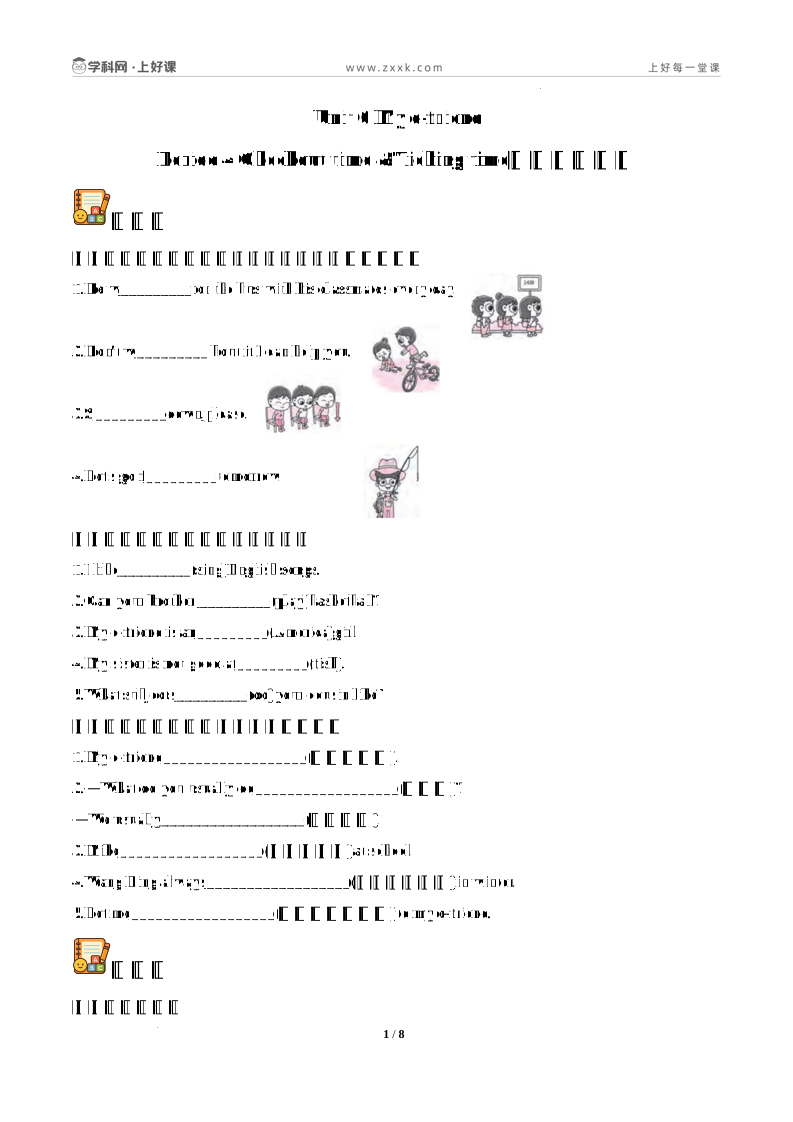
一、根据图片及首字母提示补全单词,完成句子。
1.He w_________for the bus with his classmates every day.
2.Don't w_________ bout it.I can help you.
3.S_________down,please.
4.Let's go f_________tomorrow.
二、用所给单词的适当形式填空。
1.I like_________(sing)English songs.
2.Can your brother _________(play)basketball?
3.My e-friend is an_________(America)girl.
4.My sister is not good at_________(fish).
5.What subjects_________(do)your cousin like?
三、根据中文提示,补全句子或对话。
1.My e-friend__________________(居住在希腊).
2.—What do you usually do__________________(放学后)?
—We usually__________________(打乒乓球).
3.Mike__________________(不学习科学)at school.
4.Wang Bing always__________________(穿暖和的衣服)in winter.
5.Let me__________________(写一封电子邮件)to my e-friend.
提升练
四、单项选择。
( )1.—What subjects_______he_______?—PE and Art.
A.does;like B.do;like C.does;likes
( )2.Liu Tao is my friend,and he_______football.
A.like playing B.likes playing C.likes play
( )3.Beita_______cakes and cheese,but Shuke and the little bird.【新情境·动画人物】
A.like;doesn't B.likes;don't C.isn't;is
( )4.Dora can_______English.We all like her.【新情境·动画人物】
A.say B.talk C.speak
( )5.—What_______your aunt usually do?—She usually_______TV at home.
A.do;watches B.does;watches C.does;watch
五、从方框中选择合适的句子,补全对话。
A:1.__________________
B:She’s Lucy.She lives in Australia.
A:2.__________________
B:She's eleven years old.
A:3.__________________
B:Yes,she can.
A:4.__________________
B:No,she studies Chinese after school.
A:5.__________________
B:Yes.She likes swimming,reading and singing.
A.How old is she?
B.Who's your e-friend?
C.Can she speak Chinese?
D.Does she have any hobbies?
E.Does she have Chinese lessons at school?
六、根据首字母提示,补全短文。
I have a new e-friend.His name is Simon.He 1.c__________from the US.He usually gets up at 7:00 a.m.Half an hour later he has 2.b__________.He usually goes to school by bus.His3.c__________begin at 8:00 a.m.He has four lessons 4.i__________the morning.Then they have5.1__________at 12:00 at school.From 1:30 p.m.to 3:50 p.m.,they have three lessons.After6.s_________,he often plays with his classmates. He likes 7.p_________basketball,football and table tennis.At about 4:30 p.m.,he goes 8.h__________and does his homework.He has9.d__________at about 7:00 p.m.with his parents.Then he 10.w__________TV.He goes to bed at about 10:00 p.m.
拓展练
七、阅读理解。
Mary is a little girl.She is only five years old.She is not at school.She doesn't know how to read or write.But her sister Joan is a schoolgirl.She is ten.She knows how to read and write.One day,Joan sees her little sister in the room.She is at the table.There is a pencil in her hand.She is writing."What are you writing,Mary?"Joan asks."I'm writing to my friend,Rose.""But how can you?You don't know how to write,"says Joan."Well,"says Mary,"It doesn't matter.Rose doesn't know how to read,either(也)."
任务一 根据短文内容,选择正确的答案。
( )1.Is Mary a school girl?
A.Yes,she is.
B.No,she isn't.
C.We don't know.
( )2.Who can read and write?
A.Mary.
B.Rose.
C.Joan.
( )3.Does Mary have a penfriend?
A.Yes,she does.
B.No,she doesn't.
C.We don't know.
任务二 根据短文内容,判断下列句子的正(T)误(F)。
( )4.There's a pen in Mary's hand.
( )5.Mary is writing to her friend.
( )6.Rose can read and write.
参考解析
1、 根据图片及首字母提示补全单词,完成句子。
1. 答案:waits解析:首字母 “w”,结合 “for the bus”(等公交车),固定短语 “wait for”(等待);主语 “he”(第三人称单数),一般现在时中 “wait” 变第三人称单数 “waits”,故填 “waits”。
2. 答案:worry解析:首字母 “w”,结合 “bout”(=about),固定短语 “worry about”(担心);“don't” 后接动词原形,故填 “worry”。
3. 答案:Sit解析:首字母 “S”,图片提示 “坐下”,祈使句用动词原形 “sit”,首字母需大写,固定短语 “sit down”(坐下),故填 “Sit”。
4. 答案:fishing解析:首字母 “f”,结合 “go + 动词 - ing” 表 “去做某事”,“go fishing”(去钓鱼)是常见短语,故填 “fishing”。
2、 用所给单词的适当形式填空。
1. 答案:singing解析:“like doing sth.”(喜欢做某事)是单元核心语法,“sing”(唱歌)的 - ing 形式为 “singing”,故填 “singing”。
2. 答案:play解析:“Can”(能)是情态动词,后面接动词原形,“play”(打)用原形,故填 “play”。
3. 答案:American解析:空格后 “girl”(女孩)是名词,需用形容词修饰;“America”(美国,名词)转换为形容词 “American”(美国的),故填 “American”。
4. 答案:fishing解析:“be good at doing sth.”(擅长做某事),“at” 后接动词 - ing 形式,“fish”(钓鱼)的 - ing 形式为 “fishing”,故填 “fishing”。
5. 答案:does解析:主语 “your cousin”(你的表妹 / 表弟)是第三人称单数,一般现在时的特殊疑问句需用助动词 “does”,故填 “does”。
3、 根据中文提示,补全句子或对话。
1. 答案:lives in Greece解析:“居住在” 用 “live in”,“希腊” 是 “Greece”(专有名词,首字母大写);主语 “my e-friend”(第三人称单数),“live” 变 “lives”,故填 “lives in Greece”。
2. 答案:after school;play table tennis解析:“放学后” 是固定短语 “after school”;“打乒乓球” 是 “play table tennis”(球类运动前不加 “the”),主语 “we”(复数),动词用原形,故填 “after school;play table tennis”。
3. 答案:doesn't study Science解析:“学习科学” 用 “study Science”(学科名首字母大写);主语 “Mike”(第三人称单数),否定句用 “doesn't study”,故填 “doesn't study Science”。
4. 答案:wears warm clothes解析:“穿暖和的衣服” 用 “wear warm clothes”;“always”(总是)表一般现在时,主语 “Wang Bing”(第三人称单数),“wear” 变 “wears”,故填 “wears warm clothes”。
5. 答案:write an email解析:“写一封电子邮件” 用 “write an email”(“email” 是以元音音素开头,用 “an” 修饰);“Let me” 后接动词原形,故填 “write an email”。
4、 单项选择。
1. 答案:A解析:主语 “he”(第三人称单数),一般疑问句助动词用 “does”,后面实义动词 “like” 用原形;“likes” 用于主语是第三人称单数的陈述句,排除 B(助动词用 “do” 错误)、C(“like” 变 “likes” 错误),故选 A。
2. 答案:B解析:主语 “he”(第三人称单数),“like” 变 “likes”;“like doing sth.”(喜欢做某事),“play” 的 - ing 形式为 “playing”,排除 A(“like” 未变单三)、C(“play” 未变 - ing),故选 B。
3. 答案:B解析:主语 “Beita”(第三人称单数),“like” 变 “likes”;“Shuke and the little bird”(复数),否定句用 “don't”(完整表达 “don't like”),排除 A(复数主语用 “doesn't” 错误)、C(“isn't” 后接形容词,不接名词),故选 B。
4. 答案:C解析:“说某种语言” 用 “speak + 语言”,“speak English”(说英语)正确;“say” 后接具体内容,“talk” 需加 “about”,排除 A、B,故选 C。
5. 答案:B解析:主语 “your aunt”(第三人称单数),一般疑问句助动词用 “does”;答句 “usually”(通常)表一般现在时,“watch” 变 “watches”,排除 A(助动词用 “do” 错误)、C(“watch” 未变单三),故选 B。
5、 从方框中选择合适的句子,补全对话。
1. 答案:B(Who's your e-friend?)解析:答语 “She’s Lucy”(她是露西)回答 “人物身份”,问句需用 “Who”(谁)提问,故选 B。
2. 答案:A(How old is she?)解析:答语 “She's eleven years old”(她 11 岁)回答 “年龄”,问句需用 “How old”(多大)提问,故选 A。
3. 答案:C(Can she speak Chinese?)解析:答语 “Yes, she can”(是的,她会)回应 “Can” 开头的一般疑问句,问句需用 “Can” 提问 “能力”,故选 C。
4. 答案:E(Does she have Chinese lessons at school?)解析:答语 “No, she studies Chinese after school”(不,她放学后学中文)回应 “是否在学校有语文课”,问句需用 “Does” 提问 “学校课程”,故选 E。
5. 答案:D(Does she have any hobbies?)解析:答语 “Yes. She likes swimming, reading and singing”(是的,她喜欢游泳、读书和唱歌)回答 “爱好”,问句需用 “Does” 提问 “是否有爱好”,故选 D。
6、 根据首字母提示,补全短文。
1. 答案:comes(首字母 “c”,“来自美国” 用 “come from”,主语 “he” 是第三人称单数,变 “comes”)
2. 答案:breakfast(首字母 “b”,“起床后半小时吃早餐”,“breakfast”(早餐)符合)
3. 答案:classes(首字母 “c”,“课程开始” 用 “classes begin”,复数表泛指)
4. 答案:in(首字母 “i”,“在上午” 用 “in the morning”,固定搭配)
5. 答案:lunch(首字母 “l”,“12 点吃午饭”,“lunch”(午饭)符合)
6. 答案:school(首字母 “s”,“放学后” 用 “after school”,固定短语)
7. 答案:playing(首字母 “p”,“喜欢打篮球” 用 “like playing basketball”,“like” 后接 - ing 形式)
8. 答案:home(首字母 “h”,“回家” 用 “go home”,固定短语)
9. 答案:dinner(首字母 “d”,“晚上 7 点吃晚饭”,“dinner”(晚饭)符合)
10. 答案:watches(首字母 “w”,“看电视” 用 “watch TV”,主语 “he” 是第三人称单数,变 “watches”)
7、 阅读理解。
任务一:选择正确的答案
1. 答案:B解析:文中 “Mary is a little girl. She is only five years old. She is not at school”(玛丽 5 岁,没上学),可知 “玛丽不是学生”,故选 B。
2. 答案:C解析:文中 “her sister Joan is a schoolgirl... She knows how to read and write”(琼是学生,会读写),玛丽和罗斯不会读写,故选 C。
3. 答案:A解析:文中玛丽说 “I'm writing to my friend, Rose”(我在给朋友罗斯写信),可知 “玛丽有笔友(罗斯)”,故选 A。
任务二:判断正(T)误(F)
4. 答案:F解析:文中 “There is a pencil in her hand”(她手里有一支铅笔),而非 “pen”(钢笔),故为 F。
5. 答案:T解析:文中玛丽明确说 “I'm writing to my friend, Rose”(我在给朋友写信),与句子表述一致,故为 T。
6. 答案:F解析:文中玛丽说 “Rose doesn't know how to read, either”(罗斯也不会读),可知 “罗斯不会读写”,故为 F。
2 / 2
学科网(北京)股份有限公司
$
资源预览图
1
2
3

相关资源
由于学科网是一个信息分享及获取的平台,不确保部分用户上传资料的 来源及知识产权归属。如您发现相关资料侵犯您的合法权益,请联系学科网,我们核实后将及时进行处理。