Unit 8 Let's Communicate! Section B(2a—2c)课件-2025-2026学年人教版英语八年级上册
2025-12-23
|
4份
|
27页
|
298人阅读
|
8人下载
普通
资源信息
| 学段 | 初中 |
|---|---|
| 学科 | 英语 |
| 教材版本 | 初中英语人教版八年级上册 |
| 年级 | 八年级 |
| 章节 | Vocabulary in Use |
| 类型 | 课件 |
| 知识点 | - |
| 使用场景 | 同步教学-新授课 |
| 学年 | 2025-2026 |
| 地区(省份) | 全国 |
| 地区(市) | - |
| 地区(区县) | - |
| 文件格式 | ZIP |
| 文件大小 | 649.38 MB |
| 发布时间 | 2025-12-23 |
| 更新时间 | 2025-12-23 |
| 作者 | 匿名 |
| 品牌系列 | - |
| 审核时间 | 2025-12-23 |
| 下载链接 | https://m.zxxk.com/soft/55580238.html |
| 价格 | 0.50储值(1储值=1元) |
| 来源 | 学科网 |
摘要:
该初中英语课件聚焦“名词后缀规律”与“面对面沟通重要性”,通过复习上节课沟通技巧(如认真倾听、选择话题),以问题“还有哪些沟通方式”引出“listener=listen+er”,结合视频学习后缀,搭建从已知动词到名词后缀的学习支架,衔接旧知与新知。
其亮点在于系统分类名词后缀(如-er表人、-ment表状态),结合实例(teacher, development)和填空练习(friend→friendship),培养语言能力。通过短文排序(Many people...However...)和阅读,训练逻辑思维(思维品质),作业设计实用(写5个沟通技巧贴床头)促进学习能力。采用视频导入、任务型练习,学生在语境中掌握词汇,教师可借助系统资料提升教学效率。
内容正文:
How can we communicate better?
(Section B 2a—2c)
Unit 8 Let’s Communicate!
人教版(2024) 八年级上册
通过本节课学习,我能够:
1. 了解派生词,通过回顾已学过的带有名词后缀的
派生词,掌握其变化规律;通过填空训练,理解
它们在语境中的具体含义。
2. 理解并简单描述面对面沟通在日常生活中的重要
性。
Learning objectives
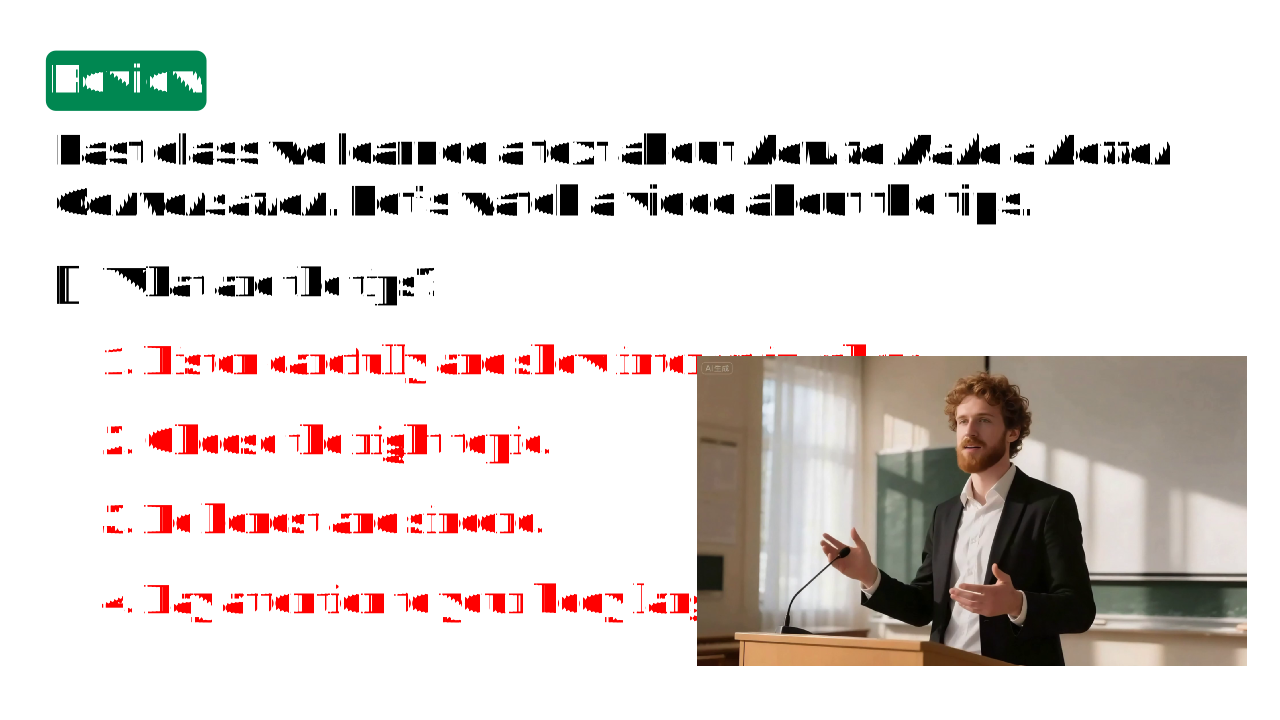
Last class we learned a text about How to Make a Better Conversation. Let’s watch a video about the tips.
What are the tips?
Review
1. Listen carefully and show interest in others.
2. Choose the right topic.
3. Be honest and sincere.
4. Pay attention to your body language.
Lead-in
Do you have any other ways to make a better conversation? And what are they?
In my opinion, to be a good listener is the most important. Do you agree with me?
Listener means a person who listens.
Listener = listen + er
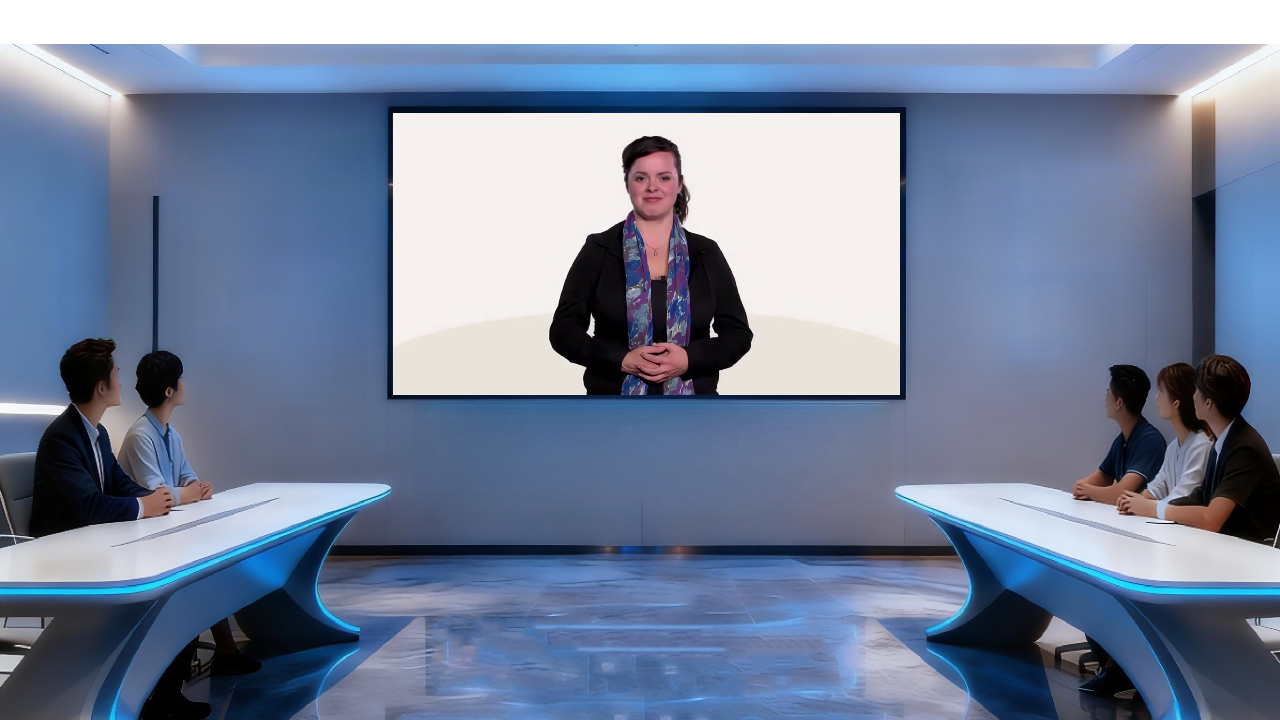
Let’s watch a video and learn about suffixes.
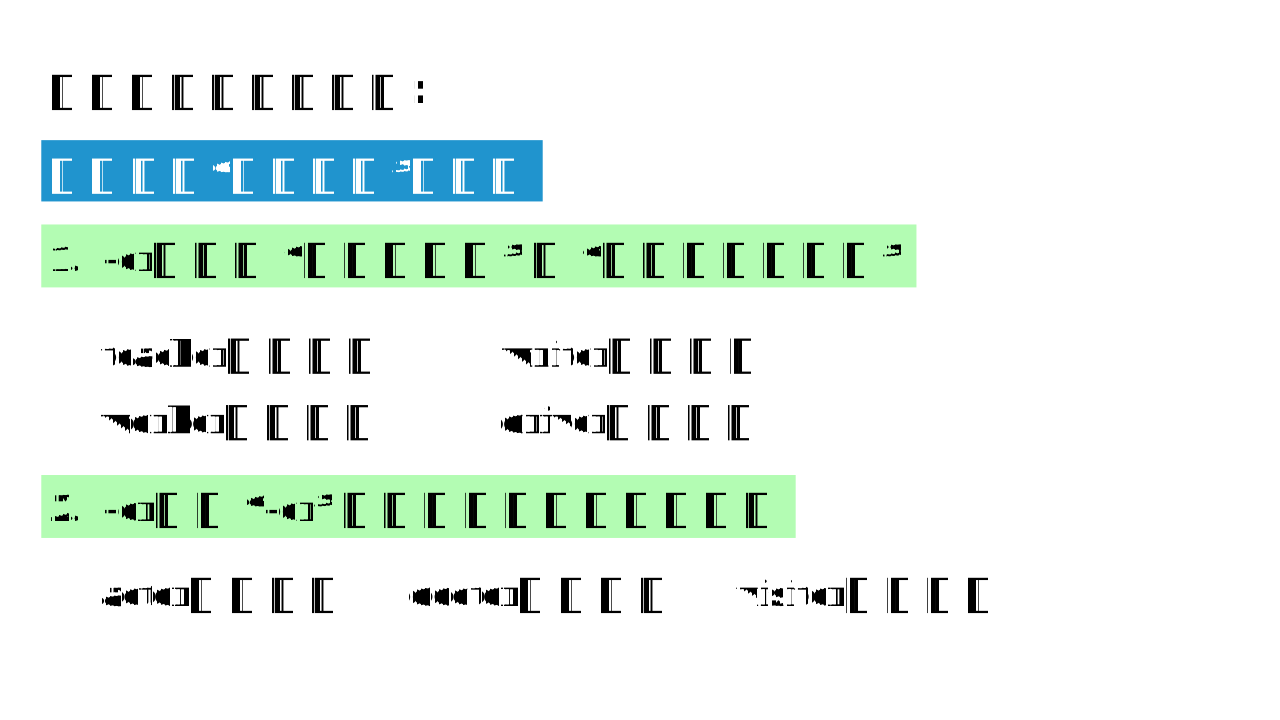
常见的名词后缀分类:
一、表示“人或职业”的后缀
-er:表示 “做某事的人” 或 “从事某职业的人”
teacher(教师) writer(作家)
worker(工人) driver(司机)
-or:与 “-er” 类似,多来自拉丁语词根
actor(演员) doctor(医生) visitor(游客)
-ian:表示 “某种职业或国籍的人”
musician(音乐家) historian(历史学家)
Canadian(加拿大人)
-ist:表示 “信仰者、研究者或从业者”
artist(艺术家) scientist(科学家) pianist(钢琴家)
二、表示 “抽象概念或状态” 的后缀
-ment:表 “动作的结果或状态”
development(发展) agreement(同意)
argument(争吵) punishment(惩罚)
-tion / -sion / -ation:由动词派生而来,表 “动作、过程或结果”
invention(发明) discussion(讨论)
education(教育) decision(决定)
-ness:由形容词派生,表 “性质、状态”
happiness(幸福) kindness(善良) illness(疾病)
-ity / -ty:由形容词派生,表 “性质、状态”(多为抽象名词)
ability(能力) safety(安全) difficulty(困难)
-th:由形容词派生,表示 “性质、状态”
length(长度) truth(真理;真实性) warmth(温暖)
-ance / -ence:表 “动作、状态或性质”
importance(重要性) patience(耐心) difference(差异)
三、表示 “物或具体事物” 的后缀
-tion:少数表具体事物
station(车站) location(位置;场所 )
-age:表 “物品、集合体或数量”
package(包裹) luggage(行李) cage(笼子 ,物品 )
四、其他常见后缀
-ship:表 “身份、关系、技能”
friendship(友谊) leadership(领导力)
-hood:表 “时期、状态、身份”
childhood(童年) brotherhood(兄弟情谊)
adulthood(成年)
-ism:表 “主义、学说、行为”
idealism(理想主义) criticism(批评行为)
Add the proper suffix to each word in brackets to make a new word. Then complete the sentences with the new words.
1. To keep a ___________ (friend), you need to make time for each other
and care about your friend’s feelings.
2. If you want to solve the __________ (argue), perhaps you should talk
about the situation with your friend.
3. If you don’t know what to say to her, I think the best way is to tell the
_______ (true).
4. They always welcome the ________ (visit) in a kind, friendly way.
5. While giving a speech, you should watch the _________ (listen) carefully
to see if they understand.
-er -or -th -ment -ship
friendship
argument
2a
truth
visitors
listeners
Complete the sentences with the phrases in the box.
make up right away show... around show... interest worry about
1. It was the first time for my cousin to visit Beijing, so I offered to ______
her ________.
2. My brother and I often have fights, but we always _________ soon after.
3. If you want to watch the drama, you should book the seats __________.
4. He ________ great ________ in music when he was a small child.
5. If you are sure about your choice, you don’t have to _____________
what other people will say.
show
make up
2b
around
right away
showed interest
worry about
Complete the sentences with the correct forms of the words in the box. Then put them in the correct order to make a short passage.
text face to face communication relationship argue
___ Many people today communicate by ______ and social media instead
of in person.
___ When we meet ___________ and talk, our body language and voice
help others better understand our meaning.
___ Also, it may be easier to build trust and develop stronger ____________.
___ This can keep us away from misunderstandings and ___________.
___ However, in-person _______________ is an important skill to learn.
text
face to face
1
3
2c
5
4
2
relationships
arguments
communication
Let’s watch a video and answer the question:
What is the strength of face-to-face talk?
When we talk face to face, our body language and voice help others better understand our meaning. This can keep us away from misunderstandings and arguments. Also, it may be easier to build trust and develop stronger relationships.
Many people today communicate by text and social media instead of in person. However, in-person communication is an important skill to learn. When we meet face to face and talk, our body language and voice help others better understand our meaning. This can keep us away from misunderstandings and arguments. Also, it may be easier to build trust and develop stronger relationships.
Read and learn the passage.
What does good communication help with?
Good communication helps with making friends and solving problems.
1. To keep a friendship, you need to make time for each other ...
make time for 为……腾出时间,后接名词或代词。
Language points
Mr Miller made time for the parents’ meeting.
米勒先生为家长会腾出了时间。
make time to do sth 腾出时间做某事
I need to make time to exercise every day.
我需要每天腾出时间锻炼。
2. Many people today communicate by text and social media instead
of in person.
(1) medium n. 媒介;手段 复数形式是:media
the medium of communication 交流媒介
You can solve the problem by social media.
你可以通过社交媒体来解决这个问题。
medium 还可作形容词,意为“中等的;中号的”。
There are three sizes for you to choose, small, medium and large.
有三种尺寸供你选择,小号、中号和大号。
(2) 辨析:instead of与instead
We shouldn’t use plastic bags. Instead, we should take our own bags. Besides, we should also walk instead of driving to the supermarket.
我们不应该使用塑料袋。相反,我们应该带自己的包。此外,我们也应该步行而不是开车去超市。
instead of 介词短语 位于句首或句中,其后可接名词、代词或动词-ing形式
instead 副词 常位于句首或句末,修饰整个句子
3. .., it may be easier to build trust and develop stronger relationships.
trust n.&v. 信任;相信
① trust sb/sth 相信某人/某事
② trust sb (not) to do sth 相信某人(不)会做某事
She has complete trust in her doctor. 她完全相信她的医生。
I trust you to finish your homework on time.
我相信你能按时完成作业。
I trust that he will come to your party. 我相信他会来你的派对。
Trust me. This is the best plan. 相信我,这是最好的计划了。
4. This can keep us away from misunderstandings and arguments.
keep (...) away from ... (使)远离;避免......靠近
常用于表示因某种危险或不良状态,而要求保持距离。它的同义短语是stay away from
Parents should keep their children away from fire.
父母应当让孩子远离火。
Children should stay away from strangers.
孩子们应当远离陌生人。
Section B (2a-2c)
Vocabulary in use
Summary
Exercise
I. 根据句意及首字母或汉语提示,完成下列句子。
1. Cathy played the old musical instrument c__________ so that
she wouldn’t break it.
2. Being __________ (社交的) helps you meet new people.
3. __________ (信任) is important in a friendship.
4. Paul’s s__________ smile made everyone feel welcome at the
party.
5. It’s not r__________ (合理的) to expect everyone to agree with
your opinion all the time.
arefully
social
Trust
incere
easonable
He felt __________ (nervous) when speaking in front of the class.
She __________ (prefer) to read books rather than watch TV.
We should learn to listen __________ (careful) to others' opinions.
She shared a few __________ (tip) on how to keep plants healthy during the winter.
He made a strong __________ (argue) for why we should start the project earlier.
II. 用括号内所给词的适当形式填空。
nervous
prefers
carefully
tips
argument
Homework
1. Recite the key words and sentences of this lesson.
2. Do related exercises.
Must do:
Write down five good communication skills you think, then stick them on your bedside, take a photo, and share the picture in the next class.
Try to do:
THANK
$Many people today communicate by text and social media instead of in person. However, in persons, communication is an important skill to learn. When we meet face to face and talk, our body language and voice help others Better understand our meaning. This can keep us away from misunderstandings and arguments. Also, IT may be easier to build trust and develop stronger relationships.
Hello, my name's in media. In this video, we will look at how to take words you already know and make them into new words. All you have to do is at a few letters before the word. These are called prefixes, or add a few letters after a word. These unknown as sexes is an example, place, replace, replacement. Be careful. You can do this with all vocabulary, but you can have fun experimenting to see which one's work and which ones don't. Now lets look at some, some fixes. Happy is an adjective. How can we make IT into a known simple? Just add the so fix this happy plus ness equals happiness. Here are two more adjectives to express feelings, sad and tired. To make the known, you just adds the same suffix, have a look, sand does this equals sadness. Tired plus ness equals tired ness. There are a few more prefixes, and so fixes that. Go with a range of words, learning which ones to use and with which words may seem hard at first. But with time, you'll learn to hear what sounds right.
Do you get nervous when you talk to someone? Do you find IT hard to have a conversation with a stranger? If you have such worries? IT is time for you to learn some more conversation skills. Here are some tips for making Better conversations. One, listen carefully and show interest in others. Two, choose the right topic. Three, be honest and sincere for pay attention to your body language. If you really work at IT, you will find having conversations much easier.
资源预览图

1
2
3
4
5
6
相关资源
由于学科网是一个信息分享及获取的平台,不确保部分用户上传资料的 来源及知识产权归属。如您发现相关资料侵犯您的合法权益,请联系学科网,我们核实后将及时进行处理。