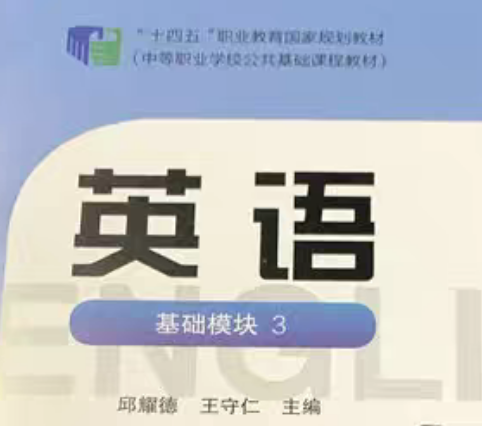
Unit 10 Being an Adult-宾语从句和同位语从句 (讲+练)-《英语 基础模块3》(语文版2022版)
2025-12-22
|
38页
|
190人阅读
|
2人下载
精品
内容正文:
宾语从句VS同位语从句
《英语 基础模块3》(语文版2022版)
Unit 10 Being an Adult语法
导
入
目
录
一、宾语从句
二、同位语从句
三、巩固练习
什么是宾语从句
一个陈述句中,紧随在谓语动词后的成分,就叫做宾语。它可以由名词,动名词、名词短语、代词、不定式、甚至句子来充当。
宾语从句
一个句子充当另一个句子的宾语,则这个句子就叫做宾语从句。而“另一个句子”被称为“主句”
宾语
I think everybody likes cookies.
She doesn’t know where her brother has gone.
I wonder what we will do for the coming school trip.
以下哪些句子是宾语从句?
My mother asked if I had finished my homework before watching TV.
The little girl sings very beautifully.
The rain stopped suddenly, so we decided to go out for a walk.
The teacher told us that the earth moves around the sun.
He says that that is a good idea.
He said that he would visit his grandparents the next weekend.
Task
宾语从句的分类
eg. I don’t know where we might meet again.
eg. We are talking about what we can do tomorrow.
动词的宾语从句
eg. I am afraid that I will fail the exam.
形容词的宾语从句
介词的宾语从句
主句
宾语从句
主句
宾语从句
主句
宾语从句
宾语从句的引导词
eg. She says (that) she wants some noodles.
结构:主语 + 谓语 + (that) + 宾语从句
1. 当陈述句充当宾语从句时,则用that来引导,其中的that无实际意义,不作任何成分,口语和非正式文体中可省略。
eg. Little Tom was afraid (that) he couldn’t pass the exam.
陈述句
陈述句
宾语从句的引导词
1. 从句的主语是that。
eg. He says that that is a good idea.
连词that不能省略的几种情况
eg. I’m afraid that if you’ve lost it, you must pay for it.
2. that从句中含有主从复合句。
宾语从句的引导词
3. 主、从句之间有插入语时。
eg. It says here, on this card, that it was used in plays.
连词that不能省略的几种情况
eg. She said (that) she would come and that she would also bring her son.
4. 若出现两个或两上以上的由that引导的宾语从句,且由并列连词连接时,只有第一个连词that可以省略。
宾语从句的引导词
eg. Do you know if /whether Kate gets up early?
结构:主语 + 谓语 + (if/wheher) + 宾语从句
2. 当由一般疑问句充当宾语从句时,则用if或whether引导,通常, 它们引导宾语从句时可通用。从句是陈述句语序。意为“是否”。
eg. I don’t know if /whether Tim is a good listener.
陈述语序
陈述语序
宾语从句的引导词
I don’t know whether or not he will come tomorrow.
以下三种情况只能用whether不用if
I don’t care of whether he is handsome.
1. 与or not 连用只能用whether
2. 介词后只能用whether
3. 在不定式前只能用whether
She can’t decide whether to go to America.
宾语从句的引导词
eg. I know how old Li Ming is.
结构:主语 + 谓语 + 特殊疑问词 + 宾语从句
3. 当特殊疑问句充当宾语从句时,由特殊疑问词连接,从句是陈述句语序。
eg. Can you tell me how I can get to the zoo?
陈述语序
陈述语序
宾语从句的引导词
eg. We discussed why he was late.
特殊疑问词引导的宾语从句中,这些词在句中不可省略,有意义。
特殊疑问词
eg. She asked who wrote the story.
疑问代词:who, what, whom. which. whose...
疑问副词:where. when, how, why...
连接代词(作主语)
连接副词(作原因状语)
eg. Do you know whose pencil it is?
连接代词(作定语)
宾语从句的时态
I hear (that)
1.主现从不限
Jim will cook (cook) dinner tomorrow.
Jim was (be) a worker two years ago.
Jim is (be) an English teacher now.
Jim had learned (learn) 1000 Chinese words by the end of last semester.
如果主句是现在的某个时态,从句的时态可根据实际情况而定
宾语从句的时态
2.主过从也过
He said (that) he would post the letter tomorrow.
He told me that he didn’t go to the library yesterday.
He said (that) he was playing football at that time.
They asked me whether I had been there before.
主句如果是过去时态,从句一般要用与过去时态相关的时态。
一般过去时
过去进行时
过去进行时
过去完成时
宾语从句的时态
3.当从句描述的是事实、真理或格言、谚语时,从句谓语动词的时态不受主句时态的限制,都用一般现在时态。
He said that the earth rises in the east.
The teacher told us that the earth goes round the sun.
My teacher said that practice makes perfect.
He told the boy that three and three is six.
宾语从句的语序
I think (that) you will like this school soon.
Can you tell me how I can get to the zoo?
无论主句是陈述句还是疑问句,宾语从句都是运用陈述句的语序,即是“主语在前,谓语在后”的顺序。
I don’t know when he left.
Please tell me when we will have the meeting.
宾语从句的易错点
否定前移的条件
2. 谓语动词为think, believe, suppose, expect, imagine等表示心理活动的词。
1. 否定前移:否定主句
1. 主句的主语是第一人称I或we;
I don’t believe he has finished his work.
I don’t think it's wise of you to teach your children alone at home.
宾语从句的易错点
2. 否定前移的反义疑问句
1. 主句主语是第一人称,后面动词是 think, believe, guess等词时,变反义疑问句看从句。
2.主句主语是第二人称、第三人称,变反义疑问句看主句。
They don’t think he’s already back, _______ ?
I don’t believe he has finished his work, _______?
has he
do they
宾语从句的易错点
3. 简化
“疑问词+不定式”
2.主句谓语动词是plan, know, remember, forget,learn等
1.主句从句主语一致
I’m planning how I can spend the holiday.
I’m planning how to spend the holiday.
宾语从句的易错点
3. 简化
“动词+不定式”
2.主句的谓语动词是hope, wish, decide, agree,choose等
1.主句从句主语一致
I hope that I can receive your e-mail.
I hope to receive your e-mail.
什么是同位语
同位语,是对前面的名词进行解释说明,与前面的名词指的是同一事物或人,一般前后都用逗号隔开。
同位语
Linda, my English teacher, is very beautiful.
找一找
同位语
I will never forget him, a great leader and thinker.
主语
什么是同位语
找出下列句子的同位语
1. Mr. Wang, my child’s teacher, will be visiting us on Tuesday.
2. I, the oldest girl in the family, always had to care for the other children.
3. But now the question comes to their minds, “Did she die young because she was a clone? ”
4. The girls were surprised at the fact that ocean ships can sail up the Great lakes.
my child’s teacher
the oldest girl in thefamily
Did she die young because she was a clone?
that ocean ships can sail up the Great lakes.
名词作同位语
短语作同位语
直接引语作同位语
句子作主语
什么是同位语从句
同位语从句是用以解释说明某一名词内容的从句,所以它总是跟在某一个名词的后面。
同位语从句
What is the appositive clause?
We heard the news
主句
that
our team had won.
引导词
同位语从句
Task
The girls were surprised at the fact that ocean ships can sail up the Great lakes.
They were worried over the fact that you were sick.
以下哪些句子是同位语从句?
The fact that the money has gone does not mean it was stolen.
The little girl sings very beautifully.
The rain stopped suddenly, so we decided to go out for a walk.
We have proof that this man committed the crime.
I have no idea why she quit her present job.
I’ve come to the conclusion that it was unwise to do that.
同位语从句的引导词
从属连词
连接代词
连接副词
that
whether
who
what
when
where
how
why
从属连词
The truth that the earth moves around the sun is known to all.
that在同位语从句中,“that” 无实际词义,也不充当任何句子成分,但不能省略。它的作用是引出对前面抽象名词内容的具体阐述。
I’ve come to the conclusion that it was unwise to do that.
that引导的同位语从句
从属连词
The problem whether we can get enough money for the project is still not solved.
意为 “是否”,在从句中同样不充当成分,但具有实际含义,不能省略。主要用于当抽象名词的内容存在不确定性时引导同位语从句 。
He must answer the question whether he agrees to it or not.
Whether引导的同位语从句
连接代词
I have no idea what he is talking about.
who (谁) , what(什么) :它们在从句中充当主语、宾语等成分。
what 作从句的宾语
The question who will be the winner of the competition is still in the air.
who作从句的主语
连接副词
I have no idea when he will return.
连接副词:起连接作用,不能省略,有实际意义,作状语。
when(何时) where(何处) why(为何) how(如何)
The problem where we should hold the party is not decided yet.
She has no clue how she can solve the difficult problem.
The reason why he was late for school is that he missed the bus.
作从句的时间状语
作从句的地点状语
作从句的方式状语
作从句的原因状语
同位语从句
可跟同位语从句的名词
news
The news that our team won the game excited everyone.
idea
I have an idea that we can go on a picnic this weekend.
fact
The fact that he was late for school is true.
promise
He made a promise that he would help me with my homework.
question
The question whether we should go there by bus remains unanswered.
doubt
I have a doubt whether he can finish the task on time.
thought
The thought that she might miss the train worried her.
同位语从句与定语从句的区别
1.从句所修饰词的不同。
eg. The fact that the money has gone does not mean it was stolen.
eg. It is announced that the plan has been successfully carried out.
同位语从句所修饰词通常是少数一些表示抽象意义的名词
同位语从句
定语从句的先行词可以指人、物等。
定语从句
同位语从句与定语从句的区别
1.引导词的作用不同
eg. The idea that we should go on a trip is great.
eg. The man who is standing there is my teacher.
引导词(除连接代词和连接副词外)在从句中不充当任何成分,仅起连接作用。
同位语从句
引导词在从句中充当一定的句子成分,像主语、宾语、状语等。
定语从句
同位语从句与定语从句的区别
3.从句作用的不同
eg. The news that there will be a concert in the park tomorrow excited the music lovers.
eg. The house which has a big garden is very expensive.
侧重点在于揭示抽象名词的具体内容。
同位语从句
重点在于对先行词进行修饰,描述先行词的特点等。
定语从句
巩固练习
1.—I’m new here. Could you tell me ________? —Certainly. NO. 20 Bus will take you there.
A.which is the way to the park B.when the park opens
C.how far is the park D.where is the park
2.—I’ve found a pencil case on the ground. Do you know ________?
—Maybe it’s Jack’s. He is looking for it.
A.who it is B.whose is it C.who is it D.whose it is
3.The thought ________ he might fail in the driving test worried him.
A. which B. that C. when D. where
4.The question ________ we can finish the task on time is very important.
A. if B. whether C. what D. which
一、选择题
巩固练习
二、完成句子
1.John wonders, “Why did we make him our monitor?” (改为宾语从句)
John wonders we him our monitor.
2.I believe. Tony will come on time. (合并为宾语从句)
I believe on time.
3.“Are you going to find a part-time job during the holidays?” I asked Mary. (改为宾语从句)
I asked Mary she going to find a part-time job during the holidays.
4.Which movie did you watch last Sunday? Could you tell me? (改为宾语从句)
Could you tell me last Sunday?
5.When did you take my car key from my bag yesterday? I just want to know that.(改为宾语从句)
I just want to know you my car key from my bag yesterday.
why
made
that Tony will come
if was
which movie you watched
when took
Summary
一、宾语从句
二、同位语从句
Thanks
$
资源预览图

1

2

3

4

5

6
由于学科网是一个信息分享及获取的平台,不确保部分用户上传资料的 来源及知识产权归属。如您发现相关资料侵犯您的合法权益,请联系学科网,我们核实后将及时进行处理。