专题01 三大时态:一般现在时、现在进行时、一般将来时(期末复习讲义)七年级英语上学期新教材外研版
2025-12-17
|
2份
|
39页
|
3160人阅读
|
112人下载
精品
资源信息
| 学段 | 初中 |
|---|---|
| 学科 | 英语 |
| 教材版本 | 初中英语外研版七年级上册 |
| 年级 | 七年级 |
| 章节 | - |
| 类型 | 教案-讲义 |
| 知识点 | 一般现在时,一般将来时,现在进行时 |
| 使用场景 | 同步教学-期末 |
| 学年 | 2025-2026 |
| 地区(省份) | 全国 |
| 地区(市) | - |
| 地区(区县) | - |
| 文件格式 | ZIP |
| 文件大小 | 499 KB |
| 发布时间 | 2025-12-17 |
| 更新时间 | 2025-12-18 |
| 作者 | Echo English |
| 品牌系列 | 上好课·考点大串讲 |
| 审核时间 | 2025-12-17 |
| 下载链接 | https://m.zxxk.com/soft/55475910.html |
| 价格 | 3.00储值(1储值=1元) |
| 来源 | 学科网 |
内容正文:
专题01 三大时态:一般现在时、现在进行时、一般将来时(期末复习讲义)
单元
语法点
常考题型
命题趋势
Unit 4-6
三大时态:一般现在时、现在进行时、一般将来时
1.单项选择
2.所给词的适当形式填空
3.语法填空
1.注重素养:更加注重对学生英语核心素养的考查。
2.语境化为主,淡化孤立考查:命题场景多选取校园活动、周末计划、日常交流等学生熟悉的内容,让学生在生活化语境中运用时态。
3.侧重理解与应用,而非机械记忆:题目不再依赖明显的时间标志词,而是要求学生通过常识或上下文推断动作的时间状态。
知识点01 一般现在时
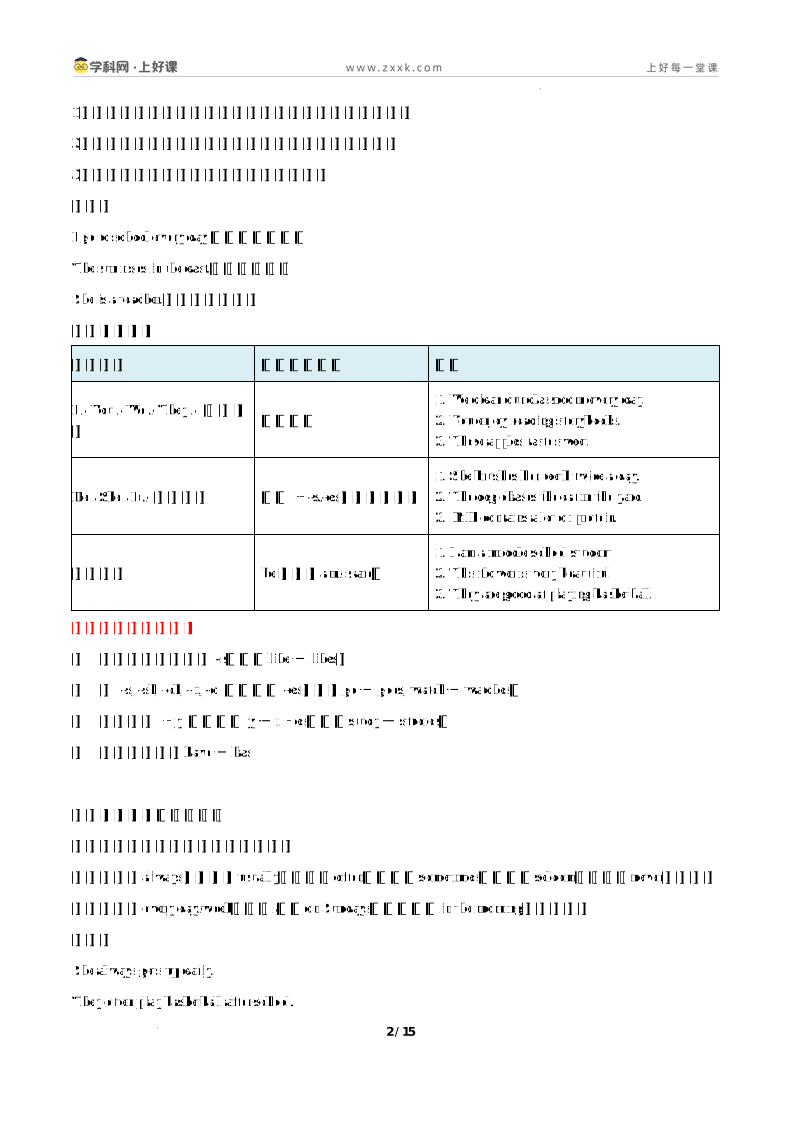
一、一般现在时的定义
一般现在时用于表示:
1、经常性或习惯性的动作(如日常生活、学习安排等)
2、客观事实或普遍真理(如科学规律、自然现象等)
3、现在的状态(如职业、性格、能力等)
例句:
I go to school every day.(习惯性动作)
The sun rises in the east.(客观真理)
She is a teacher.(现在的状态)
二、基本结构
主语类型
谓语动词形式
例句
I / You / We / They / 复数名词
动词原形
1. We clean our classroom every day.
2. You enjoy reading storybooks.
3. These apples taste sweet.
He / She / It / 单数名词
动词 + -s/-es(三单变化)
1. She brushes her teeth twice a day.
2. The dog chases the cat in the yard.
3. Milk contains a lot of protein.
所有主语
be动词(am/is/are)
1. I am a middle school student.
2. This flower is very beautiful.
3. They are good at playing basketball.
动词三单变化规则:
· 一般动词:直接加 -s(如:like → likes)
· 以 -s, -sh, -ch, -x, -o 结尾:加 -es(如:go → goes, watch → watches)
· 辅音字母 + y 结尾:变 y → i + es(如:study → studies)
· 不规则变化:have → has
三、时间状语(标志词)
一般现在时常与以下时间状语连用:
频度副词:always(总是)usually(通常)often(经常)sometimes(有时)seldom(很少)never(从不)
时间短语:every day/week(每天/周)on Sundays(在周日)in the morning(在早上)
例句:
She always gets up early.
They often play basketball after school.
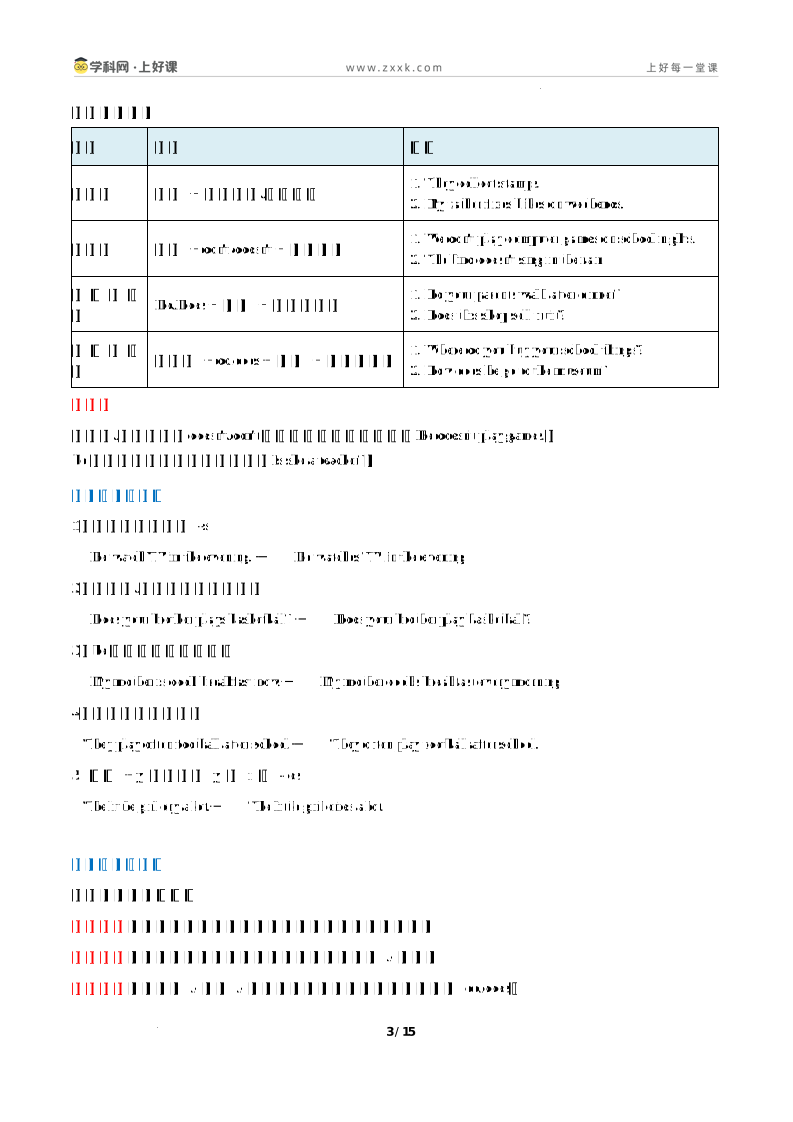
四、句型转换
句型
结构
例句
肯定句
主语 + 动词原形/三单形式
1. They collect stamps.
2. My father fixes bikes on weekends.
否定句
主语 + don't/doesn't + 动词原形
1. We don't play computer games on school nights.
2. The bird doesn't sing in the rain.
一般疑问句
Do/Does + 主语 + 动词原形?
1. Do your parents walk after dinner?
2. Does this shop sell fruit?
特殊疑问句
疑问词 + do/does + 主语 + 动词原形?
1. Where do you buy your school things?
2. How does he go to the museum?
注意:
否定句/疑问句中,doesn't/don't 后的动词恢复原形(如:He doesn't play games.)
be动词的疑问句直接提前(如:Is she a teacher?)
易|错|点|拨
1、三单动词忘记加 -s
❌ He watch TV in the evening. → ✅ He watches TV in the evening.
2、否定句/疑问句中动词未还原
❌ Does your brother plays basketball? → ✅ Does your brother play basketball?
3、be动词与实义动词混用
❌ My mother is cook breakfast now.→ ✅ My mother cooks breakfast every morning.
4、时间状语位置错误
❌They play often football after school.→ ✅ They often play football after school.
5. 辅音 + y 结尾未变 y 为 i 加 - es
❌The little girl cry a lot.→ ✅ The little girl cries a lot.
解|题|技|巧
一.核心解题步骤:
找标志:识别时间状语或语境关键词,判断动作的时态属性
看主语:根据主语人称和数,确定动词形式(原形 / 三单)
判句型:区分肯定 / 否定 / 疑问句,选择对应的结构(助动词 do/does)
二.分类解题技巧及例句:
有明确时间状语
1. 看到 every + 时间、on + 星期、频率副词,直接判定用一般现在时
2. 再根据主语确定动词形式
无明确时间状语
描述客观真理、科学事实、自然现象时,无论主语是什么,都用一般现在时
否定句
1. 主语为 I/you/we/they/ 复数名词 → don't + 动词原形
2. 主语为 he/she/it/ 单数名词 → doesn't + 动词原形
一般疑问句
1. 句首加 Do(主语为 I/you/we/they/ 复数名词)→ 主语 + 动词原形
2. 句首加 Does(主语为 he/she/it/ 单数名词)→ 主语 + 动词原形
特殊疑问句
疑问词 + Do/Does + 主语 + 动词原形
【即时检测】
1.I usually ________ to school by bike, but tomorrow is rainy, so I ________ to school by bus.
A.go;am going B.goes;go C.goes;am going
【答案】A
【详解】句意:我通常骑自行车去上学,但明天会下雨,所以我打算坐公交车去上学。
考查动词时态。根据“usually”可知,此处描述习惯性动作,应用一般现在时。主语“I”是第一人称,动词用原形“go”;根据“tomorrow”可知,此处表示将来的计划或安排,可用“be going to + 动词原形”结构。主语“I”搭配“am”,故填“am going”。 故选A。
知识点02 现在进行时
一、现在进行时的定义
现在进行时用于表示:
1、 此时此刻正在进行的动作:动作发生在说话瞬间,且仍在持续,未完成。
2、现阶段正在进行的动作:动作不一定在说话时正在发生,但在当前一段时间内持续进行。
3、按计划即将发生的动作:多用于表示位移或安排的动词(如go、come、leave等),强调“已确定的近期计划”。
例句:
My sister is watering the flowers now.(此时此刻正在进行的动作)
We are preparing for the English exam this month.(现阶段正在进行的动作)
The train is arriving in five minutes.(按计划即将发生的动作)
二、基本结构
主语类型
谓语动词形式
例句
I(第一人称单数)
am + 动词-ing
1. I am practicing the piano.
2. I am waiting for my friend at the gate.
He / She / It / 单数名词 / 不可数名词
is + 动词-ing
1. She is reading a storybook.
2. The wind is blowing strongly.
3. This machine is working well.
You / We / They / 复数名词
are + 动词-ing
1. You are doing a good job.
2. We are planting trees in the park.
3. The children are laughing loudly.
动词-ing形式变化规则
· 一般动词:直接在词尾加-ing(如:play → playing, eat → eating, talk → talking)
· 以不发音的e结尾:先去掉e,再加-ing(如:write → writing, dance → dancing, take → taking)
· 重读闭音节结尾(满足“辅+元+辅”结构,且末尾音节重读):双写末尾辅音字母,再加-ing(如:run → running, sit → sitting, stop → stopping)
· 以ie结尾:变ie为y,再加-ing(如:lie → lying, die → dying, tie → tying)
三、时间状语(标志词)
现在进行时的时间状语多为“提示当前动作状态”的词或短语,看到这些标志可快速判定时态,主要分为两类:
瞬间提示词:直接指向“说话此刻”的动作,如now(现在)、look(看,表提醒)、listen(听,表提醒)、at the moment(此刻)、right now(立刻,马上)。
阶段提示词:指向“当前一段时间”的持续动作,如these days(这些天)、this week(这周)、recently(最近)、at present(目前)。
例句:
Listen! Someone is singing in the next room.
They are building a new school at present.
This week my brother is staying with my grandparents.
四、句型转换
句型
结构
例句
肯定句
主语+ am/is/are + 动词-ing
1. My father is fixing the car.
2. Those birds are flying in the sky.
否定句
主语+ am/is/are + not + 动词-ing
1. I am not watching TV now.
2. The students are not talking in class.
一般疑问句
Am/Is/Are +主语+动词-ing?
1. Am I speaking too fast?
2. Is your mother making dumplings?
3. Are they playing basketball?
特殊疑问句
疑问词+ am/is/are +主语+动词-ing?
1. What is she drawing?
2. Where are we going tomorrow?
3. How is your father feeling today?
注意:
一般疑问句中,第一人称I对应的am需变为are,回答时仍用am(如:—Are you reading? —Yes, I am.)。
部分动词(如know、like、want、have等表心理状态、感官、拥有的词)不能用于现在进行时,需用一般现在时表达。
易|错|点|拨
1.动词 - ing 形式漏写 / 错写
❌ He is run on the playground now.→ ✅He is running on the playground now.
2.遗漏 be 动词(am/is/are)
❌ They playing basketball at the moment.→✅ They are playing basketball at the moment.
3.瞬间动词误用进行时
❌ She is knowing the answer right now.→✅ She knows the answer right now.
4.时间状语搭配错误
❌ We are having a picnic every Sunday.→✅ We are having a picnic right now.
5.be 动词与主语单复数不匹配
❌ Tom and Lily is drawing pictures.→✅ Tom and Lily are drawing pictures.
解|题|技|巧
一.核心解题步骤:
找标志:优先识别时间状语或语境提示词,这是判定现在进行时的最直接依据。若出现now、look、listen等瞬间提示词,或these days、this week等阶段提示词,直接锁定现在进行时。
定结构:根据主语的人称和数,确定对应的be动词(am/is/are)。第一人称I用am,第三人称单数及单数名词用is,第二人称、复数人称及复数名词用are。
变形式:依据动词-ing变化规则,正确改写实义动词,确保现在分词形式无误。
二、分类解题技巧及实例
有明确时间状语
看到标志词直接用“am/is/are+动词-ing”,重点匹配be动词和动词形式
无标志词(语境暗示)
根据对话场景或画面描述,判断动作正在进行,再按结构组句
否定句与疑问句
否定句在be动词后加not;疑问句将be动词提前,注意第一人称与第二人称的转换
特殊疑问句
疑问词(what/where/how等)+ be动词 + 主语 + 动词-ing,疑问词根据答语内容确定
【即时检测】
1.(24-25七年级上·江苏宿迁·期末)—Look! The boys ________ fun flying kites in the park.
—Wow! Each of them ________ a kite.
A.have; have B.are having; has C.have; is having D.are having; have
【答案】B
【详解】句意:——看!男孩们正在公园里开心地放风筝。——哇!他们每个人都有一个风筝。
考查时态和主谓一致。第一空,根据“Look!”可知,句子时态是现在进行时,其结构为“be动词+动词现在分词”,主语“The boys”是复数,be动词用are,have的现在分词是having;第二空,根据“Each of them”可知,主语是单数,谓语动词用第三人称单数形式,have的第三人称单数形式是has。故选B。
知识点03 一般将来时
一.一般将来时的定义
一般将来时用于表示:
1.将来发生的动作:动作在说话之后的某个时间点发生,尚未开始。
2.将来存在的状态:在未来一段时间内持续存在的情况或特征。
3.将来的计划、意愿或预测:表达主观打算、决心,或对未来的推测判断。
例句:
I will visit my grandparents next weekend.(将来发生的动作)
She will be 15 years old next month.(将来存在的状态)
We are going to have a sports meeting next week.(将来的计划)
二.基本结构
句型
结构
例句
will结构
主语+will+动词原形
否定式:will not = won’t
1. I will help you with your homework.
2. It will rain tomorrow.
3. She won’t go to the party.
be going to结构
主语 + am/is/are + going to + 动词原形
否定式:am/is/are + not + going to
1. He is going to buy a new bike.
2. Look at the clouds! It is going to rain.
3. They are not going to watch TV tonight.
三.时间状语(标志词)
一般将来时的时间状语多为“提示未来时间”的词或短语,看到这些标志可快速判定时态:
明确未来时间点/时间段:tomorrow(明天)、next+时间(next day/week/month/year)、in+一段时间(in five minutes/in two days)、tonight(今晚)、soon(很快)。
未来的特定时间:this coming Sunday(即将到来的周日)、the day after tomorrow(后天)、in the future(在未来)。
例句:
We will have an English test next week.
She is going to finish the work in three hours.
四.句型转换
句型
结构
例句
肯定句
I will write a letter.
She is going to see a film.
否定句
I will not (won’t) write a letter.
She is not going to see a film.
一般疑问句
Will you write a letter?
--Yes, I will./No, I won’t.
Is she going to see a film?
--Yes, she is./No, she isn’t.
特殊疑问句
疑问词 + will + 主语 + 动词原形?
疑问词+am/is/are+主语+ going to +动词原形?
易|错|点|拨
混淆 will 与 be going to 的用法
❌ I will go to Beijing. I bought the ticket yesterday.→✅ I am going to go to Beijing. I bought the ticket yesterday.
结构错误:will后接动词-ing形式
❌ He will playing football tomorrow. →✅ He will play football tomorrow.
be going to 遗漏 be 动词
❌ They going to have a picnic this weekend. →✅ They are going to have a picnic this weekend.
时间状语搭配错误
❌ We are going to visit him yesterday.→✅ We are going to visit him tomorrow.
解|题|技|巧
一.核心解题步骤
找标志:识别未来时间状语,直接锁定一般将来时。
定结构:表计划、安排或迹象推测→ 用be going to;表临时决定、意愿或无依据预测 → 用will
组句子:严格遵循结构规则,will后接动词原形,be going to需匹配主语的be动词。
二.分类解题技巧及实例
有明确时间状语
看到tomorrow/next.../in...等标志词,直接套用“will + 动词原形”或“be going to + 动词原形”,注意主语与be动词的匹配。
无标志词(语境暗示)
根据上下文判断动作是否发生在未来,再结合“计划/临时决定”的逻辑选结构。
句型转换题
否定句:will后加not,或be动词后加not;
疑问句:will提前,或be动词提前,注意人称转换。
【即时检测】
1.My grandparents ________ Beijing Opera next Saturday.
A.are going to watch B.watched
C.watch D.are watching
【答案】A
【详解】句意:我祖父母下星期六要去看京剧。
考查时态。根据“next Saturday”可知,时态用一般将来时,其结构为will do/be going to do,主语是复数,be用are。故选A。
基础通关(测试时间:10分钟)
一、单项选择
1.(24-25七年级上·北京昌平·期末)Linlin often ________ her grandparents and chats with them on weekends.
A.visit B.visits C.will visit D.is visiting
2.(24-25七年级上·福建龙岩·期末)—Where is Wang Junfeng?
—He ________ the football game on the playground.
A.watch B.is watching C.watches
3.(24-25七年级上·内蒙古鄂尔多斯·期末)Emma gets up early every day, so she is ________ late for school.
A.often B.usually C.always D.never
4.(24-25七年级上·天津河北·期末)—Is Helen doing homework?
—Yes, she is. She ________ homework for about one hour every day.
A.is doing B.does C.did D.will do
5.(24-25七年级上·北京房山·期末)Bob likes basketball. He ______ basketball matches on TV every weekend.
A.watched B.watches C.is watching D.will watch
6.(24-25七年级上·安徽合肥·期末)—Look! The dog ________ after the cat.
—They often ________ with each other like this.
A.runs, plays B.is running, play C.is running, plays D.runs, play
7.(24-25七年级上·江苏宿迁·期末)There ________ some pieces of news about the World Cup in today’s newspaper.
A.have B.has C.are D.is
8.(24-25七年级上·江苏南京·期末)—Where’s your uncle? I can’t find him.
—Maybe he ________ flowers in the garden.
A.waters B.is watering C.will water D.watered
9.(24-25七年级上·山东潍坊·期末)Look! The dolphin ________ a ship.
A.follows B.will follow C.is following D.followed
10.(24-25七年级上·广东广州·期末)—________ you ________ free tomorrow?
—No. I ________ free the day after tomorrow.
A.Are; going to; will B.Are; going to be; will
C.Are; going to; will be D.Are; going to be; will be
二、用所给词的适当形式填空
11.Judy’s birthday is coming. I (send) her a gift.
12.There’s no salt for dinner. I (buy) some later.
13.(24-25七年级上·江西赣州·期末)—Who’s your Maths teacher?
—Mr. Liu. He always (spend) half an hour reading books every morning.
14.(24-25七年级上·山东潍坊·期末)Look! The mother bird (feed) her babies.
15.Peter often (tell) funny stories to make us laugh.
16.(24-25七年级上·内蒙古呼和浩特·期末)Harmony in a family (make) everything successful.
17.Lights (shine) brightly across the city, and colourful boats are moving slowly down the river.
18.(24-25七年级上·江苏无锡·期末)In the coming winter holiday, I (make) a budget for my lucky money.
19.(24-25七年级上·天津·期末)Don’t talk to him. He (work) at the moment.
20.(24-25七年级上·江苏常州·期末)Hurry up, Tom! Your mother (wait) for you at the school gate.
三、语法填空(25-26七年级上·湖南长沙·期末)阅读下面短文,在空白处填入1个适当的单词或括号内单词的正确形式。
Peter likes going to a place. What’s this place? It is 21 farm. Many 22 (kind) of animals are there, such as cows, ducks and rabbits. They are all his 23 (grandparents). Peter often plays with these animals 24 the farm—they can make him 25 (happy).
There 26 (be) a little rabbit. The rabbit 27 (have) no friend, so Peter wants 28 (make) friends with it. He often sits on the ground 29 reads a book to the rabbit. One day, Peter’s grandfather 30 (ask) him, “Why does this rabbit like you so much? “Oh, because I love it, too.” Peter answers happily.
重难突破(测试时间:10分钟)
一、单项选择
1.(24-25七年级上·天津武清·期末)Helen ________ her grandma next month.
A.visited B.visits C.is visiting D.is going to visit
2.(24-25七年级上·北京朝阳·期末)My mother’s birthday is coming soon. I ________ a card for her tomorrow.
A.make B.will make C.made
3.(24-25七年级上·陕西西安·期末)Tomorrow Ni Ni ________ me a message about her plan.
A.sent B.send C.sends D.will send
4.(24-25七年级上·北京丰台·期末)Tina and Mary ________ a party this weekend. They are getting ready for it.
A.will have B.have C.had D.has
5.(24-25七年级上·安徽合肥·期末)Our city ________ building the new bridge next year.
A.finished B.finishes C.are finishing D.will finish
6.(24-25七年级上·广东广州·期末)—________ you ________ free tomorrow?
—No. I ________ free the day after tomorrow.
A.Are; going to; will B.Are; going to be; will
C.Are; going to; will be D.Are; going to be; will be
7.(24-25七年级上·广东江门·期末)He ________ visit his friend Jack tomorrow.
A.will be going to B.is going to C.will goes to D.goes to
8.(24-25七年级上·广东广州·期末)Look at the dark clouds in the sky. It ________ soon.
A.rain B.rains C.is raining D.is going to rain
9.(24-25七年级上·陕西延安·期末)There is going to ________ a Tech Expo next month.
A.have B.has C.be D.is
10.(24-25七年级上·山东潍坊·期末)—What are the plants going to produce?
—Most importantly, there ________ sugar.
A.is B.will C.will be D.are
二、用所给词的适当形式填空
11.(24-25七年级上·内蒙古呼和浩特·期末)Its round shape (stand for) family reunions.
12.(24-25七年级上·广东深圳·期末)China (send) more rockets into space to explore in the future.
13.(24-25七年级上·山东济宁·期末)As we all know, the sun (rise) in the east and sets in the west.
14.(24-25七年级上·河南郑州·期末)For Chinese people, the Spring Festival (mark) a new beginning.
15.(24-25七年级上·山东菏泽·期末)Our class (begin) at 8:00 in the morning.
16.(24-25七年级上·江苏无锡·期末)A cup of coffee always (bring) me energy in the morning.
17.(24-25七年级上·云南昆明·期末)Tom likes vegetables very much, but he (not like) chocolate.
18.(24-25七年级上·湖北荆州·期末)Cherry always (spend) the weekend with her grandparents.
19.(24-25七年级上·山东潍坊·期末)— you (get) ready for the spring festival?
—Yes, we are doing some cleaning.
20.(24-25七年级上·内蒙古呼和浩特·期末)Look! I am (do) some online research. Pigeons can recognise themselves in mirrors.
3、 语法填空(24-25七年级上·浙江宁波·期末)
It’s a sunny day. A hungry fox (狐狸) is looking 21 food. There 22 (be) many animals on the farm. Soon, he sees a chicken. 23 chicken is playing alone. The fox smiles, “Wow, this is my breakfast. It must be very delicious!” He comes up to the chicken 24 says, “Miss Chicken! I know you can sing 25 (good). All my 26 (friend) like your songs very much. Can you sing one for 27 (I)?” The chicken is happy to hear that. She closes her eyes and begins 28 (sing). Just then, the fox takes her away with his mouth quickly.
On the farm, some farmers are working. They shout (大喊), “Look! The fox is taking our chicken away.” Then the chicken 29 (say) to the fox, “Mr. Fox, can you hear that? Tell them I am your chicken, not their chicken.” The fox opens his mouth, “This is my chicken, not 30 (you)”.
The chicken runs away from the fox and flies into the tree.
易混易错(测试时间:10分钟)
一、单项选择
1.(24-25七年级上·天津滨海新·期末)—_______ you often ________ volleyball with your classmates after school?
—Yes, there’s so much fun.
A.Do; play B.Will; play C.Are; playing D.Did; play
2.(24-25七年级上·北京西城·期末)My grandpa loves Beijing Opera and he ________ it on the radio every evening.
A.listen to B.listens to C.listening to
3.(24-25七年级上·北京海淀·期末)We all like our English teacher. He always ______ his classes interesting.
A.make B.will make C.made D.makes
4.(24-25七年级上·天津河北·期末)—That’s strange! Does your husband usually sweep the carpet?
—No. He never ________ the carpet. But he ________ it now, because our vacuum is broken.
A.sweeps; sweeping B.sweeping; sweeps
C.sweep; sweeping D.sweeps; is sweeping
5.(24-25七年级上·北京丰台·期末)John is Robert’s brother. He ________ Robert every day.
A.will help B.helped C.helps D.ís helping
6.(24-25七年级上·江苏扬州·期末)—Where is your grandmother?
—She ________ in the park now. She usually ________ there after supper.
A.walks; walks B.walks; walking
C.is walking; is walking D.is walking; walks
7.(24-25七年级上·福建福州·期末)—________ they ________ newspapers every day?
—Yes. They ________ them now.
A.Are; reading; read B.Do; read; read C.Do; read; are reading
8.(24-25七年级上·福建泉州·期末)—Jane often ________ her hand and answers the questions in the math class.
—Oh, how nice!
A.raise B.raises C.raising
9.(24-25七年级上·广东江门·期末)Susie often ________ computer games after dinner but now she ________ a book.
A.plays; is reading B.is playing; reads
C.plays; read D.is playing; is reading
10.(24-25七年级上·江苏泰州·期末)—Listen! Who ______ in the music room?
—Lily and Lucy. They enjoy singing when they ______ free.
A.sing; has B.is singing; are C.sings; has D.are singing; is
二、用所给词的适当形式填空
11.(24-25七年级上·江苏无锡·期末)Look! Some tigers (lie) on the ground in the warm sun.
12.(24-25七年级上·江苏无锡·期末)Please turn down the music. Mum (sleep) in the next room.
13.(24-25七年级上·江苏常州·期末)— the kids (water) the flowers in the garden?
— No. They are flying kites.
14.—Dad, my computer doesn’t work now.
—Don’t worry, I (call) your uncle soon and he knows how to fix it.
15.(24-25七年级上·广东深圳·期末)To protect the beach, we (collect) all the rubbish after the party tomorrow.
16.(24-25七年级上·天津·期末)Betty’s mother (not like) football.
17.(24-25七年级上·广东深圳·期末)The great musician often (express) herself in her songs.
18.(24-25七年级上·江苏无锡·期末)When the spring festival comes, my grandparents usually (hang) red lanterns in hope of good luck.
19.(24-25七年级上·江苏常州·期末)How often your sister (play) the piano?
20.(24-25七年级上·辽宁本溪·期末)Tom often (do) his homework after school.
三、语法填空(24-25七年级上·浙江宁波·期末)
It’s a sunny day. A hungry fox (狐狸) is looking 21 food. There 22 (be) many animals on the farm. Soon, he sees a chicken. 23 chicken is playing alone. The fox smiles, “Wow, this is my breakfast. It must be very delicious!” He comes up to the chicken 24 says, “Miss Chicken! I know you can sing 25 (good). All my 26 (friend) like your songs very much. Can you sing one for 27 (I)?” The chicken is happy to hear that. She closes her eyes and begins 28 (sing). Just then, the fox takes her away with his mouth quickly.
On the farm, some farmers are working. They shout (大喊), “Look! The fox is taking our chicken away.” Then the chicken 29 (say) to the fox, “Mr. Fox, can you hear that? Tell them I am your chicken, not their chicken.” The fox opens his mouth, “This is my chicken, not 30 (you)”.
The chicken runs away from the fox and flies into the tree.
3 / 3
学科网(北京)股份有限公司
$
专题01 三大时态:一般现在时、现在进行时、一般将来时(期末复习讲义)
单元
语法点
常考题型
命题趋势
Unit 4-6
三大时态:一般现在时、现在进行时、一般将来时
1.单项选择
2.所给词的适当形式填空
3.语法填空
1.注重素养:更加注重对学生英语核心素养的考查。
2.语境化为主,淡化孤立考查:命题场景多选取校园活动、周末计划、日常交流等学生熟悉的内容,让学生在生活化语境中运用时态。
3.侧重理解与应用,而非机械记忆:题目不再依赖明显的时间标志词,而是要求学生通过常识或上下文推断动作的时间状态。
知识点01 一般现在时
一、一般现在时的定义
一般现在时用于表示:
1、经常性或习惯性的动作(如日常生活、学习安排等)
2、客观事实或普遍真理(如科学规律、自然现象等)
3、现在的状态(如职业、性格、能力等)
例句:
I go to school every day.(习惯性动作)
The sun rises in the east.(客观真理)
She is a teacher.(现在的状态)
二、基本结构
主语类型
谓语动词形式
例句
I / You / We / They / 复数名词
动词原形
1. We clean our classroom every day.
2. You enjoy reading storybooks.
3. These apples taste sweet.
He / She / It / 单数名词
动词 + -s/-es(三单变化)
1. She brushes her teeth twice a day.
2. The dog chases the cat in the yard.
3. Milk contains a lot of protein.
所有主语
be动词(am/is/are)
1. I am a middle school student.
2. This flower is very beautiful.
3. They are good at playing basketball.
动词三单变化规则:
· 一般动词:直接加 -s(如:like → likes)
· 以 -s, -sh, -ch, -x, -o 结尾:加 -es(如:go → goes, watch → watches)
· 辅音字母 + y 结尾:变 y → i + es(如:study → studies)
· 不规则变化:have → has
三、时间状语(标志词)
一般现在时常与以下时间状语连用:
频度副词:always(总是)usually(通常)often(经常)sometimes(有时)seldom(很少)never(从不)
时间短语:every day/week(每天/周)on Sundays(在周日)in the morning(在早上)
例句:
She always gets up early.
They often play basketball after school.
四、句型转换
句型
结构
例句
肯定句
主语 + 动词原形/三单形式
1. They collect stamps.
2. My father fixes bikes on weekends.
否定句
主语 + don't/doesn't + 动词原形
1. We don't play computer games on school nights.
2. The bird doesn't sing in the rain.
一般疑问句
Do/Does + 主语 + 动词原形?
1. Do your parents walk after dinner?
2. Does this shop sell fruit?
特殊疑问句
疑问词 + do/does + 主语 + 动词原形?
1. Where do you buy your school things?
2. How does he go to the museum?
注意:
否定句/疑问句中,doesn't/don't 后的动词恢复原形(如:He doesn't play games.)
be动词的疑问句直接提前(如:Is she a teacher?)
易|错|点|拨
1、三单动词忘记加 -s
❌ He watch TV in the evening. → ✅ He watches TV in the evening.
2、否定句/疑问句中动词未还原
❌ Does your brother plays basketball? → ✅ Does your brother play basketball?
3、be动词与实义动词混用
❌ My mother is cook breakfast now.→ ✅ My mother cooks breakfast every morning.
4、时间状语位置错误
❌They play often football after school.→ ✅ They often play football after school.
5. 辅音 + y 结尾未变 y 为 i 加 - es
❌The little girl cry a lot.→ ✅ The little girl cries a lot.
解|题|技|巧
一.核心解题步骤:
找标志:识别时间状语或语境关键词,判断动作的时态属性
看主语:根据主语人称和数,确定动词形式(原形 / 三单)
判句型:区分肯定 / 否定 / 疑问句,选择对应的结构(助动词 do/does)
二.分类解题技巧及例句:
有明确时间状语
1. 看到 every + 时间、on + 星期、频率副词,直接判定用一般现在时
2. 再根据主语确定动词形式
无明确时间状语
描述客观真理、科学事实、自然现象时,无论主语是什么,都用一般现在时
否定句
1. 主语为 I/you/we/they/ 复数名词 → don't + 动词原形
2. 主语为 he/she/it/ 单数名词 → doesn't + 动词原形
一般疑问句
1. 句首加 Do(主语为 I/you/we/they/ 复数名词)→ 主语 + 动词原形
2. 句首加 Does(主语为 he/she/it/ 单数名词)→ 主语 + 动词原形
特殊疑问句
疑问词 + Do/Does + 主语 + 动词原形
【即时检测】
1.I usually ________ to school by bike, but tomorrow is rainy, so I ________ to school by bus.
A.go;am going B.goes;go C.goes;am going
【答案】A
【详解】句意:我通常骑自行车去上学,但明天会下雨,所以我打算坐公交车去上学。
考查动词时态。根据“usually”可知,此处描述习惯性动作,应用一般现在时。主语“I”是第一人称,动词用原形“go”;根据“tomorrow”可知,此处表示将来的计划或安排,可用“be going to + 动词原形”结构。主语“I”搭配“am”,故填“am going”。 故选A。
知识点02 现在进行时
一、现在进行时的定义
现在进行时用于表示:
1、 此时此刻正在进行的动作:动作发生在说话瞬间,且仍在持续,未完成。
2、现阶段正在进行的动作:动作不一定在说话时正在发生,但在当前一段时间内持续进行。
3、按计划即将发生的动作:多用于表示位移或安排的动词(如go、come、leave等),强调“已确定的近期计划”。
例句:
My sister is watering the flowers now.(此时此刻正在进行的动作)
We are preparing for the English exam this month.(现阶段正在进行的动作)
The train is arriving in five minutes.(按计划即将发生的动作)
二、基本结构
主语类型
谓语动词形式
例句
I(第一人称单数)
am + 动词-ing
1. I am practicing the piano.
2. I am waiting for my friend at the gate.
He / She / It / 单数名词 / 不可数名词
is + 动词-ing
1. She is reading a storybook.
2. The wind is blowing strongly.
3. This machine is working well.
You / We / They / 复数名词
are + 动词-ing
1. You are doing a good job.
2. We are planting trees in the park.
3. The children are laughing loudly.
动词-ing形式变化规则
· 一般动词:直接在词尾加-ing(如:play → playing, eat → eating, talk → talking)
· 以不发音的e结尾:先去掉e,再加-ing(如:write → writing, dance → dancing, take → taking)
· 重读闭音节结尾(满足“辅+元+辅”结构,且末尾音节重读):双写末尾辅音字母,再加-ing(如:run → running, sit → sitting, stop → stopping)
· 以ie结尾:变ie为y,再加-ing(如:lie → lying, die → dying, tie → tying)
三、时间状语(标志词)
现在进行时的时间状语多为“提示当前动作状态”的词或短语,看到这些标志可快速判定时态,主要分为两类:
瞬间提示词:直接指向“说话此刻”的动作,如now(现在)、look(看,表提醒)、listen(听,表提醒)、at the moment(此刻)、right now(立刻,马上)。
阶段提示词:指向“当前一段时间”的持续动作,如these days(这些天)、this week(这周)、recently(最近)、at present(目前)。
例句:
Listen! Someone is singing in the next room.
They are building a new school at present.
This week my brother is staying with my grandparents.
四、句型转换
句型
结构
例句
肯定句
主语+ am/is/are + 动词-ing
1. My father is fixing the car.
2. Those birds are flying in the sky.
否定句
主语+ am/is/are + not + 动词-ing
1. I am not watching TV now.
2. The students are not talking in class.
一般疑问句
Am/Is/Are +主语+动词-ing?
1. Am I speaking too fast?
2. Is your mother making dumplings?
3. Are they playing basketball?
特殊疑问句
疑问词+ am/is/are +主语+动词-ing?
1. What is she drawing?
2. Where are we going tomorrow?
3. How is your father feeling today?
注意:
一般疑问句中,第一人称I对应的am需变为are,回答时仍用am(如:—Are you reading? —Yes, I am.)。
部分动词(如know、like、want、have等表心理状态、感官、拥有的词)不能用于现在进行时,需用一般现在时表达。
易|错|点|拨
1.动词 - ing 形式漏写 / 错写
❌ He is run on the playground now.→ ✅He is running on the playground now.
2.遗漏 be 动词(am/is/are)
❌ They playing basketball at the moment.→✅ They are playing basketball at the moment.
3.瞬间动词误用进行时
❌ She is knowing the answer right now.→✅ She knows the answer right now.
4.时间状语搭配错误
❌ We are having a picnic every Sunday.→✅ We are having a picnic right now.
5.be 动词与主语单复数不匹配
❌ Tom and Lily is drawing pictures.→✅ Tom and Lily are drawing pictures.
解|题|技|巧
一.核心解题步骤:
找标志:优先识别时间状语或语境提示词,这是判定现在进行时的最直接依据。若出现now、look、listen等瞬间提示词,或these days、this week等阶段提示词,直接锁定现在进行时。
定结构:根据主语的人称和数,确定对应的be动词(am/is/are)。第一人称I用am,第三人称单数及单数名词用is,第二人称、复数人称及复数名词用are。
变形式:依据动词-ing变化规则,正确改写实义动词,确保现在分词形式无误。
二、分类解题技巧及实例
有明确时间状语
看到标志词直接用“am/is/are+动词-ing”,重点匹配be动词和动词形式
无标志词(语境暗示)
根据对话场景或画面描述,判断动作正在进行,再按结构组句
否定句与疑问句
否定句在be动词后加not;疑问句将be动词提前,注意第一人称与第二人称的转换
特殊疑问句
疑问词(what/where/how等)+ be动词 + 主语 + 动词-ing,疑问词根据答语内容确定
【即时检测】
1.(24-25七年级上·江苏宿迁·期末)—Look! The boys ________ fun flying kites in the park.
—Wow! Each of them ________ a kite.
A.have; have B.are having; has C.have; is having D.are having; have
【答案】B
【详解】句意:——看!男孩们正在公园里开心地放风筝。——哇!他们每个人都有一个风筝。
考查时态和主谓一致。第一空,根据“Look!”可知,句子时态是现在进行时,其结构为“be动词+动词现在分词”,主语“The boys”是复数,be动词用are,have的现在分词是having;第二空,根据“Each of them”可知,主语是单数,谓语动词用第三人称单数形式,have的第三人称单数形式是has。故选B。
知识点03 一般将来时
一.一般将来时的定义
一般将来时用于表示:
1.将来发生的动作:动作在说话之后的某个时间点发生,尚未开始。
2.将来存在的状态:在未来一段时间内持续存在的情况或特征。
3.将来的计划、意愿或预测:表达主观打算、决心,或对未来的推测判断。
例句:
I will visit my grandparents next weekend.(将来发生的动作)
She will be 15 years old next month.(将来存在的状态)
We are going to have a sports meeting next week.(将来的计划)
二.基本结构
句型
结构
例句
will结构
主语+will+动词原形
否定式:will not = won’t
1. I will help you with your homework.
2. It will rain tomorrow.
3. She won’t go to the party.
be going to结构
主语 + am/is/are + going to + 动词原形
否定式:am/is/are + not + going to
1. He is going to buy a new bike.
2. Look at the clouds! It is going to rain.
3. They are not going to watch TV tonight.
三.时间状语(标志词)
一般将来时的时间状语多为“提示未来时间”的词或短语,看到这些标志可快速判定时态:
明确未来时间点/时间段:tomorrow(明天)、next+时间(next day/week/month/year)、in+一段时间(in five minutes/in two days)、tonight(今晚)、soon(很快)。
未来的特定时间:this coming Sunday(即将到来的周日)、the day after tomorrow(后天)、in the future(在未来)。
例句:
We will have an English test next week.
She is going to finish the work in three hours.
四.句型转换
句型
结构
例句
肯定句
I will write a letter.
She is going to see a film.
否定句
I will not (won’t) write a letter.
She is not going to see a film.
一般疑问句
Will you write a letter?
--Yes, I will./No, I won’t.
Is she going to see a film?
--Yes, she is./No, she isn’t.
特殊疑问句
疑问词 + will + 主语 + 动词原形?
疑问词+am/is/are+主语+ going to +动词原形?
易|错|点|拨
混淆 will 与 be going to 的用法
❌ I will go to Beijing. I bought the ticket yesterday.→✅ I am going to go to Beijing. I bought the ticket yesterday.
结构错误:will后接动词-ing形式
❌ He will playing football tomorrow. →✅ He will play football tomorrow.
be going to 遗漏 be 动词
❌ They going to have a picnic this weekend. →✅ They are going to have a picnic this weekend.
时间状语搭配错误
❌ We are going to visit him yesterday.→✅ We are going to visit him tomorrow.
解|题|技|巧
一.核心解题步骤
找标志:识别未来时间状语,直接锁定一般将来时。
定结构:表计划、安排或迹象推测→ 用be going to;表临时决定、意愿或无依据预测 → 用will
组句子:严格遵循结构规则,will后接动词原形,be going to需匹配主语的be动词。
二.分类解题技巧及实例
有明确时间状语
看到tomorrow/next.../in...等标志词,直接套用“will + 动词原形”或“be going to + 动词原形”,注意主语与be动词的匹配。
无标志词(语境暗示)
根据上下文判断动作是否发生在未来,再结合“计划/临时决定”的逻辑选结构。
句型转换题
否定句:will后加not,或be动词后加not;
疑问句:will提前,或be动词提前,注意人称转换。
【即时检测】
1.My grandparents ________ Beijing Opera next Saturday.
A.are going to watch B.watched
C.watch D.are watching
【答案】A
【详解】句意:我祖父母下星期六要去看京剧。
考查时态。根据“next Saturday”可知,时态用一般将来时,其结构为will do/be going to do,主语是复数,be用are。故选A。
基础通关(测试时间:10分钟)
一、单项选择
1.(24-25七年级上·北京昌平·期末)Linlin often ________ her grandparents and chats with them on weekends.
A.visit B.visits C.will visit D.is visiting
【答案】B
【详解】句意:琳琳经常在周末拜访她的祖父母,并和他们聊天。
考查时态。根据“often”及“on weekends.”可知时态是一般现在时,主语“Linlin”是第三人称单数,谓语动词用三单形式,故选B。
2.(24-25七年级上·福建龙岩·期末)—Where is Wang Junfeng?
—He ________ the football game on the playground.
A.watch B.is watching C.watches
【答案】B
【详解】句意:——王俊峰在哪里?——他正在观看操场上的足球比赛。
考查现在进行时。根据问句“Where is Wang Junfeng?”询问当前的位置,答句需描述他此刻正在进行的动作,因此使用现在进行时“is watching”表示“正在观看”。故选B。
3.(24-25七年级上·内蒙古鄂尔多斯·期末)Emma gets up early every day, so she is ________ late for school.
A.often B.usually C.always D.never
【答案】D
【详解】句意:艾玛每天早晨都早起,所以她上学从不迟到。
考查副词辨析。often经常;usually通常;always总是;never从不。根据前句中“Emma gets up early every day”可知,艾玛每天都起床很早,所以她从不迟到。故选D。
4.(24-25七年级上·天津河北·期末)—Is Helen doing homework?
—Yes, she is. She ________ homework for about one hour every day.
A.is doing B.does C.did D.will do
【答案】B
【详解】句意:——海伦在做作业吗?——是的,她正在做。她每天做作业大约一个小时。
考查时态。根据“every day”可知,此处要用一般现在时,故选B。
5.(24-25七年级上·北京房山·期末)Bob likes basketball. He ______ basketball matches on TV every weekend.
A.watched B.watches C.is watching D.will watch
【答案】B
【详解】句意:鲍勃喜欢篮球。他每个周末都会在电视上看篮球比赛。
考查动词时态。根据句中“every weekend”可知,这是经常性发生的动作,应用一般现在时,主语是第三人称单数,动词用三单形式。故选B。
6.(24-25七年级上·安徽合肥·期末)—Look! The dog ________ after the cat.
—They often ________ with each other like this.
A.runs, plays B.is running, play C.is running, plays D.runs, play
【答案】B
【详解】句意:——看!狗正在追猫。——它们经常像这样互相玩耍。
考查现在进行时和一般现在时。根据“Look! The dog...after the cat.”可知,第一个空用现在进行时,is running表示“正在跑”;根据“They often...with each other like this.”可知,第二个空应用一般现在时,结合主语they,动词用原形play。故选B。
7.(24-25七年级上·江苏宿迁·期末)There ________ some pieces of news about the World Cup in today’s newspaper.
A.have B.has C.are D.is
【答案】C
【详解】句意:今天的报纸有关于世界杯的一些消息。
考查主谓一致。该句是There be句型。根据“in today’s newspaper.”可知,本句是一般现在时,主语是some pieces of news,其中pieces为复数,所以be动词用are。故选C。
8.(24-25七年级上·江苏南京·期末)—Where’s your uncle? I can’t find him.
—Maybe he ________ flowers in the garden.
A.waters B.is watering C.will water D.watered
【答案】B
【详解】句意:——你叔叔在哪里?我找不到他。——也许他正在花园里浇花。
考查现在进行时。根据“Where’s your uncle?”可知,空处表示现在正在进行的动作,应用现在进行时。故选B。
9.(24-25七年级上·山东潍坊·期末)Look! The dolphin ________ a ship.
A.follows B.will follow C.is following D.followed
【答案】C
【详解】句意:看!那只海豚正在跟随一艘船。
考查现在进行时。根据“Look!”可知,此处表示动作正在发生,需用现在进行时描述当前场景,C项符合。故选C。
10.(24-25七年级上·广东广州·期末)—________ you ________ free tomorrow?
—No. I ________ free the day after tomorrow.
A.Are; going to; will B.Are; going to be; will
C.Are; going to; will be D.Are; going to be; will be
【答案】D
【详解】句意:——你明天有空吗?——没有。后天我有空。
考查时态。根据“tomorrow”以及“the day after tomorrow”可知两个句子都用一般将来时be going to do/will do;free是形容词,前用be动词。故选D。
二、用所给词的适当形式填空
11.Judy’s birthday is coming. I (send) her a gift.
【答案】will send
【详解】句意:朱迪的生日快到了。我将要送她一份礼物。根据“Judy’s birthday is coming.”可知,此处表示将来的动作,应用一般将来时,其结构为:will + 动词原形。故填will send。
12.There’s no salt for dinner. I (buy) some later.
【答案】am going to buy
【详解】句意:晚餐没有盐了。我稍后会去买一些。根据“later”可知,时态应用一般将来时,be going to表示事先计划,I之后be动词用am,to之后接动词原形buy“买”。故填am going to buy。
13.(24-25七年级上·江西赣州·期末)—Who’s your Maths teacher?
—Mr. Liu. He always (spend) half an hour reading books every morning.
【答案】spends
【详解】句意:——你的数学老师是谁?——是刘老师。他每天早上总是花半个小时读书。主语“He”为第三人称单数,且“always”和“every morning”表明动作是经常性习惯,需用一般现在时。动词“spend”的第三人称单数形式为“spends”。故填spends。
14.(24-25七年级上·山东潍坊·期末)Look! The mother bird (feed) her babies.
【答案】is feeding
【详解】句意:看!鸟妈妈正在喂她的宝宝。根据“Look!”可知,此处描述正在发生的动作,应用现在进行时,其结构为“be动词+动词的现在分词”,主语“The mother bird”为第三人称单数,be动词应用is,动词feed“喂”的现在分词为feeding。故填is feeding。
15.Peter often (tell) funny stories to make us laugh.
【答案】tells
【详解】句意:彼得经常讲有趣的故事逗我们笑。根据“often”可知,此句时态为一般现在时,主语为“Peter”,空处填动词三单形式作谓语。tell“讲述”,动词,三单形式为tells。故填tells。
16.(24-25七年级上·内蒙古呼和浩特·期末)Harmony in a family (make) everything successful.
【答案】makes
【详解】句意:家庭和睦让一切顺遂。make使,让,动词;本句阐述客观道理,时态为一般现在时;主语“Harmony in a family”是不可数名词短语,视为单数,谓语动词需用第三人称单数形式“makes”。故填makes。
17.Lights (shine) brightly across the city, and colourful boats are moving slowly down the river.
【答案】are shining
【详解】句意:灯光明亮地照耀着整个城市,五颜六色的船只缓缓地顺河而下。根据“and colourful boats are moving slowly down the river”可知,句子时态为现在进行时,其结构为“am/is/are+现在分词”。Lights是复数主语,所以be动词用are,shine的现在分词为shining。故填are shining。
18.(24-25七年级上·江苏无锡·期末)In the coming winter holiday, I (make) a budget for my lucky money.
【答案】will make
【详解】句意:在即将到来的寒假里,我会为我的压岁钱做预算。根据“In the coming winter holiday”在即将到来的寒假里,可知时态为一般将来时,谓语动词构成是will+动词原形,故填will make。
19.(24-25七年级上·天津·期末)Don’t talk to him. He (work) at the moment.
【答案】is working
【详解】句意:别跟他说话。他此刻正在工作。work“工作”,时间状语“at the moment”表示动作正在进行,因此需使用现在进行时,其结构为“be doing”,主语是“He”,be动词填is,动词填现在分词。故填is working。
20.(24-25七年级上·江苏常州·期末)Hurry up, Tom! Your mother (wait) for you at the school gate.
【答案】is waiting
【详解】句意:快点,汤姆!你妈妈在校门口等你。根据“Hurry up, Tom!”可知,此处指汤姆的妈妈正在等他,所以要快点;句子应用现在进行时,其结构为be doing,主语是Your mother,be动词用is,后跟wait的现在分词waiting。故填is waiting。
三、语法填空(25-26七年级上·湖南长沙·期末)阅读下面短文,在空白处填入1个适当的单词或括号内单词的正确形式。
Peter likes going to a place. What’s this place? It is 21 farm. Many 22 (kind) of animals are there, such as cows, ducks and rabbits. They are all his 23 (grandparents). Peter often plays with these animals 24 the farm—they can make him 25 (happy).
There 26 (be) a little rabbit. The rabbit 27 (have) no friend, so Peter wants 28 (make) friends with it. He often sits on the ground 29 reads a book to the rabbit. One day, Peter’s grandfather 30 (ask) him, “Why does this rabbit like you so much? “Oh, because I love it, too.” Peter answers happily.
【答案】
21.a 22.kinds 23.grandparents’ 24.on 25.happy 26.is 27.has 28.to make 29.and 30.asks
【导语】本文是一篇记叙文。讲述了男孩Peter喜欢去他祖父母的农场,在那里他与各种动物玩耍,尤其和一只孤单的小兔子成为朋友,体现了人与动物之间的温情与关爱。
21.句意:它是一个农场。此处表示泛指,且farm是以辅音音素开头的单词,应用不定冠词a修饰。故填a。
22.句意:那里有许多种类的动物,比如牛、鸭和兔子。many后接可数名词复数形式,kind的复数形式是kinds。故填kinds。
23.句意:它们都是他祖父母的。此处表示“祖父母的”,应用名词所有格形式,且grandparents是复数名词,其所有格形式是在词尾加“'”。故填grandparents’。
24.句意:彼得经常在农场和这些动物玩耍——它们能让他开心。on the farm“在农场”,是固定短语。故填on。
25.句意:彼得经常在农场和这些动物玩耍——它们能让他开心。make sb+形容词,表示“使某人……”,happy“开心的”,是形容词。故填happy。
26.句意:有一只小兔子。此处是there be句型,且句子是一般现在时,主语“a little rabbit”是单数,be动词应用is。故填is。
27.句意:这只兔子没有朋友。句子是一般现在时,主语“The rabbit”是单数,谓语动词应用三单形式has。故填has。
28.句意:所以彼得想和它交朋友。want to do sth“想要做某事”,是固定短语。故填to make。
29.句意:他经常坐在地上给兔子读书。此处表示并列关系,应用and连接两个并列的动词。故填and。
30.句意:一天,彼得的祖父问他。句子是一般现在时,主语“Peter’s grandfather”是单数,谓语动词应用三单形式asks。故填asks。
重难突破(测试时间:10分钟)
一、单项选择
1.(24-25七年级上·天津武清·期末)Helen ________ her grandma next month.
A.visited B.visits C.is visiting D.is going to visit
【答案】D
【详解】句意:海伦下个月要去看望她的奶奶。
考查动词的时态。根据时间状语“next month”可知,此处是一般将来时,其结构是will do或be going to do。故选D。
2.(24-25七年级上·北京朝阳·期末)My mother’s birthday is coming soon. I ________ a card for her tomorrow.
A.make B.will make C.made
【答案】B
【详解】句意:我妈妈的生日快到了。明天我将为她做一张卡片。
考查动词时态。根据“tomorrow”可知,时态是一般将来时,结构是will do,故选B。
3.(24-25七年级上·陕西西安·期末)Tomorrow Ni Ni ________ me a message about her plan.
A.sent B.send C.sends D.will send
【答案】D
【详解】句意:明天倪妮会给我发一条关于她的计划的消息。
考查时态。根据“Tomorrow”可知句子用一般将来时will do。故选D。
4.(24-25七年级上·北京丰台·期末)Tina and Mary ________ a party this weekend. They are getting ready for it.
A.will have B.have C.had D.has
【答案】A
【详解】句意:蒂娜和玛丽这个周末将有一个聚会。他们正在为此做准备。
考查时态。根据“this weekend”可知,动作发生在将来,应用一般将来时。故选A。
5.(24-25七年级上·安徽合肥·期末)Our city ________ building the new bridge next year.
A.finished B.finishes C.are finishing D.will finish
【答案】D
【详解】句意:我们市明年将完成这座新桥的建造。
考查动词时态。next year表明句子时态为一般将来时,一般将来时的构成是“will + 动词原形”,故选D。
6.(24-25七年级上·广东广州·期末)—________ you ________ free tomorrow?
—No. I ________ free the day after tomorrow.
A.Are; going to; will B.Are; going to be; will
C.Are; going to; will be D.Are; going to be; will be
【答案】D
【详解】句意:——你明天有空吗?——没有。后天我有空。
考查时态。根据“tomorrow”以及“the day after tomorrow”可知两个句子都用一般将来时be going to do/will do;free是形容词,前用be动词。故选D。
7.(24-25七年级上·广东江门·期末)He ________ visit his friend Jack tomorrow.
A.will be going to B.is going to C.will goes to D.goes to
【答案】B
【详解】句意:他明天要去拜访他的朋友杰克。
考查一般将来时。根据“tomorrow”可知,此处时态为一般将来时,其结构为“will do”或“be going to do”。故选B。
8.(24-25七年级上·广东广州·期末)Look at the dark clouds in the sky. It ________ soon.
A.rain B.rains C.is raining D.is going to rain
【答案】D
【详解】句意:看天上的乌云。很快就要下雨了。
考查动词时态。句子中有“soon”表示将来时间,且“Look at the dark clouds”提供了当前迹象,表明下雨是基于可见证据的预测,因此使用“be going to”结构,表示基于当前迹象(如乌云)的将来预测,故选D。
9.(24-25七年级上·陕西延安·期末)There is going to ________ a Tech Expo next month.
A.have B.has C.be D.is
【答案】C
【详解】句意:下个月将有一个科技博览会。
考查there be句型的一般将来时结构。在there be句型的一般将来时中,固定搭配为“there is/are going to be”,表示“将会有”,其中“going to”后必须接动词原形“be”。故选C。
10.(24-25七年级上·山东潍坊·期末)—What are the plants going to produce?
—Most importantly, there ________ sugar.
A.is B.will C.will be D.are
【答案】C
【详解】句意:——这些植物将会生产什么?——最重要的是,将会有糖。
考查存在句的将来时态。此句表达的是植物未来会生产出糖,是将来发生的事情,“there will be”是“there be”句型的一般将来时形式,意思是“将会有”,符合句子表达植物未来会生产出糖,也就是未来会有糖这一语境。故选C。
二、用所给词的适当形式填空
11.(24-25七年级上·内蒙古呼和浩特·期末)Its round shape (stand for) family reunions.
【答案】stands for
【详解】句意:它的圆形代表家庭团聚。stand for代表,动词短语;句子主语“Its round shape”是单数名词短语,视为第三人称单数,句子描述客观事实,时态为一般现在时,谓语动词需用第三人称单数形式,“stand”的第三人称单数形式是“stands”。故填stands for。
12.(24-25七年级上·广东深圳·期末)China (send) more rockets into space to explore in the future.
【答案】will send/is going to send
【详解】句意:中国将来会发射更多的火箭进入太空进行探索。根据句中“in the future”(将来)可知,句子时态为一般将来时,结构为“主语 + will + 动词原形”或“主语+be going to+动词原形”。动词“send”意为“发射”,符合句意。故填will send/is going to send。
13.(24-25七年级上·山东济宁·期末)As we all know, the sun (rise) in the east and sets in the west.
【答案】rises
【详解】句意:众所周知,太阳从东方升起,西方落下。rise“升起”;因太阳东升西落是客观事实,时态用一般现在时;主语“the sun”为单数,动词用第三人称单数形式。故填rises。
14.(24-25七年级上·河南郑州·期末)For Chinese people, the Spring Festival (mark) a new beginning.
【答案】marks
【详解】句意:对于中国人来说,春节标志着一个新的开始。根据题干可知,此处陈述事实用一般现在时,主语the Spring Festival是第三人称单数,谓语动词用第三人称单数形式。故填marks。
15.(24-25七年级上·山东菏泽·期末)Our class (begin) at 8:00 in the morning.
【答案】begins
【详解】句意:我们早上八点开始上课。根据语境可知,此处是一般现在时,主语Our class是第三人称单数,谓语动词用其三单式。故填begins。
16.(24-25七年级上·江苏无锡·期末)A cup of coffee always (bring) me energy in the morning.
【答案】brings
【详解】句意:早上一杯咖啡总能给我带来能量。根据“always”可知,时态为一般现在时,结合“A cup of coffee”可知,谓语动词要用第三人称单数形式,bring的第三人称单数形式为brings。故填brings。
17.(24-25七年级上·云南昆明·期末)Tom likes vegetables very much, but he (not like) chocolate.
【答案】doesn’t like/dislikes
【详解】句意:汤姆非常喜欢蔬菜,但他不喜欢巧克力。根据前半句“Tom likes vegetables very much”可知句子时态为一般现在时,主语he是第三人称单数,否定实义动词like需借助doesn’t,后接动词原形,故填doesn’t like。dislike意为“不喜欢”,主语是第三人称单数,dislike用三单形式dislikes。故填doesn’t like/dislikes。
18.(24-25七年级上·湖北荆州·期末)Cherry always (spend) the weekend with her grandparents.
【答案】spends
【详解】句意:Cherry总是和她的祖父母一起度过周末。根据“Cherry always...”可知,主语“Cherry”是第三人称单数,时态是一般现在时,故谓语动词用单三形式。故填spends。
19.(24-25七年级上·山东潍坊·期末)— you (get) ready for the spring festival?
—Yes, we are doing some cleaning.
【答案】 Are getting
【详解】句意:——你正在为春节做准备吗?——是的,我们正在打扫卫生。现在进行时的一般疑问句的结构是“be动词+主语+现在分词+其他?”。主语是you,所以be动词用are,位于句首,首字母大写;get的现在分词是getting。故填Are;getting。
20.(24-25七年级上·内蒙古呼和浩特·期末)Look! I am (do) some online research. Pigeons can recognise themselves in mirrors.
【答案】doing
【详解】句意:看,我正在做一些在线研究。鸽子能在镜子里认出自己。do“做”,动词,根据“Look”以及“am”可知,句子时态是现在进行时,其结构为be+动词的现在分词,do的现在分词是doing。故填doing。
3、 语法填空(24-25七年级上·浙江宁波·期末)
It’s a sunny day. A hungry fox (狐狸) is looking 21 food. There 22 (be) many animals on the farm. Soon, he sees a chicken. 23 chicken is playing alone. The fox smiles, “Wow, this is my breakfast. It must be very delicious!” He comes up to the chicken 24 says, “Miss Chicken! I know you can sing 25 (good). All my 26 (friend) like your songs very much. Can you sing one for 27 (I)?” The chicken is happy to hear that. She closes her eyes and begins 28 (sing). Just then, the fox takes her away with his mouth quickly.
On the farm, some farmers are working. They shout (大喊), “Look! The fox is taking our chicken away.” Then the chicken 29 (say) to the fox, “Mr. Fox, can you hear that? Tell them I am your chicken, not their chicken.” The fox opens his mouth, “This is my chicken, not 30 (you)”.
The chicken runs away from the fox and flies into the tree.
【答案】
21.for 22.are 23.The 24.and 25.well 26.friends 27.me 28.to sing/singing 29.says 30.yours
【导语】本文是记叙文。通过讲述狐狸诱骗小鸡、小鸡机智逃脱的故事,展现了小鸡的聪明伶俐,也传递了“遇事冷静才能化险为夷”的道理。
21.句意:一只饥饿的狐狸正在寻找食物。“寻找”的固定短语为“look for”,此处缺少介词for。故填for。
22.句意:农场里有许多动物。本句为there be句型,be动词的单复数遵循“就近原则”,根据“many animals”可知,be动词应用are。故填are。
23.句意:那只小鸡正在独自玩耍。此处特指前文提到的“a chicken”,表示特指的人或事物前应用定冠词The。故填The。
24.句意:他走向小鸡并说道。“comes up to the chicken”和“says”是两个并列的动作,应用并列连词and连接。故填and。
25.句意:我知道你唱歌唱得很好。sing为动词,此处应用good的副词形式well修饰动词sing,表示“唱歌唱得好”。故填well。
26.句意:我所有的朋友都非常喜欢你的歌。all后接可数名词复数形式,friend的复数形式为friends。故填friends。
27.句意:你能为我唱一首吗?for为介词,介词后接人称代词的宾格形式,I的宾格为me。故填me。
28.句意:她闭上眼睛开始唱歌。“begin to do sth.”和“begin doing sth.”均为固定短语,意为“开始做某事”,因此此处可填to sing或singing。故填to sing/singing。
29.句意:然后小鸡对狐狸说。本文的时态为一般现在时,主语the chicken为第三人称单数形式,因此谓语动词say应用第三人称单数形式says。故填says。
30.句意:这是我的小鸡,不是你们的。此处表示“不是你们的(小鸡)”,应用名词性物主代词yours指代“your chicken”,避免重复。故填yours。
易混易错(测试时间:10分钟)
一、单项选择
1.(24-25七年级上·天津滨海新·期末)—________ you often ________ volleyball with your classmates after school?
—Yes, there’s so much fun.
A.Do; play B.Will; play C.Are; playing D.Did; play
【答案】A
【详解】句意:——放学后你经常和同学打排球吗?——是的,很有趣。
考查时态。根据“often”可知句子用一般现在时,主语是you,变疑问句时借助助动词do。故选A。
2.(24-25七年级上·北京西城·期末)My grandpa loves Beijing Opera and he ________ it on the radio every evening.
A.listen to B.listens to C.listening to
【答案】B
【详解】句意:我爷爷喜欢京剧,他每天晚上都通过收音机听京剧。
考查主谓一致。根据“he…it on the radio every evening.”可知,此处指的是他每天晚上收听京剧。句子时态为一般现在时,主语“he”,第三人称单数,谓语动词应为动词三单形式。故选B。
3.(24-25七年级上·北京海淀·期末)We all like our English teacher. He always ______ his classes interesting.
A.make B.will make C.made D.makes
【答案】D
【详解】句意:我们都喜欢我们的英语老师。他总是让他的课有趣。
考查时态。根据“always”可知,此句时态为一般现在时,主语He是第三人称单数,谓语动词应用三单形式,此处应用makes。故选D。
4.(24-25七年级上·天津河北·期末)—That’s strange! Does your husband usually sweep the carpet?
—No. He never ________ the carpet. But he ________ it now, because our vacuum is broken.
A.sweeps; sweeping B.sweeping; sweeps
C.sweep; sweeping D.sweeps; is sweeping
【答案】D
【详解】句意:——真奇怪!你老公平时打扫地毯吗?——没有。他从不打扫地毯。但他现在正在打扫,因为我们的吸尘器坏了。
考查一般现在时和现在进行时。因为主语为he为第三人称单,never表示一般现在时,第一个空用sweeps;now表示现在进行时,结构为主语+be动词+现在分词,主语为he,be动词用is,第二个空用is sweeping。故填D。
5.(24-25七年级上·北京丰台·期末)John is Robert’s brother. He ________ Robert every day.
A.will help B.helped C.helps D.ís helping
【答案】C
【详解】句意:John是Robert的兄弟。他每天帮助Robert。
考查时态。根据“every day”可知,句子时态为一般现在时,主语He为第三人称单数,谓语动词用三单形式。故选C。
6.(24-25七年级上·江苏扬州·期末)—Where is your grandmother?
—She ________ in the park now. She usually ________ there after supper.
A.walks; walks B.walks; walking
C.is walking; is walking D.is walking; walks
【答案】D
【详解】句意:——你奶奶在哪里?——她现在在公园散步。她通常在晚饭后步行去那里。
考查动词时态。根据“now”可知,第一空所在句用现在进行时 (be doing);根据“usually”可知,第二空所在句用一般现在时,主语是she,所以谓语动词用三单形式,故选D。
7.(24-25七年级上·福建福州·期末)—________ they ________ newspapers every day?
—Yes. They ________ them now.
A.Are; reading; read B.Do; read; read C.Do; read; are reading
【答案】C
【详解】句意:——他们每天都看报纸吗? ——是的。他们现在正在读。
考查一般疑问句和时态。根据“every day”可知,问句的时态为一般现在时,主语为“they”,谓语动词为“read”,变一般疑问句时要借助助动词do,位于句首,首字母要大写,后接动词原形read,排除A;再根据“now”可知,答句的时态应用现在进行时,其结构为be doing,主语为“They”,be动词应用are,动词read的现在分词为reading,排除B。故选C。
8.(24-25七年级上·福建泉州·期末)—Jane often ________ her hand and answers the questions in the math class.
—Oh, how nice!
A.raise B.raises C.raising
【答案】B
【详解】句意:——Jane经常在数学课堂上举手回答问题。——哦,多好啊!
考查动词时态。raise举起,动词原形;raises举起,动词第三人称单数;raising举起,动词现在分词或动名词。根据“often”可知,本句时态为一般现在时,主语为Jane,谓语动词用第三人称单数。故选B。
9.(24-25七年级上·广东江门·期末)Susie often ________ computer games after dinner but now she ________ a book.
A.plays; is reading B.is playing; reads
C.plays; read D.is playing; is reading
【答案】A
【详解】句意:Susie以前经常在晚饭后玩电脑游戏,但现在她正在读书。
考查时态。根据“often”可知,句中描述的是习惯性动作,应该使用一般现在时态,主语“Susie”是第三人称单数,所以第一个空谓语动词使用“plays”;再由“now”可知,句中强调此时此刻正在进行的动作,应该使用现在进行时态,其结构为“be+动词的现在分词”,主语“she”是第三人称单数,因此“be”动词使用“is”,“read”现在分词形式为“reading”,所以第二个空使用“is reading”。故选A。
10.(24-25七年级上·江苏泰州·期末)—Listen! Who ______ in the music room?
—Lily and Lucy. They enjoy singing when they ______ free.
A.sing; has B.is singing; are C.sings; has D.are singing; is
【答案】B
【详解】句意:——听!谁在音乐室里唱歌?——莉莉和露西。她们有空的时候喜欢唱歌。
考查动词时态。第一空,根据“Listen”可知应使用现在进行时,be+动词现在分词形式,who作主语,be动词用is,即is singing;第二空be free“空闲的”,主语是they,时态为一般现在时,be动词用are。故选B。
二、用所给词的适当形式填空
11.(24-25七年级上·江苏无锡·期末)Look! Some tigers (lie) on the ground in the warm sun.
【答案】are lying
【详解】句意:看!一些老虎躺在温暖的阳光下。由“Look!”可知时态是现在进行时be doing,主语是复数,be动词用are,lie的现在分词是lying。故填are lying。
12.(24-25七年级上·江苏无锡·期末)Please turn down the music. Mum (sleep) in the next room.
【答案】is sleeping
【详解】句意:请把音乐调低。妈妈正在隔壁房间睡觉。根据“Please turn down the music.”可知,妈妈正在隔壁房间睡觉,才要把音乐调低,用现在进行时,结构为“am/is/are+现在分词”,主语Mum是第三人称单数,be动词用is,sleep的现在分词是sleeping。故填is sleeping。
13.(24-25七年级上·江苏常州·期末)— the kids (water) the flowers in the garden?
— No. They are flying kites.
【答案】 Are watering
【详解】句意:——孩子们在花园里给花浇水吗?——不。他们在放风筝。根据“No. They are flying kites.”可知,是在介绍他们正在进行的活动,所以用现在进行时,主语是the kids,be动词用are,放在句首构成疑问句,首字母大写;water要变成watering。故填Are;watering。
14.—Dad, my computer doesn’t work now.
—Don’t worry, I (call) your uncle soon and he knows how to fix it.
【答案】will call
【详解】句意:——爸爸,我的电脑坏了。 ——别担心,我马上给你叔叔打电话,他知道怎么修。call“打电话”,动词。结合soon及语境可知,该句表示接下来的安排或计划,时态应为一般将来时,结构为“will do”。故填will call。
15.(24-25七年级上·广东深圳·期末)To protect the beach, we (collect) all the rubbish after the party tomorrow.
【答案】will collect
【详解】句意:为了保护海滩,我们在明天聚会后收集所有的垃圾。根据“tomorrow”可知,句子时态为一般将来时,结构为will+动词原形。故填will collect。
16.(24-25七年级上·天津·期末)Betty’s mother (not like) football.
【答案】doesn’t like
【详解】句意:贝蒂的妈妈不喜欢足球。该句属于习惯性状态,因此时态为一般现在时,主语为Betty’s mother,单数第三人称,助动词也应用单数第三人称形式does,其否定形式为does not,其缩写形式为doesn’t,助动词后需接动词原形like。故填doesn’t like。
17.(24-25七年级上·广东深圳·期末)The great musician often (express) herself in her songs.
【答案】expresses
【详解】句意:这位伟大的音乐家经常在她的歌曲中表达自己。根据“often”可知,此处描述的时态是一般现在时,主语是The great musician,谓语动词用单数第三人称expresses,意为“表达”。故填expresses。
18.(24-25七年级上·江苏无锡·期末)When the spring festival comes, my grandparents usually (hang) red lanterns in hope of good luck.
【答案】hang
【详解】句意:春节到来时,我的祖父母通常挂红灯笼,希望能好运。根据“usually”可知,本句时态为一般现在时,主语为my grandparents,谓语动词用动词原形。故填hang。
19.(24-25七年级上·江苏常州·期末)How often your sister (play) the piano?
【答案】 does play
【详解】句意:你妹妹多久弹一次钢琴?句子为特殊疑问句且为一般现在时,根据主语“your sister”及实义动词“play”可知,应借助助动词does,后用动词原形play。故填does;play。
20.(24-25七年级上·辽宁本溪·期末)Tom often (do) his homework after school.
【答案】does
【详解】句意:汤姆经常放学后做作业。时态为一般现在时,主语是“Tom”,动词用三单形式。故填does。
三、语法填空(24-25七年级上·浙江宁波·期末)
It’s a sunny day. A hungry fox (狐狸) is looking 21 food. There 22 (be) many animals on the farm. Soon, he sees a chicken. 23 chicken is playing alone. The fox smiles, “Wow, this is my breakfast. It must be very delicious!” He comes up to the chicken 24 says, “Miss Chicken! I know you can sing 25 (good). All my 26 (friend) like your songs very much. Can you sing one for 27 (I)?” The chicken is happy to hear that. She closes her eyes and begins 28 (sing). Just then, the fox takes her away with his mouth quickly.
On the farm, some farmers are working. They shout (大喊), “Look! The fox is taking our chicken away.” Then the chicken 29 (say) to the fox, “Mr. Fox, can you hear that? Tell them I am your chicken, not their chicken.” The fox opens his mouth, “This is my chicken, not 30 (you)”.
The chicken runs away from the fox and flies into the tree.
【答案】
21.for 22.are 23.The 24.and 25.well 26.friends 27.me 28.to sing/singing 29.says 30.yours
【导语】本文是记叙文。通过讲述狐狸诱骗小鸡、小鸡机智逃脱的故事,展现了小鸡的聪明伶俐,也传递了“遇事冷静才能化险为夷”的道理。
21.句意:一只饥饿的狐狸正在寻找食物。“寻找”的固定短语为“look for”,此处缺少介词for。故填for。
22.句意:农场里有许多动物。本句为there be句型,be动词的单复数遵循“就近原则”,根据“many animals”可知,be动词应用are。故填are。
23.句意:那只小鸡正在独自玩耍。此处特指前文提到的“a chicken”,表示特指的人或事物前应用定冠词The。故填The。
24.句意:他走向小鸡并说道。“comes up to the chicken”和“says”是两个并列的动作,应用并列连词and连接。故填and。
25.句意:我知道你唱歌唱得很好。sing为动词,此处应用good的副词形式well修饰动词sing,表示“唱歌唱得好”。故填well。
26.句意:我所有的朋友都非常喜欢你的歌。all后接可数名词复数形式,friend的复数形式为friends。故填friends。
27.句意:你能为我唱一首吗?for为介词,介词后接人称代词的宾格形式,I的宾格为me。故填me。
28.句意:她闭上眼睛开始唱歌。“begin to do sth.”和“begin doing sth.”均为固定短语,意为“开始做某事”,因此此处可填to sing或singing。故填to sing/singing。
29.句意:然后小鸡对狐狸说。本文的时态为一般现在时,主语the chicken为第三人称单数形式,因此谓语动词say应用第三人称单数形式says。故填says。
30.句意:这是我的小鸡,不是你们的。此处表示“不是你们的(小鸡)”,应用名词性物主代词yours指代“your chicken”,避免重复。故填yours。
3 / 3
学科网(北京)股份有限公司
$
资源预览图

1
2
3

相关资源
由于学科网是一个信息分享及获取的平台,不确保部分用户上传资料的 来源及知识产权归属。如您发现相关资料侵犯您的合法权益,请联系学科网,我们核实后将及时进行处理。