Unit 8【刷题型】(短文首字母填空精准练)-2025-2026学年八年级英语上册单元模块满分必刷题(译林版2024)
2025-12-12
|
2份
|
22页
|
192人阅读
|
27人下载

资源信息
| 学段 | 初中 |
|---|---|
| 学科 | 英语 |
| 教材版本 | 初中英语译林版八年级上册 |
| 年级 | 八年级 |
| 章节 | Unit 8 Safe and sound |
| 类型 | 题集-专项训练 |
| 知识点 | - |
| 使用场景 | 同步教学-单元练习 |
| 学年 | 2025-2026 |
| 地区(省份) | 全国 |
| 地区(市) | - |
| 地区(区县) | - |
| 文件格式 | ZIP |
| 文件大小 | 2.65 MB |
| 发布时间 | 2025-12-12 |
| 更新时间 | 2025-12-12 |
| 作者 | Easy English初高中英语精品 |
| 品牌系列 | - |
| 审核时间 | 2025-12-12 |
| 下载链接 | https://m.zxxk.com/soft/55408146.html |
| 价格 | 3.00储值(1储值=1元) |
| 来源 | 学科网 |
内容正文:
2025-2026学年八年级英语上册单元模块满分必刷题(译林版2024)
Unit 8 Safe and sound【刷题型】(短文首字母填空精准练)
话题:自然灾害与防范
基础篇
01
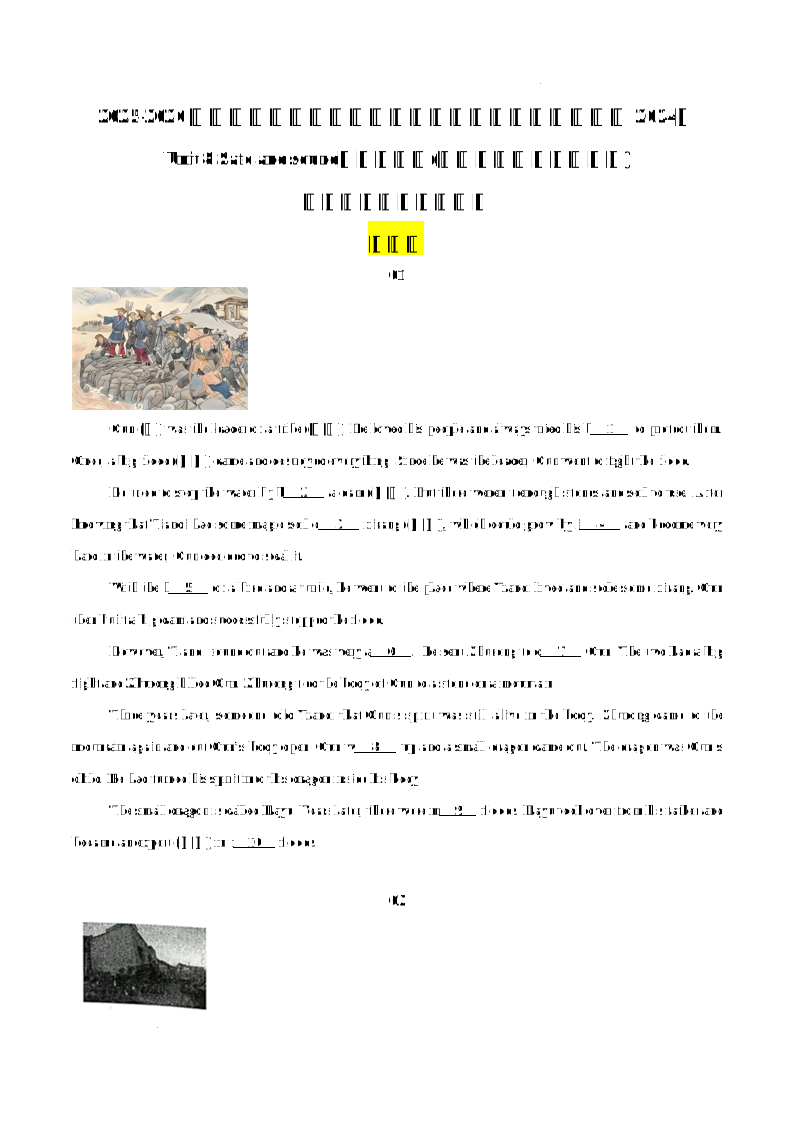
Gun (鲧) was the leader of a tribe (部落). He loved his people and always tried his b 1 to protect them. Once, a big flood (洪水) came and destroyed everything. Since he was the leader, Gun went to fight the flood.
He tried to stop the water by b 2 a dam (大坝). But there weren’t enough stones and soil to use. After knowing that Tiandi had some magic soil c 3 xirang (息壤), which could grow by i 4 and become very hard in the water, Gun decided to steal it.
With the h 5 of a bird and a turtle, he went to the place where Tiandi lived and stole some xirang. Gun then built a big dam and successfully stopped the flood.
However, Tiandi found out and he was very a 6 . He sent Zhurong to c 7 Gun. The two had a big fight and Zhurong killed Gun. Zhurong tied the body of Gun to a stone on a mountain.
Three years later, someone told Tiandi that Gun’s spirit was still alive in the body. Zhurong came to the mountain again and cut Gun’s body open. Gun w 8 up and a small dragon came out. The dragon was Gun’s child. He had turned his spirit into this dragon inside his body.
The small dragon is called Dayu. Years later, there were m 9 floods. Dayu took over from his father and became an expert (专家) in f 10 floods.
02
A very strong earthquake hit Morocco at midnight on Sept 8, 2023. At that time, Said was away from his family home in the small town of Tamaloukte, near the epicenter (震中) of the earthquake. He hurried back home through the b 1 buildings that covered the roads.
Said found that his house was completely destroyed (毁坏) when he a 2 home. Mohamed, Said’s father, was trying his best to save his three grandchildren who were still inside. U 3 , two of Said’s three children—his 11-year-old daughter, Asma, and 5-year-old son, Ibrahim—didn’t survive (存活).
“I was s 4 at home when the earthquake hit. Later a neighbour told me that my second house where the grandchildren were had fallen down, so I hurried to save them but found them under the ruins (废墟). The house c 5 down while they were inside,” Mohamed said.
Asma and Ibrahim were among the 47 people who lost their l 6 in the earthquake.
Some volunteers p 7 Said’s family with a tent, warm clothes, and food to help them live through the first part of the disaster. The Moroccan Red Crescent, w 8 the help of the Qatar Red Crescent, also helped Said’s family as they dealt with their big loss (损失).
In the face of disasters, it’s i 9 to bring back what people have lost, but offering a hand in time can help families like Said’s spend their hard time. This help is just the first step in what will likely be a long and hard j 10 for a family to get better after an earthquake.
Disasters are merciless (无情的), but there is love in the world.
03
On January 7, 2025, a strong 6.8-magnitude earthquake struck Dingri County in Tibet. The quake happened at 9:05 a.m. near Cuoguo Township, shaking an area w 1 over 6,900 inhabitants. Sadly, 126 people lost their lives, and 188 were i 2 , including 28 seriously hurt people who needed hospital care.
The earthquake d 3 more than 3,600 homes, especially in villages where old mud-brick houses collapsed. Survivors recalled (回忆) running out of their homes on the cold morning, some still in pajamas. R 4 teams faced many difficulties: freezing temperatures (-18°C), high altitude (4,500 meters), and over 1,000 aftershocks. Oxygen shortages and broken equipment slowed rescue work, while landslides added dangers.
Over 600 rescuers, i 5 firefighters and volunteers, worked day and night. They handed out tents, food, and medicine. Helicopters flew injured people to hospitals, but shelters (避难处) were overcrowded, with 10 families sometimes sharing one tent. Locals showed great courage, villagers saving their animals and firefighters digging through ruins with bare hands. People a 6 China sent warm clothes and supplies to help.
Experts explained that Tibet sits on a major e 7 zone where tectonic plate (地壳构造板块) meet. Many old buildings couldn’t withstand the shaking, l 8 to high casualties (伤亡人数). Leaders stressed the need for stronger houses and better disaster plans in risky a 9 .
This tragedy (悲剧) r 10 us of nature’s power and the importance of preparation. While rebuilding continues, teaching communities about earthquake safety and improving infrastructure (基础设施) will help protect lives in the future.
培优篇
04
Humans can’t stop natural disasters because we can’t stop the power of n 1 .
For example, a flood comes when there is too much water on land. Sometimes, it can come after a b 2 rainstorm at sea. Then too much seawater comes onto the land. A fast m 3 flood can hurt us. It can also hurt our homes. We can’t stop the water from coming, but we can t 4 to stop the water by making a wall with sandbags. Sometimes, the sandbags help stop the water. Sometimes they don’t.
An earthquake h 5 where land moves. The land goes up and down. The land s 6 . We may be hurt by things that fall down in an earthquake. Falling things can s 7 fires. We can’t stop an earthquake from coming. We can try to make our homes strong in order to p 8 them from falling down in an earthquake.
A tornado (龙卷风) is fast a 9 that goes around and around over the land. A tornado can pick up everything. It can break anything. A typhoon is a big storm with fast-moving wind and rain. It b 10 at sea and can come onto land. Its fast wind can hurt us and our homes.
We can’t stop the power of nature, but we can go to safe places.
05
Earthquakes are one of the most t 1 natural disasters. We cannot prevent them, and we don’t know when they will h 2 . This makes earthquakes very d 3 . Recently, there have been earthquakes in China, Japan, India, and El Salvador.
What c 4 earthquakes? Well, all the land and the ocean are sitting on l 5 pieces of plates (板块). The plates are all a 6 the earth. They fit t 7 like a big puzzle (拼图). Earthquakes may happen when two plates m 8 against each other. Some parts of the earth s 9 , like ocean waves (波浪).
We do not know when earthquakes will take place, but we can do some things to keep ourselves s 10 . We can teach people what to do if there is an earthquake. This way, we can make these natural disasters just a little less terrible.
06
Last year, my class went on a skiing trip to the mountain. We had already been to the wonderful place the year before, so it was the s 1 time for us to be there. And it became a great experience. We believed that this time would be more fantastic than b 2 .
When we a 3 there the day before, it snowed h 4 . And there were terrible storms. Storms are one of the worst disasters and they affect humans’ a 5 heavily. At breakfast the next day, we were told not to go skiing because of the bad weather, but we d 6 to go anyway. When we got to the top of the mountain, it started snowing again. The hotel gave u 7 some sandwiches, so we ate them while waiting for the weather to improve. It didn’t get fine and soon we were really scared. L 8 , I put my cell phone in my bag before l 9 the hotel. I called the emergency services. And they sent a helicopter (直升机) to s 10 us. What a disaster! Next year I will go to a warm island.
07
As parents, you can help children deal with the fear of natural disasters and help protect them from being hurt by t 1 them how disasters happen, and what to do when disasters happen. Here are some tips for you:
◆F 2 out what disasters are possible in your area by visiting your local library;
◆Think about w 3 your family should go if your house is destroyed;
◆Teach children the warning s 4 and signals in your area and practise what to do if a disaster happens.
◆Once you know the danger, ask your children to help check the s 5 in your house. You and your children can also work together on a disaster plan and p 6 a disaster box with food, water and necessary tools.
◆If a disaster does happen, pay a 7 to your children’s behaviour. Changes in behaviour, for example, acting strangely, m 8 that your children need help.
◆Allow children to share their f 9 about what has happened such as drawing a picture or writing a story.
◆Let friends and neighbours help you i 10 they can.
08
On October 30, the farm of a family in the village of Grüsch, Switzerland, burnt down. These buildings were about 300 years old. Unluckily, the family lost them b 1 of the fire.
The next morning at the local public school, students were s 2 after hearing the terrible news. They decided to h 3 the family. Robin Egger, a head teacher at the school, and another teacher also wanted to work with the students to help the family.
“Usually, the students make Christmas c 4 and sell them in town to make money. Then the money is used for their end-of-school trip,” Egger said. “However, the students didn’t s 5 the money on the school trip this time. They gave away all the money to the family that lost e 6 in the fire.”
Egger and these students also went to local companies and a 7 for help. Luckily, a media company Somedia would like to help. It a 8 donated (捐赠) much money to the family. W 9 the help of the teachers, the students and the company, the family started to rebuild their houses and buildings. Now the family who lost their h 10 and farm in the fire are doing “much better”.
09
Ben would hear strong winds outside his home in Alabama. Black clouds were making the s 1 very dark. With no l 2 outside, it felt like midnight. The news on TV r 3 that a heavy rainstorm was in the area.
Everyone in the neighborhood was b 4 . Dad was putting pieces of wood over the windows while his mom was making sure the flashlights and radio were w 5 . She also put some candles and matches on the table.
Ben was helping his mom make dinner when the rain began to beat heavily against the windows. After dinner, they tried to play a card game, b 6 it was hard to have fun with a serious storm happening outside.
Ben could not s 7 at first. He finally fell asleep when the wind was dying down at around 3:00 a.m. When he w 8 up, the sun was rising. He went outside with his family and found the neighborhood in a m 9 . Fallen trees, broken windows and rubbish were everywhere. They joined the neighbors to help clean up the neighborhood together. Although the storm broke many things apart, it brought families and neighbors c 10 together.
10
Most typhoons in the world have girls’ names. Sometimes they have very b 1 names. Rose is a pretty name but there was nothing pretty about Typhoon Rose. It was one of the w 2 typhoons to hit Hong Kong, China.
It began to r 3 early on the morning of August 16th, 1971. At ten o’clock in the morning, the wind was blowing people’s u 4 away. The wind became stronger and stronger. The typhoon shelters (避风港) were soon f 5 of boats. Ships that were too big to go inside the shelters put down more anchors (锚). Some very big ships went out to sea. It is s 6 for a big ship to be at sea in a typhoon because then it cannot be blown onto the rocks. The airport closed. No p 7 were able to take off or land. At 9:00 in the evening, all lights went out. No one slept well that night. It is difficult to sleep in such bad w 8 .
It was reported that Typhoon Rose k 9 more than one hundred people. Hundreds of people were injured and many of them had to go to hospital. Thousands of people l 10 their homes. The people of Hong Kong will not quickly forget Typhoon Rose!
学科网(北京)股份有限公司
$
2025-2026学年八年级英语上册单元模块满分必刷题(译林版2024)
Unit 8 Safe and sound【刷题型】(短文首字母填空精准练)
话题:自然灾害与防范
基础篇
01
Gun (鲧) was the leader of a tribe (部落). He loved his people and always tried his b 1 to protect them. Once, a big flood (洪水) came and destroyed everything. Since he was the leader, Gun went to fight the flood.
He tried to stop the water by b 2 a dam (大坝). But there weren’t enough stones and soil to use. After knowing that Tiandi had some magic soil c 3 xirang (息壤), which could grow by i 4 and become very hard in the water, Gun decided to steal it.
With the h 5 of a bird and a turtle, he went to the place where Tiandi lived and stole some xirang. Gun then built a big dam and successfully stopped the flood.
However, Tiandi found out and he was very a 6 . He sent Zhurong to c 7 Gun. The two had a big fight and Zhurong killed Gun. Zhurong tied the body of Gun to a stone on a mountain.
Three years later, someone told Tiandi that Gun’s spirit was still alive in the body. Zhurong came to the mountain again and cut Gun’s body open. Gun w 8 up and a small dragon came out. The dragon was Gun’s child. He had turned his spirit into this dragon inside his body.
The small dragon is called Dayu. Years later, there were m 9 floods. Dayu took over from his father and became an expert (专家) in f 10 floods.
【答案】
1.(b)est 2.(b)uilding 3.(c)alled 4.(i)tself 5.(h)elp 6.(a)ngry 7.(c)atch 8.(w)oke 9.(m)ore 10.(f)ighting
【导语】本文讲述了鲧为治水盗取息壤,最终化身大禹的传说故事,体现了先民与洪水斗争的智慧与精神。
1.句意:他热爱他的人民,并且总是尽最大努力保护他们。根据“always tried his … to protect them”可知,此处需用名词best,构成固定短语try one’s best to do sth.“尽某人最大努力做某事”。故填(b)est。
2.句意:他试图通过建造一座大坝来拦住水。根据“by…a dam”及首字母可知,此处指建造大坝,放在介词by之后,需用动词的现在分词形式building,表示方式方法。故填(b)uilding。
3.句意:得知天帝有一些叫作息壤的神奇土壤后,它能自己生长并在水中变得非常坚硬后,鲧决定偷走它。根据“some magic soil … xirang”及首字母可知,此处需用过去分词called,意为“被称为”;“called xirang”作后置定语修饰soil,符合语境。故填(c)alled。
4.句意:得知天帝有一些叫作息壤的神奇土壤,它能自己生长并在水中变得非常坚硬后,鲧决定偷走它。根据“which could grow by … and become very hard”及首字母可知,句子的主语和动作的执行者都是息壤,此处需用反身代词itself,意为“它自己”;grow by itself“自己生长”,符合语境。故填(i)tself。
5.句意:在一只鸟和一只乌龟的帮助下,他去了天帝居住的地方并偷了一些息壤。根据“With the … of a bird and a turtle, he went to the place where Tiandi lived and stole some xirang.”及首字母可知,此处需用名词help,意为“帮助”;短语with the help of…“在……的帮助下”,符合语境。故填(h)elp。
6.句意:然而,天帝发现了,他非常生气。根据“However, Tiandi found out”及首字母可知,天帝发现鲧偷息壤后,情绪应是“生气”;angry为形容词,意为“生气的”,符合语境。故填(a)ngry。
7.句意:他派祝融去抓鲧。Tiandi发现鲧偷息壤后会派人去“抓”他;catch是动词,意为“抓住,捉住”,符合语境。放在动词不定式之后,用动词原形。故填(c)atch。
8.句意:鲧醒来,一条小龙从他身上出来。根据“and a small dragon came out”及首字母可知,一条小龙出来,这里描述的是从之前的状态(昏迷或死亡状态)恢复生命或意识的动作。即“醒来”。此处表示过去发生的动作,应使用wake的过去式woke,意为“醒来”;符合语境。故填(w)oke。
9.句意:多年后,发生了更多的洪水。根据“there were … floods”及首字母可知,此处是和以前做对比,说明有更多的洪水,需用形容词more,意为“更多的”;符合语境。故填(m)ore。
10.句意:大禹接替父亲,成为抗洪水的专家。根据“became an expert (专家) in … floods”及首字母可知,此处指和洪水作斗争,放在介词in之后,需用动名词fighting,意为“抗击,斗争”;expert in doing sth.“在某方面的专家”,符合语境。故填(f)ighting。
02
A very strong earthquake hit Morocco at midnight on Sept 8, 2023. At that time, Said was away from his family home in the small town of Tamaloukte, near the epicenter (震中) of the earthquake. He hurried back home through the b 1 buildings that covered the roads.
Said found that his house was completely destroyed (毁坏) when he a 2 home. Mohamed, Said’s father, was trying his best to save his three grandchildren who were still inside. U 3 , two of Said’s three children—his 11-year-old daughter, Asma, and 5-year-old son, Ibrahim—didn’t survive (存活).
“I was s 4 at home when the earthquake hit. Later a neighbour told me that my second house where the grandchildren were had fallen down, so I hurried to save them but found them under the ruins (废墟). The house c 5 down while they were inside,” Mohamed said.
Asma and Ibrahim were among the 47 people who lost their l 6 in the earthquake.
Some volunteers p 7 Said’s family with a tent, warm clothes, and food to help them live through the first part of the disaster. The Moroccan Red Crescent, w 8 the help of the Qatar Red Crescent, also helped Said’s family as they dealt with their big loss (损失).
In the face of disasters, it’s i 9 to bring back what people have lost, but offering a hand in time can help families like Said’s spend their hard time. This help is just the first step in what will likely be a long and hard j 10 for a family to get better after an earthquake.
Disasters are merciless (无情的), but there is love in the world.
【答案】
1.(b)roken 2.(a)rrived 3.(U)nfortunately/(U)nluckily 4.(s)leeping 5.(c)ame 6.(l)ives 7.(p)rovided 8.(w)ith 9.(i)mpossible 10.(j)ourney
【导语】本文讲述了2023年9月8日晚摩洛哥发生地震,造成包括赛义德的两个孩子在内的47人死亡,志愿者和摩洛哥红新月会为受灾家庭提供援助,帮助他们渡过难关,重建生活。
1.句意:他匆匆穿过布满道路的残破建筑回家。根据上文“Said was away from his family home in the small town of Tamaloukte, near the epicenter (震中) of the earthquake”并结合首字母提示可知,发生了地震,房子应是倒塌,毁坏了,broken“损坏的”符合。故填(b)roken。
2.句意:赛义德到家时发现他的房子完全被毁了。根据“Said found that his house was completely destroyed”并结合首字母提示可知,此处指到家时发现自己家发生的事情,arrive“到达”,句子时态为一般过去时,动词使用过去式。故填(a)rrived。
3.句意:不幸的是,赛义德的三个孩子中有两个——他11岁的女儿阿斯玛和5岁的儿子易卜拉欣——没有幸存下来。根据“his 11-year-old daughter, Asma, and 5-year-old son, Ibrahim—didn’t survive”并结合首字母提示可知,两个孩子没有幸存下来,应是不幸的事情,unfortunately/unluckily“不幸的是”,副词,修饰整个句子,句首首字母大写。故填(U)nfortunately/(U)nluckily。
4.句意:地震发生时,我正在家里睡觉。根据“I was…at home when the earthquake hit.”的语境并结合首字母提示可知,此处指地震发生时,自己在睡觉,sleep“睡觉”,此处应用现在分词形式,与was构成过去进行时。故填(s)leeping。
5.句意:他们在里面的时候房子塌了。根据上文“Later a neighbour told me that my second house where the grandchildren were had fallen down, so I hurried to save them but found them under the ruins (废墟).”并结合首字母提示可知,房子塌了,come down“落下”,句子时态为一般过去时,动词使用过去式came。故填(c)ame。
6.句意:阿斯玛和易卜拉欣在地震中丧生的47人之中。根据上文“his 11-year-old daughter, Asma, and 5-year-old son, Ibrahim—didn’t survive”并结合首字母提示可知,两个孩子没有幸存下来,此处指失去生命,根据空前的“their”可知,此处用复数形式lives“生命”。故填(l)ives。
7.句意:一些志愿者为赛义德的家人提供了帐篷、保暖的衣服和食物,以帮助他们度过灾难的第一部分。根据“Said’s family with a tent, warm clothes, and food to help them live through the first part of the disaster”并结合首字母提示可知,是给他们提供救助,provide sb. with sth.“给某人提供某物”,句子时态为一般过去时,动词使用过去式provided。故填(p)rovided。
8.句意:摩洛哥红新月会在卡塔尔红新月会的帮助下,也帮助赛义德的家人处理了他们的巨大损失。根据“The Moroccan Red Crescent,…the help of the Qatar Red Crescent, also helped Said’s family as they dealt with their big loss”的语境并结合首字母提示可知,此处指在卡塔尔红新月会的帮助下,摩洛哥红新月会帮助赛义德的家人处理了他们的巨大损失,with the help of…“在……的帮助下”,是固定词组。故填(w)ith。
9.句意:面对灾难,人们不可能挽回失去的东西,但及时伸出援手可以帮助像赛义德这样的家庭度过艰难的时光。根据“it’s…to bring back what people have lost”的语境并结合首字母提示可知,此处指人们不可能挽回失去的东西,impossible“不可能的”符合。故填(i)mpossible。
10.句意:这种帮助只是地震后一个家庭康复的漫长而艰难旅程的第一步。根据“This help is just the first step in what will likely be a long and hard…for a family to get better after an earthquake.”的语境并结合首字母提示可知,此处指这种帮助只是地震后一个家庭康复的漫长而艰难旅程的第一步,journey“旅程”符合,a后接单数名词。故填(j)ourney。
03
On January 7, 2025, a strong 6.8-magnitude earthquake struck Dingri County in Tibet. The quake happened at 9:05 a.m. near Cuoguo Township, shaking an area w 1 over 6,900 inhabitants. Sadly, 126 people lost their lives, and 188 were i 2 , including 28 seriously hurt people who needed hospital care.
The earthquake d 3 more than 3,600 homes, especially in villages where old mud-brick houses collapsed. Survivors recalled (回忆) running out of their homes on the cold morning, some still in pajamas. R 4 teams faced many difficulties: freezing temperatures (-18°C), high altitude (4,500 meters), and over 1,000 aftershocks. Oxygen shortages and broken equipment slowed rescue work, while landslides added dangers.
Over 600 rescuers, i 5 firefighters and volunteers, worked day and night. They handed out tents, food, and medicine. Helicopters flew injured people to hospitals, but shelters (避难处) were overcrowded, with 10 families sometimes sharing one tent. Locals showed great courage, villagers saving their animals and firefighters digging through ruins with bare hands. People a 6 China sent warm clothes and supplies to help.
Experts explained that Tibet sits on a major e 7 zone where tectonic plate (地壳构造板块) meet. Many old buildings couldn’t withstand the shaking, l 8 to high casualties (伤亡人数). Leaders stressed the need for stronger houses and better disaster plans in risky a 9 .
This tragedy (悲剧) r 10 us of nature’s power and the importance of preparation. While rebuilding continues, teaching communities about earthquake safety and improving infrastructure (基础设施) will help protect lives in the future.
【答案】
1.(w)ith 2.(i)njured 3.(d)estroyed 4.(R)escue 5.(i)ncluding 6.(a)round/(a)cross 7.(e)arthquake 8.(l)eading 9.(a)reas 10.(r)eminds
【导语】本文主要讲述了2025年1月7日西藏定日县发生的6.8级地震,以及地震造成的破坏、救援工作和未来的预防措施。
1.句意:地震发生在上午9点05分,地点在措果乡附近,使有6900多名居民的地区震动。根据“over 6,900 inhabitants”和首字母提示可知,这个地区有6900多人。with“有”,介词,与over 6,900 inhabitants构成介词短语,修饰inhabitants。故填(w)ith。
2.句意:悲伤的是,126人丧生,188人受伤,其中包括28名需要住院治疗的严重受伤者。空处位于were后,修饰人,填形容词作表语。根据“people who needed hospital care”和首字母提示可知,此处表示188人受伤。injured“受伤的”,形容词。故填(i)njured。
3.句意:地震摧毁了3600多所房屋,尤其是在那些老旧的泥砖房倒塌的村庄。描述过去的事情用一般过去时。空处位于主语earthquake后,填动词过去式作谓语。根据“more than 3,600 homes”和首字母提示可知,此处指地震摧毁房屋。destroy“毁坏”,动词,指由于不可抵抗的外界原因摧毁,过去式为destroyed。故填(d)estroyed。
4.句意:救援队伍面临许多困难:零下18度的低温、4500米的高海拔和1000多次余震。根据“faced many difficulties”和首字母提示可知,此处指救援队伍面临困难。rescue“救援”,不可数名词,作定语修饰teams,位于句首首字母大写。故填(R)escue。
5.句意:超过600名救援人员,包括消防员和志愿者,日夜工作。根据“firefighters and volunteers”和首字母提示可知,此处指救援人员包括消防员和志愿者。此句含有谓语动词worked,空处填介词。including“包括”,介词。故填(i)ncluding。
6.句意:中国人民送来了温暖的衣物和物资来帮助受灾地区。空处到China作后置定语,修饰People,表示中国各地的人。around China或across China都表示“中国各地”。故填(a)round/(a)cross。
7.句意:专家解释说,西藏位于一个主要的地震带上,这里是地壳构造板块交汇的地方。根据“zone”和首字母提示可知,此处指地震带。earthquake zone“地震带”,earthquake“地震”,可数名词,作定语,修饰名词zone。故填(e)arthquake。
8.句意:许多老建筑无法承受震动,导致伤亡惨重。根据“Many old buildings couldn’t withstand the shaking”和“high casualties”可知,伤亡惨重是房屋不能承受震动造成的结果,用动名词作结果状语。lead“造成,导致”,动词,动名词为leading。故填(l)eading。
9.句意:领导人强调在风险地区需要建造更坚固的房屋和制定更好的灾害计划。空处位于形容词risky后,填名词作宾语。根据“stronger houses and better disaster plans”和首字母提示可知,要在风险地区建造坚固的房屋。area“地区”,可数名词,前无冠词修饰,用复数的areas。故填(a)reas。
10.句意:这场悲剧提醒我们大自然的力量和准备工作的重要性。描述事实用一般现在时。空处位于第三人称单数主语This tragedy后,填动词三单形式作谓语。根据“us of nature’s power and the importance of preparation”和首字母提示可知,此处指这场地震提醒我们大自然的力量。remind sb of sth“提醒某人某事”,remind“提醒”,动词,三单形式为reminds。故填(r)eminds。
培优篇
04
Humans can’t stop natural disasters because we can’t stop the power of n 1 .
For example, a flood comes when there is too much water on land. Sometimes, it can come after a b 2 rainstorm at sea. Then too much seawater comes onto the land. A fast m 3 flood can hurt us. It can also hurt our homes. We can’t stop the water from coming, but we can t 4 to stop the water by making a wall with sandbags. Sometimes, the sandbags help stop the water. Sometimes they don’t.
An earthquake h 5 where land moves. The land goes up and down. The land s 6 . We may be hurt by things that fall down in an earthquake. Falling things can s 7 fires. We can’t stop an earthquake from coming. We can try to make our homes strong in order to p 8 them from falling down in an earthquake.
A tornado (龙卷风) is fast a 9 that goes around and around over the land. A tornado can pick up everything. It can break anything. A typhoon is a big storm with fast-moving wind and rain. It b 10 at sea and can come onto land. Its fast wind can hurt us and our homes.
We can’t stop the power of nature, but we can go to safe places.
【答案】
1.nature/ature 2.big/ig 3.moving/oving 4.try/ry 5.happens/appens 6.shakes/hakes 7.start/tart 8.prevent/revent 9.air/ir 10.begins/egins
【导语】本文主要讲述了自然灾害的成因、特点及人类的应对措施。
1.句意:人类无法阻止自然灾害,因为我们无法阻止自然的力量。根据“Humans can’t stop natural disasters”可知,此处指的是无法阻止自然的力量,名词nature表示“自然”,the power of nature表示“自然的力量”。故填nature。
2.句意:有时,它可能是在海上经历了一场大暴雨后出现的。根据“a...rainstorm”可知,此处应用形容词修饰名词,表示“大的暴雨”,形容词big表示“大的”。故填big。
3.句意:快速移动的洪水会伤害我们。根据“flood”可知,此处应用形容词修饰名词,表示“快速移动的洪水”,形容词moving表示“移动的”。故填moving。
4.句意:我们无法阻止水的到来,但我们可以尝试用沙袋筑墙来阻止水。根据“to stop the water by making a wall with sandbags”可知,此处指的是尝试用沙袋筑墙来阻止水,动词try表示“尝试”,情态动词can后接动词原形。故填try。
5.句意:地震发生在陆地移动的地方。根据“An earthquake”可知,此处指的是地震发生,动词happen表示“发生”,该句描述的是客观事实,因此用一般现在时,主语An earthquake为第三人称单数,谓语动词用第三人称单数形式。故填happens。
6.句意:陆地摇晃。根据“The land goes up and down”可知,此处指的是陆地摇晃,动词shake表示“摇晃”,该句描述的是客观事实,因此用一般现在时,主语是The land,谓语动词用第三人称单数形式。故填shakes。
7.句意:掉落的东西会引发火灾。根据“Falling things can...fires”可知,此处指的是引发火灾,动词start表示“引发”,情态动词can后接动词原形。故填start。
8.句意:我们可以努力使我们的家坚固,以防止它们在地震中倒塌。根据“make our homes strong in order to...them from falling down in an earthquake”可知,此处指的是防止它们在地震中倒塌,动词prevent表示“防止”,in order to do sth表示“为了做某事”,因此用动词原形。故填prevent。
9.句意:龙卷风是在陆地上快速旋转的空气。根据“A tornado (龙卷风) is fast...that goes around and around over the land”可知,此处指的是快速旋转的空气,名词air表示“空气”,为不可数名词。故填air。
10.句意:它从海上开始,然后可以来到陆地上。根据“It...at sea and can come onto the land”可知,此处指的是它从海上开始,动词begin表示“开始”,该句描述的是客观事实,因此用一般现在时,主语It为第三人称单数,谓语动词用第三人称单数形式。故填begins。
05
Earthquakes are one of the most t 1 natural disasters. We cannot prevent them, and we don’t know when they will h 2 . This makes earthquakes very d 3 . Recently, there have been earthquakes in China, Japan, India, and El Salvador.
What c 4 earthquakes? Well, all the land and the ocean are sitting on l 5 pieces of plates (板块). The plates are all a 6 the earth. They fit t 7 like a big puzzle (拼图). Earthquakes may happen when two plates m 8 against each other. Some parts of the earth s 9 , like ocean waves (波浪).
We do not know when earthquakes will take place, but we can do some things to keep ourselves s 10 . We can teach people what to do if there is an earthquake. This way, we can make these natural disasters just a little less terrible.
【答案】
1.(t)errible/(t)ypical 2.(h)appen 3.(d)angerous 4.(c)auses 5.(l)arge 6.(a)round 7.(t)ogether 8.(m)ove 9.(s)hake 10.(s)afe
【导语】本文是一篇说明文,主要介绍了地震的成因、危害以及如何在地震中保护自己。
1.句意:地震是最可怕的/典型的自然灾害之一。根据首字母提示和“natural disasters”可知,terrible意为“可怕的”,typical意为“典型的”,均符合语境。故填 (t)errible/(t)ypical。
2.句意:我们不能预防它,我们不知道它们何时会发生。空格在情态动词will后需接动词原形,根据首字母提示和“We cannot prevent them”,应填表示“发生”的动词。故填(h)appen。
3.句意:这使得地震非常危险。根据首字母提示和上下文对地震危害的描述可知,地震很危险,dangerous“危险的”,形容词作宾语补足语。故填(d)angerous。
4.句意:什么导致地震?空格是特殊疑问句的谓语动词,主语“What”为单数,需用三单形式。根据首字母提示和下文对地震成因的解释。故填(c)auses。
5.句意:陆地和海洋都位于巨大的板块上。根据首字母提示和板块理论常识可知,版块面积巨大,large“巨大的”,形容词作定语。故填(l)arge。
6.句意:所有的板块都环绕着地球。around the earth“环绕地球”,为固定搭配。故填(a)round。
7.句意:它们像拼图一样紧密拼接。根据首字母提示和比喻“like a puzzle”可知,此处指拼在一起,together意为“在一起”。故填(t)ogether。
8.句意:当两个板块相互碰撞时可能发生地震。根据首字母提示和常识可知,板块运动相撞,就有可能会发生地震,应用move;时态为一般现在时,主语是two plates。故填(m)ove。
9.句意:地球的某些部分会摇晃,像海浪一样。根据首字母提示和地震时的震动现象。时态为一般现在时,主语“parts”为复数,需动词原形。故填(s)hake。
10.句意:我们不知道地震什么时候会发生,但是我们可以做些事情来保证自身安全。根据首字母提示和防灾目的,safe意为“安全的”,形容词作宾语补足语。故填(s)afe。
06
Last year, my class went on a skiing trip to the mountain. We had already been to the wonderful place the year before, so it was the s 1 time for us to be there. And it became a great experience. We believed that this time would be more fantastic than b 2 .
When we a 3 there the day before, it snowed h 4 . And there were terrible storms. Storms are one of the worst disasters and they affect humans’ a 5 heavily. At breakfast the next day, we were told not to go skiing because of the bad weather, but we d 6 to go anyway. When we got to the top of the mountain, it started snowing again. The hotel gave u 7 some sandwiches, so we ate them while waiting for the weather to improve. It didn’t get fine and soon we were really scared. L 8 , I put my cell phone in my bag before l 9 the hotel. I called the emergency services. And they sent a helicopter (直升机) to s 10 us. What a disaster! Next year I will go to a warm island.
【答案】
1.(s)econd 2.(b)efore 3.(a)rrived 4.(h)eavily 5.(a)ctivities 6.(d)ecided 7.(u)s 8.(L)uckily 9.(l)eaving 10.(s)ave
【导语】本文讲述了作者和同学们在一次滑雪旅行中遇到暴风雪被困,最终通过手机求救获救的惊险经历。
1.句意:我们前一年已经去过那个美丽的地方,所以这次是我们第二次去那里。根据“We had already been to the wonderful place the year before”及首字母可知,之前我们去过一次,这是我们第二次去那里,此处需用序数词second,意为“第二的”;修饰名词time,符合语境。故填(s)econd。
2.句意:我们相信这一次会比以前更精彩。根据“We believed that this time would be more fantastic than …”及首字母可知,这次应该比以前好,此处需用副词before,意为“以前,从前”;用于比较级结构中,符合语境。故填(b)efore。
3.句意:当我们前一天到达那里时,雪下得很大。根据“When we ... there”及首字母可知,我们到了那里,此处需用动词arrive“到达”,结合the day before表过去时间,动词用过去式arrived。故填(a)rrived。
4.句意:当我们前一天到达那里时,雪下得很大。根据“it snowed ...”及首字母可知,雪下得很大。此处需用副词修饰动词snow,heavily意为“猛烈地,大量地”,符合语境。故填(h)eavily。
5.句意:风暴是最严重的灾害之一,它们会严重影响人类的活动。根据“they affect humans’ … heavily”及首字母可知,风暴影响人类的活动。此处需用名词activities,意为“活动”;此处表泛指,用其复数形式。故填(a)ctivities。
6.句意:第二天早餐时,我们被告知因为天气不好不要去滑雪,但我们还是决定去。根据“but we … to go anyway”及首字母可知,but表转折,说明我们还是决定去,时态为一般过去时,此处需用动词decide的过去式decided,意为“决定”。故填(d)ecided。
7.句意:酒店给了我们一些三明治,所以我们在等待天气好转时吃了它们。根据“The hotel gave … some sandwiches”及首字母可知,酒店是给我们三明治。此处需用宾格代词us,意为“我们”;作gave的宾语,符合语境。故填(u)s。
8.句意:幸运的是,我在离开酒店前把手机放进了包里。根据“I put my cell phone in my bag before leaving the hotel”以及语境可知,此处需用副词luckily,意为“幸运地”;修饰整个句子,符合语境。故填(L)uckily。
9.句意:幸运的是,我在离开酒店前把手机放进了包里。根据“I put my cell phone in my bag before … the hotel”及首字母可知,在离开宾馆之前,我把手机放在了包里。放在介词before之后,此处需用动名词leaving,意为“离开”。故填(l)eaving。
10.句意:他们派出一架直升机来救我们。根据“And they sent a helicopter (直升机) to … us”及首字母可知,直升机是来救我们的。此处需用动词save,意为“救,拯救”,放在动词不定式之后,用动词原形。故填(s)ave。
07
As parents, you can help children deal with the fear of natural disasters and help protect them from being hurt by t 1 them how disasters happen, and what to do when disasters happen. Here are some tips for you:
◆F 2 out what disasters are possible in your area by visiting your local library;
◆Think about w 3 your family should go if your house is destroyed;
◆Teach children the warning s 4 and signals in your area and practise what to do if a disaster happens.
◆Once you know the danger, ask your children to help check the s 5 in your house. You and your children can also work together on a disaster plan and p 6 a disaster box with food, water and necessary tools.
◆If a disaster does happen, pay a 7 to your children’s behaviour. Changes in behaviour, for example, acting strangely, m 8 that your children need help.
◆Allow children to share their f 9 about what has happened such as drawing a picture or writing a story.
◆Let friends and neighbours help you i 10 they can.
【答案】
1.(t)elling 2.(F)ind 3.(w)here 4.(s)igns 5.(s)afety 6.(p)repare 7.(a)ttention 8.(m)ean 9.(f)eelings 10.(i)f
【导语】本文主要介绍了作为父母,可通过多种方式帮助孩子应对自然灾害的恐惧并保护他们免受伤害,包括教孩子灾害相关知识、了解所在区域可能的灾害、规划家庭避难所、熟悉预警信号、检查房屋安全、准备防灾物资、关注孩子行为、允许孩子表达感受以及寻求他人帮助等。
1.句意:作为父母,你可以帮助孩子应对自然灾害的恐惧,并通过告诉他们灾害是如何发生的以及灾害发生时该怎么做,来帮助保护他们免受伤害。“by”是介词,后接动名词形式,根据“how disasters happen, and what to do when disasters happen”和首字母提示可知,动词“tell”,其动名词形式为“telling”,意为“告诉”,符合语境。故填(t)elling。
2.句意:通过访问当地图书馆,弄清楚你所在地区可能发生哪些灾害。本句为祈使句,以动词原形开头,“find out”是固定短语,意为“弄清楚,查明”符合语境。故填(F)ind。
3.句意:想想如果你的房子被毁坏了,你的家人应该去哪里。根据句法结构可知,此处是宾语从句,从句中缺少地点状语,应用“where”引导,表示“哪里”。故填(w)here。
4.句意:教孩子你所在地区的预警标志和信号,并练习如果灾害发生时该怎么做。“sign”意为“标志”,是可数名词,这里和“signals”并列,用其复数形式“signs”表示多种预警标志。故填(s)igns。
5.句意:一旦你知道了危险,让你的孩子帮忙检查你家里的安全情况。“the”后接名词,“safe”是形容词,其名词形式为“safety”意为“安全”,符合语境。故填(s)afety。
6.句意:你和你的孩子也可以一起制定灾害计划,并准备一个装有食物、水和必要工具的防灾箱。“and”连接并列的谓语动词,前面是动词原形“work”,这里也用动词原形,“prepare”意为“准备”符合语境。故填(p)repare。
7.句意:如果灾害真的发生了,注意你孩子的行为。“pay attention to”是固定短语,意为“注意”。故填(a)ttention。
8.句意:行为上的变化,例如举止怪异,意味着你的孩子需要帮助。主语“Changes”是复数,句子为一般现在时态,谓语动词用原形,“mean”意为“意味着”,符合句子逻辑。故填(m)ean。
9.句意:允许孩子分享他们对所发生事情的感受,比如画一幅画或写一个故事。根据“their”可知,可数名词“feeling”意为“感受”,其复数形式“feelings”表示“多种感受”符合语境。故填(f)eelings。
10.句意:如果朋友和邻居有能力,就让他们帮助你。根据语境和首字母提示可知,“if”意为“如果”,引导条件状语从句,符合逻辑。故填(i)f。
08
On October 30, the farm of a family in the village of Grüsch, Switzerland, burnt down. These buildings were about 300 years old. Unluckily, the family lost them b 1 of the fire.
The next morning at the local public school, students were s 2 after hearing the terrible news. They decided to h 3 the family. Robin Egger, a head teacher at the school, and another teacher also wanted to work with the students to help the family.
“Usually, the students make Christmas c 4 and sell them in town to make money. Then the money is used for their end-of-school trip,” Egger said. “However, the students didn’t s 5 the money on the school trip this time. They gave away all the money to the family that lost e 6 in the fire.”
Egger and these students also went to local companies and a 7 for help. Luckily, a media company Somedia would like to help. It a 8 donated (捐赠) much money to the family. W 9 the help of the teachers, the students and the company, the family started to rebuild their houses and buildings. Now the family who lost their h 10 and farm in the fire are doing “much better”.
【答案】
1.(b)ecause 2.(s)ad 3.(h)elp 4.(c)ards 5.(s)pend 6.(e)verything 7.(a)sked 8.(a)lso 9.(W)ith 10.(h)ome
【导语】本文讲述了瑞士一所学校的学生和老师通过义卖圣诞卡和寻求企业帮助,为火灾中失去家园的农场家庭筹集善款的故事。
1.句意:不幸的是,这家人因火灾失去了它们。根据“lost them…of the fire”可知需用固定短语because of表示原因,故填(b)ecause。
2.句意:第二天早上在当地公立学校,学生们听到这个可怕的消息后很悲伤。根据“were…after hearing the terrible news”可知需用形容词作表语,且表示难过的情绪,故填(s)ad。
3.句意:他们决定帮助这家人。根据“decided to…the family”及后文的帮助行为,可知需用动词原形表示“帮助”,故填(h)elp。
4.句意:通常学生们会制作圣诞卡片并在镇上出售来赚钱。根据“students make Christmas…”以及首字母提示可知需用名词复数表示“卡片”,故填(c)ards。
5.句意:然而这次学生们没有把钱花在学校旅行上。根据“However, the students didn’t…the money”的转折意义,可知需用动词原形表示“花费”,故填(s)pend。
6.句意:他们把所有的钱都给了在火灾中失去一切的那家人。根据“the farm of a family... burnt down”及“lost…in the fire”可知需用代词表示失去“一切”,故填(e)verything。
7.句意:Egger和这些学生还去了当地公司寻求帮助。根据“ went to local companies and...”可知需用动词过去式和went并列,根据“... for help”可知表示“请求”,故填(a)sked。
8.句意:它还向这家人捐赠了很多钱。根据“It ...donated (捐赠) much money”结合上文学生们的捐助,可知指这家公司“也”捐了钱,故填(a)lso。
9.句意:在老师、学生和公司的帮助下。根据“the help of”可知需用固定短语with the help of表示“在……的帮助下”,故填(W)ith。
10.句意:现在这户在火灾中失去家和农场的人家情况好多了。根据第一段“the farm of a family... burnt down”可知他们失去了家,故填(h)ome。
09
Ben would hear strong winds outside his home in Alabama. Black clouds were making the s 1 very dark. With no l 2 outside, it felt like midnight. The news on TV r 3 that a heavy rainstorm was in the area.
Everyone in the neighborhood was b 4 . Dad was putting pieces of wood over the windows while his mom was making sure the flashlights and radio were w 5 . She also put some candles and matches on the table.
Ben was helping his mom make dinner when the rain began to beat heavily against the windows. After dinner, they tried to play a card game, b 6 it was hard to have fun with a serious storm happening outside.
Ben could not s 7 at first. He finally fell asleep when the wind was dying down at around 3:00 a.m. When he w 8 up, the sun was rising. He went outside with his family and found the neighborhood in a m 9 . Fallen trees, broken windows and rubbish were everywhere. They joined the neighbors to help clean up the neighborhood together. Although the storm broke many things apart, it brought families and neighbors c 10 together.
【答案】
1.(s)ky 2.(l)ight 3.(r)eported 4.(b)usy 5.(w)orking 6.(b)ut 7.(s)leep 8.(w)oke 9.(m)ess 10.(c)loser
【导语】本文介绍了本和家人经历的一次暴风雨的过程。
1.句意:乌云正在使天空变得漆黑一片。根据“Black clouds”及首字母s可知此处应用名词sky表示“天空”。故填(s)ky。
2.句意:外面没有光,感觉就像是午夜。根据“very dark”可知,屋外一片漆黑,没有光,根据首字母l可知应用名词light表示“光”。故填(l)ight。
3.句意:电视上的新闻报道说该地区有一场特大暴风雨。根据“The news on TV”及首字母r可知应用动词report来表示“报道”,句子应用一般过去时,report的过去式为reported。故填(r)eported。
4.句意:社区里的每个人都很忙碌。根据“Dad was putting pieces of wood over the windows while his mom was making sure the flashlights and radio were…. She also put some candles and matches on the table.”可知,爸爸妈妈都在忙着为暴风雨做准备,根据首字母b可知此处应用形容词busy表示“忙碌的”。故填(b)usy。
5.句意:爸爸在窗户上放木头,而妈妈则在确保手电筒和收音机正常工作。根据“making sure the flashlights and radio were”可知此处表示妈则在确保手电筒和收音机正常工作,根据首字母w可知应用动词work表示“运作”,根据“were”可知此处应用过去进行时,动词work的现在分词为working。故填(w)orking。
6.句意:晚饭后,他们试着玩纸牌游戏,但是因为外面发生了严重的暴风雨,很难玩得开心。空格前后句子为转折关系,根据首字母b可知应用but表示转折。故填(b)ut。
7.句意:刚开始,本睡不着。根据下文“He finally fell asleep when the wind was dying down at around 3:00 a.m.”及首字母s可知此处应用动词sleep表示“睡觉”。情态动词could后加动词原形。故填(s)leep。
8.句意:当他醒来时,太阳正在升起。根据“the sun was rising”及首字母w可知此处应用动词短语wake up表示“醒来”,句子采用一般过去时,动词wake的过去式为woke。故填(w)oke。
9.句意:他和家人一起出门,发现附近一片狼藉。根据下文“Fallen trees, broken windows and rubbish were everywhere.”及首字母m可知此处应用介词短语in a mess表示“一团乱”。故填(m)ess。
10.句意:尽管这场风暴使许多东西分崩离析,但它拉近了家庭和邻居的距离。根据“brought families and neighbors”及首字母c可知此处应用形容词close的比较级closer表示“更紧密的”。故填(c)loser。
10
Most typhoons in the world have girls’ names. Sometimes they have very b 1 names. Rose is a pretty name but there was nothing pretty about Typhoon Rose. It was one of the w 2 typhoons to hit Hong Kong, China.
It began to r 3 early on the morning of August 16th, 1971. At ten o’clock in the morning, the wind was blowing people’s u 4 away. The wind became stronger and stronger. The typhoon shelters (避风港) were soon f 5 of boats. Ships that were too big to go inside the shelters put down more anchors (锚). Some very big ships went out to sea. It is s 6 for a big ship to be at sea in a typhoon because then it cannot be blown onto the rocks. The airport closed. No p 7 were able to take off or land. At 9:00 in the evening, all lights went out. No one slept well that night. It is difficult to sleep in such bad w 8 .
It was reported that Typhoon Rose k 9 more than one hundred people. Hundreds of people were injured and many of them had to go to hospital. Thousands of people l 10 their homes. The people of Hong Kong will not quickly forget Typhoon Rose!
【答案】
1.beautiful/eautiful 2.worst/orst 3.rain/ain 4.umbrellas/mbrellas 5.full/ull 6.safer/safe/afer/afe 7.planes/lanes 8.weather/eather 9.killed/illed 10.lost/ost
【导语】本文主要讲述了1971年台风“露丝”袭击中国香港时的破坏性影响。
1.句意:有时它们有着非常美丽的名字。结合下文“Rose is a pretty name”和首字母提示可知,此处指美丽的名字,空后是名词names,空处应是形容词beautiful,作定语。故填beautiful。
2.句意:这是袭击中国香港最严重的台风之一。根据“...but there was nothing pretty about Typhoon Rose. It was one of the...typhoons to hit Hong Kong, China.”和首字母提示可知,台风“露丝”是袭击香港的最严重的台风之一,“one of the+形容词最高级+名词复数”是固定搭配,表示“最……之一”,空处应是worst“最糟的,最严重的”。故填worst。
3.句意:1971年8月16日清晨,天开始下雨了。根据“It began to...early on the morning of August 16th, 1971.”和常识可知,台风常常伴随着下雨,rain“下雨”,begin to do“开始做某事”是固定搭配,空处是动词原形。故填rain。
4.句意:早上十点钟,风把人们的伞吹走了。根据“the wind was blowing people’s...away”和首字母提示可知,风很大,把雨伞都吹走了,umbrella“雨伞”,用其复数形式表泛指。故填umbrellas。
5.句意:避风港很快就挤满了船只。根据“The wind became stronger and stronger. The typhoon shelters (避风港) were soon...of boats.”和首字母提示可知,风越来越大,很多船都聚集在避风港,be full of“充满”是固定短语,符合语境。故填full。
6.句意:在台风天气里,大型船只在海上是(更)安全的,因为这样它们就不会被吹到礁石上。根据“It is...for a big ship to be at sea in a typhoon because then it cannot be blown onto the rocks.”和首字母提示可知,台风天气之下,大型船只在海上反而不会被吹到礁石上,那样才是安全的(那样才更安全),safe/safer均符合语境,作表语。故填safer/safe。
7.句意:没有飞机能够起飞或降落。根据上文“The airport closed.”可知,机场都关闭了,所以没有飞机能够起飞或降落,plane“飞机”,结合“were”可知,空处应是复数形式。故填planes。
8.句意:在这样恶劣的天气里,很难入睡。上文提到台风,那属于恶劣天气,weather“天气”,是不可数名词。故填weather。
9.句意:据报道,台风“露丝”导致一百多人死亡。根据“It was reported that Typhoon Rose...more than one hundred people.”和首字母提示可知,此处指台风致人死亡,kill“杀死,导致死亡”,句子用一般过去时,谓语动词用过去式。故填killed。
10.句意:数千人失去了家园。根据“Thousands of people...their homes.”和首字母提示可知,台风导致很多人失去了家园,lose“失去”,句子用一般过去时,谓语动词用过去式。故填lost。
学科网(北京)股份有限公司
$
资源预览图
1

2

3

相关资源
由于学科网是一个信息分享及获取的平台,不确保部分用户上传资料的 来源及知识产权归属。如您发现相关资料侵犯您的合法权益,请联系学科网,我们核实后将及时进行处理。