Unit2 Improving Yourself Developing ideas 课件-2025-2026学年高中英语外研版选择性必修第二册
2025-12-11
|
13页
|
1660人阅读
|
6人下载
普通
内容正文:
Revision
max out(钱)花光;(信用卡)刷爆 equip /ɪˈkwɪp/v.使有知识和技能
in contrast to与......形成对比 personal finances(个人的)财务管理
district /ˈdɪstrɪkt/n.地区 jar /dʒɑː/n.(玻璃)罐子,广口瓶
necessity /nɪˈsesɪti/n.必需品 invest /ɪnˈvest/v.投资
toothpaste /ˈtuːθpeɪst/n.牙膏 lifelong /ˈlaɪflɒŋ/adj.终身的
objectively /əbˈdʒektɪvli/adv.客观地 vision /ˈvɪʒ(ə)n/n.构想,设想
item /ˈaɪtəm/n.一件商品(或物品) likewise /ˈlaɪkwaɪz/adv.同样地;相似地
If you got 10,000-yuan scholarship, how would you handle it?
Lead in
Learning Objectives:
By the end of the class, we will be able to:
Learn about teens’ money management ways and its importance.
Master the "four-jar method" by analyzing the passage structure.
Think deeply about the values behind the four jars and understand the title’s wordplay.
Express your own money management ideas and form a correct money view.
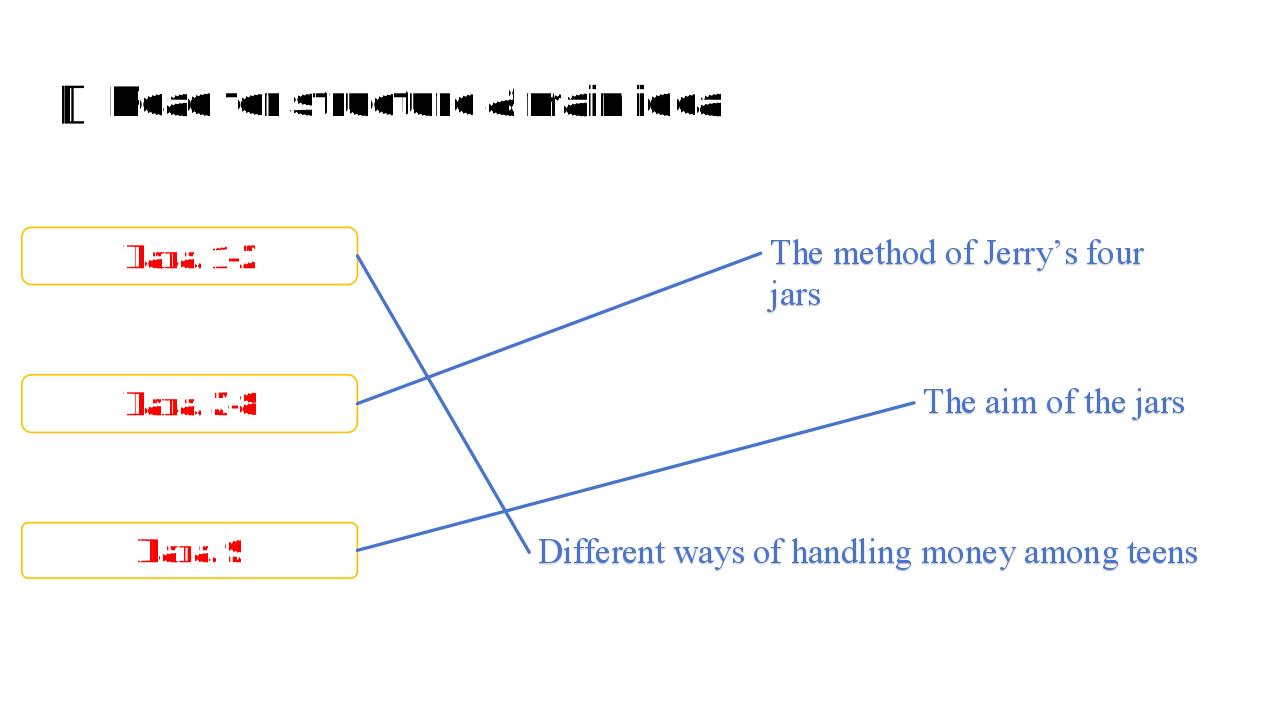
Read for structure & main idea
Different ways of handling money among teens
The method of Jerry’s four jars
The aim of the jars
Para. 1-2
Para. 3-8
Para. 9
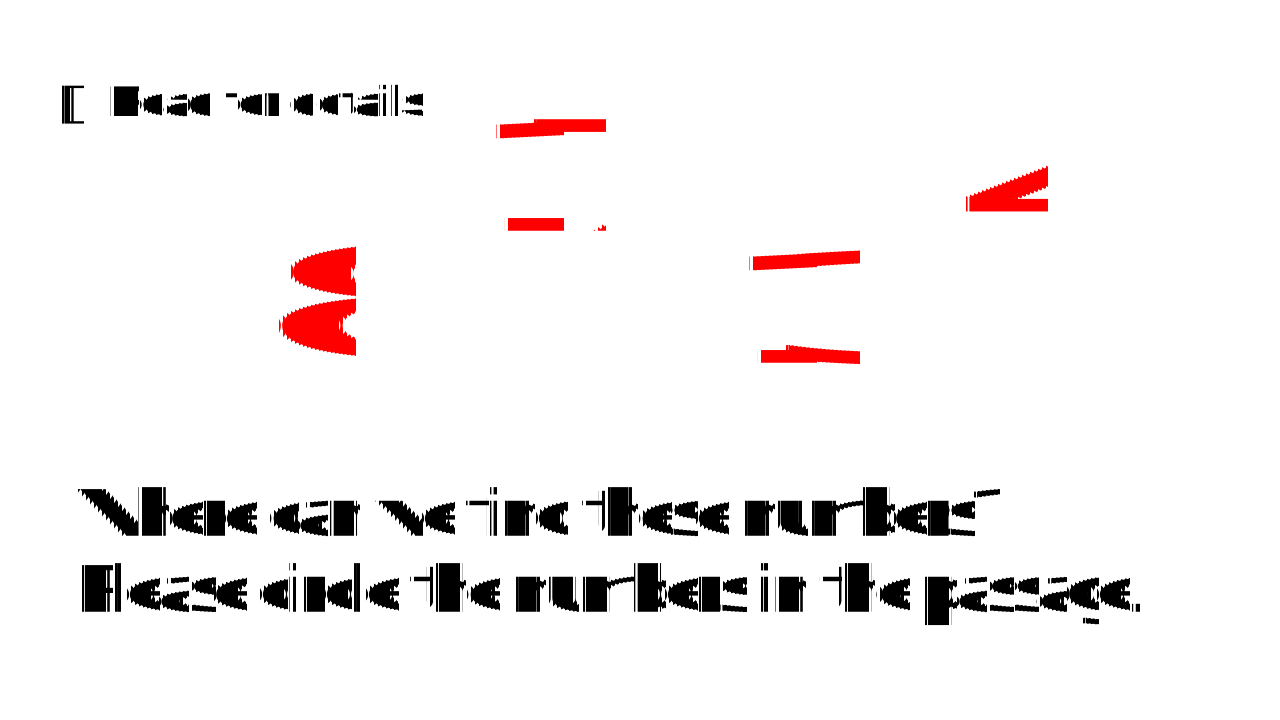
Read for details
8
4
17
13
Where can we find these numbers?
Please circle the numbers in the passage.
Read for details
8
In contrast to these big spenders, there are also teens that prove age is no barrier to making good use of money. With the help of her grandmother, eight-year-old Khloe Thompson started making "Kare Bags" for the homeless people in her district. Inside the bags are necessities such as toothpaste, soap and socks, bought first with her pocket money and then through crowd funding. These items helped to make the lives of poor and homeless people a little bit easier, On receiving a Kare Bag, one woman said, "You make me feel like a human being."
What does the number stand for?
Why does the autor mentiond her in the passage?
Read for details
17
However people intend to use their money, managing it seems to be unprecedentedly important to younger generations. A 2016 study said 17 states of the US require high school students to take courses in personal finances. For those who have no access to courses, help might be at hand thanks to Jerry Witkovsky and his method of using four jars to teach teenagers how to spend their money wisely.
Why are the 17 states requiring students to do that?
What does the number stand for?
Read for details
13
When Jerry’s grandchildren turned 13, his present to each of them was three jars: one for Spending, one for Saving, and another for Giving - he has since added a fourth jar for Investing- It was from then on that his grandchildren started to be in control of what to do with the money they receive: spend, save, invest or give? Jerry's birthday present to his grandchildren is, however, much more than money and a few jars - he is giving them the opportunity to learn lifelong values.
What did they got?
What does the number stand for?
Read para. 5-8 and complete the diagram.
your own happiness
the opportunity to buy something you like
the future
that special something you’ve seen in the stores
build for the future
investing in yourself
kindness and helping
whatever causes you believe in
The wider aim of the jars is to encourage teenagers to think more objectively about money and the things that it can do, so that they grow up understanding, if you like, the value of the valuable. In this way, they will be better equipped in their adult lives to make informed choices about how they use the money they have. Indeed, the small change inside their jars could mean a big change in how they manage their money.
what is your understanding of the title?
Valuable values
Young people's spending power 1. _____ (vary), with some misusing money and others managing it well. An eight - year - old, Khloe, made "Kare Bags" filled with 2. _______ (necessity), which improved the homeless' lives. Managing money matters for teens. Jerry, who uses four jars (Spending, Saving, Giving, Investing), teaches them 3. _______ (spend) wisely. His grandchildren, having received the jars, decide on money use. The Spending jar, aiming at self - happiness, is for personal expenses. The Saving jar, 4. intended for future plans like college, helps in long - term goals. The Investing jar, 4. _______ (offer) a future vision, provides a chance for building wealth. The Giving jar, showing 5. ______ (kind), is about helping others. The jars, 6. ______ (design) to encourage teens to think objectively about money, assist them in making better 7. _______ (choice). A small change in the jars can lead to a significant money - management 8. ______ (transform). Teens, 9. _______ (teach) by the jars, are more likely to handle money well. They need to learn 10. _______ to make the most of it.
how
taught
transformation
choices
designed
kindness
offering
to spend
necessities
varies
“Money is a good servant, and a bad master.”
Francis Bacon
Money can be useful when we control it well, but it will bring trouble if it controls us.
$
资源预览图

1

2

3

4
5
6
相关资源
示范课
由于学科网是一个信息分享及获取的平台,不确保部分用户上传资料的 来源及知识产权归属。如您发现相关资料侵犯您的合法权益,请联系学科网,我们核实后将及时进行处理。