Unit 7 Section A 3a-3c课件 2025-2026学年人教版(2012)英语九年级全册
2025-12-12
|
30页
|
83人阅读
|
0人下载
普通
资源信息
| 学段 | 初中 |
|---|---|
| 学科 | 英语 |
| 教材版本 | 初中英语人教版(2012)九年级全册 |
| 年级 | 九年级 |
| 章节 | 3a-3c |
| 类型 | 课件 |
| 知识点 | - |
| 使用场景 | 同步教学-新授课 |
| 学年 | 2025-2026 |
| 地区(省份) | 全国 |
| 地区(市) | - |
| 地区(区县) | - |
| 文件格式 | PPTX |
| 文件大小 | 1.60 MB |
| 发布时间 | 2025-12-12 |
| 更新时间 | 2025-12-12 |
| 作者 | 匿名 |
| 品牌系列 | - |
| 审核时间 | 2025-12-08 |
| 下载链接 | https://m.zxxk.com/soft/55333320.html |
| 价格 | 2.00储值(1储值=1元) |
| 来源 | 学科网 |
摘要:
该初中英语课件围绕诗歌《Mom's Heart》,聚焦母亲的爱随时间的情感变化(婴儿享受、儿童青少年误解、成年理解),通过图片匹配、分段解析、情感对比表格等学习支架,以时间脉络(baby→kid→teen→adult)引导学生逐步理解诗歌结构与情感逻辑。
亮点在于融合语言能力与思维品质,通过“分段-情感-语言”三阶活动(如Stanza 2-3对话补全体会误解,Stanza 4表格总结理解),结合词汇辨析(scary/scared)、短语(regret doing sth.)的语境学习,提升语言运用能力。同时通过情感反思培养批判性思维,学生能夯实基础并深化情感体验,教师可直接用分层练习与拓展活动提高教学效率。
内容正文:
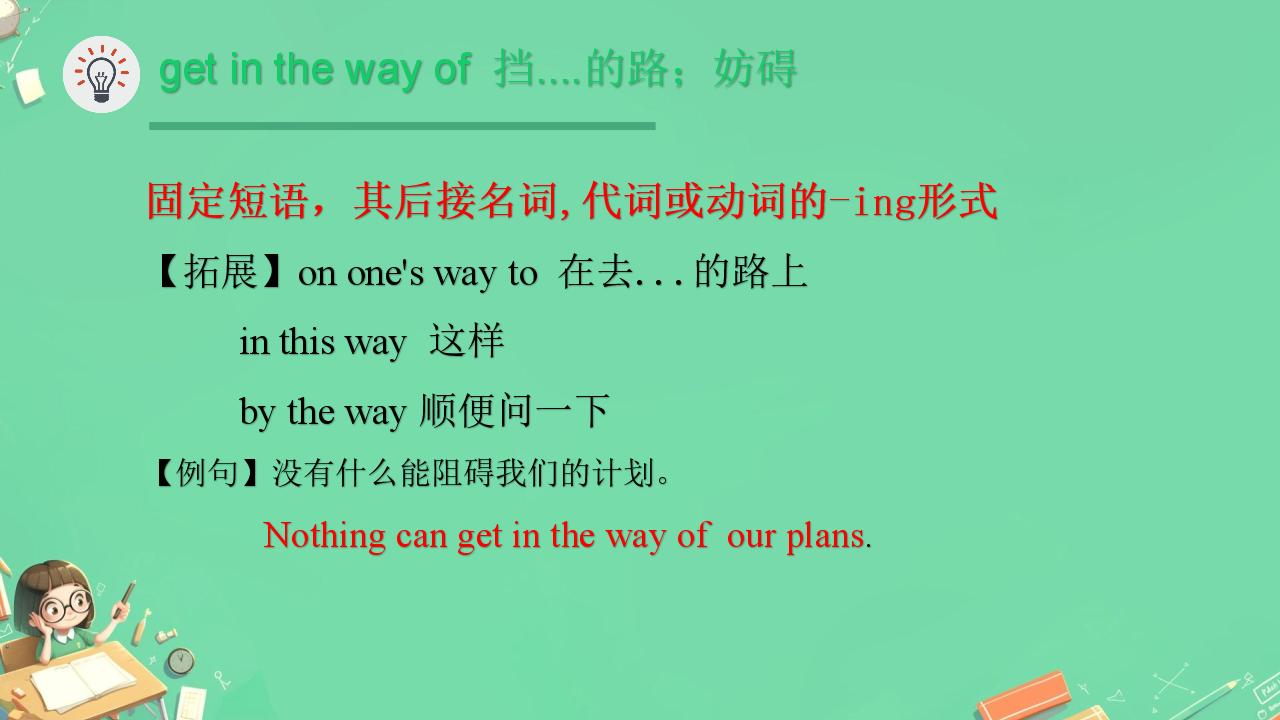
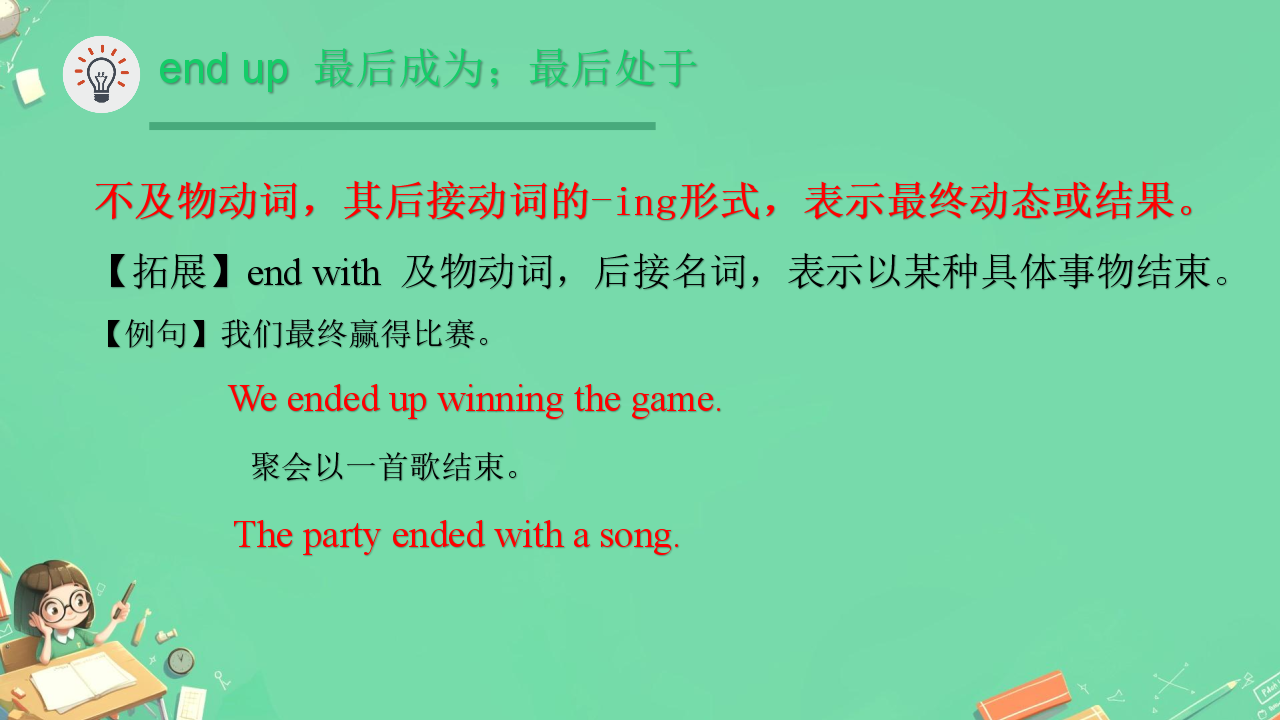
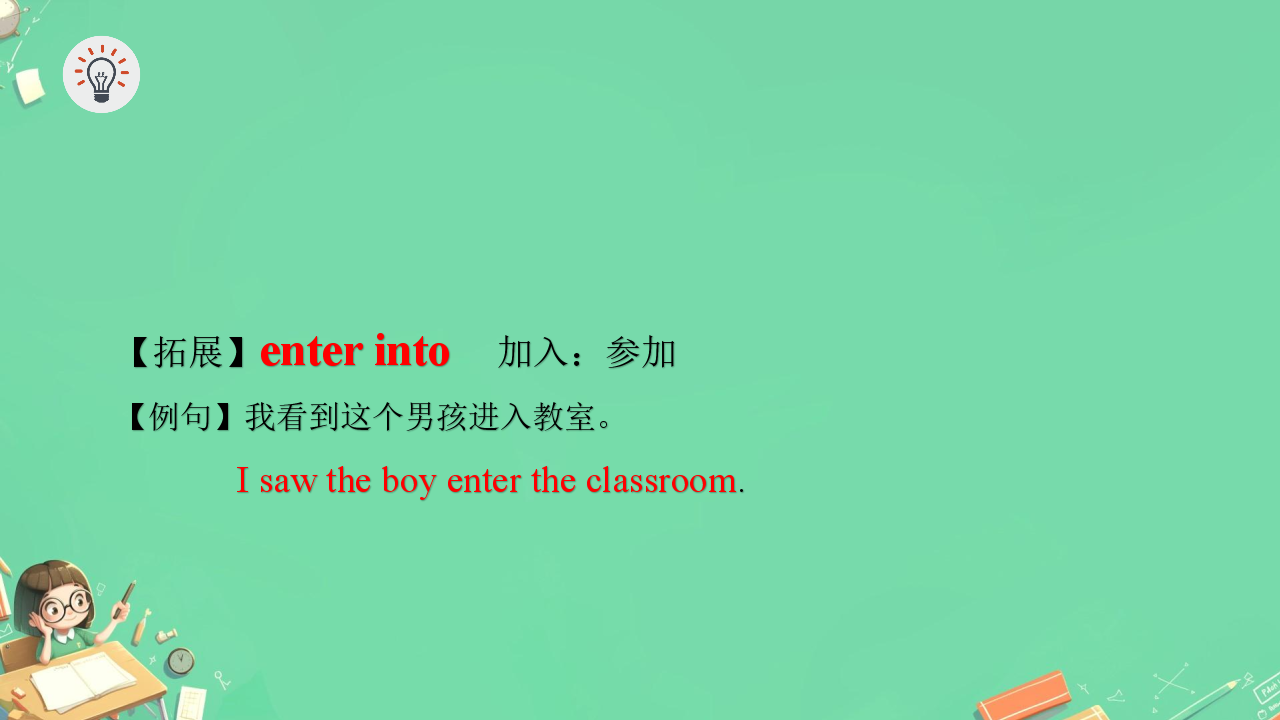
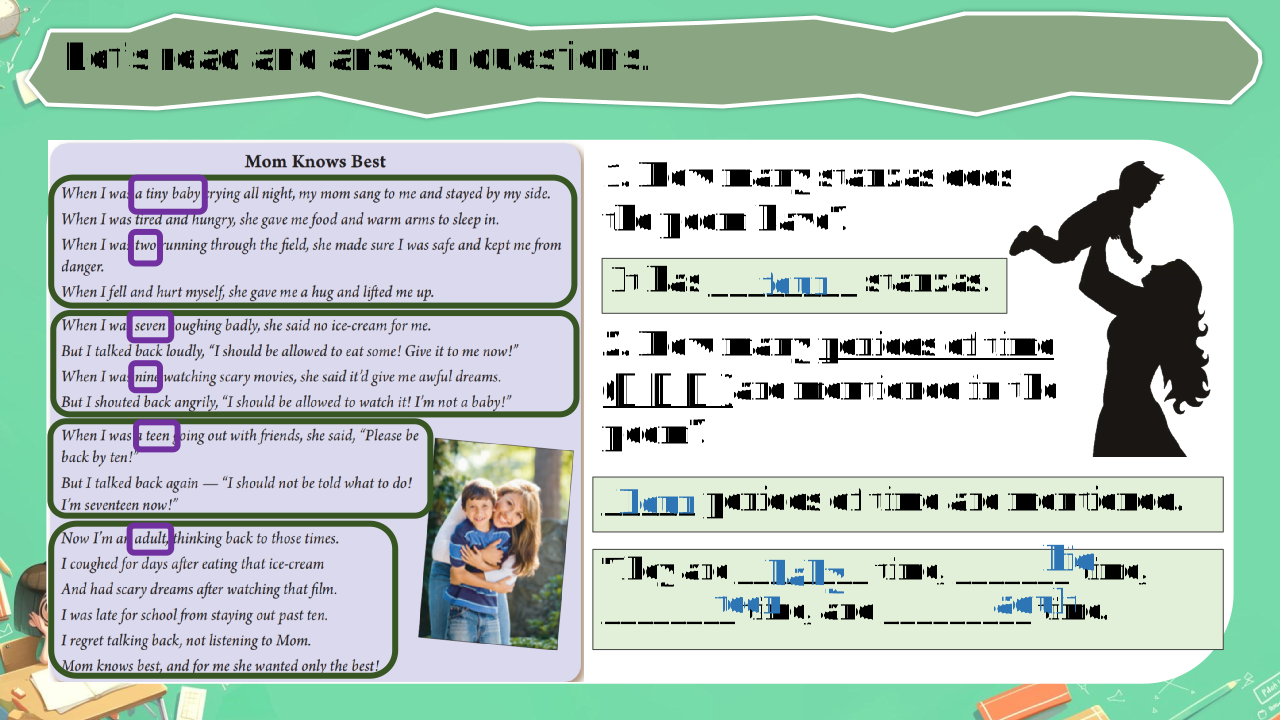
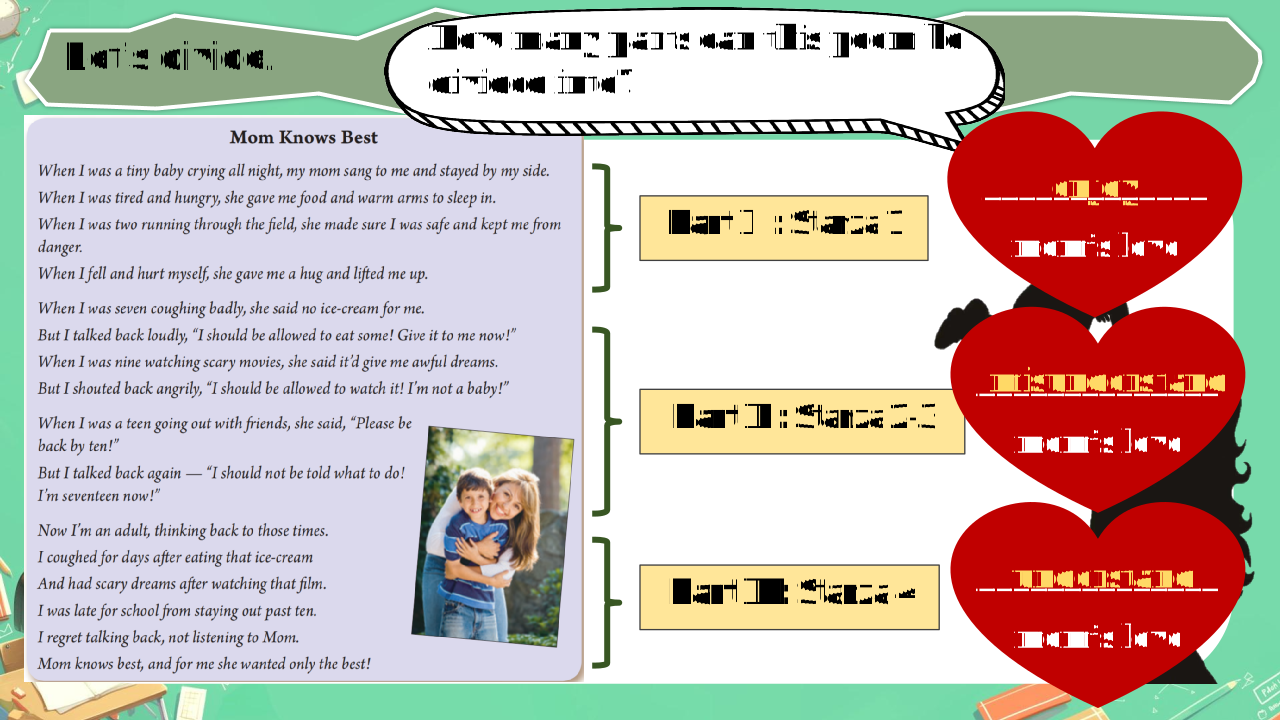
Unit 7 Teenagers should be allowed to choose their own clothes. Section A 3a-3c get in the way of 挡....的路;妨碍 固定短语,其后接名词,代词或动词的-ing形式 【拓展】on one's way to 在去...的路上 in this way 这样 by the way 顺便问一下 【例句】没有什么能阻碍我们的计划。 Nothing can get in the way of our plans. end up 最后成为;最后处于 不及物动词,其后接动词的-ing形式,表示最终动态或结果。 【拓展】end with 及物动词,后接名词,表示以某种具体事物结束。 【例句】我们最终赢得比赛。 We ended up winning the game. 聚会以一首歌结束。 The party ended with a song. 【拓展】enter into 加入:参加 【例句】我看到这个男孩进入教室。 I saw the boy enter the classroom. Let’s read and answer questions. 1. How many stanzas does the poem have? It has _ stanzas. 2. How many periods of time (时间段)are mentioned in the poem? four _ periods of time are mentioned. Four They are _ time, _ time, _ time, and _ time. baby kid teen adult Let’s divide. How many parts can this poem be divided into? Part : Stanza 1 Part : Stanza 2-3 Part : Stanza 4 _ mom’s love _ mom’s love _ mom’s love enjoy misunderstand understand Let’s read Stanza 1 and match pictures with the sentences. When I was a tiny baby crying all night, my mom sang to me and stayed by my side. When I was tired and hungry, she gave me food and warm arms to sleep in. When I was two running through the field, she made sure I was safe and kept me from danger. When I fell and hurt myself, she gave me a hug and lifted me up. 1 2 3 4 2 4 1 3 Let’s read Stanza 1 and fill in the blanks. When I was a tiny baby _ all night, my mom _ to me and _ by my side. When I was _ and _, she gave me food and _ to sleep in. When I was two running through the _, she made sure I was _ and kept me from _. When I _ and _ myself, she gave me a _ and _ me up. crying sang stayed tired hungry warm arms field safe danger fell hurt hug lifted What did the writer feel about mom’s love when he was a tiny baby? He felt _. _ mom’s love enjoy warm, sweet … Let’s read Stanza 2-3 and complete the chart. Time What happened? What did mom say? My responses Seven _ badly No ice-cream Talked back _ Nine Watched_ It would give me _ _ angrily _ Went out with friends Be back _ Talked back again Coughed loudly scary movies awful dreams Shouted back Teen by ten Let’s read Stanza 2-3 and complete the conversation. The author: Mom, I want to eat _. Mom: _ ice- cream for you. You are _ badly. The author: I should be _ to eat some. The author was watching scary movies. Mom: You shouldn’t watch them. They will give you _. The author: I should be _ to watch them. The author: Mom, I want to _ with my friends. Mom: Please be back _. The author: I should not _ what to do. ice-cream No coughing allowed awful dreams allowed go out by ten be told What did the writer feel about mom’s love when he was a kid and teen? He felt _. bad / angry _ mom’s love misunderstand Let’s read Stanza 4 and complete the chart. Time What did I do? What happened? Adult Ate ice-cream _ for days Watched that scary _ Had _ _ past ten Was _ for school Coughed film scary dreams Stayed out late What does the writer feel about mom’s love now? He feels _. regretful / grateful I regret talking back, not listening to Mom. _ mom’s love understand Read the poem again and answer the questions. 3b 1. What did the mom do when the writer was a baby and a small child? When the writer was a baby and a small child, the mom did these: sang to him and stayed by his side when he cried; gave him food and warm arms to sleep in when he was tired and hungry; kept him safe when he was running through the field; hugged him and lifted him up when he fell and hurt himself. Read the poem again and answer the questions. 3b 2. Why do you think the writer talked back to his mom when he was seven and nine years old? 3. How did the writer feel when he was a teenager and his mom said “Please be back by ten”? 4. After reading the whole poem, how do you think the writer feels about his mom? He felt that he had grown up and he did not want to be treated like a little child anymore. He was angry because he felt that he was old enough to be independent and should not be told what to do. He loves his mom and is thankful for what she has done for him. Let’s think. Does Mom know best? tiny baby seven nine teen adult two happy sweet terrible angry regretful grateful unhappy The poem is written in the order of _ to describe the change of my _. time attitudes Mom _ best. knew Mom _ best. didn’t know Mom _ best. does know Let’s choose the right answers. 1. What’s the author’s purpose of writing this poem? To express his regret for old days. To show his love and understanding for Mom. To tell readers that our parents love us most. 2. Which of the following Chinese poem or saying expresses the similar emotion? 慈母手中线,游子身上衣。 爱子心无尽,归家喜及辰。 年少不懂父母恩,半身糊涂半身人。 Let’s taste the language. Rhyme /na t/ /sa d/ 1. 尾韵(end rhyme):句子的最后一个字押韵。 2. 头韵(alliteration):一行或者一节诗中几个词开头辅音相同,形成押韵。 3. 内韵(alliteration):词与词之间元音的重复形成的内部押韵。(本诗中/a /和/z/反复重复) Think about a time you did something even though your mom or dad told you not to do it. Share your story with your partner. 3c Think about a time you did something that your mom didn’t allow you to do. Try to rhyme. When I was _, but my mom _. eight doing no homework always remembered to check Let’s think. Make meals for you every day. Offer you everything that you need. Teach you to say the first word. Help you out when you are in trouble. Encourage you when you are down. Regard you as the most valuable treasure. Mother Let’s think. Do you know your Mom best? When is your Mom’s birthday? What food does your Mom love to eat? Have you ever sent your Mom flowers? Try to know your Mom better! Language points When I was a tiny baby crying all night, my mom sang to me and stayed by my side. When I was tired and hungry, she gave me food and warm arms to sleep in. When I was two running through the field, she made sure I was safe and kept me from danger. When I fell and hurt myself, she gave me a hug and lifted me up. tiny adj. 极小的 / ta ni/ stay by one’s side 待在某人身边;不离某人左右 run through the field 在田间奔跑 keep sb. (away) from … 使某人远离…… give sb. a hug 给某人一个拥抱 lift up 举起;抬起(动副短语) Language points 教材例句: When I was a tiny baby crying all night, my mom sang to me and stayed by my side. 当我还是个小婴儿整夜哭闹的时候,妈妈给我唱歌,陪在我身边。 cry v.(不及物) 哭;叫喊 n. 叫喊;大叫;哭 e.g. Don’t cry. Everything will be okay. 别哭了!一切都会好起来的。 e.g. When he heard a cry for help, he ran out as quickly as he could. 听到呼救声,他尽可能快地跑了出去。 Language points 教材例句: When I fell and hurt myself, she gave me a hug and lifted me up. 当我跌倒受伤时,她给了我一个拥抱,把我扶了起来。 hug v. / n. 拥抱;搂抱 give sb. a hug 给某人一个拥抱 e.g. Mr. Smith gave his daughter a hug and put her to bed. 史密斯先生拥抱了女儿一下,把她放到床上。 lift此处用作及物动词,意为“举起;抬高”。 搭配:lift sth. up e.g. The luggage is too heavy for me to lift. 这行李太重,我搬不起来。 Language points When I was seven coughing badly, she said no ice-cream for me. But I talked back loudly, “I should be allowed to eat some! Give it to me now!” When I was nine watching scary movies, she said it’d give me awful dreams. But I shouted back angrily, “I should be allowed to watch it! I’m not a baby!” badly adv. 严重地 大声顶嘴 噩梦 awful adj. 坏的;糟糕的/ f( )l/ 生气地回嘴 Language points 教材例句: But I talked back loudly… 但我大声顶嘴。 talk back 顶嘴,回嘴 talk back to sb. “跟某人顶嘴” e.g. Don’t talk back. Listen to what your father says. 不要顶嘴,听你父亲讲。 e.g. Don’t talk back to your parents. 别跟父母顶嘴。 Language points When I was a teen going out with friends, she said. “Please be back by ten!” But I talked back again —”I should not be told what to do! I’m seventeen now!” 10点之前,“by + 时间点”表示“截止于……” Language points Now I’m an adult, thinking back to those times. I coughed for days after eating that ice cream. And had scary dreams after watching that film. I was late for school from staying out past ten. I regret talking back, not listening to Mom. Mom knows best, and for me she wanted only the best! think back to 回想起某事 have scary dreams 做噩梦 regret doing sth. 后悔做过某事 regret to do sth. 很遗憾去做某事 Language points 教材例句: And had scary dreams after watching that film. 看了那部电影之后做了很多噩梦。 scary adj. 可怕的;容易受惊的;引起恐慌的(修饰物) scared adj. 害怕的;恐惧的(修饰人) e.g. Grandpa told me a scary ghost story. I felt scared. 爷爷给我讲了一个吓人的鬼故事。我感到很害怕。 Language points 教材例句: I regret talking back, not listening to Mom. 我后悔顶嘴,没有听妈妈的。 regret v.懊悔;惋惜 短语: regret doing sth. 后悔做过某事(事情做过了) regret to do sth. 很遗憾去做某事 (事情还没做) e.g. He never regrets marrying her. 他从不后悔娶了她。 e.g. We regret to inform you that your application has not been successful. 我们很遗憾地通知您,您的申请未通过。 Exercises:单项选择。 1. He_ late to watch the football match till midnight, so he is sleepy today. A. woke up B. stayed up C. put up D. got up 2. I’m allowed to go out with friends at night, but I have to be home _10: 00 pm. A. in B. on C. by D. at 3.The stones are so heavy. How _ they _to the top of the building without modern machines? A. do; lift B. did; lift C. were; lifted D. do; lifted Exercises:单项选择。 4.The stone was heavy, but the man _it _ easily. A. lifted; up B. looked; up C. picked; up D. cleaned; up 5. — Someone stole my new iPhone 15 last week. — _ Did you tell the teacher about it? That’s OK. B. How awful! C. Take care. D. You should be more careful. 6. — How do you like the game show? — _. I can’t stand it. A. Funny B. Important C. Perfect D. Awful $
资源预览图
1
2
3
4
5
6
相关资源
由于学科网是一个信息分享及获取的平台,不确保部分用户上传资料的 来源及知识产权归属。如您发现相关资料侵犯您的合法权益,请联系学科网,我们核实后将及时进行处理。