Unit6 A day in the life Section B(1a-1b)课件 2025-2026学年人教版英语七年级上册
2025-12-04
|
38页
|
209人阅读
|
3人下载
普通
资源信息
| 学段 | 初中 |
|---|---|
| 学科 | 英语 |
| 教材版本 | 初中英语人教版七年级上册 |
| 年级 | 七年级 |
| 章节 | 1a-1d |
| 类型 | 课件 |
| 知识点 | - |
| 使用场景 | 同步教学-新授课 |
| 学年 | 2025-2026 |
| 地区(省份) | 广东省 |
| 地区(市) | 广州市,韶关市,深圳市,珠海市,汕头市,佛山市,江门市,湛江市,茂名市,肇庆市,惠州市,梅州市,汕尾市,河源市,阳江市,清远市,东莞市,中山市,潮州市,揭阳市,云浮市 |
| 地区(区县) | - |
| 文件格式 | PPTX |
| 文件大小 | 33.65 MB |
| 发布时间 | 2025-12-04 |
| 更新时间 | 2025-12-30 |
| 作者 | xkw_065486411 |
| 品牌系列 | - |
| 审核时间 | 2025-12-04 |
| 下载链接 | https://m.zxxk.com/soft/55274776.html |
| 价格 | 2.00储值(1储值=1元) |
| 来源 | 学科网 |
内容正文:
A Day in the Life
UNIT
6
Section B
How different are people’s daily routines?
daily adj. 每日的;日常的
daily routine 日常生活
Learning objectives
1.Learn to get basic(基本的) information about
Timo through careful reading
2.Learn to retell(复述) Timo's daily rountine
3.Write a daily rountie accroding to your own
life
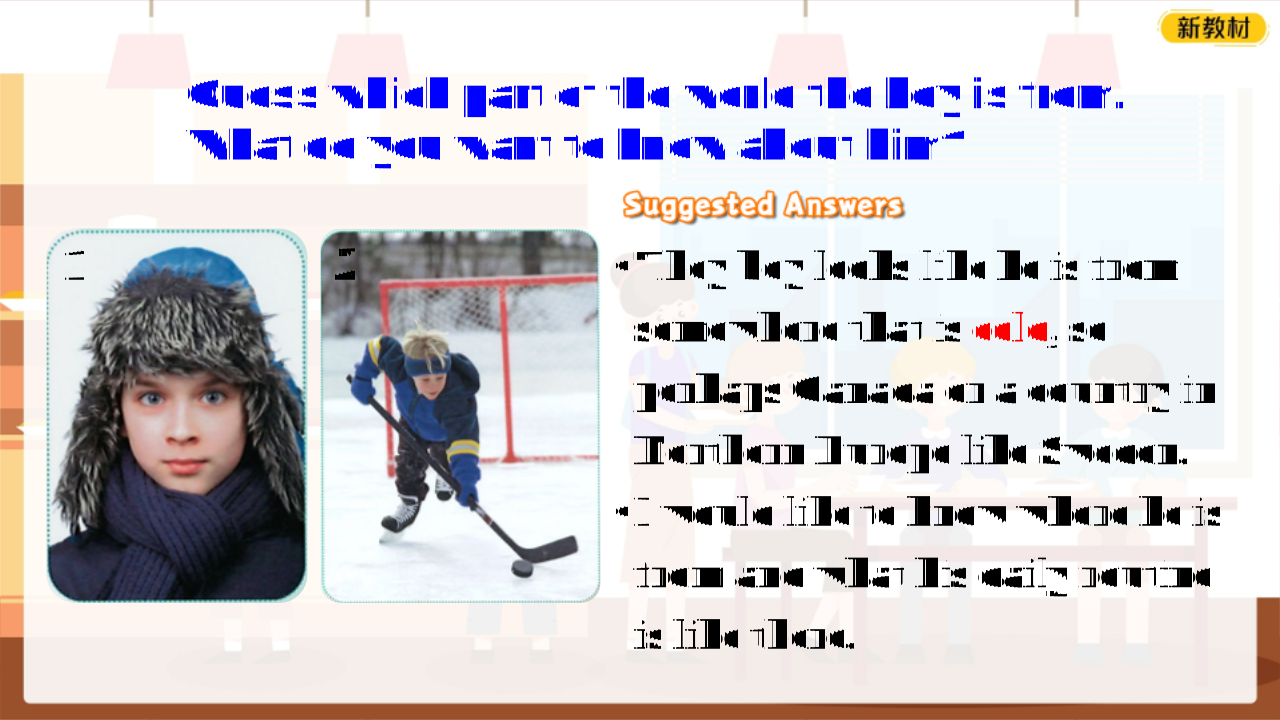
What do you see in the photos?
In the first photo, what is the boy wearing?
In the second photo, what sport is the boy doing?
1
2
Pictures may tell the background.
Look at the photos, and then answer the questions.
Guess which part of the world the boy is from.
What do you want to know about him?
1
2
They boy looks like he is from somewhere that is cold, so perhaps Canada or a country in Northern Europe like Sweden.
I would like to know where he is from and what his daily routine is like there.
Finland
Finland is a country in Northern Europe and is a part of Scandinavia, a geographical region, along with Sweden, Norway, and Denmark. The capital city is Helsinki. Around 70% of Finland is covered by forests, and the country is also known as the “land of a thousand lakes”.
Popular Sports in Finland
Due to the climate and geography, sports based on snow and ice are of course popular, such as ice-hockey, skiing, and skating. However, other common global sports are also popular, such as football, basketball, and athletics.
Read the text and choose a suitable title for it.
Timo’s School
One of Timo’s School Days
Timo’s Hobbies
Time Limit: 1 minute
略读(skimming),即有选择性地进行阅读,跳过某些细节。这种阅读方法旨在通过对文章标题、首尾句及各段前两句或尾句等概括性语句的阅读,对文章内容有一个大致了解。当我们不需要对文章进行深层理解时,就可以运用略读这一阅读方法快速了解作者的意图或文章的主题。段落大意题、主旨大意题和标题归纳题都可采用此阅读策略。
Skimming
You can find main ideas by first taking a quick look at the picture(s), key words and phrases, and topic sentences.
The passage is about
Timo’s Tuesday routine.
Read again and complete the timetable with Timo’s activities.
Time Timo’s activity
7:40 a.m.
9:00 a.m.
12:00 p.m.
12:30 p.m.
2:15 p.m.
after school
4:00 p.m.
6:00 p.m.
after dinner
9:30 p.m.
gets up
school begins
has lunch
lessons begin (again)
lessons finish
goes to ice hockey club
gets home
has dinner
reads with his parents
goes to bed
通过时间迅速定位获取信息
S1: What does Timo do after school?
S2: He goes to the ice hockey club.
S1: That’s right!
S2: When does he have dinner?
S1: He has dinner at …
Take turns to quiz each other on Timo’s day in pairs.
Read again and answer the questions.
1. What lessons does Timo have every Tuesday morning?
2. How long is each lesson at his school?
3. What club does Timo go to?
Timo has one Finnish lesson and two home economics lessons ever Tuesday morning.
Each lesson at his school lasts for 45 minutes.
Timo goes to the ice hockey club.
4. How does he make good use of his time?
Timo makes good use of his time by listening to the news and music in the morning and going to club after school. He also reads and prepares his schoolbag for the next day before he goes to bed.
He makes the most of every second.
根据列出来的Timo合理利用时间的细节证据,说明这些细节反应了Timo怎样的生活态度。
Listen to the news or music
Walk to school
Have home economics class
Go to the ice hockey club
Read with parents
Prepare schoolbag …
Time management
develop hobbies
exercise
learn to be independent
(独立)
spend time with family
make preparations
…
Time management can be a difficult thing for everyone.
Make a to-do list. Put important things at the top.
Take regular breaks. It helps keep out mind fresh and focused.
Make routines, e.g. a dedicated study time each day.
Set reminders with your phone.
Prioritize one thing at a time.
Here are some suggestions for good time management:
It’s OK to say “No” to things, such as hanging out with friends.
Be realistic. Don’t try to do too much.
Little and often is more effective than cramming (塞满).
Get enough sleep. We can’t be effective if we are too tired.
People’s daily routines are influenced by many different factors. Climate, weather, geography, and environment are particularly important. For example, in the far north, some places have limited sunlight during winter months, which has a great effect on human physiology. People living in big cities have a different experience from those living in the country where life moves a little slower.
Timo finishes school at 2.15. Then he goes to an ice hockey club. What factors do you think can influence people’s daily routines?
再次阅读文章,并归纳出篇章结构和内容要点,分析不同要点之间的衔接逻辑。
Activities before school, at school and after school
Activities at home
Introduce oneself: name, age, home country
Choose a day to describe: which month, which day
Activities before school begins: get up, have breakfast, walk to school
Activities at school: breaks, lessons in the morning and in the afternoon
Activities after school: club activities
Activities at home: have dinner, read, prepare school bag, go to bed
使用衔接句/词是实现语篇连贯的有效手段之一。
使话题的转换显得自然
保持了文章整体的连贯
衔接句与衔接词的使用
与一起生活
每周二
走路去学校
10分钟步行路程
家政学;家庭经济学
起床
为……把某物准备好
第二天
到家
吃晚餐
吃午餐
上床睡觉
朗读文本,预测句子重音。然后听录音,核查自己的预测。
Complete the timetable about one of your school days. How different is your school day from Timo’s?
Time My activity My opinion/feeling
6:30 a.m.
8:00 a.m. …
12:30 p.m. …
5:00 p.m. …
6:00 p.m. …
9:30 p.m. …
get up, brush teeth, eat breakfast, get dressed
school begins
lunch & break time
get home
dinner time
bed time
a little early …
Time My activity
6:30 a.m.
8:00 a.m.
12:30 p.m.
5:00 p.m.
6:00 p.m.
9:30 p.m.
get up, brush teeth, eat breakfast, get dressed
school begins
lunch & break time
get home
dinner time
bed time
Time Timo’s activity
7:40 a.m.
9:00 a.m.
12:00 p.m.
12:30 p.m.
2:15 p.m.
after school
4:00 p.m.
6:00 p.m.
after dinner
9:30 p.m.
gets up
school begins
has lunch
lessons begin (again)
lessons finish
goes to ice hockey club
gets home
has dinner
reads with his parents
goes to bed
Are there any differences
between the two
timetables? Why?
My name is _________. I’m __________ years old. I live ____________. Every ________, I usually get up at ____________. Then _________. My school begins at ____________. I have _________ in the morning. After that, _________. In the afternoon, _________. I usually get home around _________. Then _________. At _________, it’s time for me to _________.
self-introduction
Use the information in 2a to write about your day.
Morning activities
Morning lessons
Afternoon lessons and activities
Activities at home/
After school activities
self-introduction
Morning activities
Morning lessons
Afternoon lessons and activities
Activities at home/ After school activities
Activities before school
Activities at school
My day
My name is _________. I’m __________ years old. I live ____________. Every _________, I usually get up at __________. Then ______________________________________________. My school begins at ____________. I have ______________________
____________ in the morning. After that, ___________________
______________________. In the afternoon, _________________
_______________. I usually get home around _________. Then _________________________________________________________________________________________________________. At _________, it’s time for me to __________.
Yang Xin
12
in Beijing
school day
6:30
I eat breakfast, brush my teeth, and get dressed
8:00
and history
at 12:30 p.m. I have
I have geography,
5 o’clock
I play football with my friends until dinner time at 6 o’clock.
I usually do some reading after I finish my homework
English, maths, Chinese
lunch and break time
music and PE
9:30
go to bed
Write about your day.
My name is _________. I’m __________ years old. I live ____________. Every ________, I usually get up at ____________. Then _________. My school begins at ____________. I have _________ in the morning. After that, _________. In the afternoon, _________. I usually get home around _________. Then _________. At _________, it’s time for me to _________.
评分标准 ( 满分15分) 分数 得分 总分
能从以下方面介绍自己的一天 (self-introduction, morning activities, morning lessons, afternoon lessons and activities, after-school activities)。内容连贯、完整,表达清楚。 6
能正确使用本单元所学词汇和表达,并正确拼写所有单词。 3
能正确使用一般现在时。 2
能按时间顺序条理清晰的介绍自己的生活日常。 1
能使用after, then, after that等连接词来衔接句子。 1
能正确使用标点。 1
书写规范且工整。 1
8:00 a.m.
_________
____ a.m.
get up
12:30 (noon)
_________
2:00 p.m.
________
2:30 p.m.
_________
10:30 p.m.
_________
6:30 p.m.
_________
6:00 p.m.
________
have lunch
go to bed
Complete the timeline according to your writing.
How do you think of your daily routine?
Pretty good;
A little busy …
与一起生活
每周二
起床
走路去学校
10分钟步行路程
吃午/晚餐
到家
为……把某物准备好
第二天
上床睡觉
live with
every Tuesday
get up
walk to school
a 10-minute walk
have lunch / dinner
get home
prepare sth. for
the next day
go to bed
I can
通过快速阅读获取文本大意,找出最合适的文章标题
梳理出Timo星期二的日常生活轨迹,并制作成结构化图表
了解荷兰中学生的日常作息,尝试进行跨文化比较
根据提示用本单元所学知识描述自己的一天
Choose to do:
给Timo写封信,需要包括以下内容:
1. Which part of Timo’s life interests you most?
2. What else do you want to know about his life? What questions would you like to ask?
3. How is Timo’s day different from your day?
4. Would you like to make friends with Timo?
使用第三人称介绍Timo Halla 的上学日常。
His name is Timo Halla. He is 13 years old. He lives with his parents in Helsinki…
完成写作初稿,与同学互评。
对同学的初稿提出修改意见或建议。
根据同学的反馈修改写作。
Lavf59.14.100
93807.055
$
资源预览图

1

2

3
4

5
6
相关资源
由于学科网是一个信息分享及获取的平台,不确保部分用户上传资料的 来源及知识产权归属。如您发现相关资料侵犯您的合法权益,请联系学科网,我们核实后将及时进行处理。