语法专题2 第3讲 情态动词和虚拟语气(教师用书Word)-【正禾一本通】2026年新高考英语高三一轮总复习高效讲义(外研版)
2025-12-07
|
6页
|
73人阅读
|
5人下载
教辅

资源信息
| 学段 | 高中 |
|---|---|
| 学科 | 英语 |
| 教材版本 | - |
| 年级 | 高三 |
| 章节 | - |
| 类型 | 教案-讲义 |
| 知识点 | 情态动词,虚拟语气 |
| 使用场景 | 高考复习-一轮复习 |
| 学年 | 2026-2027 |
| 地区(省份) | 全国 |
| 地区(市) | - |
| 地区(区县) | - |
| 文件格式 | DOCX |
| 文件大小 | 274 KB |
| 发布时间 | 2025-12-07 |
| 更新时间 | 2025-12-07 |
| 作者 | 山东正禾大教育科技有限公司 |
| 品牌系列 | 正禾一本通·高考一轮总复习高效讲义 |
| 审核时间 | 2025-12-07 |
| 下载链接 | https://m.zxxk.com/soft/55212698.html |
| 价格 | 3.00储值(1储值=1元) |
| 来源 | 学科网 |
摘要:
该高中英语高考复习讲义聚焦情态动词和虚拟语气核心考点,按基本用法、表推测、情态动词+have done到虚拟语气在if条件句及名词性从句中的应用,以“基础—进阶—综合”逻辑层次组织知识点。通过考点梳理、方法指导(如推测语气强弱对比)、真题训练(近三年新课标卷实例)等环节,帮助学生构建知识网络,突破语法难点。
资料采用“讲练结合+语境应用”创新策略,如在虚拟语气教学中设计“情景改写”活动(将if条件句转化为含蓄条件句),培养学生语言能力和思维品质。设置基础巩固、写作应用分层练习,结合真题语料即时反馈,确保有限时间内最大化复习效果。助力学生掌握高考高频考点,为教师精准把控复习节奏提供清晰指导。
内容正文:
第三讲 情态动词和虚拟语气
高考考法洞悉
零距离接触高考题
高考技巧点拨
1.(2024·新课标Ⅰ卷)Volunteers under the age of 18 must have the parent/guardian approval section signed.
2.(2023·新课标Ⅰ卷)Should it be possible,I truly hope you can take my suggestions into consideration.
3.(2022·浙江6月卷)He throws his arms and legs out as if he were flying (fly),his eyes wide with excitement.
考查角度:阅读理解、阅读七选五与写作中的尝试高级句式。
考点一 情态动词的基本用法
1.表示“可以”时常用may,can;表示“不可以”用can't。
You can/may take whatever you like in this room.
你可以拿走这个屋子里你喜欢的任何东西。
2.表示“必须”常用must和have to。must强调说话人的主观意志,而have to表示客观需要。
You must have selfconfidence if you want to achieve your goal.
如果你想实现目标,你一定要自信。
3.can表示“能力”,could表示过去的能力,一般情况下可以与be able to互换。
I think the baby can/will be able to walk in another two months.
我认为那个婴儿再过两个月就能走路了。
We were lucky that the weather was fine that day and we were able to see the sunrise.
我们很幸运,那天的天气很好,我们能看到日出。
4.表示“应该”时用should和ought to。
Jane took off her yellow blouse,thinking that she should go to an open area if they came back again.
学生用书第325页
简脱下她的黄衬衫,心想如果他们再回来的话,她应该到一个空旷的地方。
5.will表示“意愿”或表示“习惯性、倾向性”,过去式为would。
Fish will die out of water.
鱼离开水会死。
6.shall用于第一、二、三人称的肯定句时,表许诺、决心、命令、规定或警告等。
One of our rules is that every student shall wear school uniform while at school.
我们的其中一项规定是学生在校期间必须穿校服。
7.need/dare既可以用作情态动词,也可以作实义动词。
You needn't get the machine repaired this week.I won't need it until next month.
这周你不必请人修理机器,我到下个月才用。
考点二 情态动词表推测
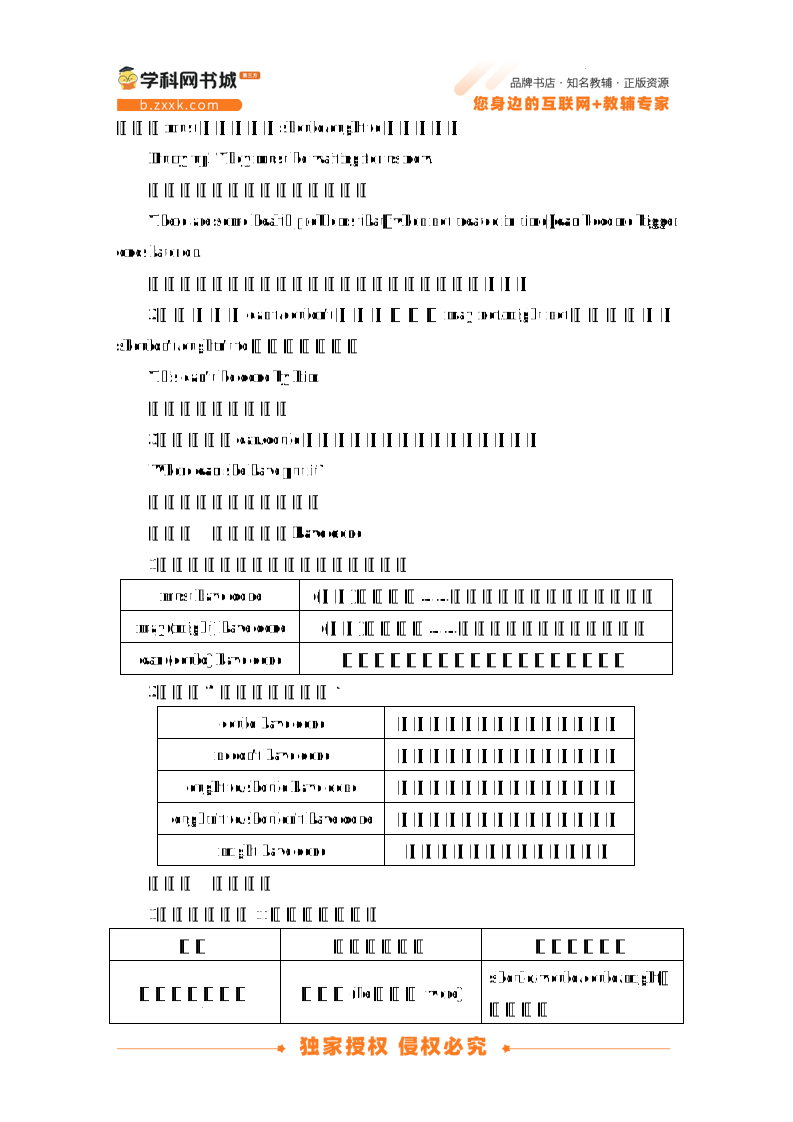
1.表肯定:can表示客观上的可能,意为“有时会”;may/might/could表示可能;must表示一定;should/ought to表示应该。
Hurry up! They must be waiting for us now.
快点!他们现在一定在等我们。
There are some health problems that,when not treated in time,can become bigger ones later on.
有些健康问题,如果不及时治疗,以后会变得更严重。
2.表否定:can't/couldn't表示不可能;may not/might not表示可能不;shouldn't/oughtn't to表示应该不会。
This can't be done by him.
这不可能是他做的。
3.表疑问:can/could表示惊讶、怀疑、不相信的态度。
Where can she have put it?
她到底把它放哪儿了呢?
考点三 情态动词+have done
1.对过去发生的事情或状态进行推测
must have done
(过去)一定做过……;语气比较肯定;用于肯定句
may (might) have done
(过去)可能做过……;语气不确定;用于肯定句
can (could) have done
用于否定句或疑问句,表示怀疑或不确定
2.表示“与过去事实相反”
could have done
过去本可以做某事但实际上没做
needn't have done
过去本不必做某事但实际上做了
ought to/should have done
过去本应该做某事但实际上没做
oughtn't to/shouldn't have done
过去不应该做某事但实际上做了
might have done
过去可能做某事但实际上没做
考点四 虚拟语气
1.虚拟语气在if条件句中的运用
类别
从句谓语动词
主句谓语动词
与现在事实相反
过去式(be动词用were)
should/would/could/might+动词原形
与过去事实相反
had+动词ed形式
should/would/could/might+have+动词ed形式
与将来事实相反
过去式(be动词用were)
should/would/could/might+动词原形
should+动词原形
were to+动词原形
2.含蓄条件句
(1)有时假设的情况不用条件句表达,而是用but for,without等介词(短语)来表示。
We wouldn't have finished the project on time without your timely help.
如果没有你的及时帮助,我们就不能按时完成那项工程了。
(2)用连词otherwise,or等暗示后文与前面的情况相反,从而引出后文的虚拟语气。
He was very busy yesterday.Otherwise,he would have come to the party.
他昨天太忙了。否则的话,他就会来参加聚会了。
3.虚拟语气用于名词性从句
(1)在“It is+important/necessary/natural/strange/essential/vital/a pity+that ...”句型中,谓语动词用“(should+)动词原形”。
学生用书第326页
It's vital that we (should) take our safety driving along the road seriously.
重视道路安全驾驶是至关重要的。
(2)在would rather(that)后的宾语从句中,从句的谓语动词如果表示现在或将来要发生的动作,从句用一般过去时;如果表示过去发生的动作,从句用过去完成时。
I'd rather he had gone to the seaside with me the day before yesterday.
要是他前天和我去海边就好了。
(3)句中含有以下单词或其变形时,该句中的名词性从句(宾语从句、表语从句、主语从句、同位语从句)部分常用虚拟语气,其谓语动词形式为“should+动词原形”,其中should可以省略。
(4)wish后宾语从句中的虚拟语气
虚拟语气
从句谓语动词
与现在事实相反
过去式(be动词一般用were)
与过去事实相反
had+动词ed形式
与将来事实相反
would/could+动词原形
(5)三个特定句式中的虚拟语气
句型结构
过去虚拟
现在虚拟
将来虚拟
if only引导的条件句及感叹句
had+动词ed形式
过去式(be动词一般用were)
would/could/should/might+动词原形
as if/though引导的表语从句及方式状语从句
had+动词ed形式
过去式(be动词一般用were)
would/could/should/might+动词原形
It is (high) time that...
过去式或“should+动词原形”
[小题微练]——单句语法填空/语法与写作
1.In today's information age,the loss of data can cause serious problems for a company.
2.They might have found a better hotel if they had driven (drive) a few more kilometers.
3.我多么希望我当时一收到你的电子邮件就阅读和回复啊!
How I wish I had read and replied to your email as soon as I received it!
4.我建议为了保持友谊,我们应该与朋友面对面交流而不是发短信。
I suggest we (should) communicate with our friends face to face instead of sending text messages so that we can maintain our friendship.
5.到了我们人类采取适当的措施来维护生态平衡的时候了。
It is high time that we human beings took/should take proper measures to keep the balance of nature.
[语法与写作微练]——情态动词和虚拟语气链接典题
1.(2023·浙江1月卷读后续写)一时间,大家都说不出话来。然后有人说:“她一定是来道别的。”
For a moment,all were speechless.Then someone said ,“She must have come to say goodbye.”
2.我注意到,剧本的选择可能并不是对所有学生都有吸引力。
It has come to my attention that the choice of scripts may not be engaging enough for all students.
3.因此,我建议你改进你的工作,而不是仅仅依赖于人工智能工具,并与你的老师进行开放的对话。
Therefore,I suggest you (should) improve your work instead of simply depending on AI tools and have an open conversation with your teacher.
4.我儿子轻轻地把它们移植到我们的新育苗床上,好像每一朵都是最娇嫩的花朵。
My son tenderly transplanted them into our new beds with a welcome,as if each were the most delicate flower.
学生用书第327页
学科网(北京)股份有限公司
$
资源预览图

1

2
3
相关资源
由于学科网是一个信息分享及获取的平台,不确保部分用户上传资料的 来源及知识产权归属。如您发现相关资料侵犯您的合法权益,请联系学科网,我们核实后将及时进行处理。