Unit 6 课时6 Section B(Project&Reading Plus)项目+拓展阅读课课件-八年级英语上册【趣味课堂】精品备课(人教版2024)
2025-11-18
|
2份
|
31页
|
597人阅读
|
7人下载
精品
资源信息
| 学段 | 初中 |
|---|---|
| 学科 | 英语 |
| 教材版本 | 初中英语人教版八年级上册 |
| 年级 | 八年级 |
| 章节 | Project |
| 类型 | 课件 |
| 知识点 | - |
| 使用场景 | 同步教学-新授课 |
| 学年 | 2025-2026 |
| 地区(省份) | 全国 |
| 地区(市) | - |
| 地区(区县) | - |
| 文件格式 | ZIP |
| 文件大小 | 112.14 MB |
| 发布时间 | 2025-11-18 |
| 更新时间 | 2025-11-18 |
| 作者 | 小辣椒 初中英语课件 |
| 品牌系列 | - |
| 审核时间 | 2025-11-18 |
| 下载链接 | https://m.zxxk.com/soft/54959679.html |
| 价格 | 5.00储值(1储值=1元) |
| 来源 | 学科网 |
内容正文:
Unit 6 Plan for Yourself
Make plans for solving problems
Project & Reading Plus
Lesson Objectives:
In this lesson, we will be able to:
1. Knowledge Objective: Master vocabulary and phrases about school
problems, reasons, solutions, and fable - related terms. Grasp how to
analyze and describe school issues and fable plots.
2. Ability Objective: Use target language to create problem - solution
reports and fable - related answers. Improve reading and speaking
skills by presenting reports and answering fable questions.
3. Affective Objective: Develop a sense of responsibility for solving
school problems. Appreciate the moral values in fables and learn to
plan for the future.
桃
李
不
言
下
自
成
蹊
目
录
CONTENTS
01 Lead in
02 Project
03 Reading plus
04 Exercise&Homework
桃
李
不
言
下
自
成
蹊
Lead in
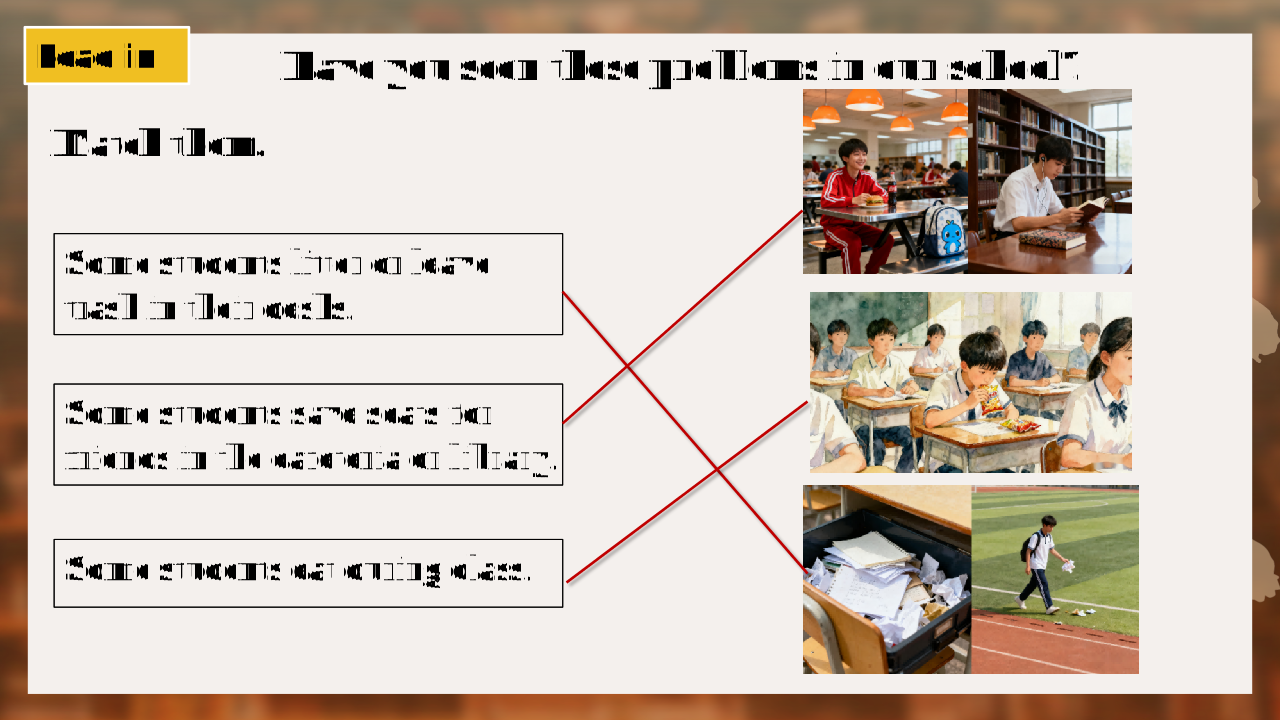
Have you seen these problems in our school?
Match them.
Some students litter or leave trash in their desks.
Some students save seats for friends in the cafeteria or library.
Some students eat during class.
桃
李
不
言
下
自
成
蹊
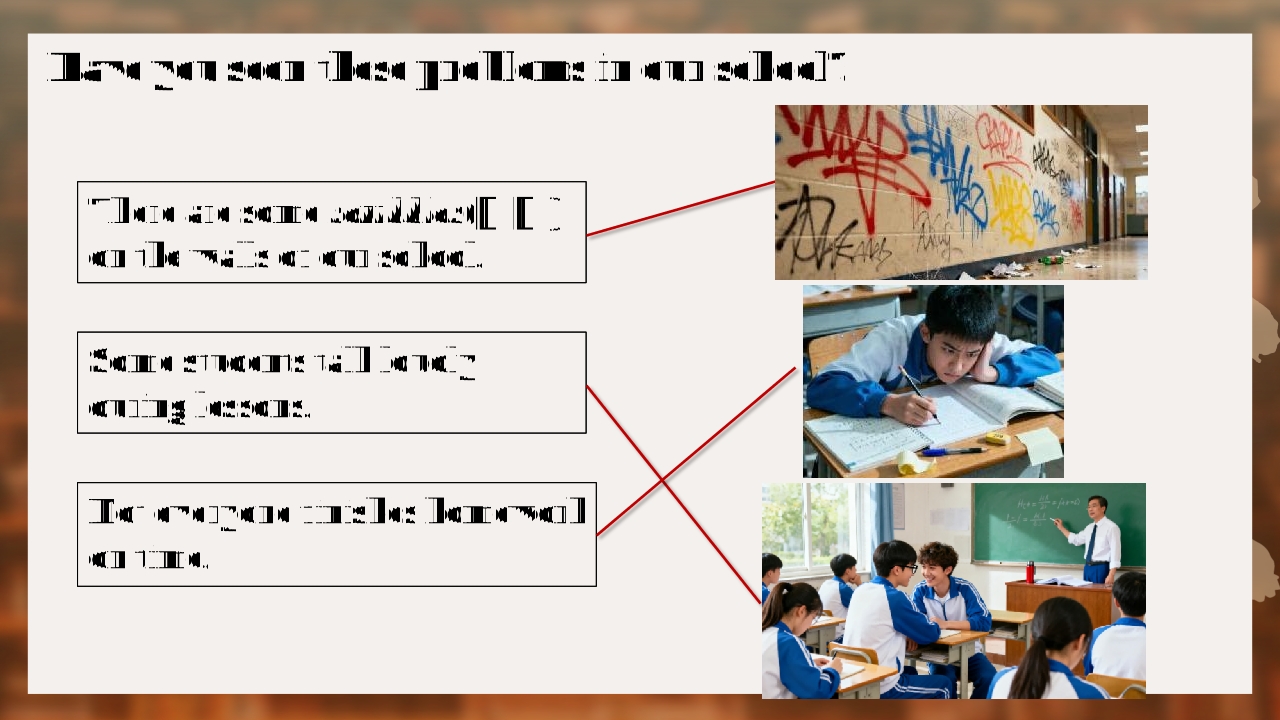
Have you seen these problems in our school?
There are some scribbles(涂鸦) on the walls of our school.
Some students talk loudly during lessons.
Not everyone finishes homework on time.
桃
李
不
言
下
自
成
蹊
What causes these problems? How can we solve them?
e.g.
Problem:
Some students save seats for friends in the cafeteria or library.
Reason:
They want to sit with friends but don’t consider others.
Solution:
Set clear rules: no saving seats during busy hours.
桃
李
不
言
下
自
成
蹊
Project
Make plans for solving problems
制订解决问题的计划
4a
Work in groups. Discuss what problems there are in your class or at school.
Problem 1
Problem 2
Problem 3
桃
李
不
言
下
自
成
蹊
4a
Then make a list of the problems and the reasons why they exist.
Problems
Reasons
There are some scribbles(涂鸦) on the walls of our school.
Students are looking for a way to express themselves.
Some students talk loudly during lessons.
Some students may feel confused about the lesson; the class is boring or they just seek attention.
Not everyone finishes homework on time.
Some students forget or don't understand the tasks.
桃
李
不
言
下
自
成
蹊
4b
Write down some plans to solve the problems.
There are some scribbles on the walls of our school.
Solutions
Problems
Reasons
Students are looking for a way to express themselves.
Schools can offer art classes or clubs where students can express themselves freely.
Let the class monitor remind noisy students or talk to them to find the reason after class.
Some students talk loudly during lessons.
Some students may feel confused about the lesson; the class is boring or they just seek attention.
Not everyone finishes homework on time.
Some students forget or don't understand the tasks.
Create a homework checklist for everyone.
桃
李
不
言
下
自
成
蹊
4c
Prepare a presentation to share your plans with the whole class.
Checklist:
good content of the plan
practical solutions
fluent and clear speech
confident performance
桃
李
不
言
下
自
成
蹊
4c
Prepare a presentation to share your plans with the whole class.
Hello, everyone! Today I want to talk about three problems in our school and how we can solve them.
First, let's talk about scribbles on the walls.
Some students draw on walls because they want to express themselves.
To solve this, our school can start art classes or clubs where everyone can draw freely.
桃
李
不
言
下
自
成
蹊
4c
Prepare a presentation to share your plans with the whole class.
Next, some students talk loudly in class.
This happens when lessons are boring, or when students want attention.
Our class monitor can help by reminding them to be quiet, or talking with them after class.
Finally, not everyone finishes homework on time.
Many students forget or don't understand the homework.
We can make a simple homework checklist to help everyone remember.
Thank you for listening! Let's work together to make our school better.
桃
李
不
言
下
自
成
蹊
Reflecting
1. What is your dream job? How are you going to achieve your goal?
2. What expressions can you use to talk about future plans?
3. Do you think it is important to make resolutions? Why?
4. What resolutions are you going to make? How are you going to keep them?
5. How did this unit help you think of ways to improve yourself?
你梦想的工作是什么?你打算如何实现自己的目标?
你可以用哪些表达来谈论未来的计划?
你认为做决定重要吗?为什么?
你打算做什么决定?你打算如何坚持下去?
本单元如何帮助你思考提升自我的方法的?
Dream big, plan well, work hard, smile often, and good things will happen.
胸怀大志,计划周全,努力奋斗,笑口常开,美好的事情自会降临。
桃
李
不
言
下
自
成
蹊
The Ant and the Grasshopper
(Adapted from Aesop’s Fables)
n. 蚱蜢;蚂蚱
Reading plus
桃
李
不
言
下
自
成
蹊
Listen and read the fable paragraph by paragraph.
The Ant and the Grasshopper
It was summertime. The ant and the grasshopper were in the farmer’s field. The ant was busy collecting corn. The grasshopper was relaxing in the sun. “
Hey, Ant, come sit with me,” said the grasshopper.
“No, thanks,” said the ant. “I have to take this corn home. I’m preparing for the winter.”
A few weeks later, summer was almost at an end. The ant continued to take corn home every day, but the grasshopper just played his violin and danced around.
“Come on, Ant!” said the grasshopper. “Dance with me!”
“No,” replied the ant. “I’m going to get more corn. Why don’t you join me? You should plan for the winter.”
n.夏季;夏天
n. 谷物;谷粒;玉米
be busy doing sth. 忙于做某事
come 和 sit 之间省略“and”,在祈使句中,多个动作连续发生时, 省略and以增强语句的简洁性和指令性。
at an end 结束
continue to do sth. 继续做某事
相当于 “Why not do sth.?”
桃
李
不
言
下
自
成
蹊
Listen and read the fable paragraph by paragraph.
“But the winter is so far away! Your work looks so boring! Come with me! Let’s have a picnic!”
“No, thanks, Grasshopper. I’m going to continue with my boring work.”
The grasshopper was silent for a while, but then he happily danced away. The ant looked tired, but she felt happy when she saw all the food in her kitchen.
The autumn arrived and the weather became cool and windy. The grasshopper ran around the farm singing songs. The poor ant had to fight her way through the wind. She wanted to collect lots of wood.
“Ant, it’s too windy to work!” said the grasshopper. “Come and sing with me!”
continue with sth. 继续某事
silent adj.沉默的(stay/keep silent 保持沉默)
fight one’s way
艰难地前进
too...to... 太……而不能,可与“so...that...”/“not... enough to...”互换
桃
李
不
言
下
自
成
蹊
Listen and read the fable paragraph by paragraph.
“No, thanks, Grasshopper. There’s just a little bit more work for me to do. I want to be warm in the winter.”
And then the cold winter came. The ant sat at home by her fire, enjoying some lovely corn soup. Then she heard a knock at the door.
“Oh, dear Ant,” said the grasshopper, “you must help me! I have no food! And no fire to keep me warm!”
“Sorry, Grasshopper, you must learn to look after yourself. Keep dancing and singing through the winter, and work hard when spring comes!”
此句省略了主语和谓语,完整句子为“And I have no fire to keep me warm!”,省略后与前一个句子保持并列关系,避免重复,使句子更简洁有力。
桃
李
不
言
下
自
成
蹊
1
Read the story and answer the questions.
1. What did Ant do to get ready for the winter?
She collected corn and wood.
桃
李
不
言
下
自
成
蹊
1
Read the story and answer the questions.
2. What did Grasshopper do before winter came?
He relaxed in the sun, played the violin, danced and sang songs.
桃
李
不
言
下
自
成
蹊
1
Read the story and answer the questions.
3. What do you think of Ant? What about Grasshopper?
I think Ant is hard-working and Grassshopper is lazy.
桃
李
不
言
下
自
成
蹊
Read again and complete the tasks.
1. Why did the ant refuse to dance with the grasshopper during summer?
( )
A. She didn’t like the grasshopper.
B. She was too tired to dance.
C. She was busy collecting food for winter.
2. What did the grasshopper do when autumn came? ( )
A. He helped the ant collect wood.
B. He sang and danced around the farm.
C. He started building a warm house.
C
B
桃
李
不
言
下
自
成
蹊
Read again and complete the tasks.
3. How did the ant feel when she saw the food in her kitchen? ( )
A. Sad and lonely. B. Happy and satisfied. C. Angry and tired.
4. What did the grasshopper ask for when winter came? ( )
A. A violin to play music. B. Seeds to plant in spring.
C. Food and warmth.
5. What lesson can we learn from this story? ( )
A. Planning and working hard can help us in difficult times.
B. It’s important to play and have fun every day.
C. We should always depend on others for help.
C
B
A
桃
李
不
言
下
自
成
蹊
2
Write a new ending to the story.
And then the cold winter came. __________________________
______________________________________________________________________________________________________________________________________________________________________________________________________________________________________________________________________________
And then the cold winter came. The grasshopper sat outside the ant's house, looking sad. The ant felt a bit sorry for him. She opened the door and said, "Come in, but help with housework in exchange for food and warmth." The grasshopper was thankful and started to work. He learned to work hard. In spring, he left, found his own field, and worked hard there.
桃
李
不
言
下
自
成
蹊
Discussion
What can we learn from the ant and the grasshopper?
How can we apply “planning ahead” to our school life?
Why is it important to take responsibility for our actions?
桃
李
不
言
下
自
成
蹊
Discussion
What can we learn from the ant and the grasshopper?
How can we apply “planning ahead” to our school life?
Why is it important to take responsibility for our actions?
We can learn the importance of planning ahead and taking responsibility for our actions from the ant and the grasshopper.
We can apply "planning ahead" to our school life by making study plans, finishing homework on time, and preparing for exams in advance(提前).
Because it helps us grow, build trust, and face the results of our choices.
桃
李
不
言
下
自
成
蹊
Exercises
I. 阅读短文,从方框中选择适当的词并用其正确形式填空。
relationship discuss own able paint
resolution hobby good improve sure
On New Year's Day, just as humans do, animals also make 1. __________. On this day, all animals go to the Lion's home and 2. __________ their resolutions for the coming year. The Monkey says, “I wanted to learn how to swim last year, but I am still not 3. __________ to do that. My mother told me to do only what I can do. This year, I am going to take up a new 4. __________ like painting and I may 5. __________ a beautiful picture of the animal world one day.”
resolutions
discuss
able
hobby
paint
桃
李
不
言
下
自
成
蹊
Exercises
I. 阅读短文,从方框中选择适当的词并用其正确形式填空。
relationship discuss own able paint
resolution hobby good improve sure
The Dog says, “I hope to have a better 6. ____________ with humans. Last year, I helped the police catch some criminals. This year I'm going to bring more happiness to people.” The Fox says, "I'm going to 7. __________ my acting and become the 8. __________ actor in the forest.” “What about
you, Pig?” the Lion asks. The Pig responds, “I am still not 9. __________ about my plan, but I want to have my 10. __________ room so I can sleep well every day.” “Ha ha…”the other animals laugh.
relationships
improve
best
sure
own
桃
李
不
言
下
自
成
蹊
Exercises
II. 阅读理解·推测文章出处法。
(2024河南中考)
( ) 25. Where can we probably read the text?
A. On a school noticeboard.
B. In a city guidebook.
C. On a community website.
D. In a local newspaper.
A
To celebrate our school’s 50th anniversary
in the school music hall
come to our school
桃
李
不
言
下
自
成
蹊
Summary
We learn:
1. Vocabulary & Phrases: school problem - related words (scribble, litter,
occupy), fable - related words (ant, grasshopper, moral). Phrases like
“prepare for”, “express oneself”.
2. Sentence Patterns: “The problem is... because... The solution is...”,
fable comprehension questions and answers.
3. Skills: Analyzing school problems, reading and understanding fables,
creating presentations.
We can:
Create problem - solution reports and present them. Answer fable - related questions and write new endings.
桃
李
不
言
下
自
成
蹊
Homework
1. 基础层:写3个关于校园问题及其解决方案的句子。
2. 提高层:为一个校园问题设计迷你海报,包含原因和
解决方案。
3. 拓展层:写一个关于学生改变坏习惯并帮助他人的小故事。
桃
李
不
言
下
自
成
蹊
Thank you!
桃
李
不
言
下
自
成
蹊
$The ant and the grass hopper, adapted from east hop's fables . IT was summer time. The ant and the grass hopper were in the farmers field. The ant was busy collecting corn. The grass hopper was relaxing in the sun. Hey, aunt, come sit with me. said the growth hopper. No, thanks. Said the end. I have to take this corn home. I'm preparing for the winter. A few weeks later, summer was almost at an end. The ant continued to take corn home every day, but the grass hopper just played his violin and dance around. Come on and . said the grass hopper. dance with me. No. replied the ant. i'm going to get more corn. Why don't you join me? You should plan for the winter. but the winter is so far away, your work looks so boring. Come with me. Let's have a picnic. No. thanks, grass harper. I'm going to continue with my boring work. The grass hopper was silent for a while, but then he happily dance away. The ant looked tired, but he felt happy when he saw all the food in her kitchen. The autumn arrived and the weather became cool and windy. The grass hopper ran around the farm singing songs. The poor ant had to fight her way through the wind. He wanted to collect lots of . wood and it's too windy to work, said the . gross hopper. Come and seeing with me. No, thanks. grass hopper. That's just a little bit more work for me to do. I want to be warm in the winter. And then the cold winter came the ant SAT at home by her fire, enjoying some lovely corn soup. Then he heard a knock at the door. Oh, dear, ante, said the grass upper. you must help me. I have no food and no fire to keep me warm. Sorry. grass hopper, you must learn to look after yourself, keep dancing and singing through the winter, and work hard when spring comes.
资源预览图

1

2

3
4
5

6

相关资源
由于学科网是一个信息分享及获取的平台,不确保部分用户上传资料的 来源及知识产权归属。如您发现相关资料侵犯您的合法权益,请联系学科网,我们核实后将及时进行处理。