Unit 1 Look it up! 知识清单 2025-2026学年沪教版英语八年级上册
2025-11-13
|
5页
|
147人阅读
|
7人下载
普通
资源信息
| 学段 | 初中 |
|---|---|
| 学科 | 英语 |
| 教材版本 | 初中英语沪教版八年级上册 |
| 年级 | 八年级 |
| 章节 | Unit 1 Look it up! |
| 类型 | 学案-知识清单 |
| 知识点 | - |
| 使用场景 | 同步教学-单元练习 |
| 学年 | 2025-2026 |
| 地区(省份) | 广东省 |
| 地区(市) | 深圳市 |
| 地区(区县) | - |
| 文件格式 | DOCX |
| 文件大小 | 57 KB |
| 发布时间 | 2025-11-13 |
| 更新时间 | 2025-11-13 |
| 作者 | 匿名 |
| 品牌系列 | - |
| 审核时间 | 2025-11-13 |
| 下载链接 | https://m.zxxk.com/soft/54867775.html |
| 价格 | 0.50储值(1储值=1元) |
| 来源 | 学科网 |
内容正文:
8AU1 Look it up! 知识清单
1
学科网(北京)股份有限公司
学科网(北京)股份有限公司
1、 单元词组、句型
短语
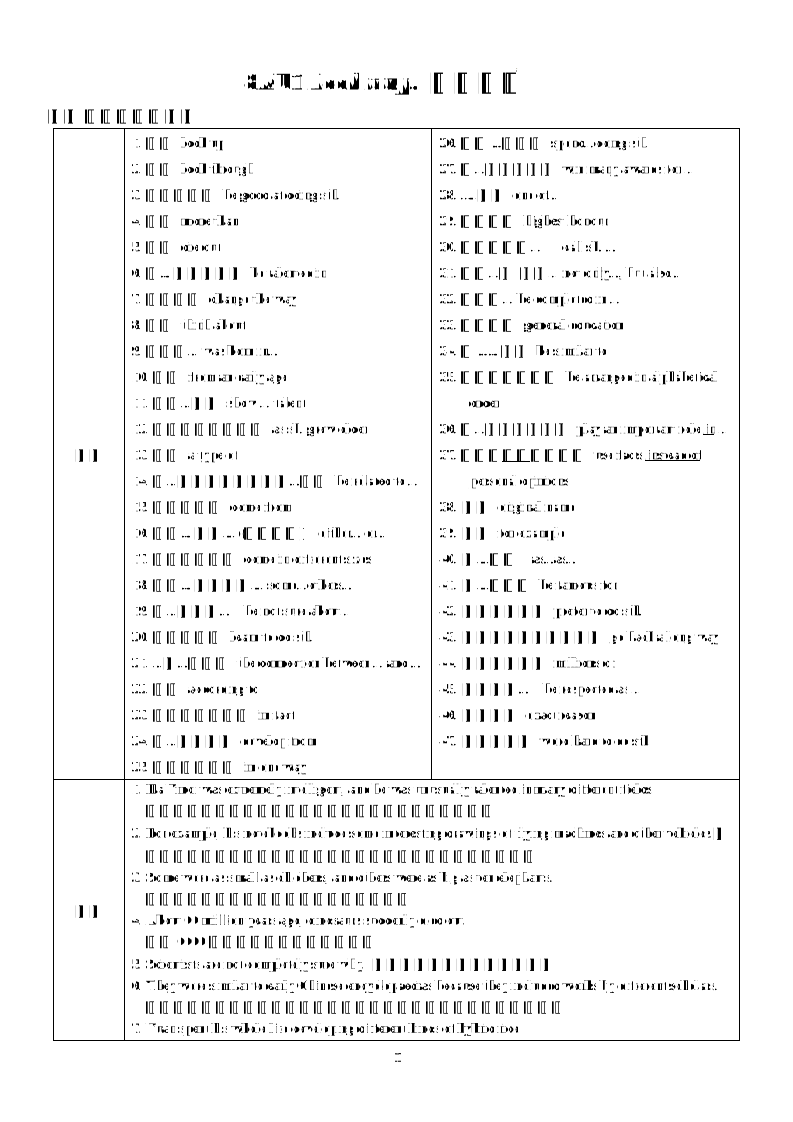
1. 查找 look up
2. 浏览 look through
3. 擅长做某事 be good at doing sth.
4. 多于 more than
5. 灭绝 die out
6. 在…方面有天赋 be talented in
7. 改变方式 change the way
8. 思考 think about
9. 出生于... was born in...
10. 从小 from an early age
11. 展现...天赋 show ... talent
12. 随着某人年龄增长 as sb. grew older
13. 一种 a type of
14. 与...属于同一种类;与...相关 be related to ...
15. 源自,源于 come from
16. 要么…要么… (就近原则) either... or...
17. 有不同的尺寸 come in different sizes
18. 一些…,另一些… some...others...
19. 对...不确定... be not sure about...
20. 学会做某事 learn to do sth.
21. ...和...的联系 the connection between ... and ...
22. 根据 according to
23. 事实上,实际上 in fact
24. 由...发展而成 develop from
25. 在某种程度上 in one way
26. 花费…做某事 spend...doing sth.
27. 因...获得许多奖 win many awards for ...
28. .…之一 one of...
29. 最高荣誉 highest honour
30. 称呼某人为... call sb. ...
31. 不仅..., 而且... not only..., but also...
32. 完成于... be completed in ...
33. 通识教育 general education
34. 与……相似 be similar to
35. 按字母顺序排序 be arranged in alphabetical order
36. 在...起到重要作用 play an important role in ...
37. 用事实而非个人观点 use facts instead of personal opinions
38. 原名 original name
39. 例如 for example
40. 像…一样 as...as...
41. 因…而著名 be famous for
42. 更喜欢做某事 prefer to do sth.
43. 历史悠久(时间追溯) go back a long way
44. 数以百万计的 millions of
45. 被尊称为... be respected as ...
46. 具体原因 exact reason
47. 努力做某事 word hard to do sth.
句型
1. Da Vinci was extremely intelligent, and he was unusually talented in many different fields.
达芬奇非常聪明,他在很多不同的领域都有非凡的才能。
2. For example, his notebooks include some interesting drawings of flying machines and other vehicles.例如,他的笔记本中有一些有趣的飞行器和其他交通工具的图画。
3. Some were as small as chickens, and others were as big as ten elephants.
有些像鸡一样小,有些像十头大象一样大。
4. About 66 million years ago, dinosaurs suddenly died out.
大约6600万年前,恐龙突然灭绝了。
5. Scientists are not completely sure why. 科学家们并不完全确定原因。
6. They were similar to early Chinese encyclopaedias because they included works by different scholars. 它们与早期的中国百科全书相似,因为它们包含了不同学者的作品。
7. Yuan spent his whole life developing different kinds of hybrid rice.
袁隆平一生致力于杂交水稻的培育。
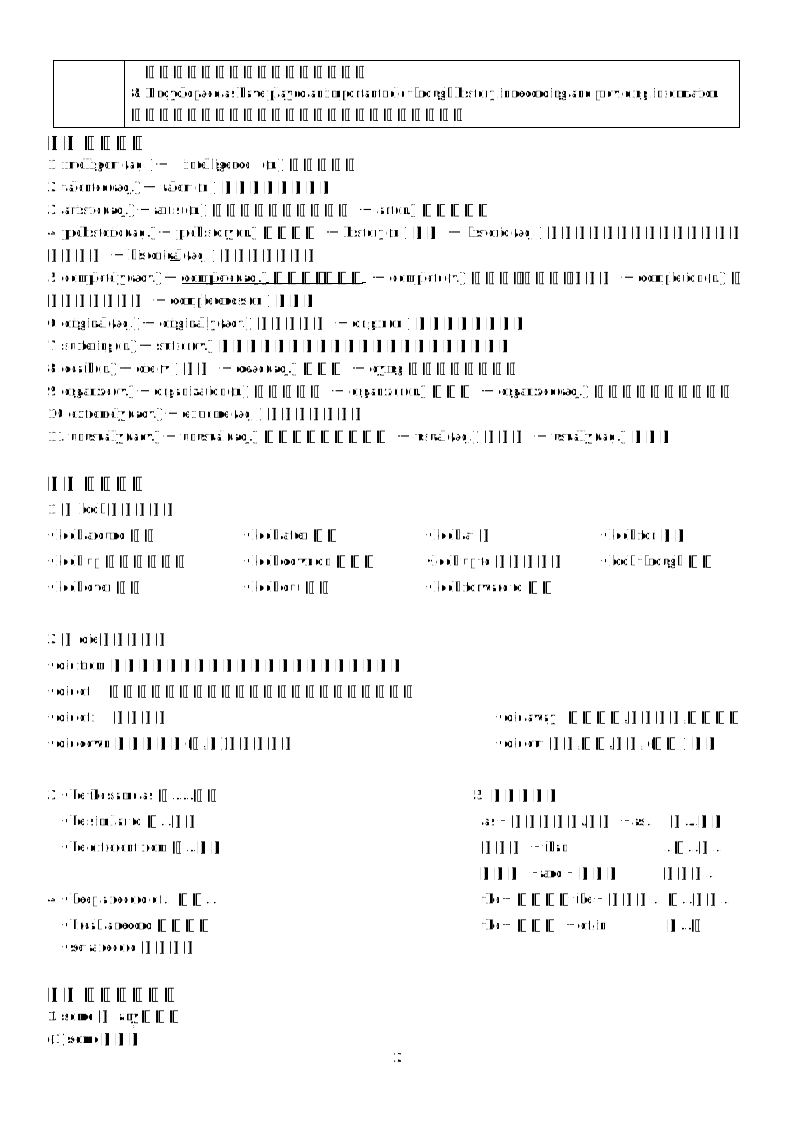
8. Encyclopaedias have played an important role through history in recording and providing information.百科全书在历史中扮演了记录和提供信息的重要角色。
2、 词性转换
3、
1. intelligent (adj.) → intelligence (n.) 才智;智慧
2. talented (adj.) → talent (n.) 天才;天资;天赋
3. artistic (adj.) → artist (n.) 艺术家;(尤指)画家 → art (n.) 艺术;美术
4. prehistoric (adj.) → prehistory (n.) 史前时期 → history (n.) 历史 → historic (adj.) 历史上著名(或重要)的;可名垂青史的 → historical (adj.) (有关)历史的
5. completely (adv.) → complete (adj.) 完全的;彻底的 → complete (v.) 使完整;使完全;使完美 → completion (n.) 完成;结束;完工 → completeness (n.) 完整性
6. original (adj.) → originally (adv.) 原来;起初 → origin (n.) 起源;源头;起因
7. suffering (n.) → suffer (v.) (因疾病、痛苦、悲伤等)受苦,受难,受折磨
8. death (n.) → die (v.) 死亡 → dead (adj.) 死亡的 → dying (现在分词形式)
9. organize (v.) → organization (n.) 安排;组织 → organizer (n.) 组织者 → organized (adj.) 安排有序的;有条理的
10. extremely (adv.) → extreme (adj.) 极度的;极端的
11. unusually (adv.) → unusual (adj.) 不同寻常的;独特的 → usual (adj.) 通常的 → usually (adj.) 通常地
4、 短语辨析
5、
1. 与look相关的短语
• look around 环顾 • look after 照顾 • look at 看 • look for 寻找
• look up 向上看;查阅 • look down on 瞧不起 •look up to 尊敬;钦佩 • look through 浏览
• look over 检查 • look out 小心 • look forward to 期待
2. 与die相关的短语
• die from (因受伤、事故、严寒等身体外部原因)而死亡
• die of (因情感、饥寒、生病、年老等内部原因)而死亡
• die off 相继死去 • die away 声音变弱,渐渐模糊,逐渐消失
• die down 慢慢地熄灭(风,火),逐渐暗淡 • die out 熄灭,变弱,消失, (动物) 灭绝
3. • be the same as 和......一样 5. 比较句型:
• be similar to 和...类似 as + 原级形容词/副词 + as... 像…一样
• be different from 和...不同 比较级 + than ...比...更...
比较级 + and + 比较级 越来越...
4. • keep a record of... 记录... the + 比较级,the + 比较级... 越...就越...
• break a record 打破记录 the + 最高级 + of/in 最...的
• set a record 创造纪录
6、 语法知识梳理
1. some 和any的用法
(1) some的用法
A. 用于肯定句,修饰可数名词复数或不可数名词,表 “一些、若干”。
e.g. I have some books. 我有一些书。
B. 用于希望得到肯定回答的疑问句(如请求、邀请),表 “一些”。常见句型:Would you/Could you...? Why not ...?
e.g. Would you pass me some pears? 你能递给我一些梨吗?
Why not have some snacks? 为什么不吃些零食呢?
C. 用于肯定句中表 “某个”,后接可数名词单数。
E.g. She works in some company in Beijing. 她在北京某家公司上班。
some多用于肯定句,any多用于否定句和疑问句。
D. 用在条件句中,当条件句的核心是 “希望、期待假设的情况成为现实”,且说话人隐含 “希望得到肯定结果”(类似 some 在请求类疑问句中的用法)时,可用 some,强调 “希望有一些(而非任意)”。
If there are some seats left, we’ll stay for the concert. 如果还有一些座位,我们就留下来听音乐会。
(2) any的用法
A. 用于否定句、一般疑问句,修饰可数名词复数或不可数名词,表 “一些 / 任何”。
e.g. He doesn’t have any friends here.他在这里没有任何朋友。
Do you have any plans for the weekend? 你周末有什么计划吗?
B. 用于肯定句表 “任何”,后接可数名词单数或不可数名词,强调 “无论哪个 / 何种”。
e.g. You can choose any color you like. 你可以选任何你喜欢的颜色。
Any student can join the club. 任何学生都能加入这个俱乐部。
C. 条件句中,用 any(表 “任何 / 无论是否存在”),通常不预设 “事物一定存在”,覆盖 “有或没有” 的泛指可能性,后接可数名词复数或不可数名词。
e.g. If you have any problems, don’t hesitate to call me. 如果你有任何问题,随时打电话给我。
If you have any time, help me.如果你有时间,帮帮我。
(3) 与 “of 短语” 搭配
some/any 后接 of 时,of 后面必须是 “限定词 + 名词”(如 my、the、these)或代词宾格(如 us、them),不能直接接名词。
e.g. Some of my friends are coming. 我的一些朋友要来。
(4) 用法口诀:
一般情况用 any,“任何 / 无论有否” 表泛指;
希望期待用 some,“一些 / 真的有” 表渴望;
any 接单数表 “任一”,some 单数表 “某个” 不可取。
2. 复合不定代词
(1) 复合不定代词的构成
复合不定代词是由some/any/no/every + -one/-body/-thing/-where 构成的代词,泛指人、物、地点。
-one
-body
-thing
-where
some-
表 “一些 / 某个”,偏肯定 / 期待
someone
某人
somebody
某人
something
某事
somewhere
某处
any-
表 “任何 / 任一”,偏疑问 / 否定
anyone
任何人
anybody
任何人
anything
任何事
anything
任何地方
no-
表 “没有”,表否定
no one
没有人
nobody
没有人
nothing
没有事
nothing
无处
every-
表 “每个 / 所有”,表全部
everyone
每个人
everybody
每个人
everything
每件事
everything
到处
其中,-one 和 -body 用法完全一致(如 someone = somebody),可互换,前者稍正式,后者更口语化。
指地点的复合不定代词(somewhere/anywhere 等),本质是 “地点副词”,后不接介词 (如 “去某处” 说 go somewhere,不说 go to somewhere)
(2) 复合不定代词的用法
A. 复合不定代词做主语时,因其本身是 “单数概念”(即使指代多个对象,也表 “整体 / 泛指”),谓语动词必须用三单形式。
e. g. Everything is possible. 凡事皆有可能。
Everyone likes this song.每个人都喜欢这首歌。
B. 形容词、else、不定式(to do)、介词短语等修饰复合不定代词时,必须放在复合不定代词之后。
Is there anything important these days? 这些天有任何重要的事情吗?
She met someone from her hometown. 她碰到了一个同乡。
There’s nothing to worry about. 没什么好担心的。
C. some-和any-构成的复合不定代词与some的用法一致。注意避免双重否定。
no- 类代词本身已含否定含义(= not any...),不能再和 not 连用(否则构成双重否定,语义混乱)。若要加强否定,可用 “not + any- 类代词”,或直接用 no- 类代词。
e.g. I saw no one in the room. = I didn’t see anyone in the room. 我在房间里没看到任何人。
There’s nothing wrong with the machine.= There isn’t anything wrong with the machine. 机器没问题。
D. 与 of 搭配:仅 any-/every- 可接 of,但of 后必须是 “限定词 + 名词”(如 my, the, these)或代词宾格(如 us, them)
e.g. Any of you can take this book. 你们中的任何人都能拿这本书。
Everyone of the team members worked hard. 团队里的每个人都很努力。
E. 常见固定搭配。
something like...(有点像……):That’s something like a plan. 那有点像个计划。
nothing but...(只不过是……):He did nothing but watch TV all day. 他一整天除了看电视什么也没做。
anything but...(根本不……):This book is anything but boring. 这本书一点也不无聊。
somewhere around...(大约……):The cost is somewhere around 100 yuan. 费用大约 100 元。
everyone except...(除了…… 之外所有人):Everyone except Tom attended the meeting. 除了汤姆,所有人都参加了会议。
(3) 复合不定代词的用法口诀
三单谓语是核心,定语后置勿前置;
some- 肯定 / 请求,any- 疑问 / 否定 / 任指;
no- 本身表否定,双重否定要回避;
地点副词不加 to,of 搭配看前缀。
3
学科网(北京)股份有限公司
学科网(北京)股份有限公司
$
资源预览图
1
2
相关资源
由于学科网是一个信息分享及获取的平台,不确保部分用户上传资料的 来源及知识产权归属。如您发现相关资料侵犯您的合法权益,请联系学科网,我们核实后将及时进行处理。