期中复习之单元语法综合练(Units1-3)-2025-2026学年八年级英语上学期期中复习(仁爱科普版2024)
2025-10-31
|
2份
|
21页
|
573人阅读
|
28人下载

内容正文:
期中复习之单元语法综合练
(Units 1-3)
Unit 1 My Dream Job 一般将来时和名词构词法
Unit 2 The World of Art 不定代词/副词和感叹句
Unit 3 Sound Body, Sound Mind 否定前缀和情态动词need
Unit 1 My Dream Job 一般将来时和名词构词法
1.There ________ a sports meeting in our school next week.
A.is going to have B.will have C.is going to be
2.—What are you saving money for?
—My mother’s birthday is coming soon. I ________ a gift for my mom.
A.buy B.bought C.am going to buy
3.The students ________ the library after school tomorrow afternoon.
A.are going to clean B.were cleaning C.cleaned
4.If you want to visit the Palace Museum tomorrow, I ________ tickets for you.
A.will book B.booked C.book D.was booking
5.If people keep on cutting down trees, there soon ________ enough forests for animals to live in.
A.won’t have B.aren’t C.won’t be
6.—What’s your plan for the weekend, John?
—I ________ my uncle and aunt.
A.visit B.visited C.am going to visit D.would visit
7.—________ you ________ a poster for the art festival next month?
—Yes, I plan to draw the outline this evening.
A.Are; going to make B.Do; make C.Did; make
8.—What is your brother’s plan for this coming winter holiday?
—I am not sure if he ________ to Harbin with his friends.
A.go B.goes C.will go
9.My classmates ________ the Beijing Garden Expo (北京园博园) next Sunday.
A.visits B.visited C.are going to visit
10.I’m not sure if it ________ tomorrow. If it ________, we’ll cancel the picnic.
A.will rain; rains B.rains; will rain
C.will rain; will rain D.rains; rains
11.The rule you should pay attention to ________ you become a better person. So please follow it!
A.will help B.help C.helping
12.Mary ________ a snowman next week.
A.makes B.is going to make C.is making
13.What is he going ________ next week?
A.buy B.buys C.to buy
14.We _________ a picnic tomorrow.
A.are having B.had C.have D.will have
15.—Are you free tomorrow?
—No, there ________ a meeting tomorrow morning.
A.is B.has C.will be D.will have
16.We will have a discussion about it ________.
A.three days ago B.last night C.yesterday D.in three days
17.We can add the suffix “er” to the following words to form a new word EXCEPT ________.
A.report B.visit C.paint
18.Which of the following words can be added the suffix “-ist” to ________ form a noun?
A.dance B.win C.visit D.piano
19.—Which one of the following words has a suffix as the word “actor”?
—It’s _________.
A.soccer B.reporter C.fever D.cheer
20.Which of the following words is formed in the same way as “kindness”?
A.rubber B.uncertain C.railway D.action
Unit 2 The World of Art 不定代词/副词和感叹句
21.—Is there in today’s newspaper?
—No. No one wants to read it.
A.anything interesting B.something interesting
C.interesting anything D.interesting something
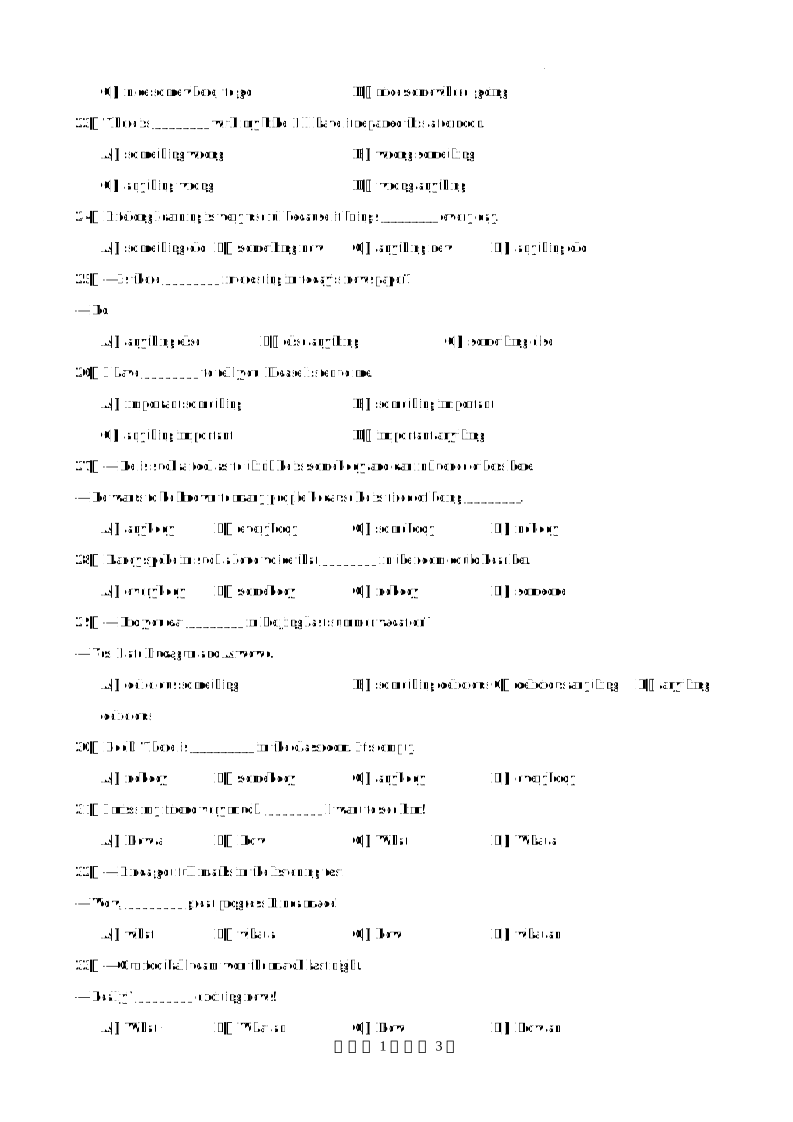
22.—Lucy, let’s go ________ this summer vacation.
—OK. I suggest ________ to Xi’an, an ancient city.
A.somewhere nice; to go B.somewhere nice; going
C.nice somewhere; to go D.nice somewhere; going
23.There is ________ with my bike. I’ll have it repaired this afternoon.
A.something wrong B.wrong something
C.anything wrong D.wrong anything
24.Lifelong learning is very useful because it brings ________ every day.
A.something old B.something new C.anything new D.anything old
25.—Is there ________ interesting in today’s newspaper?
—No.
A.anything else B.else anything C.something else
26.I have ________ to tell you. Please listen to me.
A.important something B.something important
C.anything important D.important anything
27.—He is such a fool as to think he is somebody and can influence others here.
—He wants to be known to many people because he is tired of being ________.
A.anybody B.everybody C.somebody D.nobody
28.Nancy spoke in such a loud voice that ________ in the room could hear her.
A.everybody B.somebody C.nobody D.someone
29.—Did you eat ________ in Beijing last summer vacation?
—Yes. I ate Lüdagun and Aiwowo.
A.delicious something B.something delicious C.delicious anything D.anything delicious
30.Look! There is _________ in the classroom. It’s empty.
A.nobody B.somebody C.anybody D.everybody
31.I miss my friend very much. ________ I want to see him!
A.How a B.How C.What D.What a
32.—Linda got full marks in the listening test.
—Wow, ________ great progress Linda made!
A.what B.what a C.how D.what an
33.—Our football team won the match last night.
—Really? ________ exciting news!
A.What B.What an C.How D.How an
34.—________ useful advice on English learning Mr. Li gave us!
—I agree.
A.What B.What a C.How D.How a
35.—________ interesting lantern guessing game!
—Yes. I was so excited that I tried it again and again.
A.What B.How C.What an D.How an
36._________ exciting experience they had at the V-Day military parade (胜利日阅兵) last weekend!
A.What a B.What an C.How D.What
37.________ great advice he gave to me!
A.What a B.How a C.What D.How
38.— Peter, ________ difficulty I had getting the job! — Congratulations!
A.How B.What a C.How a D.What
39.—________ film Born to Fly is! I really hope to watch it again.
—So do I. It is the best film that I’ve ever watched.
A.How great B.How a great C.What a great
40.—We Chengdu people can take a fast train to Hong Kong directly now.
—________ good news!
A.What a B.How C.What
Unit 3 Sound Body, Sound Mind 否定前缀和情态动词need
41.Which of the following words doesn’t have a prefix (前缀)?
A.untidy B.important C.impatient D.unhealthy
42.Which of the following words can’t be added a prefix “im” to?
A.polite B.patient C.active D.possible
43.Which of the follow prefixes (前缀) doesn’t mean “without”?
A.un- B.im- C.in- D.re-
44.Which of the following words CANNOT be added the prefix (前缀) “un-” to give it the opposite meaning?
A.Happy B.Healthy C.Usual D.expensive
45.He ________ buy a new bike. The old one still works well.
A.doesn’t have B.needn’t C.don’t need to
46.With the smart fridge, you _______ worry about what to eat!
A.needn’t B.don’t need C.needn’t to D.don’t have
47.—Must I wear warm clothes?
—No, you ________. It’s warm these days.
A.mustn’t B.can’t C.needn’t
48.In fact, he ________ do all the tasks.
A.needn’t B.doesn’t need C.need to D.not need
49.You ________ worry about the show. Everything will be perfect.
A.can’t B.mustn’t C.shouldn’t D.needn’t
50.You _______ shopping with us this afternoon if you have something important to do.
A.needn’t to go B.don’t need go C.don’t need going D.needn’t go
51.—Must I give you the book now?
—No, you ________.
A.can’t B.mustn’t C.needn’t
52.Jack ________ any help. He can do it by himself.
A.needs not B.needn’t
C.doesn’t need D.needn’t to
53.—Must we wear the school clothes tomorrow, Mr. Wang?
—No, you________. Only on Mondays. Tomorrow is Tuesday.
A.mustn’t B.needn’t
C.can’t D.shouldn’t
54.—Must I take an umbrella, mum?
—No, you ________. It’s a fine day today.
A.can’t B.shouldn’t C.needn’t
55.Tommy has already finished his report, so he ________ work on it any more.
A.doesn’t need B.needn’t to C.needs to D.doesn’t need to
56.Simon, you ________ do your homework today. Leave it till tomorrow.
A.needn’t to B.not need to C.don’t need D.don’t need to
57.You __________ return the book today. You can keep it until next week.
A.needn’t B.shouldn’t C.mustn’t D.can’t
58.We _________ learn from him, since he is not a model student.
A.can’t B.mustn’t C.needn’t D.shouldn’t
59.—Must I clean the room now?
—No, you ________. You can do it later.
A.needn’t B.can’t C.may not
60.— Where’s my raincoat, mom?
— It’s such a fine day today. You ________ take a raincoat with you.
A.can’t B.mustn’t C.needn’t
试卷第1页,共3页
试卷第1页,共3页
学科网(北京)股份有限公司
$
期中复习之单元语法综合练
(Units 1-3)
Unit 1 My Dream Job 一般将来时和名词构词法
Unit 2 The World of Art 不定代词/副词和感叹句
Unit 3 Sound Body, Sound Mind 否定前缀和情态动词need
Unit 1 My Dream Job 一般将来时和名词构词法
1.There ________ a sports meeting in our school next week.
A.is going to have B.will have C.is going to be
【答案】C
【详解】句意:下周,在我们学校将举行一场运动会。
考查there be句型的将来时。根据时间状语 next week可知,用一般将来时。there be句型表示“存在”,其将来时为“there will be”或“there is going to be”。故选C。
2.—What are you saving money for?
—My mother’s birthday is coming soon. I ________ a gift for my mom.
A.buy B.bought C.am going to buy
【答案】C
【详解】句意:——你存钱干什么?——我妈妈的生日快到了。我打算给我妈妈买礼物。
考查时态。根据“My mother’s birthday is coming soon”可知,是指打算为妈妈买礼物,表示将来的计划或打算,用一般将来时be going to do的结构。故选C。
3.The students ________ the library after school tomorrow afternoon.
A.are going to clean B.were cleaning C.cleaned
【答案】A
【详解】句意:——学生们明天下午放学后将要去打扫图书馆。
考查动词时态。根据句中的时间“tomorrow afternoon”可知,动作还没有发生,应用一般将来时,故选A。
4.If you want to visit the Palace Museum tomorrow, I ________ tickets for you.
A.will book B.booked C.book D.was booking
【答案】A
【详解】句意:如果你明天想去参观故宫博物院,我会为你订票。
考查动词时态。will book将会预定,一般将来时;booked预定,一般过去时;book预定,一般现在时;was booking正在预定,过去进行时。根据“If you want to visit the Palace Museum tomorrow”可知,此句是if引导的条件状语从句,遵循“主将从现”原则,即主句用一般将来时,从句用一般现在时,所以此处应用一般将来时will book。故选A。
5.If people keep on cutting down trees, there soon ________ enough forests for animals to live in.
A.won’t have B.aren’t C.won’t be
【答案】C
【详解】句意:如果人们继续砍伐树木,很快就不会有足够的森林供动物居住了。
考查there be句型和时态。分析句子结构可知,此句是there be句型,表示“某地有某物”;再根据“If people keep on cutting down trees”可知,如果人们继续砍伐树木,那么很快就不会有足够的森林供动物居住了,因此这里用there be句型的一般将来时结构“there won’t be”表示“将不会有”。故选C。
6.—What’s your plan for the weekend, John?
—I ________ my uncle and aunt.
A.visit B.visited C.am going to visit D.would visit
【答案】C
【详解】句意:——约翰,你周末有什么计划?——我打算去看望我的叔叔和阿姨。
考查时态。根据“What’s your plan for the weekend”可知,问句是询问计划,答语应用一般将来时be going to do结构。故选C。
7.—________ you ________ a poster for the art festival next month?
—Yes, I plan to draw the outline this evening.
A.Are; going to make B.Do; make C.Did; make
【答案】A
【详解】句意:——你打算为下个月的艺术节制作一张海报吗?——是的,我计划今晚画轮廓。
考查动词时态辨析。根据句中“next month”可知,句子需用一般将来时,谓语结构有两种,will do或是be going to do,选项A符合语境,故选A。
8.—What is your brother’s plan for this coming winter holiday?
—I am not sure if he ________ to Harbin with his friends.
A.go B.goes C.will go
【答案】C
【详解】句意:——你哥哥对即将到来的寒假有什么计划?——我不确定他是否会和他的朋友们去哈尔滨。
考查宾语从句的时态。根据“this coming winter holiday”可知,动作发生在将来,宾语从句用一般将来时,其结构为will+动词原形。故选C。
9.My classmates ________ the Beijing Garden Expo (北京园博园) next Sunday.
A.visits B.visited C.are going to visit
【答案】C
【详解】句意:我的同学们下周日打算去参观北京园博园。
考查一般将来时。根据“next Sunday”可知,这是一般将来时的时间标志,“be going to + 动词原形”可表示将来的计划或打算。故选C。
10.I’m not sure if it ________ tomorrow. If it ________, we’ll cancel the picnic.
A.will rain; rains B.rains; will rain
C.will rain; will rain D.rains; rains
【答案】A
【详解】句意:我不确定明天是否会下雨。如果下雨,我们就取消野餐。
考查时态。第一空是if 引导宾语从句(表“是否”),时态需根据从句的时间状语调整,若从句有未来时间,需用一般将来时(will + 动词原形),根据“tomorrow”可知,用一般将来时态,即will rain;第二空是if 引导条件状语从句(表“如果”),时态需遵循“主将从现”规则——主句用一般将来时,从句用一般现在时(表未来含义),根据“we’ll cancel the picnic”可知,主句用了将来时态,则从句用一般现在时态,且主语“it”是第三人称单数,所以用rains。故选A。
11.The rule you should pay attention to ________ you become a better person. So please follow it!
A.will help B.help C.helping
【答案】A
【详解】句意:你应该注意的规则将帮助你成为一个更好的人。所以请遵守它!
考查时态。will help一般将来时;help动词原形,用于一般现在时;helping现在分词,用于现在进行时。根据“The rule you should pay attention to... you become a better person.”可知,此处强调遵守规则对未来的影响,时态为一般将来时。故选A。
12.Mary ________ a snowman next week.
A.makes B.is going to make C.is making
【答案】B
【详解】句意:玛丽下周要堆雪人。
考查动词时态。根据“next week”可知,该句是一般将来时,其结构为“be going to do”,故选B。
13.What is he going ________ next week?
A.buy B.buys C.to buy
【答案】C
【详解】句意:他下周打算买什么?
考查be going to结构。be going to do sth“打算做某事”,固定短语,故选C。
14.We _________ a picnic tomorrow.
A.are having B.had C.have D.will have
【答案】D
【详解】句意:我们明天将要去野餐。
考查动词时态。根据“tomorrow”可知是一般将来时。故选D。
15.—Are you free tomorrow?
—No, there ________ a meeting tomorrow morning.
A.is B.has C.will be D.will have
【答案】C
【详解】句意:——你明天有空吗? ——没有,明天早上有一场会议。
考查there be句型的一般将来时。根据“there … a meeting…”可知,此处为there be句型:表示“某地/某时存在某物/某人”,其基本结构为“there +be动词+主语+地点/时间状语”,本身已包含“存在”的含义,不能与表示“拥有”的动词“have/has”混用,排除B和D;再根据“tomorrow morning”可知,句子时态为一般将来时,其结构为:There is/are going to be…或There will be…,排除A。故选C。
16.We will have a discussion about it ________.
A.three days ago B.last night C.yesterday D.in three days
【答案】D
【详解】句意:我们将在三天后就此事进行讨论。
考查时间状语的辨析。three days ago三天前;last night昨晚;yesterday昨天;in three days三天后。根据“We will have a discussion about it ...”可知,will have是一般将来时,in three days是一般将来时的时间状语。故选D。
17.We can add the suffix “er” to the following words to form a new word EXCEPT ________.
A.report B.visit C.paint
【答案】B
【详解】句意:除了visit,我们可以在下面的单词上加上后缀“er”形成一个新词。
考查动词的名词形式。report报道;visit参观;paint用颜料画。根据题干可知,此处是让在单词中加上后缀“er”,使之成为新的单词,report—reporter“记者”,名词,paint—painter“画家”,名词,visit不能加er,应在其后加“or”变为新单词,即visit—visitor“游客”,故此处是除了visit以外。故选B。
18.Which of the following words can be added the suffix “-ist” to ________ form a noun?
A.dance B.win C.visit D.piano
【答案】D
【详解】句意:下列哪一个单词我们可以加后缀“-ist”变为名词?
考查单词派生。dance跳舞,后面加r构成名词dancer“舞者”;win赢,获胜,后面加ner构成名词winner“获胜者,赢家”;visit参观,拜访,后面加or构成名词visitor“参观者”;piano“钢琴”,去o加ist构成名词pianist“钢琴家”。故选D。
19.—Which one of the following words has a suffix as the word “actor”?
—It’s _________.
A.soccer B.reporter C.fever D.cheer
【答案】B
【详解】句意:——以下哪个单词和“actor”一词有相同的后缀?——是“reporter”。
考查构词法。actor演员,是由单词“act”和后缀“or”构成的;soccer足球,无后缀;reporter记者,是由单词“report”和后缀“er”构成的;fever发烧,无后缀;cheer欢呼,无后缀。故选B。
20.Which of the following words is formed in the same way as “kindness”?
A.rubber B.uncertain C.railway D.action
【答案】D
【详解】句意:下列哪一个单词的组成形式与单词“kindness”相同?
考查构词法。“kindness”是由形容词“kind”加后缀“-ness”构成名词;rubber橡胶,直接构成;uncertain不确定的,前缀un + 形容词certain构成;railway铁路,是两个单词rail和way合成;action行动,是动词act加后缀-ion形成名词。与“kindness”构词方式相同的是D。故选D。
Unit 2 The World of Art 不定代词/副词和感叹句
21.—Is there in today’s newspaper?
—No. No one wants to read it.
A.anything interesting B.something interesting
C.interesting anything D.interesting something
【答案】A
【详解】句意:——今天的报纸上有什么有趣的内容吗?——没有。没人想读它。
考查复合不定代词。根据答语“No one wants to read it.”可知,报纸上没有什么有趣的内容,结合问句是一般疑问句,用“anything interesting”符合语境与语法要求。故选A。
22.—Lucy, let’s go ________ this summer vacation.
—OK. I suggest ________ to Xi’an, an ancient city.
A.somewhere nice; to go B.somewhere nice; going
C.nice somewhere; to go D.nice somewhere; going
【答案】B
【详解】句意:——露西,这个暑假我们去个好地方吧。——好的,我建议去西安这座古城。
考查地点副词和非谓语动词。somewhere是复合不定副词,被形容词修饰时,形容词应后置,排除CD;suggest doing sth.“建议做某事”,动名词作宾语。故选B。
23.There is ________ with my bike. I’ll have it repaired this afternoon.
A.something wrong B.wrong something
C.anything wrong D.wrong anything
【答案】A
【详解】句意:我的自行车有点毛病。我将在今天下午把它修好。
考查定语后置。形容词修饰不定代词时,须位于不定代词之后,作后置定语,故排除选项BD;代词something常用在肯定句,anything常用在否定和一般疑问句。故选A。
24.Lifelong learning is very useful because it brings ________ every day.
A.something old B.something new C.anything new D.anything old
【答案】B
【详解】句意:终身学习是非常有用的,因为它每天都会带来一些新的东西。
考查不定代词。something old一些旧的东西;something new一些新的东西;anything new任何新的东西;anything old任何旧的东西。根据“Lifelong learning is very useful”可知终身学习很有用,所以它每天会带来新的东西,“something”常用于肯定句,“anything”常用于否定句和疑问句,此句是肯定句,用“something new”。故选B。
25.—Is there ________ interesting in today’s newspaper?
—No.
A.anything else B.else anything C.something else
【答案】A
【详解】句意:——今天的报纸上还有其他有趣的事吗?——没有。
考查不定代词。 根据“... interesting in today’s newspaper”可知,复合不定代词受定语修饰时,定语应放在它们后面,此处为一般疑问句,应用anything,else作为后置定语修饰anything。故选A。
26.I have ________ to tell you. Please listen to me.
A.important something B.something important
C.anything important D.important anything
【答案】B
【详解】句意:我有重要的事情要告诉你,请听我说。
考查形容词修饰不定代词。英语中,形容词修饰不定代词时,需后置,即“不定代词+形容词”,由此可排除“important something”和“important anything”;something常用于肯定句,表“某事、某物”;anything常用于否定句或疑问句,表“任何事物”。本句是肯定句,需用something,故选B。
27.—He is such a fool as to think he is somebody and can influence others here.
—He wants to be known to many people because he is tired of being ________.
A.anybody B.everybody C.somebody D.nobody
【答案】D
【详解】句意:——他真是个傻瓜,以为自己是个了不起的人物,能在这里影响别人。——他想让很多人认识他,因为他厌倦了当无名小卒。
考查不定代词辨析。anybody任何人;everybody每个人;somebody某人,重要人物;nobody无名小卒,没人。根据“He wants to be known to many people”可知,他想让很多人认识他,说明他厌倦了当无名小卒,故选D。
28.Nancy spoke in such a loud voice that ________ in the room could hear her.
A.everybody B.somebody C.nobody D.someone
【答案】A
【详解】句意:南希说话声音如此大以至于房间里的每个人都能听到她的声音。
考查不定代词辨析。everybody每个人;somebody某人;nobody没有人;someone某人。根据“Nancy spoke in such a loud voice”可知,说话声音很大,所以房间里的每个人都能听到,用everybody符合语境。故选A。
29.—Did you eat ________ in Beijing last summer vacation?
—Yes. I ate Lüdagun and Aiwowo.
A.delicious something B.something delicious C.delicious anything D.anything delicious
【答案】D
【详解】句意:——去年暑假你在北京吃了什么好吃的吗?——是的。我吃了驴打滚和艾窝窝。
考查不定代词与形容词的用法。something常用于肯定句,anything常用于否定句或疑问句,本句是一般疑问句,应用anything;delicious作形容词,意为“美味的”,形容词修饰不定代词时,需后置。故选D。
30.Look! There is _________ in the classroom. It’s empty.
A.nobody B.somebody C.anybody D.everybody
【答案】A
【详解】句意:看!教室里没有人。它是空的。
考查代词辨析。nobody没有人;somebody某人;anybody任何人;everybody每个人。根据“It’s empty.”可知,教室里没有人。故选A。
31.I miss my friend very much. ________ I want to see him!
A.How a B.How C.What D.What a
【答案】B
【详解】句意:我非常想念我的朋友。我多么想见到他!
考查感叹句的用法。根据“I want to see him”是动词短语,需用“How”引导感叹句,强调程度,此处为“How+主语+谓语”的结构。故选B。
32.—Linda got full marks in the listening test.
—Wow, ________ great progress Linda made!
A.what B.what a C.how D.what an
【答案】A
【详解】句意:——琳达听力测试得了满分。——哇,琳达取得了多么大的进步啊!
考查感叹句引导词辨析。What修饰名词或名词短语;What a修饰可数名词单数,且单词发音以辅音音素开头;How修饰形容词或副词;What an修饰可数名词单数,且单词发音以元音音素开头。根据“…great progress Linda made!”可知,中心词progress是不可数名词,前面不能加不定冠词,What符合语境。故选A。
33.—Our football team won the match last night.
—Really? ________ exciting news!
A.What B.What an C.How D.How an
【答案】A
【详解】句意:——我们的足球队昨晚赢了比赛。——真的吗?多么令人兴奋的消息!
考查感叹句。根据“... exciting news!”可知,句子是感叹句,中心词是不可数名词news,感叹句型用“What+形容词+不可数名词(+主谓)!”。故选A。
34.—________ useful advice on English learning Mr. Li gave us!
—I agree.
A.What B.What a C.How D.How a
【答案】A
【详解】句意:——李老师给了我们多么有用的英语学习建议啊!——我同意。
考查感叹句。根据“... useful advice on English learning Mr. Li gave us!”可知,句子是感叹句,中心词是不可数名词advice,感叹句型用“What+形容词+不可数名词+主谓”。故选A。
35.—________ interesting lantern guessing game!
—Yes. I was so excited that I tried it again and again.
A.What B.How C.What an D.How an
【答案】C
【详解】句意:——多么有趣的猜灯谜游戏啊!——是的。我太兴奋了,所以试了一遍又一遍。
考查感叹句。感叹句构成为:What+a /an+形容词+可数名词单数+主语+谓语!或What+形容词+可数名词复数+主语+谓语!或What+形容词+不可数名词+主语+谓语!或者How+形容词/副词+主语+谓语!根据题干“lantern guessing game”猜灯谜游戏是可数名词,由于interesting是以元音音素开头的单词用an。故选C。
36._________ exciting experience they had at the V-Day military parade (胜利日阅兵) last weekend!
A.What a B.What an C.How D.What
【答案】B
【详解】句意:上周末,他们在胜利日阅兵式上度过了多么激动人心的经历啊!
考查感叹句。感叹句结构有两种:“What+(a/an)+形容词+名词(+主语+谓语)!”和“How+形容词/副词(+主语+谓语)!”。本句中心词为名词experience,应用what引导感叹句;experience“经历”是可数名词单数形式,exciting发音以元音音素开头,前面应用不定冠词an。故选B。
37.________ great advice he gave to me!
A.What a B.How a C.What D.How
【答案】C
【详解】句意:他给了我多好的建议!
考查感叹句。根据“…great advice he gave to me”及标点符号可知是感叹句,advice是不可数名词,用what来引导感叹句,其结构是“What+形容词+不可数名词+主语+谓语”。故选C。
38.— Peter, ________ difficulty I had getting the job! — Congratulations!
A.How B.What a C.How a D.What
【答案】D
【详解】句意:——彼得,我找到这份工作有多难啊!——恭喜你!
考查感叹句。How多么;What a多么一个;How a怎么一个,语法错误;What多么。感叹句常用“What”和“How”引导,二者结构不同:“What”引导的感叹句结构为:①What + a/an + 形容词 + 可数名词单数 + (主语 + 谓语)! 和 ②What + 形容词 + 可数名词复数/不可数名词 + (主语 + 谓语)!;“How”引导的感叹句结构为:① How + 形容词/副词 + (主语 + 谓语)! ② How + 主语 + 谓语! 本题中,被修饰的核心词是“difficulty”,为不可数名词,符合“What + 形容词 + 不可数名词 + (主语 + 谓语)”的结构。故选D。
39.—________ film Born to Fly is! I really hope to watch it again.
—So do I. It is the best film that I’ve ever watched.
A.How great B.How a great C.What a great
【答案】C
【详解】句意:——《长空之王》是一部多么棒的电影啊!我真的很想再看一次。——我也是。这是我看过的最好的电影。
考查感叹句。本句是感叹句,中心词是可数名词单数film,用感叹句型“What a/an+形容词+名词单数+主谓”,形容词是great,不定冠词用a。故选C。
40.—We Chengdu people can take a fast train to Hong Kong directly now.
—________ good news!
A.What a B.How C.What
【答案】C
【详解】句意:——我们成都人现在可以直接坐高铁去香港了。——多好的消息啊!
考查感叹句。分析句子可知,此处为感叹句,news为不可数名词,因此是由what引导的感叹句,结构为“What+形容词+不可数名词+(主语+谓语)!”,故选C。
Unit 3 Sound Body, Sound Mind 否定前缀和情态动词need
41.Which of the following words doesn’t have a prefix (前缀)?
A.untidy B.important C.impatient D.unhealthy
【答案】B
【详解】句意:下列哪个单词没有前缀?
考查构词法。untidy不整洁的,前缀为un-,表示否定;important重要的,无前缀;impatient不耐烦的,前缀为im-,表示否定;unhealthy不健康的,前缀为un-,表示否定。故选B。
42.Which of the following words can’t be added a prefix “im” to?
A.polite B.patient C.active D.possible
【答案】C
【详解】句意:下列哪个单词不能加上前缀“im-”?
考查构词法。polite有礼貌的—impolite无礼貌的;patient耐心的—impatient不耐烦的;active积极的,其反义词是inactive,不是imactive,因此不能加前缀“im-”;possible可能的—impossible不可能的。结合选项可知,选项C符合。故选C。
43.Which of the follow prefixes (前缀) doesn’t mean “without”?
A.un- B.im- C.in- D.re-
【答案】D
【详解】句意:以下哪个前缀的含义不是“没有”?
考查构词法。un-,im-和in-都是否定前缀,表示“没有”,re-表示的是“再,重新”。故选D。
44.Which of the following words CANNOT be added the prefix (前缀) “un-” to give it the opposite meaning?
A.Happy B.Healthy C.Usual D.expensive
【答案】D
【详解】句意:以下哪个单词不能加上前缀“un -”来赋予其相反的意思?
考查构词法。“happy”加上“un -”变成“unhappy”,表示“不开心的”;“healthy”加上“un -”变成“unhealthy”,表示“不健康的”;“usual”加上“un -”变成“unusual”,表示“不寻常的”;“expensive”的反义词是“cheap”,不能通过加“un -”前缀来构成反义词。故选D。
45.He ________ buy a new bike. The old one still works well.
A.doesn’t have B.needn’t C.don’t need to
【答案】B
【详解】句意:他不必买一辆新自行车。那辆旧的还很好用。
考查情态动词。doesn’t have表述错误;needn’t不必;don’t need to主谓不一致。根据“The old one still works well.”可知,他不必买新的。故选B。
46.With the smart fridge, you _______ worry about what to eat!
A.needn’t B.don’t need C.needn’t to D.don’t have
【答案】A
【详解】句意:有了智能冰箱,你就不必担心吃什么了!
考查情态动词need的用法。情态动词“need”,否定形式为“needn’t”,后接动词原形;实义动词“need”,否定形式为“don’t need”,后跟动词不定式;don’t have to没必要,后跟动词不定式。根据“you...worry about what to eat!”可知,空后为动词原形。故选A。
47.—Must I wear warm clothes?
—No, you ________. It’s warm these days.
A.mustn’t B.can’t C.needn’t
【答案】C
【详解】句意:——我必须穿暖和的衣服吗?——不,你不必。这些天天气很暖和。
考查情态动词的否定回答。mustn’t禁止,不允许;can’t不能,不可能;needn’t不必,不需要。根据“Must I...”的一般疑问句结构,其否定回答用“No, you needn’t.”或“No, you don’t have to.”,且结合答句“天气暖和”的语境,此处表达“不必”穿厚衣服。故选C。
48.In fact, he ________ do all the tasks.
A.needn’t B.doesn’t need C.need to D.not need
【答案】A
【详解】句意:事实上,他不需要做所有的任务。
考查动词need的用法。need作情态动词时,need do sth“需要做某事”,否定形式为needn’t do sth,排除D;need作实义动词时,need to do sth“需要做某事”,否定形式为doesn’t need to do sth,排除B。若句子是肯定句且need是实义动词,主语是第三人称,谓语动词用三单,排除C,故选A。
49.You ________ worry about the show. Everything will be perfect.
A.can’t B.mustn’t C.shouldn’t D.needn’t
【答案】D
【详解】句意:你不必担心演出,一切都会很完美。
考查情态动词用法。can’t不能;mustn’t禁止;shouldn’t不应该;needn’t不必。根据“...worry about the show. Everything will be perfect.”可知,没有必要担心,一切都会很完美,故选D。
50.You _______ shopping with us this afternoon if you have something important to do.
A.needn’t to go B.don’t need go C.don’t need going D.needn’t go
【答案】D
【详解】句意:如果你有重要的事情要做,今天下午你不需要和我们去购物。
考查动词need。need可以当情态动词,也可以当实义动词,意为“需要”,否定形式为needn’t do和don’t need to do“不需要做”。结合选项可知,只有D选项符合。故选D。
51.—Must I give you the book now?
—No, you ________.
A.can’t B.mustn’t C.needn’t
【答案】C
【详解】句意:——我必须现在给你书吗?——不,你不必。
考查情态动词。can’t不能;mustn’t禁止;needn’t不需要。根据答语中的“No, ”可知,为否定回答。以must开头的一般疑问句,肯定回答还用must;而否定回答一般借助于needn’t或don’t have to,表示“没必要”。故选C。
52.Jack ________ any help. He can do it by himself.
A.needs not B.needn’t
C.doesn’t need D.needn’t to
【答案】C
【详解】句意:杰克不需要任何帮助。他可以自己做这件事。
考查动词。need有两种词性,一种是情态动词,没有时态和三单变化,表示“需要”,其后接动词原形构成谓语;另一种是实义动词,本身充当谓语,有时态和三单变化,表示“需要”,其后接sth或to do作宾语。情态动词的否定直接在其后加not,实义动词的否定要借助助动词;根据设空处后的名词“any help”,可知此处need为实义动词,其否定要借助助动词,故选C。
53.—Must we wear the school clothes tomorrow, Mr. Wang?
—No, you________. Only on Mondays. Tomorrow is Tuesday.
A.mustn’t B.needn’t
C.can’t D.shouldn’t
【答案】B
【详解】句意:——王老师,我们明天必须穿校服吗?——不,你们不必。只有在每周一穿。明天是周二。
考查情态动词。mustn’t表示禁止;needn’t不必;can’t不能;shouldn’t不应该。以Must开头的一般疑问句,否定回答用needn’t。故选B。
54.—Must I take an umbrella, mum?
—No, you ________. It’s a fine day today.
A.can’t B.shouldn’t C.needn’t
【答案】C
【详解】句意:——妈妈,我必须带伞吗?——不,你不必。今天天气很好。
考查情态动词。can’t不能;shouldn’t不应该;needn’t不必。根据“Must I take an umbrella, mum?”可知,must提问的一般疑问句,其否定句可用needn’t回答。故选C。
55.Tommy has already finished his report, so he ________ work on it any more.
A.doesn’t need B.needn’t to C.needs to D.doesn’t need to
【答案】D
【详解】句意:Tommy已经完成了他的报告,所以他不需要再做了。
考查动词。根据“Tommy has already finished his report”可知,他不需要再做了,排除C;need情态动词,need sth.“需要做某事”, needn’t do sth.“不需要做某事”,排除A与B;need实义动词,need to do sth.“需要做某事”,doesn’t/don’t need to do sth.“不需要做某事”。故选D。
56.Simon, you ________ do your homework today. Leave it till tomorrow.
A.needn’t to B.not need to C.don’t need D.don’t need to
【答案】D
【详解】句意:西蒙,你今天不需要做作业。留到明天吧。
考查need用法。need可以作为情态动词或实义动词,作为情态动词时,后加动词原形,A选项错误,排除;B选项形式错误,排除;need作实义动词时,常用结构为:need to do sth“需要做某事”,排除C。故选D。
57.You __________ return the book today. You can keep it until next week.
A.needn’t B.shouldn’t C.mustn’t D.can’t
【答案】A
【详解】句意:你今天不必还书。你可以借到下周。
考查情态动词。needn’t不必;shouldn’t不应该;mustn’t禁止;can’t不能。根据“ You can keep it until next week.”可知,可以借到下周再还,所以今天不必还书,故选A。
58.We _________ learn from him, since he is not a model student.
A.can’t B.mustn’t C.needn’t D.shouldn’t
【答案】C
【详解】句意:我们不需要向他学习,因为他不是一个模范学生。
考查情态动词。can’t不能;mustn’t表禁止;needn’t不需要;shouldn’t不应该,根据空后的“since he is not a model student”可知,因为他不是模范学生,所以我们不需要向他学习,故选C。
59.—Must I clean the room now?
—No, you ________. You can do it later.
A.needn’t B.can’t C.may not
【答案】A
【详解】句意:——我必须现在打扫房间吗?——不必。你可以稍后再做。
考查情态动词。needn’t没必要;can’t不可以;may not可能不。用must提问的否定回答应该是needn’t或don’t have to,意为“不必”,故选A。
60.— Where’s my raincoat, mom?
— It’s such a fine day today. You ________ take a raincoat with you.
A.can’t B.mustn’t C.needn’t
【答案】C
【详解】句意;——妈妈,我的雨衣在哪里?——今天天气很好。你不必随身带雨衣。
考查情态动词。can’t 不能;musn’t禁止;needn’t不需要。根据“It’s such a fine day today. ”可知,妈妈说是个好天气,不需要带雨伞。故选C。
试卷第1页,共3页
试卷第1页,共3页
学科网(北京)股份有限公司
$
资源预览图

1

2
3
所属专辑

相关资源
示范课
由于学科网是一个信息分享及获取的平台,不确保部分用户上传资料的 来源及知识产权归属。如您发现相关资料侵犯您的合法权益,请联系学科网,我们核实后将及时进行处理。