精品解析:湖南省株洲第一职业技术学校2022-2023学年高三上学期期中考试英语试题
 切换试卷
切换试卷
2025-10-27
|
2份
|
22页
|
66人阅读
|
0人下载
内容正文:
株洲第一职业技术学校
2022年下学期期中考试试卷
一、单项选择。(每题1分,共20分)
1. Tony is ________ boy. He can swim and skate well.
A a 11-year-old B. an 11-year-old
C. a 11-years-old D. an 11-years-old
【答案】B
【解析】
【详解】考查复合形容词和冠词辨析。句意:托尼是一个11岁的男孩。他游泳和滑冰都很好。根据句意和选项可知,空处修饰名词 boy,表示“一个11岁的”,应用复合形容词“11-year-old”,其中year用单数形式;又因为“eleven”,发音以元音音素/ɪ/开头,所以前面要用不定冠词an。故选B。
2. China ________ great achievements in science and technology since 2012.
A. makes B. made C. has made D. had made
【答案】C
【解析】
【详解】考查现在完成时。句意:2012年以来,中国科技事业取得了巨大成就。“since 2012”是现在完成时的标志词,故本句用现在完成时,现在完成时的构成是“have/has + 过去分词”;“China”是第三人称单数,所以用“has”,“make”的过去分词是“made”,因此选择“has made”。故选C。
3. Listen! Our teachers ________ folk songs in the next room.
A. are singing B. were singing C. sing D. sang
【答案】A
【解析】
【详解】考查现在进行时。句意:听!我们的老师正在隔壁房间唱民歌。Listen“听”为现在进行时的标志,现在进行时的形式为“am/is/are + doing”,主语Our teachers是复数,be动词用are。故选A。
4. The medicine ________ millions of people’s lives since it was put into use.
A. is saving B. will save C. has saved D. had saved
【答案】C
【解析】
【详解】考查现在完成时。句意:该药自投入使用以来已挽救了数百万人的生命。根据“since it was put into use.”可知,此句为现在完成时,其结构为:have/has+done,主语“The medicine”是第三人称单数,故用has。故选C。
5. We’re proud that China ________ stronger and stronger these years.
A. will become B. became C. is becoming D. was becoming
【答案】C
【解析】
【详解】考查现在进行时。句意:我们很自豪中国这些年正变得越来越强大。根据“these years”可知,此处表明现阶段一直在进行的动作,用现在进行时“is becoming”。故选C。
6. For safety, it’s important for students to ________ the traffic rules on the way to school.
A. make B. change C. follow D. break
【答案】C
【解析】
【详解】考查动词辨析。句意:安全起见,学生们在上学路上遵守交通规则是很重要的。A. make制作;B. change改变;C. follow遵循;D. break破坏。根据important for students to... the traffic rules可知,此处应是遵守交通规则很重要。故选C。
7. The boy is sleeping. Please ________ the TV and keep quiet.
A. turn up B. turn off C. turn on D. turn down
【答案】B
【解析】
【详解】考查动词短语辨析。句意:男孩在睡觉。请把电视关掉并保持安静。A. turn up出现;B. turn off关闭;C.turn on打开; D. turn down调低。根据“The boy is sleeping.”可知,男孩在睡觉,所以应是关闭电视。故选B。
8. He ________ an English club last year and has improved his English a lot.
A. protected B. left C. saw D. joined
【答案】D
【解析】
【详解】考查动词辨析。句意:他去年加入了一个英格兰俱乐部,英语水平有了很大提高。A. protected保护;B. left离开;C. saw看见;D. joined加入。根据“an English club ”可知,此处是“加入英语俱乐部”。故选D。
9. The music sounds quite pleasant. Who ________the violin next door?
A. has played B. played C. plays D. is playing
【答案】D
【解析】
【详解】考查现在进行时。句意:音乐听起来很悦耳。谁在隔壁拉小提琴?根据“The music sounds quite pleasant.”可知,表示说话时刻正在进行的动作,此处应用现在进行时,其结构为am/is/are doing。故选D。
10. It is important to ________ calm in an emergency.
A. become B. keep C. have D. make
【答案】B
【解析】
【详解】考查动词辨析。句意:在紧急情况下保持冷静是很重要的。A. become变得;B. keep保持;C. have有;D. make制作。根据“... calm in an emergency”可知,在紧急情况下应保持冷静,keep calm是固定短语,意为”保持冷静”,符合题意。故选B。
11. ________ more difficult for grown-ups to learn a foreign language.
A. There seems that B. That seemed to be
C. They seem to be D. It seems to be
【答案】D
【解析】
【详解】考查固定句型。句意:对于成年人来说,学习一门外语似乎更加困难。固定句型It seems to be+形容词+for sb.+to do sth.表示“做某事对于某人来说是……”,It作形式主语,动词不定式作真正的主语。根据“more difficult for grown-ups to learn a foreign language”可知,to learn a foreign language是真正主语,要用It作形式主语,故填It seems to be。故选D。
12. It is necessary _________ us to help our friends out when they meet difficulties.
A. to B. of C. with D. for
【答案】D
【解析】
【详解】考查介词词义辨析。句意:当我们的朋友遇到困难时,我们有必要帮助他们。A. to到;B. of……的;C. with和;D. for对于。It is+adj+for/of sb. to do sth.“做某事对某人来说是……”(形容词修饰的是人,就用 of ,表示“某人怎么样”;形容词修饰的是做的事情,就用 for,表示“做某事对某人怎么样”)。本题中形容词necessary形容的是“to help our friends out”,表示“我们有必要帮助他们”,故用for。故选D。
13. Don’t ________ too much time playing computer games.
A. cost B. pay C. spend D. take
【答案】C
【解析】
【详解】考查动词辨析。句意:不要花太多时间玩电脑游戏。A. cost花费(sth cost sb some money);B. pay支付(sb pay some money for sth);C. spend花费(sb spend some time/money on sth/in doing sth);D. take花费(it takes sb some time to do sth)。根据“too much time playing ...”可知,是考查spend some time doing sth.。故选C。
14. Take care when you’re driving, ________ in a big storm like this.
A. especially B. immediately C. probably D. recently
【答案】A
【解析】
【详解】考查副词辨析。句意:开车时要小心,尤其是在像这样的大暴雨中。A. especially尤其(用于强调某一情况的重要性或特殊性);B. immediately立即;C. probably可能;D. recently最近。根据“in a big storm like this”可知,这里是强调在大暴雨这种特殊情况下需要“特别”小心,“especially”符合语境。故选A。
15. He hasn’t read the magazine, and I haven’t read it, ________.
A. either B. yet C. already D. too
【答案】A
【解析】
【详解】考查副词辨析。句意:他没有读过这本杂志,我也没有读过。A. either副词,也,用在否定句或者疑问句中,位于句末;B. yet副词,仍然,用在疑问句或者否定句中;C. already副词,已经;D. too副词,也,用在肯定句末。根据句意可知,此处为“我也没有读过”,并且在否定句中,位于句末,表“也”应用“either”。故选A。
16. Sam is ________ about his speech because he thinks he is well prepared.
A. honest B. confident C. modest D. curious
【答案】B
【解析】
【详解】考查形容词。句意:Sam对自己的演讲充满信心,因为他认为自己准备得很充分。A. honest诚实的;B. confident自信的;C. modest谦虚的;D. curious好奇的。根据“because he thinks he is well prepared”可知,此处表示他因为准备充分,对自己的演讲充满信心。故选B。
17. ________ in the sun is bad for your eyes.
A. Read B. Reads C. Reading D. To reading
【答案】C
【解析】
【详解】考查非谓语动词。句意:在太阳下阅读对你的眼睛有害。分析句子可知,“… in the sun”为句子主语,故动词为非谓语形式,此处用动名词作主语,表示抽象的、一般性的行为,这里 “Reading in the sun”表示在太阳下阅读这种行为,符合语法规则。 故选C。
18. —Which of the two subjects do you like better, art or music?
—________. They are really interesting.
A. Both B. All C. Neither D. None
【答案】A
【解析】
【详解】考查不定代词辨析。句意:—艺术和音乐这两个科目你更喜欢哪一个?—两者都喜欢,它们真的很有趣。A. Both两者都;B. All三者或三者以上都;C. Neither两者都不;D. None三者或三者以上都。根据“two”以及“They are really interesting.”可知,此处指两者都喜欢,故用both。故选A。
19. All of us find ________ necessary to take exercise every day.
A. this B. that C. it D. them
【答案】C
【解析】
【详解】考查代词辨析。句意:我们所有人都认为每天锻炼身体是必要的。A. this这;B. that那;C. it它;D. them他们。根据“All of us find ... necessary to take exercise every day.”可知,此处是“find it + adj. + to do sth.”句型,其中“it”作形式宾语,真正的宾语是后面的“to do sth. ”。故选C。
20. My brother likes painting. It is one of ________ hobbies.
A. my B. her C. his D. your
【答案】C
【解析】
【详解】考查代词辨析。句意:我弟弟喜欢画画。这是他的爱好之一。A. my我的;B. her她的;C. his他的;D. your你的。分析句子可知,空格处应用形容词性物主代词作定语修饰名词“hobbies”,句子的主语是“my brother”,是男性,所以表示“他的”用“his”。故选C。
二、交际用语。(每题2分,共20分)
21. —Paul, this is my friend, Ann.
—________
A. Very well, thank you. B. How do you like the party?
C. Glad to meet you. D. Glad to meet you, Ann.
【答案】D
【解析】
【详解】考查情景交际。句意:—保罗,这是我的朋友,安。—很高兴见到你,安。A. Very well, thank you很好,谢谢你;B. How do you like the party你觉得派对怎么样;C. Glad to meet you很高兴见到你;D. Glad to meet you, Ann很高兴见到你,安。根据“Paul, this is my friend, Ann”可知,此处是向保罗介绍安,按照交际习惯,保罗应向安打招呼,Glad to meet you, Ann.符合语境。故选D。
22. —I’m sorry I broke your mirror.
—Oh, really? ________.
A. It doesn’t matter B. Not at all C. Don’t be sorry D. It’s OK with me
【答案】A
【解析】
【详解】考查情景交际。句意:—对不起,我打破了你的镜子。 —哦,真的吗?没关系。A. It doesn’t matter没关系;B. Not at all一点也不;C. Don’t be sorry不符合英语表达习惯;D. It’s OK with me我没事。根据“I’m sorry I broke your mirror.”可知,此处回应别人的道歉,表示“没关系”,应用“It doesn’t matter.”。故选A。
23. —Well, I’d better let you get on with your work.
—________
A. I’ve wasted a lot of your time. B. Thank you for a lovely afternoon.
C. You must be tired. D. I’m sorry to trouble you.
【答案】B
【解析】
【详解】考查情景交际。句意:—嗯,我最好让你继续工作。—感谢你让我度过一个愉快的下午。A. I’ve wasted a lot of your time我浪费了你很多时间;B. Thank you for a lovely afternoon感谢你让我度过一个愉快的下午;C. You must be tired你一定很累了;D. I’m sorry to trouble you很抱歉打扰你。根据“Well, I’d better let you get on with your work” 可知,此处是结束对话时的常用语。B选项符合结束对话时表达感谢的情景。故选B。
24. —Let me introduce myself. I’m Albert.
—________
A. With pleasure. B. It’s my pleasure. C. I’m very pleased. D. Pleased to meet you.
【答案】D
【解析】
【详解】考查情景交际。句意:—让我自我介绍一下。我是艾伯特。—很高兴见到你。A. With pleasure乐意效劳;B. It’s my pleasure不用谢;C. I’m very pleased我很高兴;D. Pleased to meet you很高兴见到你。根据“Let me introduce myself. I’m Albert.”可知,此处是对方做完自我介绍后,需要做出初次见面打招呼的回应,Pleased to meet you.符合语境。故选D。
25. —Have you met my friend Susan? Susan, this is Li.
—________
A. Glad to meet you. B. Thank you. C. How are you? D. Welcome home.
【答案】A
【解析】
【详解】考查情景交际。句意:—你见过我的朋友苏珊吗?苏珊,这位是李。—很高兴见到你。A. Glad to meet you很高兴见到你;B. Thank you谢谢你;C. How are you你好吗;D. Welcome home欢迎回家。根据“Susan, this is Li. (苏珊,这位是李。)”可知此时在引荐。第一次见面时,我们通常用“Glad to meet you.”用于初次见面时表达友好和高兴的心情。故选A。
26. —Thank you very much for your help.
—________
A. It’s my duty. B. It has no trouble.
C. I’m serving the people. D. It’s my pleasure.
【答案】D
【解析】
【详解】考查情景交际。句意:—非常感谢你的帮助。—这是我的荣幸。A. It’s my duty这是我的职责;B. It has no trouble它没有麻烦;C. I’m serving the people我在为人民服务;D. It’s my pleasure这是我的荣幸。根据“Thank you very much for your help.”可知,此处需要对别人的感谢作出回应。对于别人的感谢,常用“It’s my pleasure”来回答。故选D。
27. —Oh dear! I’ve just broken a window.
—________! It can’t be helped.
A. Great B. Never mind C. That’s fine D. Not at all
【答案】B
【解析】
【详解】考查情景交际。句意:—噢,亲爱的!我刚打破了一扇窗户。—别介意!这是没有办法的。A. Great好吧;B. Never mind没关系;C. That’s fine那很好;D. Not at all别客气。根据“It can’t be helped.”可知,此处是表示对前者的安慰。故选B。
28. —I’m sorry. I missed the bus.
—________
A. I hope it won’t happen again. B. I accept your apology.
C. You should be very sorry. Never mind. D. It could happen to anyone.
【答案】D
【解析】
【详解】考查情景交际。句意:—很抱歉,我错过了公交车。—这是常有的事。A. I hope it won’t happen again我希望这事不会再发生;B. I accept your apology我接受你的道歉;C. You should be very sorry. Never mind你应该非常抱歉,没关系;D. It could happen to anyone这是常有的事。根据“I’m sorry. I missed the bus.”可知,此处需要对对方错过公交车表示安慰。故选D。
29. —Helen, I’d be glad if you would come and have tea with us on Friday.
—________
A. I try to go. B. Many thanks for your kind invitation, I will.
C. I am very busy. D. I must go.
【答案】B
【解析】
【详解】考查情景交际。句意:—海伦,如果你能在周五来和我们一起喝茶,我会很高兴的。—非常感谢你的好意邀请,我会来的。A. I try to go我试着去;B. Many thanks for your kind invitation, I will非常感谢你的好意邀请,我会来的;C. I am very busy我很忙;D. I must go我必须去。根据“Helen, I’d be glad if you would come and have tea with us on Friday.”可知,海伦,如果你能在周五来和我们一起喝茶,我会很高兴的。由此可知,此处应对对方的邀请作出回答,并表达感激之情。故选B。
30. —Would you like to go out to play basketball with me?
—________, but I should finish my homework first.
A. It’s hard to say B. You’re welcome
C. I’d love to D. You’re right
【答案】C
【解析】
【详解】考查情景交际。句意:—我想要出去和你一起打篮球吗?—我很愿意,但我应该先完成我的家庭作业。A. It’s hard to say很难说;B. You’re welcome不客气;C. I’d love to我很愿意;D. You’re right你说得对。根据“but I should finish my homework first”可知,但我应该先完成我的家庭作业,前后表示转折,所以空处表示“我愿意去”。故选C。
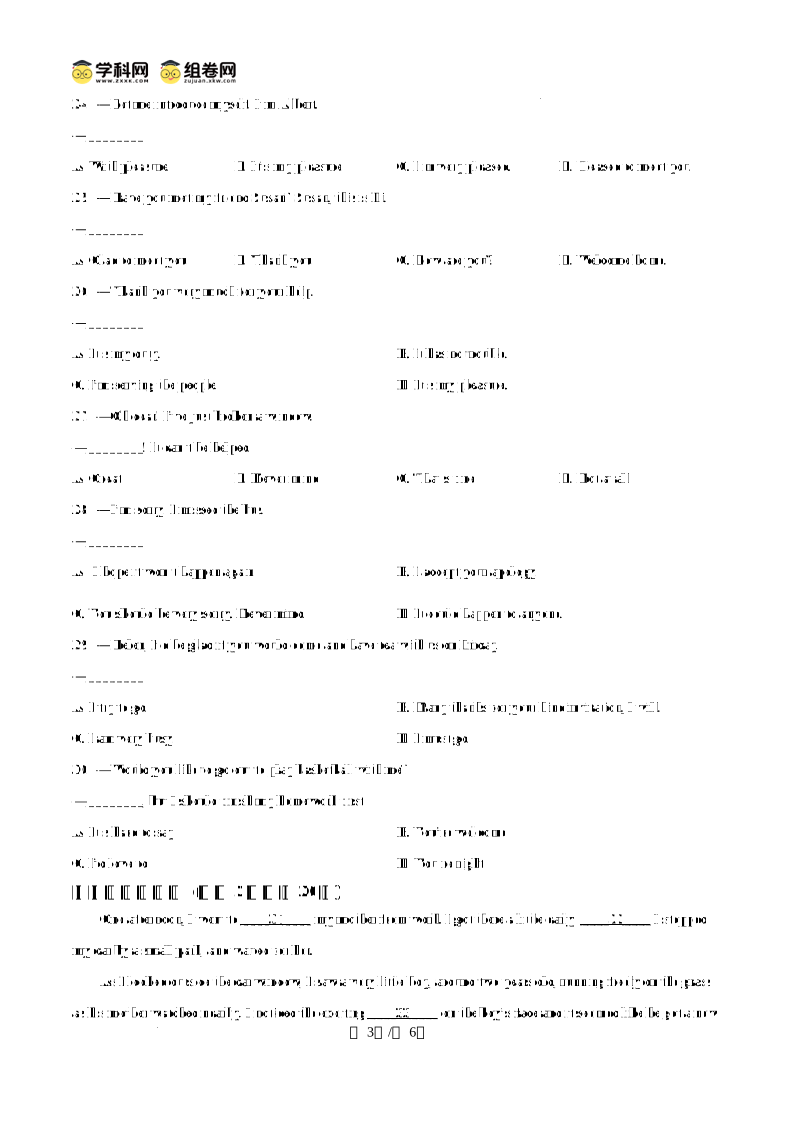
三、完形填空。 (每题2分,共20分)
One afternoon, I went to ____31____ my mother from work. I got there a little early, ____32____ I stopped my car by a small park, and waited for her.
As I looked outside the car window, I saw a very little boy, around two years old, running freely on the grass as his mother watched nearby. I noticed the exciting ____33____ on the boy’s face and it seemed like he got a new toy. The boy then fell to the grass, got up, without looking back at his mother, ran as fast as he could. He still smiled, just like ____34____ had happened.
At that moment, I thought to myself, “Why don’t most adults ____35____ difficulties in this way?” Most adults are afraid of falling down and ____36____ have another try. They would worry about ____37____ someone sees them fall or not and they may not try again. However, for kids, when they fall down, they don’t consider their falling down as a failure, instead, they ____38____ it as a learning experience. They just try again and again until they succeed. The answer must be that they don’t ____39____ “failing down” with the word “failure”. As a result, they are not upset in any way. Besides, they may think to themselves that it is quite common to fall down. In other words, they are allowed by themselves to make mistakes, so they keep _____40_____.
31. A. take up B. pick up C. turn up D. get on
32. A. but B. when C. though D. so
33. A. expression B. attention C. information D. decision
34. A. something B. anything C. nothing D. everything
35. A. start with B. get on with C. deal with D. face with
36. A. always B. seldom C. sometimes D. often
37 A. why B. when C. whether D. that
38. A. bring B. change C. look D. treat
39. A. connect B. compare C. fill D. touch
40. A. normal B. active C. healthy D. outgoing
【答案】31. B 32. D 33. A 34. C 35. C 36. B 37. C 38. D 39. A 40. B
【解析】
【导语】本文是一篇记叙文。主要讲述作者看到小男孩摔倒后不在意,继续奔跑,思考成年人应向孩子学习对待困难的方式。
【31题详解】
考查动词短语词义辨析。句意:一天下午,我去接妈妈下班。A. take up开始从事;B. pick up接载;C. turn up出现,调高;D. get on上车,进展。根据“my mother from work (我的妈妈下班)”可知,应是去接妈妈下班。故选B。
【32题详解】
考查连词词义辨析。句意:我到得有点早,所以我把车停在一个小公园旁边,等她。A. but但是;B. when当……时候;C. though尽管;D. so所以。“I got there a little early (提前到了一点)”和“I stopped my car by a small park, and waited for her. (我把车停在一个小公园旁边,然后等她。)”前后句是因果关系,前面是原因,后面是结果,故用“so”引出结果。故选D。
【33题详解】
考查名词词义辨析。句意:我注意到男孩脸上兴奋的表情,看起来他好像得到了一个新玩具。A. expression表情;B. attention注意;C. information信息;D. decision 决定。根据“on the boy’s face (在男孩的脸上)”可知,我注意到的是脸上的“表情”。故选A。
34题详解】
考查不定代词词义辨析。句意:他仍然微笑着,就像什么都没发生一样。A. something某事;B. anything任何事;C. nothing没有什么;D. everything一切。根据“He still smiled, just like … had happened. (他仍然微笑着,就像……发生过一样。)”可知,这里表示小男孩摔倒后起来继续跑,像没发生任何事一样。故选C。
【35题详解】
考查动词短语辨析。句意:为什么大多数成年人不以这种方式处理困难呢?A. start with以……开始;B. get on with与……相处;C. deal with处理;D. face with面对。根据“difficulties in this way (用这种方式……困难)”以及上文提到小男孩应对困难的方式可知,此处表示处理、应对困难的方式。故选C。
【36题详解】
考查副词词义辨析。句意:大多数成年人害怕摔倒,很少再试一次。A. always总是;B. seldom很少;C. sometimes有时;D. often经常。根据“Most adults are afraid of falling down (大多数成年人害怕摔倒)”和“and they may not try again (他们可能不会再试了)”可知,害怕摔倒所以很少再尝试。故选B。
【37题详解】
考查连词词义辨析。句意:他们会担心是否有人看到他们摔倒,可能就不再尝试了。A. why为什么;B. when当……时候;C. whether是否;D. that无实义。分析句子可知,“… someone sees them fall or not”为宾语从句,“whether...or not”表示“是否”,固定搭配,符合句意。故选C。
【38题详解】
考查动词词义辨析。句意:然而,对于孩子们来说,当他们摔倒时,他们不认为摔倒就是失败,相反,他们把它当作一种学习经历。A. bring带来;B. change改变;C. look看;D. treat对待,把……看作。根据“they don’t consider their falling down as a failure (他们不认为摔倒就是失败)”可知,他们不认为摔倒就是失败,相反,他们把它当作一种学习经历,treat...as...表示“把……当作……”。故选D。
【39题详解】
考查动词词义辨析。句意:答案一定是他们不把“摔倒”和“失败”这个词联系起来。A. connect联系;B. compare比较;C. fill充满;D. touch触摸。根据“they don’t consider their falling down as a failure (他们不认为摔倒就是失败)”可知,他们不认为摔倒就是失败,也就是说他们没有把摔倒和失败联系在一起,“connect...with...”表示“把……和……联系起来”。故选A。
【40题详解】
考查形容词词义辨析。句意:换句话说,他们允许自己犯错,所以他们保持积极。A. normal正常的;B. active积极的;C. healthy健康的;D. outgoing外向的。根据“As a result, they are not upset in any way. …In other words, they are allowed by themselves to make mistakes, so they keep… (因此,他们并没有感到失望。……换句话说,他们允许自己犯错,所以他们会保持……)”可知,这里表示孩子们不把摔倒当失败,允许自己犯错,所以一直保持积极的状态。故选B。
四、阅读理解。(每题2分,共10分)
I am a professor of sports and exercise so I often deal with nervousness in my research with sports people. Actually, most people experience nervousness at some time or another.
If you are feeling anxious, my advice is to first find the cause or causes. Make a list of those things that are making you nervous and work out which ones you can do something about. Focus all of your efforts on managing the causes that you can control. Most people cannot tell the difference between controllable and uncontrollable causes, so things they can’t control become a big reason for nervousness. Dealing with this is very important if people want to keep a healthy mind.
Simply try to accept the uncontrollable causes of nervousness. You might be worried about the weather on a big day, an accident or an attack on the train, or perhaps just things that other people are doing at work. The results may be very important but there is still no use worrying because you can’t control any of these things.
Accept that you can’t control everything. Once you understand this, it becomes easier not to worry.
If a situation, such as swimming, is causing you to be anxious, try to face it as often as possible so that you can get used to it.
It can often help to think about yourself doing the thing that makes you nervous — then close your eyes and imagine it going well. Imagine how the flight or job interview is going to happen so that you can get used to it.
This will help you understand that the thing you fear most is probably not going to happen
41. Who wrote this passage?
A. A reporter. B. A sportsman. C. A patient. D. A professor.
42. The writer thinks there is no use worrying about some causes of nervousness because ________
A. most are not very important.
B. they are not the real causes of the problem.
C. they cannot be controlled by people.
D. it’s better to deal with one cause at a time.
43. If swimming makes you nervous, what should you do according to the writer?
A. Go swimming often to get used to it.
B. Avoid going to the swimming pool
C. Find a swimming teacher.
D. Imagine watching others swim.
44. What is true about nervousness according to the passage?
A. It usually has only one cause.
B. It is usually caused by people.
C. People can easily manage it.
D. Most people suffer from it.
45. What is the main purpose of this passage?
A. To introduce the writer’s sports experience.
B. To advise on how to deal with nervousness.
C. To help people remember their fears.
D. To explain the dangers of nervousness.
【答案】41. D 42. C 43. A 44. D 45. B
【解析】
【导语】本文是一篇说明文。文章主要讲述了如何应对紧张情绪的建议。
【41题详解】
细节理解题。根据第一段中“I am a professor of sports and exercise so I often deal with nervousness in my research with sports people. (我是一名体育和运动教授,所以我经常在与体育人士的研究中处理紧张情绪。)”可知,这篇文章是由一位教授写的。故选D。
【42题详解】
细节理解题。根据第三段中“The results may be very important but there is still no use worrying because you can’t control any of these things. (结果可能非常重要,但担心仍然没有用,因为你无法控制这些事情。)”可知,作者认为担心一些紧张的原因是没有用的,因为人们无法控制这些事情。故选C。
【43题详解】
细节理解题。根据第五段中“If a situation, such as swimming, is causing you to be anxious, try to face it as often as possible so that you can get used to it. (如果一种情况,比如游泳,让你感到焦虑,试着尽可能多地面对它,这样你就能习惯它。)”可知,如果游泳让你感到紧张,作者建议你应该经常去游泳以习惯它。故选A。
【44题详解】
细节理解题。根据第一段中“Actually, most people experience nervousness at some time or another. (事实上,大多数人都有过紧张的经历。)”可知,大多数人都会在某个时候经历紧张情绪。故选D。
【45题详解】
主旨大意题。根据全文内容可知,本文主要讲述了如何应对紧张情绪的建议,包括找出紧张的原因、接受不可控因素、经常面对紧张情境以及通过想象来克服紧张等。因此,本文的主要目的是提供关于如何处理紧张情绪的建议。故选B。
五、英汉互译。(每题2分,共30分)
英汉互译
46. introduce
47. family
48. 优秀的
49. 美味的
50. 建议
51. stay in bed
52. look forward to
53. future
54. sunny
55. worry about
【答案】46. 介绍 47. 家庭##家人
48. excellent
49. delicious
50. suggest /suggestion/advise/advice 51. 待在床上
52. 期待 53. 未来,将来
54. 阳光充足的,晴朗的
55. 担心
【解析】
【46题详解】
考查动词。introduce:介绍。故填:介绍。
【47题详解】
考查名词。family:家庭,家人。故填:家庭,家人。
【48题详解】
考查形容词。优秀的:excellent。故填excellent。
【49题详解】
考查形容词。美味的:delicious。故填delicious。
【50题详解】
考查动词和名词。建议:suggest/advise,动词; suggestion/advice,名词。故填suggest /suggestion/advise/advice。
【51题详解】
考查动词短语。stay:待在;in bed:在床上;stay in bed:待在床上。故填:待在床上。
【52题详解】
考查动词短语。look forward to:期待。故填:期待。
【53题详解】
考查名词。future:未来,将来。故填:未来,将来。
【54题详解】
考查形容词。sunny:阳光充足的,晴朗的。故填:阳光充足的,晴朗的。
【55题详解】
考查动词短语。worry about:担心。故填:担心。
56. 自三年前以来我一直在学英语。(句子汉译英)
_________________________________________________
【答案】I have been learning English since three years ago.
【解析】
【详解】考查陈述句和现在完成进行时态。根据“句号”和“自三年前以来”可知,该句是现在完成进行时的陈述句。我:I,作主语;一直在学:have been learning,现在完成进行时,作谓语;英语:English,作宾语;自三年前以来:since three years ago,作时间状语。故本句译为:I have been learning English since three years ago.
57. 我们盼望你来参观我们学校。(句子汉译英)
_________________________________________________
【答案】We are looking forward to your visit to our school.
【解析】
【详解】考查动词短语和现在进行时。根据“我们盼望……” 和“。”可知,该句是现在进行时的陈述句。我们:We,人称代词作主语;盼望:are looking forward to,作谓语,这里用现在进行时表此刻的状态,主语为复数故be动词用are;你来参观我们学校:your visit to our school,其中your visit作宾语,to our school作后置定语修饰visit。故本句译为:We are looking forward to your visit to our school.
58. 带着微笑问候和服务顾客。(句子汉译英)
_________________________________________________
【答案】Greet and serve customers with a smile.
【解析】
【详解】考查祈使句。根据句意以及句末标点可知,该句是一个祈使句,表达命令、请求等语气,祈使句通常以动词原形开头。问候和服务:greet and serve,并列动词原形作谓语;顾客:customers,名词复数作宾语;带着微笑:with a smile,介词短语作状语,表示伴随的方式。故本句译为:Greet and serve customers with a smile。
59. Many people would buy electric appliances, clothes and toys on sharp discount on Thanksgiving Day. (句子英译汉)
_________________________________________________
【答案】许多人会在感恩节那天购买大幅打折的电器、衣服和玩具。
【解析】
【详解】考查陈述句和情态动词。Many people:许多人,作主语;would buy:会购买,情态动词后加动词原形,表示“过去经常性或习惯性的动作”,作谓语;electric appliances, clothes and toys:电器、衣服和玩具,作宾语;on sharp discount:大幅打折,作方式状语;on Thanksgiving Day:在感恩节当天,作时间状语。故本句译为:许多人会在感恩节那天购买大幅打折的电器、衣服和玩具。
60. You should learn to serve the customers politely and patiently. (句子英译汉)
________________
【答案】你应该学会礼貌而耐心地为顾客服务。
【解析】
【详解】考查动词不定式作宾语。You:你,人称代词作主语;should learn:应该学习,“情态动词+动词原形”作谓语;to serve:服务,动词不定式作宾语;the customers:顾客,名词作serve的宾语;politely and patiently:礼貌又耐心地,并列副词作状语。故本句译为:你应该学会礼貌而耐心地为顾客服务。
第1页/共1页
学科网(北京)股份有限公司
$
株洲第一职业技术学校
2022年下学期期中考试试卷
一、单项选择。(每题1分,共20分)
1. Tony is ________ boy. He can swim and skate well.
A. a 11-year-old B. an 11-year-old
C. a 11-years-old D. an 11-years-old
2. China ________ great achievements in science and technology since 2012.
A. makes B. made C. has made D. had made
3. Listen! Our teachers ________ folk songs in the next room.
A. are singing B. were singing C. sing D. sang
4. The medicine ________ millions of people’s lives since it was put into use.
A. is saving B. will save C. has saved D. had saved
5. We’re proud that China ________ stronger and stronger these years.
A. will become B. became C. is becoming D. was becoming
6. For safety, it’s important for students to ________ the traffic rules on the way to school.
A. make B. change C. follow D. break
7. The boy is sleeping. Please ________ the TV and keep quiet.
A. turn up B. turn off C. turn on D. turn down
8. He ________ an English club last year and has improved his English a lot.
A. protected B. left C. saw D. joined
9. The music sounds quite pleasant. Who ________the violin next door?
A. has played B. played C. plays D. is playing
10 It is important to ________ calm in an emergency.
A. become B. keep C. have D. make
11. ________ more difficult for grown-ups to learn a foreign language.
A. There seems that B. That seemed to be
C. They seem to be D. It seems to be
12. It is necessary _________ us to help our friends out when they meet difficulties.
A. to B. of C. with D. for
13 Don’t ________ too much time playing computer games.
A. cost B. pay C. spend D. take
14. Take care when you’re driving, ________ in a big storm like this.
A especially B. immediately C. probably D. recently
15. He hasn’t read the magazine, and I haven’t read it, ________.
A. either B. yet C. already D. too
16. Sam is ________ about his speech because he thinks he is well prepared.
A. honest B. confident C. modest D. curious
17. ________ in the sun is bad for your eyes.
A. Read B. Reads C. Reading D. To reading
18. —Which of the two subjects do you like better, art or music?
—________. They are really interesting.
A. Both B. All C. Neither D. None
19. All of us find ________ necessary to take exercise every day.
A. this B. that C. it D. them
20. My brother likes painting. It is one of ________ hobbies.
A. my B. her C. his D. your
二、交际用语。(每题2分,共20分)
21. —Paul, this is my friend, Ann.
—________
A. Very well, thank you. B. How do you like the party?
C. Glad to meet you. D. Glad to meet you, Ann.
22. —I’m sorry I broke your mirror.
—Oh, really? ________.
A. It doesn’t matter B. Not at all C. Don’t be sorry D. It’s OK with me
23. —Well, I’d better let you get on with your work.
—________
A. I’ve wasted a lot of your time. B. Thank you for a lovely afternoon.
C. You must be tired. D. I’m sorry to trouble you.
24. —Let me introduce myself. I’m Albert.
—________
A. With pleasure. B. It’s my pleasure. C. I’m very pleased. D. Pleased to meet you.
25. —Have you met my friend Susan? Susan, this is Li.
—________
A. Glad to meet you. B. Thank you. C. How are you? D. Welcome home.
26. —Thank you very much for your help.
—________
A. It’s my duty. B. It has no trouble.
C. I’m serving the people. D. It’s my pleasure.
27. —Oh dear! I’ve just broken a window.
—________! It can’t be helped.
A. Great B. Never mind C. That’s fine D. Not at all
28. —I’m sorry. I missed the bus.
—________
A I hope it won’t happen again. B. I accept your apology.
C. You should be very sorry. Never mind. D. It could happen to anyone.
29. —Helen, I’d be glad if you would come and have tea with us on Friday.
—________
A. I try to go. B. Many thanks for your kind invitation, I will.
C. I am very busy. D. I must go.
30. —Would you like to go out to play basketball with me?
—________, but I should finish my homework first.
A. It’s hard to say B. You’re welcome
C. I’d love to D. You’re right
三、完形填空。 (每题2分,共20分)
One afternoon, I went to ____31____ my mother from work. I got there a little early, ____32____ I stopped my car by a small park, and waited for her.
As I looked outside the car window, I saw a very little boy, around two years old, running freely on the grass as his mother watched nearby. I noticed the exciting ____33____ on the boy’s face and it seemed like he got a new toy. The boy then fell to the grass, got up, without looking back at his mother, ran as fast as he could. He still smiled, just like ____34____ had happened.
At that moment, I thought to myself, “Why don’t most adults ____35____ difficulties in this way?” Most adults are afraid of falling down and ____36____ have another try. They would worry about ____37____ someone sees them fall or not and they may not try again. However, for kids, when they fall down, they don’t consider their falling down as a failure, instead, they ____38____ it as a learning experience. They just try again and again until they succeed. The answer must be that they don’t ____39____ “failing down” with the word “failure”. As a result, they are not upset in any way. Besides, they may think to themselves that it is quite common to fall down. In other words, they are allowed by themselves to make mistakes, so they keep _____40_____.
31. A. take up B. pick up C. turn up D. get on
32. A. but B. when C. though D. so
33. A. expression B. attention C. information D. decision
34. A. something B. anything C. nothing D. everything
35. A. start with B. get on with C. deal with D. face with
36. A. always B. seldom C. sometimes D. often
37. A. why B. when C. whether D. that
38. A. bring B. change C. look D. treat
39. A. connect B. compare C. fill D. touch
40. A. normal B. active C. healthy D. outgoing
四、阅读理解。(每题2分,共10分)
I am a professor of sports and exercise so I often deal with nervousness in my research with sports people. Actually, most people experience nervousness at some time or another.
If you are feeling anxious, my advice is to first find the cause or causes. Make a list of those things that are making you nervous and work out which ones you can do something about. Focus all of your efforts on managing the causes that you can control. Most people cannot tell the difference between controllable and uncontrollable causes, so things they can’t control become a big reason for nervousness. Dealing with this is very important if people want to keep a healthy mind.
Simply try to accept the uncontrollable causes of nervousness. You might be worried about the weather on a big day, an accident or an attack on the train, or perhaps just things that other people are doing at work. The results may be very important but there is still no use worrying because you can’t control any of these things.
Accept that you can’t control everything. Once you understand this, it becomes easier not to worry.
If a situation, such as swimming, is causing you to be anxious, try to face it as often as possible so that you can get used to it.
It can often help to think about yourself doing the thing that makes you nervous — then close your eyes and imagine it going well. Imagine how the flight or job interview is going to happen so that you can get used to it.
This will help you understand that the thing you fear most is probably not going to happen.
41. Who wrote this passage?
A. A reporter. B. A sportsman. C. A patient. D. A professor.
42. The writer thinks there is no use worrying about some causes of nervousness because ________
A. most are not very important.
B. they are not the real causes of the problem.
C. they cannot be controlled by people.
D. it’s better to deal with one cause at a time.
43. If swimming makes you nervous, what should you do according to the writer?
A. Go swimming often to get used to it.
B. Avoid going to the swimming pool
C. Find a swimming teacher.
D. Imagine watching others swim.
44. What is true about nervousness according to the passage?
A. It usually has only one cause.
B. It is usually caused by people.
C. People can easily manage it.
D. Most people suffer from it.
45. What is the main purpose of this passage?
A. To introduce the writer’s sports experience.
B. To advise on how to deal with nervousness.
C. To help people remember their fears.
D. To explain the dangers of nervousness.
五、英汉互译。(每题2分,共30分)
英汉互译
46. introduce
47. family
48. 优秀的
49. 美味
50. 建议
51. stay in bed
52. look forward to
53. future
54. sunny
55. worry about
56. 自三年前以来我一直在学英语。(句子汉译英)
_________________________________________________
57. 我们盼望你来参观我们学校。(句子汉译英)
_________________________________________________
58. 带着微笑问候和服务顾客。(句子汉译英)
_________________________________________________
59. Many people would buy electric appliances, clothes and toys on sharp discount on Thanksgiving Day. (句子英译汉)
_________________________________________________
60. You should learn to serve the customers politely and patiently. (句子英译汉)
________________
第1页/共1页
学科网(北京)股份有限公司
$
资源预览图

1

2
3

由于学科网是一个信息分享及获取的平台,不确保部分用户上传资料的 来源及知识产权归属。如您发现相关资料侵犯您的合法权益,请联系学科网,我们核实后将及时进行处理。