A3版期中模拟卷3(高教版)-2025-2026学年高二上学期《英语期中考点大串讲》(原卷版+解析版)
2025-10-30
|
2份
|
31页
|
426人阅读
|
5人下载
内容正文:
2025-2026学年高二上学期《英语期中考点大串讲》
期中模拟卷3
考试时间:90分钟 满分:100分
班级 姓名 学号 成绩
注意事项:
1.答卷前,考生务必用黑色字迹的钢笔或签字笔将自己的准考证号、姓名、考场号和座位号填写在答题卡上。用2B铅笔在“考场号”和“座位号”栏相应位置填涂自己的考场号和座位号。将条形码粘贴在答题卡“条形码粘贴处”。
2.作答选择题时,选出每小题答案后,用 2B 铅笔把答题卡上对应题目选项的答案信息点涂黑;如需改动,用橡皮擦干净后,再选涂其他答案,答案不能答在试卷上。
3.非选择题必须用黑色字迹的钢笔或签字笔作答,答案必须写在答题卡各题目指定区域内相应位置上;如需改动,先划掉原来的答案,然后再写上新的答案;不准使用铅笔和涂改液。不按以上要求作答的答案无效。
4.考生必须保持答题卡的整洁。考试结束后,将试卷和答题卡一并交回。
5.测试范围:《英语 基础模块2》(高教版)Unit 1~4。
6. 难度系数:0.75。
一、补全对话(5小题,共5分)
阅读下列简短对话,从A、B、C、D中选出最佳答案,将对话补全。
1.— Will you come with me to the concert this Saturday night?
— __________, but I promised Jane I would go with her.
A.Forget it B.My pleasure
C.Thanks D.Take it easy
2.— You’d better control the use of your mobile phone.
— __________. It really have a bad influence on our study.
A.Good idea B.I can’t agree more
C.Not at all D.My pleasure
3.— Garden Hotel Room Reservation. _______?
— I’d like to book a non-smoking double room.
A. How are you B. May I help you
C. What do you do D. What’s wrong
4.— Could you do me a favor?
— ______________.
A.No, I needn’t B. Yes, I’m glad to
C. No, I don’t D. Yes, please
5.— How was your internship at the hotel last month?
— ________ I learned a lot about customer service and made new friends.
A. It was great! B. I don’t like it.
C. It’s too hard. D. I didn’t go
二、词汇(10小题,共10分)
阅读下列句子,从A、B、C、D中选出句中画线的单词或词组的意义。
6.It was a challenge to get along well with my colleagues at first.
A. 同事 B. 学徒 C. 助理 D. 学问
7.A tourist feels the need to get as much as sightseeing as possible.
A. 考古学家 B.摄影师 C.旅行者 D.导游
8.Lin, a trainee at a company, got the first prize of the car repairing.
A.雇员 B.学生 C.实习生 D.雇主
9.As a result, we burn off less energy, and cause more health problems.
A. 能源 B. 能量 C. 能力 D. 资源
10.The hotel offers a discount to customers who book their rooms in advance.
A. 涨价 B. 折扣 C. 缺货 D. 原价
11.Our hometown will develop into a modern and beautiful city in several years.
A. 改造 B. 发展 C. 建立 D. 启动
12.Actually, advertised foods rarely look exactly like the real food they ’ re selling.
A.内部 B.表面上 C.理想中 D.事实上
13.The Eiffel Tower, which was built for the 1889 World Fair, is famous for its unique design.
A.常见的 B.常规的 C.独一无二的 D.流行的
14.We need to make a reservation for the hotel in advance to avoid no rooms available during the peak season.
A. 预约 B. 取消 C. 更改 D. 检查
15.Modern science and technology empower human beings to control natural forces more effectively.
A.能量 B.源泉 C.技术 D.能力
三、单项选择(共 15 小题,每小题1分,满分10分)
从每小题所给的四个选项中,选出一个可以填入空白处的最佳选项。
16.Lucy _______ a dress when she cut her finger.
A. made B. is making C. was making D. makes
17._______ strange clothes he is wearing!
A. How a B. What a C. How D. What
18.Busy office jobs sometimes make people _______ their temper.
A. to lose B. lose C. losing D. to be lost
19.You should _______ the agenda to see what items will be affected.
A. go through B. go about C. go by D. go on
20.The doctor suggested that he ________ less time on the computer and more time on physical exercise.
A. spend B. spends C. spent D. will spend
21.This vocational course on computer repair ________ me a lot. Now I can fix simple computer problems by myself.
A. helps B. likes C. wants D. knows
22.He ________ the travel itinerary when his friend called him to discuss the trip details.
A. plans B. is planning C. was planning D. will plan
23.The doctor advised that she ________ more fruits and vegetables and less junk food to keep healthy.
A. eat B. eats C. ate D. will eat
24.Xu Xiake became interested in books about different places at an early age and _______ to travel.
A. want B. wants C. have wanted D. wanted
25.I first met Lily three years ago. She _______ at a radio shop at the time.
A. has worked B. was working C. had been working D. had worked
四、完形填空(共15小题,每小题1分,满分15分)
阅读下面短文,掌握其大意,然后从各题所给的四个选项中,选出最佳选项。
One day, a son asked his father, “What is my life __26__?”
His father gave him a __27__ and said, “If you want to know, take this to the __28__. If someone asks the price, stay quiet and __29__ up two fingers.”
The boy went to the market. An old woman asked how much the stone was. The boy __30__ up two fingers. The woman said, “Two dollars,” and tried to __31__ .
Unsurprisingly, the boy went home and told his father. The father said, “Now go to the __32__ . If someone asks the price, hold up two fingers.”
The boy went to the museum. A man in a suit (西装) asked how much the stone was. The boy held up two fingers. The man said, “Two hundred dollars,” and __33__ to pay.
Shocked, the boy ran home and told his father. The father then said, “Go to the __34__ market.”
The boy went to the stone market and __35__ the stone to an old man. The old man got __36__ and asked how much it was. The boy held up two fingers. The old man said, “Twenty thousand dollars,” and wanted to __37__ it.
Happily, the boy hurried home and told his father. The father smiled and said, “The old man knew the true __38__ of the stone. Your life is the same. You can be a two-dollar rock or a twenty-thousand-dollar rock. You __39__ your own worth. Remember, some people will see your true __40__, and some will not.”
26.A. worth B. cost C. price D. value
27.A. stone B. book C. coin D. toy
28.A. market B. school C. park D. hospital
29.A. hold B. put C. give D. take
30.A. held B. put C. gave D. took
31.A. pay B. buy C. sell D. leave
32.A. museum B. library C. cinema D. bank
33.A. offered B. refused C. forgot D. agreed
34.A. stone B. food C. clothes D. flower
35.A. showed B. sold C. gave D. lent
36.A. excited B. angry C. sad D. worried
37.A. buy B. sell C. keep D. throw
38.A. value B. price C. cost D. worth
39.A. decide B. know C. find D. change
10.A.value B. price C. state D. feeling
五、阅读理解(阅读下列短文,短文后面有五个小题,从每小题所给的四个选项中,选出一个最佳选项。共15小题,每小题2分, 满分30分。)
A
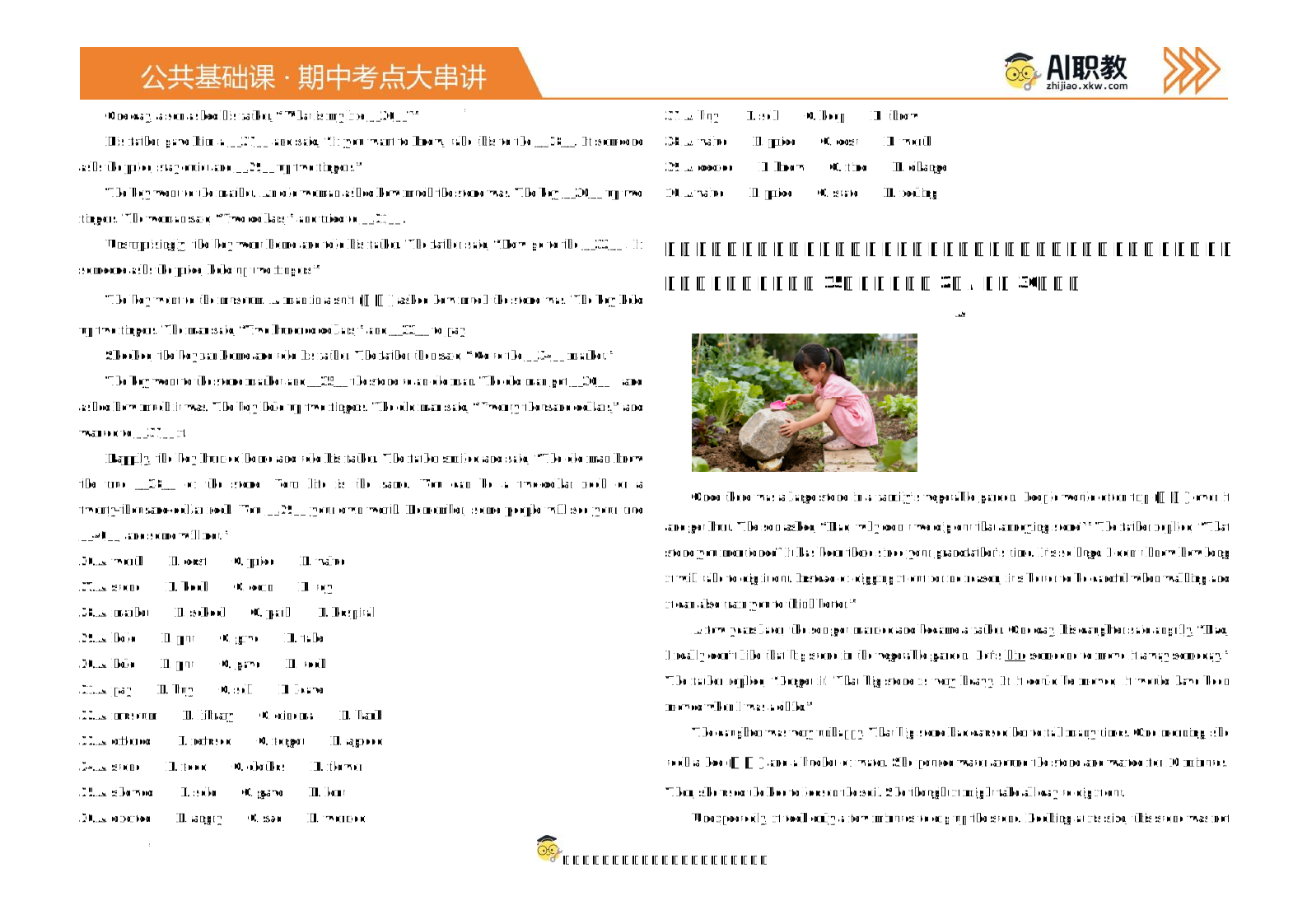
Once there was a large stone in a family’s vegetable garden. People would often trip (绊倒) over it and get hurt. The son asked, “Dad, why don’t we dig out that annoying stone?” The father replied, “That stone you mentioned? It has been there since your grandfather’s time. It’s so huge. I don’t know how long it will take to dig it out. Instead of digging it out for no reason, it’s better to be careful when walking and it can also train you to think better.”
A few years later, the son got married and became a father. One day, his daughter said angrily, “Dad, I really don’t like that big stone in the vegetable garden. Let’s hire someone to move it away someday.” The father replied, “Forget it! That big stone is very heavy. If it could be moved, it would have been moved when I was a child.”
The daughter was very unhappy. That big stone had caused her to fall many times. One morning, she took a hoe (锄头) and a bucket of water. She poured water around the stone and waited for 10 minutes. Then, she used the hoe to loosen the soil. She thought it might take all day to dig it out.
Unexpectedly, it took only a few minutes to dig up the stone. Looking at its size, this stone was not as big as they thought. They had all been tricked by how big it looked.
What prevents us from discovering and creating new things are the psychological obstacles (心理障碍) and stubborn stones in our minds.
41.Why did the father tell his daughter not to move the stone?
A. Because the stone was a gift from his grandfather.
B. Because he thought the stone was too heavy to be moved.
C. Because the stone could help train people to be careful.
D. Because the stone was useful for protecting the vegetable garden.
42.What does the word "hire" in the second paragraph mean?
A. Ask someone to do a job and pay them for it.
B. Ask friends to help for free.
C. Do a job by oneself.
D. Wait for others to offer help.
43.What can we infer from the daughter’s experience of moving the stone?
A. The daughter was stronger than her father and grandfather.
B. The stone became smaller over the years.
C. The family’s fear of moving the stone was based on a wrong impression.
D. The daughter used a special tool that her father didn’t have.
44.What did the daughter do first before digging up the stone?
A. She asked her father for help.
B. She poured water around the stone and waited.
C. She borrowed a new hoe from her neighbor.
D. She dug a small hole around the stone.
45.Which of the following is the best title for the passage?
A. A Family’s Vegetable Garden.
B. The Heavy Stone in the Garden.
C. The "Stubborn Stone" in Our Minds.
D. How to Dig Up a Big Stone
B
Described as the “undisputed (无可争议的) father of the modern nature documentary”, Sir David Attenborough has spent his life teaching the world about our natural planet and calling for action on climate change. His documentaries, such as the long running Life series and Blue Planet, which he wrote and narrated (解说), have won many awards and have been watched across the planet.
Born on May 8, 1926 in London, UK, Attenborough developed an early interest in nature collecting bird eggs and fossils (化石) from the age of 7. He later studied natural sciences at the University of Cambridge. After graduating, he took a training program with the BBC in 1950 and began working there as a producer in 1952. He had success at the BBC working on a number of shows but he didn’t like the BBC’s programming limits, especially when it came to nature. They brought animals into a studio (工作室), which he felt was wrong because animals should be seen in their natural homes. In order to change this, Attenborough made the series Zoo Quest in 1954. They traveled far and wide to record animals not just in zoos, but in nature. The show was so successful that it set the standard for nature documentaries and led the BBC to create its Natural History unit in 1957.
From then on, Attenborough has continued to make excellent nature documentaries throughout his life and even now in his 90s. He has written books on environmental activism including Saving Planet Earth in 2007. Among his achievements, Attenborough was knighted in 1985, given the Order of Merit in 2002 and holds at least 31 honorary degrees. A number of birds, insects and plants have also been given Attenborough’s name, to honor him in nature.
46.Which of the following is one of David Attenborough’s famous documentaries?
A. Saving Planet Earth B. Zoo Quest
C. Cambridge Natural History D. BBC Studio Stories
47.What does the word "honorary degrees" in the third paragraph mean?
A. Degrees that are earned by completing normal academic courses
B. Special degrees given to people to recognize their achievements
C. Degrees that are only offered by the University of Cambridge
D. Degrees that require years of research on nature
48.Why did David Attenborough make the series Zoo Quest?
A. Because he wanted to bring more animals into BBC studios.
B. Because he disagreed with the BBC’s way of filming nature at that time.
C. Because the BBC asked him to create a new type of entertainment show.
D. Because he wanted to get a job in the BBC’s Natural History unit.
49.What is the main idea of the passage?
A. The history of the BBC’s Natural History unit.
B. David Attenborough’s life, career achievements and contributions to nature documentaries.
C. How to make a successful nature documentary.
D. The importance of protecting the natural planet through documentaries.
50.This passage is most likely taken from ________.
A. a science fiction novel B. a personal diary
C. a biography D. a cooking magazine
C
David Beckham was born in 1975, in London. When he was a young boy, his greatest passion was football. __________51__________ Sometimes he would go and watch a game with his friends. When David Beckham was 12 years old, he won the Bobby Charlton Soccer Skills award. This was an important step forward for this young boy, and it led him to go for a visit to a football training camp in Spain. __________52__________
__________53__________ This meant that he could practice football as much as he wanted to and play for the highly successful Manchester United Youth Cup team and Under-21 team. In April, 1995, he played his first football league game against Leeds United. During 1995 and 1996, David became a regular member of the team and Manchester United won both football seasons, with David scoring many goals.
__________54__________ In the first game of the 1996-1997 season,he scored a surprising goal from beyond the halfway line. Beckham sent the ball over the goalkeeper's head and into the goal. It was a wonderful goal and Beckham became famous overnight.__________55__________ He also had the ability to make the ball go from left to right, or right to left, whenever he chose.
A. As a boy, he played for the schools of Essex and also for his county team.
B. His goals made him a household name.
C. He played it whenever he had the chance.
D. In 1991, he became a trainee with Manchester United.
E. He continued to score astonishing goals after that.
六、语法填空(共10小题,每小题1分,满分10分)
Once, a young man had a long trip by train. As time went by, he started feeling __56__ (bore). He took out his travel map and counted all the stops on his way. To his __57__ (surprise), there were over 60 small stations! This made him __58__ (feel) impatient about all these stops. At every small station, he ran to the steward and asked, “Why is __59__ taking so long? How far is the next station?”
The steward, an old man with white hair, __60__ (kine) invited him to sit in his small office. The young __61__ (travel) said impatiently to the steward: “The train had to stop at every stop. Don’t you think it’s boring __62__ (have) so many stops before reaching the end? I just want to get to my destination quickly.”
The steward smiled and said, “I have been working on this train for over 30 years. However, I never pay attention to those small stations. I only remember where I set off and where my journey ends. In between, I just focus __63__ doing my job.”
The young traveler lowered his head and started to think __64__ (quiet).
Life is the same. Even though we have many stops along the way, we don’t need to worry about each one. We just need to remember our goal and keep __65__ (move) forward.
七、完成句子(共5小题,每小题2分,满分10分)
66.He is enthusiastic and __________________ (参加各种各样的活动).
67.Although Olive experienced many difficulties, _______________ (他从未放弃自己的梦想).
68.__________________ (我们必须照顾老人) because one day we will become old as well.
69.____________________(很重要)to pay attention to both physical and mental health.
70._____________________ (我正在准备简历)when you called me.
八、写作(共10分)
【写作内容】假如你是李明,请写一封加入学校志愿者服务队的申请信。内容包括你对志愿者的了解、你打算怎么做等。
【写作要求】
1.词数40左右;
2.条理清晰,语句通顺,语法正确;
3.邮件的开头和结尾已给出,不计入总词数。
Dear Sir/Madam,
____________________________________________________________________
___________________________________________________________________
___________________________________________________________________
___________________________________________________________________
Sincerely yours,
Li Ming
原创精品资源学科网独家享有版权,侵权必究!
学科网(北京)股份有限公司
学科网(北京)股份有限公司
学科网(北京)股份有限公司
$
编写说明:2025-2026学年高二上学期《英语期中考点大串讲》以《英语 基础模块2》(高教版)教材1-4单元内容为基准,精准覆盖核心考点,并紧密贴合职教高考真题题型,包括复习讲义和模拟卷在内的4份资源,旨在为学生提供全方位、高效的期中复习解决方案。
本专题是2025-2026学年高二上学期《英语期中考点大串讲》(高教版)的第4份资源,内容为期中模拟卷3。
2025-2026学年高二上学期《英语期中考点大串讲》
期中模拟卷3
考试时间:90分钟 满分:100分
班级 姓名 学号 成绩
注意事项:
1.答卷前,考生务必用黑色字迹的钢笔或签字笔将自己的准考证号、姓名、考场号和座位号填写在答题卡上。用2B铅笔在“考场号”和“座位号”栏相应位置填涂自己的考场号和座位号。将条形码粘贴在答题卡“条形码粘贴处”。
2.作答选择题时,选出每小题答案后,用 2B 铅笔把答题卡上对应题目选项的答案信息点涂黑;如需改动,用橡皮擦干净后,再选涂其他答案,答案不能答在试卷上。
3.非选择题必须用黑色字迹的钢笔或签字笔作答,答案必须写在答题卡各题目指定区域内相应位置上;如需改动,先划掉原来的答案,然后再写上新的答案;不准使用铅笔和涂改液。不按以上要求作答的答案无效。
4.考生必须保持答题卡的整洁。考试结束后,将试卷和答题卡一并交回。
5.测试范围:《英语 基础模块2》(高教版)Unit 1~4。
6. 难度系数:0.75。
一、补全对话(5小题,共5分)
阅读下列简短对话,从A、B、C、D中选出最佳答案,将对话补全。
1.— Will you come with me to the concert this Saturday night?
— __________, but I promised Jane I would go with her.
A.Forget it B.My pleasure
C.Thanks D.Take it easy
2.— You’d better control the use of your mobile phone.
— __________. It really have a bad influence on our study.
A.Good idea B.I can’t agree more
C.Not at all D.My pleasure
3.— Garden Hotel Room Reservation. _______?
— I’d like to book a non-smoking double room.
A. How are you B. May I help you
C. What do you do D. What’s wrong
4.— Could you do me a favor?
— ______________.
A.No, I needn’t B. Yes, I’m glad to
C. No, I don’t D. Yes, please
5.— How was your internship at the hotel last month?
— ________ I learned a lot about customer service and made new friends.
A. It was great! B. I don’t like it.
C. It’s too hard. D. I didn’t go
1. 【答案】C
【解析】考查情景交际。句意:—— 这周六晚上你能和我一起去听音乐会吗?—— 谢谢,但我答应简要和她一起去了。A. Forget it 算了吧(用于拒绝或打消对方念头,语气较生硬,不符合礼貌回应邀请的语境);B. My pleasure 不客气(用于回应感谢,不用于回应邀请);C. Thanks 谢谢(用于礼貌回应对方的邀请,即使无法接受,也先表达感谢,符合交际礼仪);D. Take it easy 放轻松(用于安慰对方不要紧张,与 “回应邀请” 无关)。根据问句 “Will you come with me to the concert this Saturday night?”(这周六晚上你能和我一起去听音乐会吗?,表邀请)以及后半句 “but I promised Jane I would go with her.”(但我答应简要和她一起去了,表拒绝)可知,此处需先礼貌感谢对方的邀请,再说明拒绝理由,“谢谢” 符合语境。故选 C。
2. 【答案】B
【解析】考查情景交际。句意:—— 你最好控制一下手机的使用。—— 我完全同意。它确实对我们的学习有不好的影响。A. Good idea 好主意(用于赞同对方的提议,语气较日常,未体现 “完全认同” 的强烈态度);B. I can’t agree more 我完全同意(用于强调 “非常认同对方的观点”,与后半句 “确实有坏影响” 的补充说明呼应);C. Not at all 一点也不 / 不客气(用于回应感谢或表示 “完全不”,与 “认同控制手机使用” 的语境矛盾);D. My pleasure 不客气(用于回应感谢,不用于回应建议)。根据 “You’d better control the use of your mobile phone.”(你最好控制一下手机的使用,表建议)以及后半句 “It really has a bad influence on our study.”(它确实对我们的学习有不好的影响,表强烈认同)可知,此处需表达 “完全认同建议”,“我完全同意” 符合语境。故选 B。
3. 【答案】B
【解析】考查情景交际(酒店预订场景)。句意:—— 花园酒店客房预订处。有什么可以帮您的吗?—— 我想预订一间无烟双人房。A. How are you 你好吗(用于日常问候,不用于服务场景接待客户);B. May I help you 有什么可以帮您的吗(用于服务行业接待客户,询问需求,符合 “客房预订处” 的场景);C. What do you do 你是做什么的(用于询问对方职业,与 “客房预订” 服务无关);D. What’s wrong 怎么了(用于询问对方是否有麻烦,不用于服务场景接待客户)。根据 “Garden Hotel Room Reservation.”(花园酒店客房预订处,表服务场景)以及答语 “I’d like to book a non-smoking double room.”(我想预订一间无烟双人房,表客户需求)可知,此处需询问客户需求,“有什么可以帮您的吗” 符合语境。故选 B。
4. 【答案】B
【解析】考查情景交际。句意:—— 你能帮我个忙吗?—— 好的,我很乐意。A. No, I needn’t 不,我不需要(用于拒绝时,语气生硬且逻辑不符,“needn’t” 表 “没必要”,而非 “不能帮忙”);B. Yes, I’m glad to 好的,我很乐意(用于愉快地同意帮忙,符合 “请求帮忙” 的回应逻辑);C. No, I don’t 不,我不(回答结构不完整,且 “don’t” 后缺少实义动词,无法明确拒绝 “帮忙” 的请求);D. Yes, please 好的,请(用于同意对方接受自己的帮助,而非自己提供帮助,语境不符)。根据问句 “Could you do me a favor?”(你能帮我个忙吗?,表请求帮忙)可知,此处需回应 “是否愿意帮忙”,“好的,我很乐意” 符合礼貌同意的语境。故选 B。
5. 【答案】A
【解析】考查情景交际。句意:—— 你上个月在酒店的实习怎么样?—— 太棒了!我学到了很多关于客户服务的知识,还交到了新朋友。A. It was great! 太棒了!(用于表达对实习的积极评价,与后半句 “学到知识、交新朋友” 的正面内容呼应);B. I don’t like it. 我不喜欢它(用于表达负面态度,与后半句 “学到知识、交新朋友” 的内容矛盾);C. It’s too hard. 它太难了(用于表达负面感受,与后半句 “学到知识、交新朋友” 的内容矛盾);D. I didn’t go 我没去(用于说明 “未参加实习”,与后半句 “学到知识、交新朋友” 的实习经历矛盾)。根据问句 “How was your internship at the hotel last month?”(你上个月在酒店的实习怎么样?,询问实习感受)以及后半句 “I learned a lot about customer service and made new friends.”(我学到了很多关于客户服务的知识,还交到了新朋友,表积极收获)可知,此处需表达对实习的正面评价,“太棒了!” 符合语境。故选 A。
二、词汇(10小题,共10分)
阅读下列句子,从A、B、C、D中选出句中画线的单词或词组的意义。
6.It was a challenge to get along well with my colleagues at first.
A. 同事 B. 学徒 C. 助理 D. 学问
7.A tourist feels the need to get as much as sightseeing as possible.
A. 考古学家 B.摄影师 C.旅行者 D.导游
8.Lin, a trainee at a company, got the first prize of the car repairing.
A.雇员 B.学生 C.实习生 D.雇主
9.As a result, we burn off less energy, and cause more health problems.
A. 能源 B. 能量 C. 能力 D. 资源
10.The hotel offers a discount to customers who book their rooms in advance.
A. 涨价 B. 折扣 C. 缺货 D. 原价
11.Our hometown will develop into a modern and beautiful city in several years.
A. 改造 B. 发展 C. 建立 D. 启动
12.Actually, advertised foods rarely look exactly like the real food they ’ re selling.
A.内部 B.表面上 C.理想中 D.事实上
13.The Eiffel Tower, which was built for the 1889 World Fair, is famous for its unique design.
A.常见的 B.常规的 C.独一无二的 D.流行的
14.We need to make a reservation for the hotel in advance to avoid no rooms available during the peak season.
A. 预约 B. 取消 C. 更改 D. 检查
15.Modern science and technology empower human beings to control natural forces more effectively.
A.能量 B.源泉 C.技术 D.能力
6.【答案】A
【解析】考查名词。句意:起初,和同事友好相处对我来说是个挑战。名词 “colleagues” 意为 “同事”,结合 “get along well with”(友好相处)和工作场景的隐含逻辑,该词描述职场中一起工作的人,符合语境。故选 A。
7.【答案】C
【解析】考查名词。句意:旅行者总希望尽可能多地观光。名词 “tourist” 意为 “旅行者”,结合 “sightseeing”(观光)这一核心行为,该词明确了进行观光活动的主体,符合语境。故选 C。
8.【答案】C
【解析】考查名词。句意:林是一家公司的实习生,他获得了汽车维修比赛的一等奖。名词 “trainee” 意为 “实习生”,结合 “at a company”(在公司)和 “car repairing”(汽车维修)的技能场景,该词描述在公司学习实践的人员,符合语境。故选 C。
9.【答案】B
【解析】考查名词。句意:结果,我们消耗的能量更少,从而引发了更多健康问题。名词 “energy” 在此处意为 “能量”,结合 “burn off”(消耗)可知,该词指身体代谢所需的能量,符合 “健康问题” 的关联逻辑,符合语境。故选 B。
10.【答案】B
【解析】考查名词。句意:这家酒店为提前预订房间的顾客提供折扣。名词 “discount” 意为 “折扣”,结合 “book their rooms in advance”(提前订房)的优惠条件,该词描述酒店给予的价格减免,符合语境。故选 B。
11.【答案】B
【解析】考查动词。句意:几年后,我们的家乡将发展成为一座现代化的美丽城市。动词 “develop” 意为 “发展”,结合 “into a modern and beautiful city”(成为现代化美丽城市)可知,该词描述家乡从现有状态向更好状态的转变过程,符合语境。故选 B。
12.【答案】D
【解析】考查副词。句意:事实上,广告中的食物很少和他们实际销售的真实食物一模一样。副词 “Actually” 意为 “事实上”,用于引出与普遍认知(广告呈现)相反的真实情况,符合语境。故选 D。
13.【答案】C
【解析】考查形容词。句意:埃菲尔铁塔建于 1889 年世界博览会期间,以其独一无二的设计而闻名。形容词 “unique” 意为 “独一无二的”,结合埃菲尔铁塔设计的标志性特征,该词准确描述其设计的独特性,符合语境。故选 C。
14.【答案】A
【解析】考查名词。句意:我们需要提前预订酒店,以避免旺季时没有可用房间。名词 “reservation” 意为 “预约”,“make a reservation” 为固定搭配,指提前预订服务,结合 “avoid no rooms available”(避免无房)的目的,符合语境。故选 A。
15.【答案】C
【解析】考查名词。句意:现代科技使人类能够更有效地控制自然力量。名词 “technology” 意为 “技术”,“science and technology” 为固定搭配,指 “科技”,是人类控制自然力量的工具,符合语境。故选 C。
三、单项选择(共 15 小题,每小题1分,满分10分)
从每小题所给的四个选项中,选出一个可以填入空白处的最佳选项。
16.Lucy _______ a dress when she cut her finger.
A. made B. is making C. was making D. makes
17._______ strange clothes he is wearing!
A. How a B. What a C. How D. What
18.Busy office jobs sometimes make people _______ their temper.
A. to lose B. lose C. losing D. to be lost
19.You should _______ the agenda to see what items will be affected.
A. go through B. go about C. go by D. go on
20.The doctor suggested that he ________ less time on the computer and more time on physical exercise.
A. spend B. spends C. spent D. will spend
21.This vocational course on computer repair ________ me a lot. Now I can fix simple computer problems by myself.
A. helps B. likes C. wants D. knows
22.He ________ the travel itinerary when his friend called him to discuss the trip details.
A. plans B. is planning C. was planning D. will plan
23.The doctor advised that she ________ more fruits and vegetables and less junk food to keep healthy.
A. eat B. eats C. ate D. will eat
24.Xu Xiake became interested in books about different places at an early age and _______ to travel.
A. want B. wants C. have wanted D. wanted
25.I first met Lily three years ago. She _______ at a radio shop at the time.
A. has worked B. was working C. had been working D. had worked
16.【答案】C
【解析】考查动词时态。句意:露西正在做裙子时,割伤了手指。“when” 引导的时间状语从句中 “cut”(割伤)是一般过去时,主句动作 “做裙子” 需用过去进行时,表示 “过去某个时刻正在进行的动作”;过去进行时结构为 “was/were + 现在分词”,主语 “Lucy” 是第三人称单数,因此用 “was making”。A(一般过去时)、B(现在进行时)、D(一般现在时)均不符合时态逻辑,排除。故选 C。
17.【答案】D
【解析】考查感叹句的用法。句意:他穿的衣服多奇怪啊!感叹句有两种基本结构:“What + (a/an) + 形容词 + 名词 + 主语 + 谓语!” 和 “How + 形容词 / 副词 + 主语 + 谓语!”。此处中心词是 “clothes”(衣服,不可数名词),需用 “What” 引导,且 “clothes” 不可数,无需加 “a/an”。A(How 后接形容词,不可接 a)、B(What a 后接可数名词单数,clothes 不可数)、C(How 后需接形容词 + 主语 + 谓语,此处结构不符)均错误,排除。故选 D。
18.【答案】B
【解析】考查非谓语动词。句意:繁忙的办公室工作有时会让人发脾气。“make”(使,让)是使役动词,后接省略 “to” 的不定式作宾语补足语,构成 “make sb. do sth.”(让某人做某事)的固定搭配,因此 “lose” 用原形。A(带 to 的不定式)、C(动名词)、D(被动语态不定式)均不符合搭配规则,排除。故选 B。
19.【答案】A
【解析】考查动词短语辨析。句意:你应该仔细查看议程,看看哪些项目会受到影响。A. go through(仔细查看,浏览);B. go about(着手做,处理);C. go by(流逝,遵循);D. go on(继续,发生)。结合语境 “查看议程内容”,“go through” 符合语义,其他选项均与 “查看议程” 的语境不符,排除。故选 A。
20.【答案】A
【解析】考查虚拟语气。句意:医生建议他少花点时间在电脑上,多花点时间做体育锻炼。“suggest”(建议)后接宾语从句时,从句谓语需用 “(should) + 动词原形” 的虚拟语气结构,“should” 可省略,因此 “spend” 用原形。B(第三人称单数)、C(过去式)、D(一般将来时)均不符合虚拟语气规则,排除。故选 A。
21.【答案】A
【解析】考查动词词义辨析。句意:这门电脑维修的职业课程帮了我很多。现在我能自己解决简单的电脑问题了。A. helps(帮助);B. likes(喜欢);C. wants(想要);D. knows(知道)。结合后文 “能自己修电脑”,可知课程 “帮助” 了自己,“helps” 符合语义,其他选项均与 “解决电脑问题” 的语境无关,排除。故选 A。
22.【答案】C
【解析】考查动词时态。句意:当他的朋友打电话来讨论旅行细节时,他正在制定旅行行程。“when” 引导的时间状语从句中 “called”(打电话)是一般过去时,主句动作 “制定行程” 需用过去进行时,表示 “过去打电话的时刻正在进行的动作”;过去进行时结构为 “was/were + 现在分词”,主语 “He” 是第三人称单数,因此用 “was planning”。A(一般现在时)、B(现在进行时)、D(一般将来时)均不符合时态逻辑,排除。故选 C。
23.【答案】A
【解析】考查虚拟语气。句意:医生建议她多吃水果和蔬菜,少吃垃圾食品来保持健康。“advise”(建议)后接宾语从句时,从句谓语需用 “(should) + 动词原形” 的虚拟语气结构,“should” 可省略,因此 “eat” 用原形。B(第三人称单数)、C(过去式)、D(一般将来时)均不符合虚拟语气规则,排除。故选 A。
24.【答案】D
【解析】考查动词时态。句意:徐霞客很小的时候就对关于不同地方的书籍感兴趣,并且想要去旅行。“became”(变得)是一般过去时,“and” 连接并列动作,“想要旅行” 与 “感兴趣” 是同时期的过去动作,需用一般过去时;“want” 的过去式为 “wanted”。A(动词原形,一般现在时)、B(第三人称单数,一般现在时)、C(现在完成时)均不符合时态一致原则,排除。故选 D。
25.【答案】B
【解析】考查动词时态。句意:我三年前第一次见到莉莉。那时她正在一家收音机商店工作。“three years ago”(三年前)和 “at the time”(那时)提示,“工作” 是 “过去见到莉莉时正在进行的动作”,需用过去进行时;过去进行时结构为 “was/were + 现在分词”,主语 “She” 是第三人称单数,因此用 “was working”。A(现在完成时,表过去动作持续到现在)、C(过去完成进行时,表过去某时刻前持续的动作)、D(过去完成时,表过去的过去)均不符合 “当时正在工作” 的语境,排除。故选 B。
四、完形填空(共15小题,每小题1分,满分15分)
阅读下面短文,掌握其大意,然后从各题所给的四个选项中,选出最佳选项。
One day, a son asked his father, “What is my life __26__?”
His father gave him a __27__ and said, “If you want to know, take this to the __28__. If someone asks the price, stay quiet and __29__ up two fingers.”
The boy went to the market. An old woman asked how much the stone was. The boy __30__ up two fingers. The woman said, “Two dollars,” and tried to __31__ .
Unsurprisingly, the boy went home and told his father. The father said, “Now go to the __32__ . If someone asks the price, hold up two fingers.”
The boy went to the museum. A man in a suit (西装) asked how much the stone was. The boy held up two fingers. The man said, “Two hundred dollars,” and __33__ to pay.
Shocked, the boy ran home and told his father. The father then said, “Go to the __34__ market.”
The boy went to the stone market and __35__ the stone to an old man. The old man got __36__ and asked how much it was. The boy held up two fingers. The old man said, “Twenty thousand dollars,” and wanted to __37__ it.
Happily, the boy hurried home and told his father. The father smiled and said, “The old man knew the true __38__ of the stone. Your life is the same. You can be a two-dollar rock or a twenty-thousand-dollar rock. You __39__ your own worth. Remember, some people will see your true __40__, and some will not.”
26.A. worth B. cost C. price D. value
27.A. stone B. book C. coin D. toy
28.A. market B. school C. park D. hospital
29.A. hold B. put C. give D. take
30.A. held B. put C. gave D. took
31.A. pay B. buy C. sell D. leave
32.A. museum B. library C. cinema D. bank
33.A. offered B. refused C. forgot D. agreed
34.A. stone B. food C. clothes D. flower
35.A. showed B. sold C. gave D. lent
36.A. excited B. angry C. sad D. worried
37.A. buy B. sell C. keep D. throw
38.A. value B. price C. cost D. worth
39.A. decide B. know C. find D. change
10.A.value B. price C. state D. feeling
【答案】26.D 27.A 28.A 29.A 30.A 31.B 32.A 33.A 34.A 35.A 36.A 37.A 38.A 39.A 40.A
【导语】这是一篇记叙文,通过父子间的互动传递 “人生价值由自身定义” 的哲理。儿子询问父亲 “人生的价值是什么”,父亲让他带着一块石头分别去市场、博物馆和石材市场,每次有人问价就比出两根手指。石头在不同场景下被估值从 2 美元涨到 2 万美元,父亲借此告诉儿子:人生如同这块石头,价值高低由自己决定,总会有人看见你的真正价值。
【解析】
26. 考查名词词义辨析。句意:一天,儿子问父亲:“我的人生价值是什么?”A. worth 价值(侧重 “抽象价值”,常与 “of” 搭配);B. cost 成本(侧重 “花费的钱 / 时间”);C. price 价格(侧重 “商品标价”);D. value 价值(侧重 “抽象意义、重要性”,可直接作表语)。根据后文父亲用石头 “价值” 类比人生可知,儿子问的是人生的 “抽象价值”,“What is... value” 是常用表达,“worth” 需用 “What is the worth of...” 结构,此处 “value” 更符合语法与语境。故选 D。
27. 考查名词词义辨析。句意:父亲给了他一块石头,说:“如果你想知道,就把它带到市场去。”A. stone 石头;B. book 书;C. coin 硬币;D. toy 玩具。根据后文 “The boy went to the market. An old woman asked how much the stone was” 可知,后文全程围绕 “石头” 展开,父亲给的物品是 “石头”,前后语义一致。故选 A。
28. 考查名词词义辨析。句意:父亲给了他一块石头,说:“如果你想知道,就把它带到市场去。”A. market 市场;B. school 学校;C. park 公园;D. hospital 医院。根据后文 “The boy went to the market” 可知,男孩去的地方是 “市场”,父亲让他带石头去的也是 “市场”,直接呼应。故选 A。
29. 考查动词词义辨析。句意:如果有人问价,就保持安静,比出两根手指。A. hold 举起,比出(动作);B. put 放置;C. give 给予;D. take 拿走。根据后文 “The boy... up two fingers”“The boy held up two fingers” 可知,此处指 “举起手指比出数字”,“hold up” 是固定搭配,意为 “举起、抬起”,符合 “比手势” 的动作。故选 A。
30. 考查动词词义辨析。句意:男孩比出了两根手指。A. held 举起;B. put 放置;C. gave 给予;D. took 拿走。根据前文父亲的指示 “hold up two fingers” 可知,男孩按照要求 “举起” 手指,“held up” 与前文指令完全一致。故选 A。
31. 考查动词词义辨析。句意:老妇人说:“2 美元”,并想买下它(石头)。A. pay 支付(后需接 “钱” 或 “for + 物品”);B. buy 买(直接接物品,表 “购买动作”);C. sell 卖(主语通常是卖家);D. leave 离开。根据老妇人问价并说 “Two dollars” 可知,她是买家,想 “买下” 石头,“try to buy” 符合 “买家意图”;“pay” 需搭配 “for it”,此处无介词,排除。故选 B。
32. 考查名词词义辨析。句意:父亲说:“现在去博物馆。如果有人问价,就比出两根手指。”A. museum 博物馆;B. library 图书馆;C. cinema 电影院;D. bank 银行。根据后文 “The boy went to the museum” 可知,男孩去的地方是 “博物馆”,父亲让他去的也是 “博物馆”,直接呼应。故选 A。
33. 考查动词词义辨析。句意:男人说:“200 美元”,并主动提出要付钱。A. offered 主动提出;B. refused 拒绝;C. forgot 忘记;D. agreed 同意(侧重 “认可提议”,不强调 “主动做”)。根据 “Two hundred dollars” 可知,男人认可石头价值并 “主动提出” 付钱,“offered to pay” 体现 “主动意愿”,符合买家对物品有兴趣的态度;“agreed” 需有前文 “提议”,此处无,排除。故选 A。
34. 考查名词词义辨析。句意:父亲接着说:“去石材市场。”A. stone 石头;B. food 食物;C. clothes 衣服;D. flower 花。根据后文 “The boy went to the stone market” 可知,男孩去的是 “石材市场”,父亲让他去的也是 “石材市场”,“stone market” 为固定搭配,直接呼应。故选 A。
35. 考查动词词义辨析。句意:男孩去了石材市场,把石头拿给一位老人看。A. showed 展示,给…… 看;B. sold 卖(此时还未到 “卖” 的环节,只是问价);C. gave 给予(表 “赠送”,不符合语境);D. lent 借(表 “借出”,不符合语境)。根据后文 “the old man... asked how much it was” 可知,老人先问价,前提是男孩 “把石头拿给老人看”,“showed the stone to the old man” 符合 “展示物品后问价” 的逻辑。故选 A。
36. 考查形容词词义辨析。句意:老人很兴奋,问它(石头)多少钱。A. excited 兴奋的;B. angry 生气的;C. sad 悲伤的;D. worried 担心的。根据后文老人给出 “Twenty thousand dollars”(2 万美元)的高价可知,老人认出了石头的价值,因此情绪是 “兴奋的”,符合 “发现有价值物品” 的反应。故选 A。
37. 考查动词词义辨析。句意:老人说:“2 万美元”,并想买下它。A. buy 买;B. sell 卖(老人是买家,不是卖家);C. keep 保留(需先 “买下” 才能 “保留”,此处是 “想买” 的意图);D. throw 扔(与 “出高价” 矛盾)。根据 “Twenty thousand dollars” 可知,老人认可石头价值,想 “买下” 它,“wanted to buy” 符合买家意图,与前文市场、博物馆场景的 “想买” 逻辑一致。故选 A。
38. 考查名词词义辨析。句意:父亲笑着说:“老人知道石头真正的价值。”A. value 价值(侧重 “抽象意义、实际价值”);B. price 价格(侧重 “标价、交易价格”);C. cost 成本(侧重 “花费”);D. worth 价值(需搭配 “of”,如 “the worth of the stone”)。此处指石头的 “实际价值”,而非表面 “价格”,“true value” 符合 “老人认出石头本质价值” 的语境,且 “value” 可直接作宾语,“worth” 语法不符。故选 A。
39. 考查动词词义辨析。句意:你决定自己的价值。A. decide 决定;B. know 知道;C. find 找到;D. change 改变(侧重 “改变已有的价值”,此处是 “定义价值”)。根据前文石头在不同场景价值不同,且父亲类比 “人生如同石头” 可知,人生价值不是固定的,而是由自己 “决定” 的,“decide your own worth” 符合 “价值由自身定义” 的核心哲理。故选 A。
40. 考查名词词义辨析。句意:记住,有些人会看见你真正的价值,有些人则不会。A. value 价值;B. price 价格;C. state 状态;D. feeling 感受。根据前文围绕 “石头价值” 类比 “人生价值” 可知,此处指 “真正的价值”,“true value” 与前文 “true value of the stone” 语义呼应,保持哲理的一致性。故选 A。
五、阅读理解(阅读下列短文,短文后面有五个小题,从每小题所给的四个选项中,选出一个最佳选项。共15小题,每小题2分, 满分30分。)
A
Once there was a large stone in a family’s vegetable garden. People would often trip (绊倒) over it and get hurt. The son asked, “Dad, why don’t we dig out that annoying stone?” The father replied, “That stone you mentioned? It has been there since your grandfather’s time. It’s so huge. I don’t know how long it will take to dig it out. Instead of digging it out for no reason, it’s better to be careful when walking and it can also train you to think better.”
A few years later, the son got married and became a father. One day, his daughter said angrily, “Dad, I really don’t like that big stone in the vegetable garden. Let’s hire someone to move it away someday.” The father replied, “Forget it! That big stone is very heavy. If it could be moved, it would have been moved when I was a child.”
The daughter was very unhappy. That big stone had caused her to fall many times. One morning, she took a hoe (锄头) and a bucket of water. She poured water around the stone and waited for 10 minutes. Then, she used the hoe to loosen the soil. She thought it might take all day to dig it out.
Unexpectedly, it took only a few minutes to dig up the stone. Looking at its size, this stone was not as big as they thought. They had all been tricked by how big it looked.
What prevents us from discovering and creating new things are the psychological obstacles (心理障碍) and stubborn stones in our minds.
41.Why did the father tell his daughter not to move the stone?
A. Because the stone was a gift from his grandfather.
B. Because he thought the stone was too heavy to be moved.
C. Because the stone could help train people to be careful.
D. Because the stone was useful for protecting the vegetable garden.
42.What does the word "hire" in the second paragraph mean?
A. Ask someone to do a job and pay them for it.
B. Ask friends to help for free.
C. Do a job by oneself.
D. Wait for others to offer help.
43.What can we infer from the daughter’s experience of moving the stone?
A. The daughter was stronger than her father and grandfather.
B. The stone became smaller over the years.
C. The family’s fear of moving the stone was based on a wrong impression.
D. The daughter used a special tool that her father didn’t have.
44.What did the daughter do first before digging up the stone?
A. She asked her father for help.
B. She poured water around the stone and waited.
C. She borrowed a new hoe from her neighbor.
D. She dug a small hole around the stone.
45.Which of the following is the best title for the passage?
A. A Family’s Vegetable Garden.
B. The Heavy Stone in the Garden.
C. The "Stubborn Stone" in Our Minds.
D. How to Dig Up a Big Stone
【答案】41.B 42.A 43.C 44.B 45.C
【导语】这是一篇记叙文。主要讲述了一家人菜园里有一块大石头,爷爷、父亲都因觉得石头太大太重而不愿挪动,直到女儿用简单方法轻易将其挖出,最终揭示 “阻碍我们的往往是心中的心理障碍和顽固的‘石头’” 这一道理的故事。
41. 细节理解题。根据第二段 “The father replied, ‘Forget it! That big stone is very heavy. If it could be moved, it would have been moved when I was a child.’(父亲回答说:“别想了!那块大石头太重了。要是能挪走,我小时候就被挪走了。”)” 可知,父亲告诉女儿不要挪石头,是因为他认为石头太重了,挪不动,该原因与选项 B 一致。A 选项 “因为石头是爷爷送的礼物”、D 选项 “因为石头对保护菜园有用”(文中未提及)、C 选项 “因为石头能帮助训练人们细心”(是父亲对儿子说的话,并非对女儿说的理由)均与原文描述不符。故选 B。
42. 词义猜测题。根据第二段 “One day, his daughter said angrily, ‘Dad, I really don’t like that big stone in the vegetable garden. Let’s hire someone to move it away someday.’(一天,他的女儿生气地说:“爸爸,我真的很讨厌菜园里那块大石头。咱们哪天雇个人把它挪走吧。”)” 可知,女儿想让别人来挪石头,结合生活常识,让别人做事通常需要付钱,由此可推测 “hire” 意为 “雇人做事并付报酬”,即 “Ask someone to do a job and pay them for it”。B 选项 “让朋友免费帮忙”、C 选项 “自己做这件事”、D 选项 “等别人主动帮忙” 均与 “让别人挪石头” 的语境及 “hire” 的含义不符。故选 A。
43. 推理判断题。根据第四段 “Unexpectedly, it took only a few minutes to dig up the stone. Looking at its size, this stone was not as big as they thought. They had all been tricked by how big it looked.(出乎意料的是,挖起这块石头只花了几分钟。看它的大小,这块石头并没有他们想象的那么大。他们都被它看起来的大小骗了。)” 可知,这家人害怕挪石头,是因为觉得石头又大又重,但实际上石头并没有那么大,这种害怕源于错误的印象,该推断与选项 C 一致。A 选项 “女儿比父亲和爷爷强壮”(文中未对比体力)、B 选项 “石头这些年变小了”(石头大小未变,是印象错误)、D 选项 “女儿用了父亲没有的特殊工具”(女儿只用了锄头和水,并非特殊工具)均与原文内容不符。故选 C。
44. 细节理解题。根据第三段 “One morning, she took a hoe and a bucket of water. She poured water around the stone and waited for 10 minutes. Then, she used the hoe to loosen the soil.(一天早上,她拿了一把锄头和一桶水。她把水浇在石头周围,等了 10 分钟。然后,她用锄头松土。)” 可知,女儿在挖石头前,首先做的是往石头周围浇水并等待,该行为与选项 B 一致。A 选项 “向父亲求助”(女儿是自己行动,未求助)、C 选项 “向邻居借新锄头”(文中未提及借锄头)、D 选项 “在石头周围挖小洞”(是浇水等待后才松土,并非先挖洞)均与原文描述不符。故选 B。
45. 主旨大意题。文章前四段讲述 “菜园里的石头” 这一故事,最后一段点明主旨:“What prevents us from discovering and creating new things are the psychological obstacles and stubborn stones in our minds.(阻碍我们发现和创造新事物的,是我们心中的心理障碍和顽固的‘石头’。)”。可见文章核心是通过 “菜园里的石头” 引出 “心中的‘顽固石头’”,因此最佳标题是 “我们心中的‘顽固石头’”,与选项 C 一致。A 选项 “一家人的菜园”、B 选项 “菜园里的重石头”(均仅为故事载体,未体现主旨)、D 选项 “如何挖一块大石头”(未涉及 “心理障碍” 这一核心)均无法概括全文主旨。故选 C。
B
Described as the “undisputed (无可争议的) father of the modern nature documentary”, Sir David Attenborough has spent his life teaching the world about our natural planet and calling for action on climate change. His documentaries, such as the long running Life series and Blue Planet, which he wrote and narrated (解说), have won many awards and have been watched across the planet.
Born on May 8, 1926 in London, UK, Attenborough developed an early interest in nature collecting bird eggs and fossils (化石) from the age of 7. He later studied natural sciences at the University of Cambridge. After graduating, he took a training program with the BBC in 1950 and began working there as a producer in 1952. He had success at the BBC working on a number of shows but he didn’t like the BBC’s programming limits, especially when it came to nature. They brought animals into a studio (工作室), which he felt was wrong because animals should be seen in their natural homes. In order to change this, Attenborough made the series Zoo Quest in 1954. They traveled far and wide to record animals not just in zoos, but in nature. The show was so successful that it set the standard for nature documentaries and led the BBC to create its Natural History unit in 1957.
From then on, Attenborough has continued to make excellent nature documentaries throughout his life and even now in his 90s. He has written books on environmental activism including Saving Planet Earth in 2007. Among his achievements, Attenborough was knighted in 1985, given the Order of Merit in 2002 and holds at least 31 honorary degrees. A number of birds, insects and plants have also been given Attenborough’s name, to honor him in nature.
46.Which of the following is one of David Attenborough’s famous documentaries?
A. Saving Planet Earth B. Zoo Quest
C. Cambridge Natural History D. BBC Studio Stories
47.What does the word "honorary degrees" in the third paragraph mean?
A. Degrees that are earned by completing normal academic courses
B. Special degrees given to people to recognize their achievements
C. Degrees that are only offered by the University of Cambridge
D. Degrees that require years of research on nature
48.Why did David Attenborough make the series Zoo Quest?
A. Because he wanted to bring more animals into BBC studios.
B. Because he disagreed with the BBC’s way of filming nature at that time.
C. Because the BBC asked him to create a new type of entertainment show.
D. Because he wanted to get a job in the BBC’s Natural History unit.
49.What is the main idea of the passage?
A. The history of the BBC’s Natural History unit.
B. David Attenborough’s life, career achievements and contributions to nature documentaries.
C. How to make a successful nature documentary.
D. The importance of protecting the natural planet through documentaries.
50.This passage is most likely taken from ________.
A. a science fiction novel B. a personal diary
C. a biography D. a cooking magazine
【答案】46.B 47.B 48.B 49.B 50.C
【导语】这是一篇说明文。主要介绍了 “现代自然纪录片无可争议的之父” 大卫・爱登堡爵士的生平、职业生涯成就,以及他在自然纪录片领域的开创性贡献和所获荣誉。
46. 细节理解题。根据第一段 “His documentaries, such as the long running Life series and Blue Planet, which he wrote and narrated, have won many awards” 和第二段 “In order to change this, Attenborough made the series Zoo Quest in 1954... The show was so successful that it set the standard for nature documentaries” 可知,《动物探秘》(Zoo Quest)是大卫・爱登堡制作的著名纪录片之一。A 选项《拯救地球》是他写的环保行动书籍,C 选项《剑桥自然史》、D 选项《BBC 工作室故事》均未在文中提及是他的纪录片。故选 B。
47. 词义猜测题。根据第三段 “Among his achievements, Attenborough was knighted in 1985, given the Order of Merit in 2002 and holds at least 31 honorary degrees.” 可知,“honorary degrees” 与 “被封爵”“获得功绩勋章” 并列,均为对他成就的认可。由此可推测 “honorary degrees” 意为 “为表彰个人成就而授予的特殊学位”,即 “Special degrees given to people to recognize their achievements”。A 选项 “通过完成常规学术课程获得的学位”、C 选项 “仅剑桥大学授予的学位”、D 选项 “需要多年自然研究的学位” 均与 “表彰成就” 的语境不符。故选 B。
48. 细节理解题。根据第二段 “he didn’t like the BBC’s programming limits, especially when it came to nature. They brought animals into a studio, which he felt was wrong... In order to change this, Attenborough made the series Zoo Quest in 1954.” 可知,大卫・爱登堡制作《动物探秘》是因为他不认同当时 BBC 拍摄自然题材的方式(将动物带入工作室),想要改变这种模式。A 选项 “想把更多动物带入 BBC 工作室” 与原文意思相悖,C 选项 “BBC 让他创作新型娱乐节目”、D 选项 “想在 BBC 自然历史部门工作” 均与原文描述不符。故选 B。
49. 主旨大意题。文章第一段总述大卫・爱登堡在自然纪录片领域的地位及作品;第二段介绍他的生平、早期经历和《动物探秘》的创作背景及影响;第三段讲述他后续的职业生涯、著作及所获荣誉。整体围绕 “大卫・爱登堡的生平、职业成就及对自然纪录片的贡献” 展开,该核心与选项 B 一致。A 选项 “BBC 自然历史部门的历史”、C 选项 “如何制作成功的自然纪录片”、D 选项 “通过纪录片保护地球的重要性” 均为文章局部信息,无法概括全文主旨。故选 B。
50. 推理判断题。文章围绕大卫・爱登堡的生平经历、职业发展、成就荣誉展开,符合传记的写作特点。A 选项 “科幻小说”、B 选项 “个人日记”、D 选项 “烹饪杂志” 的内容与文章主题无关,因此这篇文章最可能来自一篇传记。故选 C。
C
David Beckham was born in 1975, in London. When he was a young boy, his greatest passion was football. __________51__________ Sometimes he would go and watch a game with his friends. When David Beckham was 12 years old, he won the Bobby Charlton Soccer Skills award. This was an important step forward for this young boy, and it led him to go for a visit to a football training camp in Spain. __________52__________
__________53__________ This meant that he could practice football as much as he wanted to and play for the highly successful Manchester United Youth Cup team and Under-21 team. In April, 1995, he played his first football league game against Leeds United. During 1995 and 1996, David became a regular member of the team and Manchester United won both football seasons, with David scoring many goals.
__________54__________ In the first game of the 1996-1997 season,he scored a surprising goal from beyond the halfway line. Beckham sent the ball over the goalkeeper's head and into the goal. It was a wonderful goal and Beckham became famous overnight.__________55__________ He also had the ability to make the ball go from left to right, or right to left, whenever he chose.
A. As a boy, he played for the schools of Essex and also for his county team.
B. His goals made him a household name.
C. He played it whenever he had the chance.
D. In 1991, he became a trainee with Manchester United.
E. He continued to score astonishing goals after that.
【答案】51.C 52. A 53. D 54. B 55. E
【导语】本文是一篇记叙文,按时间顺序讲述了大卫・贝克汉姆的足球生涯起步与发展历程,从儿时对足球的热爱,到获得奖项、成为曼联学员,再到凭借精彩进球一举成名,展现了他在足球领域的成长与成就。
51.根据空前 “When he was a young boy, his greatest passion was football”(当他还是个小男孩时,他最大的爱好就是足球)和空后 “Sometimes he would go and watch a game with his friends”(有时他会和朋友一起去看比赛)可知,此处应描述他对足球的 “热爱” 具体表现 —— 抓住机会踢球。选项 C “He played it whenever he had the chance”(只要有机会,他就会踢足球),既承接 “最大爱好是足球” 的表述,又与后文 “看比赛” 共同体现对足球的热衷,符合语境。故选 C。
52.根据空前 “When David Beckham was 12 years old, he won the Bobby Charlton Soccer Skills award... it led him to go for a visit to a football training camp in Spain”(贝克汉姆 12 岁时获得博比・查尔顿足球技能奖…… 这让他有机会去西班牙的一个足球训练营)可知,此处应补充他 “获奖前 / 儿时” 的足球经历,让成长轨迹更完整。选项 A“As a boy, he played for the schools of Essex and also for his county team”(小时候,他曾效力于埃塞克斯的学校以及郡队),既呼应 “young boy” 的身份,又体现他早年间的足球基础,符合逻辑。故选 A。
53.根据空后 “This meant that he could practice football as much as he wanted to and play for the highly successful Manchester United Youth Cup team and Under-21 team”(这意味着他可以尽情练习足球,还能为战绩辉煌的曼联青年杯队和 U21 队效力)可知,“this” 需指代某一关键事件 —— 与 “曼联” 相关的经历。选项 D“In 1991, he became a trainee with Manchester United”(1991 年,他成为曼联的一名实习生),既明确了时间和事件,又让后文 “为曼联青年队效力” 有了合理前提,符合语境。故选 D。
54.根据空前 “During 1995 and 1996... David scoring many goals”(1995 至 1996 年间…… 贝克汉姆打进多粒进球)和空后 “In the first game of the 1996-1997 season,he scored a surprising goal from beyond the halfway line... Beckham became famous overnight”(在 1996-1997 赛季的第一场比赛中,他打进惊人进球…… 贝克汉姆一夜成名)可知,此处应先总结 “进球” 与 “成名” 的关联,再具体描述 “惊人进球” 的细节。选项 B “His goals made him a household name”(他的进球让他家喻户晓),既承接前文 “打进多粒进球” 的表现,又为后文 “惊人进球、一夜成名” 做铺垫,点明 “进球” 是他成名的核心原因,符合语境。故选 B。
55.根据空前 “It was a wonderful goal and Beckham became famous overnight”(这是一个精彩的进球,贝克汉姆一夜成名)和空后 “He also had the ability to make the ball go from left to right, or right to left”(他还能随心所欲地让球左右旋转)可知,此处应说明他成名后仍保持出色的进球状态,与后文 “特殊技能” 形成并列。选项 E “He continued to score astonishing goals after that”(在那之后,他继续打进惊人的进球),用 “continued” 体现进球状态的延续,既呼应前文 “精彩进球”,又展现他持续的足球实力,符合逻辑。故选 E。
六、语法填空(共10小题,每小题1分,满分10分)
Once, a young man had a long trip by train. As time went by, he started feeling __56__ (bore). He took out his travel map and counted all the stops on his way. To his __57__ (surprise), there were over 60 small stations! This made him __58__ (feel) impatient about all these stops. At every small station, he ran to the steward and asked, “Why is __59__ taking so long? How far is the next station?”
The steward, an old man with white hair, __60__ (kine) invited him to sit in his small office. The young __61__ (travel) said impatiently to the steward: “The train had to stop at every stop. Don’t you think it’s boring __62__ (have) so many stops before reaching the end? I just want to get to my destination quickly.”
The steward smiled and said, “I have been working on this train for over 30 years. However, I never pay attention to those small stations. I only remember where I set off and where my journey ends. In between, I just focus __63__ doing my job.”
The young traveler lowered his head and started to think __64__ (quiet).
Life is the same. Even though we have many stops along the way, we don’t need to worry about each one. We just need to remember our goal and keep __65__ (move) forward.
【答案】56. bored 57. surprise 58. feel 59. it 60. kindly 61. traveler 62. to have 63. on 64. quietly 65. moving
【导语】本文讲述了一位年轻人乘火车长途旅行时,因沿途众多小站停靠而不耐烦,列车长以自己 30 多年的工作经历开导他 “不必在意途中的停留,只需牢记目标并向前”,进而启示人们生活亦如此的故事。
56. 考查形容词。句意:随着时间的推移,他开始感到无聊。此处修饰人 “he” 的感受,用 “bore”(使无聊,动词)的形容词形式 “bored”(感到无聊的);“boring” 常修饰事物,不符合语境。故填 bored。
57. 考查固定短语。句意:令他惊讶的是,竟然有 60 多个小站!“to one’s surprise” 是固定短语,意为 “令某人惊讶的是”,“surprise”(惊讶,名词)符合该短语搭配。故填 surprise。
58. 考查非谓语动词。句意:这让他对所有这些停靠站感到不耐烦。“make sb. do sth.” 是固定搭配,意为 “使某人做某事”,此处用动词原形 “feel”(感到)作宾语补足语。故填 feel。
59. 考查形式主语。句意:为什么要花这么长时间?“it takes + 时间” 是固定句型,“it” 作形式主语,真正的主语是后面的 “to stop at every small station”(在每个小站停靠),符合 “询问耗时原因” 的语境。故填 it。
60. 考查词性转换。句意:那位白发苍苍的老列车长,亲切地邀请他坐在自己的小办公室里。此处修饰动词 “invited”(邀请),需用 “kind”(亲切的,形容词)的副词形式 “kindly”(亲切地),体现列车长的态度。故填 kindly。
61. 考查词性转换。句意:年轻的旅行者不耐烦地对列车长说:“火车必须在每个站都停。”“young”(年轻的)是形容词,后接名词,“travel”(旅行,动词 / 名词)的名词形式 “traveler”(旅行者)符合 “年轻人的身份” 的语境。故填 traveler。
62. 考查非谓语动词。句意:在到达终点前有这么多停靠站,你不觉得无聊吗?“it’s + 形容词 + to do sth.” 是固定句型,“it” 作形式主语,真正的主语是动词不定式 “to have”(有),符合 “表达对停留的看法” 的语境。故填 to have。
63. 考查固定短语。句意:在这期间,我只专注于做好我的工作。“focus on doing sth.” 是固定短语,意为 “专注于做某事”,符合 “列车长专注工作” 的描述。故填 on。
64. 考查词性转换。句意:年轻的旅行者低下头,开始静静地思考。此处修饰动词 “think”(思考),需用 “quiet”(安静的,形容词)的副词形式 “quietly”(静静地),体现旅行者思考时的状态。故填 quietly。
65. 考查非谓语动词。句意:我们只需要记住自己的目标,继续前进。“keep doing sth.” 是固定搭配,意为 “继续做某事”,此处用 “move”(移动;前进)的动名词形式 “moving”。故填 moving。
七、完成句子(共5小题,每小题2分,满分10分)
66.He is enthusiastic and __________________ (参加各种各样的活动).
67.Although Olive experienced many difficulties, _______________ (他从未放弃自己的梦想).
68.__________________ (我们必须照顾老人) because one day we will become old as well.
69.____________________(很重要)to pay attention to both physical and mental health.
70._____________________ (我正在准备简历)when you called me.
66.【答案】takes part in all kinds of activities
【解析】考查固定短语及时态。“参加” 的固定短语为 “take part in”;“各种各样的活动” 是 “all kinds of activities”;主语 “He” 是第三人称单数,描述常态用一般现在时,“take” 用第三人称单数形式 “takes”。句意:他很热情,并且参加各种各样的活动。
67.【答案】he never gave up his dream
【解析】考查动词短语及时态。“放弃” 的固定短语为 “give up”;“自己的梦想” 是 “his dream”;前半句 “experienced” 用一般过去时,后半句时态需一致,“give” 的过去式是 “gave”。句意:尽管奥利弗经历了很多困难,但他从未放弃自己的梦想。
68.【答案】We must take care of the elderly
【解析】考查情态动词及固定短语。“必须” 用情态动词 “must”,后接动词原形;“照顾” 是 “take care of”;“老人” 常用 “the elderly”(“the + 形容词” 表一类人);主语 “我们” 是 “We”,位于句首首字母大写。句意:我们必须照顾老人,因为总有一天我们也会变老。
69.【答案】It is very important
【解析】考查固定句型。“It is + 形容词 + to do sth.” 是固定句型,“it” 作形式主语,真正主语是后面的不定式;“很重要” 是 “very important”;句首首字母需大写,符合句型结构。句意:关注身心健康是很重要的。
70.【答案】I was preparing my resume
【解析】考查时态。“when you called me”(你给我打电话时)提示主句动作正在进行,用过去进行时,结构为 “was/were + 动词现在分词”;“准备简历” 是 “prepare my resume”;主语 “我” 是 “I”,故用 “was preparing”。句意:你给我打电话时,我正在准备简历。
八、写作(共10分)
【写作内容】假如你是李明,请写一封加入学校志愿者服务队的申请信。内容包括你对志愿者的了解、你打算怎么做等。
【写作要求】
1.词数40左右;
2.条理清晰,语句通顺,语法正确;
3.邮件的开头和结尾已给出,不计入总词数。
Dear Sir/Madam,
____________________________________________________________________
___________________________________________________________________
___________________________________________________________________
___________________________________________________________________
Sincerely yours,
Li Ming
【答案】
Dear Sir/Madam,
I am writing to apply for being a member of our school volunteer service team.
Volunteers contribute love and strength to the society and make people’s life more beautiful. I want to learn from them. I will work with enthusiasm and patience. I will try my best to serve well.
I am looking forward to hearing from you. Thank you very much.
Sincerely yours,
Li Ming
学科网(北京)股份有限公司原创精品资源学科网独家享有版权,侵权必究!
学科网(北京)股份有限公司
学科网(北京)股份有限公司
$
资源预览图

1

2
3
所属专辑


由于学科网是一个信息分享及获取的平台,不确保部分用户上传资料的 来源及知识产权归属。如您发现相关资料侵犯您的合法权益,请联系学科网,我们核实后将及时进行处理。