Unit 3 Our Colorful School Life单元话题阅读理解练习-2025-2026学年七年级英语上册单元重难点易错题精练(仁爱科普版2024)
2025-10-24
|
2份
|
22页
|
174人阅读
|
8人下载

资源信息
| 学段 | 初中 |
|---|---|
| 学科 | 英语 |
| 教材版本 | 初中英语仁爱科普版七年级上册 |
| 年级 | 七年级 |
| 章节 | Unit 3 Our Colorful School Life |
| 类型 | 题集-专项训练 |
| 知识点 | - |
| 使用场景 | 同步教学-单元练习 |
| 学年 | 2025-2026 |
| 地区(省份) | 全国 |
| 地区(市) | - |
| 地区(区县) | - |
| 文件格式 | ZIP |
| 文件大小 | 549 KB |
| 发布时间 | 2025-10-24 |
| 更新时间 | 2025-10-24 |
| 作者 | 初高中精品英语馆 |
| 品牌系列 | - |
| 审核时间 | 2025-10-24 |
| 下载链接 | https://m.zxxk.com/soft/54536168.html |
| 价格 | 3.00储值(1储值=1元) |
| 来源 | 学科网 |
内容正文:
Unit 3 Our Colorful School Life
单元话题阅读理解练习
Unit 3 Our Colorful School Life单元话题:学校生活
本资料共10篇专题训练,从上到下依次按照难度分为基础语篇巩固练和重难语篇提升练
基础语篇巩固练
Three students are talking about their feelings about the new school life. Let’s listen to them.
Jennifer: I’m happy to be at the new school. I like learning new things. During the summer holiday, I read many books about new subjects. When I’m at the new school, I will make many new friends.
Eric: I will study at No. 2 Junior High School in a week. But I am not happy, because the summer holiday is too short! And I’m worried about my new school life. It may be very hard for me. I won’t have much time to do sports but I really want to be in some clubs.
Alice: I am buying school things for my junior high. My brother tells me I will have much homework at the new school but I think it is OK. Studying is important for students.
121.Who feels OK about the new school life?
A.Alice and Eric. B.Jennifer and Eric. C.Jennifer and Alice. D.Alice and her brother.
122.What does the underlined word “It” refer to?
A.Doing sports. B.Joining clubs. C.The new subject. D.The new school life.
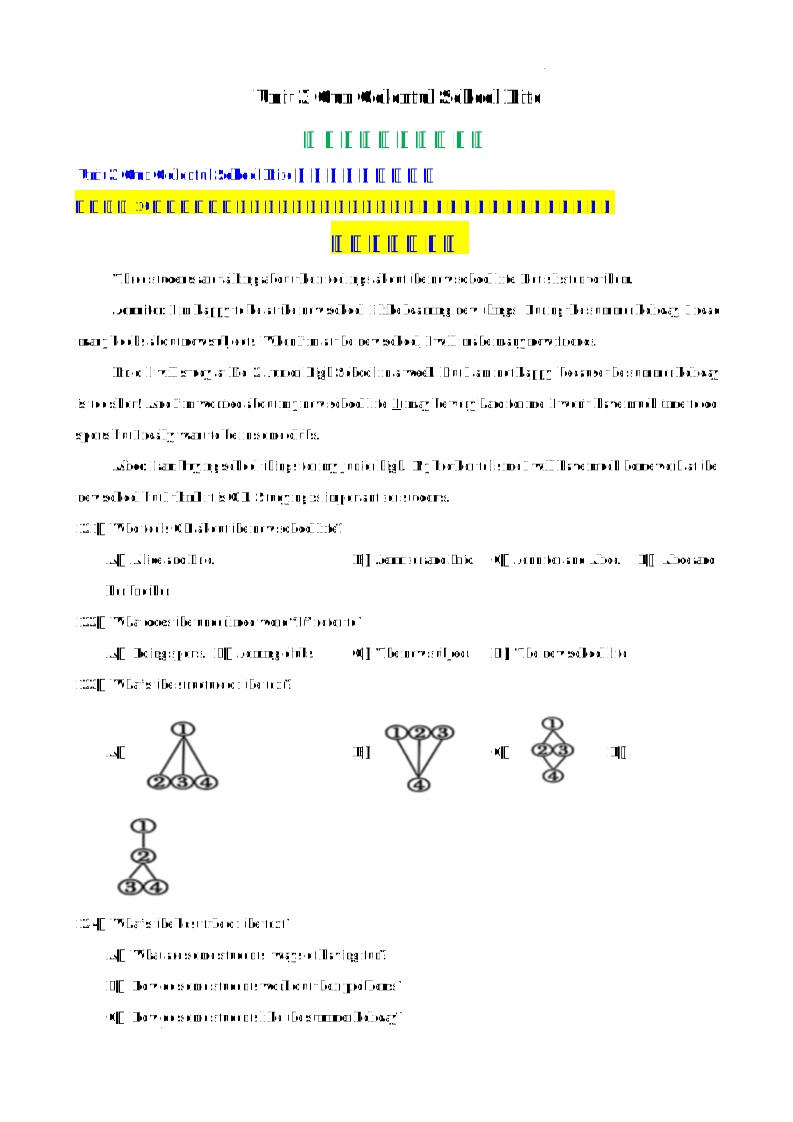
123.What’s the structure of the text?
A. B. C. D.
124.What’s the best title of the text?
A.What are some students’ ways of having fun?
B.How do some students work out their problems?
C.How do some students like the summer holiday?
D.What do some students think of their new school life?
【答案】121.C 122.D 123.A 124.D
【导语】本文是一篇记叙文,主要讲述了Jennifer、Eric和Alice三位学生对新学校生活的不同感受。
121.细节理解题。根据Jennifer的表述“I’m happy to be at the new school.”以及 Alice 的表述“My brother tells me I will have much homework at the new school but I think it is OK.”可知,Jennifer 对新学校生活感到开心,Alice觉得新学校生活没问题;而Eric表示“I am not happy”。因此对新学校生活感觉OK的是Jennifer和Alice。故选C。
122.词义猜测题。根据 Eric 的话“I’m worried about my new school life. It may be very hard for me.”可知,Eric担心新学校生活,认为“它”对自己来说可能很难,这里的“It”指代前文提到的“new school life”。故选D。
123.篇章结构题。文章第一段总述三位学生谈论对新学校生活的感受;第二、三、四段分别介绍Jennifer、Eric、Alice各自对新学校生活的看法,整体为“总—分”结构,与选项 A 的结构相符。故选A。
124.最佳标题题。根据文章开头“Three students are talking about their feelings about the new school life.”以及全文内容可知,文章围绕几位学生对新学校生活的看法展开,“What do some students think of their new school life?”能全面概括主旨。故选D。
Hi, I’m Tom. Let me tell you about my school day. I usually get up at 7:00 a.m. I eat breakfast and then go to school at 7:30 a.m.
My school is near my home, so I walk to school. It takes me 10 minutes. When I get to school, I first go to the classroom. I say “hello” to my classmates and our teacher.
Our first class starts at 8:00 a.m. My favorite class is English. In English class, we learn new words and make sentences. Last week, we learned food words like “cabbage”, “eggplant” and “tofu”. Our teacher told us to talk about our favorite food in English. It was interesting.
After four classes in the morning, we have lunch at school. I often eat with my friend, Jack. We talk about our classes and hobbies.
In the afternoon, we have two classes. After class, I join the English club. We practice speaking English and sing English songs. I go home at 5:00 p.m. I have a happy school day!
125.How does Tom go to school?
A.By bike B.By bus C.On foot D.By car
126.When does Tom’s first class start?
A.At 7:00 a.m. B.At 7:30 a.m. C.At 8:00 a.m. D.At 8:30 a.m.
127.What food words did Tom learn last week?
A.“Fox” and “mushroom” B.“Cabbage” and “eggplant”
C.“Apple” and “banana” D.“Dog” and “cat”
128.Who does Tom eat lunch with?
A.His parents B.His teacher C.Jack D.Lisa
129.What does Tom do after class in the afternoon?
A.He goes home B.He joins the English club
C.He plays football D.He reads books in the library
【答案】125.C 126.C 127.B 128.C 129.B
【导语】本文中汤姆介绍自己愉快的上学日,涵盖上学方式、课程等日常。
125.细节理解题。根据“My school is near my home, so I walk to school.”可知,“walk to school”和“on foot”意思相同,都是步行去学校。故选C。
126.细节理解题。根据文章第三段“Our first class starts at 8:00 a.m.”,可知第一节课在上午8点开始。故选C。
127.细节理解题。根据“Last week, we learned food words like ‘cabbage’, ‘eggplant’ and ‘tofu’.”,可知上周,我们学习了关于食物的词汇,比如卷心菜、茄子和豆腐。故选B。
128.细节理解题。根据“I often eat with my friend, Jack.”,可知Tom和Jack一起吃午饭。故选C。
129.细节理解题。根据“After class, I join the English club.”,可知下午课后Tom参加英语俱乐部。故选B。
Nicholas is from England. He is twenty-two years old. Although (尽管) he has only one hand, he likes playing the piano very much. And he wants to be a pianist. Now he is a student at the Royal College of Music (皇家音乐学院) in London. Let’s have a look at his day.
Nicholas’ Day
Get up
6:00
Have breakfast
7:00
Play the piano
8:00-11:00
Have lunch
12:00
Have a nap (打盹)
13:00-14:00
Play the piano
15:00-17:00
Have dinner
18:00
Play the piano
19:00-20:00
Go to bed
21:00
130.What’s the matter (麻烦) with Nicholas?
A.He has only one ear. B.He has only one eye.
C.He has only one hand. D.He has only one foot.
131.What does Nicholas do now?
A.A pianist. B.A student. C.A teacher. D.A worker.
132.How long (多久) does Nicholas play the piano in a day?
A.6 hours. B.5 hours. C.3 hours. D.2 hours.
【答案】130.C 131.B 132.A
【导语】本文是一篇应用文,讲述了英国22岁的独手青年Nicholas克服身体障碍,坚持追求钢琴梦想并在皇家音乐学院学习的日常生活安排。
130.细节理解题。根据文章“Although he has only one hand...”可知Nicholas只有一只手。故选C。
131.细节理解题。根据文章“Now he is a student at the Royal College of Music in London.”可知他目前的身份是学生。故选B。
132.推理判断题。根据表格可知,活动“Play the piano”对应的时间为“8:00-11:00”、“15:00-17:00”和“19:00-20:00”,由此可知他每天一共弹6个小时钢琴。故选A。
Hello! I’m Linda, a student at No 1 Middle School in Hefei. My school life is interesting and colorful.
Classes start at 8:00 a.m. We have four classes in the morning and two in the afternoon. I study many subjects. English is my favorite because it’s useful. I don’t like geography because it’s difficult and boring.
After school, I often play basketball with my classmates. Sometimes I read in the library. We must be quiet there.
We also have many clubs like art, music, and basketball. I joined the art club because I like drawing. We have club activities every Friday afternoon.
School is not only for learning happily. I really enjoy my colorful school life!
133.When do classes begin in Linda’s school?
A.At 7:30 a.m. B.At 8:00 a.m. C.At 8:30 a.m. D.At 9:00 a.m.
134.Why doesn’t Linda like geography?
A.Because it’s difficult and boring. B.Because the teacher is strict and not good.
C.Because it’s easy and has many tasks. D.Because she doesn’t have geography books.
135.What can we learn from the text about Linda?
A.She likes sports and music best. B.She only cares about her studies.
C.She doesn’t enjoy her school life. D.She enjoys different school activities.
136.What does the word “colorful” most likely mean in the text?
A.Having lots of colors. B.A lot of money.
C.Enjoying many activities. D.Full of problems.
137.What is the main idea of this text?
A.Linda’s favorite subject is English. B.Linda introduces her school life.
C.Linda doesn’t like geography. D.Linda’s school has many clubs.
【答案】133.B 134.A 135.D 136.C 137.B
【导语】本文以第一人称介绍Linda的日常课程、课外活动、社团参与及感受。
133.细节理解题。根据“Classes start at 8:00 a.m.”可知,Linda所在学校是上午8点上课。故选B。
134.细节理解题。根据“I don’t like geography because it’s difficult and boring.”可知,因为地理课既难又无聊,所以Linda不喜欢地理。故选A。
135.细节理解题。根据“After school, I often play basketball with my classmates. Sometimes I read in the library. We must be quiet there.”、“We also have many clubs like art, music, and basketball. I joined the art club because I like drawing. We have club activities every Friday afternoon.”以及“I really enjoy my colorful school life!”可知,她打篮球、去图书馆、参加美术社,喜欢丰富多彩的学校生活。即她喜欢不同的学校活动。故选D。
136.词句猜测题。根据“We also have many clubs like art, music, and basketball. I joined the art club because I like drawing. We have club activities every Friday afternoon.”可知,学校社团活动丰富,充满乐趣,“colorful”本意为“丰富多彩的”,在描述校园生活时,应理解为“享受许多活动”。故选C。
137.主旨大意题。通读全文可知,全文以第一人称介绍Linda的日常课程、课外活动、社团参与及感受。故选B。
Bob: Maths is my favourite subject. It is useful in our life and it is interesting. I have maths on Monday, Tuesday, Thursday and Friday.
Jane: I love English. It’s my favourite subject. I have English from Monday to Friday. I think this language is beautiful. I want to be an English teacher like Miss Green.
Eric: Someone thinks history is boring, but I don’t think so. I like it very much and I think it’s really interesting. I know a lot of great people in history classes. I have two history classes every week.
Tina: My mother is a singer. She sings very well. She is good at the piano and drawing. I love art because of her. I have an art lesson on Wednesday afternoon.
138.Bob doesn’t have maths on ________.
A.Monday B.Tuesday C.Wednesday D.Friday
139.Eric thinks history is ________.
A.interesting B.boring C.difficult D.healthy
140.________ is good at the piano.
A.Tina’s father B.Tina’s mother C.Tina’s aunt D.Tina’s uncle
【答案】138.C 139.A 140.B
【导语】本文是一篇记叙文,通过四个学生的自述,分别介绍了他们最喜欢的科目及相关信息。
138.细节理解题。根据“I have maths on Monday, Tuesday, Thursday and Friday.”可知,Bob没有数学课的日子是周三。故选C。
139.细节理解题。根据“Someone thinks history is boring, but I don’t think so. I like it very much and I think it’s really interesting.”可知,Eric认为历史是有趣的。故选A。
140.细节理解题。根据“My mother is a singer… She is good at the piano and drawing.”可知,Tina的妈妈擅长钢琴。故选B。
Every day, you may go to school by school bus. But do you have lessons on the bus? On a small farm in Mexico, there are no schools. A bus is the school. The driver of the bus is the teacher. It’s a school bus, but it doesn’t take the children to school. It just goes around from place to place, and sometimes it comes to this farm. The bus will stay here for three months. The farmers call it a school on wheels (轮子). Every time when the bus comes, the farmers will come, running to it, shouting and laughing. They warmly welcome the school bus.
When the bus is on the farm in the morning, the teacher teaches the small children. In the afternoon, the bigger children come to have their lessons because they must work in the morning. At night, the fathers and mothers come to school. They want to learn, too. The farmers hope that someday they can have a real school!
141.The school bus will ________.
A.take the children to school B.stay at a place for a whole year
C.go around from place to place D.take the fathers and mothers to school
142.What does the underlined word (划线单词) “it” in paragraph 1 refer to (指的是)?
A.the school B.the farm C.the children D.the bus
143.The bigger children have their lessons in the afternoon because ________ in the morning.
A.they have to work B.they can’t get up early
C.they have to do their homework D.the teacher wants to teach the small children first
144.Where may the passage come from?
A.A comic book (漫画书). B.A storybook.
C.A travel guide (指南). D.A magazine.
【答案】141.C 142.D 143.A 144.D
【导语】本文是记叙文。主要讲述了在墨西哥的一个小农场里,没有固定学校,一辆公交车充当移动学校,司机担任老师,为不同年龄段的孩子及家长授课,农场人们期盼拥有真正学校的故事。
141.细节理解题。根据“It’s a school bus, but it doesn’t take the children to school. It just goes around from place to place”可知,这辆公交学校会四处移动。结合选项,“go around from place to place”符合文意。故选C。
142.词句猜测题。根据前文“A bus is the school. The driver of the bus is the teacher. It’s a school bus... The farmers call it a school on wheels”可知,前文一直围绕“公交车”展开,此处“it”指代前文提到的“the bus”,即农民们把这辆公交车称为“车轮上的学校”。故选D。
143.细节理解题。根据“In the afternoon, the bigger children come to have their lessons because they must work in the morning”可知,大一点的孩子下午上课,是因为他们早上必须工作。“they have to work”与原文表述一致。故选A。
144.推理判断题。本文讲述特殊的教育形式,适合刊登在杂志上。故选D。
What class do you find interesting? Is it science, history, music or PE? To many students of a school in Liangjiang New Area, Chongqing, the answer is “cooking”.
The school begins the new class for its students. In the “cooking” class, teachers don’t ask students to read any books or look at the blackboard. They just instruct students how to make food. For example, with the teachers’ help, students make the nice Chongqing noodles. At the end of the class, students eat the noodles with their classmates.
Now more and more schools begin the “cooking” class. Students can study cooking skills at school. When they go back home, they can cook for their parents. And this makes parents very happy. They know it’s important for their children to have some life skills. “What an interesting class for children!” a parent says. “And it will help them a lot in their future life.”
145.What does the underlined word “instruct” probably mean in Paragraph 2?
A.Ask. B.Wish. C.Study. D.Teach.
146.At the end of a “cooking” class, students ________.
A.eat the food with classmates B.bring the food home for dinner
C.ask their teachers to eat the food D.borrow cooking books from teachers
147.What can we know according to parents?
A.They like to learn new skills. B.They feel happy about the class.
C.They like to help children to cook. D.They can teach kids to cook at home.
148.What can be the best title(标题)for the text?
A.Clean school. B.Happy family. C.Interesting class. D.Favourite food.
【答案】145.D 146.A 147.B 148.C
【导语】本文主要介绍了重庆两江新区一所学校开设的烹饪课,以及这门课受到学生和家长欢迎的情况。
145.词句猜测题。根据“In the ‘cooking’ class, teachers don’t ask students to read any books or look at the blackboard. They just instruct students how to make food.”可知,老师在烹饪课上是教学生做食物,“instruct”在这里的意思是“教”,与Teach意思相近。故选D。
146.细节理解题。根据“At the end of the class, students eat the noodles with their classmates.”可知,在烹饪课结束时,学生们和同学一起吃食物。故选A。
147.细节理解题。根据“What an interesting class for children!”a parent says.“And it will help them a lot in their future life.”可知,家长们对这门课感到很高兴。故选B。
148.主旨大意题。文章主要围绕有趣的烹饪课展开,介绍了课程内容以及家长和学生的反应等,Interesting class“有趣的课程”能很好地概括文章主旨。故选C。
I get up at half past six and get dressed for school. I don’t live far from the school, so I often walk there. Lots of students catch the school bus or their parents drive them to school. On Mondays, we usually start the day with a flag-raising ceremony (仪式) in the playground at seven thirty. The head teacher talks to us and gives us information about school.
This year I have seven subjects. We study Chinese, Maths, English, History, Geography, Politics and Biology.
We have 20 minutes for a break in the morning and an hour for lunch. Some students bring food to school for lunch, but my friends and I always eat in the school canteen because we can get a hot meal there every day.
Lessons end at 5 o’clock in the afternoon, but on Mondays and Wednesdays I stay at school until six o’clock. There are lots of activities in our school.
At the end of the day, I always spend two hours on homework—sometimes three hours, because we get lots of homework now.
149.How does the writer go to school?
A.By bus. B.By taxi. C.By bike. D.On foot.
150.Which subject does the writer have to study this year from the text?
A.Geography. B.Science. C.Music. D.Art.
151.The writer always ________.
A.eats lunch at home B.brings lunch to school
C.eats lunch at school D.eats lunch outside school
152.What does the writer usually do after 5 o’clock on Wednesday afternoon?
A.He takes part in school activities. B.He has evening lessons at school.
C.He plays the guitar at night clubs. D.He goes to the market for supper.
【答案】149.D 150.A 151.C 152.A
【导语】本文主要讲述了作者一天的学校生活。
149.细节理解题。根据“I don’t live far from the school, so I often walk there.”可知,作者步行去上学。故选D。
150.细节理解题。根据“This year I have seven subjects. We study Chinese, Maths, English, History, Geography, Politics and Biology.”可知,作者今年必须学习地理。故选A。
151.细节理解题。根据“but my friends and I always eat in the school canteen because we can get a hot meal there every day”可知,作者总是在学校食堂吃饭。故选C。
152.推理判断题。根据“but on Mondays and Wednesdays I stay at school until six o’clock. There are lots of activities in our school”可知,作者在星期一和星期三会在学校待到六点,因为学校有很多活动,由此可推断,作者在星期三5点之后通常会参加学校活动。故选A。
重难语篇提升练
Finding the Right Balance (平衡) in After-School Activities
After-school activities are important for children’s growth. These activities help children find new interests and build skills. However, too many activities can make children feel bad.
Rachel Cortese, a speech-language pathologist (病理学家), thinks that after-school activities can help children make friends and use up their energy (能量). When children do well in these activities, they often feel better about themselves. Taking part in the activities can also keep children away from dangerous behaviors (行为).
On the other hand, doing too many after-school activities can hurt (伤害) children’s confidence. Susan Newman, a social psychologist (心理学家), thinks that if children try to do everything, they might not be good at anything. That can hurt their confidence.
To avoid too many activities, children must understand their real needs and have time for free play. That can help them balance their activities.
It’s great for children to try different activities, but it is important for them to find a balance. So as students, make sure you have as much time to relax and have fun as you do for after-school activities.
153.What is Paragraph 2 mainly about?
A.Ways to help children find new after-school activities.
B.Ideas on helping children do well in after-school activities.
C.Bad things about after-school activities.
D.Good things about after-school activities.
154.Susan Newman probably agrees (同意) that ________.
A.children can be good at every after-school activity
B.students should manage to do more after-school activities
C.after-school activities can help children with their homework
D.too many after-school activities are bad for children’s confidence
155.What does the word “avoid” in Paragraph 4 most probably mean?
A.Keep children away from. B.Be interested in.
C.Put more effort into. D.Help children with.
156.What is the writer’s main purpose (目的) in writing this passage?
A.To ask children to take part in more after-school activities.
B.To tell children to have both after-school activities and free time.
C.To help children find more time to do after-school activities.
D.To make children know all the after-school activities.
【答案】153.D 154.D 155.A 156.B
【导语】本文是一篇说明文,主要讲述了课外活动对孩子的成长很重要,但是课外活动并不是多多益善,孩子们要在参加课外活动和放松玩耍之间找到平衡点。
153.主旨大意题。根据“after-school activities can help children make friends and use up their energy.”,“When children do well in these activities, they often feel better about themselves.”和“Taking part in the activities can also keep children away from dangerous behaviors. ”可知,这些都是参加课外活动的好处。故选D。
154.细节理解题。根据“Susan Newman, a social psychologist, thinks that if children try to do everything, they might not be good at anything. That can hurt their confidence.”可知,社会心理学家苏珊·纽曼认为,如果孩子试图做每件事,他们可能什么都不擅长。这会伤害他们的信心。故选D。
155.词句猜测题。根据“children must understand their real needs and have time for free play. That can help them balance their activities.”可知,孩子们要选择自己需要的课外活动,避免太多的活动。故选A。
156.主旨大意题。根据“So as students, make sure you have as much time to relax and have fun as you do for after-school activities.”和全文可知,这篇文章建议孩子们在参加课外活动和放松玩耍之间找到平衡点,两者都要兼顾。故选B。
Forget about boring classrooms, today’s schools are something else! Forests in buildings, no boundaries (边界) and lots of natural light... Schools are becoming more than just places to study!
A school with a wild side
In Huizhen High School in Ningbo, Zhejiang, the school building has a “forest” in it. The building’s designer, Ma Di, believes playing is just as important as learning in the classroom. So he puts a “forest in the air” into a teaching building. There are corridors (走廊) in the forest. They go through treetops. This lets students move up and down in the “forest”. Students can also see all of the city from its rooftop (屋顶上面的) park.
No fences on campus (无围栏校园)
Believe it or not, Futian High School in Shenzhen, Guangdong, has a fenceless campus. ▲ Students are no longer away from everyone—they can become part of the city. The school also has special green roofs (屋顶). They can give food and resting spaces for birds. During migrant (迁徙) seasons, students can see families of birds on the sports field.
Turning heads with something different
Los Angeles High School, US, is famous for its special campus. It has three special buildings: the theater, the library and the front hall. These buildings look like big art pieces and use a lot of natural light. The theater has metal (金属) walls. They reflect (反射) light and people can see it from far away. The library is in the shape of an ice cream and has a big window on the roof. The front hall faces Grand Avenue and has big round windows. Through the windows, students can look outside.
157.Which of the following is right according to “forest in the air” in Paragraph 2?
A.The teaching building is in the forest.
B.The teaching building only has a forest on the roof of it.
C.The teaching building is a place for students to learn about plants.
D.The teaching building has a “forest” for students to study and play.
158.Which of the following sentences can be put in ▲ ?
A.It shows beautiful walls to people outside.
B.It shares many spaces with people outside.
C.It makes people outside feed birds on the roof.
D.It keeps the students away from people outside.
159.What can we learn from the last paragraph?
A.The three special buildings are in the same style.
B.People can see the theater from far away in Grand Avenue.
C.The special campus can get natural light in different ways.
D.The big window on the wall of the library can’t reflect the light.
160.What’s the purpose of this passage?
A.To introduce the designers of these schools.
B.To introduce some special designs of these schools.
C.To compare (比较) the good and bad points of these schools.
D.To compare the differences among these schools.
【答案】157.D 158.B 159.C 160.B
【导语】本文主要介绍了三所特殊设计的学校。
157.细节理解题。根据“So he puts a ‘forest in the air’ into a teaching building. There are corridors (走廊) in the forest. They go through treetops. This lets students move up and down in the ‘forest’. Students can also see all of the city from its rooftop (屋顶上面的) park.”可知,教学楼内有一个“空中森林”,学生可以在其中学习和玩耍,故选D。
158.词句猜测题。根据“Students are no longer away from everyone—they can become part of the city.”可知,学生们不再远离所有人,他们可以成为城市的一部分,选项B“它与外面的人共享许多空间。”符合,故选B。
159.细节理解题。根据“These buildings look like big art pieces and use a lot of natural light.”可知,这些建筑利用了大量的自然光,故选C。
160.推理判断题。本文主要介绍了三所特殊设计的学校,因此文章的目的是介绍这些学校的一些特殊设计,故选B。
学科网(北京)股份有限公司
$
Unit 3 Our Colorful School Life
单元话题阅读理解练习
Unit 3 Our Colorful School Life单元话题:学校生活
本资料共10篇专题训练,从上到下依次按照难度分为基础语篇巩固练和重难语篇提升练
基础语篇巩固练
Three students are talking about their feelings about the new school life. Let’s listen to them.
Jennifer: I’m happy to be at the new school. I like learning new things. During the summer holiday, I read many books about new subjects. When I’m at the new school, I will make many new friends.
Eric: I will study at No. 2 Junior High School in a week. But I am not happy, because the summer holiday is too short! And I’m worried about my new school life. It may be very hard for me. I won’t have much time to do sports but I really want to be in some clubs.
Alice: I am buying school things for my junior high. My brother tells me I will have much homework at the new school but I think it is OK. Studying is important for students.
121.Who feels OK about the new school life?
A.Alice and Eric. B.Jennifer and Eric. C.Jennifer and Alice. D.Alice and her brother.
122.What does the underlined word “It” refer to?
A.Doing sports. B.Joining clubs. C.The new subject. D.The new school life.
123.What’s the structure of the text?
A. B. C. D.
124.What’s the best title of the text?
A.What are some students’ ways of having fun?
B.How do some students work out their problems?
C.How do some students like the summer holiday?
D.What do some students think of their new school life?
Hi, I’m Tom. Let me tell you about my school day. I usually get up at 7:00 a.m. I eat breakfast and then go to school at 7:30 a.m.
My school is near my home, so I walk to school. It takes me 10 minutes. When I get to school, I first go to the classroom. I say “hello” to my classmates and our teacher.
Our first class starts at 8:00 a.m. My favorite class is English. In English class, we learn new words and make sentences. Last week, we learned food words like “cabbage”, “eggplant” and “tofu”. Our teacher told us to talk about our favorite food in English. It was interesting.
After four classes in the morning, we have lunch at school. I often eat with my friend, Jack. We talk about our classes and hobbies.
In the afternoon, we have two classes. After class, I join the English club. We practice speaking English and sing English songs. I go home at 5:00 p.m. I have a happy school day!
125.How does Tom go to school?
A.By bike B.By bus C.On foot D.By car
126.When does Tom’s first class start?
A.At 7:00 a.m. B.At 7:30 a.m. C.At 8:00 a.m. D.At 8:30 a.m.
127.What food words did Tom learn last week?
A.“Fox” and “mushroom” B.“Cabbage” and “eggplant”
C.“Apple” and “banana” D.“Dog” and “cat”
128.Who does Tom eat lunch with?
A.His parents B.His teacher C.Jack D.Lisa
129.What does Tom do after class in the afternoon?
A.He goes home B.He joins the English club
C.He plays football D.He reads books in the library
Nicholas is from England. He is twenty-two years old. Although (尽管) he has only one hand, he likes playing the piano very much. And he wants to be a pianist. Now he is a student at the Royal College of Music (皇家音乐学院) in London. Let’s have a look at his day.
Nicholas’ Day
Get up
6:00
Have breakfast
7:00
Play the piano
8:00-11:00
Have lunch
12:00
Have a nap (打盹)
13:00-14:00
Play the piano
15:00-17:00
Have dinner
18:00
Play the piano
19:00-20:00
Go to bed
21:00
130.What’s the matter (麻烦) with Nicholas?
A.He has only one ear. B.He has only one eye.
C.He has only one hand. D.He has only one foot.
131.What does Nicholas do now?
A.A pianist. B.A student. C.A teacher. D.A worker.
132.How long (多久) does Nicholas play the piano in a day?
A.6 hours. B.5 hours. C.3 hours. D.2 hours.
Hello! I’m Linda, a student at No 1 Middle School in Hefei. My school life is interesting and colorful.
Classes start at 8:00 a.m. We have four classes in the morning and two in the afternoon. I study many subjects. English is my favorite because it’s useful. I don’t like geography because it’s difficult and boring.
After school, I often play basketball with my classmates. Sometimes I read in the library. We must be quiet there.
We also have many clubs like art, music, and basketball. I joined the art club because I like drawing. We have club activities every Friday afternoon.
School is not only for learning happily. I really enjoy my colorful school life!
133.When do classes begin in Linda’s school?
A.At 7:30 a.m. B.At 8:00 a.m. C.At 8:30 a.m. D.At 9:00 a.m.
134.Why doesn’t Linda like geography?
A.Because it’s difficult and boring. B.Because the teacher is strict and not good.
C.Because it’s easy and has many tasks. D.Because she doesn’t have geography books.
135.What can we learn from the text about Linda?
A.She likes sports and music best. B.She only cares about her studies.
C.She doesn’t enjoy her school life. D.She enjoys different school activities.
136.What does the word “colorful” most likely mean in the text?
A.Having lots of colors. B.A lot of money.
C.Enjoying many activities. D.Full of problems.
137.What is the main idea of this text?
A.Linda’s favorite subject is English. B.Linda introduces her school life.
C.Linda doesn’t like geography. D.Linda’s school has many clubs.
Bob: Maths is my favourite subject. It is useful in our life and it is interesting. I have maths on Monday, Tuesday, Thursday and Friday.
Jane: I love English. It’s my favourite subject. I have English from Monday to Friday. I think this language is beautiful. I want to be an English teacher like Miss Green.
Eric: Someone thinks history is boring, but I don’t think so. I like it very much and I think it’s really interesting. I know a lot of great people in history classes. I have two history classes every week.
Tina: My mother is a singer. She sings very well. She is good at the piano and drawing. I love art because of her. I have an art lesson on Wednesday afternoon.
138.Bob doesn’t have maths on ________.
A.Monday B.Tuesday C.Wednesday D.Friday
139.Eric thinks history is ________.
A.interesting B.boring C.difficult D.healthy
140.________ is good at the piano.
A.Tina’s father B.Tina’s mother C.Tina’s aunt D.Tina’s uncle
Every day, you may go to school by school bus. But do you have lessons on the bus? On a small farm in Mexico, there are no schools. A bus is the school. The driver of the bus is the teacher. It’s a school bus, but it doesn’t take the children to school. It just goes around from place to place, and sometimes it comes to this farm. The bus will stay here for three months. The farmers call it a school on wheels (轮子). Every time when the bus comes, the farmers will come, running to it, shouting and laughing. They warmly welcome the school bus.
When the bus is on the farm in the morning, the teacher teaches the small children. In the afternoon, the bigger children come to have their lessons because they must work in the morning. At night, the fathers and mothers come to school. They want to learn, too. The farmers hope that someday they can have a real school!
141.The school bus will ________.
A.take the children to school B.stay at a place for a whole year
C.go around from place to place D.take the fathers and mothers to school
142.What does the underlined word (划线单词) “it” in paragraph 1 refer to (指的是)?
A.the school B.the farm C.the children D.the bus
143.The bigger children have their lessons in the afternoon because ________ in the morning.
A.they have to work B.they can’t get up early
C.they have to do their homework D.the teacher wants to teach the small children first
144.Where may the passage come from?
A.A comic book (漫画书). B.A storybook.
C.A travel guide (指南). D.A magazine.
What class do you find interesting? Is it science, history, music or PE? To many students of a school in Liangjiang New Area, Chongqing, the answer is “cooking”.
The school begins the new class for its students. In the “cooking” class, teachers don’t ask students to read any books or look at the blackboard. They just instruct students how to make food. For example, with the teachers’ help, students make the nice Chongqing noodles. At the end of the class, students eat the noodles with their classmates.
Now more and more schools begin the “cooking” class. Students can study cooking skills at school. When they go back home, they can cook for their parents. And this makes parents very happy. They know it’s important for their children to have some life skills. “What an interesting class for children!” a parent says. “And it will help them a lot in their future life.”
145.What does the underlined word “instruct” probably mean in Paragraph 2?
A.Ask. B.Wish. C.Study. D.Teach.
146.At the end of a “cooking” class, students ________.
A.eat the food with classmates B.bring the food home for dinner
C.ask their teachers to eat the food D.borrow cooking books from teachers
147.What can we know according to parents?
A.They like to learn new skills. B.They feel happy about the class.
C.They like to help children to cook. D.They can teach kids to cook at home.
148.What can be the best title(标题)for the text?
A.Clean school. B.Happy family. C.Interesting class. D.Favourite food.
I get up at half past six and get dressed for school. I don’t live far from the school, so I often walk there. Lots of students catch the school bus or their parents drive them to school. On Mondays, we usually start the day with a flag-raising ceremony (仪式) in the playground at seven thirty. The head teacher talks to us and gives us information about school.
This year I have seven subjects. We study Chinese, Maths, English, History, Geography, Politics and Biology.
We have 20 minutes for a break in the morning and an hour for lunch. Some students bring food to school for lunch, but my friends and I always eat in the school canteen because we can get a hot meal there every day.
Lessons end at 5 o’clock in the afternoon, but on Mondays and Wednesdays I stay at school until six o’clock. There are lots of activities in our school.
At the end of the day, I always spend two hours on homework—sometimes three hours, because we get lots of homework now.
149.How does the writer go to school?
A.By bus. B.By taxi. C.By bike. D.On foot.
150.Which subject does the writer have to study this year from the text?
A.Geography. B.Science. C.Music. D.Art.
151.The writer always ________.
A.eats lunch at home B.brings lunch to school
C.eats lunch at school D.eats lunch outside school
152.What does the writer usually do after 5 o’clock on Wednesday afternoon?
A.He takes part in school activities. B.He has evening lessons at school.
C.He plays the guitar at night clubs. D.He goes to the market for supper.
重难语篇提升练
Finding the Right Balance (平衡) in After-School Activities
After-school activities are important for children’s growth. These activities help children find new interests and build skills. However, too many activities can make children feel bad.
Rachel Cortese, a speech-language pathologist (病理学家), thinks that after-school activities can help children make friends and use up their energy (能量). When children do well in these activities, they often feel better about themselves. Taking part in the activities can also keep children away from dangerous behaviors (行为).
On the other hand, doing too many after-school activities can hurt (伤害) children’s confidence. Susan Newman, a social psychologist (心理学家), thinks that if children try to do everything, they might not be good at anything. That can hurt their confidence.
To avoid too many activities, children must understand their real needs and have time for free play. That can help them balance their activities.
It’s great for children to try different activities, but it is important for them to find a balance. So as students, make sure you have as much time to relax and have fun as you do for after-school activities.
153.What is Paragraph 2 mainly about?
A.Ways to help children find new after-school activities.
B.Ideas on helping children do well in after-school activities.
C.Bad things about after-school activities.
D.Good things about after-school activities.
154.Susan Newman probably agrees (同意) that ________.
A.children can be good at every after-school activity
B.students should manage to do more after-school activities
C.after-school activities can help children with their homework
D.too many after-school activities are bad for children’s confidence
155.What does the word “avoid” in Paragraph 4 most probably mean?
A.Keep children away from. B.Be interested in.
C.Put more effort into. D.Help children with.
156.What is the writer’s main purpose (目的) in writing this passage?
A.To ask children to take part in more after-school activities.
B.To tell children to have both after-school activities and free time.
C.To help children find more time to do after-school activities.
D.To make children know all the after-school activities.
Forget about boring classrooms, today’s schools are something else! Forests in buildings, no boundaries (边界) and lots of natural light... Schools are becoming more than just places to study!
A school with a wild side
In Huizhen High School in Ningbo, Zhejiang, the school building has a “forest” in it. The building’s designer, Ma Di, believes playing is just as important as learning in the classroom. So he puts a “forest in the air” into a teaching building. There are corridors (走廊) in the forest. They go through treetops. This lets students move up and down in the “forest”. Students can also see all of the city from its rooftop (屋顶上面的) park.
No fences on campus (无围栏校园)
Believe it or not, Futian High School in Shenzhen, Guangdong, has a fenceless campus. ▲ Students are no longer away from everyone—they can become part of the city. The school also has special green roofs (屋顶). They can give food and resting spaces for birds. During migrant (迁徙) seasons, students can see families of birds on the sports field.
Turning heads with something different
Los Angeles High School, US, is famous for its special campus. It has three special buildings: the theater, the library and the front hall. These buildings look like big art pieces and use a lot of natural light. The theater has metal (金属) walls. They reflect (反射) light and people can see it from far away. The library is in the shape of an ice cream and has a big window on the roof. The front hall faces Grand Avenue and has big round windows. Through the windows, students can look outside.
157.Which of the following is right according to “forest in the air” in Paragraph 2?
A.The teaching building is in the forest.
B.The teaching building only has a forest on the roof of it.
C.The teaching building is a place for students to learn about plants.
D.The teaching building has a “forest” for students to study and play.
158.Which of the following sentences can be put in ▲ ?
A.It shows beautiful walls to people outside.
B.It shares many spaces with people outside.
C.It makes people outside feed birds on the roof.
D.It keeps the students away from people outside.
159.What can we learn from the last paragraph?
A.The three special buildings are in the same style.
B.People can see the theater from far away in Grand Avenue.
C.The special campus can get natural light in different ways.
D.The big window on the wall of the library can’t reflect the light.
160.What’s the purpose of this passage?
A.To introduce the designers of these schools.
B.To introduce some special designs of these schools.
C.To compare (比较) the good and bad points of these schools.
D.To compare the differences among these schools.
学科网(北京)股份有限公司
$
资源预览图
1
2
3

相关资源
由于学科网是一个信息分享及获取的平台,不确保部分用户上传资料的 来源及知识产权归属。如您发现相关资料侵犯您的合法权益,请联系学科网,我们核实后将及时进行处理。