Unit 4 Natural Disasters Reading for Writing 导学案-2025-2026学年高中英语人教版必修第一册
2025-10-23
|
2份
|
8页
|
315人阅读
|
0人下载
普通
资源信息
| 学段 | 高中 |
|---|---|
| 学科 | 英语 |
| 教材版本 | 高中英语人教版必修第一册 |
| 年级 | 高一 |
| 章节 | Reading for Writing |
| 类型 | 学案-导学案 |
| 知识点 | - |
| 使用场景 | 同步教学-新授课 |
| 学年 | 2025-2026 |
| 地区(省份) | 全国 |
| 地区(市) | - |
| 地区(区县) | - |
| 文件格式 | ZIP |
| 文件大小 | 74 KB |
| 发布时间 | 2025-10-23 |
| 更新时间 | 2025-10-23 |
| 作者 | 琛。 |
| 品牌系列 | - |
| 审核时间 | 2025-10-23 |
| 下载链接 | https://m.zxxk.com/soft/54498086.html |
| 价格 | 1.00储值(1储值=1元) |
| 来源 | 学科网 |
内容正文:
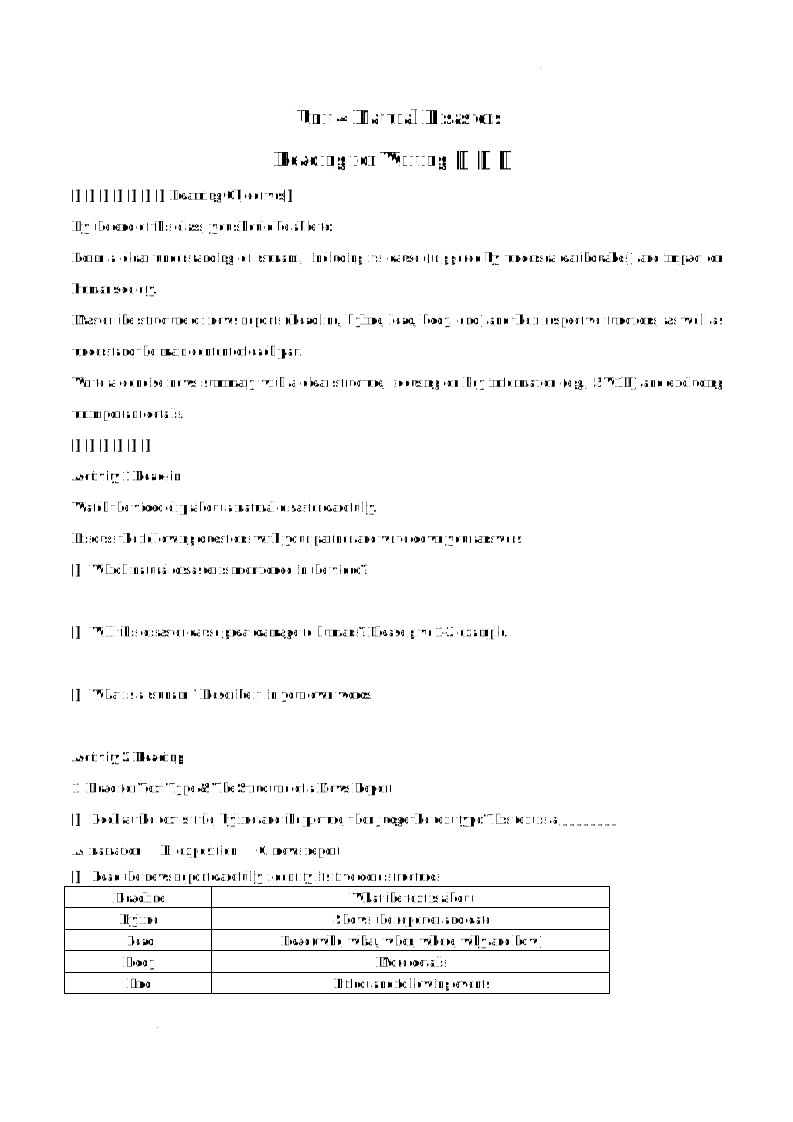
Unit 4 Natural Disasters
Reading for Writing 导学案
一、学习目标(Learning Objectives)
By the end of this class, you should be able to:
Form a clear understanding of tsunami, including its cause (triggered by undersea earthquakes) and impact on human society.
Master the structure of news reports (headline, byline, lead, body, end) and their respective functions, as well as understand the main content of each part.
Write a concise news summary with a clear structure, focusing on key information (e.g., 5W1H) and excluding unimportant details.
二、教学活动
Activity 1 Lead-in
Watch the video clip about a natural disaster carefully.
Discuss the following questions with your partner and write down your answers:
1 Which natural disaster is mentioned in the video?
2 Will this disaster cause great damage to humans? Please give 1-2 example.
3 What is a tsunami? Describe it in your own words.
Activity 2 Reading
1. Read for Text Type & The Structure of a News Report
① Look at the text’s title, byline and the picture, then judge the text type:This text is a ________
A. narration B. exposition C. news report
② Read the news report carefully, identify its five core structures
Headline
What the text is about
Byline
Shows the reporter and date
Lead
Lead (who, what, when, where, why and how)
Body
More details
End
Effect and following events
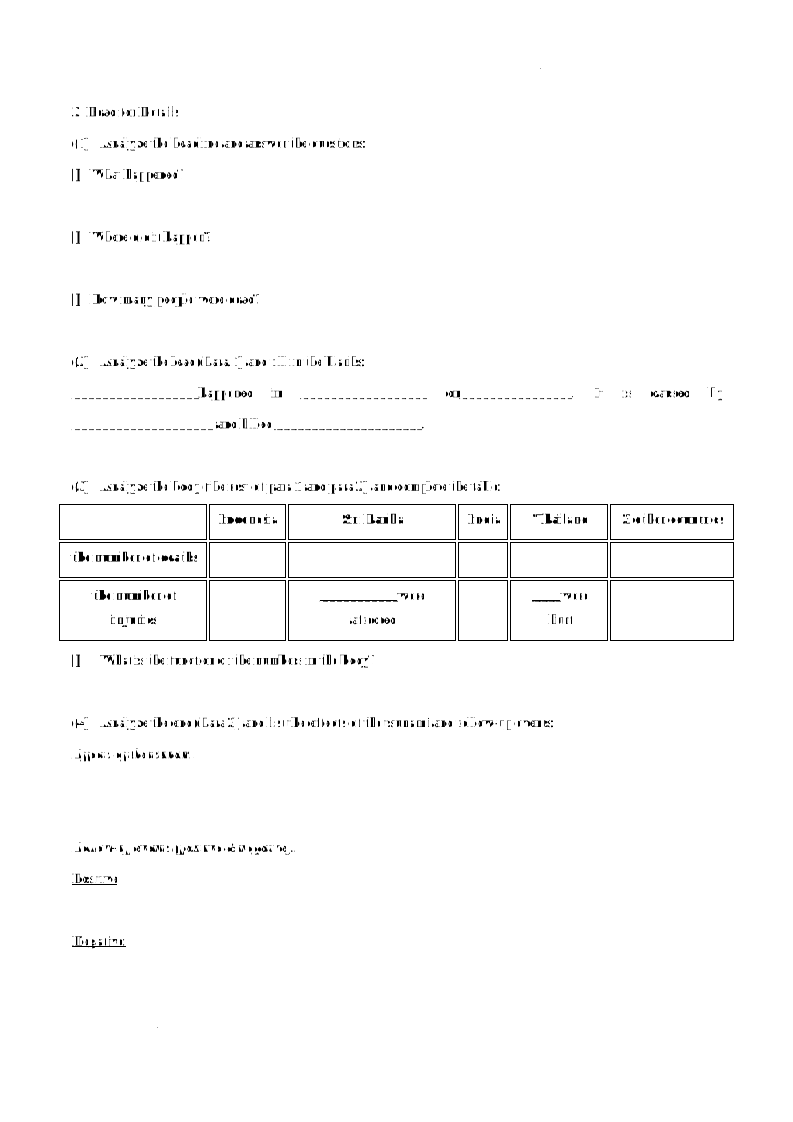
2. Read for Details
(1) Analyze the headline and answer the questions:
1 What happened?
2 Where did it happen?
3 How many people were dead?
(2) Analyze the lead (Para.1) and fill in the blanks:
__________________happened in __________________ on________________. It is caused by ____________________ and killed _____________________.
(3) Analyze the body (the rest of para 1 and para 2) and complete the table:
Indonesia
Sri Lanka
India
Thailand
3 other countries
the number of deaths
the number of injuries
___________were affected
____were hurt
· What is the function of the numbers in the body?
(4) Analyze the end (Para.3) and list the effects of the tsunami and follow-up events:
Effects of the tsunami:
Follow-up events (positive & negative):
Positive
Negative:
3. Study the Language Features of News Reports
How does the author describe numbers? Find out the phrases.
4. Read the summary of the news report. Check the main points it includes.
Summary: On 26 December 2004, a tsunami killed more than 6,500 tourists, fishermen, and other locals in Southeast Asia. Thousands of people are missing and the number of deaths is expected to grow. The damage caused by the tsunami is making it difficult for rescue workers to help the survivors.
date time place event cause effect following events
Activity 3 Writing
1. Pre-writing: Learn Summary Writing Steps
Step 1: List the main details of the news (e.g., 5W1H, key data).
Step 2: Write down the main idea of each part (lead, body, end) of the news report.
Step 3: Organize the main ideas logically, use proper conjunctions to connect them, and draft the summary.
Note:
A summary should be around one third the length of the original text.
Write down the key supporting points for the topic.
Do not include unimportant details or examples.
2. While-writing: Write a summary for the text on page 50.
Step 1: List the main details of the news (e.g., 5W1H, key data).
main details
Information
when(date)
what(event)
where(place)
who(effects)
following events
why
how
Step 2: Write down the main idea of each part (lead, body, end) of the news report.
Para 1: ______________________________________________________________________
Para 2: ______________________________________________________________________
Para 3: ______________________________________________________________________
Para 4: ______________________________________________________________________
Para 5: ______________________________________________________________________
Step 3: Organize the main ideas logically, use proper conjunctions to connect them, and draft the summary.
Strange things happened in the countryside before the earthquake.
An earthquake hit _________ China on 28 July 1976.
____________________________________________________________________________________________
________________________________________________________________________________________________________________________________________________________________________________________
____________________________________________________________________________________________
3. Post-writing: Peer Assessment
Exchange drafts. Use the checklists to give feedback on your partner’s draft.
"Yes" and "×" for "No", and write short comments if needed:
Does the summary give you a clear idea of what the text is about?
Does the summary include only the most important information of the text?
Is the summary the proper length?
Are there any spelling or punctuation errors?
Does the writer use correct tenses?
Activity 4 Homework
假定你是李华,上周日你校举办了5公里越野赛跑活动。请你为校英文报写一篇报道,内容包括:
1.参加人员;
2.跑步路线:从校门口到南山脚下;
3.活动反响。
注意:写作词数应为80左右。
学科网(北京)股份有限公司
$
Unit 4 Natural Disasters
Reading for Writing 导学案(教师用)
一、学习目标(Learning Objectives)
By the end of this class, you should be able to:
Form a clear understanding of tsunami, including its cause (triggered by undersea earthquakes) and impact on human society.
Master the structure of news reports (headline, byline, lead, body, end) and their respective functions, as well as understand the main content of each part.
Write a concise news summary with a clear structure, focusing on key information (e.g., 5W1H) and excluding unimportant details.
二、教学活动
Activity 1 Lead-in
Watch the video clip about a natural disaster carefully.
Discuss the following questions with your partner and write down your answers:
1 Which natural disaster is mentioned in the video?
Tsunami.
2 Will this disaster cause great damage to humans? Please give 1-2 examples.
The house will be destroyed, thus making people homeless.
People, especially children, will be swallowed by the water.
3 What is a tsunami? Describe it in your own words.
A tsunami is a huge ocean wave caused by an earthquake under the sea. When the wave reaches land, it can flood cities, wash away buildings, and be very dangerous. People who live near the coast have warning systems to help them stay safe.
Activity 2 Reading
1. Read for Text Type & The Structure of a News Report
① Look at the text’s title, byline and the picture, then judge the text type:This text is a ________
A. narration B. exposition C. news report
② Read the news report carefully, identify its five core structures
Headline
What the text is about
Byline
Shows the reporter and date
Lead
Lead (who, what, when, where, why and how)
Body
More details
End
Effect and following events
2. Read for Details
(1) Analyze the headline and answer the questions:
1 What happened?
A tsunami hit Asia.
2 Where did it happen?
Across Asia’s coastlines.
3 How many people were dead?
Over 6,500.
(2) Analyze the lead (Para.1) and fill in the blanks:
A tsunami happened in coastlines across Asia on 26 December 2004. It is caused by a powerful earthquake and killed more than 6,500 people.
(3) Analyze the body (the rest of para 1 and para 2) and complete the table:
Indonesia
Sri Lanka
India
Thailand
3 other countries
the number of deaths
the number of injuries
___________were affected
____were hurt
· What is the function of the numbers in the body?
To show the severity of the tsunami disaster and make the news report more concrete and convincing.
(4) Analyze the end (Para.3) and list the effects of the tsunami and follow-up events:
Effects of the tsunami:
Thousands of people are still missing, and the number of deaths is expected to grow.
Follow-up events (positive & negative):
Positive: Foreign aid is being organized for the tsunami-hit countries.
Negative: Dangerous conditions and damaged roads will make it difficult to deliver food and supplies.
3. Study the Language Features of News Reports
How does the author describe numbers?Find out the phrases.
at least At least 1,870 people were killed in Indonesia.
as many as Indian officials said as many as 1,900 had been killed along the southern coast.
the number of... stood at In Sri Lanka, some 1,600 kilometres west of the quake centre, the number of deaths stood at 2,498.
4. Read the summary of the news report. Check the main points it includes.
Summary: On 26 December 2004, a tsunami killed more than 6,500 tourists, fishermen, and other locals in Southeast Asia. Thousands of people are missing and the number of deaths is expected to grow. The damage caused by the tsunami is making it difficult for rescue workers to help the survivors.
date time place event cause effect following events
Activity 3 Writing
1. Pre-writing: Learn Summary Writing Steps
Step 1: List the main details of the news (e.g., 5W1H, key data).
Step 2: Write down the main idea of each part (lead, body, end) of the news report.
Step 3: Organize the main ideas logically, use proper conjunctions to connect them, and draft the summary.
Note:
A summary should be around one third the length of the original text.
Write down the key supporting points for the topic.
Do not include unimportant details or examples.
2. While-writing: Write a summary for the text on page 50.
Step 1: List the main details of the news (e.g., 5W1H, key data).
main details
Information
when(date)
on 28 July 1976
what(event)
an earthquake hit Tangshan City
where(place)
in the countryside of northeastern Hebei
who(effects)
many people were killed or injured
the city was greatly affected and nearly destroyed
following events
soldiers and medical workers arrived to offer help
a new Tangshan was built
why
none
how
none
Step 2: Write down the main idea of each part (lead, body, end) of the news report.
Para1: Strange things happened in the countryside of Hebei, China.
Para2: A strong earthquake hit Tangshan, and many people were killed or injured.
Para3: The city was greatly affected and nearly destroyed.
Para4: The rescue work began soon after the quakes.
Para5: With strong support from the government and the city’s people, the new city of Tangshan was built.
Step 3: Organize the main ideas logically, use proper conjunctions to connect them, and draft the summary.
Strange things happened in the countryside before the earthquake.
An earthquake hit _________ China on 28 July 1976.
________________________________________________________________________________________________________________________________________________________________________________________
3. Post-writing: Peer Assessment
Exchange drafts. Use the checklists to give feedback on your partner’s draft.
"Yes" and "×" for "No", and write short comments if needed:
Does the summary give you a clear idea of what the text is about?
Does the summary include only the most important information of the text?
Is the summary the proper length?
Are there any spelling or punctuation errors?
Does the writer use correct tenses?
Activity 4 Homework
假定你是李华,上周日你校举办了5公里越野赛跑活动。请你为校英文报写一篇报道,内容包括:
1.参加人员;
2.跑步路线:从校门口到南山脚下;
3.活动反响。
注意:写作词数应为80左右。
学科网(北京)股份有限公司
$
资源预览图
1
2

相关资源
由于学科网是一个信息分享及获取的平台,不确保部分用户上传资料的 来源及知识产权归属。如您发现相关资料侵犯您的合法权益,请联系学科网,我们核实后将及时进行处理。