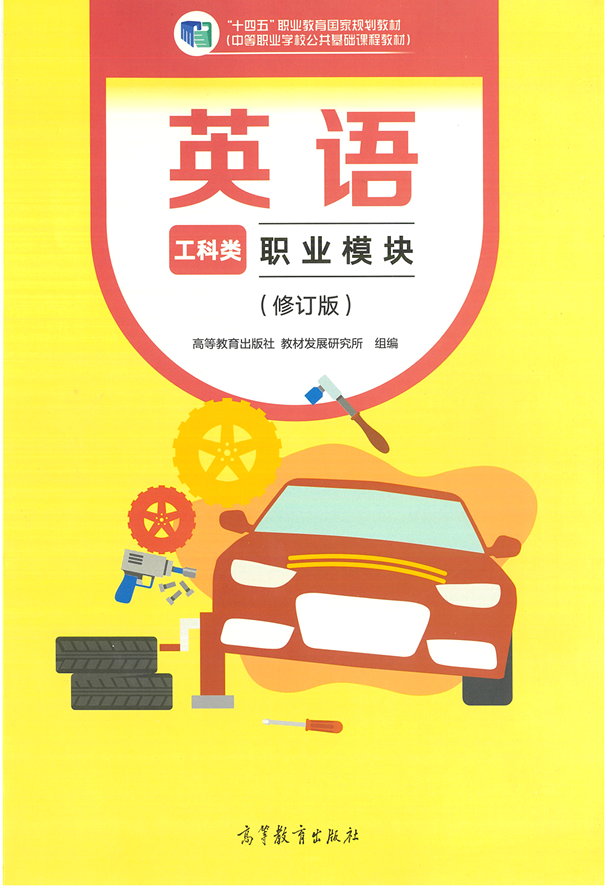
1.4 Working Together-Culture Language Practice(教学设计)-《英语 工科类职业模块》(高教版)《上好课》
2025-10-20
|
9页
|
103人阅读
|
0人下载
精品
内容正文:
课程名称
《英语 工科类职业模块》
(高教版)
Unit 1 Working Together
Language Practice
课型
新授课
课时
授课班级
授课时间
授课教师
教材分析
本节课的主要内容为教材第一单元的语言运用(Language Practice)板块。通过在具体语境中使用和操练词句,帮助学生巩固本单元重点词汇和语句,提高学生语言知识的综合运用能力。
学情分析
本节课的教学设计将具体语境中使用和操练词句,帮助学生进一步提高职场语言沟通能力,以及帮助学生体会在职场中尊重他人,团队合作的重要性,提升职业核心素养,基于此,学情分析如下:
(1)学生的知识储备:经过前6课时的学习,学生已积累并能够初步运用与“同事相处”“职场新人准备”相关的核心词汇与句型,对职场行为规范形成了基本认知。
(2)学生的能力水平:学生能在教师设定的结构化情境中进行简单的对话与信息匹配,但在脱离模板、自主应对复杂或突发情境时,灵活组织语言并提出解决方案的综合语用能力仍有待提升。
(3)学生的兴趣态度:学生对职场主题表现出较强的学习动机,普遍认同团队合作、与人为善的职场价值观,愿意在模拟情境中尝试表达与实践。
(4)学生的学习困难:主要困难在于将碎片化知识在真实语境中系统整合、灵活输出。学生个体差异显著:部分学生可进行连贯表达,而基础薄弱者仍停留于词汇和句型的机械记忆与套用,在理解与表达的深度和流畅性上存在明显分化。
教学目标
1.语言知识与理解:学生能够准确匹配本单元核心动词短语(如 deal with, take notesbe,friendly with,refuse)与其常见的名词搭配(如 different problems, some notes)。
2.语言技能与运用:学生能够分析语篇的逻辑顺序与连贯性,通过排序句子重构一个内容完整、逻辑合理的职场叙事短文。
3.情感态度与职业素养:通过练习内容,进一步强化对认真负责、有效沟通等积极职场行为的认同。
教学重难点
教学重点:指导学生在具体的句子和语篇中正确运用核心动词短语,确保形式准确、搭配得当。
教学难点:引导学生分析语篇逻辑,理解并排序句子,使其成为一段连贯、合理的叙事。培养学生从孤立的语言知识到连贯语篇输出的综合能力。
教学方法
情境教学法与任务型教学法相结合、启发式与支架式教学法、合作探究学习法
课前准备
PPT课件
教学媒体
希沃白板
教学过程
教学环节
教师活动设计
学生活动设计
设计意图
Step1 Vocabulary Review & Activation
1.Flashcard Quick-Response Competition:
(1)Prepare two sets of cards: one set with the unit's core verb phrases (deal with, make, ask, take, be friendly with, come from, refuse, understand) and another set with noun collocation cards (fellow workmates, others' feelings, smart questions, some notes, different problems, clients' requests, the same mistakes, different backgrounds).
(2)Divide the class into two teams. Have representatives from each team take turns coming to the front. The teacher randomly holds up one verb card and one noun card. The student must quickly judge if the collocation is correct and shout "Match!" or "No match!". Correct answers score points.
2.Categorization Challenge:
(1)After the quick-response round, guide the whole class to categorize all the correct collocations. Draw two areas on the whiteboard: "Work & Tasks" (e.g., deal with problems, take notes) and "People & Relationships" (e.g., be friendly with workmates, understand feelings).
(2)Have student groups discuss and place all correct collocations into the appropriate categories, and consider if they can add any other collocations.
3.Contextual Listening Warm-up:
Tt orally presents several sentences containing the target phrases, but with key words blanked out. For example: "When you have a meeting, it's helpful to __________." Students need to deduce the meaning and call out the correct phrase (take some notes).
1. Participate in the Competition: Actively participate in the flashcard quick-response game, rapidly recalling and identifying correct verb-noun collocations.
2. Collaborate to Categorize: Within their groups, discuss the core meaning of each collocation and sort them into the "Work & Tasks" or "People & Relationships" categories, deepening their understanding of the vocabulary's application scenarios.
3. Listen and Complete Phrases: Listen attentively to the teacher's oral sentences. Respond quickly based on the context, saying the missing core phrase aloud, making the transition from recognition to initial application.
1.高效激活记忆:通过高互动性、快节奏的竞赛游戏,在短时间内高强度地激活学生关于核心短语搭配的记忆,迅速集中学生注意力,营造积极的课堂氛围。
2.结构化知识网络:分类活动引导学生从孤立记忆单词转向结构化理解,帮助他们构建清晰的语义场,理解不同短语的功能和应用场景,为后续在具体语境中准确选用词汇打下坚实基础。
3.搭建应用桥梁:“听句补词”是一个承上启下的微型任务,它让学生在真实的听觉语境中验证和运用刚刚复习的搭配,实现了从机械匹配到意义理解的过渡,为接下来完成书面的句子和篇章练习做好了无缝衔接。
Step2
Collocation and Application
1.Guided Matching:
(1)Instruct students to complete the matching exercise (verbs with noun phrases).
(2)Conduct immediate whole-class feedback. Do not simply confirm answers; for each correct match, ask: "Can we make a complete sentence with this pair?" and elicit an example (e.g., for deal with - different problems: "Managers must deal with different problems every day."). This reinforces the transition from phrase to sentence level.
2.Contextualized Sentence Completion:
(1)Guide students to the sentence completion task. Before they start writing, highlight the importance of analyzing context clues:
a. Subject-Verb Agreement: Point to sentence 2 ("The young worker...") and ask: "What is the subject? Is it singular or plural? What ending might the verb need?"
b.Tense: Point to sentence 5 ("As suppliers, we...") and ask: "What time is this? Present, past, or future? What tense should we use?"
(2)Encourage students to work individually initially to foster independent thinking.
(3)After a few minutes, have them compare answers in pairs and discuss any differences, justifying their choices to each other.
3.Feedback and Error Analysis:
(1)Review answers as a class. For each sentence, nominate a student to provide the answer and read the full sentence.
(2)Proactive Error Correction: Anticipate common errors. For example, for sentence 3 ("You should try not to..."), if the answer is make the same mistakes, ask: "Why do we use the base form make here after to?" (Infinitive of purpose). If a student makes an error, guide them to self-correct by referring back to the grammar rule or context clue.
1.Match and Generate:
(1) Complete the verb-noun phrase matching task.
(2) Participate in the feedback session, listening to and potentially creating example sentences for the collocations.
2.Analyze and Complete:
(1) Independently read each sentence carefully, focusing on the subject and time context.
(2) Choose the correct phrase from the matched pairs and write it in the blank in its appropriate grammatical form (e.g., makes for 3rd person singular, make for infinitive).
(3) Engage in pair discussion to compare answers, explain reasoning, and resolve discrepancies collaboratively.
3. Participate and Clarify:
(1) Share answers during class feedback, reading the complete sentence aloud.
(2) Listen attentively to explanations, especially for corrections, to clarify understanding of grammar rules and usage.
1.实现从短语到句子的能力跨越:本环节的设计序列引导学生从孤立的词汇搭配识别,过渡到在完整的句子语境中应用这些搭配,这是语言习得的关键一步。
2.培养元认知策略与语言准确性:通过在练习前明确引导学生分析语法语境(如主谓一致、时态),培养他们关注语言细节的习惯,提升语言输出的准确性,并发展其自主学习策略。
3.促进协作学习:个人独立思考与同伴讨论相结合的模式,既保证了学生的自主思考空间,又创造了通过解释和协商来深化理解的机会,实现了同伴互学。
Step3
Discourse Construction
1.Strategy Instruction:
(1) Introduce the story sequencing task. Teach explicit strategies for solving it:
a. Find the Topic Sentence: Which sentence introduces the main character and situation? (Likely Richard found a job...).
b. Identify Chronological Markers: Look for words indicating time order (e.g., at night, before he went to bed, in the morning).
c. Track Pronoun References: Find pronouns (he, him, his) and identify which noun they refer to. This creates logical links.
d. Identify Cause and Effect: What problem caused which action? (e.g., Couldn't sleep -> Tired -> Made mistakes -> Went to hospital).
2. Monitor and Support Group Work:
(1) Organize students into small groups to discuss and sequence the sentences.
Answers:①—E; ②—G; ③—C; ④—D; ⑤—A; ⑥—H; ⑦—F; ⑧—B
(2) Circulate among groups, listening to their reasoning. Ask probing questions like "Why did you put sentence 2 after sentence 1?" or "What clue in sentence 4 tells you it must be the last one?" to deepen their logical thinking.
3.Confirm and Synthesize:
(1) Once groups have reached a consensus, confirm the correct sequence as a class.
(2) Critical Thinking Extension: Ask a follow-up question: "What is the irony or unexpected twist in this story?" (He thought he was only gone one night, but he had actually slept for two days). This checks deep comprehension and engages students with the humor of the narrative.
1.Apply Strategies and Discuss:
(1) Within their groups, actively apply the sequencing strategies taught by the teacher.
(2) Discuss the logical flow of events, using pronouns, time markers, and cause-effect relationships as evidence to support their proposed order.
(3) Negotiate with group members to agree on a final sequence.
2. Justify and Explain:
(1) Be prepared to explain their group's reasoning during the class feedback session, stating the evidence they used for key placement decisions.
(2) Engage with the teacher's extension question, analyzing the story's deeper structure and humorous element.
1.发展语篇能力与逻辑思维:语篇排序任务训练学生理解句子间的逻辑联系,把握叙事脉络,从理解单句提升到理解连贯语篇的高阶思维能力。
2.使问题解决策略显性化:通过教授并让学生实践具体的语篇排序策略(如寻找主题句、识别时间标记词),使他们掌握一套可迁移的阅读理解与写作组织方法。
3.推动协作式意义建构:小组合作要求学生清晰地阐述自己的推理,捍卫自己的观点,并通过协作共同构建出语篇的意义,从而达成更深层次、更具协商性的理解。
Step4: Production and Extension
1.Set the Scene: Show images depicting a workplace novice (e.g., named "Xiao Li") feeling troubled and stressed due to working with a "complaining and uncooperative" colleague.
2.Deliver the Task: Announce the core task: "Now, you are the 'Workplace Task Force'. In your groups, create a 'Workplace Survival Guide' for Xiao Li."
3.Specify Requirements: The guide must include:
(1)At least 3 specific, actionable suggestions.
(2) Must use at least 4 of the lesson's core vocabulary words/phrases (e.g., deal with, put yourself in their shoes, be friendly with, make mistakes, smooth out the relationship).
(3)Each suggestion must include a rationale.
1. Brainstorm: Group members brainstorm various possible suggestions based on personal experience and lesson content.
2. Select & Refine: Discuss the feasibility and effectiveness of each suggestion, selecting the most suitable 3.
3. Write & Design: Write the final suggestions on poster paper, optionally adding simple decorations (e.g., drawings, bolding key words), and prepare for presentation.
1.实现语言知识的综合运用与创造性输出:通过创设情境,让学生在解决复杂问题的过程中进行筛选、重组和运用,完成从语言理解到语言创造的关键跨越。
2.培养高阶思维与实际问题解决能力
3.强化合作学习与沟通素养:小组协作的形式模拟了职场中的团队合作场景,在此过程中不仅锻炼了英语表达能力,更提升了倾听、沟通与协作的软技能,为未来职场奠定基础。
Step5
Exercise
1.The meeting will ____________ (处理)these problems.
2.All living things ______________(依靠)the sun for their growth.
3.Put yourself in my shoes, and then perhaps you will stop ____________(抱怨)
4.Do you ____________(相处)well with your boss?
5.I’m ____________(厌烦) up with this boring life.
Answers: deal with; depend on; complaining; get on/along; fed
Step 6
Summary
1.词汇短语:我们重点练习了 deal with, make mistakes, take notes, put yourself in their shoes 等核心表达的用法。
2. 语篇技能:我们学习了通过寻找关键词、代词指代和时间顺序来理解故事逻辑的方法。
3. 核心主题:我们深入探讨了如何智慧地处理职场人际关系,并强调了尊重、理解与团队合作的重要性。
4.价值升华: “语言是工具,思维是核心,素养是目标”。鼓励学生将今天所学的语言和思维策略应用到未来的学习和工作中去。
Step 7 Homework
1.Organize class notes and review all core verb phrases and their collocations from this unit, creating your own example sentences.
2.Complete the grammar section related to this lesson's content in the workbook.
教学反思
本节课在课程开始初始,将传统的词汇匹配练习设计成网页交互游戏。这一数字化手段有效激发了中职学生的学习兴趣,课堂参与度和专注度显著提升。接下来则重点围绕动词短语搭配与语篇逻辑展开。从练习反馈看,学生能较好完成词汇匹配任务,但在句子填空和语篇排序中,动词形式运用和逻辑推理仍显薄弱。后续需增加半开放式的语境造句练习,强化语言形式与意义的结合,同时加强语篇衔接手段的显性教学,帮助学生建立从词汇到语篇的系统认知。
精品资源学科网独家享有版权,侵权必究!
学科网(北京)股份有限公司
$
资源预览图

1

2

3
由于学科网是一个信息分享及获取的平台,不确保部分用户上传资料的 来源及知识产权归属。如您发现相关资料侵犯您的合法权益,请联系学科网,我们核实后将及时进行处理。