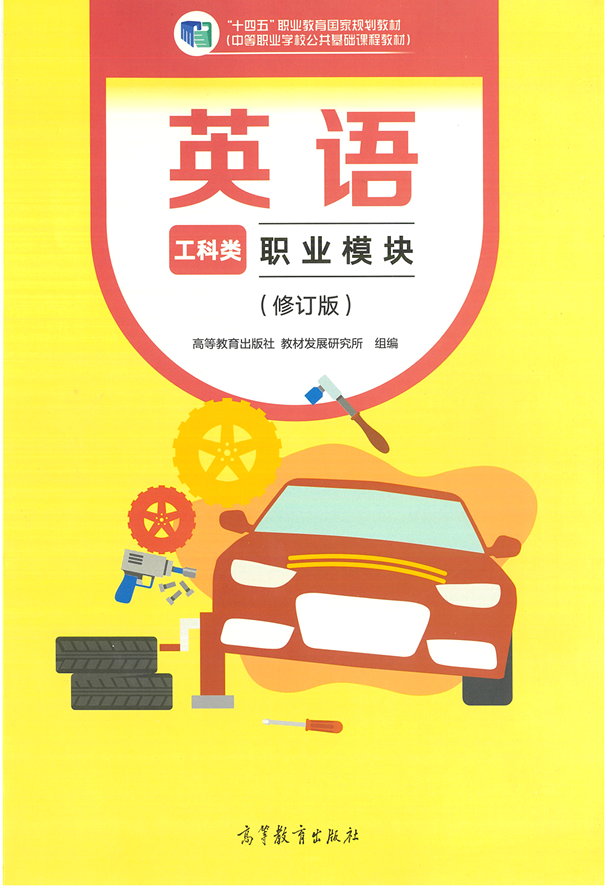
1.2 Working Together-Reading & Writing(教学设计)-《英语 工科类职业模块》(高教版)《上好课》
2025-10-14
|
12页
|
177人阅读
|
0人下载
精品
内容正文:
课程名称
《英语 工科类职业模块》
(高教版)
Unit 1 Working Together
Reading and Writing
课型
新授课
课时
授课班级
授课时间
授课教师
教材分析
本课教学内容选自教材第一单元的读写(Reading and Writing)板块,要求学生通过阅读第一天上班的入职建议和如何应对难相处同事的短文,培养学生的阅读能力。同时,训练学生进行信息整合,运用所学语言知识,完成如何与难相处同事和谐共处的短文,培养其写作能力。在读写活动中加深学生对团队精神的了解,体会团队合作的益处。
学情分析
本节课的教学设计将围绕“填补经验空白”和“促进语言深化”两大核心任务开展,基于此,学情分析如下:
(1)学生的知识储备
通过前面的学习,学生已初步构建了与“同事相处”主题相关的词汇和句型。他们能够识别并运用如“get along with”, “be fed up with”等核心短语,并能进行简单的问答和交流。这为本节课的读写活动提供了必要的语言输入基础。
学生的知识多局限于人际描述,对于职场新人应做的具体准备事项(如熟悉环境、了解文化)以及更具策略性的处事原则(如应对冲突、积极沟通)等相关表达较为陌生,词汇库有待扩充。
(2)学生的能力水平
在提供明确语言支架(如句型模板)的情况下,学生具备模仿和进行简单口语对话的能力。这表明他们已具备初步的语言模仿和套用能力。
从口头模仿到笔头输出的转化能力,以及理解和撰写连贯篇章的能力是当前的薄弱环节。同时,由于缺乏真实职场体验,他们将语言知识迁移到复杂情境中解决问题的能力明显不足。
(3)学生的兴趣态度
学生普遍认识到该主题与未来职业发展高度相关,因此对学习“如何在职场中立足与成长”抱有务实的学习期待。他们对真实的职场案例和实用的生存技巧会表现出更高的关注度。
正因缺乏亲身经历,部分学生可能感觉话题略显抽象,从而产生一定的心理距离。他们的学习态度在很大程度上依赖于教学情境的真实感和任务的吸引力。
(4)学生的学习困难与个体差异
学生的学习困难从两方面着手:
1. 经验缺失与认知空白:最大的难点在于如何填补“校园思维”与“职场现实”之间的沟壑。学生难以凭空想象职场新人的具体挑战和应对策略。
2. 语言的内化与深化:将已学的简单口语表达,提升为能够在读写中灵活、准确运用的正式和丰富的语言,是一个重要的能力跨越。
从个体差异方面来看,少数有过兼职或社会实践经验的学生,对话题的理解和共鸣会远高于毫无经验的同学;英语基础扎实的学生能更快地吸收新词汇并组织语言,而基础薄弱的学生则在词汇记忆和篇章理解上会持续面临挑战;外向型学生乐于在讨论中分享观点(即使语言简单),而内向型学生可能更倾向于通过书面形式进行深度思考与输出。
教学对策:因此通过引入真实的职场新人案例、设置循序渐进的读写任务,并巧妙地将“尊重、合作、沟通”等职业素养作为思政元素自然渗透于教学活动之中,从而帮助学生构建知识、提升能力、深化素养。
教学目标
1. 语言知识与理解
学生能够读懂关于职场新人建议及应对难相处同事的短文,并运用跳读等阅读策略,识别并概括出文本的段落大意与关键建议。
学生能够整合阅读中获得的信息,运用本单元所学核心词汇与句型,针对特定职场人际情境书面提出1-2条合理的建议。
2. 语言技能与运用
学生能够通过对比、分析等思维活动,辩证地看待新工作环境的利与弊,或分析不同同事的性格特点,并简要陈述自己的看法。
3. 情感态度与职业素养
学生能够通过本课的读写活动,认识到团队合作与和谐人际关系在职场中的重要性,初步树立与人为善、宽以待人的职场交往意识。
教学重难点
教学重点:在阅读时识别关键语句,快速获取文本的段落大意,读懂新入职的建议,如: dress code,arrive earlier,listen to learn the ropes,take notes,communication tools。
教学难点:能针对新工作环境的利弊,合理分析,结合提示语和例句,如neat and well-organized,keep … at a distance等等,有理有据地表达观点。
教学方法
情境教学法与任务型教学法相结合、启发式与支架式教学法、合作探究学习法
课前准备
PPT课件、听力材料
教学媒体
希沃白板
教学过程
教学环节
教师活动设计
学生活动设计
设计意图
TextA
Step1 Pre-reading
1. Context Setting: Display a picture of a new employee standing alone at an office doorway. Pose the question: "If you were this new employee, what would you be worried about? What would you do?"
2. Organize "Problem-Solution" Matching: Divide students into small groups. Distribute two sets of cards: one with "Problems" a new employee might face, and another with possible "Solutions." Students match the cards and briefly justify their choices.
Problem Cards: e.g., "I don't know what to wear.", "I'm afraid I'll be late.", "There is too much new information to remember."
Solution Cards: e.g., "Check the dress code before.", "Arrive 10 minutes earlier.", "Take notes."
3. Organize a Categorical Brainstorming Session: Divide students into small groups. Assign or have groups select from key categories such as "clothes, knowledge, relationship, environment, pay, training". Instruct them to quickly list as many specific considerations or tips as they can think of for their assigned category(s) within a time limit (e.g., 2-3 minutes).
3. Introduce the Topic: Guide students to focus on the "Solutions," and inform them that the text will provide an authoritative "New Employee Survival Guide."
1. Group Discussion & Matching: Within groups, discuss and match the "Problem Cards" with the "Solution Cards."
2. Group Brainstorming: Within groups, actively brainstorm and list down specific considerations or "dos and don'ts" for the assigned category/categories (e.g., for 'clothes': 'dress neatly', 'check the dress code', 'avoid casual wear').
3. Share Predictions: Share 1-2 matched pairs with the class and explain the reasoning.
1.共情与需求激发:从新人的“焦虑”和“问题”入手,更容易引发学生共鸣,激发他们从课文中寻找“解决方案”的强烈动机。
2.预测内容:通过匹配活动,学生已对课文内容进行了初步预测,带着验证预测的心态去阅读,专注度更高。
Step2 While-reading(TextA)
1. Set Skimming Task: Instruct students to read the text quickly to complete the main idea matching task (Textbook Activity 6).
2. Facilitate Deep Checking & Strategy Instruction: When checking answers, focus on asking: "What is the key word in this paragraph that helped you choose the answer?" Guide students to identify the topic words in each paragraph.
3. Guide Intensive Reading & Language Internalization:
(1) Language Focus: Explain core phrases: keep...in mind, learn the ropes, get familiar with, as quickly as possible.
(2) Organize "Infographic Creation" Activity: Provide a template and ask groups to transform the 5 textual tips into a visual infographic (e.g., draw a clock for "arrive earlier," a notebook for "take notes").
1. Skim for Gist: Read the text quickly to complete the main idea matching task.
2. Identify Key Words: Circle the core vocabulary in each paragraph that determines the main idea.
3. Collaborative Infographic Creation: Work in groups to create an infographic poster representing the 5 tips using simple drawings, symbols, and keywords.
1. 策略训练可视化:通过寻找“关键词”将抽象的阅读策略具体化,帮助学生掌握快速抓取主旨的技巧。
2. 深度加工促进记忆:“信息图制作”任务要求学生理解、转译、创造,这是一个对知识进行深度加工的过程,远比被动阅读更能巩固记忆。同时,它兼顾了不同学习风格(视觉型、动觉型)。
3. 为输出搭建支架:制作完成的信息图海报将成为读后活动的重要语言和内容支架。
Step3 Post-reading(TextA)
1. Deepen Understanding & Critical Thinking: Guide students to answer the questions in Textbook Activity 7. Pose an open-ended question: "Why should you be more careful on the first day of your work?"
2. Create Output Scenario – "Advisor Role-play": Set a new scenario: "Your friend Li Hua will start his first job as an office clerk tomorrow. He is very nervous. Please give him the 3 most important pieces of advice based on the text and your poster."
3. Facilitate Evaluation & Summarize: Invite groups to present their role-play. Provide feedback on language accuracy, reasonableness of advice, and communication effectiveness. Summarize the soft skills crucial for workplace success.
1. Answer Questions & Reflect Critically: Answer textbook questions based on the text. Think about, then share, which tip seems most difficult to follow and explain why.
2. Role-play & Output: In pairs, one student plays the nervous friend Li Hua, the other acts as the career advisor. The advisor uses the group's infographic poster to give three key pieces of advice and offer encouragement in English.
3. Present & Peer Assess: Present the role-play to the class. Listen to feedback from the teacher and peers.
1. 培养批判性思维:通过讨论“最难遵循的建议”,鼓励学生将文本内容与个人体验和社会认知相联系,进行个性化解读。
2. 实现情境化、有意义的口语输出:“顾问”角色赋予了学生权威感和责任感,使语言输出更具真实交际意义。之前信息成为有力的参考,极大降低了输出的焦虑和难度。
3. 巩固与升华:角色扮演是对本课所学语言和内容的综合运用,最终教师的总结将零散的建议提升到职业素养的高度,实现育人目标。
Text B
Step4 Pre-reading
1. Context Setting: Play a short video clip or show pictures depicting minor conflicts between colleagues in a workplace.
2. Initiate Brainstorming: Pose the questions: "In your opinion, what makes a co-worker 'difficult'? Can you describe some types of difficult people at work?" Write students' key terms on the board.
3. Organize "Problem Wall" Activity: Follow up by asking: "When you face such a colleague, what are your biggest confusions or problems?" Collect student responses to form a "Problem Wall," informing them they will seek answers in the text.
1. Watch & Think: Watch the video/pictures to engage with the scenario of workplace interpersonal conflict.
2. Participate in Brainstorming: Actively think of and describe types or characteristics of "difficult co-workers."
3. Contribute Confusions: Share specific confusions or challenges they might face with such colleagues.
1.激活背景知识与情感:通过视频和头脑风暴,激活学生对于“难相处同事”的已有认知和情绪体验,使学习主题与个人感受产生连接。
2.明确学习需求:“问题墙”活动将学生的个人困惑转化为明确的学习任务,使他们带着强烈的目的性进入阅读,旨在从文中找到解决问题的线索。
Step5 While-reading (TextB)
1. Set Skimming Task: Instruct students to read the text quickly to finish Activity9 and Activity10.
Check Answers & Guide Deep Analysis: After checking answers, pose deep analysis questions:
Activity9: 1) √; 2) √; 3) ×; 4) ×; 5) √
Activity10:1) E; 2) B; 3) C; 4) A; 5) D
2.Explain Language Points: Focus on core phrases:
get along with (contrast with get on with)
deal with (contrast with solve/handle)
depend on
put yourself in their shoes (explain as a key idiom)
1. Skim for Gist: Read quickly to complete the main idea task.
2. Read Intensively & Analyze: Re-read to find answers to the deep analysis questions, understanding the text's logic and core message.
3. Learn & Annotate: Underline core phrases and expressions in the text.
1.训练阅读策略:从泛读抓主旨到精读析细节,分层训练学生的阅读能力。
2.培养批判性思维:通过设置深层问题,引导学生超越字面意思,分析作者的论证逻辑和文章深层含义,实现与文本的深度对话。
3.夯实语言基础:在语境中学习和巩固核心词汇与短语,为后续的语言输出做好准备。
Step6 Post-reading (TextB)
1. Facilitate Activity 11 (Look and Complete):
(1) Instruction & Demonstration: Show the pictures and words from the textbook. Elicit the meaning of the words from students and clarify the purpose of the activity.
(2) Organize Group Work: Divide students into small groups to discuss and match the words to the correct sentences.
(3) Check Answers & Provide Feedback: Conduct a whole-class feedback session, nominate students to share their answers, and explain the reasons for their choices. Provide corrective feedback if necessary.
1)—B; 2)—A; 3)—D; 4)—C
2. Facilitate Activity 12 (Choose and Complete):
(1) Brainstorming Activation: Initiate a brainstorming session to review all the suggestions learned for dealing with difficult co-workers (from both the text and previous discussions).
(2) Monitor & Support Group Discussion: Instruct students to read the passage in Activity 12 and, in their groups, discuss and complete the blanks using the phrases from Activity 11.
(3) Check Answers & Consolidate Learning: Check the answers as a class. Provide feedback and emphasize how these phrases are used in a broader context to form complete advice.
1) examine yourself;
2) have a friendly chat;
3) limit contact and personal conversations;
4) report to the manager
1. Complete Activity 11 (Look and Complete):
(1) Observe & Identify: Look at the pictures and words, thinking about their meanings.
(2) Discuss & Match: Work in groups to discuss and match the words to the sentences.
(3) Participate & Check: Participate in the class feedback, sharing answers and listening to explanations.
2. Complete Activity 12 (Choose and Complete):
(1) Brainstorm Suggestions: Actively recall and verbalize the suggestions learned.
(2) Read, Discuss & Complete: Read the passage carefully and, through group discussion, decide which phrases best complete the blanks.
(3) Consolidate Understanding: Check answers and understand the application of these phrases in a practical context.
1.巩固词汇与短语:活动11直接巩固了本课的核心词汇,确保学生能够将词义与实际应用对应起来。
2.发展综合性语言技能:活动12训练学生在语篇语境中理解文意并选择恰当短语完成语段,从而提升阅读理解与词汇语法综合应用能力。
3. 搭建从识别到输出的学习阶梯:遵循从词汇匹配到语篇补全的递进序列,为语言内化提供结构化路径,为学生后续更自由的表达做好准备。
4.小组讨论鼓励学生进行同伴互教,通过观点协商与阐释加深对知识的理解。
Step7 Practice
1. Context Setting & Questioning: Present contrasting images of open-plan offices and cubicle-based offices. Pose the question: "Which office layout do you prefer and why?" Guide students to focus on key dimensions such as "privacy," "teamwork," and "efficiency."
2. Organizing & Facilitating Discussion: Divide students into small groups. Assign the task of analyzing the advantages (For) and disadvantages (Against) of the office environment from the images, requiring them to list reasoned arguments.
3. Providing Feedback & Language Scaffolding: Invite groups to present their viewpoints. Provide feedback focusing not only on the content of the ideas but also on guiding and refining the language students use.
For:
It makes a neat and well-organized environment. By laying out the desks and chairs in this way, the office will seem more spacious and well organized.
Against:
It is a barrier to teamwork. When a certain job is done on a group basis, this kind of seating makes it difficult for team members to get together and have a discussion.
4. Feedback&Discussion:
(1)Our school photography club is going to hold an International High School Student photography Show, whose theme is _____________(环境的) protection.(2023真题)
(2)A positive _____________ (工作环境)helps motivate employees. (2025联考)
(3) They're safety signs to help workers see the dangers at the workplace and avoid injury. (2025联考)
1. Analyzing & Thinking: Observe the images, understand the question, and consider the pros and cons of the office design based on the suggested dimensions.
2. Collaborative Exploration & Argumentation: Brainstorm within groups, gathering reasons from both supportive and opposing perspectives, and attempt to formulate complete arguments in English.
3. Presenting & Peer Learning: Select representatives to present the group's analysis to the class. Listen to other groups' viewpoints, absorbing different perspectives and potentially more effective ways of expression.
1.培养批判性思维与辩证看待问题的能力:通过要求学生对同一事物进行正反两方面的分析,强制其进行多角度思考,打破单一思维模式,这正是职场中的重要素养。
2.提升综合语言运用能力:将本单元所学的词汇和句型在一个全新的、需要思考的情境中进行应用,实现从语言模仿到观点表达的跨越。
Step 8
Summary
Tips on the first day on a new job.
Show up early.
Dress properly.
Be ready to take notes.
Engage your sense of hearing.
Learn about communication tools.
How to get along with difficult co-workers?
Depend on your self-confidence, knowledge and skills.
Show more respect and understanding.
Put yourself in their shoes and understand their feelings.
Step 9 Homework
Word Bank: get along with, put yourself in their shoes, deal with, negative, respect, cubicles, teamwork, efficient
Starting a new job can be challenging. To 1) _______________ difficult co-workers, it is important to show 2) _______________ and understanding. Sometimes, you need to 3) _______________ to see things from their perspective. A positive attitude is better than a 4) _______________ one. The design of the office also matters. For example, 5) _______________ can offer privacy and help some people become more 6) _____________. However, they might also be a barrier to 7) _______________. The key is to learn how to 8) _______________ different types of people and work environments.
(Answers: 1) deal with, 2) respect, 3) put yourself in their shoes, 4) negative, 5) cubicles, 6) efficient, 7) teamwork, 8) get along with)
教学反思
本节课围绕职场合作主题展开,学生能积极参与情境讨论,辩证分析办公环境利弊。但口语输出仍以模仿为主,创新表达不足;小组合作中部分学生参与度不均。未来需设计半开放式任务促进语言迁移,细化小组分工确保全员参与,并合理分配各环节时间,提升教学实效。
精品资源学科网独家享有版权,侵权必究!
学科网(北京)股份有限公司
$
资源预览图

1

2

3
由于学科网是一个信息分享及获取的平台,不确保部分用户上传资料的 来源及知识产权归属。如您发现相关资料侵犯您的合法权益,请联系学科网,我们核实后将及时进行处理。