Unit 9 Help yourself by helping others.派生法记单词 2025-2026学年教科版(五四学制)(2012)九年级英语上册
2025-09-29
|
6页
|
67人阅读
|
0人下载
普通
内容正文:
教科版九上 Unit 9 Help yourself by helping others.派生法记单词
序号
原词
例句
派生词
例句
1
directory /dəˈrektəri/ n. 电话簿
1. You can find his phone number in the phone directory.(你可以在电话簿里找到他的电话号码。)2. The address directory helps us locate our old classmates.(地址簿帮我们找到老同学的住址。)3. She kept a small directory in her bag for emergency calls.(她包里放了一本小电话簿,以备紧急通话使用。)
1. direct /dəˈrekt/ adj. 直接的;v. 导演;指挥2. directly /dəˈrektli/ adv. 直接地
1. We took a direct flight to Beijing to save time.(为了节省时间,我们乘直飞航班去了北京。)2. He will direct the school play next month.(下个月他将执导学校的话剧。)3. After school, she went directly home to finish her homework.(放学后,她直接回家完成作业。)4. You should speak directly if you have any questions.(如果你有问题,应该直言不讳。)
2
non-fiction /ˌnɒnˈfɪkʃən/ n. 非小说类文学作品
1. My teacher asked us to read a non-fiction book about history.(老师让我们读一本关于历史的非小说类书籍。)2. She prefers reading non-fiction because it tells real stories.(她更喜欢读非小说类作品,因为它讲述真实的故事。)3. The library has a large section for non-fiction books.(图书馆有很大一块区域放非小说类书籍。)
fiction /ˈfɪkʃən/ n. 小说(合成词基础词,前缀“non-”表“非”)
1. He is interested in science fiction and often reads such books.(他对科幻小说感兴趣,经常读这类书。)2. This love fiction is very popular among middle school students.(这本爱情小说在中学生中很受欢迎。)
3
psychologist /saɪˈkɒlədʒɪst/ n. 心理学家
1. The child psychologist helped the boy get over his fear of darkness.(儿童心理学家帮这个男孩克服了对黑暗的恐惧。)2. We can consult a psychologist when we have emotional problems.(当我们有情绪问题时,可以咨询心理学家。)3. Her mother works as a psychologist in a local hospital.(她妈妈在当地一家医院当心理学家。)
1. psychology /saɪˈkɒlədʒi/ n. 心理学2. psychological /ˌsaɪkəˈlɒdʒɪkl/ adj. 心理的
1. She plans to study psychology at university in the future.(她未来计划在大学学习心理学。)2. Educational psychology is important for teachers to understand students.(教育心理学对教师了解学生很重要。)3. Many teenagers have psychological problems due to study pressure.(很多青少年因学习压力有心理问题。)4. We should pay more attention to our psychological health.(我们应该更关注自己的心理健康。)
4
self-focus /self ˈfəʊkəs/ n. 以自我为中心
1. Too much self-focus makes it hard for him to make friends.(过于以自我为中心让他很难交到朋友。)2. We need to overcome self-focus and learn to care for others.(我们需要克服自我中心,学会关心他人。)3. Her self-focus made her ignore the feelings of her classmates.(她的自我中心让她忽视了同学的感受。)
1. focus /ˈfəʊkəs/ v./n. 集中(注意力)(合成词基础词,前缀“self-”表“自我的”)
1. Please focus on your study and don't look around.(请专注于你的学习,不要东张西望。)2. His focus on the experiment made him succeed.(他对实验的专注让他取得了成功。)
5
depression /dɪˈpreʃən/ n. 抑郁症;沮丧
1. He suffered from depression after his dog passed away.(他的狗去世后,他患上了抑郁症。)2. Her smile helped him get out of depression.(她的微笑帮他走出了沮丧。)3. Long-term loneliness may lead to depression.(长期孤独可能会导致抑郁症。)
1. depress /dɪˈpres/ v. 使沮丧;使抑郁2. depressed /dɪˈprest/ adj. 沮丧的;抑郁的
1. The bad exam result depressed her for a whole week.(糟糕的考试成绩让她沮丧了一整周。)2. The rainy weather always depresses my father.(下雨天总是让我爸爸心情低落。)3. She felt depressed because no one remembered her birthday.(她很沮丧,因为没人记得她的生日。)4. A depressed person needs more care and understanding.(抑郁的人需要更多的关心和理解。)
6
non-depressed /ˌnɒn dɪˈprest/ adj. 不忧郁的
1. Doing exercise every day helps us keep a non-depressed mood.(每天锻炼帮我们保持不忧郁的心情。)2. The non-depressed patients recovered faster than expected.(非抑郁症患者恢复得比预期快。)3. Her cheerful personality keeps her in a non-depressed state.(她开朗的性格让她一直处于不忧郁的状态。)
depressed /dɪˈprest/ adj. 沮丧的(合成词基础词,前缀“non-”表“非”)
1. He looked depressed after hearing the bad news.(听到坏消息后,他看起来很沮丧。)2. My sister was depressed because she failed the dance competition.(我姐姐因为舞蹈比赛失利而心情低落。)
7
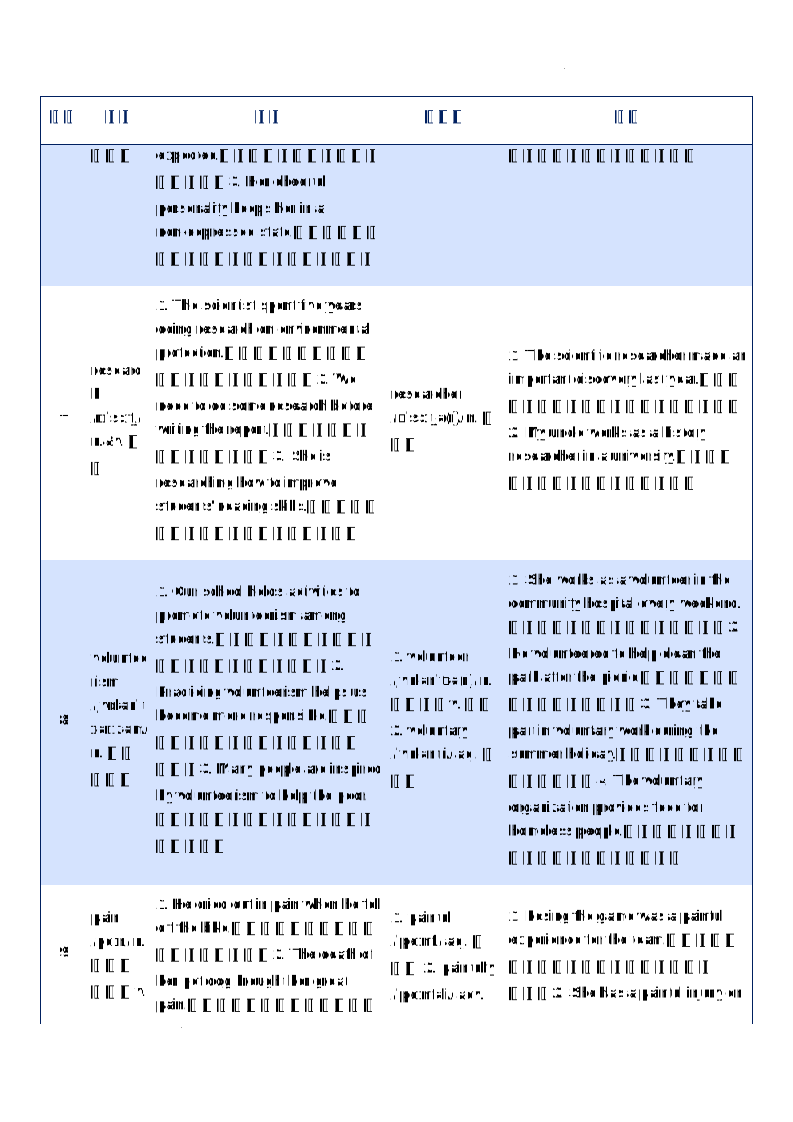
research /rɪˈsɜːtʃ/ n.&v. 研究
1. The scientist spent five years doing research on environmental protection.(这位科学家花了五年时间做环境保护研究。)2. We need to do some research before writing the report.(写报告前我们需要做些研究。)3. She is researching how to improve students' reading skills.(她正在研究如何提高学生的阅读能力。)
researcher /rɪˈsɜːtʃə(r)/ n. 研究者
1. The scientific researcher made an important discovery last year.(这位科研人员去年有了一项重要发现。)2. My uncle works as a history researcher in a university.(我叔叔在一所大学当历史研究者。)
8
volunteerism /ˌvɒlənˈtɪərɪzəm/ n. 志愿者主义
1. Our school holds activities to promote volunteerism among students.(我们学校举办活动,在学生中弘扬志愿者精神。)2. Practicing volunteerism helps us become more responsible.(践行志愿者主义帮我们变得更有责任感。)3. Many people are inspired by volunteerism to help the poor.(很多人受志愿者精神鼓舞,去帮助穷人。)
1. volunteer /ˌvɒlənˈtɪə(r)/ n. 志愿者;v. 自愿2. voluntary /ˈvɒləntri/ adj. 自愿的
1. She works as a volunteer in the community hospital every weekend.(她每周在社区医院当志愿者。)2. He volunteered to help clean the park after the picnic.(野餐后,他自愿帮忙清理公园。)3. They take part in voluntary work during the summer holiday.(他们暑假期间参加志愿工作。)4. The voluntary organization provides food for homeless people.(这个志愿组织为无家可归的人提供食物。)
9
pain /peɪn/ n. 痛苦;苦恼;v. 使痛苦
1. He cried out in pain when he fell off the bike.(他从自行车上摔下来时,痛得大叫。)2. The death of her pet dog brought her great pain.(宠物狗的去世给她带来了巨大的痛苦。)3. The wound on his leg pained him when he walked.(他走路时,腿上的伤口让他很疼。)
1. painful /ˈpeɪnfl/ adj. 痛苦的2. painfully /ˈpeɪnfəli/ adv. 痛苦地
1. Losing the game was a painful experience for the team.(输掉比赛对这支队伍来说是一次痛苦的经历。)2. She has a painful injury on her arm from the accident.(事故中她的胳膊受了很疼的伤。)3. He cried painfully after hearing his grandmother's death.(听到奶奶去世的消息,他痛苦地哭了。)4. She walked painfully because her feet were hurt.(她走路很艰难,因为脚受伤了。)
10
loneliness /ˈləʊnlinəs/ n. 孤单;寂寞
1. Living alone made her feel deep loneliness.(独居让她感到深深的孤独。)2. He suffered from loneliness after his friends moved away.(朋友搬走后,他饱受孤独之苦。)3. Reading books helps her get rid of loneliness.(读书帮她摆脱孤独。)
1. lonely /ˈləʊnli/ adj. 孤独的;寂寞的2. alone /əˈləʊn/ adj./adv. 独自的/地
1. The lonely old man often sits by the window waiting for his children.(这位孤独的老人经常坐在窗边等孩子。)2. She feels lonely when her parents are on business trips.(父母出差时,她感到很寂寞。)3. He lives alone but never feels lonely.(他独自生活,但从不感到孤独。)4. She finished the homework alone without any help.(她没靠任何帮助,独自完成了作业。)
11
factual /ˈfæktʃuəl/ adj. 真实的;实在的
1. The news report must be factual and not made up.(新闻报道必须真实,不能虚构。)2. We need to collect factual information for the project.(我们需要为这个项目收集真实信息。)3. His factual explanation made everyone understand the problem.(他实事求是的解释让所有人都明白了问题。)
fact /fækt/ n. 事实
1. Tell me the fact about what happened yesterday.(告诉我昨天发生的事实。)2. This story is based on facts, not imagination.(这个故事基于事实,而非想象。)
12
unbelievable /ˌʌnbɪˈliːvəbəl/ adj. 难以置信的
1. It's unbelievable that he finished the 1000-meter race in 3 minutes.(他3分钟跑完1000米,太难以置信了。)2. She told us an unbelievable story about her trip to Africa.(她给我们讲了一个关于非洲之旅的不可思议的故事。)3. The number of his fans has increased by an unbelievable amount.(他的粉丝数量增长了惊人的幅度。)
1. believe /bɪˈliːv/ v. 相信(合成词基础词,前缀“un-”表“不”)2. believable /bɪˈliːvəbl/ adj. 可信的3. unbelievably /ˌʌnbɪˈliːvəbli/ adv. 难以置信地
1. I believe that you can pass the exam if you work hard.(我相信只要你努力,就能通过考试。)2. We should believe in ourselves when facing difficulties.(面对困难时,我们应该相信自己。)3. This is a believable excuse because he really was ill.(这是个可信的借口,因为他确实病了。)4. Her explanation sounds believable to most people.(她的解释对大多数人来说听起来可信。)5. He ran unbelievably fast and won the race easily.(他跑得快得难以置信,轻松赢得了比赛。)6. The scenery in the mountains is unbelievably beautiful.(山里的风景美得惊人。)
13
direct /dəˈrekt/ v. 导演;指挥;adj. 直接的
1. He will direct a new film about teenagers' life.(他将执导一部关于青少年生活的新电影。)2. The teacher directed the students to clean the classroom.(老师指挥学生们打扫教室。)3. There is no direct train from our city to Shanghai.(我们城市到上海没有直达火车。)
1. director /dəˈrektə(r)/ n. 导演;负责人2. directly /dəˈrektli/ adv. 直接地
1. The film director won an award for his excellent work.(这位电影导演因其出色的作品获奖。)2. He went directly to the teacher's office after class.(课后他直接去了老师办公室。)
14
ancient /ˈeɪnʃənt/ adj. 古代的;古老的
1. We learned about ancient civilizations in history class.(我们在历史课上学了古代文明。)2. There are many ancient buildings in this old city.(这座古城里有很多古建筑。)3. Ancient people used stones to make tools.(古代人用石头制作工具。)
ancientness /ˈeɪnʃəntnəs/ n. 古老(初中拓展)
1. The ancientness of the temple attracts many tourists.(这座寺庙的古老吸引了很多游客。)2. We can feel the ancientness of the culture from these relics.(从这些文物中,我们能感受到文化的古老。)
15
swing /swɪŋ/ v. 摆动;n. 秋千
1. The monkey swung from one tree to another quickly.(猴子快速地从一棵树荡到另一棵树。)2. Children like to play on the swing in the park.(孩子们喜欢在公园的秋千上玩。)3. She swung her arms happily while walking.(她走路时开心地摆动手臂。)
1. swung /swʌŋ/ v. swing的过去式/过去分词2. swinging /ˈswɪŋɪŋ/ adj. 摆动的;活跃的
1. The door swung open when the wind blew.(风吹过时,门晃开了。)2. He swung his legs when he sat on the chair.(他坐在椅子上时晃着腿。)3. The swinging branches made shadows on the ground.(摆动的树枝在地上投下影子。)4. They had a swinging party to celebrate the festival.(他们举办了一场热闹的派对庆祝节日。)
16
solid /ˈsɒlɪd/ adj. 固体的;n. 固体
1. Ice is the solid form of water.(冰是水的固体形态。)2. The house is built on a solid rock foundation.(这房子建在坚固的岩石地基上。)3. We need to eat more solid food to keep healthy.(我们需要多吃固体食物来保持健康。)
1. solidly /ˈsɒlɪdli/ adv. 坚固地;扎实地
1. The table stands solidly on the floor.(这张桌子稳稳地立在地板上。)2. He studied solidly and got good grades in the exam.(他扎实学习,考试取得了好成绩。)
学科网(北京)股份有限公司
$
资源预览图

1

2
3
相关资源
示范课
由于学科网是一个信息分享及获取的平台,不确保部分用户上传资料的 来源及知识产权归属。如您发现相关资料侵犯您的合法权益,请联系学科网,我们核实后将及时进行处理。