Unit 2 reading提优作业 2025-2026学年译林版(2024)七年级英语上册
2025-09-25
|
5页
|
93人阅读
|
8人下载
资源信息
| 学段 | 初中 |
|---|---|
| 学科 | 英语 |
| 教材版本 | 初中英语译林版七年级上册 |
| 年级 | 七年级 |
| 章节 | Reading |
| 类型 | 作业-同步练 |
| 知识点 | - |
| 使用场景 | 同步教学-新授课 |
| 学年 | 2025-2026 |
| 地区(省份) | 江苏省 |
| 地区(市) | - |
| 地区(区县) | - |
| 文件格式 | DOCX |
| 文件大小 | 31 KB |
| 发布时间 | 2025-09-25 |
| 更新时间 | 2025-09-25 |
| 作者 | James727 |
| 品牌系列 | - |
| 审核时间 | 2025-09-25 |
| 下载链接 | https://m.zxxk.com/soft/54100757.html |
| 价格 | 0.50储值(1储值=1元) |
| 来源 | 学科网 |
内容正文:
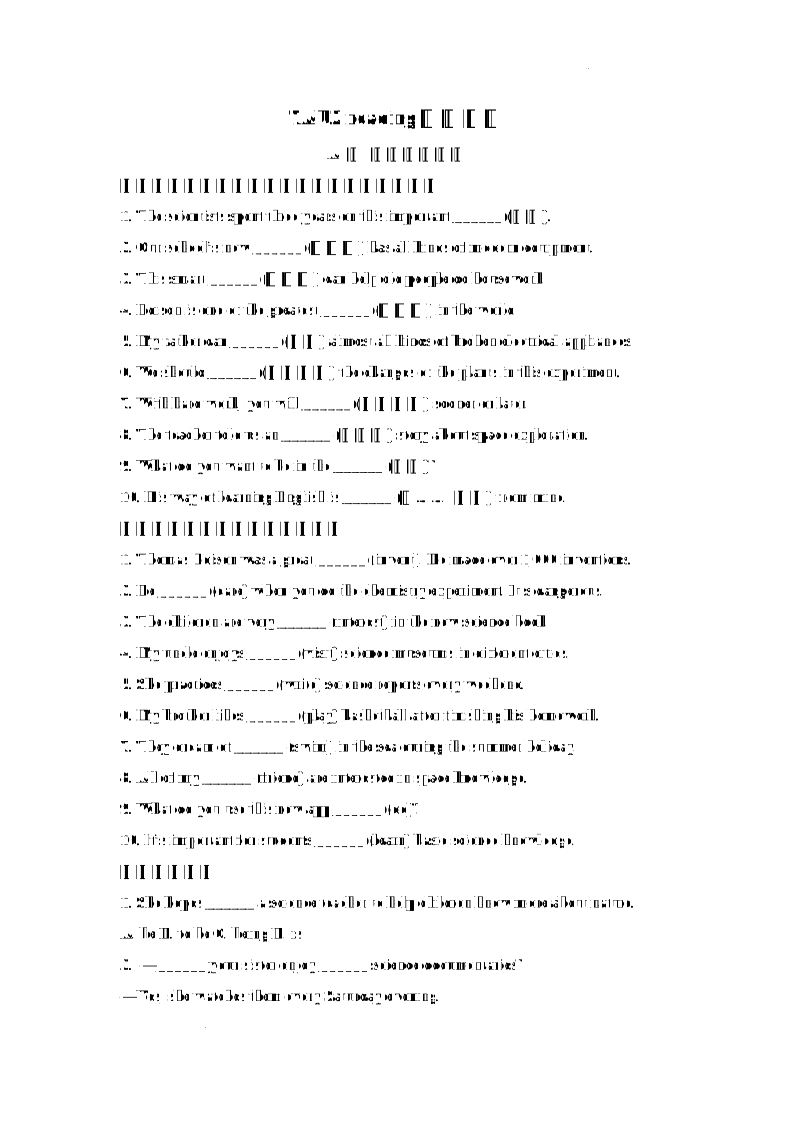
7AU2 reading提优作业
A 层 基础巩固训练
一、根据句意及所给汉语提示写出单词或短语
1. The scientists spent three years on this important ______ (发现).
2. Our school’s new ______ (实验室) has all kinds of modern equipment.
3. This smart ______ (机器人) can help old people do housework.
4. Edison is one of the greatest ______ (发明家) in the world.
5. My father can ______ (修理) almost all kinds of broken electrical appliances.
6. We should ______ (仔细观察) the changes of the plants in this experiment.
7. With hard work, you will ______ (实现目标) sooner or later.
8. The teacher told us an ______ (有趣的) story about space exploration.
9. What do you want to be in the ______ (未来)?
10. His way of learning English is ______ (与…… 不同) from mine.
二、用所给单词的适当形式填空
1. Thomas Edison was a great ______ (invent). He made over 1,000 inventions.
2. Be ______ (care) when you do the chemistry experiment. It’s dangerous.
3. The children are very ______ (interest) in the new science book.
4. My uncle enjoys ______ (visit) science museums in different cities.
5. She practices ______ (write) science reports every weekend.
6. My brother likes ______ (play) basketball after finishing his homework.
7. They dream of ______ (swim) in the sea during the summer holiday.
8. All of my ______ (friend) are interested in space knowledge.
9. What do you use this new app ______ (do)?
10. It’s important for students ______ (learn) basic science knowledge.
三、单项填空
1. She hopes ______ a science teacher to help children know more about nature.
A. be B. to be C. being D. is
2. —______ your sister enjoy ______ science documentaries?
—Yes, she watches them every Saturday evening.
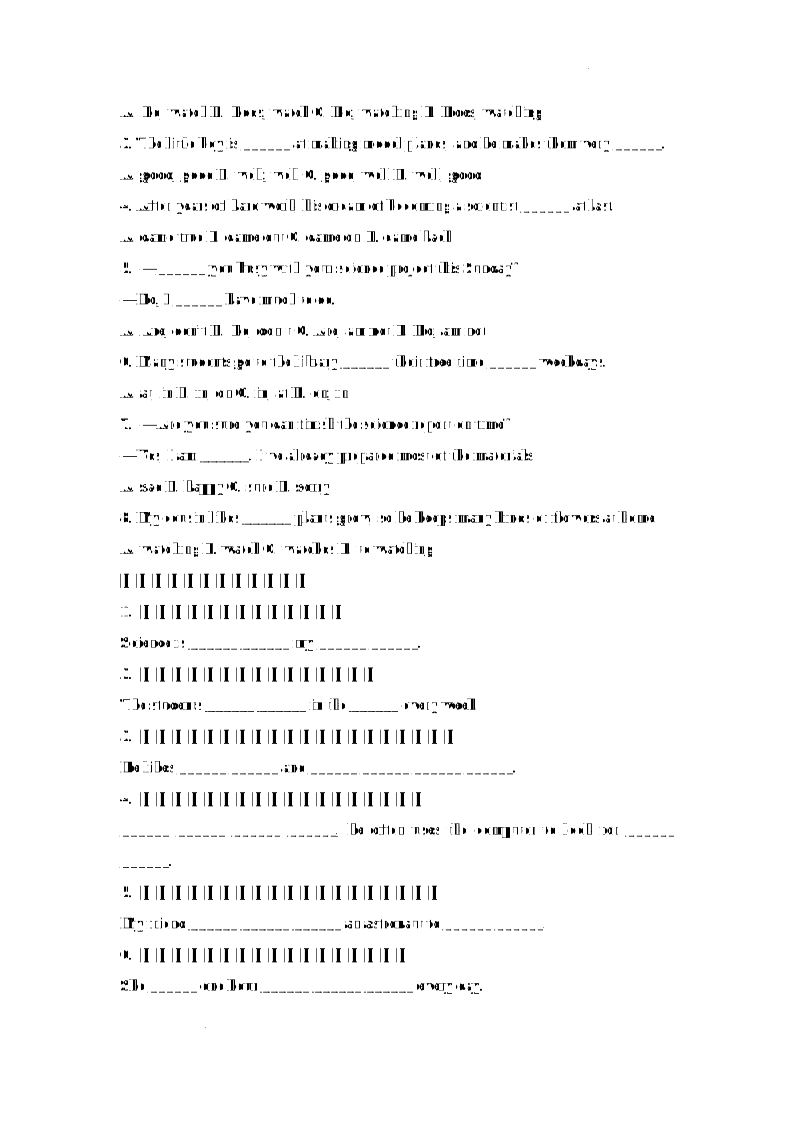
A. Do; watch B. Does; watch C. Do; watching D. Does; watching
3. The little boy is ______ at making model planes, and he makes them very ______.
A. good; good B. well; well C. good; well D. well; good
4. After years of hard work, his dream of becoming a scientist ______ at last.
A. came true B. came out C. came on D. came back
5. —______ you busy with your science project this Sunday?
—No, I ______ have much to do.
A. Are; don’t B. Do; don’t C. Are; am not D. Do; am not
6. Many students go to the library ______ their free time ______ weekdays.
A. at; in B. in; on C. in; at D. on; in
7. —Are you sure you can finish the science report on time?
—Yes, I am ______. I’ve already prepared most of the materials.
A. sad B. happy C. sure D. sorry
8. My cousin likes ______ plants grow, so he keeps many kinds of flowers at home.
A. watching B. watch C. watches D. to watching
四、根据中文提示完成句子
1. 科学是我最喜欢的学科之一。
Science is ______ ______ my ______ ______.
2. 学生们每周都会在实验室做实验。
The students ______ ______ in the ______ every week.
3. 他喜欢观察动物,并且记录它们的生活习惯。
He likes ______ ______ and ______ ______ ______ ______.
4. 在空闲时间,他常用电脑查找科学资料。
______ ______ ______ ______, he often uses the computer to look for ______ ______.
5. 我的朋友梦想成为一名宇航员,探索太空。
My friend ______ ______ ______ an astronaut to ______ ______.
6. 她每天花一小时阅读关于科学的书籍。
She ______ one hour ______ ______ ______ every day.
B 层 能力提升训练
一、完形填空(首字母填空)
My name is Tom. My favourite h______ is science. Every weekend, I spend two hours doing small science experiments at home. Sometimes I mix different liquids to see what color they turn, and sometimes I make simple machines with paper and glue.
I also like reading science books. My dad buys me a new one every month. From these books, I l______ a lot about animals, plants and the universe. Last month, I read a book about dinosaurs. It told me how dinosaurs lived millions of years ago. That was really amazing!
This term, our school started a science club. I j______ it right away. Every Wednesday afternoon, we do experiments together and share our ideas. Last week, we made a small rocket. It flew up to 10 meters high! I felt so proud.
I dream of becoming a scientist when I grow up. I hope my dream can c______ true. I will keep working hard for it.
二、阅读理解
A
My name is Lily. I’m 13 years old and I’m in Grade 7. I love science more than any other subject. Every summer, I join a science camp. There, I can do interesting experiments and learn from real scientists.
Last summer, the science camp’s theme was “Ecology (生态学)”. We went to a small forest near the city. The scientist there taught us how to observe birds. We used binoculars (望远镜) to watch their feathers and actions. We also recorded what they ate. After three days, we wrote a report about the birds in the forest. The scientist said our report was very good. That made me very happy.
This summer, the science camp will have a theme about “Robots”. I’m already looking forward to it. I want to learn how to make a small robot that can walk and talk. I think science is not only useful but also fun. It helps me understand the world better.
1. What does Lily love most?
A. Math B. Science C. English D. Art
2. What did Lily do in last summer’s science camp?
A. She made a small robot.
B. She observed birds in a forest.
C. She studied the stars in the sky.
D. She made different kinds of liquids.
3. Why does Lily think science is fun?
A. Because it helps her make many friends.
B. Because it helps her understand the world better.
C. Because it lets her travel to different places.
D. Because it lets her read many interesting books.
4. What is the main idea of the passage?
A. Lily’s school life.
B. Lily’s love for science.
C. The science camp’s history.
D. How to learn science well.
B
Mike is 14 years old. He likes travelling very much. He thinks travelling can help him learn about different cultures and meet new people. Last year, he went to Japan with his parents.
They stayed in Tokyo for a week. Tokyo is a big and busy city. Mike visited many interesting places there. He went to the Tokyo Tower, which is like the Eiffel Tower in Paris. He also went to a science museum. There, he saw many cool inventions, like a robot that can play the piano. Mike even took a photo with it.
Mike also tried Japanese food. He liked sushi (寿司) best. His parents told him that sushi is made with fresh fish and rice. Mike thought it was delicious. He also learned a little Japanese, like “hello” and “thank you”. The local people were very friendly to him. When he said “thank you” in Japanese, they smiled and said “you’re welcome”.
Mike wants to travel to more countries. Next year, he plans to go to Australia. He wants to see kangaroos (袋鼠) and learn about Australian culture.
1. Why does Mike like travelling?
A. Because he likes Japanese food.
B. Because he wants to visit the Tokyo Tower.
C. Because it helps him learn about different cultures.
D. Because it helps him make robots.
2. What did Mike see in the Japanese science museum?
A. A robot that can play the piano.
B. A big kangaroo.
C. The Eiffel Tower.
D. Many kinds of birds.
3. What did Mike learn in Japan?
A. How to make sushi.
B. A little Japanese.
C. How to play the piano.
D. How to make robots.
4. Where does Mike plan to go next year?
A. Japan B. France C. Australia D. The UK
答案
A 层 基础巩固训练
一、1. discovery 2. laboratory 3. robot 4. inventors 5. repair 6. observe carefully 7. achieve your goal 8. interesting 9. future 10. different from二、1. inventor 2. careful 3. interested 4. visiting 5. writing 6. playing 7. swimming 8. friends 9. to do 10. to learn三、1. B 2. D 3. C 4. A 5. A 6. B 7. C 8. A四、1. one of; favourite subjects 2. do experiments; laboratory 3. observing animals; recording their living habits 4. In his free time; science materials 5. dreams of becoming; explore space 6. spends; reading science books
B 层 能力提升训练
一、1. hobby 2. learn 3. joined 4. come二、A 篇:1. B 2. B 3. B 4. B;B 篇:1. C 2. A 3. B 4. C
学科网(北京)股份有限公司
$
资源预览图
1
2
相关资源
由于学科网是一个信息分享及获取的平台,不确保部分用户上传资料的 来源及知识产权归属。如您发现相关资料侵犯您的合法权益,请联系学科网,我们核实后将及时进行处理。