考前押题05 完形填空(10空)6大常考话题(期中专项训练)七年级英语上学期新教材译林版
2025-10-30
|
2份
|
85页
|
285人阅读
|
24人下载
资源信息
| 学段 | 初中 |
|---|---|
| 学科 | 英语 |
| 教材版本 | 初中英语译林版七年级上册 |
| 年级 | 七年级 |
| 章节 | - |
| 类型 | 题集-专项训练 |
| 知识点 | - |
| 使用场景 | 同步教学-期中 |
| 学年 | 2025-2026 |
| 地区(省份) | 全国 |
| 地区(市) | - |
| 地区(区县) | - |
| 文件格式 | ZIP |
| 文件大小 | 378 KB |
| 发布时间 | 2025-10-30 |
| 更新时间 | 2025-09-22 |
| 作者 | Mr Wang.教英语 |
| 品牌系列 | 上好课·考点大串讲 |
| 审核时间 | 2025-09-22 |
| 下载链接 | https://m.zxxk.com/soft/54030542.html |
| 价格 | 3.00储值(1储值=1元) |
| 来源 | 学科网 |
内容正文:
专题05 完形填空(10空)6大常考话题
话题1 个人介绍
话题4 学校活动
话题2 业余爱好
话题5 哲理感悟
话题3 学校设施
话题6 健康与运动
话题1 个人介绍
Passage 1
Hello, everyone! My name is Tommy. I’m from Nanjing but now I live in London. I live here because my 1 work here. My father teaches Chinese and my mother is an office worker.
I am in Grade 7 this year. The schools here are 2 from those in Nanjing. Our grade has 10 3 . Each class has about 15 students. The school day starts 4 here. We have our first lesson at 9:00 a.m. I have lunch at school with my friends. We can go 5 at 3:30 in the afternoon. After school, I spend a lot of 6 playing basketball. I 7 do many things that I would like to do.
We don’t have much 8 to do and my homework is usually interesting. We don’t do many exercises about the lessons. Sometimes I don’t think doing little homework is good 9 us, because many of my classmates aren’t good at 10 lessons. I think if we don’t do enough exercises, we may not understand lessons well.
1.A.friends B.parents C.teachers D.sisters
2.A.interesting B.far C.hard D.different
3.A.classes B.teachers C.students D.schools
4.A.fast B.late C.early D.slowly
5.A.to sleep B.to school C.to work D.home
6.A.date B.week C.day D.time
7.A.should B.can C.can’t D.shouldn’t
8.A.work B.housework C.homework D.exercise
9.A.at B.of C.for D.with
10.A.they B.them C.their D.theirs
Passage 2
Mr. White comes from London, 11 . He now 12 at a middle school in our city. He has sixty students. He often 13 his class is too big and it is hard work for him to talk with every student in English. He enjoys drinking black tea and Chinese food very much. He 14 playing football, but he doesn’t play well.
Mr. White’s son James and I are in the same class, so we are 15 . James sits 16 me because he is much shorter than me. 17 likes music very much. He likes playing football, 18 . After school we often play football on the playground. James often helps me learn English 19 his free time.
Mrs. White is a nurse. She works in a big hospital. At weekends, she likes shopping. Sometimes the White family go to the park or climb hills. They 20 China.
11.A.the UK B.the USA C.Canada D.Russia
12.A.plays B.studies C.teaches D.cooks
13.A.says B.talks C.speaks D.tells
14.A.learns B.lets C.wants D.likes
15.A.teachers B.friends C.workers D.classmates
16.A.in the front of B.by C.in front of D.near
17.A.His B.Him C.I D.He
18.A.too B.very C.also D.either
19.A.on B.in C.at D.for
20.A.are all like B.all like C.all are like D.like all
Passage 3
Dear Grandpa and Grandma,
How are you now? I’m doing well. My life in China is really 21 !
I’m in Grade Seven now, and my classmates here are so nice and 22 . And all my teachers are very helpful. There are fifty 23 in my class—twenty girls and thirty boys. But you know, in 24 , there are usually only 35 students in a class. And American students move (移动) from classroom to classroom for their classes. But in China, it’s very 25 ! We students don’t move. We 26 in the classroom and the teachers move from classroom to classroom. That’s interesting!
My classmates and teachers are very great, so it’s a good idea for me to 27 them. Students in China study very hard. They usually 28 school at 8:00 in the morning. After they study for seven 29 , they go home.
I’m so 30 to be in China with them. I love China. I learn some Chinese now.
Love,
Jane
21.A.quiet B.boring C.great D.bad
22.A.friendly B.short C.small D.cheap
23.A.teachers B.students C.workers D.doctors
24.A.China B.Japan C.England D.America
25.A.easy B.delicious C.difficult D.different
26.A.sleep B.travel C.stay D.shop
27.A.learn from B.laugh at C.look for D.put up
28.A.finish B.start C.lose D.find
29.A.minutes B.years C.days D.hours
30.A.sad B.sorry C.happy D.angry
Passage 4
Lucy lives in Shanghai with her parents, Mr. and Mrs. White. Mr. White 31 in a company. Mrs. White is a teacher in our school. She teaches 32 English. All of us are friendly to her and she loves us, too. Lucy likes eating Chinese food very much. 33 Sunday morning, she usually goes to the shop and helps her mother 34 some shopping. They often buy a lot of things.
But Lucy’s brother lives in a town near Paris in France. It is a wonderful but busy town. People there are very kind. On the old streets, there are many 35 . You can eat a lot of nice food there. He is a 36 in a restaurant. He makes Chinese food for it. It is very easy for people to go shopping because there are many supermarkets and shops. There is a big cinema near his home, 37 he can see great films there. People in the town will 38 feel bored (无聊) because there are a lot of things to do. Also 39 is easy for them to take a bus to get to the city centre from their town.
However, I like the nature best. So I would like to live in the country (农村). Here, I can enjoy the field and sunflowers. Sometimes rabbits run into my garden. I think it’s very comfortable to be in this kind of beautiful place. 40 my home! You will feel very happy here.
31.A.studies B.plays C.works D.shops
32.A.our B.us C.we D.her
33.A.In B.On C.At D.By
34.A.carry B.does C.go D.do
35.A.hospitals B.museums C.restaurants D.schools
36.A.postman B.worker C.teacher D.cook
37.A.after B.so C.if D.but
38.A.always B.usually C.often D.never
39.A.it B.this C.that D.these
40.A.Welcome to B.Go to C.Stay to D.Get to
Passage 5
Sophia is an eleven-year-old pupil. She lives in Brighton, the UK with her parents and she enjoys her daily life.
She usually gets up at a quarter to eight and starts her 41 day. Then she has a shower and gets dressed. After that, she goes downstairs and has 42 with her parents. She usually has milk, bread and an egg. Then she 43 her teeth because she wants to keep them white and healthy!
After that, she gets her schoolbag and goes to the bus stop to 44 the school bus. Classes start at half past eight and finish at half past four. She usually has lunch at the school canteen with her 45 at about 12 o’clock. Her best friend is Amy, and Sophia always 46 next to her at lunch. They usually have rice, soup, salad and meat. They have a 47 for one and a half hours and then they go on with their afternoon classes.
After school she returns home and does her homework. She is a very 48 pupil, so she never forgets any school tasks! After homework, she usually listens to music and watches TV a bit.
At half past seven, it is time for dinner. She likes eating a sandwich with strawberry juice. Then she usually reads a book or 49 the school day with her parents for a while.
50 , she goes to bed at about ten o’clock.
41.A.bad B.boring C.tired D.busy
42.A.breakfast B.lunch C.dinner D.tea
43.A.washes B.watches C.brushes D.worries
44.A.find B.catch C.keep D.stop
45.A.brothers B.parents C.sisters D.classmates
46.A.sits B.waits C.plays D.works
47.A.party B.meeting C.break D.lesson
48.A.famous B.hard-working C.quiet D.poor
49.A.thinks about B.puts on C.listens to D.talks about
50.A.Finally B.Carefully C.Early D.Quickly
话题2 业余爱好
Passage 1
Everyone has hobbies. What’s your hobby? The 51 may be different. A lot of people like to 52 different things as their hobbies, such as stamps, coins or even unusual things.
Sandy likes keeping rocks. She spends all her free time 53 rocks. Sandy and her uncle take hikes together during weekends and holidays. They pick up interesting rocks on their way and add them to their collection. At school, she is interested in showing them to her friends 54 . She thinks rocks are a kind of beauty of nature.
I like collecting coins. I collect all kinds of coins in my free time. I enjoy collecting coins 55 I can learn many things from them. For example, some coins can show what happened in the past, so I can learn about 56 and culture from them. I also have a sentimental (情感的) reason why I collect coins. When my grandfather passed away, he gave me the coin collection he had been collecting for over 50 years. It has been a tradition in my family to keep the coins from the previous (先前的) generation from then on. It is my 57 to start my coin collection and pass it on to the next generation.
But my father is different. He likes collecting 58 from newspapers. When he finds a piece of good news he likes, he marks it with a pen. After he 59 reading all the newspapers, he begins to cut out the news he marks from the newspapers. Then he glues them onto his notebook and writes down the date in the middle of the page. When we get home, we can’t see 60 good newspapers. Only pieces of paper are left on the desk. My father has many notebooks of this kind. He often shows them to us. He is proud of them.
51.A.character B.answer C.picture D.question
52.A.count B.catch C.collect D.call
53.A.climbing up B.looking for C.chatting with D.cutting out
54.A.happily B.quickly C.safely D.widely
55.A.because B.until C.or D.but
56.A.science B.problems C.history D.buildings
57.A.turn B.tip C.problem D.character
58.A.stamps B.ads C.notebooks D.news
59.A.likes B.finishes C.enjoys D.practises
60.A.any B.much C.few D.little
Passage 2
I am Xu Haican and I’m 12 years old. My hobby is Chinese kung fu. I thought kung fu films were great 61 I was 6 years old. My dream was to learn kung fu and share my 62 with my peers (同辈). So I came to Southern Shaolin Temple (寺) in Quanzhou. My master says I am 63 at it. My peers in the temple are also my friends. 64 play chess and games after training (训练). Sometimes our master is strict (严格的) with us, 65 I’m thankful to him. He wants us to learn it well. Most of us 66 the Wuzu Fist (五祖拳) in the temple. The temple is a warm 67 to me. I like the life here and our master 68 us a lot of things, gives us tasty food, and takes us out to play games. The kung fu spirit (精神) is 69 making your body strong, having righteousness (正义) in your heart, and working hard for the whole country. Our master always tells us to pass on (传递) the Chinese kung fu and 70 it with the world. I will try my best to do it.
61.A.what B.when C.where D.why
62.A.lessons B.skills C.books D.time
63.A.good B.fit C.bad D.special
64.A.He B.They C.We D.You
65.A.and B.also C.because D.but
66.A.learn B.change C.plan D.dance
67.A.energy B.festival C.home D.world
68.A.knocks B.wishes C.gets D.teaches
69.A.with B.about C.past D.to
70.A.enjoy B.practise C.show D.share
Passage 3
Lily is a little girl at school. She is shy and she is not popular (受欢迎的). But she 71 playing football. Her friends and classmates always play tricks on Lily for her 72 in football. However, Lily just wants to play her 73 sport. She wants to become a great football player.
Every day, after coming back from school, Lily quickly finishes her homework and goes out to 74 football. Her mother knows Lily’s 75 for the sport and always encourages (鼓励) her to go play.
One day, the school said there would 76 a football game. Lily wanted to give it a try. She took part in the game and her 77 made fun of her once again. Lily did not give up. She tried her best to score goals (进球), one after 78 .
The other students were surprised to see how 79 Lily played. Their team did best with her help. They even won the game in the end.
With her hard work, Lily proved (证明) herself to others. If you’re strong and determined (坚定的) like her, you can achieve your 80 one day.
71.A.hates B.wants C.enjoys D.needs
72.A.wish B.treat C.fun D.interest
73.A.favourite B.best C.different D.most
74.A.practise B.start C.keep D.find
75.A.work B.love C.score D.feature
76.A.come B.play C.be D.get
77.A.teachers B.parents C.classmates D.students
78.A.others B.another C.each D.other
79.A.fast B.happily C.badly D. well
80.A.story B.luck C.dream D.sport
Passage 4
Sarah and Henry are middle school students. They are in the same 81 of the school. Sarah often plays the piano there. And Henry often plays the violin. The club has some new students these days. Sarah and Henry are sharing 82 own stories about learning different instruments (乐器) in the Music Club now. “I couldn’t play the piano 83 at the beginning of learning it. My parents 84 about I couldn’t keep my love of the piano,” Sarah says, “But after 85 the club and studying for a long time, I can play it well. That’s because there is a very 86 teacher, Miss Wang. I like her very much because she often helps us in her free time. And with her help, I am not afraid of 87 in front of people now.” “I am learning to play the violin here 88 I enjoy music and it makes me feel relaxed.” Henry says, “I’m 89 it’s also useful to learn a kind of instrument. It helps me concentrate (集中注意力).”
“We are so happy to 90 the Music Club. It’s a good place for us students,” Sarah and Henry says happily.
81.A.class B.grade C.club D.place
82.A.his B.theirs C.her D.their
83.A.good B.well C.better D.best
84.A.knew B.learnt C.worried D.talked
85.A.joining B.opening C.closing D.finding
86.A.clever B.lucky C.difficult D.kind
87.A.singing B.dancing C.playing D.drawing
88.A.or B.so C.but D.because
89.A.sure B.afraid C.sorry D.ready
90.A.change B.join C.learn D.design
Passage 5
Eleven-year-old girl Nandi Bushell was born in South Africa. At a very young age, she moved with her 91 to the UK. Now, she 92 there with her parents and brother.
Bushell likes playing the drum (鼓). Her love for the drums 93 when she was five. One day, she got a good grade (分数) in her maths. Her father was so 94 that he took her to a 95 shop. To his surprise, his daughter didn’t want a toy. She just wanted a drum set.
It didn’t take Bushell much time to learn 96 to play the drum. Soon she did well in it. She also learned to play the guitar and the piano, 97 she still loved the drum best.
On August 26, 2021, she joined her 98 Foo Fighters band (乐队) and played 99 song Everlong with them and she said that was the best night of her life.
Now, Bushell has a 100 . She wants to play the drum all around the world when she is fourteen years old.
91.A.family B.friends C.teachers D.classmates
92.A.gets B.plays C.lives D.studies
93.A.took B.made C.went D.started
94.A.angry B.happy C.sad D.worried
95.A.clothes B.toy C.sports D.flower
96.A.what B.when C.how D.where
97.A.so B.but C.then D.and
98.A.great B.kind C.busy D.favourite
99.A.their B.your C.our D.his
100.A.hobby B.reason C.story D.dream
话题3 学校设施
Passage 1
Thanks for your letter and telling me about your school. Your school is really interesting. And our school is also full of (充满) 101 .
Our school is 102 my home, so I go to school 103 bus. The school is beautiful and it is big too. The classroom building has three 104 . My classroom is 105 the ground floor.
Our library is big. There are two 106 in it. We can read 107 there. Also, there 108 two art rooms and three computer rooms. We have a music room for music lessons. My favorite place is the playground. We go there for 109 every afternoon. Every year, we have sports meetings there.
We have nice 110 too. They are nice to us and their lessons are interesting.
I am happy at this school!
101.A.time B.fun C.lessons D.buildings
102.A.near B.behind C.far away from D.in the front of
103.A.by B.with C.for D.on
104.A.rooms B.classes C.floors D.offices
105.A.on B.at C.off D.in
106.A.halls B.art rooms C.reading rooms D.playgrounds
107.A.books B.sports C.films D.movies
108.A.are B.is C.be D.have
109.A.meetings B.meals C.lessons D.sports
110.A.classmates B.friends C.parents D.teachers
Passage 2
Hello! 111 name is Li Ming. I’m twelve. I’m from Zhenjiang. Now I’m in No. 4 Middle School. I’m 112 Class 5, Grade 7. Miss Gao 113 my English teacher. She is 114 , so we love her.
This is our classroom. It’s big and tidy. There are lots of 115 and chairs in it. Liu Ping is in Grade 7, too. 116 is from Nanjing. She is my good 117 . She loves music a lot. She plays the guitar in our school 118 . Her English is good. She often 119 me with my English. I think she is a good girl. Look! 120 is that girl? She is Liu Ping.
111.A.Her B.My C.Your D.His
112.A.to B.for C.in D.of
113.A.is B.are C.am D.be
114.A.tall B.full C.small D.nice
115.A.desks B.grades C.schools D.classes
116.A.I B.You C.She D.He
117.A.friend B.teacher C.doctor D.brother
118.A.house B.classroom C.band (乐队) D.yard
119.A.asks B.helps C.thanks D.tells
120.A.Who B.How C.Where D.What
Passage 3
Good morning, everyone! My name is Bob and I am in Class 2, Grade 7. Today is School Day. I am so happy to stand here and talk about something about my class on this 121 day.
This is the school hall. It is 122 big. We have the New Year’s party here every year. The building behind it is the teachers’ building. Many teachers work in it every day. Our classroom building is 123 its right. There are 36 modern and tidy classrooms in it. We spend a lot of time 124 in the classroom every day. Our teachers are great. They teach 125 very well. The school library is behind the classroom building. You can see a lot of 126 in it. Look! There is a tall building. The colour of it is red, 127 we often call it “Red Building”. It is the art building. You can see many nice 128 in it.
Oh, it’s time 129 lunch. Let’s go to the dining hall to have some 130 food now. Then we can continue (继续) to visit other places of our school in the afternoon.
121.A.difficult B.difficulty C.importance D.important
122.A.really B.also C.always D.often
123.A.in B.on C.at D.of
124.A.to learn B.learn C.learning D.learned
125.A.us B.we C.our D.ours
126.A.books B.book C.ball D.balls
127.A.if B.but C.because D.so
128.A.bats B.pictures C.drawers D.blackboards
129.A.to B.for C.in D.at
130.A.different B.happy C.delicious D.beautiful
Passage 4
Hello, I’m Alex, a 13-year-old boy. I 131 in Qiming Middle School. My school is large and beautiful. My favourite 132 in the school is the library. Because I love 133 very much.
My classroom is large, too. There is a desk for the teacher and 40 desks for the 134 . Under every desk, there is a 135 . They are all brown. I like this color because it 136 nice. Where is my desk? It’s at the back of the classroom, near the notice board. I like to sit there because it’s 137 for me to see the new notices.
Look! The woman at the front door is Ms Sun, the maths teacher. Her 138 is next to our classroom. She always says, “If you 139 some problems (难题), come to me.” She is 140 kind and helpful.
131.A.live B.stay C.teach D.study
132.A.story B.place C.photo D.subject
133.A.running B.singing C.reading D.cooking
134.A.students B.parents C.friends D.boys
135.A.book B.chair C.clock D.pen
136.A.gets B.keeps C.sounds D.looks
137.A.easy B.magic C.bad D.hard
138.A.home B.room C.shop D.office
139.A.have B.want C.need D.learn
140.A.also B.even C.really D.again
Passage 5
My name’s Li Han. I’m a 141 in a middle school of Chengdu, China. My English name is Alice. You can 142 me Alice Li. Here are 143 nice photos. Let me tell you something about them.
In the 144 photo are four students from the UK. They are Judy, Helen, David and Linda. They are all my 145 . We are in the same class.
In the next picture is 146 classroom. The classroom is big and nice. There are 40 desks and chairs in the classroom. Look! This is my desk. There’s a red bag on it. It’s Helen’s. There are two pens 147 my desk, too. The red one is Judy’s, and the black one is David’s. 148 is my pen? It’s in my bag. Can you 149 a basketball under the chair? The chair is Linda’s, 150 the basketball isn’t hers. It’s my basketball!
141.A.teacher B.student C.farmer
142.A.find B.help C.call
143.A.two B.three C.four
144.A.first B.last C.next
145.A.classmates B.teachers C.brothers
146.A.her B.our C.his
147.A.on B.in C.under
148.A.Where B.What C.Who
149.A.make B.see C.read
150.A.or B.and C.but
话题4 学校活动
Passage 1
Sandy is in a new school now. She enjoys school. She is an active (积极的) student and likes to do many things at her school. She enjoys taking 151 in club activities at school. She joins the Gardening Club, and 152 brings her a lot of happiness.
In the Gardening Club, Sandy learns about different 153 and how to take care of them. She enjoys getting her hands 154 while planting seeds and watering the plants. When she sees the tiny seeds 155 into flowers, she has a great sense of achievement (成就感). Sandy loves the smell of land, 156 she spends many afternoons in the school garden 157 after the plants.
The club 158 gives Sandy a chance to make new friends. The club members work together as a team. They often share their knowledge (知识) and 159 each other while working in the garden. Sometimes, they use flowers to make beautiful bouquets (花束) and give them 160 teachers and students.
The hands-on activities, teamwork spirit and beauty of nature fill her school days with joy.
151.A.apart B.turns C.part D.down
152.A.it B.she C.he D.they
153.A.kids B.schools C.students D.plants
154.A.cool B.dirty C.warm D.clean
155.A.get B.fall C.grow D.run
156.A.so B.but C.because D.if
157.A.going B.looking C.running D.taking
158.A.only B.once C.never D.also
159.A.find B.make C.want D.help
160.A.as B.for C.to D.off
Passage 2
In my school, we have our own talent (才艺) show every year. It is a tradition in our 161 and it started about 20 years ago.
This year, the talent show takes place in the 162 . Students in grades 7 and 8 163 it. I decide to play the violin. I have a partner named Evian. She plays the piano along with me. We have only one week to 164 . The day 165 the talent show, we practise many times at my home.
Everyone is excited to see the 166 in the library. Evian and I do a good 167 . Other students sing and dance. Alex’s performance (表演) is the most 168 one. He writes and reads an interesting poem about school life. We all like it. There is 169 a gingerbread house competition (比赛). Three groups tries to build a gingerbread house in 10 minutes.
I 170 enjoy the talent show! It helps all of us relax.
161.A.class B.family C.school D.city
162.A.classroom B.library C.gym D.field
163.A.look down on B.keep away from C.come up with D.take part in
164.A.dance B.write C.practice D.happen
165.A.after B.before C.between D.during
166.A.show B.library C.piano D.student
167.A.test B.job C.idea D.turn
168.A.important B.delicious C.careful D.popular
169.A.just B.both C.also D.still
170.A.never B.seldom C.maybe D.really
Passage 3
We go on a school trip every year. This year it is from November 29th to 30th. We have lots of 171 during the two days. We camp, study with students from other schools in a small town and visit some museums. But the most exciting activity for me is 172 lunch.
We get to the campsite (野营地) 173 11:00 a.m. The guide tells us, “This is the place where we will make our lunch today. There isn’t any meat for you. There are 174 cabbages, potatoes and some other vegetables. There is also some flour (面粉). Now, let’s do it in different 175 !” “Oh, no! Why do we have to do that?” a 176 student shouts, “Now I am so hungry and I don’t want to do anything!”
Many students shout like 177 . But we have to start or we will have nothing to eat. There is only one cook in our group — that fat student 178 others didn’t cook before. He makes pancakes for us. Half an hour later, the pancakes are ready “Wow! They 179 delicious!” I say. The others in my group get the pancakes and eat them quickly. However, we aren’t full because the cook doesn’t make enough pancakes for us. During the activity, we learn an important 180 —We must learn to make food by ourselves from now on.
171.A.meetings B.subjects C.problems D.activities
172.A.watching B.selling C.making D.buying
173.A.for B.on C.in D.at
174.A.hardly B.always C.only D.even
175.A.ideas B.ways C.kinds D.groups
176.A.thin B.tall C.fat D.short
177.A.her B.you C.us D.him
178.A.because B.but C.when D.so
179.A.touch B.taste C.cook D.sound
180.A.event B.duty C.lesson D.news
Passage 4
Daniel and Sandy are new students at Sunshine Middle School. They often go to the Club Fair (集市). At the fair, students get to know different clubs and 181 the activities. Now they are 182 about the Rocket (火箭) Club.
“Our club will teach you 183 to build rockets. Then you can launch them into the 184 ,” a boy says. “Watch!” He takes a rocket and launches it. The rocket flies off the ground quickly.
Daniel and Sandy are very surprised. “Will it go all the way 185 space (太空)?” Sandy asks.
“Of course it won’t,” a girl from another club says. “Our club is better. Come and join the Solar Power (太阳能) Club.”
“What do you do?” asks Daniel.
“We make wonderful machines. They only use solar power. Look!” She takes a toy car from the table and then uses a remote control (遥控器) to 186 it all around the playground.
“It uses power from the 187 .” says Sandy. “That’s cool! Let me have a try!”
Daniel and Sandy learn about 188 clubs. After visiting the fair, they feel very 189 .
“I want to be in 190 the clubs,” says Sandy.
“Me too!” says Daniel.
181.A.take care of B.take apart C.take part in D.take place
182.A.worrying B.learning C.hearing D.thinking
183.A.what B.when C.how D.where
184.A.sky B.water C.classroom D.ground
185.A.into B.from C.at D.on
186.A.catch B.drive C.buy D.take
187.A.sun B.water C.wind D.earth
188.A.much B.many C.a little D.few
189.A.afraid B.excited C.tired D.special
190.A.any B.both C.some D.all
Passage 5
Jennifer and her twin sister Katie learn about how to care for others at school. This gives them a great 191 ! “Let’s start a new club at school called The CARE CLUB!” Katie says. “CARE means The Caring and Respecting (尊重) Everybody Club.” Jennifer thinks it’s a 192 idea. Every night, they plan what to do the next day to 193 their love for others.
One day, they help a little boy who gets hurt (受伤) when he is 194 on the playground. Another day, they stay to help a little girl with her Maths after school. 195 , they take a friend’s dog for a walk and give it a good bath. They love helping others and they think it is 196 too.
Soon, the other students at school ask to join the club, 197 Katie and Jennifer open the club to new members. Everyone in the 198 needs to show love for others. They have a meeting every week. At the meeting, they talk about 199 to help others. Everyone gives some 200 every week, so they can buy flowers for sick people or a card to make them happy. Now, everyone knows THE CARE CLUB and wants to join!
191.A.gift B.idea C.problem D.lesson
192.A.amazing B.friendly C.wonderful D.difficult
193.A.show B.change C.take D.get
194.A.sleeping B.living C.flying D.running
195.A.At weekends B.On weekdays C.At 7:00 a. m. D.On Monday
196.A.fun B.hard C.quiet D.bright
197.A.and B.so C.but D.or
198.A.class B.city C.club D.country
199.A.what B.which C.who D.how
200.A.plans B.time C.money D.skills
话题5 哲理感悟
Passage 1
Ms. White is a teacher for Grade 7. She often shares her great ideas with her students.
One morning, Ms White walks into the 201 with a tube (管) of toothpaste (牙膏).
“Good morning, everyone! 202 is in my hand?” Ms. White asks.
“A tube of toothpaste,” the students answer together.
“You’re 203 . It’s a tube of toothpaste. Now, I’ll show you something 204 .” When the students hear this, they all sit up and watch Ms White carefully.
Ms. White 205 the tube of toothpaste. After that, she gets the toothpaste out all over her 206 . Then she tries her best to put the toothpaste back into the tube, but 207 can’t. The students want to know why Ms. White does so.
At this moment, Ms. White 208 , “Look! The toothpaste on the desk is like the words (话语) we say. Once (一旦) they come out, we can’t take them back. 209 we must think before we speak.”
All the students learn a good lesson from Ms. White. They try to be 210 . They don’t want to say any bad words about each other.
201.A.hall B.field C.classroom D.library
202.A.What B.When C.Where D.How
203.A.funny B.right C.polite D.pretty
204.A.interesting B.tiring C.healthy D.clean
205.A.washes B.fixes C.closes D.opens
206.A.book B.desk C.clothes D.hands
207.A.I B.we C.she D.they
208.A.writes B.asks C.says D.reads
209.A.So B.Because C.But D.And
210.A.interested B.happy C.modern D.kind
Passage 2
As a group of frogs (青蛙) travel through the forest, two of them fall into a deep pit (坑). When the other frogs crowd around the pit and see how deep it is, they tell the two fogs that there is no 211 left for them.
The two frogs hear them, 212 they don’t want to give up. They try their best to 213 out of the pit. The frogs at the top are still saying that they should just 214 , and that they will never make it out.
Finally, one of the frogs 215 what the others say and stops. The other frog 216 goes on jumping hard. Again, the frogs above shout at him to stop trying and to just wait 217 die. However, the frog jumps as hard as he can and finally makes it out.
When he gets out, the other frogs ask, “Why don’t you follow what we say?”
The frog doesn’t 218 a word but points at his ears and shakes his head. He is deaf (聋). He keeps trying simply because he thinks they encourage 219 the whole time.
The story teaches us that what people say about us might not be 220 for our situation (情况), so it’s important to stay strong even if others try to bring us down.
211.A.energy B.hope C.place D.surprise
212.A.and B.but C.because D.so
213.A.jump B.swim C.drop D.look
214.A.get up B.take up C.put up D.give up
215.A.hears from B.forgets about C.listens to D.cares about
216.A.still B.also C.always D.even
217.A.at B.for C.to D.around
218.A.say B.speak C.talk D.tell
219.A.him B.them C.it D.me
220.A.wrong B.clear C.careful D.true
Passage 3
In my family, my mum always gives the family something special (特别的) for meals—she may make breakfast food for dinner.
I still remember one night my mum 221 some bread in front of my dad, something very burnt (焦的). I wait to see if (是否) my dad will get angry. To my surprise, my dad just takes his 222 , smiles at my mum and then turns to ask me how my day at school is. I forget (忘记) what I tell him that night. 223 I remember (记得) watching him put some butter on that bread. He eats happily, every bite (一口).
After dinner, my mum says sorry to my dad for burning the bread. And I never forget what he says, “I 224 burnt bread, dear. It doesn’t matter (要紧) at all.”
Later that night, I go to kiss Dad good 225 . I ask him if he really likes his bread burnt. He has me in arms and says, “Your mum works very hard all day. She’s really 226 . And you see—a little burnt food never hurts (伤害) anyone!”
Now I know life is not perfect (完美). 227 is perfect, either. As for me, I often forget birthdays or some other special days. But I learn something 228 these years. What we really need is the understanding of each other, between a husband (丈夫) and wife, a parent and 229 or just between two friends. This is the key (关键) to a happy life. So don’t get angry if the bread gets burnt. Remember burnt bread never hurts anyone.
Be 230 to those around you and a happier life will surely come closer to you.
221.A.cooks B.puts C.finds D.buys
222.A.bread B.milk C.banana D.sweet
223.A.But B.So C.Because D.And
224.A.dislike B.make C.love D.need
225.A.morning B.afternoon C.evening D.night
226.A.tired B.excited C.angry D.interested
227.A.Everybody B.Anybody C.Nobody D.Somebody
228.A.important B.difficult C.interesting D.easy
229.A.student B.brother C.sister D.child
230.A.angry B.kind C.clever D.free
Passage 4
“I’m bored (无聊的),” Val said to Mom. “What can I do? ” “Look at the world around 231 ,” said Mom, “Stop and take time to observe (观察).”
“How can I begin?” asked Val. “ 232 do you hear?” asked Mom.
“Listen hard!” Val did not hear too much at first. At last, noises (嘈杂声) came to her 233 . She heard the 234 noise of cars far away. Close by, birds sang songs. There were so many sounds to hear.
The next 235 , Val asked, “Now how can I observe?” Mom knew what to ask. “What can you smell?” “Nothing,” she said. 236 soon she found many new things to smell. One flower in their garden smelled like wood. The freshly made breakfast smelled good.
Friday was a day for 237 . Val and Aunt Lin were in the park. Val watched a line ( 一 排 ) of 238 on the ground. Each held bits of apples. Next they watched a ball game for an hour.
“Our day was fun!” Val told Mom 239 when she got back home. On Saturday, Val went outside early. She was sure the world had many more things to 240 her!
231.A.me B.you C.him D.them
232.A.How B.Where C.When D.What
233.A.mouth B.nose C.eyes D.ears
234.A.loud B.soft C.weak D.high
235.A.morning B.afternoon C.evening D.night
236.A.And B.So C.But D.Because
237.A.smelling B.hearing C.seeing D.feeling
238.A.bees B.ants C.butterflies D.birds
239.A.carefully B.politely C.unhappily D.excitedly
240.A.teach B.ask C.help D.learn
Passage 5
We go on a school trip every year. This year it is from November 29th to 30th. We have lots of 241 during the two days. We camp, study with students from other schools in a small town and visit some museums. But the most exciting activity for me is 242 lunch.
We get to the campsite (野营地) 243 11:00 a.m. The guide tells us, “This is the place where we will make our lunch today. There isn’t any meat for you. There are 244 cabbages, potatoes and some other vegetables. There is also some flour (面粉). Now, let’s do it in different 245 !” “Oh, no! Why do we have to do that?” a 246 student shouts, “Now I am so hungry and I don’t want to do anything!”
Many students shout like 247 . But we have to start or we will have nothing to eat. There is only one cook in our group — that fat student 248 others didn’t cook before. He makes pancakes for us. Half an hour later, the pancakes are ready “Wow! They 249 delicious!” I say. The others in my group get the pancakes and eat them quickly. However, we aren’t full because the cook doesn’t make enough pancakes for us. During the activity, we learn an important 250 —We must learn to make food by ourselves from now on.
241.A.meetings B.subjects C.problems D.activities
242.A.watching B.selling C.making D.buying
243.A.for B.on C.in D.at
244.A.hardly B.always C.only D.even
245.A.ideas B.ways C.kinds D.groups
246.A.thin B.tall C.fat D.short
247.A.her B.you C.us D.him
248.A.because B.but C.when D.so
249.A.touch B.taste C.cook D.sound
250.A.event B.duty C.lesson D.news
话题6 健康与运动
Passage 1
People in every place of the world do sports in their life. Why do people like sports? 251 help people to keep young, happy and healthy. Many people like to 252 other people play games. They feel it interesting to 253 about their favourite games or players. They enjoy the games on TV or 254 the Internet. When “their” players or teams win (赢), they get very happy .
Where are games and sports from? They are often from people’s work and 255 . People in some countries and places use 256 to help them work in their life, so they use horses in their sports, too.
Some sports like jumping or 257 can be traced back to (追溯到) many years ago. 258 basketball and volleyball are very new. Both of them are only about 200 years old. People are inventing (发明) new sports or games all the time. Water-skiing (滑水) is one of the new members in the sports family. People 259 different places in the world may not know each other very well, but they become good 260 after a game together.
251.A.Basketball B.Football C.Sports D.Players
252.A.watch B.listen C.hear D.look
253.A.say B.speak C.talk D.tell
254.A.in B.on C.at D.by
255.A.wish B.life C.dream D.holiday
256.A.cars B.cows C.dogs D.horses
257.A.shopping B.reading C.drawing D.running
258.A.But B.And C.Because D.So
259.A.on B.out C.with D.from
260.A.friends B.teachers C.brothers D.sisters
Passage 2
When I first fly to Edinburgh Middle School, I meet a lot of new classmates. Some of them become 261 good friends later. One day, I take out a Jianzi. My friends know nothing about it 262 they ask me to show them how to kick (踢) it on the school playground. We try hard to keep the Jianzi in the 263 to get more kicks. Lots of students 264 our Jianzi kicking. The show is so good and all the boys and girls say “Great”. When the Jianzi 265 over our heads again and again, more and more students come to enjoy our game and some even 266 , “Can we join you?” It really cheers us a lot.
Then, an exciting idea comes to me: Why not 267 a Jianzi Club to make more people know this traditional game in China? I tell other students to practise Jianzi kicking as an exercise. It is good for our 268 and can make us strong.
My dream finally 269 . I always look forward to kicking Jianzi — not only for fun but also to show our traditional sport. It’s nice that our Jianzi 270 begins just as a group of friends with same interests!
261.A.your B.his C.my D.her
262.A.or B.but C.and D.so
263.A.tree B.river C.land D.air
264.A.need B.enjoy C.learn D.dislike
265.A.flies B.goes C.shows D.takes
266.A.say B.talk C.ask D.speak
267.A.start B.join C.have D.visit
268.A.hobby B.health C.rest D.wish
269.A.comes out B.comes true C.comes on D.comes in
270.A.class B.match C.team D.member
Passage 3
John Hunt is a famous writer. Lots of people like him and his work. John Hunt is 271 from many other writers. 272 he needs to work at home and likes reading and watching different kinds of TV shows, he doesn’t 273 stay at home. He likes going outside and exercising. For example, he often runs, goes camping and goes skateboarding. Because of his healthy lifestyle, he is very happy. And he is always in good 274 . How can he keep healthy? He tells us some advice. First, keep 275 . He gets up at 6:00 a.m. and runs for an hour every morning. And he walks to the mountains three times a month. So don’t be lazy. Second, remember to have 276 . It’s very important. He always has a lot of porridge, bread and milk 27 doing morning exercises. Then 278 after working. Don’t 279 too much about your work. It isn’t good for your health. You can try listening to music or walking with friends if you have time. He is sure these must 280 you have a healthy body.
271.A.same B.different C.popular D.smart
272.A.Because B.Although C.Unless D.So
273.A.always B.sometimes C.never D.ever
274.A.life B.mind C.interest D.health
275.A.working B.reading C.writing D.exercising
276.A.breakfast B.lunch C.dinner D.meal
277.A.when B.if C.after D.while
278.A.relax B.travel C.leave D.practice
279.A.expect B.have C.worry D.talk
280.A.make B.try C.hope D.decide
Passage 4
Jerry can’t say a word when he is two years old. His parents are 281 . His father takes him to many big 282 like Beijing and Shanghai to see doctors. With the doctors’ help, little Jerry starts to say some simple words.
Later, the father learns that 283 can help his son. He spends months teaching Jerry to swim to help his son, the father doesn’t go out to work. He stays at home to talk and 284 with his son every day. After ten months’ practice, his son can 285 more because of swimming. All the family are very happy.
Now Jerry’s favorite 286 in the school is PE. He swims very well, and 287 lots of medals (奖牌) in swimming games. His father also teaches Jerry how to live well without parents’ help. Thanks to his father, now Jerry can do many things 288 by himself. He can 289 other students freely and they can understand him well. He also has good habits (习惯). He exercises every day and eats 290 food to keep fit. The father says, “I hope my son can be happy and healthy all his life.”
281.A.relaxed B.bored C.worried D.interested
282.A.hospitals B.cities C.countries D.offices
283.A.swimming B.dancing C.painting D.talking
284.A.drink B.sleep C.sing D.exercise
285.A.speak B.write C.hear D.see
286.A.club B.sport C.subject D.event
287.A.finds B.buys C.wins D.gives
288.A.easily B.badly C.quietly D.nervously
289.A.looks for B.talks to C.holds up D.worries about
290.A.sweet B.colorful C.expensive D.healthy
Passage 5
Do you know Jenny? Let me introduce her to you. Jenny is my 291 daughter. She is my cousin and classmate. We are in the same class, Class 7.
Jenny’s favourite colour is red, so she is always in a red T-shirt. I like red best, too. Jenny 292 maths. Because she thinks it is a little 293 and she can’t work out the problems. But I like maths very much. I have 294 interesting books about it at home. I’m ready to share them with her.
Jenny has several good eating 295 . She eats fresh fruit and vegetables every day. She likes hamburgers, but she seldom (极少) eats 296 . She also likes cola, but it contains (包含) too much sugar. She always 297 they are not healthy food.
Jenny loves 298 very much. Volleyball attracts (吸引) her most and she plays it very well . She sometimes plays it with her friends in the afternoon. She wants 299 a great volleyball player. As for me, I like ping-pong and I enjoy playing it after class.
Both Jenny and I eat healthy food and like doing exercise, 300 we have strong bodies. Do you have any good ideas to keep healthy? Let’s share!
291.A.father’s B.teacher’s C.uncle’s D.brother’s
292.A.likes B.knows C.doesn’t know D.doesn’t like
293.A.difficult B.interesting C.easy D.special
294.A.few B.much C.many D.no
295.A.hobbies B.habits C.hopes D.happiness
296.A.it B.its C.they D.them
297.A.says B.talks C.speaks D.tells
298.A.presents B.classes C.meetings D.sports
299.A.to like B.to be C.to have D.to save
200.A.and B.so C.but D.or
1 / 1
学科网(北京)股份有限公司
学科网(北京)股份有限公司
学科网(北京)股份有限公司
$
专题05 完形填空(10空)6大常考话题
话题1 个人介绍
话题4 学校活动
话题2 业余爱好
话题5 哲理感悟
话题3 学校设施
话题6 健康与运动
话题1 个人介绍
Passage 1
Hello, everyone! My name is Tommy. I’m from Nanjing but now I live in London. I live here because my 1 work here. My father teaches Chinese and my mother is an office worker.
I am in Grade 7 this year. The schools here are 2 from those in Nanjing. Our grade has 10 3 . Each class has about 15 students. The school day starts 4 here. We have our first lesson at 9:00 a.m. I have lunch at school with my friends. We can go 5 at 3:30 in the afternoon. After school, I spend a lot of 6 playing basketball. I 7 do many things that I would like to do.
We don’t have much 8 to do and my homework is usually interesting. We don’t do many exercises about the lessons. Sometimes I don’t think doing little homework is good 9 us, because many of my classmates aren’t good at 10 lessons. I think if we don’t do enough exercises, we may not understand lessons well.
1.A.friends B.parents C.teachers D.sisters
2.A.interesting B.far C.hard D.different
3.A.classes B.teachers C.students D.schools
4.A.fast B.late C.early D.slowly
5.A.to sleep B.to school C.to work D.home
6.A.date B.week C.day D.time
7.A.should B.can C.can’t D.shouldn’t
8.A.work B.housework C.homework D.exercise
9.A.at B.of C.for D.with
10.A.they B.them C.their D.theirs
【答案】
1.B 2.D 3.A 4.B 5.D 6.D 7.B 8.C 9.C 10.C
【导语】本文主要是作者介绍了在伦敦的学校生活。
1.句意:我住在这里是因为我父母在这里工作。
friends朋友;parents父母;teachers老师;sisters姐妹。根据“My father”及“my mother”可知,父母在这里工作,故选B。
2.句意:这里的学校与南京的学校不同。
interesting有趣的;far远的;hard困难的;different不同的。结合常识,伦敦学校和南京学校是不同的,故选D。
3.句意:我们年级有10个班级。
classes班级;teachers老师;students学生;schools学校。根据“Each class has about 15 students.”可知,有10个班级,故选A。
4.句意:这里的上学时间很晚。
fast快;late晚;early早;slowly慢。根据“We have our first lesson at 9:00 a.m.”可知上学时间很晚。故选B。
5.句意:我们可以下午3:30回家。
to sleep睡觉;to school学校;to work工作;home家。根据“at 3:30 in the afternoon”可知,放学回家的时间,故选D。
6.句意:放学后,我花很多时间打篮球。
date日期;week星期;day天;time时间,不可数名词。a lot of后面修饰可数名词的复数形式或者是不可数名词,ABC单词应用复数形式,故选D。
7.句意:我可以做很多我想做的事情。
should应该;can能够;can’t不能;shouldn’t不应该。根据“I … do many things that I would like to do”可知,能做自己想做的事情,故选B。
8.句意:我们没有太多的家庭作业要做,我的家庭作业经常很有趣。
work工作;housework家务;homework作业;exercise锻炼。根据“my homework is usually interesting”可知,此处指家庭作业,故选C。
9.句意:有时我认为少做作业对我们没有好处,因为我的很多同学的功课都不好。
at在;of……的;for为了;with和。be good for us“对我们有好处”,故选C。
10.句意:有时我认为少做作业对我们没有好处,因为我的很多同学的功课都不好。
they他们,人称代词主格;them他们,人称代词宾格;their他们的,形容词性物主代词;theirs名词性物主代词。此空修饰名词lessons,应填形容词性物主代词,故选C。
Passage 2
Mr. White comes from London, 11 . He now 12 at a middle school in our city. He has sixty students. He often 13 his class is too big and it is hard work for him to talk with every student in English. He enjoys drinking black tea and Chinese food very much. He 14 playing football, but he doesn’t play well.
Mr. White’s son James and I are in the same class, so we are 15 . James sits 16 me because he is much shorter than me. 17 likes music very much. He likes playing football, 18 . After school we often play football on the playground. James often helps me learn English 19 his free time.
Mrs. White is a nurse. She works in a big hospital. At weekends, she likes shopping. Sometimes the White family go to the park or climb hills. They 20 China.
11.A.the UK B.the USA C.Canada D.Russia
12.A.plays B.studies C.teaches D.cooks
13.A.says B.talks C.speaks D.tells
14.A.learns B.lets C.wants D.likes
15.A.teachers B.friends C.workers D.classmates
16.A.in the front of B.by C.in front of D.near
17.A.His B.Him C.I D.He
18.A.too B.very C.also D.either
19.A.on B.in C.at D.for
20.A.are all like B.all like C.all are like D.like all
【答案】
11.A 12.C 13.A 14.D 15.D 16.C 17.D 18.A 19.B 20.B
【导语】本文介绍了作者的老师怀特先生以及他的家人。
11.句意:怀特先生来自英国伦敦。
the UK英国;the USA美国;Canada加拿大;Russia俄罗斯。根据“London”和常识可知,伦敦属于英国。故选A。
12.句意:他现在在我们市的一所中学教书。
plays玩;studies学习;teaches教;cooks烹饪。根据下文“He has sixty students.”可知,他有学生,他应在学校教书。故选C。
13.句意:他经常说他的班级太大了,用英语和每个学生交谈对他来说很难。
says是及物动词,强调说什么;talks交谈,为不及物动词;speaks作及物动词时常接语言名词;tells告诉,及物动词。根据“He often...his class is too big”可知,此处强调说的内容,表示“他经常说他的班级太大了”。故选A。
14.句意:他喜欢踢足球,但踢得不好。
learns学习;lets让;wants想要;likes喜欢。根据“He...playing football, but he doesn’t play well.”可知,but表示句意出现转折,意为“虽然喜欢踢足球,但是踢得不好”。故选D。
15.句意:怀特先生的儿子詹姆斯和我在同一个班,所以我们是同班同学。
teachers老师;friends朋友;workers工人;classmates同学。根据上文“in the same class”可知,在同一个班里的人是同学。故选D。
16.句意:詹姆斯坐在我前面,因为他比我矮得多。
in the front of在物体内部的前面;by通过;in front of在物体外部的前面;near靠近,接近。根据“he is much shorter than me.”可知,詹姆斯比作者矮,应该坐在作者的前面,是外部的前面,应用in front of。故选C。
17.句意:他非常喜欢音乐。
His他的,物主代词;Him他,人称代词的宾格;I我,人称代词;He他,人称代词的主格。根据“...likes music very much.”可知,此空在句中作主语,应用主格代词he,指代“James”。故选D。
18.句意:他也喜欢踢足球。
too也,常用于肯定句句末;very非常;also也,常用于肯定句句中;either也,常用于否定句句末。根据“He likes playing football...”可知,此空位于肯定句句末,应用too表示“也喜欢踢足球”。故选A。
19.句意:詹姆斯经常在空闲时间帮助我学习英语。
on在……上面;in在……里面;at在;for为了。in one’s free time“在某人的空闲时间”,为固定搭配。故选B。
20.句意:他们都喜欢中国。
are all like都相似;all like都喜欢;all are like全部都像;like all喜欢全部。根据“They...China.”可知,此处指他们都喜欢中国。故选B。
Passage 3
Dear Grandpa and Grandma,
How are you now? I’m doing well. My life in China is really 21 !
I’m in Grade Seven now, and my classmates here are so nice and 22 . And all my teachers are very helpful. There are fifty 23 in my class—twenty girls and thirty boys. But you know, in 24 , there are usually only 35 students in a class. And American students move (移动) from classroom to classroom for their classes. But in China, it’s very 25 ! We students don’t move. We 26 in the classroom and the teachers move from classroom to classroom. That’s interesting!
My classmates and teachers are very great, so it’s a good idea for me to 27 them. Students in China study very hard. They usually 28 school at 8:00 in the morning. After they study for seven 29 , they go home.
I’m so 30 to be in China with them. I love China. I learn some Chinese now.
Love,
Jane
21.A.quiet B.boring C.great D.bad
22.A.friendly B.short C.small D.cheap
23.A.teachers B.students C.workers D.doctors
24.A.China B.Japan C.England D.America
25.A.easy B.delicious C.difficult D.different
26.A.sleep B.travel C.stay D.shop
27.A.learn from B.laugh at C.look for D.put up
28.A.finish B.start C.lose D.find
29.A.minutes B.years C.days D.hours
30.A.sad B.sorry C.happy D.angry
【答案】
21.C 22.A 23.B 24.D 25.D 26.C 27.A 28.B 29.D 30.C
【导语】本文是作者写给爷爷奶奶的信,信中介绍自己在中国的学习和生活情况。
21.句意:我在中国的生活真的很棒!
quiet安静的;boring无聊的;great极好的;bad坏的。根据上文“I’m doing well.”可知,此处指作者在中国的生活很棒。故选C。
22.句意:我现在在七年级,这里的同学都很好和友善。
friendly友好的;short短的;small小的;cheap便宜的。根据“my classmates here are so nice”以及下文“My classmates and teachers are very great”可知,此处指作者的同学很友好。故选A。
23.句意:我班上有五十名学生——二十名女生和三十名男生。
teachers老师;students学生;workers工人;doctors医生。根据“There are fifty…in my class—twenty girls and thirty boys.”可知,此处指作者班上有五十名学生。故选B。
24.句意:但你知道,在美国,一个班通常只有35名学生。
China中国;Japan日本;England英国;America美国。根据下文“And American students move from classroom to classroom for their classes.”可知,此处指在美国,一个班通常只有35名学生。故选D。
25.句意:但在中国,情况却大不相同!
easy容易的;delicious美味的;difficult困难的;different不同的。根据上文“And American students move from classroom to classroom for their classes.”以及下文“We students don’t move.”可知,中国是固定班级教学,而在美国实施“走班制”,情况不一样。故选D。
26.句意:我们待在教室里,老师们从一个教室到另一个教室上课。
sleep睡觉;travel旅行;stay停留;shop购物。根据上文“We students don’t move.”可知,此处指学生待在教室里不动。故选C。
27.句意:我的同学和老师都很棒,所以向他们学习对我来说是个好主意。
learn from向……学习;laugh at嘲笑;look for寻找;put up张贴。根据“My classmates and teachers are very great, so it’s a good idea for me to…them.”可知,作者的同学和老师都很棒,所以向他们学习对作者来说是个好主意。故选A。
28.句意:他们通常早上8点开始上学。
finish完成;start开始;lose失去;find找到。根据上文“Students in China study very hard.”以及下文“After they study for seven…they go home.”可知,中国的学生学习非常努力,他们通常早上8点开始上学。故选B。
29.句意:他们学习了七个小时后,就回家了。
minutes分钟;years年;days天;hours小时。根据“After they study for seven…they go home.”可知,此处指学生在学校学习七个小时。故选D。
30.句意:我很高兴和他们一起在中国。
sad悲伤的;sorry抱歉的;happy快乐的;angry生气的。根据上文“My classmates and teachers are very great”以及下文“I love China.”可知,此处指作者很高兴和老师和同学一起在中国。故选C。
Passage 4
Lucy lives in Shanghai with her parents, Mr. and Mrs. White. Mr. White 31 in a company. Mrs. White is a teacher in our school. She teaches 32 English. All of us are friendly to her and she loves us, too. Lucy likes eating Chinese food very much. 33 Sunday morning, she usually goes to the shop and helps her mother 34 some shopping. They often buy a lot of things.
But Lucy’s brother lives in a town near Paris in France. It is a wonderful but busy town. People there are very kind. On the old streets, there are many 35 . You can eat a lot of nice food there. He is a 36 in a restaurant. He makes Chinese food for it. It is very easy for people to go shopping because there are many supermarkets and shops. There is a big cinema near his home, 37 he can see great films there. People in the town will 38 feel bored (无聊) because there are a lot of things to do. Also 39 is easy for them to take a bus to get to the city centre from their town.
However, I like the nature best. So I would like to live in the country (农村). Here, I can enjoy the field and sunflowers. Sometimes rabbits run into my garden. I think it’s very comfortable to be in this kind of beautiful place. 40 my home! You will feel very happy here.
31.A.studies B.plays C.works D.shops
32.A.our B.us C.we D.her
33.A.In B.On C.At D.By
34.A.carry B.does C.go D.do
35.A.hospitals B.museums C.restaurants D.schools
36.A.postman B.worker C.teacher D.cook
37.A.after B.so C.if D.but
38.A.always B.usually C.often D.never
39.A.it B.this C.that D.these
40.A.Welcome to B.Go to C.Stay to D.Get to
【答案】
31.C 32.B 33.B 34.D 35.C 36.D 37.B 38.D 39.A 40.A
【导语】本文主要介绍了露西家人的情况以及作者喜欢乡村生活。
31.句意:怀特先生在一家公司工作。
studies学习;plays玩;works工作;shops购物。根据“in a company”可知是在一家公司工作。故选C。
32.句意:她教我们英语。
our我们的;us我们,宾格;we我们,主格;her她的。teach sb. sth.“教某人某物”,故此处用代词宾格。故选B。
33.句意:星期天上午,她通常去商店,帮妈妈购物。
In在……里;On在……上;At在;By通过。空格后是具体某一天的上午,用介词on。故选B。
34.句意:星期天早上,她通常去商店,帮妈妈购物。
carry携带;does做,动词单三;go去;do做,动词原形。do some shopping“购物”,help sb. do sth.“帮助某人做某事”。故选D。
35.句意:在老街上,有许多餐馆。
hospitals医院;museums博物馆;restaurants餐馆;schools学校。根据“You can eat a lot of nice food there.”可知,可以在餐馆吃食物。故选C。
36.句意:他是一家餐馆的厨师。
postman邮递员;worker工人;teacher老师;cook厨师。根据“in a restaurant”和“ He makes Chinese food for it.”可知,是餐馆里的厨师。故选D。
37.句意:他家附近有一家大电影院,所以他可以在那里看很棒的电影。
after在……之后;so所以;if如果;but但是。前后两句是因果关系,前因后果,用so连接。故选B。
38.句意:镇上的人永远不会感到无聊,因为有很多事情要做。
always总是;usually通常;often经常;never从不。根据“because there are a lot of things to do”可知,有很多事情要做,所以永远不会感到无聊。故选D。
39.句意:而且,他们很容易从他们的城镇乘公共汽车去市中心。
it它;this这个;that那个;these这些。此处是句式It is adj. for sb. to sth.“做某事对某人来说是……的”,it作形式主语。故选A。
40.句意:欢迎来到我家!
Welcome to欢迎到;Go to去;Stay to停留到;Get to到达。根据“my home”可知此处表示欢迎。故选A。
Passage 5
Sophia is an eleven-year-old pupil. She lives in Brighton, the UK with her parents and she enjoys her daily life.
She usually gets up at a quarter to eight and starts her 41 day. Then she has a shower and gets dressed. After that, she goes downstairs and has 42 with her parents. She usually has milk, bread and an egg. Then she 43 her teeth because she wants to keep them white and healthy!
After that, she gets her schoolbag and goes to the bus stop to 44 the school bus. Classes start at half past eight and finish at half past four. She usually has lunch at the school canteen with her 45 at about 12 o’clock. Her best friend is Amy, and Sophia always 46 next to her at lunch. They usually have rice, soup, salad and meat. They have a 47 for one and a half hours and then they go on with their afternoon classes.
After school she returns home and does her homework. She is a very 48 pupil, so she never forgets any school tasks! After homework, she usually listens to music and watches TV a bit.
At half past seven, it is time for dinner. She likes eating a sandwich with strawberry juice. Then she usually reads a book or 49 the school day with her parents for a while.
50 , she goes to bed at about ten o’clock.
41.A.bad B.boring C.tired D.busy
42.A.breakfast B.lunch C.dinner D.tea
43.A.washes B.watches C.brushes D.worries
44.A.find B.catch C.keep D.stop
45.A.brothers B.parents C.sisters D.classmates
46.A.sits B.waits C.plays D.works
47.A.party B.meeting C.break D.lesson
48.A.famous B.hard-working C.quiet D.poor
49.A.thinks about B.puts on C.listens to D.talks about
50.A.Finally B.Carefully C.Early D.Quickly
【答案】
41.D 42.A 43.C 44.B 45.D 46.A 47.C 48.B 49.D 50.A
【导语】本文主要介绍了索菲娅忙碌的一天。
41.句意:她通常7点45分起床,开始她忙碌的一天。
bad糟糕的;boring无聊的;tired劳累的;busy忙碌的。结合下文可知,是忙碌的一天开始了。故选D。
42.句意:在那之后,她下楼和父母吃早饭。
breakfast早饭;lunch午饭;dinner晚饭;tea茶。根据“She usually has milk, bread and an egg.”可知,是和父母吃早饭。故选A。
43.句意:然后她刷牙,因为她想保持牙齿洁白健康!
washes洗;watches观看;brushes刷;worries担心。根据“her teeth”可知,此处指刷牙。故选C。
44.句意:在那之后,她拿起书包去公交车站赶校车。
find找到;catch赶上;keep保持;stop停止。根据“goes to the bus stop to... the school bus”可知,是去赶校车。故选B。
45.句意:她通常12点左右和同学在学校食堂吃午饭。
brothers兄弟;parents父母;sisters姐妹;classmates同学。根据“She usually has lunch at the school canteen with her”可知,应该是和同学一起在学校食堂吃午饭。故选D。
46.句意:她最好的朋友是埃米,午饭时索菲娅总是坐在她旁边。
sits坐;waits等待;plays玩;works工作。根据“next to her at lunch”可知,此处指午饭时坐在埃米的旁边。故选A。
47.句意:他们休息一个半小时,然后继续下午的课。
party聚会;meeting会议;break休息;lesson课。根据“They have a... for one and a half hours and then they go on with their afternoon classes”可知,午饭后应该是休息一个半小时,再继续下午的课。故选C。
48.句意:她是一个非常勤奋的学生,所以她从不忘记任何学校任务!
famous著名的;hard-working勤奋的;quiet安静的;poor可怜的。根据“so she never forgets any school tasks”可知,她是一个勤奋的学生。故选B。
49.句意:然后她通常读书或者和父母谈论一会儿学校的一天。
thinks about考虑;puts on穿上;listens to听;talks about谈论。根据“the school day with her parents”可知,此处指和父母谈论关于学校的事,talk about sth. with sb.“和某人谈论某事”。故选D。
50.句意:最后,她大约10点钟上床睡觉。
Finally最后;Carefully小心地; Early早地; Quickly快速地。根据“she goes to bed at about ten o’clock”可知,此处表示一天的结尾,应用副词finally。故选A。
话题2 业余爱好
Passage 1
Everyone has hobbies. What’s your hobby? The 51 may be different. A lot of people like to 52 different things as their hobbies, such as stamps, coins or even unusual things.
Sandy likes keeping rocks. She spends all her free time 53 rocks. Sandy and her uncle take hikes together during weekends and holidays. They pick up interesting rocks on their way and add them to their collection. At school, she is interested in showing them to her friends 54 . She thinks rocks are a kind of beauty of nature.
I like collecting coins. I collect all kinds of coins in my free time. I enjoy collecting coins 55 I can learn many things from them. For example, some coins can show what happened in the past, so I can learn about 56 and culture from them. I also have a sentimental (情感的) reason why I collect coins. When my grandfather passed away, he gave me the coin collection he had been collecting for over 50 years. It has been a tradition in my family to keep the coins from the previous (先前的) generation from then on. It is my 57 to start my coin collection and pass it on to the next generation.
But my father is different. He likes collecting 58 from newspapers. When he finds a piece of good news he likes, he marks it with a pen. After he 59 reading all the newspapers, he begins to cut out the news he marks from the newspapers. Then he glues them onto his notebook and writes down the date in the middle of the page. When we get home, we can’t see 60 good newspapers. Only pieces of paper are left on the desk. My father has many notebooks of this kind. He often shows them to us. He is proud of them.
51.A.character B.answer C.picture D.question
52.A.count B.catch C.collect D.call
53.A.climbing up B.looking for C.chatting with D.cutting out
54.A.happily B.quickly C.safely D.widely
55.A.because B.until C.or D.but
56.A.science B.problems C.history D.buildings
57.A.turn B.tip C.problem D.character
58.A.stamps B.ads C.notebooks D.news
59.A.likes B.finishes C.enjoys D.practises
60.A.any B.much C.few D.little
【答案】
51.B 52.C 53.B 54.A 55.A 56.C 57.A 58.D 59.B 60.A
【导语】本文是一篇说明文。主要介绍了不同人的爱好。
51.句意:答案可能不同。
character性格;answer答案;picture图片;question问题。根据“Everyone has hobbies. What’s your hobby?”可知,此处指答案各不相同。故选B。
52.句意:许多人喜欢收集不同的东西作为他们的爱好,如邮票,硬币,甚至不寻常的东西。
count数数;catch抓住;collect收集;call打电话。根据“such as stamps, coins or even unusual things.”可知,应该是收集东西。故选C。
53.句意:她把所有的空闲时间都用来找石头。
climbing up爬上;looking for寻找;chatting with和……聊天;cutting out切除。根据“Sandy likes keeping rocks.”可知,要用空闲时间找石头。故选B。
54.句意:在学校里,她很高兴地把它们展示给她的朋友们看。
happily高兴地;quickly幸运地;safely安全地;widely广泛地。根据“She thinks rocks are a kind of beauty of nature.”可知,应该是高兴地展示给同学们看。故选A。
55.句意:我喜欢收集硬币,因为我可以从中学到很多东西。
because因为;until直到;or或者;but但是。根据“I enjoy collecting coins … I can learn many things from them.”可知,前后句之间是因果关系。故选A。
56.句意:例如,一些硬币可以显示过去发生的事情,所以我可以从中了解历史和文化。
science科学;problems问题;history历史;buildings建筑物。根据“some coins can show what happened in the past,”可知,可以从中了解历史和文化。故选C。
57.句意:现在轮到我开始收集硬币并把它传给下一代了。
turn轮到的机会;tip建议;problem问题;character性格。根据“It has been a tradition in my family to keep the coins from the previous (先前的) generation from then on.”可知现在轮到我开始收集硬币并把它传给下一代了。故选A
58.句意:他喜欢从报纸上收集新闻。
stamps邮票;ads广告;notebooks笔记本;news新闻。根据“When he finds a piece of good news he likes, he marks it with a pen.”可知,他喜欢从报纸上收集新闻。故选D。
59.句意:当他看完所有的报纸后,他开始从报纸上剪下他标记的新闻。
likes喜欢;finishes完成;enjoys享受;practises练习。根据“he begins to cut out the news he marks from the newspapers.”可知,应该是看完所有的报纸,因此finishes符合题意。故选B。
60.句意:当我们回到家,我们看不到任何好的报纸。
any任何的,常用于否定句中;much许多的,修饰不可数名词;few很少的,修饰可数名词复数;little很少的,修饰不可数名词。根据“After he … reading all the newspapers, he begins to cut out the news he marks from the newspapers.”可知,当我们回到家,我们看不到任何好的报纸,句子为否定句, any符合题意。故选A。
Passage 2
I am Xu Haican and I’m 12 years old. My hobby is Chinese kung fu. I thought kung fu films were great 61 I was 6 years old. My dream was to learn kung fu and share my 62 with my peers (同辈). So I came to Southern Shaolin Temple (寺) in Quanzhou. My master says I am 63 at it. My peers in the temple are also my friends. 64 play chess and games after training (训练). Sometimes our master is strict (严格的) with us, 65 I’m thankful to him. He wants us to learn it well. Most of us 66 the Wuzu Fist (五祖拳) in the temple. The temple is a warm 67 to me. I like the life here and our master 68 us a lot of things, gives us tasty food, and takes us out to play games. The kung fu spirit (精神) is 69 making your body strong, having righteousness (正义) in your heart, and working hard for the whole country. Our master always tells us to pass on (传递) the Chinese kung fu and 70 it with the world. I will try my best to do it.
61.A.what B.when C.where D.why
62.A.lessons B.skills C.books D.time
63.A.good B.fit C.bad D.special
64.A.He B.They C.We D.You
65.A.and B.also C.because D.but
66.A.learn B.change C.plan D.dance
67.A.energy B.festival C.home D.world
68.A.knocks B.wishes C.gets D.teaches
69.A.with B.about C.past D.to
70.A.enjoy B.practise C.show D.share
【答案】
61.B 62.B 63.A 64.C 65.D 66.A 67.C 68.D 69.B 70.D
【导语】本文主要讲述了徐海灿对中国功夫的热爱,以及他在南少林寺学习功夫的经历和感悟,表达了继承和传播中国功夫的决心。
61.句意:当我6岁的时候我认为功夫电影很棒。
what 什么;when 当……时;where 哪里;why 为什么。根据“ I was 6 years old”可知,这里是时间状语,所以空处用when引导时间状语从句,故选B。
62.句意:我的梦想是学习功夫,并与同龄人分享我的技能。
lessons 课程;skills 技能;books 书籍;time 时间。根据“My dream was to learn kung fu”可知,学功夫,所以应是分享功夫这个技能,故选B。
63.句意:师父说我很擅长。
good 好的;fit 适合的;bad 坏的;special 特别的。be good at“擅长”,固定短语,此处指“擅长功夫”,故选A。
64.句意:我们在训练后下棋和玩游戏。
He 他;They 他们;We 我们;You 你。根据“My peers in the temple are also my friends.”可知,此处指“I”和“My peers”,所以用we指代,故选C。
65.句意:有时候师父对我们很严格,但是我很感激他。
and 和;also 也;because 因为;but 但是。根据“is strict (严格的) with us,”和“I’m thankful to him”可知,空格前后在句意上是转折关系,所以用but连接,故选D。
66.句意:我们大多数人都在寺庙里学习五祖拳。
learn 学习;change 改变;plan 计划;dance 跳舞。根据“He wants us to learn it well.”和语境可知,此处指学习五祖拳,故选A。
67.句意:寺庙对我来说是一个温暖的家。
energy 能量;festival 节日;home 家;world 世界。根据“ I like the life here and our master...us a lot of things, gives us tasty food, and takes us out to play games.”可知,作者喜欢这里的生活,所以觉得寺庙就是一个温暖的家,故选C。
68.句意:我喜欢这里的生活,我们的师傅教我们很多东西,给我们美味的食物,带我们出去玩游戏。
knocks 敲;wishes 希望;gets 获得;teaches 教。根据上文“Sometimes our master is strict (严格的) with us,... I’m thankful to him. He wants us to learn it well.”和下文“...us a lot of things, gives us tasty food, and takes us out to play games”可知,应是师傅教会了我们很多东西,故选D。
69.句意:功夫精神就是让你的身体强壮,心中有义,为整个国家努力工作。
with 用;about 关于;past 过去;to 到。根据“ making your body strong, having righteousness ( 正义 ) in your heart, and working hard for the whole country.”可知,此处是介绍功夫的精神内容,所以用about符合语境,故选B。
70.句意:我们的师父总是告诉我们要传递中国功夫,并与世界分享它。
enjoy 享受;practise 练习;show 展示;share 分享。根据“Our master always tells us to pass on (传递) the Chinese kung fu ”可知,要传递中国功夫,所以也就是要分享,故选D。
Passage 3
Lily is a little girl at school. She is shy and she is not popular (受欢迎的). But she 71 playing football. Her friends and classmates always play tricks on Lily for her 72 in football. However, Lily just wants to play her 73 sport. She wants to become a great football player.
Every day, after coming back from school, Lily quickly finishes her homework and goes out to 74 football. Her mother knows Lily’s 75 for the sport and always encourages (鼓励) her to go play.
One day, the school said there would 76 a football game. Lily wanted to give it a try. She took part in the game and her 77 made fun of her once again. Lily did not give up. She tried her best to score goals (进球), one after 78 .
The other students were surprised to see how 79 Lily played. Their team did best with her help. They even won the game in the end.
With her hard work, Lily proved (证明) herself to others. If you’re strong and determined (坚定的) like her, you can achieve your 80 one day.
71.A.hates B.wants C.enjoys D.needs
72.A.wish B.treat C.fun D.interest
73.A.favourite B.best C.different D.most
74.A.practise B.start C.keep D.find
75.A.work B.love C.score D.feature
76.A.come B.play C.be D.get
77.A.teachers B.parents C.classmates D.students
78.A.others B.another C.each D.other
79.A.fast B.happily C.badly D. well
80.A.story B.luck C.dream D.sport
【答案】
71.C 72.D 73.A 74.A 75.B 76.C 77.C 78.B 79.D 80.C
【导语】本文主要讲述莉莉为了足球梦想不断努力不惧嘲笑,最终实现梦想的故事。
71.句意:但她喜欢踢足球。
hates讨厌;wants想要;enjoys喜爱;needs需要。根据下文“She wants to become a great football player.”可知,她喜欢踢足球。故选C。
72.句意:因为莉莉对足球感兴趣,她的朋友和同学们总是捉弄她。
wish希望;treat款待;fun乐趣;interest兴趣。根据下文“She wants to become a great football player.”可知,莉莉对足球感兴趣。故选D。
73.句意:然而,莉莉只是想玩她最喜欢的运动。
favourite最喜欢的;best最好的;different不同的;most最。下文提到莉莉为了足球非常努力,不管遇到什么困难都从不放弃,可知足球是她喜欢的运动。故选A。
74.句意:每天放学后,莉莉都会迅速做完作业,然后出去踢足球。
practise练习;start开始;keep保持;find找到。根据上文“She wants to become a great football player.”可知,莉莉想成为一名伟大的足球运动员,所以她应是每天都练习踢足球。故选A。
75.句意:她的妈妈知道莉莉对这项运动的热爱,总是鼓励她去踢球。
work工作;love爱;score得分;feature特点。根据“Her mother knows Lily’s...for the sport and always encourages (鼓励) her to go play.”可知,妈妈正是因为知道莉莉对足球的热爱,所以才会鼓励她去踢球。故选B。
76.句意:一天,学校说将会有一场足球比赛。
come来;play玩;be有,是;get得到。根据“there would...a football game”可知,此处是there be“有”句型。故选C。
77.句意:她参加了这场比赛,而她的同学们又一次取笑了她。
teachers老师;parents父母;classmates同学;students学生。根据上文“Her friends and classmates always play tricks on Lily for her...in football.”可知,她的朋友和同学捉弄她,此处应是指她的同学取笑她。故选C。
78.句意:她竭尽全力,一个接一个地进球。
others其他人;another另一个;each每个;other另外的。此处应是one after another“接连地,一个接一个地”,是固定搭配。故选B。
79.句意:其他学生看到莉莉球踢得这么好都很惊讶。
fast快速地;happily开心地;badly拙劣地,差;well好地。根据下文“Their team did best with her help. They even won the game in the end.”可知,莉莉踢足球踢得很好。故选D。
80.句意:如果你像她一样坚强且坚定,终有一天你会实现自己的梦想。
story故事;luck运气;dream梦想;sport运动。根据“If you’re strong and determined (坚定的) like her, you can achieve your...one day.”可知,此处指实现梦想。故选C。
Passage 4
Sarah and Henry are middle school students. They are in the same 81 of the school. Sarah often plays the piano there. And Henry often plays the violin. The club has some new students these days. Sarah and Henry are sharing 82 own stories about learning different instruments (乐器) in the Music Club now. “I couldn’t play the piano 83 at the beginning of learning it. My parents 84 about I couldn’t keep my love of the piano,” Sarah says, “But after 85 the club and studying for a long time, I can play it well. That’s because there is a very 86 teacher, Miss Wang. I like her very much because she often helps us in her free time. And with her help, I am not afraid of 87 in front of people now.” “I am learning to play the violin here 88 I enjoy music and it makes me feel relaxed.” Henry says, “I’m 89 it’s also useful to learn a kind of instrument. It helps me concentrate (集中注意力).”
“We are so happy to 90 the Music Club. It’s a good place for us students,” Sarah and Henry says happily.
81.A.class B.grade C.club D.place
82.A.his B.theirs C.her D.their
83.A.good B.well C.better D.best
84.A.knew B.learnt C.worried D.talked
85.A.joining B.opening C.closing D.finding
86.A.clever B.lucky C.difficult D.kind
87.A.singing B.dancing C.playing D.drawing
88.A.or B.so C.but D.because
89.A.sure B.afraid C.sorry D.ready
90.A.change B.join C.learn D.design
【答案】
81.C 82.D 83.B 84.C 85.A 86.D 87.C 88.D 89.A 90.B
【导语】本文介绍了Sarah和Henry两位中学生的音乐学习经历。他们都是同一所学校的中学生,并在学校的音乐俱乐部中学习不同的乐器。Sarah学习钢琴,而Henry学习小提琴。文章详细描述了他们在学习乐器过程中的挑战、进步以及对音乐学习的热爱和看法。
81.句意:他们在学校的同一个俱乐部。
class班级;grade年级;club俱乐部;place地方。根据“Sarah often plays the piano there. And Henry often plays the violin. The club has some new students these days.”可知,他们在学校的同一个俱乐部。故选C。
82.句意:Sarah和Henry现在正在音乐俱乐部分享他们各自学习不同乐器的故事。
his他的;theirs他们的(名词性物主代词);her她的;their他们的(形容词性物主代词)。根据句子主语“Sarah and Henry”以及空格后的“own stories”可知,此处指的是他们自己的故事,应用形容词性物主代词their修饰名词stories。故选D。
83.句意:刚开始学钢琴的时候,我弹得不好。
good好的(形容词);well好地(副词);better更好的(比较级);best最好的(最高级)。根据“play the piano”可知,此处应用副词修饰动词play,故选B。
84.句意:我的父母担心我不能保持对钢琴的热爱。
knew知道;learnt学习;worried担心;talked谈论。根据“about I couldn’t keep my love of the piano”可知,此处表示父母担心自己不能保持对钢琴的热爱,应用worried about表示“担心……”。故选C。
85.句意:但是加入俱乐部并学习了很长时间后,我能弹得很好。
joining加入;opening打开;closing关闭;finding发现。根据“the club and studying for a long time”可知,此处表示加入俱乐部并学习了很长时间后,应用joining表示“加入”。故选A。
86.句意:那是因为有一个非常和蔼的老师,王老师。
clever聪明的;lucky幸运的;difficult困难的;kind和蔼的。根据“I like her very much because she often helps us in her free time”可知,此处表示自己喜欢她是因为她经常在业余时间帮助他们,说明她是一个和蔼的老师,应用kind表示“和蔼的”。故选D。
87.句意:在她的帮助下,我现在不怕在人们面前演奏了。
singing唱歌;dancing跳舞;playing演奏;drawing画画。根据“I couldn’t play the piano”可知,此处表示不害怕在众人面前演奏钢琴了,应用playing表示“演奏”。故选C。
88.句意:我在这里学习拉小提琴,因为我喜欢音乐,它让我感到放松。
or或者;so因此;but但是;because因为。根据“I enjoy music and it makes me feel relaxed”可知,此处表示原因,应用because引导原因状语从句。故选D。
89.句意:我确信学习一种乐器也很有用。
sure确信的;afraid害怕的;sorry抱歉的;ready准备好的。根据“it’s also useful to learn a kind of instrument”可知,此处表示确信学习一种乐器也很有用,应用sure表示“确信的”。故选A。
90.句意:我们很高兴加入音乐俱乐部。
change改变;join加入;learn学习;design设计。根据“the Music Club. It’s a good place for us students”可知,此处表示很高兴加入音乐俱乐部,应用join表示“加入”。故选B。
Passage 5
Eleven-year-old girl Nandi Bushell was born in South Africa. At a very young age, she moved with her 91 to the UK. Now, she 92 there with her parents and brother.
Bushell likes playing the drum (鼓). Her love for the drums 93 when she was five. One day, she got a good grade (分数) in her maths. Her father was so 94 that he took her to a 95 shop. To his surprise, his daughter didn’t want a toy. She just wanted a drum set.
It didn’t take Bushell much time to learn 96 to play the drum. Soon she did well in it. She also learned to play the guitar and the piano, 97 she still loved the drum best.
On August 26, 2021, she joined her 98 Foo Fighters band (乐队) and played 99 song Everlong with them and she said that was the best night of her life.
Now, Bushell has a 100 . She wants to play the drum all around the world when she is fourteen years old.
91.A.family B.friends C.teachers D.classmates
92.A.gets B.plays C.lives D.studies
93.A.took B.made C.went D.started
94.A.angry B.happy C.sad D.worried
95.A.clothes B.toy C.sports D.flower
96.A.what B.when C.how D.where
97.A.so B.but C.then D.and
98.A.great B.kind C.busy D.favourite
99.A.their B.your C.our D.his
100.A.hobby B.reason C.story D.dream
【答案】
91.A 92.C 93.D 94.B 95.B 96.C 97.B 98.D 99.A 100.D
【导语】本文主要介绍了Nandi Bushell对鼓的热爱。
91.句意:在很小的时候,她和家人搬去了英国。
family家人;friends朋友;teachers老师;classmates同学。根据“Now, she...there with her parents and brother.”可知是和家人一起搬家。故选A。
92.句意:现在,她和她的父母和弟弟住在那。
gets得到;plays玩;lives住;studies学习。根据“she moved with her...to the UK.”可知他们一家搬到英国居住。故选C。
93.句意:她对打鼓的爱开始于她五岁时。
took拿;made做;went去;started开始。根据“Her love for the drums...when she was five.”可知,此处指对鼓的热爱在五岁时开始。故选D。
94.句意:她的父亲很开心,带她去了一个玩具店。
angry生气的;happy开心的;sad悲伤的;worried担心的。根据上文“One day, she got a good grade (分数) in her maths.”可知,数学考得好,爸爸是开心的。故选B。
95.句意:她的父亲很开心,带她去了一个玩具店。
clothes衣服;toy玩具;sports运动;flower花。根据“To his surprise, his daughter didn’t want a toy.”可知女儿没选玩具,可知是带去了玩具店。故选B。
96.句意:并没花Bushell太长时间去学习打鼓。
what什么;when什么时候;how怎样;where哪里。根据“It didn’t take Bushell much time to learn...to play the drum.”可知,此处指学习怎样打鼓。故选C。
97.句意:她也学习弹吉他和钢琴,但是她仍然最爱鼓。
so因此;but但是;then然后;and和。分析“She also learned to play the guitar and the piano,...she still loved the drum best.”可知,前后句表转折关系,应用but连接。故选B。
98.句意:2021年8月26日,她加入了她最喜欢的Foo Fighters乐队,和他们一起演奏了他们的歌曲《Everlong》,她说那是她一生中最美好的夜晚。
great伟大的;kind善良的;busy繁忙的;favourite最爱的。根据“she said that was the best night of her life.”可知她是和最爱的乐队一起演奏。故选D。
99.句意:2021年8月26日,她加入了她最喜欢的Foo Fighters乐队,和他们一起演奏了他们的歌曲《Everlong》,她说那是她一生中最美好的夜晚。
their他们的;your你的;our我们的;his他的。此处指代上文“Foo Fighters band”,应用their。故选A。
100.句意:现在,Bushell有一个梦想。
hobby爱好;reason原因;story故事;dream梦想。根据“She wants to play the drum all around the world when she is fourteen years old.”可知,当她十四岁的时候,她想要在世界各地打鼓。这应是她的梦想。故选D。
话题3 学校设施
Passage 1
Thanks for your letter and telling me about your school. Your school is really interesting. And our school is also full of (充满) 101 .
Our school is 102 my home, so I go to school 103 bus. The school is beautiful and it is big too. The classroom building has three 104 . My classroom is 105 the ground floor.
Our library is big. There are two 106 in it. We can read 107 there. Also, there 108 two art rooms and three computer rooms. We have a music room for music lessons. My favorite place is the playground. We go there for 109 every afternoon. Every year, we have sports meetings there.
We have nice 110 too. They are nice to us and their lessons are interesting.
I am happy at this school!
101.A.time B.fun C.lessons D.buildings
102.A.near B.behind C.far away from D.in the front of
103.A.by B.with C.for D.on
104.A.rooms B.classes C.floors D.offices
105.A.on B.at C.off D.in
106.A.halls B.art rooms C.reading rooms D.playgrounds
107.A.books B.sports C.films D.movies
108.A.are B.is C.be D.have
109.A.meetings B.meals C.lessons D.sports
110.A.classmates B.friends C.parents D.teachers
【答案】
101.B 102.C 103.A 104.C 105.A 106.C 107.A 108.A 109.D 110.D
【导语】本文是一封回信,作者向对方介绍了自己的学校。
101.句意:而我们的学校也充满了乐趣。
time时间;fun乐趣;lessons课;buildings建筑。根据“Your school is really interesting.”可知,是我们的学校也充满了乐趣。故选B。
102.句意:我们学校离我家很远,所以我乘公共汽车去学校。
near在……附近;behind在……后面;far away from远离;in the front of在……前面。根据“so I go to school...bus”可知,我们学校离我家很远。故选C。
103.句意:我们学校离我家很远,所以我乘公共汽车去学校。
by通过;with带有;for为了;on在……上。根据“bus”可知,by bus表示“乘坐公交车”。故选A。
104.句意:教学楼共有三层。
rooms房间;classes班级;floors层、楼;offices办公室。根据“the ground floor”可知,教学楼有三层。故选C。
105.句意:我的教室在一楼。
on在……上;at在;off从……离开;in在……里。根据“the ground floor.”可知,on the ground floor意为“在一楼”。故选A。
106.句意:里面有两个阅览室。
halls大厅;art rooms美术室;reading rooms阅览室;playgrounds操场。根据“Our library is big.”可知,里面有两个阅览室。故选C。
107.句意:我们可以在那里看书。
books书;sports运动;films电影;movies电影。根据“read”和上文句意可知,我们可以在那里看书。故选A。
108.句意:此外,还有两个美术室和三个计算机室。
are是,主语为复数;is是,主语为单数;be是,原形;have有。根据“two art rooms and three computer rooms.”可知,there be结构需要遵循就近原则,two art rooms为复数,be动词are。故选A。
109.句意:我们每天下午都去那里运动。
meetings会议;meals餐;lessons课;sports运动。根据“My favorite place is the playground.”可知,我们每天下午都去操场运动。故选D。
110.句意:我们也有很好的老师。
classmates同学;friends朋友;parents父母;teachers老师。根据“They are nice to us and their lessons are interesting.”可知,我们也有很好的老师。故选D。
Passage 2
Hello! 111 name is Li Ming. I’m twelve. I’m from Zhenjiang. Now I’m in No. 4 Middle School. I’m 112 Class 5, Grade 7. Miss Gao 113 my English teacher. She is 114 , so we love her.
This is our classroom. It’s big and tidy. There are lots of 115 and chairs in it. Liu Ping is in Grade 7, too. 116 is from Nanjing. She is my good 117 . She loves music a lot. She plays the guitar in our school 118 . Her English is good. She often 119 me with my English. I think she is a good girl. Look! 120 is that girl? She is Liu Ping.
111.A.Her B.My C.Your D.His
112.A.to B.for C.in D.of
113.A.is B.are C.am D.be
114.A.tall B.full C.small D.nice
115.A.desks B.grades C.schools D.classes
116.A.I B.You C.She D.He
117.A.friend B.teacher C.doctor D.brother
118.A.house B.classroom C.band (乐队) D.yard
119.A.asks B.helps C.thanks D.tells
120.A.Who B.How C.Where D.What
【答案】
111.B 112.C 113.A 114.D 115.A 116.C 117.A 118.C 119.B 120.A
【导语】本文作者介绍了自己所在的学校、班级、老师及朋友。
111.句意:我的名字是李明。
Her她的;My我的;Your你的;His他的。根据“I’m twelve.”可知,此处是指“我的”名字。故选B。
112.句意:我在七年级五班。
to到;for为了;in在里面;of……的。表示在几年级几班,用介词in。故选C。
113.句意:高老师是我的英语老师。
is是,主语是第三人称单数;are主语是复数或第二人称;am主语是I;be原形。此处主语是第三人称单数Miss Gao,be动词用is。故选A。
114.句意:她很友好,所以我们喜欢她。
tall高的;full满的;small小的;nice友好的。根据“so we love her.”可知,她很友好,所以喜欢她。故选D。
115.句意:里面有很多桌子和椅子。
desks桌子;grades年级;schools学校;classes课程。根据“and chairs”可知,是指教室里有很多桌子和椅子。故选A。
116.句意:她来自南京。
I我;You你;She她;He他。此处指代刘萍,为女性,用she指代。故选C。
117.句意:她是我的好朋友。
friend朋友;teacher老师;doctor医生;brother兄弟。根据“Liu Ping is in Grade 7, too ... is from Nanjing.”可知,刘萍应该是我的好朋友。故选A。
118.句意:她在我们学校的乐队里弹吉他。
house房子;classroom教室;band乐队;yard院子。根据“She plays the guitar”可知,应是在学校乐队弹吉他。故选C。
119.句意:她经常帮我学英语。
asks问;helps帮助;thanks感谢;tells告诉。固定短语help sb with sth“帮助某人某事”。故选B。
120.句意:那个女孩是谁?
Who谁;How怎样;Where哪里;What什么。根据“She is Liu Ping.”可知,是问那个女孩是谁。故选A。
Passage 3
Good morning, everyone! My name is Bob and I am in Class 2, Grade 7. Today is School Day. I am so happy to stand here and talk about something about my class on this 121 day.
This is the school hall. It is 122 big. We have the New Year’s party here every year. The building behind it is the teachers’ building. Many teachers work in it every day. Our classroom building is 123 its right. There are 36 modern and tidy classrooms in it. We spend a lot of time 124 in the classroom every day. Our teachers are great. They teach 125 very well. The school library is behind the classroom building. You can see a lot of 126 in it. Look! There is a tall building. The colour of it is red, 127 we often call it “Red Building”. It is the art building. You can see many nice 128 in it.
Oh, it’s time 129 lunch. Let’s go to the dining hall to have some 130 food now. Then we can continue (继续) to visit other places of our school in the afternoon.
121.A.difficult B.difficulty C.importance D.important
122.A.really B.also C.always D.often
123.A.in B.on C.at D.of
124.A.to learn B.learn C.learning D.learned
125.A.us B.we C.our D.ours
126.A.books B.book C.ball D.balls
127.A.if B.but C.because D.so
128.A.bats B.pictures C.drawers D.blackboards
129.A.to B.for C.in D.at
130.A.different B.happy C.delicious D.beautiful
【答案】
121.D 122.A 123.B 124.C 125.A 126.A 127.D 128.B 129.B 130.C
【导语】本文是七年级学生鲍勃在学校日对校园的介绍,包括学校大厅、教师办公楼、教学楼、图书馆、艺术楼等建筑的位置和功能,还提到了在学校的学习生活,并邀请大家一起去食堂吃午饭,下午继续参观学校。
121.句意:在这个重要的日子里,我很高兴站在这里谈论关于我班级的事情。
difficult困难的;difficulty困难,名词;importance重要性,名词;important重要的。根据“Today is School Day”可知,学校日是“重要的”日子,此处需形容词修饰day。故选D。
122.句意:它真的很大。
really真正地;also也;always总是;often经常。根据“big”可知,此处强调学校大厅“真的”很大,really是程度副词,修饰形容词big。故选A。
123.句意:我们的教学楼在它的右边。
in在……里面;on在……上面/右边;at在……点;of……的。根据“its right”可知,表示“在右边”用固定搭配“on the right”。故选B。
124.句意:我们每天花很多时间在教室里学习。
to learn不定式;learn动词原形;learning动名词或现在分词;learned过去式。根据“spend a lot of time...”可知,固定搭配“spend time doing sth.”表示“花费时间做某事”,此处用动名词learning。故选C。
125.句意:他们教我们很好。
us我们,宾格;we我们,主格;our我们的,形容词性物主代词;ours我们的,名词性物主代词。根据“teach”可知,动词后接宾格代词,us是we的宾格。故选A。
126.句意:你可以在里面看到很多书。
books书,复数;book书,单数;ball球;balls球,复数。根据“school library”可知,图书馆里有很多“书”,a lot of 后接可数名词复数。故选A。
127.句意:它的颜色是红色的,所以我们经常叫它“红楼”。
if如果;but但是;because因为;so所以。前句“The colour of it is red” 是原因,后句“call it ‘Red Building’”是结果,前因后果,用so连接。故选D。
128.句意:你可以在里面看到许多漂亮的画。
bats球拍;pictures画;drawers抽屉;blackboards黑板。根据“art building”可知,艺术楼里有很多“画”。故选B。
129.句意:哦,到吃午饭的时间了。
to到;for为了;in在……里;at在……。根据“it’s time...”可知,考查固定句型“it’s time for sth.”,意为“到……的时间了”。故选B。
130.句意:现在让我们去食堂吃一些美味的食物吧。
different不同的;happy开心的;delicious美味的;beautiful美丽的。根据“food”可知,形容食物用“美味的”。故选C。
Passage 4
Hello, I’m Alex, a 13-year-old boy. I 131 in Qiming Middle School. My school is large and beautiful. My favourite 132 in the school is the library. Because I love 133 very much.
My classroom is large, too. There is a desk for the teacher and 40 desks for the 134 . Under every desk, there is a 135 . They are all brown. I like this color because it 136 nice. Where is my desk? It’s at the back of the classroom, near the notice board. I like to sit there because it’s 137 for me to see the new notices.
Look! The woman at the front door is Ms Sun, the maths teacher. Her 138 is next to our classroom. She always says, “If you 139 some problems (难题), come to me.” She is 140 kind and helpful.
131.A.live B.stay C.teach D.study
132.A.story B.place C.photo D.subject
133.A.running B.singing C.reading D.cooking
134.A.students B.parents C.friends D.boys
135.A.book B.chair C.clock D.pen
136.A.gets B.keeps C.sounds D.looks
137.A.easy B.magic C.bad D.hard
138.A.home B.room C.shop D.office
139.A.have B.want C.need D.learn
140.A.also B.even C.really D.again
【答案】
131.D 132.B 133.C 134.A 135.B 136.D 137.A 138.D 139.A 140.C
【导语】本文主要介绍了Alex的个人信息、教室设施和数学老师。
131.句意:我在启明中学学习。
live居住;stay停留;teach教;study学习。根据“Hello, I’m Alex, a 13-year-old boy.”可知,此处说的是在学校学习。故选D。
132.句意:我在学校最喜欢的地点是图书馆。
story故事;place地点;photo照片;subject科目。根据“My favourite ... in the school is the library.”可知,作者在学校最喜欢的地点是图书馆。故选B。
133.句意:因为我非常喜欢阅读。
running跑步;singing唱;reading阅读;cooking烹饪。根据“My favourite ... in the school is the library.”可知,可以推断作者很喜欢阅读。故选C。
134.句意:有一张老师用的桌子和40张学生用的桌子。
students学生;parents父母;friends朋友;boys男孩。根据“There is a desk for the teacher and 40 desks for the ...”可知,教室里有一张老师用的桌子和40张学生用的桌子。故选A。
135.句意:每张课桌下面都有一把椅子。
book书本;chair椅子;clock时钟;pen钢笔。根据“Under every desk, there is a ...”可知,每张课桌下面都有一把椅子。故选B。
136.句意:我喜欢这个颜色,因为它看起来很不错。
gets得到;keeps保持;sounds听起来;looks看起来。根据“I like this color because it ... nice.”课桌,此处说的是喜欢的原因是因为它看起来很不错。故选D。
137.句意:我喜欢坐在那里,因为我很容易看到新通知。
easy容易的;magic神奇的;bad坏的;hard困难的。根据“It’s at the back of the classroom, near the notice board. I like to sit there because it’s ... for me to see the new notices.”可知,作者喜欢坐在那里是因为很容易看到新通知。故选A。
138.句意:她的办公室在我们教室旁边。
home家;room房间;shop商店;office办公室。根据“The woman at the front door is Ms Sun, the maths teacher. Her...is next to our classroom.”可知,此处说的是孙老师的办公室在教室旁边。故选D。
139.句意:如果你们有问题,来找我。
have拥有;want想要;need需要;learn学会。根据“If you ... some problems (难题), come to me.”可知,此处说的是有问题就去找老师。故选A。
140.句意:她真的很善良和乐于助人。
also也;even甚至;really真正地;again再次。根据“She is ... kind and helpful.”可知,需填入副词修饰形容词kind and helpful,really“真正地”符合语境。故选C。
Passage 5
My name’s Li Han. I’m a 141 in a middle school of Chengdu, China. My English name is Alice. You can 142 me Alice Li. Here are 143 nice photos. Let me tell you something about them.
In the 144 photo are four students from the UK. They are Judy, Helen, David and Linda. They are all my 145 . We are in the same class.
In the next picture is 146 classroom. The classroom is big and nice. There are 40 desks and chairs in the classroom. Look! This is my desk. There’s a red bag on it. It’s Helen’s. There are two pens 147 my desk, too. The red one is Judy’s, and the black one is David’s. 148 is my pen? It’s in my bag. Can you 149 a basketball under the chair? The chair is Linda’s, 150 the basketball isn’t hers. It’s my basketball!
141.A.teacher B.student C.farmer
142.A.find B.help C.call
143.A.two B.three C.four
144.A.first B.last C.next
145.A.classmates B.teachers C.brothers
146.A.her B.our C.his
147.A.on B.in C.under
148.A.Where B.What C.Who
149.A.make B.see C.read
150.A.or B.and C.but
【答案】
141.B 142.C 143.A 144.A 145.A 146.B 147.A 148.A 149.B 150.C
【导语】本文介绍了作者李涵和他的同学们及他们的教室的情况。
141.句意:我是中国成都一所中学的学生。
teacher老师;student学生;farmer农民。根据“They are all my classmates.”可知,作者是一名学生。故选B。
142.句意:你可以叫我爱丽丝李。
find发现;help帮助;call叫。根据“...me Alice Li”可知,是叫我爱丽丝李。故选C。
143.句意:这里有两张漂亮的照片。
two两;three三;four四。根据“In the...photo are four students from the UK.”及“In the next picture is our classroom.”可知,一共是两张照片。故选A。
144.句意:第一张照片中有四名来自英国的学生。
first第一;last最后;next接下来。根据“Here are two nice photos.”可知,一共两张照片,此处说的是第一张照片。故选A。
145.句意:他们都是我的同学。
classmates同学;teachers老师;brothers兄弟。根据“We are in the same class.”可知,他们都是我的同学。故选A。
146.句意:下图是我们的教室。
her她的;our我们的;his他的。根据“This is my desk.”可知,是我们的教室。故选B。
147.句意:我的桌子上也有两支钢笔。
on在……上面;in在……里面;under在……下面。根据“two pens...my desk”可知,应表达笔在桌子上,on the desk“在桌子上”,用介词on。故选A。
148.句意:我的钢笔在哪?
Where在哪;What什么;Who谁。根据“It’s in my bag.”可知,是问钢笔在哪。故选A。
149.句意:你能看到椅子下面有个篮球吗?
make制作;see看见;read读。根据“a basketball under the chair”可知,是看见椅子下有篮球。故选B。
150.句意:椅子是琳达的,但篮球不是她的。
or或者;and和;but但是。根据“The chair is Linda’s,...the basketball isn’t hers.”可知,前后是转折关系,用but连接。故选C。
话题4 学校活动
Passage 1
Sandy is in a new school now. She enjoys school. She is an active (积极的) student and likes to do many things at her school. She enjoys taking 151 in club activities at school. She joins the Gardening Club, and 152 brings her a lot of happiness.
In the Gardening Club, Sandy learns about different 153 and how to take care of them. She enjoys getting her hands 154 while planting seeds and watering the plants. When she sees the tiny seeds 155 into flowers, she has a great sense of achievement (成就感). Sandy loves the smell of land, 156 she spends many afternoons in the school garden 157 after the plants.
The club 158 gives Sandy a chance to make new friends. The club members work together as a team. They often share their knowledge (知识) and 159 each other while working in the garden. Sometimes, they use flowers to make beautiful bouquets (花束) and give them 160 teachers and students.
The hands-on activities, teamwork spirit and beauty of nature fill her school days with joy.
151.A.apart B.turns C.part D.down
152.A.it B.she C.he D.they
153.A.kids B.schools C.students D.plants
154.A.cool B.dirty C.warm D.clean
155.A.get B.fall C.grow D.run
156.A.so B.but C.because D.if
157.A.going B.looking C.running D.taking
158.A.only B.once C.never D.also
159.A.find B.make C.want D.help
160.A.as B.for C.to D.off
【答案】
151.C 152.A 153.D 154.B 155.C 156.A 157.B 158.D 159.D 160.C
【导语】本文主要讲述了萨拉在学校园艺俱乐部的经历,在这里她学到了很多关于植物的知识,并且她在这里交了很多朋友。
151.句意:她喜欢在学校参加俱乐部活动。
apart分离;turns轮流;part部分;down向下。根据“club activities at school”可知,是参加俱乐部活动,take part in“参加”。故选C。
152.句意:她加入了园艺俱乐部,这给她带来了很多快乐。
it它;she她;he他;they他们。根据“she joined the gardening club, and...brought her a lot of happiness”可知,空格处应用it指代上文提到的 “加入园艺俱乐部”。故选A。
153.句意:在园艺俱乐部,萨拉学习不同的植物和如何照顾他们。
kids孩子们;schools学校;students学生;plants植物。根据“and how to take care of them.”可知是学习植物。故选D。
154.句意:她喜欢在播种和给植物浇水时弄脏自己的手。
cool凉爽的;dirty脏的;warm温暖的;clean干净的。根据“while planting seeds and watering the plants.”可知,播种通常会弄脏手。故选B。
155.句意:当她看到小苗长成美丽的花朵时,她有一种巨大的成就感。
get获得;fall落下;grow生长;run跑步。根据“beautiful flowers”可知,此处表示长成美丽的花朵。grow into意为“长成”。故选C。
156.句意:萨拉喜欢土壤的味道,所以她花了很多个下午在花园里照看植物。
so所以;but但是;because因为;if如果。根据“Sarah loved the smell of land...she spent many afternoons in the school garden”可知,后句是前句的结果,连词so“所以”符合语境。故选A。
157.句意:萨拉喜欢土壤的味道,所以她花了很多个下午在花园里照看植物。
going去;looking看;running跑步;taking拿。根据“...after the plants.”可知是look after“照顾”。故选B。
158.句意:俱乐部也给了萨拉一个结交新朋友的机会。
only仅仅;once一次;never从不;also也。结合上文可知萨拉在园艺俱乐部获得了成就感,此处继续讲她交到了新朋友,用also表示进一步解释。故选D。
159.句意:他们经常分享他们的知识,并在花园里工作时互相帮助。
find找到;make制作;want想要;help帮助。根据“each other while working in the garden.”可知,在花园里工作时互相帮助。故选D。
160.句意:他们有时用他们的花做美丽的花束,送给老师和学生。
as作为;for为了;to到;off离开。give sth. to sb.“把某物给某人”。故选C。
Passage 2
In my school, we have our own talent (才艺) show every year. It is a tradition in our 161 and it started about 20 years ago.
This year, the talent show takes place in the 162 . Students in grades 7 and 8 163 it. I decide to play the violin. I have a partner named Evian. She plays the piano along with me. We have only one week to 164 . The day 165 the talent show, we practise many times at my home.
Everyone is excited to see the 166 in the library. Evian and I do a good 167 . Other students sing and dance. Alex’s performance (表演) is the most 168 one. He writes and reads an interesting poem about school life. We all like it. There is 169 a gingerbread house competition (比赛). Three groups tries to build a gingerbread house in 10 minutes.
I 170 enjoy the talent show! It helps all of us relax.
161.A.class B.family C.school D.city
162.A.classroom B.library C.gym D.field
163.A.look down on B.keep away from C.come up with D.take part in
164.A.dance B.write C.practice D.happen
165.A.after B.before C.between D.during
166.A.show B.library C.piano D.student
167.A.test B.job C.idea D.turn
168.A.important B.delicious C.careful D.popular
169.A.just B.both C.also D.still
170.A.never B.seldom C.maybe D.really
【答案】
161.C 162.B 163.D 164.C 165.B 166.A 167.D 168.D 169.C 170.D
【导语】本文主要讲述了作者学校每年举办的才艺秀相关情况。
161.句意:这是我们学校的一个传统,它大约始于 20 年前。
class班级;family家庭;school学校;city城市。根据“In my school, we have our own talent show every year.”以及后文多处提到学校里的相关场景,可知这个才艺秀是学校举办的。故选C。
162.句意:今年,才艺秀在图书馆举行。
classroom教室;library图书馆;gym体育馆;field田野;场地。根据“Everyone is excited to see the…in the library.”明确提到了大家在图书馆观看这个活动,可知才艺秀是在图书馆举行的。故选B。
163.句意:七八年级的学生参加这个才艺秀。
look down on看不起;keep away from远离;come up with想出,提出;take part in参加。根据上下文情境,前面提到有才艺秀这个活动,这里说七八年级的学生,可知是参与到这个才艺秀当中去进行表演等活动。故选D。
164.句意:我们只有一周的时间来练习。
dance跳舞;write写;practice练习;happen发生。根据“The day…the talent show, we practise many times at my home.”后文提到在才艺秀之前在家里多次练习,可知有一周时间用来练习准备才艺秀表演。故选C。
165.句意:在才艺秀之前的那天,我们在我家练习了很多次。
after在……之后;before在……之前;between在……之间;during在……期间。根据常理以及后文提到在这一天练习多次是为了准备才艺秀,可知是在才艺秀开始之前进行练习:before 符合这种时间逻辑关系。故选B。
166.句意:每个人都很兴奋能在图书馆观看这个表演。
show表演;展示;library图书馆;piano钢琴;student学生。根据前文提到才艺秀在图书馆举行,这里说大家兴奋地观看,可知是观看才艺秀这个表演活动。故选A。
167.句意:伊维安和我表现得很好。
test测试;job工作;idea主意;turn轮流,转弯,表现。根据上下文,这里是说伊维安和“我”在才艺秀上的表现情况,do a good turn表示“表现得好”,符合语境。故选D。
168.句意:亚历克斯的表演是最受欢迎的一个。
important重要的;delicious美味的;careful仔细的;popular受欢迎的。根据“We all like it.”可知大家都喜欢亚历克斯的表演,他的表演很受欢迎。故选D。
169.句意:还有一个姜饼屋比赛。
just仅仅,只是;both两者都;also也;还;still仍然。根据上下文,前面介绍了才艺秀中的一些表演项目,这里接着说还有一个姜饼屋比赛,可知在原有活动基础上补充说明还有其他活动。故选C。
170.句意:我真的很喜欢这个才艺秀!它帮助我们所有人放松。
never从不;seldom很少;maybe也许;really真正地;确实。根据“It helps all of us relax.”说明才艺秀有让人放松的好处,可知“我”是真的喜欢这个才艺秀。故选D。
Passage 3
We go on a school trip every year. This year it is from November 29th to 30th. We have lots of 171 during the two days. We camp, study with students from other schools in a small town and visit some museums. But the most exciting activity for me is 172 lunch.
We get to the campsite (野营地) 173 11:00 a.m. The guide tells us, “This is the place where we will make our lunch today. There isn’t any meat for you. There are 174 cabbages, potatoes and some other vegetables. There is also some flour (面粉). Now, let’s do it in different 175 !” “Oh, no! Why do we have to do that?” a 176 student shouts, “Now I am so hungry and I don’t want to do anything!”
Many students shout like 177 . But we have to start or we will have nothing to eat. There is only one cook in our group — that fat student 178 others didn’t cook before. He makes pancakes for us. Half an hour later, the pancakes are ready “Wow! They 179 delicious!” I say. The others in my group get the pancakes and eat them quickly. However, we aren’t full because the cook doesn’t make enough pancakes for us. During the activity, we learn an important 180 —We must learn to make food by ourselves from now on.
171.A.meetings B.subjects C.problems D.activities
172.A.watching B.selling C.making D.buying
173.A.for B.on C.in D.at
174.A.hardly B.always C.only D.even
175.A.ideas B.ways C.kinds D.groups
176.A.thin B.tall C.fat D.short
177.A.her B.you C.us D.him
178.A.because B.but C.when D.so
179.A.touch B.taste C.cook D.sound
180.A.event B.duty C.lesson D.news
【答案】
171.D 172.C 173.D 174.C 175.D 176.C 177.D 178.A 179.B 180.C
【导语】本文讲述了一次学校旅行活动,重点是学生们自己动手做午餐的经历。
171.句意:这两天我们有很多活动。
meetings会议;subjects科目;problems问题;activities活动。根据下句“We camp, study with students from other schools in a small town and visit some museums.”可知,此处讨论的是学校开展了很多活动。故选D。
172.句意:但对我来说最令人兴奋的活动是做午餐。
watching观看;selling售卖;making制作;buying购买。根据“But the most exciting activity for me is…lunch.”可知,此处是指自己做午餐的活动。故选C。
173.句意:上午11:00我们到达露营地
for为了;on在上面;in在里面;at在具体时刻。根据“We get to the campsite (野营地)…11:00 a.m.”可知,此处描述具体的时刻,应用介词at。故选D。
174.句意:只有卷心菜、土豆和一些其他蔬菜。
hardly几乎不;always总是;only只有;even甚至。根据“There isn’t any meat for you. There are…cabbages, potatoes and some other vegetables.”可知,野餐没有肉类食材,只有蔬菜。故选C。
175.句意:现在,让我们分成不同的小组来做吧!
ideas想法;ways方式;kinds种类;groups小组。根据“let’s do it in different…!”及下文“There is only one cook in our group”可知,是指分小组来做饭。故选D。
176.句意:一个胖学生喊道:“我现在好饿,什么都不想做!”
thin瘦弱的;tall高的;fat胖的;short矮小的。根据下文“There is only one cook in our group — that fat student”可知,这是个胖学生。故选C。
177.句意:很多学生都像他一样喊叫。
her她的;you你;us我们;him他。根据“Many students shout like….”可知,此处是指很多学生都像上文的那个胖学生一样喊叫。故选D。
178.句意:我们组里只有一个厨师——那个胖学生,因为其他人以前不做饭。
because因为;but但是;when什么时候;so因此。根据“There is only one cook in our group — that fat student…others didn’t cook before.”可知,前句讲述了结果,后句阐述原因,应用because引导原因状语从句。故选A。
179.句意:哇!它们味道鲜美!
touch触摸;taste尝;cook做饭;sound听起来。根据“They…delicious!”可知,此处是试吃胖学生做的煎饼。故选B。
180.句意:在活动中,我们学到了重要的一课——从现在开始我们必须学会自己做饭。
event事件;duty责任;lesson课程;news新闻。根据“During the activity, we learn an important…—We must learn to make food by ourselves from now on.”可知,通过这个活动学习到了重要的一课。故选C。
Passage 4
Daniel and Sandy are new students at Sunshine Middle School. They often go to the Club Fair (集市). At the fair, students get to know different clubs and 181 the activities. Now they are 182 about the Rocket (火箭) Club.
“Our club will teach you 183 to build rockets. Then you can launch them into the 184 ,” a boy says. “Watch!” He takes a rocket and launches it. The rocket flies off the ground quickly.
Daniel and Sandy are very surprised. “Will it go all the way 185 space (太空)?” Sandy asks.
“Of course it won’t,” a girl from another club says. “Our club is better. Come and join the Solar Power (太阳能) Club.”
“What do you do?” asks Daniel.
“We make wonderful machines. They only use solar power. Look!” She takes a toy car from the table and then uses a remote control (遥控器) to 186 it all around the playground.
“It uses power from the 187 .” says Sandy. “That’s cool! Let me have a try!”
Daniel and Sandy learn about 188 clubs. After visiting the fair, they feel very 189 .
“I want to be in 190 the clubs,” says Sandy.
“Me too!” says Daniel.
181.A.take care of B.take apart C.take part in D.take place
182.A.worrying B.learning C.hearing D.thinking
183.A.what B.when C.how D.where
184.A.sky B.water C.classroom D.ground
185.A.into B.from C.at D.on
186.A.catch B.drive C.buy D.take
187.A.sun B.water C.wind D.earth
188.A.much B.many C.a little D.few
189.A.afraid B.excited C.tired D.special
190.A.any B.both C.some D.all
【答案】
181.C 182.B 183.C 184.A 185.A 186.B 187.A 188.B 189.B 190.D
【导语】本文介绍了Daniel和Sandy作为新学生参加并了解了俱乐部集市里的一些俱乐部。
181.句意:在集市上,学生们了解了不同的俱乐部并参加了活动。
take care of照顾;take apart拆开;take part in参加;take place发生。根据空后的“the activities”并结合选项可知,此处指参加活动。故选C。
182.句意:现在他们正在了解火箭俱乐部。
worrying担心;learning学习;hearing听;thinking想。根据下文“Our club will teach you…to build rockets. Then you can launch them into the…”此处介绍俱乐部的内容可知,此处表示了解火箭俱乐部,learn about“了解”,固定词组。故选B。
183.句意:我们的俱乐部将教你如何制造火箭。
what什么;when何时;how如何;where在哪里。根据“Our club will teach you…to build rockets.”的语境可知,此处指教制造火箭的方法,how符合。故选C。
184.句意:然后你可以把它们发射到天空中。
sky天空;water水;classroom教室;ground地面。根据“Our club will teach you…to build rockets. Then you can launch them into the…”可知,them指代的是火箭,所以此处指把火箭发射到天空中。故选A。
185.句意:它会一直进入太空吗?
into进入;from来自;at在;on在……上面。根据“Will it go all the way…space (太空)?”的语境和结合选项可知,此处指询问火箭是否会进入太空,A项符合。故选A。
186.句意:她从桌子上拿了一辆玩具车,然后用遥控器在操场上驱动它。
catch抓住;drive驱动;buy买;take拿。根据“She takes a toy car from the table”可知,此处指用遥控器在操场上驱动玩具车。故选B。
187.句意:它使用太阳能。
sun太阳;water水;wind风;earth地球。根据上文“They only use solar power.”可知,此处指太阳能。故选A。
188.句意:Daniel和Sandy了解了许多俱乐部。
much许多的,后接不可数名词;many许多的,后接可数名词复数形式;a little一点后接不可数名词;few几乎没有,后接可数名词复数形式。根据空后的“clubs”为可数名词的复数可知,此处可排除A项和C项;根据上文可知,Daniel和Sandy参观了俱乐部,此处表示肯定的含义,many符合。故选B。
189.句意:参观完集市后,他们感到非常兴奋。
afraid害怕的;excited兴奋的;tired疲惫的;special特殊的。根据下文“I want to be in…the clubs”可知,想要加入俱乐部,说明他们是感到兴奋的。故选B。
190.句意:Sandy说:“我想加入所有的俱乐部。”。
any任何,常用于否定句或疑问句;both两者都;some一些;all所有。此句为肯定句,根据上文“students get to know different clubs”以及“After visiting the fair, they feel very…”可知,参观完集市后,他们感到非常兴奋,所以此处表示想加入所有的俱乐部。故选D。
Passage 5
Jennifer and her twin sister Katie learn about how to care for others at school. This gives them a great 191 ! “Let’s start a new club at school called The CARE CLUB!” Katie says. “CARE means The Caring and Respecting (尊重) Everybody Club.” Jennifer thinks it’s a 192 idea. Every night, they plan what to do the next day to 193 their love for others.
One day, they help a little boy who gets hurt (受伤) when he is 194 on the playground. Another day, they stay to help a little girl with her Maths after school. 195 , they take a friend’s dog for a walk and give it a good bath. They love helping others and they think it is 196 too.
Soon, the other students at school ask to join the club, 197 Katie and Jennifer open the club to new members. Everyone in the 198 needs to show love for others. They have a meeting every week. At the meeting, they talk about 199 to help others. Everyone gives some 200 every week, so they can buy flowers for sick people or a card to make them happy. Now, everyone knows THE CARE CLUB and wants to join!
191.A.gift B.idea C.problem D.lesson
192.A.amazing B.friendly C.wonderful D.difficult
193.A.show B.change C.take D.get
194.A.sleeping B.living C.flying D.running
195.A.At weekends B.On weekdays C.At 7:00 a. m. D.On Monday
196.A.fun B.hard C.quiet D.bright
197.A.and B.so C.but D.or
198.A.class B.city C.club D.country
199.A.what B.which C.who D.how
200.A.plans B.time C.money D.skills
【答案】
191.B 192.C 193.A 194.D 195.A 196.A 197.B 198.C 199.D 200.C
【导语】本文介绍的是詹妮弗和她的妹妹凯蒂在学校建立一个新的俱乐部:关爱俱乐部,俱乐部的成员们要保证爱别人,给别人带来帮助。
191.句意:这给了她们一个好主意!
gift礼物;idea主意;problem问题;lesson教训。根据后文“Let’s start a new club at school called The CARE CLUB!”可知,此处指的是给了她们一个好主意。故选B。
192.句意:詹妮弗认为这是个好主意。
amazing令人惊奇的;friendly友好的;wonderful绝妙的;difficult困难的。根据“Every night, they plan what to do the next day”可知,应该说她认为这是一个好主意。故选C。
193.句意:每天晚上,她们计划第二天要做什么来表达她们对别人的爱。
show展示;change改变;take拿走;get得到。根据“their love for others.”可知,应该说表达爱。故选A。
194.句意:有一天,她们帮助了一个在操场上跑步时受伤的小男孩。
sleeping睡觉;living生活;flying飞;running跑。根据“on the playground”可知,应该说帮助了在操场上跑步而受伤的男孩,故选D。
195.句意:在周末,她们带朋友的狗去散步,给它好好洗澡。
At weekends在周末;On weekdays在工作日;At 7:00 a. m.在早上七点;On Monday在周一。根据“they take a friend’s dog for a walk and give it a good bath”可知,这些事只能周末做,故选A。
196.句意:她们喜欢帮助别人,她们也认为这很有趣。
fun有趣的;hard艰难的;quiet安静的;bright明亮的。根据“They love helping others and they think it is…too.”并结合语境,前文提到了她们喜欢帮助人,此处应该说她们认为这也很有趣。故选A。
197.句意:很快,学校里的其他学生要求加入俱乐部,因此凯蒂和詹妮弗向新成员开放了俱乐部。
and和;so因此;but但是;or或者。根据“Soon, the other students at school ask to join the club”可知,前文提到了有其他人想加入这个俱乐部,应该说“因此”凯蒂和詹妮弗向新成员开放了俱乐部。故选B。
198.句意:俱乐部里的每个人都需要表达对他人的爱。
class班级;city城市;club俱乐部;country国家。根据“Katie and Jennifer open the club to new members.”可知,此处说要求俱乐部的人需要表达对他人的爱。故选C。
199.句意:在会上,他们讨论了如何帮助别人。
what什么;which哪个;who谁;how如何。根据“they talk about…to help others.”可知,应该说讨论了“如何”帮助人。故选D。
200.句意:每个人每周都会给出一些钱,这样他们就可以给生病的人买花或买张卡片让他们开心。
plans计划;time时间;money钱;skills技巧。根据后文“so they can buy flowers for sick people or a card to make them happy.”可知,后文提到了买花或者卡片,因此是给出钱。故选C。
话题5 哲理感悟
Passage 1
Ms. White is a teacher for Grade 7. She often shares her great ideas with her students.
One morning, Ms White walks into the 201 with a tube (管) of toothpaste (牙膏).
“Good morning, everyone! 202 is in my hand?” Ms. White asks.
“A tube of toothpaste,” the students answer together.
“You’re 203 . It’s a tube of toothpaste. Now, I’ll show you something 204 .” When the students hear this, they all sit up and watch Ms White carefully.
Ms. White 205 the tube of toothpaste. After that, she gets the toothpaste out all over her 206 . Then she tries her best to put the toothpaste back into the tube, but 207 can’t. The students want to know why Ms. White does so.
At this moment, Ms. White 208 , “Look! The toothpaste on the desk is like the words (话语) we say. Once (一旦) they come out, we can’t take them back. 209 we must think before we speak.”
All the students learn a good lesson from Ms. White. They try to be 210 . They don’t want to say any bad words about each other.
201.A.hall B.field C.classroom D.library
202.A.What B.When C.Where D.How
203.A.funny B.right C.polite D.pretty
204.A.interesting B.tiring C.healthy D.clean
205.A.washes B.fixes C.closes D.opens
206.A.book B.desk C.clothes D.hands
207.A.I B.we C.she D.they
208.A.writes B.asks C.says D.reads
209.A.So B.Because C.But D.And
210.A.interested B.happy C.modern D.kind
【答案】
201.C 202.A 203.B 204.A 205.D 206.B 207.C 208.C 209.A 210.D
【导语】本文主要介绍了怀特女士用牙膏做实验,告诉学生们说话之前要三思,不要说别人的坏话。
201.句意:一天早上,怀特女士拿着一管牙膏走进了教室。
hall大厅;field场地;classroom教室;library图书馆。根据“Ms. White is a teacher”可知她是一名老师,所以是走进教室。故选C。
202.句意:我手里是什么?
What什么;When何时;Where在哪里;How怎样。根据“A tube of toothpaste”可知此处询问手里的是什么。故选A。
203.句意:你们说得对。
funny有趣的;right正确的;polite礼貌的;pretty漂亮的。根据“It’ s a tube of toothpaste”可知老师说学生们说的是对的。故选B。
204.句意:现在,我要向你们展示一些有趣的东西。
interesting有趣的;tiring累人的;healthy健康的;clean干净的。根据“When the students hear this, they all sit up and watch Ms. White carefully”可知学生都坐直,认真地看着怀特女士,所以是给他们展示一些有趣的东西。故选A。
205.句意:怀特女士打开了牙膏管。
washes洗涤;fixes修理;closes关闭;opens打开。根据“After that, she gets the toothpaste out all over her”可知她打开了牙膏管,把牙膏挤出来。故选D。
206.句意:之后,她把牙膏挤得桌子上到处都是。
book书;desk桌子;clothes衣服;hands手。根据“The toothpaste on the desk”可知是把牙膏挤在桌子上。故选B。
207.句意:然后她尽力把牙膏再挤回管子里,但是她做不到。
I我;we我们;she她;they他们。根据“Then she tries her best to put the toothpaste back into the tube, but...can’t”可知此处指怀特女士,用代词she。故选C。
208.句意:就在这时,怀特女士说。
writes写;asks问;says说;reads读。根据“Look...”可知这是怀特女士说的话。故选C。
209.句意:因此,我们在说话之前必须三思。
So所以;Because因为;But但是;And和。此句和前句是因果关系,此处表示结果,用so连接。故选A。
210.句意:他们试着变得友善。
interested感兴趣的;happy快乐的;modern现代的;kind善良的。根据“They don’t want to say any bad words about each other.”可知他们不想说对方的坏话,变得很友善。故选D。
Passage 2
As a group of frogs (青蛙) travel through the forest, two of them fall into a deep pit (坑). When the other frogs crowd around the pit and see how deep it is, they tell the two fogs that there is no 211 left for them.
The two frogs hear them, 212 they don’t want to give up. They try their best to 213 out of the pit. The frogs at the top are still saying that they should just 214 , and that they will never make it out.
Finally, one of the frogs 215 what the others say and stops. The other frog 216 goes on jumping hard. Again, the frogs above shout at him to stop trying and to just wait 217 die. However, the frog jumps as hard as he can and finally makes it out.
When he gets out, the other frogs ask, “Why don’t you follow what we say?”
The frog doesn’t 218 a word but points at his ears and shakes his head. He is deaf (聋). He keeps trying simply because he thinks they encourage 219 the whole time.
The story teaches us that what people say about us might not be 220 for our situation (情况), so it’s important to stay strong even if others try to bring us down.
211.A.energy B.hope C.place D.surprise
212.A.and B.but C.because D.so
213.A.jump B.swim C.drop D.look
214.A.get up B.take up C.put up D.give up
215.A.hears from B.forgets about C.listens to D.cares about
216.A.still B.also C.always D.even
217.A.at B.for C.to D.around
218.A.say B.speak C.talk D.tell
219.A.him B.them C.it D.me
220.A.wrong B.clear C.careful D.true
【答案】
211.B 212.B 213.A 214.D 215.C 216.A 217.B 218.A 219.A 220.D
【导语】本文讲述了两只青蛙掉入了一个深坑,其他青蛙都认为他们无望逃出。但其中一只不听其他青蛙的话,坚持努力向上跳,最终成功跳出的故事。
211.句意:他们告诉两只青蛙,没有离开的希望了。
energy能量;hope希望;place地方;surprise惊讶。根据“they don’t want to give up. ”可知其他青蛙告诉这两只,没有希望出来,但是他们没有放弃。故选B。
212.句意:这两只青蛙听见了,但是他们没有放弃。
and和;but但是;because因为;so因此。空前后有转折关系,虽然听见说没希望,但是还是不放弃。故选B。
213.句意:他们尽最大努力跳出坑。
jump跳;swim游泳;drop扔;look看。根据“out of the pit.”和常识可知,青蛙想要出坑,需要跳出去。故选A。
214.句意:在上面的青蛙还在说他们应该放弃,他们永远不会成功的。
get up起床;take up开始从事;put up张贴;give up放弃。根据“they tell the two fogs that there is no hope left for them.”可知上面的青蛙知道没希望,所以劝他们放弃。故选D。
215.句意:最后,其中一个青蛙听了其他人说的,停下了。
hear from收到……来信;forget about忘记;listen to听;care about关心。根据“what the others say”可知一直青蛙听了他们说的话。故选C。
216.句意:另一只青蛙仍然努力蹦。
still仍然;also也;always总是;even甚至。根据“goes on jumping hard.”可知一只青蛙放弃了,另一只仍然努力。故选A。
217.句意:再一次,上面的青蛙对他大喊,不要再尝试了,等死吧。
at在;for为了;to到;around周围。动词短语wait for表示“等待”。故选B。
218.句意:青蛙什么也没说,只是指着自己的耳朵摇了摇头。
say说;speak说语言;talk谈论;tell告诉。根据a word可知,此处指说的内容,用动词say。故选A。
219.句意:他一直在努力,只是因为他认为他们一直在鼓励他。
him他;them他们;it它;me我。根据“ He keeps trying simply because he thinks they encourage ”可知这只青蛙意为其他青蛙在鼓励他,主语是He,宾格用him。故选A。
220.句意:这个故事告诉我们,人们对我们的评价可能并不符合我们的情况。
wrong错误的;clear清晰的;careful仔细的;true真的。根据“The story teaches us that what people say about us might not be”可知其他人说的话对现在的情况来说并不一定是真的。故选D。
Passage 3
In my family, my mum always gives the family something special (特别的) for meals—she may make breakfast food for dinner.
I still remember one night my mum 221 some bread in front of my dad, something very burnt (焦的). I wait to see if (是否) my dad will get angry. To my surprise, my dad just takes his 222 , smiles at my mum and then turns to ask me how my day at school is. I forget (忘记) what I tell him that night. 223 I remember (记得) watching him put some butter on that bread. He eats happily, every bite (一口).
After dinner, my mum says sorry to my dad for burning the bread. And I never forget what he says, “I 224 burnt bread, dear. It doesn’t matter (要紧) at all.”
Later that night, I go to kiss Dad good 225 . I ask him if he really likes his bread burnt. He has me in arms and says, “Your mum works very hard all day. She’s really 226 . And you see—a little burnt food never hurts (伤害) anyone!”
Now I know life is not perfect (完美). 227 is perfect, either. As for me, I often forget birthdays or some other special days. But I learn something 228 these years. What we really need is the understanding of each other, between a husband (丈夫) and wife, a parent and 229 or just between two friends. This is the key (关键) to a happy life. So don’t get angry if the bread gets burnt. Remember burnt bread never hurts anyone.
Be 230 to those around you and a happier life will surely come closer to you.
221.A.cooks B.puts C.finds D.buys
222.A.bread B.milk C.banana D.sweet
223.A.But B.So C.Because D.And
224.A.dislike B.make C.love D.need
225.A.morning B.afternoon C.evening D.night
226.A.tired B.excited C.angry D.interested
227.A.Everybody B.Anybody C.Nobody D.Somebody
228.A.important B.difficult C.interesting D.easy
229.A.student B.brother C.sister D.child
230.A.angry B.kind C.clever D.free
【答案】
221.B 222.A 223.A 224.C 225.D 226.A 227.C 228.A 229.D 230.B
【导语】本文主要通过爸爸欣然接受妈妈烤焦的面包的故事,告诉我们生活并不完美,幸福生活的关键在于彼此理解。
221.句意:我还记得有一天晚上,妈妈把一些很焦的面包放到爸爸面前。
cooks烹饪;puts放;finds发现;buys买。根据“in front of my dad”可知,妈妈把面包放到爸爸面前。故选B。
222.句意:令我惊讶的是,爸爸只是拿起他的面包,对我妈妈微笑,然后转过身来问我今天在学校过得怎么样。
bread面包;milk牛奶;banana香蕉;sweet糖果。根据“put some butter on that bread”可知,爸爸拿起了面包。故选A。
223.句意:但我记得我看到他在面包上涂了点黄油。
But但是;So所以;Because因为;And而且。根据“I forget (忘记) what I tell him that night. ... I remember (记得) watching him put some butter on that bread.”可知,前后句存在转折关系,用but表示“但是”。故选A。
224.句意:我喜欢烤焦的面包,亲爱的。
dislike讨厌;make制作;love喜欢;need需要。根据“dear”和“It doesn’t matter (要紧) at all.”可知,爸爸表示这一点也不要紧,可以推断他说他喜欢烤焦的面包。故选C。
225.句意:那天晚上晚些时候,我去亲吻爸爸道晚安。
morning早上;afternoon下午;evening晚上;night晚上。根据“Later that night”可知,时间是晚上,“good evening”意为“晚上好”,常用于晚上和他人打招呼;“good night”意为“晚安”,常用于晚上向他人道别或祝愿他人晚安。结合句意,是我向爸爸道晚安。故选D。
226.句意:她真的很累。
tired劳累的;excited激动的;angry生气的;interested感兴趣的。根据“Your mum works very hard all day.”可知,妈妈一整天都在辛苦工作,很劳累。故选A。
227.句意:也没有人是完美的。
Everybody每个人;Anybody任何人;Nobody没有人;Somebody某人。根据“Now I know life is not perfect (完美). ... is perfect, either.”可知,生活并不完美,也没有人是完美的。故选C。
228.句意:但这些年我学到了一些重要的东西。
important重要的;difficult困难的;interesting有趣的;easy容易的。根据“But I learn something ... these years. What we really need is the understanding of each other...”可知,这些年我学到了一些重要的东西,我们真正需要的是理解彼此。故选A。
229.句意:我们真正需要的是彼此的理解,丈夫和妻子之间,父母和孩子之间,或者只是两个朋友之间。
student学生;brother兄/弟;sister姐/妹;child孩子。根据“between a husband (丈夫) and wife, a parent and ...”可知,和“父母”对应的是“孩子”。故选D。
230.句意:善待身边的人,幸福生活就会离你越来越近。
angry生气的;kind善良的;clever聪明的;free免费的。根据“Be ... to those around you and a happier life will surely come closer to you.”可知,善待身边的人,幸福生活就会越来越近。故选B。
Passage 4
“I’m bored (无聊的),” Val said to Mom. “What can I do? ” “Look at the world around 231 ,” said Mom, “Stop and take time to observe (观察).”
“How can I begin?” asked Val. “ 232 do you hear?” asked Mom.
“Listen hard!” Val did not hear too much at first. At last, noises (嘈杂声) came to her 233 . She heard the 234 noise of cars far away. Close by, birds sang songs. There were so many sounds to hear.
The next 235 , Val asked, “Now how can I observe?” Mom knew what to ask. “What can you smell?” “Nothing,” she said. 236 soon she found many new things to smell. One flower in their garden smelled like wood. The freshly made breakfast smelled good.
Friday was a day for 237 . Val and Aunt Lin were in the park. Val watched a line ( 一 排 ) of 238 on the ground. Each held bits of apples. Next they watched a ball game for an hour.
“Our day was fun!” Val told Mom 239 when she got back home. On Saturday, Val went outside early. She was sure the world had many more things to 240 her!
231.A.me B.you C.him D.them
232.A.How B.Where C.When D.What
233.A.mouth B.nose C.eyes D.ears
234.A.loud B.soft C.weak D.high
235.A.morning B.afternoon C.evening D.night
236.A.And B.So C.But D.Because
237.A.smelling B.hearing C.seeing D.feeling
238.A.bees B.ants C.butterflies D.birds
239.A.carefully B.politely C.unhappily D.excitedly
240.A.teach B.ask C.help D.learn
【答案】
231.B 232.D 233.D 234.C 235.A 236.C 237.C 238.B 239.D 240.A
【导语】本文是一篇记叙文。文章主要讲述妈妈建议Val观察周围的世界,通过听觉、嗅觉、视觉等方式去感受这个世界,Val照做后觉得很有趣。
231.句意:看看你周围的世界。
me我;you你;him他;them他们。由上文“I’m bored (无聊的),” Val said to Mom.可知,Val是对妈妈说的,所以此处用you,指代Mom。故选B。
232.句意:你听到什么?
How如何;Where哪里;When何时;What什么。由下文Val的回答“Listen hard!”可知,此处用what询问听到的内容。故选D。
233.句意:最后,噪音传到她的耳朵里。
mouth嘴;nose鼻子;eyes眼睛;ears耳朵。由上文“Listen hard!”可知,此处用ears指代听。故选D。
234.句意:她听到了远处汽车的微弱噪音。
loud大声的;soft柔软的;weak微弱的;high高的。由下文“Close by, birds sang songs.”可知,汽车的声音是微弱的,与鸟的歌声形成对比。故选C。
235.句意:第二天早上,Val问。
morning早上;afternoon下午;evening晚上;night夜晚。由下文“Friday was a day for…”可知,Val是早上问的妈妈。故选A。
236.句意:但是她很快发现了很多新的东西可以闻。
And和;So因此;But但是;Because因为。由上文“Nothing,” she said.和下文“soon she found many new things to smell.”可知,前后句之间形成转折关系,所以用but。故选C。
237.句意:星期五是观察的日子。
smelling闻;hearing听;seeing看;feeling感觉。由下文“Val watched a line (一排) of…on the ground.”可知,此处用seeing指代观察。故选C。
238.句意:Val看着地上的一排蚂蚁。
bees蜜蜂;ants蚂蚁;butterflies蝴蝶;birds鸟。由下文“Each held bits of apples.”可知,此处用ants指代蚂蚁。故选B。
239.句意:Val回到家时兴奋地告诉了妈妈。
carefully仔细地;politely礼貌地;unhappily不高兴地;excitedly兴奋地。由上文“Our day was fun!”可知,Val是兴奋地告诉妈妈。故选D。
240.句意:她确信这个世界有更多的事情要教她!
teach教;ask问;help帮助;learn学习。由上文Val通过观察和感受世界后,觉得很有趣,所以此处用teach表示她相信世界有更多的事情等着她去发现和学习。故选A。
Passage 5
We go on a school trip every year. This year it is from November 29th to 30th. We have lots of 241 during the two days. We camp, study with students from other schools in a small town and visit some museums. But the most exciting activity for me is 242 lunch.
We get to the campsite (野营地) 243 11:00 a.m. The guide tells us, “This is the place where we will make our lunch today. There isn’t any meat for you. There are 244 cabbages, potatoes and some other vegetables. There is also some flour (面粉). Now, let’s do it in different 245 !” “Oh, no! Why do we have to do that?” a 246 student shouts, “Now I am so hungry and I don’t want to do anything!”
Many students shout like 247 . But we have to start or we will have nothing to eat. There is only one cook in our group — that fat student 248 others didn’t cook before. He makes pancakes for us. Half an hour later, the pancakes are ready “Wow! They 249 delicious!” I say. The others in my group get the pancakes and eat them quickly. However, we aren’t full because the cook doesn’t make enough pancakes for us. During the activity, we learn an important 250 —We must learn to make food by ourselves from now on.
241.A.meetings B.subjects C.problems D.activities
242.A.watching B.selling C.making D.buying
243.A.for B.on C.in D.at
244.A.hardly B.always C.only D.even
245.A.ideas B.ways C.kinds D.groups
246.A.thin B.tall C.fat D.short
247.A.her B.you C.us D.him
248.A.because B.but C.when D.so
249.A.touch B.taste C.cook D.sound
250.A.event B.duty C.lesson D.news
【答案】
241.D 242.C 243.D 244.C 245.D 246.C 247.D 248.A 249.B 250.C
【导语】本文讲述了一次学校旅行活动,重点是学生们自己动手做午餐的经历。
241.句意:这两天我们有很多活动。
meetings会议;subjects科目;problems问题;activities活动。根据下句“We camp, study with students from other schools in a small town and visit some museums.”可知,此处讨论的是学校开展了很多活动。故选D。
242.句意:但对我来说最令人兴奋的活动是做午餐。
watching观看;selling售卖;making制作;buying购买。根据“But the most exciting activity for me is…lunch.”可知,此处是指自己做午餐的活动。故选C。
243.句意:上午11:00我们到达露营地
for为了;on在上面;in在里面;at在具体时刻。根据“We get to the campsite (野营地)…11:00 a.m.”可知,此处描述具体的时刻,应用介词at。故选D。
244.句意:只有卷心菜、土豆和一些其他蔬菜。
hardly几乎不;always总是;only只有;even甚至。根据“There isn’t any meat for you. There are…cabbages, potatoes and some other vegetables.”可知,野餐没有肉类食材,只有蔬菜。故选C。
245.句意:现在,让我们分成不同的小组来做吧!
ideas想法;ways方式;kinds种类;groups小组。根据“let’s do it in different…!”及下文“There is only one cook in our group”可知,是指分小组来做饭。故选D。
246.句意:一个胖学生喊道:“我现在好饿,什么都不想做!”
thin瘦弱的;tall高的;fat胖的;short矮小的。根据下文“There is only one cook in our group — that fat student”可知,这是个胖学生。故选C。
247.句意:很多学生都像他一样喊叫。
her她的;you你;us我们;him他。根据“Many students shout like….”可知,此处是指很多学生都像上文的那个胖学生一样喊叫。故选D。
248.句意:我们组里只有一个厨师——那个胖学生,因为其他人以前不做饭。
because因为;but但是;when什么时候;so因此。根据“There is only one cook in our group — that fat student…others didn’t cook before.”可知,前句讲述了结果,后句阐述原因,应用because引导原因状语从句。故选A。
249.句意:哇!它们味道鲜美!
touch触摸;taste尝;cook做饭;sound听起来。根据“They…delicious!”可知,此处是试吃胖学生做的煎饼。故选B。
250.句意:在活动中,我们学到了重要的一课——从现在开始我们必须学会自己做饭。
event事件;duty责任;lesson课程;news新闻。根据“During the activity, we learn an important…—We must learn to make food by ourselves from now on.”可知,通过这个活动学习到了重要的一课。故选C。
话题6 健康与运动
Passage 1
People in every place of the world do sports in their life. Why do people like sports? 251 help people to keep young, happy and healthy. Many people like to 252 other people play games. They feel it interesting to 253 about their favourite games or players. They enjoy the games on TV or 254 the Internet. When “their” players or teams win (赢), they get very happy .
Where are games and sports from? They are often from people’s work and 255 . People in some countries and places use 256 to help them work in their life, so they use horses in their sports, too.
Some sports like jumping or 257 can be traced back to (追溯到) many years ago. 258 basketball and volleyball are very new. Both of them are only about 200 years old. People are inventing (发明) new sports or games all the time. Water-skiing (滑水) is one of the new members in the sports family. People 259 different places in the world may not know each other very well, but they become good 260 after a game together.
251.A.Basketball B.Football C.Sports D.Players
252.A.watch B.listen C.hear D.look
253.A.say B.speak C.talk D.tell
254.A.in B.on C.at D.by
255.A.wish B.life C.dream D.holiday
256.A.cars B.cows C.dogs D.horses
257.A.shopping B.reading C.drawing D.running
258.A.But B.And C.Because D.So
259.A.on B.out C.with D.from
260.A.friends B.teachers C.brothers D.sisters
【答案】
251.C 252.A 253.C 254.B 255.B 256.D 257.D 258.A 259.D 260.A
【导语】本文主要介绍运动的好处,及一些运动的历史。
251.句意:运动帮助人们保持年轻、快乐和健康。
Basketball篮球;Football足球;Sports运动;Players运动员。根据前文“Why do people like sports?”可知,问的是人们为什么喜欢运动,所以横线上是运动能帮助人们保持年轻,开心和健康。故选C。
252.句意:许多人喜欢看别人玩游戏。
watch看;listen听;hear听;look看。根据“...other people play games”结合所给的词是观看比赛。故选A。
253.句意:他们对谈论自己喜欢的游戏或玩家感到有趣。
say说;speak说;talk说;tell告诉。根据语境谈论喜欢的游戏和玩家,所以考查短语“talk about sth.”谈论某事。故选C。
254.句意:他们喜欢电视或互联网上的游戏。
in在……里;on在……上;at在;by通过。根据语境是“互联网上”,考查短语“on the Internet”互联网上。故选B。
255.句意:它们通常来自人们的工作和生活。
wish祝愿;life生活;dream梦想;holiday假期。根据“help them work in their life”可知,一些运动来自于他们的平常生活中火工作中。故选B。
256.句意:一些国家和地区的人们在生活中使用马来帮助他们工作,因此他们也在体育运动中使用马。
cars汽车;cows牛;dogs狗;horses马。根据后文“so they use horses in their sports, too.”可知,人们使用马帮助工作。故选D。
257.句意:有些运动比如跳跃或者跑步可以追溯到很多年前。
shopping购物;reading读书;drawing绘画;running跑步。根据主语是“Some sports ”,结合所给选项,应是running。故选D。
258.句意:但是篮球和排球都很新。
But但是;And并且;Because因为;So因此。根据后文“Both of them are only about 200 years old.”可知只有200年历史,和前文的构成对比,所以是but。故选A。
259.句意:世界不同地方的人可能彼此不太了解,但在一起一场比赛后就会成为好友。
on在……上;out外面;with和;from从。根据语境应是来自世界各地的人,所以是from。故选D。
260.句意:世界不同地方的人可能彼此不太了解,但在一起一场比赛后就会成为好友。
friends朋友;teachers老师;brothers兄弟;sisters姐妹。根据前文“may not know each other very well”可知,比赛前可能彼此不认识,所以比赛后可能成为好朋友。故选A。
Passage 2
When I first fly to Edinburgh Middle School, I meet a lot of new classmates. Some of them become 261 good friends later. One day, I take out a Jianzi. My friends know nothing about it 262 they ask me to show them how to kick (踢) it on the school playground. We try hard to keep the Jianzi in the 263 to get more kicks. Lots of students 264 our Jianzi kicking. The show is so good and all the boys and girls say “Great”. When the Jianzi 265 over our heads again and again, more and more students come to enjoy our game and some even 266 , “Can we join you?” It really cheers us a lot.
Then, an exciting idea comes to me: Why not 267 a Jianzi Club to make more people know this traditional game in China? I tell other students to practise Jianzi kicking as an exercise. It is good for our 268 and can make us strong.
My dream finally 269 . I always look forward to kicking Jianzi — not only for fun but also to show our traditional sport. It’s nice that our Jianzi 270 begins just as a group of friends with same interests!
261.A.your B.his C.my D.her
262.A.or B.but C.and D.so
263.A.tree B.river C.land D.air
264.A.need B.enjoy C.learn D.dislike
265.A.flies B.goes C.shows D.takes
266.A.say B.talk C.ask D.speak
267.A.start B.join C.have D.visit
268.A.hobby B.health C.rest D.wish
269.A.comes out B.comes true C.comes on D.comes in
270.A.class B.match C.team D.member
【答案】
261.C 262.D 263.D 264.B 265.A 266.C 267.A 268.B 269.B 270.C
【导语】本文是一篇记叙文。文章讲述了作者去爱丁堡中学上学,在那作者向外国同学展示了我国的传统运动——毽子,并且组建了毽子俱乐部,深受大家喜欢,传播了中国的传统文化。
261.句意:他们中的一些后来成为我的好朋友。
your你的;his他的;my我的;her她的。根据“I meet a lot of new classmates”可知,应是成为作者的朋友,故选C。
262.句意:我的朋友们对于它一无所知所以他们让我在操场上向他们展示怎样踢它。
or或者;but但是;because因为;so所以。根据“My friends know nothing about it”和“they ask me to show them how to kick (踢) it on the school playground”可知二者为因果关系,前者为原因,后者为结果,故选D。
263.句意:为了踢得更多我们非常努力地保持毽子在空中。
tree树;river河;land陆地;air空气。根据“to get more kicks”并结合备选项可知,毽子保持在空中才能踢得更多,in the air“在空中”符合语境,故选D。
264.句意:许多学生喜欢我们踢毽子。
need需要;enjoy喜欢;learn学习;dislike不喜欢。根据“The show is so good and all the boys and girls say ‘Great’.”可知,许多学生喜欢我们踢毽子。故选B。
265.句意:当毽子一次又一次地从我们头顶飞过时,越来越多的学生来欣赏我们的游戏,甚至有人问:“我们能和你一起玩吗?”
flies飞;goes去;shows展示;takes拿。根据“When the Jianzi ... over our heads again and again”可知,毽子在头顶上飞过,故选A。
266.句意:当毽子一次又一次地从我们头顶飞过时,越来越多的学生来欣赏我们的游戏,甚至有人问:“我们能和你一起玩吗?”
say说;talk谈论;ask询问;speak讲话。根据“Can we join you?”可知,这是有人问的问题。故选C。
267.句意:为什么不成立一个毽子俱乐部,让更多的人了解中国的传统游戏呢?
start开始;join加入;have有;visit参观。根据“Why not ... a Jianzi Club”可知,开始成立一个俱乐部。故选A。
268.句意:它对我们的健康有益,能使我们变得强壮。
hobby爱好;health健康;rest休息;wish希望。根据“It is good for our ... and can make us strong.”可知,踢毽子对健康有好处。故选B。
269.句意:我的梦想最终实现了。
comes out出版;comes true实现;comes on出场;comes in进来。根据“My dream finally”可知,梦想最终实现了。故选B。
270.句意:很高兴我们的毽子团队一开始只是一群有着相同兴趣的朋友!
class班级;match比赛;team团队;member成员。根据“It’s nice that our Jianzi ... begins just as a group of friends with same interests!”可知,毽子团队是一群有相同爱好的朋友。故选C。
Passage 3
John Hunt is a famous writer. Lots of people like him and his work. John Hunt is 271 from many other writers. 272 he needs to work at home and likes reading and watching different kinds of TV shows, he doesn’t 273 stay at home. He likes going outside and exercising. For example, he often runs, goes camping and goes skateboarding. Because of his healthy lifestyle, he is very happy. And he is always in good 274 . How can he keep healthy? He tells us some advice. First, keep 275 . He gets up at 6:00 a.m. and runs for an hour every morning. And he walks to the mountains three times a month. So don’t be lazy. Second, remember to have 276 . It’s very important. He always has a lot of porridge, bread and milk 27 doing morning exercises. Then 278 after working. Don’t 279 too much about your work. It isn’t good for your health. You can try listening to music or walking with friends if you have time. He is sure these must 280 you have a healthy body.
271.A.same B.different C.popular D.smart
272.A.Because B.Although C.Unless D.So
273.A.always B.sometimes C.never D.ever
274.A.life B.mind C.interest D.health
275.A.working B.reading C.writing D.exercising
276.A.breakfast B.lunch C.dinner D.meal
277.A.when B.if C.after D.while
278.A.relax B.travel C.leave D.practice
279.A.expect B.have C.worry D.talk
280.A.make B.try C.hope D.decide
【答案】
271.B 272.B 273.A 274.D 275.D 276.A 277.C 278.A 279.C 280.A
【导语】本文主要介绍了著名作家John Hunt的健康生活习惯以及他给出的一些保持健康的建议。
271.句意:John Hunt与其他许多作家不同。
same相同的;different不同的;popular受欢迎的;smart聪明的。be different from“不同于”,固定短语。故选B。
272.句意:虽然他需要在家里工作,喜欢阅读和观看不同类型的电视节目,但他并不总是待在家里。
Because因为;Although虽然;Unless除非;So所以。根据“he needs to work at home and likes reading and watching different kinds of TV shows, he doesn’t ... stay at home.”可知,前后句是让步关系,用although引导让步状语从句。故选B。
273.句意:虽然他需要在家里工作,喜欢阅读和观看不同类型的电视节目,但他并不总是待在家里。
always总是;sometimes有时;never从不;ever曾经。根据“He likes going outside and exercising.”可知,他不总是待在家里。故选A。
274.句意:而且他始终身体健康。
life生活;mind头脑;interest兴趣;health健康。根据“How can he keep healthy?”可知,他身体健康,in good health“身体好”。故选D。
275.句意:首先,坚持锻炼。
working工作;reading阅读;writing写;exercising锻炼。根据“He gets up at 6:00 a.m. and runs for an hour every morning.”可知,是指坚持锻炼。故选D。
276.句意:第二,记得吃早餐。
breakfast早餐;lunch午餐;dinner晚餐;meal一餐。根据“He always has a lot of porridge, bread and milk ... doing morning exercises.”可知,是说要吃早餐。故选A。
277.句意:他总是在做晨练后喝很多粥、面包和牛奶。
when当……时;if如果;after在……之后;while当……时。根据“has a lot of porridge, bread and milk ... doing morning exercises.”可知,是指在晨练后喝很多粥、面包和牛奶。故选C。
278.句意:然后工作后要放松。
relax放松;travel旅行;leave离开;practice练习。根据“after working”可知,是指工作后要放松一下。故选A。
279.句意:不要太担心你的工作。
expect期待;have有;worry担心;talk谈话。根据“too much about your work”可知,是指不要太担心工作,worry about“担心”。故选C。
280.句意:他确信这些一定能使你拥有健康的身体。
make使,让;try尝试;hope希望;decide决定。根据“these must ... you have a healthy body.”以及前文给出的建议可知,是指这些建议可以使你拥有健康的身体。故选A。
Passage 4
Jerry can’t say a word when he is two years old. His parents are 281 . His father takes him to many big 282 like Beijing and Shanghai to see doctors. With the doctors’ help, little Jerry starts to say some simple words.
Later, the father learns that 283 can help his son. He spends months teaching Jerry to swim to help his son, the father doesn’t go out to work. He stays at home to talk and 284 with his son every day. After ten months’ practice, his son can 285 more because of swimming. All the family are very happy.
Now Jerry’s favorite 286 in the school is PE. He swims very well, and 287 lots of medals (奖牌) in swimming games. His father also teaches Jerry how to live well without parents’ help. Thanks to his father, now Jerry can do many things 288 by himself. He can 289 other students freely and they can understand him well. He also has good habits (习惯). He exercises every day and eats 290 food to keep fit. The father says, “I hope my son can be happy and healthy all his life.”
281.A.relaxed B.bored C.worried D.interested
282.A.hospitals B.cities C.countries D.offices
283.A.swimming B.dancing C.painting D.talking
284.A.drink B.sleep C.sing D.exercise
285.A.speak B.write C.hear D.see
286.A.club B.sport C.subject D.event
287.A.finds B.buys C.wins D.gives
288.A.easily B.badly C.quietly D.nervously
289.A.looks for B.talks to C.holds up D.worries about
290.A.sweet B.colorful C.expensive D.healthy
【答案】
281.C 282.B 283.A 284.D 285.A 286.C 287.C 288.A 289.B 290.D
【导语】本文通过讲述父亲陪伴和帮助儿子的故事展现了父爱的伟大。
281.句意:他的父母很担心。
relaxed放松的;bored无聊的;worried担心的;interested感兴趣的。根据“Jerry can’t say a word when he is two years old.”可知,他两岁还不会说话,因此父母很担心。故选C。
282.句意:他的父亲带他去许多大城市,如北京和上海看医生。
hospitals医院;cities城市;countries国家;offices办公室。根据“Beijing and Shanghai”可知,此处说的是城市。故选B。
283.句意:后来,父亲知道游泳可以帮助他的儿子。
swimming游泳;dancing跳舞;painting画画;talking说话。根据“He spends months teaching Jerry to swim to help his son, the father doesn’t go out to work.”可知,此处指的是游泳。故选A。
284.句意:他每天待在家里和儿子聊天,锻炼身体。
drink喝;sleep睡觉;sing唱歌;exercise锻炼。根据“He spends months teaching Jerry to swim to help his son”可知,游泳可以锻炼身体。故选D。
285.句意:经过十个月的练习,他的儿子因为游泳能说更多的话了。
speak说;write写;hear听到;see看。根据“Jerry can’t say a word when he is two years old.”以及“All the family are very happy.”可知,家人们开心是因为他的儿子可以说更多话。故选A。
286.句意:现在杰里在学校最喜欢的科目是体育。
club俱乐部;sport运动;subject科目;event事件。根据“PE”可知,此处指的是科目。故选C。
287.句意:他游泳游得很好,在游泳比赛中赢得了许多奖牌。
finds找到;buys买;wins赢得;gives给。根据“He swims very well, and…lots of medals (奖牌) in swimming games”可知,此处说的是他赢得了许多奖牌。故选C。
288.句意:多亏了他的父亲,现在杰里可以自己轻松地做许多事情。
easily轻松地;badly糟糕地;quietly安静地;nervously紧张地。根据“Thanks to his father, now Jerry can do many things…by himself.”可知,此处说的是可以自己轻松地做许多事情。故选A。
289.句意:他可以自由地和其他学生交谈,他们也能很好地理解他。
looks for寻找;talks to交谈;holds up举起;worries about担心。根据“…other students freely and they can understand him well.”可知,此处说的是可以与别的学生交谈。故选B。
290.句意:他每天锻炼,吃健康的食物来保持健康。
sweet甜蜜的;colorful多彩的;expensive昂贵的;healthy健康的。根据“He also has good habits (习惯).”可知,此处说的是他的好习惯,应该是吃健康的食物。故选D。
Passage 5
Do you know Jenny? Let me introduce her to you. Jenny is my 291 daughter. She is my cousin and classmate. We are in the same class, Class 7.
Jenny’s favourite colour is red, so she is always in a red T-shirt. I like red best, too. Jenny 292 maths. Because she thinks it is a little 293 and she can’t work out the problems. But I like maths very much. I have 294 interesting books about it at home. I’m ready to share them with her.
Jenny has several good eating 295 . She eats fresh fruit and vegetables every day. She likes hamburgers, but she seldom (极少) eats 296 . She also likes cola, but it contains (包含) too much sugar. She always 297 they are not healthy food.
Jenny loves 298 very much. Volleyball attracts (吸引) her most and she plays it very well . She sometimes plays it with her friends in the afternoon. She wants 299 a great volleyball player. As for me, I like ping-pong and I enjoy playing it after class.
Both Jenny and I eat healthy food and like doing exercise, 300 we have strong bodies. Do you have any good ideas to keep healthy? Let’s share!
291.A.father’s B.teacher’s C.uncle’s D.brother’s
292.A.likes B.knows C.doesn’t know D.doesn’t like
293.A.difficult B.interesting C.easy D.special
294.A.few B.much C.many D.no
295.A.hobbies B.habits C.hopes D.happiness
296.A.it B.its C.they D.them
297.A.says B.talks C.speaks D.tells
298.A.presents B.classes C.meetings D.sports
299.A.to like B.to be C.to have D.to save
200.A.and B.so C.but D.or
【答案】
291.C 292.D 293.A 294.C 295.B 296.D 297.A 298.D 299.B 300.B
【导语】本文主要介绍了作者的堂妹Jenny的喜好、饮食习惯、对运动的热爱,以及她和作者都注重健康的生活方式。
291.句意:Jenny是我叔叔的女儿。
father’s父亲的;teacher’s教师的;uncle’s叔叔的;brother’s兄弟的。根据“She is my cousin”可知堂妹是叔叔的女儿。故选C。
292.句意:Jenny不喜欢数学。
likes喜欢;knows知道;doesn’t know不知道;doesn’t like不喜欢。根据“and she can’t work out the problems”可知她解决不出问题,所以是不喜欢数学。故选D。
293.句意:因为她觉得它有点难,她解决不了问题。
difficult困难的;interesting有趣的;easy容易的;special特别的。根据“and she can’t work out the problems”可知她解决不出问题,所以是认为数学难。故选A。
294.句意:我家里有很多关于它的有趣的书。
few几乎没有;much许多;many许多;no没有。根据“interesting books about it at home. I’m ready to share them with her.”可知有很多有趣的书,要和她分享,修饰名词复数用many。故选C。
295.句意:Jenny有几个好的饮食习惯。
hobbies爱好;habits习惯;hopes希望;happiness幸福。eating habit“饮食习惯”。故选B。
296.句意:她喜欢汉堡,但她很少吃它们。
it它;its它的;they它们(主格);them它们(宾格)。此处指代“hamburgers”,作宾语用代词宾格them。故选D。
297.句意:她总是说它们是不健康的食物。
says说;talks谈话;speaks讲话;tells告诉。根据“they are not healthy food.”可知是说它们不是健康的食物,用动词say。故选A。
298.句意:Jenny非常喜欢运动。
presents礼物;classes班级;meetings会议;sports运动。根据“Volleyball”可知她喜欢运动。故选D。
299.句意:她想成为一名伟大的排球运动员。
to like喜欢;to be成为;to have有;to save节省。根据“wants...a great volleyball player ”可知是想成为一名伟大的排球运动员,want to be“想成为”。故选B。
300.句意:Jenny和我吃健康的食物,喜欢做运动,所以我们有强壮的身体。
and和;so因此;but但是;or或者。前后两句是因果关系,此处表示结果,用so连接。故选B。
1 / 1
学科网(北京)股份有限公司
学科网(北京)股份有限公司
学科网(北京)股份有限公司
$
资源预览图

1
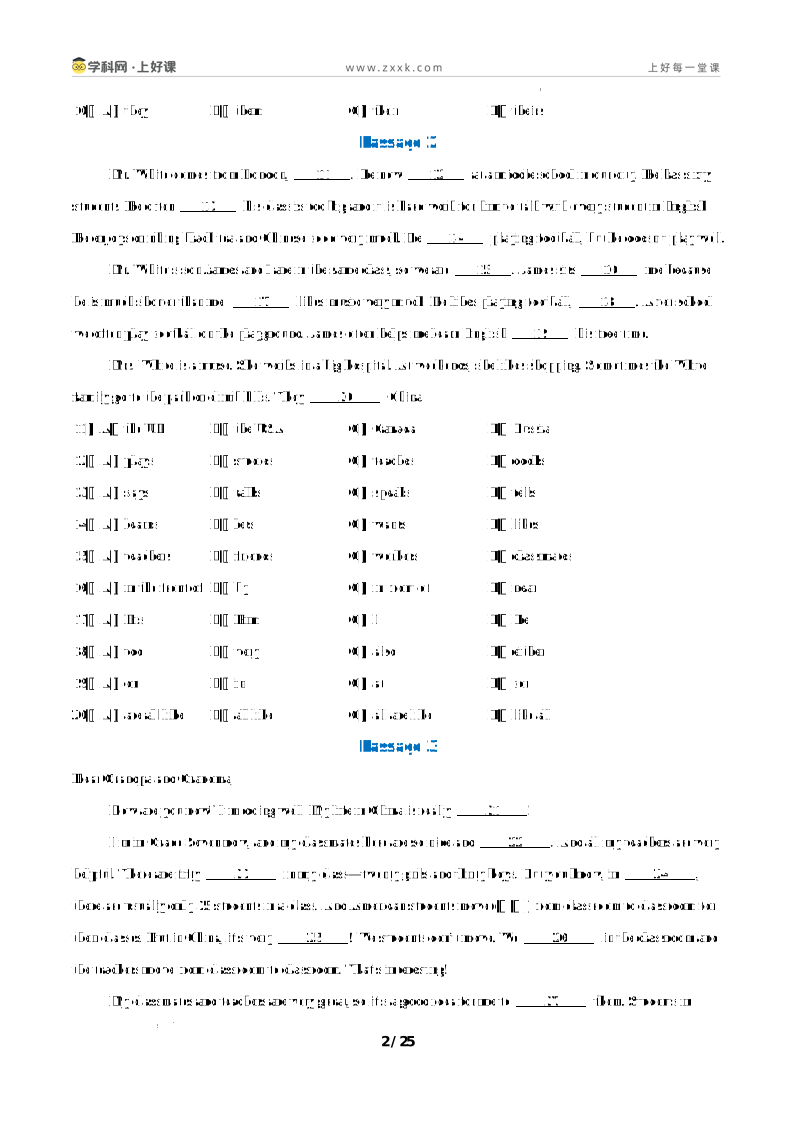
2
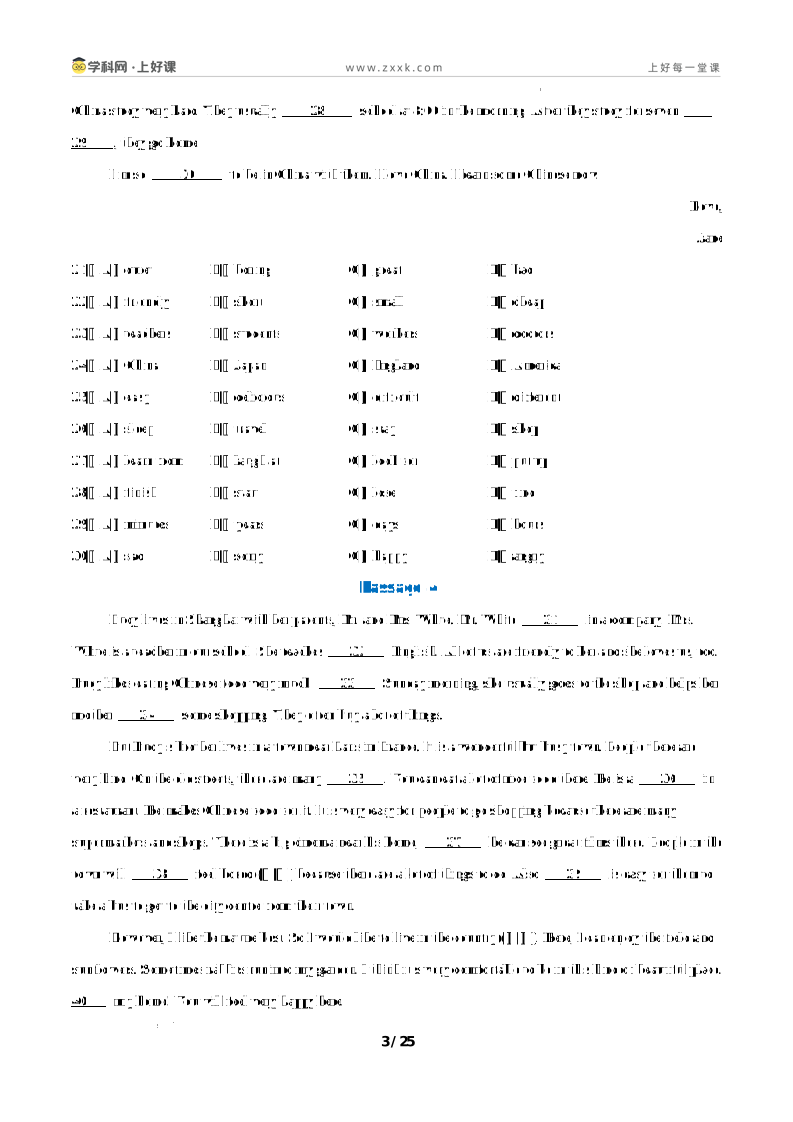
3

相关资源
由于学科网是一个信息分享及获取的平台,不确保部分用户上传资料的 来源及知识产权归属。如您发现相关资料侵犯您的合法权益,请联系学科网,我们核实后将及时进行处理。