Unit 8 Let's celebrate!(Integration)教案-2025-2026学年译林版英语七年级上册
2025-09-20
|
5页
|
556人阅读
|
200人下载
普通
资源信息
| 学段 | 初中 |
|---|---|
| 学科 | 英语 |
| 教材版本 | 初中英语译林版七年级上册 |
| 年级 | 七年级 |
| 章节 | Integration |
| 类型 | 教案 |
| 知识点 | - |
| 使用场景 | 同步教学-新授课 |
| 学年 | 2025-2026 |
| 地区(省份) | 全国 |
| 地区(市) | - |
| 地区(区县) | - |
| 文件格式 | DOCX |
| 文件大小 | 96 KB |
| 发布时间 | 2025-09-20 |
| 更新时间 | 2025-09-20 |
| 作者 | 匿名 |
| 品牌系列 | - |
| 审核时间 | 2025-09-20 |
| 下载链接 | https://m.zxxk.com/soft/54009097.html |
| 价格 | 0.00储值(1储值=1元) |
| 来源 | 学科网 |
摘要:
该教案聚焦初中英语七年级Unit 8 Let's celebrate!的整合教学,围绕节日主题系统构建语言知识与文化理解的联系。从导入环节展示中外节日图片激活旧知,到词汇游戏强化表达,再到阅读文本深化文化认知,最后通过听读结合与角色扮演实现输出迁移,形成由输入到输出的学习支架。
本设计亮点突出,融合语言能力、文化意识和思维品质三大核心素养。例如,在“双九节”阅读活动中,教师引导学生理解“登高敬老”的文化内涵,不仅提升语言理解力,更培养跨文化敏感度;小组对比中西节日差异的讨论,则锻炼批判性思维与价值判断能力。作业设计鼓励图文并茂写作与国际节日探究,既发展自主学习能力,又激发真实语用兴趣,助力学生学以致用,也为教师提供可复制、易操作的教学范式。
内容正文:
教学设计
课程基本信息
学科
英语
年级
七年级
学期
秋季
课题
Unit 8 Let's celebrate!(Integration)
教学目标
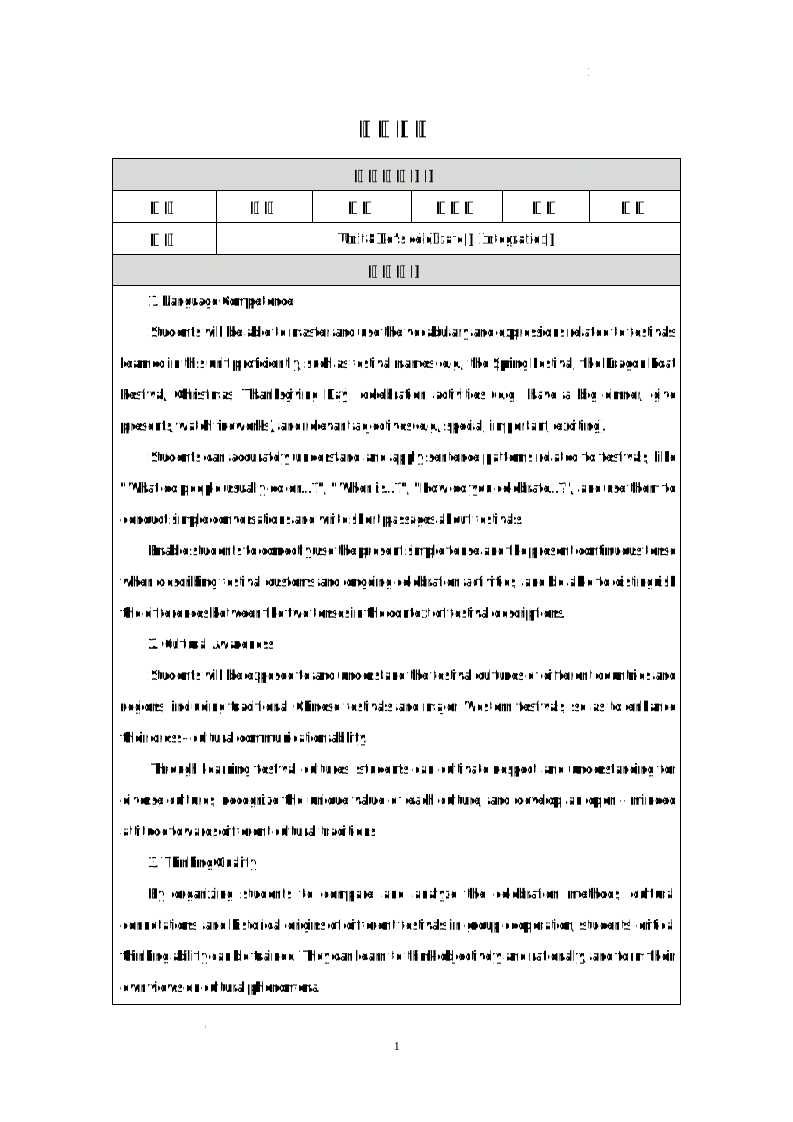
1. Language Competence
Students will be able to master and use the vocabulary and expressions related to festivals learned in this unit proficiently, such as festival names (e.g., the Spring Festival, the Dragon Boat Festival, Christmas, Thanksgiving Day), celebration activities (e.g., have a big dinner, give presents, watch fireworks), and relevant adjectives (e.g., special, important, exciting).
Students can accurately understand and apply sentence patterns related to festivals, like "What do people usually do on...?", "When is...?", "How do you celebrate...?", and use them to conduct simple conversations and write short passages about festivals.
Enable students to correctly use the present simple tense and the present continuous tense when describing festival customs and ongoing celebration activities, and be able to distinguish the differences between the two tenses in the context of festival descriptions.
2. Cultural Awareness
Students will be exposed to and understand the festival cultures of different countries and regions, including traditional Chinese festivals and major Western festivals, so as to enhance their cross - cultural communication ability.
Through learning festival cultures, students can cultivate respect and understanding for diverse cultures, recognize the unique value of each culture, and develop an open - minded attitude towards different cultural traditions.
3. Thinking Quality
By organizing students to compare and analyze the celebration methods, cultural connotations, and historical origins of different festivals in group cooperation, students' critical thinking ability can be trained. They can learn to think objectively and rationally, and form their own views on cultural phenomena.
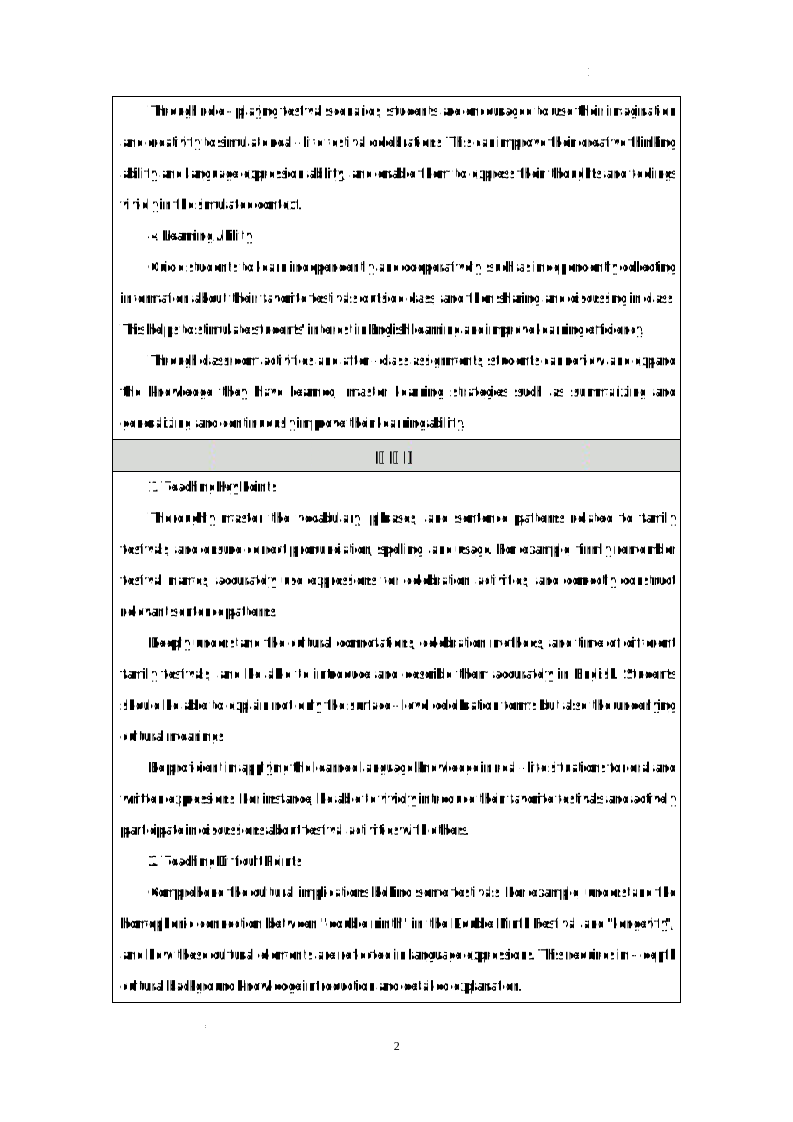
Through role - playing festival scenarios, students are encouraged to use their imagination and creativity to simulate real - life festival celebrations. This can improve their creative thinking ability and language expression ability, and enable them to express their thoughts and feelings vividly in the simulated context.
4. Learning Ability
Guide students to learn independently and cooperatively, such as independently collecting information about their favorite festivals outside class, and then sharing and discussing in class. This helps to stimulate students' interest in English learning and improve learning efficiency.
Through classroom activities and after - class assignments, students can review and expand the knowledge they have learned, master learning strategies such as summarizing and generalizing, and continuously improve their learning ability.
重难点
1. Teaching Key Points
Thoroughly master the vocabulary, phrases, and sentence patterns related to family festivals, and ensure correct pronunciation, spelling, and usage. For example, firmly remember festival names, accurately use expressions for celebration activities, and correctly construct relevant sentence patterns.
Deeply understand the cultural connotations, celebration methods, and time of different family festivals, and be able to introduce and describe them accurately in English. Students should be able to explain not only the surface - level celebration forms but also the underlying cultural meanings.
Be proficient in applying the learned language knowledge in real - life situations for oral and written expressions. For instance, be able to vividly introduce their favorite festivals and actively participate in discussions about festival activities with others.
2. Teaching Difficult Points
Comprehend the cultural implications behind some festivals. For example, understand the homophonic connection between "double ninth" in the Double Ninth Festival and "longevity", and how these cultural elements are reflected in language expressions. This requires in - depth cultural background knowledge introduction and detailed explanation.
Guide students to correctly understand and respect the differences in festival cultures of different countries and ethnic groups in cross - cultural communication, and be able to communicate effectively. Teachers need to create relevant cross - cultural communication scenarios to help students practice and experience.
Assist students in organizing their language to write a logical, rich - content, and accurate article about their favorite festivals. This includes helping students reasonably arrange the writing structure, use appropriate conjunctions, and ensure the coherence and fluency of the article.
教学过程
教学环节
学习活动(包含设计意图)
Lead - in (5 minutes)
Activity: Show students some pictures of different festivals around the world on the PPT, including both Chinese festivals like the Spring Festival with red lanterns, couplets, and family reunions, and Western festivals such as Christmas with Santa Claus, Christmas trees, and gifts. Then ask students to quickly name the festivals they see.
Design Intent: This activity aims to arouse students' interest in the topic of festivals. By showing vivid pictures, it can quickly attract students' attention, activate their prior knowledge about festivals, and create a relaxed and active classroom atmosphere, laying a good foundation for the subsequent teaching content.
Presentation (12 minutes)
Activity: Divide students into pairs. One student randomly selects a festival - related word or phrase card (prepared in advance, such as "the Lantern Festival", "eat mooncakes", "give red envelopes", etc.), and then describes it to the partner without directly saying the word. The partner tries to guess what it is. After several rounds of guessing, invite some pairs to come to the front of the class to demonstrate.
Design Intent: This pair - work activity can effectively review the vocabulary and phrases related to festivals learned in this unit. Through the process of description and guessing, students can not only strengthen their memory of words and phrases but also improve their ability to use English to explain and communicate, which is beneficial for enhancing their language application ability.
Practice (15 minutes)
Activity: Provide students with a short passage about the Double Ninth Festival. First, let students read it silently for 2 - 3 minutes to get a general idea of the content. Then, read the passage aloud sentence by sentence, explaining new words (such as "elderly", "climb mountains"), difficult sentence structures (such as "It is a day to show respect for the elderly."), and cultural backgrounds (the significance of climbing mountains on the Double Ninth Festival). After that, ask some questions related to the text, like "What do people usually do on the Double Ninth Festival?" and "Why is this festival important?" to check students' understanding.
Design Intent: Reading this text about the Double Ninth Festival can help students further understand the celebration ways and cultural connotations of traditional Chinese festivals. The process of silent reading, reading aloud, explanation, and question - answering can improve students' reading comprehension ability, vocabulary acquisition ability, and cultural awareness. It also provides language input for students' subsequent speaking and writing tasks.
Production (10 minutes)
Activity: Play a recording of a dialogue between two students discussing Mother's Day and Father's Day. The first time, let students just listen to get a general sense of the topic. The second time, ask them to listen carefully and fill in a form on the handout, which includes information such as the date of these two festivals, common celebration activities (e.g., give flowers, make cards), and what children usually say to their parents. After listening, ask students to work in pairs to role - play the dialogue, and then create their own dialogues about other festivals they know. Finally, invite some pairs to perform their dialogues in front of the class.
Design Intent: The listening activity can train students' listening skills, especially the ability to capture key information. Role - playing and creating new dialogues can give students the opportunity to practice speaking. Through these activities, students can not only improve their listening and speaking abilities but also deepen their understanding of festival - related expressions and cultural backgrounds, and enhance their confidence in using English to communicate.
Summary and Homework (3 minutes)
Activity: Summarize the key points of this class with students, including important festival - related vocabulary, sentence patterns, cultural knowledge, and the main points of writing an article about festivals. Then assign homework: ask students to write a more detailed article about their favorite festival, not less than 100 words, and illustrate it with some simple pictures. They are also required to search for information about an international festival they are interested in and be ready to share it in the next class.
Design Intent: The summary can help students review and consolidate the knowledge learned in this class. The homework assignment can further strengthen students' writing ability and expand their knowledge of international festivals. The requirement of illustration can increase students' interest in completing homework, and the sharing task in the next class can promote students' independent learning and communication ability.
1
学科网(北京)股份有限公司
学科网(北京)股份有限公司
$
资源预览图
1
2
相关资源
由于学科网是一个信息分享及获取的平台,不确保部分用户上传资料的 来源及知识产权归属。如您发现相关资料侵犯您的合法权益,请联系学科网,我们核实后将及时进行处理。