Unit 3 Family ties(Reflection)教案-2025-2026学年外研版(2024)英语七年级上册
2025-09-18
|
6页
|
168人阅读
|
85人下载
普通
摘要:
该教案聚焦七年级英语Unit 3 Family ties的反思性学习,围绕家庭成员词汇、句型结构与 possessive 形式展开,通过歌曲导入、猜谜互动、家庭树绘制和照片册展示等环节层层递进,构建从感知到表达的学习支架,实现语言输入向输出的有效转化。
本教案亮点突出,融合语言能力、文化意识与思维品质三大核心素养。例如,在Step 2中借助图片与情境教学突破新词难点,强化语言能力;在Step 4的家庭相册活动中引导学生用英文讲述真实家庭故事,体现文化意识中的跨文化理解与情感共鸣;同时通过“为什么喜欢某位家人”这类问题激发批判性思考,提升思维品质。教师可直接套用活动设计,学生则能在真实语境中提升听说读写综合能力,增强自信与人文关怀。
内容正文:
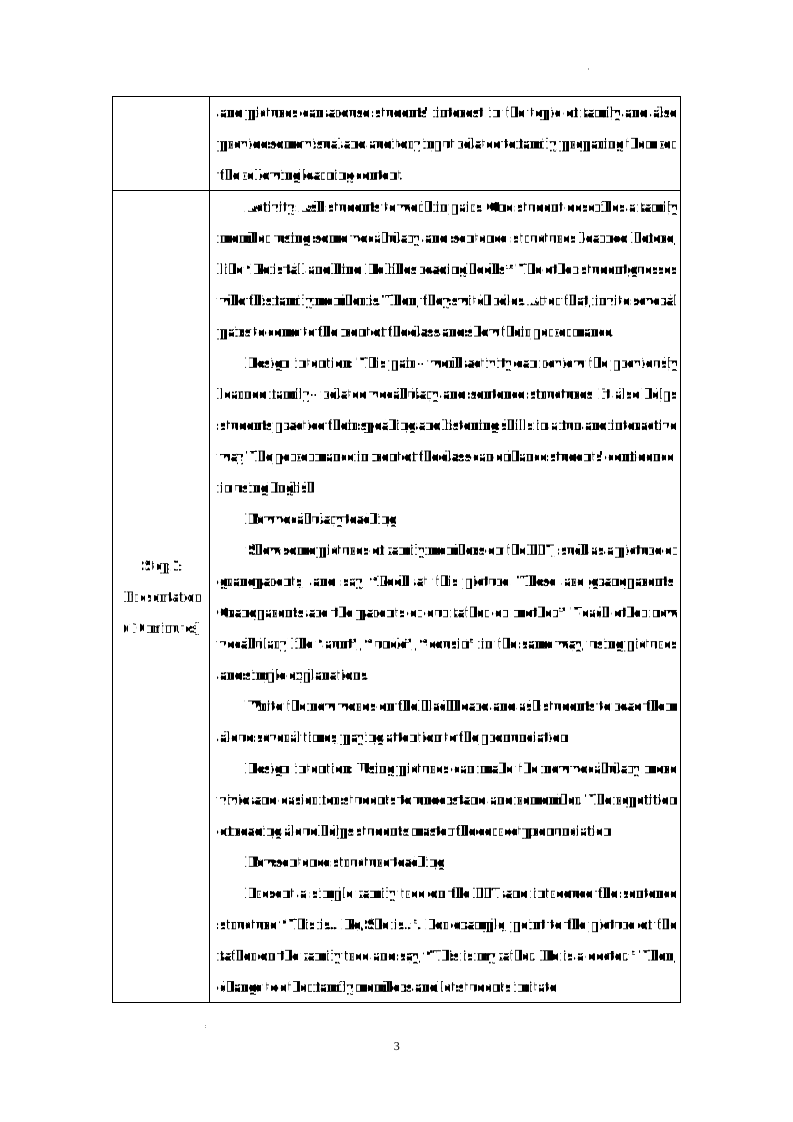
教学设计 课程基本信息 学科 英语 年级 七年级 学期 秋季 课题 Unit 3 Family ties(Reflection) 教学目标 1.1 Language Ability Students will be able to master and fluently use family - related vocabulary, such as “grandparents”, “cousins”, “aunt”, “uncle” etc., and sentence structures like “This is... He/She is...”, “I have...”, “There are... in my family” to introduce their family members and describe family relationships. They can apply the possessive form of nouns (e.g., my father's job, my sister's hobbies) accurately to express family - related information. By the end of the class, students should be able to participate in simple conversations about family life, including talking about family activities, family traditions, and expressing their feelings towards family members. 1.2 Cultural Awareness Students will understand that family values and family structures vary across different cultures. For example, they will learn about the concept of extended families in some cultures and nuclear families in others. They can respect and appreciate the diversity of family expressions in different cultural backgrounds, such as different ways of celebrating family festivals around the world. 1.3 Thinking Quality Through analyzing and discussing family - related materials, students can organize their thoughts logically when describing family stories or sharing their emotional connections with family members. For instance, they can use cause - effect reasoning to explain why they love a certain family member. They will be able to think critically about the role of family in their lives and the responsibilities within a family. 1.4 Learning Ability Students will enhance their public speaking skills by presenting their family - themed content, such as introducing their family photo albums. They can also learn to absorb feedback from teachers and classmates to improve their speaking and presentation skills. They will be encouraged to use various learning resources, like textbooks, online materials, and real - life experiences, to expand their knowledge of family - related English expressions. 重难点 2.1 Teaching Key Points Mastery of family - related vocabulary and key sentence structures for introducing family members and describing family relationships. Ability to use possessive nouns correctly in the context of family - related descriptions. Developing the skill to communicate about family - related topics in simple English conversations. 2.2 Teaching Difficult Points Helping students understand and correctly use complex sentence structures related to family, such as “My grandparents, who live in the countryside, often come to visit us.” Facilitating students' understanding of the cultural differences in family values and structures across different regions and countries. Guiding students to express their deep - seated emotions and abstract concepts about family, like family affection and the importance of family unity, in English. 教学过程 教学环节 学习活动(包含设计意图) Step 1: Warming-up & Lead-in (5 minutes) Activity: Play a short English song about family, such as “Family Song” by The Learning Station. While the song is playing, show some vivid pictures of different families on the screen, including nuclear families, extended families, and families from different ethnic backgrounds. Design intention: This activity can quickly draw students' attention and create a warm and family - friendly atmosphere. The combination of music and pictures can arouse students' interest in the topic of family and also provide some visual and auditory input related to family, preparing them for the following learning content. Step 2: Presentation (10 minutes) Activity: Ask students to work in pairs. One student describes a family member using some vocabulary and sentence structures learned before, like “He is tall and kind. He likes reading books.” The other student guesses who this family member is. Then, they switch roles. After that, invite several pairs to come to the front of the class and show their performance. Design intention: This pair - work activity can review the previously learned family - related vocabulary and sentence structures. It also helps students practice their speaking and listening skills in a fun and interactive way. The performance in front of the class can enhance students' confidence in using English. New vocabulary teaching: Show some pictures of family members on the PPT, such as a picture of grandparents, and say, “Look at this picture. These are grandparents. Grandparents are the parents of our father or mother.” Teach other new vocabulary like “aunt”, “uncle”, “cousin” in the same way, using pictures and simple explanations. Write the new words on the blackboard and ask students to read them aloud several times, paying attention to the pronunciation. Design intention: Using pictures can make the new vocabulary more vivid and easier for students to understand and remember. The repetition of reading aloud helps students master the correct pronunciation. New sentence structure teaching: Present a simple family tree on the PPT and introduce the sentence structure “This is... He/She is...”. For example, point to the picture of the father on the family tree and say, “This is my father. He is a doctor.” Then, change to other family members and let students imitate. Teach the possessive form of nouns. Write some examples on the blackboard, like “my mother's job”, “my brother's favorite sport”. Explain the usage and let students make their own sentences. Design intention: Demonstrating with a family tree can help students understand the relationship between family members more clearly and learn how to introduce them. The practice of making sentences with the possessive form can strengthen students' understanding and application of this grammar point. Step 3: Practice (15 minutes) Activity 1: Making a family tree Hand out pieces of paper and pencils to students. Let them draw their own family trees on the paper. They should write the English names of their family members on the family tree. After they finish drawing, ask them to work in groups of four. In the group, each student introduces their family tree to others using the vocabulary and sentence structures they just learned. Design intention: Making a family tree can make students more familiar with their own family structures and at the same time practice writing the English names of family members. The group - based introduction activity provides students with more opportunities to practice speaking English in a real - life - related context. Activity 2: Guessing game One student in each group describes a family member in the group without saying the name directly. For example, “This family member is a female. She is kind - hearted and likes cooking. She is someone's mother.” The other group members guess who this family member is. Design intention: This guessing game can further train students' ability to describe family members using English and also improve their listening and thinking skills. It can also increase the fun of learning and the interaction within the group. Step 4: Oral Practice & Consolidation (15 minutes) Activity: Making a family photo album and presenting it Ask students to take out some photos of their families (if they have brought them to class). If not, they can draw some pictures of their family members. Let them make a simple family photo album with paper and glue. They should write a short description under each photo or picture, introducing the family member, such as “This is my little brother. His name is Tom. He is very cute and likes playing toys.” Then, invite several students to come to the front of the class and present their family photo albums to the whole class. After each presentation, other students can ask some questions, like “What does your father do?” Design intention: Making a family photo album can integrate students' skills of writing, speaking, and creativity. The presentation in front of the class can significantly improve students' public speaking skills, and the Q&A session can further enhance their communication ability. Step 5: Summary & Homework (5 minutes) Summary: Review the key vocabulary and sentence structures learned in this class with students. Ask students to summarize what they have learned about family in English today. Emphasize the importance of family and the significance of expressing family - related feelings in English. Design intention: The review can help students consolidate what they have learned. Letting students summarize can check their understanding and improve their ability to organize knowledge. Homework: Ask students to write a short passage about their families, including at least five sentences, using the vocabulary and sentence structures learned in class. Encourage them to share their family stories with their parents in English at home. Design intention: The writing assignment can strengthen students' writing skills and their ability to use English knowledge. Sharing family stories with parents can not only practice speaking but also enhance family communication. 1 学科网(北京)股份有限公司 学科网(北京)股份有限公司 $
资源预览图

1

2
3
相关资源
示范课
由于学科网是一个信息分享及获取的平台,不确保部分用户上传资料的 来源及知识产权归属。如您发现相关资料侵犯您的合法权益,请联系学科网,我们核实后将及时进行处理。