Unit 4 Time to celebrate(重难词汇精炼)英语外研版2024七年级上册
2025-11-24
|
2份
|
13页
|
798人阅读
|
39人下载
资源信息
| 学段 | 初中 |
|---|---|
| 学科 | 英语 |
| 教材版本 | 初中英语外研版七年级上册 |
| 年级 | 七年级 |
| 章节 | Unit 4 Time to celebrate |
| 类型 | 题集-专项训练 |
| 知识点 | 词汇 |
| 使用场景 | 同步教学-单元练习 |
| 学年 | 2025-2026 |
| 地区(省份) | 全国 |
| 地区(市) | - |
| 地区(区县) | - |
| 文件格式 | ZIP |
| 文件大小 | 192 KB |
| 发布时间 | 2025-11-24 |
| 更新时间 | 2025-09-08 |
| 作者 | ly1169610447 |
| 品牌系列 | 上好课·上好课 |
| 审核时间 | 2025-09-08 |
| 下载链接 | https://m.zxxk.com/soft/53824822.html |
| 价格 | 3.00储值(1储值=1元) |
| 来源 | 学科网 |
内容正文:
Unit 4 Time to celebrate
词汇专项过关
目录
词汇基础练
词汇语境练-句子
词汇语境练-语篇
词汇基础练
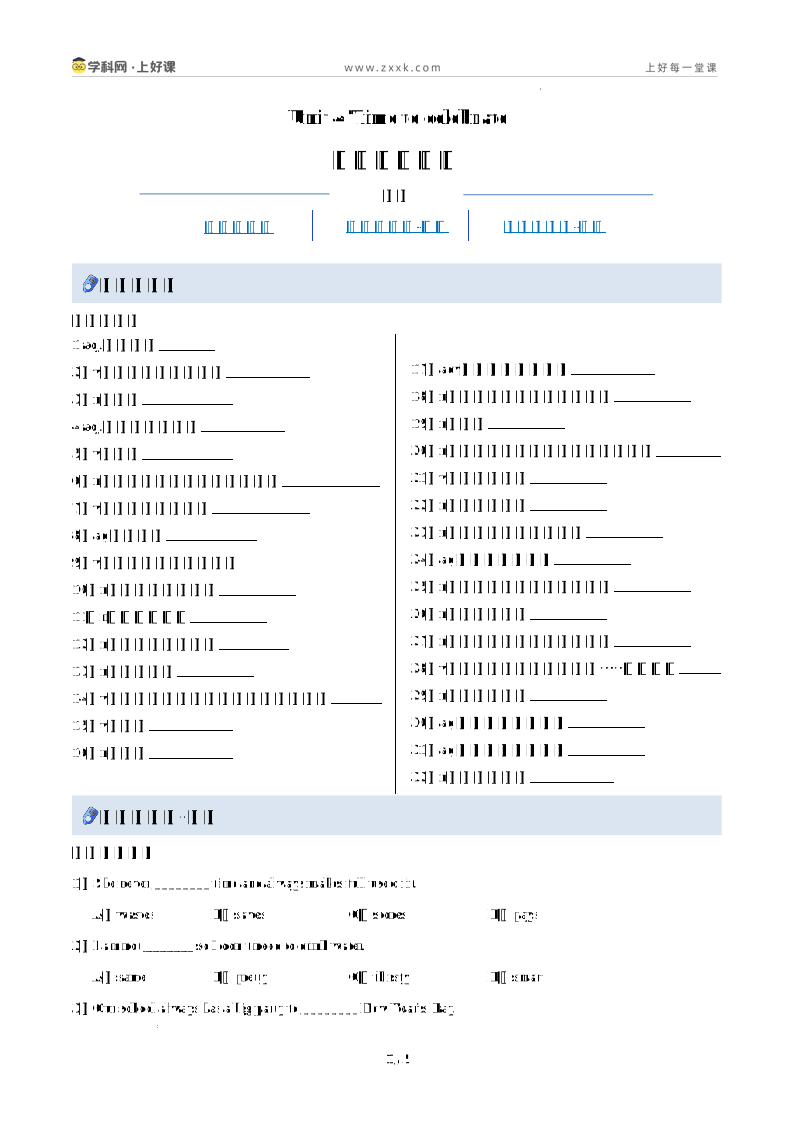
1、 汉译英
学科网(北京)股份有限公司1 / 5
学科网(北京)股份有限公司
1.adj.不平常的
2.v.请客,款待,招待
3.n.水饺
4.adj.全部的,整个的
5.v.悬挂
6.n.(烹制好的)菜肴,一道菜
7.v.说笑话;开玩笑
8.adj.震惊的
9.v.发出笑声,(大)笑
10.n.形,形状,外形
11.n.团圆,团聚
12.n.片;块;段;截
13.n.一餐;饭
14.v.思念,想念,怀念(某人);错过
15.v.庆祝
16.n.文化
17.adv.通常地;惯常地
18.n.(金钱、技能等的)浪费
19.n.污染
20.n.(道德或法律上的)义务,责任
21.v.发光,发亮
22.n.中断,暂停
23.n.紧急情况,不测事件
24.adj.渴的,口渴的
25.n.挑战,具有挑战性的事物
26.n.病人,患者
27.n.形势,情况,状况,局面
28.v.后悔(做了某事);对·····感到遗憾
29.n.决定,抉择
30.adj.医学的;医疗的
31.adj.欢乐的,欢庆的
32.n.烟火,烟花
试卷第1页,共3页
试卷第4页,共5页
学科网(北京)股份有限公司
词汇语境练-句子
一、单项选择
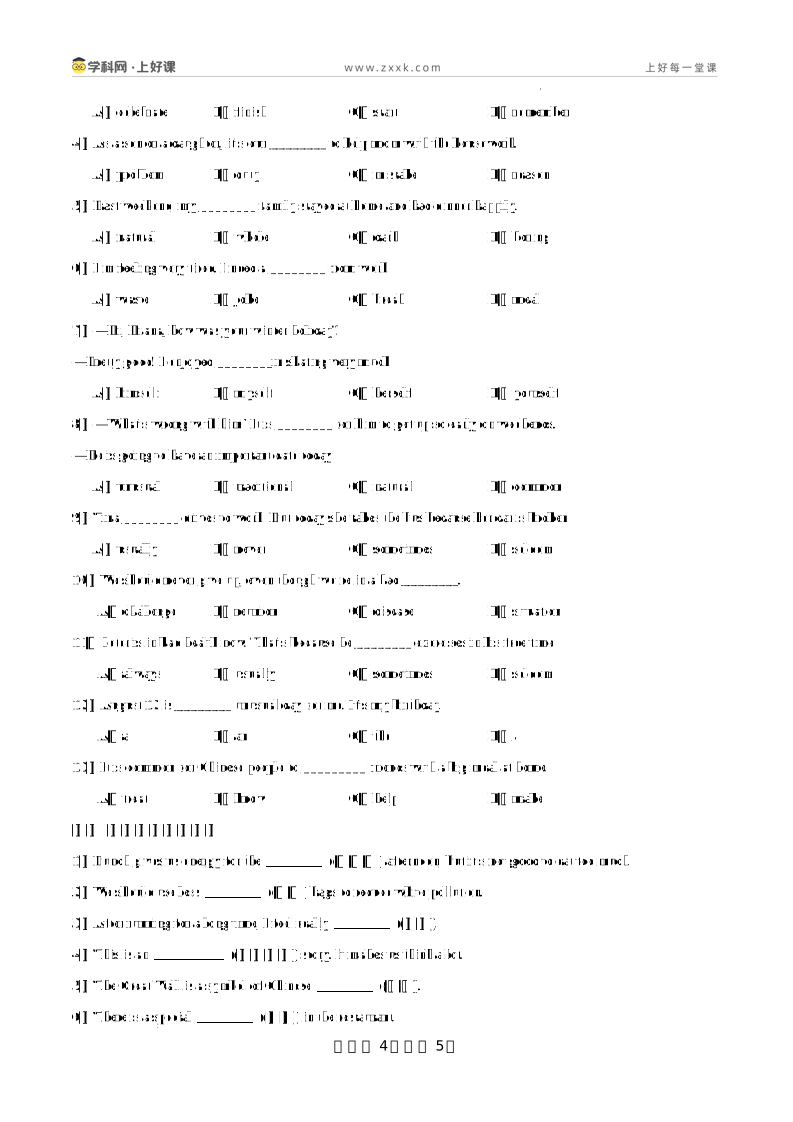
1.She never ________ time and always makes full use of it.
A.wastes B.saves C.stores D.pays
2.I am not _______ so I don’t need to drink water.
A.same B.pretty C.thirsty D.smart
3.Our school always has a big party to ________ New Year’s Day.
A.celebrate B.finish C.start D.remember
4.As a son or a daughter, it’s our ________ to help mom with the housework.
A.problem B.duty C.mistake D.reason
5.Last weekend, my ________ family stayed at home and had dinner happily.
A.natural B.whole C.dark D.boring
6.I’m feeling very tired. I need a ________ from work.
A.waste B.joke C.break D.meal
7.—Hi, Diana, how was your winter holiday?
—Pretty good! I enjoyed ________in skating very much.
A.himself B.myself C.herself D.yourself
8.—What’s wrong with him? It is ________ for him to get up so early on weekends.
—He is going to have an important date today.
A.unusual B.traditional C.natural D.common
9.Tina ________ drives to work. But today she takes the bus because her car is broken.
A.usually B.never C.sometimes D.seldom
10.We should never give up, even though we’re in a bad ________.
A.challenge B.reunion C.disease D.situation
11.Peter is in bad health now. That’s because he ________ exercises in his free time.
A.always B.usually C.sometimes D.seldom
12.August 12 is ________ unusual day for me. It’s my birthday.
A.a B.an C.the D./
13.It is common for Chinese people to _________ friends with a big meal at home.
A.treat B.know C.help D.make
二、 根据汉语提示填空
1.Lunch gives us energy for the (整个的) afternoon, but it’s not good to eat too much.
2.We should use less (塑料) bags to reduce white pollution.
3.After running for a long time, I feel really (渴的).
4.This is an (不寻常的) story. It makes us think a lot.
5.The Great Wall is a symbol of Chinese (文化).
6.There is a special (菜肴) in the restaurant.
7.My sister studies at a (医学的) college.
8.The (医疗的) teams spend most of their time and energy saving people’s lives.
9.This (黄瓜) plant is climbing.
10.Thank you very much for (庆祝) my birthday.
11.My parents love me and they always (支持) my decisions.
12.Disney fireworks show will begin at 9:15 p.m. Please don’t (错过) it.
13.I want to (请客、招待) my friend, Amy, to a big dinner.
14.It’s our d (职责) to help our parents with some housework.
15.How about the (圣诞节) evening party?
16.—Don’t keep your phone at hand during a (一顿饭) unless you have some important things.
—Sorry, I won’t do that again.
词汇语境练-语篇
三、选词填空
(一)阅读短文,从方框中选出正确的词并用其适当形式填空,使短文通顺、意思完整。每空限填一词, 每词限用一次。
cook activity really one delicious come clean animal welcome before
We call Chinese New Year the Spring Festival. It usually 1 in January or February. There is a (n) 2 name for each Chinese year. We may call it the Year of the Tiger, the Year of the Sheep or the Year of the Horse.
3 the Spring Festival, people always spend much time shopping and 4 their houses. On Chinese New Year’s Eve (除夕), there is always a big family dinner. People 5 many dishes (菜) for the dinner. The dishes are all 6 . Family members eat and talk. They feel 7 happy. After dinner, all the family members watch TV and 8 the new year.
On the 9 day of the new year, people wear new clothes and go to visit relatives (亲戚) and friends. They play games and have many other 10 to do. People usually have a very good time.
(二)请从方框内选择适当的词并用其正确形式填空,使文章完整连贯。注意每空一词,每词仅用一次,有两词为多余项。
holiday cold important but there dumpling always it celebrate on mean so
Winter Solstice (冬至) is the day with the longest night. It comes in December and it is the start of winter. The Chinese Winter Solstice Festival is a very 1 time in China like in other cultures around the world. In fact, 2 is a traditional saying: “Dōngzhì dà rúnián”. It 3 that the winter solstice is as important as the Chinese New Year. So how do people 4 it?
People worshiped the gods (拜神) 5 the first day of the winter solstice in China. This tradition could go back to the Zhou Dynasty (朝代). 6 the winter solstice only became a winter festival across China in the Han Dynasty. People had a one-day 7 . Like the Chinese New Year, it was a time for happy family reunions.
The winter solstice is not a public (公共的) holiday in modern China any more. But many people still celebrate it. People 8 spend the holiday happily with their family or friends. They also get ready for the coming 9 weather in winter. It is a time for them to eat some delicious dishes such as 10 and tangyuan. The festival is meaningful for Chinese people.
四、综合填空
(一)根据短文内容及首字母提示,填写所缺单词,使短文意思完整,每空限填一词。
National Day (国庆节) is an important holiday in China. It happens o 1 October lst every year. People celebrate the founding (建立) of the People’s Republic of China. Many people have a week off from work and school.
Cities and towns are decorated with flags (旗子) and flowers. Streets l 2 very beautiful. Many families t 3 during this time. They visit famous p 4 and enjoy the food there. Some people stay at home and w 5 the National Day parade (阅兵) on TV. It is v 6 exciting.
In the evening, people enjoy fireworks. The sky lights up with bright c 7 . Children and their parents both love this part. Some families h 8 a big dinner together. They eat delicious food a 9 talk about their day.
National Day is a time for fun and pride (自豪). It brings people together and celebrate the country’s achievements (进步). Everyone feels h 10 to be a Chinese.
(二)阅读短文,根据短文内容及首字母提示,在空白处填入一个适当的单词。
The Lantern Festival falls on the 15th day of the first lunar month. This day is always the first full moon in the new year. Ancient people also c 1 it Shangyuan Festival. Celebrations and t 2 on this day began from the Han Dynasty (朝代) and became p 3 in the Tang Dynasty. Watching the red lanterns is one of the main traditions. Lanterns of different s 4 and sizes are usually put on trees, or along river banks on show. It is said that sky lanterns were first used by Zhuge Kongming to ask for help when he was in trouble. Today, when the lanterns slowly r 5 into the air, people make wishes.
Another tradition is g 6 lantern riddles (谜语). The riddles are usually short, wise, and sometimes humorous (幽默的). The answer to a riddle can be a Chinese character (汉字), a famous person’s name, or a name of a place.
The most i 7 thing is to eat sweet dumplings with different tastes, because they are symbols of reunion and wishes for good luck. In northern China, they are called yuanxiao while in southern p 8 they’re named tangyuan. Because making sweet dumplings is like a game or an activity, they are usually done happily by a group of f 9 or family members.
In old times, the Lantern Festival was also romantic (浪漫的). W 10 lanterns gave young people a chance to meet each other. A line from Xin Qiji, a poet during the Song Dynasty, shows this: Hundreds and thousands of times I searched for her in the crowd. Suddenly I turned, and there she stood in the dim.
$Unit 4 Time to celebrate
词汇专项过关
目录
词汇基础练
词汇语境练-句子
词汇语境练-语篇
词汇基础练
1、 汉译英
学科网(北京)股份有限公司1 / 5
学科网(北京)股份有限公司
1.adj.不平常的 unusual
2.v.请客,款待,招待 treat
3.n.水饺 dumpling
4.adj.全部的,整个的 whole
5.v.悬挂 hang
6.n.(烹制好的)菜肴,一道菜 dish
7.v.说笑话;开玩笑 joke
8.adj.震惊的 shocked
9.v.发出笑声,(大)笑__laugh______
10.n.形,形状,外形 shape
11.n.团圆,团聚 reunion
12.n.片;块;段;截 piece
13.n.一餐;饭 meal
14.v.思念,想念,怀念(某人);错过 miss
15.v.庆祝 celebrate
16.n.文化 culture
17.adv.通常地;惯常地 usually
18.n.(金钱、技能等的)浪费 waste
19.n.污染 pollution
20.n.(道德或法律上的)义务,责任 duty
21.v.发光,发亮 shine
22.n.中断,暂停 break
23.n.紧急情况,不测事件 emergency
24.adj.渴的,口渴的 thirsty
25.n.挑战,具有挑战性的事物 challenge
26.n.病人,患者 patient
27.n.形势,情况,状况,局面 situation
28.v.后悔(做了某事);对·····感到遗憾 regret
29.n.决定,抉择 decision
30.adj.医学的;医疗的 medical
31.adj.欢乐的,欢庆的 festive
32.n.烟火,烟花 firework
词汇语境练-句子
二、单项选择
1.A
【详解】句意:她从不浪费时间,总是充分利用它。
考查动词辨析。wastes浪费;saves节省;stores储存;pays支付。根据“always makes full use of it”可知,总是充分利用时间,应是从不浪费时间。故选A。
2.C
【详解】句意:我不渴,所以我不需要喝水。
考查形容词辨析。same相同的;pretty漂亮的;thirsty口渴的;smart聪明的。根据“so I don’t need to drink water.”可知,不要喝水,故应是不口渴。故选C。
3.A
【详解】句意:我们学校总是有一个大晚会来庆祝新年。
考查动词辨析。celebrate庆祝;finish完成;start开始;remember记得。根据“has a big party to…New Year’s Day.”可知,应该说有一个大晚会来庆祝新年。故选A。
4.B
【详解】句意:作为儿子或女儿,帮助妈妈做家务是我们的责任。
考查名词辨析。problem问题;duty责任;mistake错误;reason原因。从情理和道德层面来讲,作为子女,帮助妈妈做家务是我们应尽的责任和义务。故选B。
5.B
【详解】句意:上个周末,我们全家待在家里,并愉快地吃晚饭。
考查形容词辨析。natural自然的;whole全部的;dark黑暗的;boring无聊的。根据“Last weekend, my...family stayed at home and had dinner happily.”可知,此处表示上周末,我们全家待在家里并愉快地吃晚饭。故选B。
6.C
【详解】句意:我感觉非常累,我需要中断工作休息一下。
考查名词辨析。waste浪费; joke笑话;break休息;meal餐食。根据“I’m feeling very tired.”可知,这里指中断工作休息一下,故选C。
7.B
【详解】句意:——你好,Diana,你的寒假怎么样?——相当不错!我滑冰非常开心。
考查代词辨析。himself他自己;myself我自己;herself她自己;yourself你自己。根据“I enjoyed...in skating very much.”可知,enjoy oneself玩得开心,固定短语,主语是第一人称,反身代词myself。故选B。
8.A
【详解】句意:——他怎么了?周末他起得这么早是不寻常的。——他今天有一个重要的约会。
考查形容词辨析。unusual不寻常的;traditional传统的;natural自然的;common普通的。根据“What’s wrong with him?”和“He is going to have an important date today”对他周末早起表示疑惑;可知此处指“周末他起得早是不寻常的”。故选A。
9.A
【详解】句意:蒂娜通常开车去上班。但是今天她乘公共汽车,因为她的车坏了。
考查副词辨析。usually通常;never从不;sometimes有时候;seldom很少。根据“But today she takes the bus because her car is broken.”可推断蒂娜通常是开车上班的。故选A。
10.D
【详解】句意:即使我们处于困境,我们也绝不能放弃。
考查名词辨析。challenge挑战;reunion聚会;disease疾病;situation情况。根据“We should never give up, even though we’re in a bad...”可知,此处表示虽然我们处于困境,但是也不能放弃。故选D。
11.D
【详解】句意:彼得现在身体不好。那是因为他很少在空闲时间锻炼。
考查副词辨析。always总是;usually通常;sometimes有时;seldom很少。根据“Peter is in bad health now. That’s because he...exercises in his free time.”可知他身体不好,是因为他很少锻炼。故选D。
12.B
【详解】句意:8月12日对我来说是个不寻常的日子。这一天是我的生日。
考查冠词。a一,泛指,用于辅音音素开头的单词前;an一,泛指,用于元音音素开头的单词前;the特指;/零冠词。根据“unusual day”可知,此处泛指一天,且unusual是元音音素开头的单词,用an修饰。故选B。
13.A
【详解】句意:中国人在家里请朋友吃一顿大餐是很常见的。
考查动词辨析。treat对待;know知道;help帮助;make制作。根据“with a big meal at home”可知,是指用大餐款待朋友。故选A。
二、根据汉语提示填空
1.whole
【详解】句意:午饭为我们提供了整个下午的能量,但吃太多不好。根据句意和汉语提示可知,此处考查whole“整个的”,形容词,在句中作定语,修饰名词“afternoon”。故填whole。
2.plastic
【详解】句意:我们应该少用塑料袋以减少白色污染。根据“We should use less…bags to reduce white pollution.”以及汉语提示可知,我们应该少用塑料袋,plastic“塑料的”,此处为形容词作定语。故填plastic。
3.thirsty
【详解】句意:长时间跑步后,我感觉真的很渴。“thirsty”是形容词,意为“渴的”,在句子中作表语,用于描述主语“I”的感受。故填thirsty。
4.unusual
【详解】句意:这是一个 不寻常的 故事。它让我们思考了很多。根据中文提示可知,unusual“不寻常的”,形容词作定语,故填unusual。
5.culture
【详解】句意:长城是中国文化的一个象征。culture“文化”,名词。故填culture。
6.dish
【详解】句意:我们餐厅有一个特色菜。菜肴dish,可数名词,因前文有a,故用单数。故填dish。
7.medical
【详解】句意:我的姐姐在一所医学院学习。根据“My sister studies at a…college.”及汉语提示可知,medical是形容词,表示“医学的;医疗的”符合语境,medical college表示“医学院”。故填medical。
8.medical
【详解】句意:医疗队花费了大量的时间和精力来挽救人们的生命。根据汉语提示可知,medical“医疗的”。故填medical。
9.cucumber
【详解】句意:这棵黄瓜爬蔓了。cucumber“黄瓜”,名词。故填cucumber。
10.celebrating
【详解】句意:非常感谢你来庆祝我的生日。celebrate“庆祝”,动词,且根据空前介词“for”可知,设空处用doing形式作for的宾语。故填celebrating。
11.support
【详解】句意:我的父母爱我,他们总是支持我的决定。support“支持”,动词。根据“always”可知,此句是一般现在时,主语是they,谓语动词用原形。故填support。
12.miss
【详解】句意:迪士尼烟花表演将于晚上9点15分开始。请不要错过。miss“错过”,是动词,don’t后用动词原形。故填miss。
13.treat
【详解】句意:我想请我的朋友艾米吃一顿丰盛的晚餐。treat“请客,招待”,want to do sth.“想要做某事”。故填treat。
14.(d)uty
【详解】句意:帮助父母做家务是我们的责任。duty“职责,责任”。故填(d)uty。
15.Christmas
【详解】句意:圣诞节晚会怎么样?圣诞节:Christmas,专有名词,首字母应大写。故填Christmas。
16.meal
【详解】句意:——吃饭的时候不要把手机放在手边,除非你有重要的事情。——抱歉,我不会再那样做了。根据“a”可知,此处填名词单数,meal意为“一顿饭”,符合语境,故填meal。
词汇语境练-语篇
三、选词填空
(一)1.comes 2.animal 3.Before 4.cleaning 5.cook 6.delicious 7.really 8.welcome 9.first 10.activities
【导语】本文介绍了中国春节的传统习俗、庆祝活动以及人们在节日期间的欢乐氛围。
1.句意:它通常在一月或二月到来。根据“in January or February.”可知,春节通常在一月或二月到来,应用动词come。本句是一般现在时,主语是第三人称单数,动词用三单形式。故填comes。
2.句意:每一年都有一个动物名字。根据“We may call it the Year of the Tiger, the Year of the Sheep or the Year of the Horse.”可知,每一年都有一个动物名字,应用animal。故填animal。
3.句意:在春节之前,人们总是花很多时间购物和打扫房子。根据“he Spring Festival, people always spend much time shopping”可知,人们购物是发生在春节前,应用before。故填Before。
4.句意:在春节之前,人们总是花很多时间购物和打扫房子。根据“their houses”和常识可知,春节前需要打扫房子,应用动词clean,形式和and前的shopping一致。故填cleaning。
5.句意:人们为晚餐烹饪许多菜肴。根据“many dishes (菜) for the dinner.”可知,指的是做菜,应用动词cook,主语是people,动词用原形。故填cook。
6.句意:这些菜肴都很美味。根据“dishes ”可知,菜很美味,应用形容词delicious。故填delicious。
7.句意:他们真的很高兴。空处应填副词修饰形容词,结合选词可知,really“真正”符合语境。故填really。
8.句意:晚饭后,所有的家庭成员看电视并迎接新年。根据“After dinner”可知,除夕晚上吃完晚饭后就需要迎接新年,应用动词welcome,动词应用原形和watch一致。故填welcome。
9.句意:在新年的第一天,人们穿新衣服去拜访亲戚和朋友。根据“people wear new clothes and go to visit relatives (亲戚) and friends”可知,新年第一天人们穿新衣服去拜访亲戚和朋友,应用序数词first。故填first。
10.句意:他们玩游戏并且有很多其他的活动要做。根据“They play games and have many other...to do.”可知,人们在新年会有很多其他活动,应用复数名词activities。故填activities。
(二)1.important 2.there 3.means 4.celebrate 5.on 6.But 7.holiday 8.always 9.cold 10.dumplings
【导语】本文是一篇说明文。主要介绍了冬至的由来,冬至的意义,冬至的传统习俗,以及冬至的饮食习惯。
1.句意:在中国,冬至就像世界上的其他文化一样,是一个非常重要的节日。根据第一段“In fact…is a traditional saying: ‘Dōngzhì dà rúnián’. ”可知,中国有句古话:“冬至大如年”。由此可知,冬至在中国是一个非常重要的节日。此处应填入“重要的”这一含义,即important“重要的”。故填important。
2.句意:事实上,中国有句古话:“冬至大如年”。根据题意可知,此处是there be句型,所以,“there”符合题意。故填there。
3.句意:这意味着冬至和春节一样重要。根据文中第一段“In fact, there is a traditional saying: ‘Dong zhi dai rú nian’. ”可知,冬至在中国是一个非常重要的节日,所以,动词“mean意味着”符合题意,本句主语“It”第三人称单数,此处应填mean的第三人称单数形式means。故选means。
4.句意:那么人们是如何庆祝的呢? 根据下文“People worshiped the gods… first day of the winter solstice in China. ”可知,此处是指庆祝的方式,所以,动词“celebrate”符合题意。结合本句主语“people”,可知谓语动词应用celebrate的原形。故填celebrate。
5.句意:在中国,人们在冬至的第一天拜神。根据题意可知,on the first day of“在……的第一天”,此处on表示具体的某一天。故填on。
6.句意:但冬至成为全国性的冬季节日是在汉代。根据“This tradition could go back to the Zhou Dynasty.”和“the winter solstice only became a winter festival across China in the Han Dynasty.”可知,这两句话之间是转折关系,因此此处应该填入“but”,且位于句首,首字母要大写。故填But。
7.句意:人们有一天的假期。根据句意可知,此处one-day修饰名词,结合提示词可知,应填holiday“假期”,且不定冠词a后接名词单数。故填holiday。
8.句意:人们总是和家人或朋友一起愉快地度过假期。根据句意可知,提示词“always”符合题意,表频率。故填always。
9.句意:他们还为冬天即将到来的寒冷天气做准备。根据题意可知,冬天很冷,所以,此处应填“cold”。故填cold。
10.句意:对他们来说,这是一个吃一些美味的食物的时候,比如饺子和汤圆。根据句意和提示词可知,冬至人们吃饺子是习俗,所以,“dumpling”符合题意,且为复数dumplings,表泛指。故填dumplings。
四、综合填空
(一)根据短文内容及首字母提示,填写所缺单词,使短文意思完整。每空限填一词。
1.(o)n 2.(l)ook 3.(t)ravel 4.(p)laces 5.(w)atch 6.(v)ery 7.(c)olours/(c)olors 8.(h)ave 9.(a)nd 10.(h)appy
【导语】本文主要介绍了国庆节。
1.句意:它在每年的10月1日。具体的某一天前用时间介词on。故填(o)n。
2.句意:街道看起来很漂亮。根据“l…very beautiful”可知,此处表示“看起来很漂亮”,look“看起来”符合题意。此处是一般现在时,主语Streets是复数,谓语动词用原形。故填(l)ook。
3.句意:许多家庭在这段时间旅行。根据“They visit famous p…and enjoy the food there.”可知,此处指“旅行”,travel“旅行”符合题意。此处是一般现在时,主语是复数,谓语动词用原形。故填(t)ravel。
4.句意:他们参观著名的地方,享受那里的食物。根据“They visit famous p…”可知,人们参观著名的地方,place“地方”符合题意,此处用其复数表示泛指。故填(p)laces。
5.句意:有些人待在家里看电视上的国庆阅兵。根据“w…the National Day parade (阅兵) on TV.”可知,此处指“在电视上观看阅兵”,watch“观看”符合题意。故填(w)atch。
6.句意:这非常令人兴奋。根据“It is v…exciting.”可知,此处表示“非常令人兴奋”,very“非常”符合题意。故填(v)ery。
7.句意:天空被明亮的色彩照亮了。根据“The sky lights up with bright c…”可知,天空被明亮的色彩照亮了。color/colour“颜色”符合题意,此处用其复数表示泛指。故填(c)olours/(c)olors。
8.句意:一些家庭一起吃一顿丰盛的晚餐。have a big dinner“举行一次丰盛的晚餐”。此处是一般现在时,主语是复数,谓语动词用原形。故填(h)ave。
9.句意:他们吃着美味的食物,谈论着他们的一天。空处前后表示并列,应该用连词and连接。故填(a)nd。
10.句意:每个人都为自己是中国人而感到高兴。根据“National Day is a time for fun and pride (自豪). It brings people together and celebrate the country’s achievements (进步).”可知,每个人都为自己是中国人而感到高兴。happy“高兴的”,形容词作表语。故填(h)appy。
(二)阅读短文,根据短文内容及首字母提示,在空白处填入一个适当的单词。
1.(c)alled 2.(t)raditions 3.(p)opular 4.(s)hapes 5.(r)ise 6.(g)uessing 7.(i)mportant 8.(p)art 9.(f)riends 10.(W)atching
【导语】本文主要讲述了中国元宵节的由来,习俗和传统。
1.句意:古人又称上元节。根据“Ancient people also…it Shangyuan Festival.”及首字母提示可知,古人又称上元节;call“称作”,动词,句子为一般过去时。故填(c)alled。
2.句意:这一天的庆祝活动和传统始于汉代,盛行于唐代。根据下文“Watching the red lanterns is one of the main traditions.”及首字母提示可知,此处指庆祝活动和传统,tradition“传统”,可数名词,and并列连接两个复数名词。故填(t)raditions。
3.句意:这一天的庆祝活动和传统始于汉代,盛行于唐代。根据“Celebrations and…on this day began from the Han Dynasty and became…in the Tang Dynasty.”及首字母提示可知,此处指在唐朝流行,be popular in“在……中流行”,固定短语。故填(p)opular。
4.句意:不同形状和大小的灯笼通常被放在树上,或者沿着河岸展示。根据“Lanterns of different…and sizes are usually put on trees, or along river banks on show. ”及首字母提示可知,此处指的是“不同形状和大小的灯笼”,shape“形状”,可数名词,and并列连接两个复数名词。故填(s)hapes。
5.句意:今天,当灯笼缓缓升空时,人们许愿。根据“Today, when the lanterns slowly…into the air, people make wishes.”及首字母提示可知,此处指孔明灯升起来,rise“上升”,动词,主语lanterns为复数形式,句子为一般现在时,因此空处应用动词原形。故填(r)ise。
6.句意:另一个传统是猜灯谜。根据“Another tradition is…lantern riddles.”及首字母提示可知,此处指“猜灯谜”,guess“猜”,动词,空前is为系动词,因此空处应用动名词作表语。故填(g)uessing。
7.句意:最重要的是吃不同口味的汤圆,因为它们象征着团圆和祈求好运。根据“…because they are symbols of reunion and wishes for good luck.”及首字母提示可知,吃不同口味的汤圆是最重要的,important“重要的”,形容词,作定语,修饰后面的名词thing。故填(i)mportant。
8.句意:在中国北方,它们被称为元宵,而在南方,它们被称为汤圆。根据“In northern China, they are called yuanxiao while in southern…they’re named tangyuan.”及首字母提示可知,此处指“在南方地区”,part“部分”,名词。故填(p)art。
9.句意:因为包饺子就像是一种游戏或一项活动,所以通常是一群朋友或亲戚一起快乐地包饺子。根据“…they are usually done happily by a group of…or family members.”及首字母提示可知,此处指的是“一群朋友或亲戚”,friend“朋友”,可数名词,or“或者”,表示并列,因此空处应用名词的复数形式。故填(f)riends。
10.句意:看灯笼让年轻人有机会认识彼此。根据前文“Watching the red lanterns is one of the main traditions.”及“…lanterns gave young people a chance to meet each other.”及首字母提示可知,此处指看灯笼让年轻人有机会认识彼此,watch“看”,动词,空处应用动名词作主语,且位于句首首字母大写。故填(W)atching。
试卷第2页,共13页
试卷第4页,共8页
学科网(北京)股份有限公司
$
资源预览图
1
2
所属专辑


相关资源
由于学科网是一个信息分享及获取的平台,不确保部分用户上传资料的 来源及知识产权归属。如您发现相关资料侵犯您的合法权益,请联系学科网,我们核实后将及时进行处理。