Unit2 Digital Humans(知识清单) 英语沪教版选择修性必修第二册
2025-08-25
|
2份
|
14页
|
150人阅读
|
5人下载
精品
内容正文:
Unit 1 Digital Humans 知识清单(答案版)
一、核心词汇
单词
释义
拓展
analyse / analyze[v.]
分析
analysis (n.) 分析
analyst (n.) 分析师
analytical (adj.) 分析的
constant [adj.]
持续不断的
constantly (adv. )不断地
constancy (n. )恒久不变
compromise[ v. ]
损害;妥协
compromising (adj. )
妥协的;有失体面的
desperate [adj.]
极度渴望的;绝望的
desperation (n. )绝望
desperately (adv. )拼命地;极度地
exposure [n. ]
暴露;接触
expose (v. )使暴露
exposed (adj. )无遮蔽的;易受攻击的
potential [adj. & n]
潜在的;潜力
potentially (adv.) 可能地
potentiality (n. )潜在性
profile [n.]
简介;侧面轮廓
[形近]profit n.利润v.获利
sympathetic [adj.]
表示同情的
sympathy (n.) 同情
sympathize (v.) 同情;体谅
withdraw [ v.]
(使)退出;撤回
withdrawal (n. )撤退;取款
withdrawn (adj. )沉默寡言的;孤僻的
【随手练】词形转换
1.The newspaper published a detailed_________of the social media phenomenon, which was very __________ and insightful. (analyse)
2.She checked her phone _________throughout the meeting, a sign of her _______ anxiety about missing out. (constant)
3. I have great ________ for those who experience cyberbullying. We should all learn to _________ with their feelings.(sympathetic)
4.After the embarrassing incident online, she became increasingly _________ and eventually decided on a complete withdrawal from all social media platforms. (withdraw)
5. In a ________ attempt to gain more followers, he posted controversial content. He was ________ seeking everyone's attention.(desperate)
二、高频短语
短语
释义
拓展
log in / log on
登录
I log in to my social media account every morning to check messages.
have a row (with)
(与…)争吵
They had a row with each other over a misunderstanding online.
make up (with)
(与…)和好
After a long talk, they finally made up with each other.
pick on
找茬;欺负
It's not right to pick on someone just because they are different.
stick up for
支持;为…辩护
A good friend will always stick up for you when others are unfair.
hit it off
相处融洽
We hit it off immediately and talked for hours.
run into
偶然遇到
I ran into an old classmate while scrolling through my feed.
think twice
三思
You should think twice before sharing personal information online.
be concerned about
担心…
Parents are often concerned about who their children talk to online.
【随手记】写作素材积累
① A true friend is not someone who merely likes your posts online, but one who will unequivocally stick up for you when you are picked on or misunderstood.
真正的朋友不是在线上仅仅给你点赞的人,而是当你在网络上被欺负或误解时,会毫不犹豫为你挺身而出的人。
②While digital platforms allow us to run into old acquaintances and momentarily hit it off with strangers, we must think twice about the authenticity and depth of these connections.
尽管数字平台能让我们偶然遇到老相识、并与陌生人瞬间聊得火热,但我们必须慎重思考这些关系的真实性与深度。
③It is natural for parents to be profoundly concerned about their children's online safety; however, constant suspicion may only lead to more rows, driving a wider gap between the two generations.
父母深切担忧孩子的网络安全是很自然的;然而,无休止的猜疑只会引发更多的争吵,从而在两代人之间划出更宽的鸿沟。
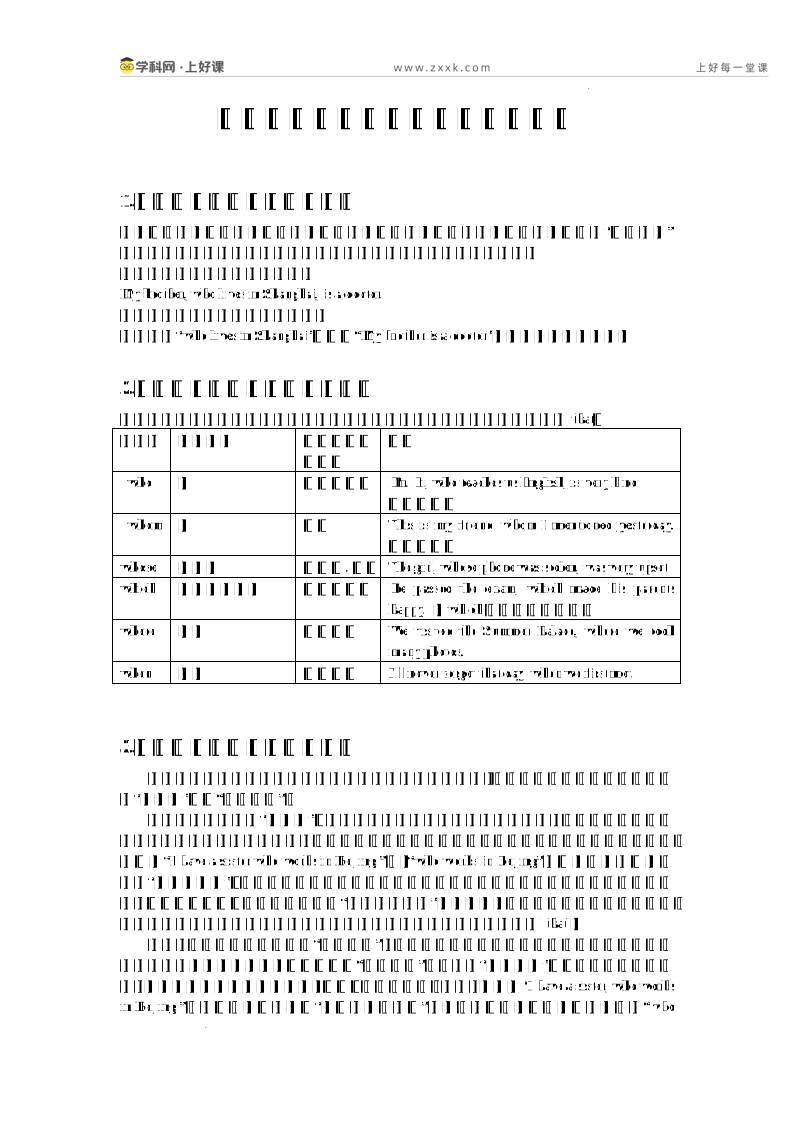
三、重点语法:非限制性定语从句
1.什么是非限制性定语从句?
它是对先行词(名词或整个主句)进行额外补充说明的从句。这种补充信息是“锦上添花”的,而不是必不可少的。如果去掉它,主句的意思依然完整、清晰。
核心标志:用逗号与主句隔开。
My brother, who lives in Shanghai, is a doctor.
我的哥哥是个医生,他住在上海。
即使去掉“who lives in Shanghai”,主句“My brother is a doctor”的意思仍然是完整的。
2.如何引导非限制性定语从句?
引导非限制性定语从句的关系词非常重要,不能省略关系词,且不能使用that。
关系词
指代对象
在从句中充当成分
例句
who
人
主语或宾语
Mr. Li, who teaches us English, is very kind.
(作主语)
whom
人
宾语
This is my friend, whom I mentioned yesterday. (作宾语)
whose
人或物
定语(..的)
The girl, whose phone was stolen, was very upset.
which
物或整个主句
主语或宾语
He passed the exam, which made his parents happy. (which指代前面整件事)
where
地点
地点状语
We visited the Summer Palace, where we took many photos.
when
时间
时间状语
I'll never forget that day, when we first met.
3.与非限制性定语从句的区别
要理解非限制性定语从句和限制性定语从句的根本区别,关键在于判断从句提供的信息是“身份证”还是“个人简历”。
限制性定语从句是“身份证”。它的信息用于唯一确定先行词的身份,是句子的核心组成部分,不可或缺。如果去掉它,主句的意思就会变得不完整、不明确,甚至产生歧义。例如,在句子“I have a sister who works in Beijing.”中,“who works in Beijing”这个从句就像是我姐姐的“身份证信息”,它的作用是把我那个在北京工作的姐姐和我其他可能存在的姐姐区分开来。没有这个信息,句子的核心意思“我有一个姐姐”虽然成立,但失去了最重要的限定意义。因此,这种从句和主句关系紧密,中间没有逗号,可以使用关系代词`that`。
相反,非限制性定语从句是“个人简历”。它仅仅是对一个身份已经非常明确的先行词进行额外的、补充性的说明。这种信息是“锦上添花”的,而非“必不可少”的。即使将其完全删除,主句所陈述的事实依然完整、清晰,毫不受影响。例如,在句子“I have a sister, who works in Beijing.”中,逗号的存在暗示“我只有一个姐姐”这个前提是双方都知道的。后面的“who works in Beijing”只是像一份“个人简历”,补充介绍了她的工作地点这条额外信息。去掉它,主句“I have a sister.”依然是一个意思完整、逻辑清晰的句子。正因为它是补充说明,所以书写时必须用逗号与主句隔开,并且绝对不能用`that`来引导。
总结来说,两者的核心区别在于:限制性定语从句(无逗号):定义身份,信息关键,不可删除。非限制性定语从句(有逗号):补充信息,身份已明,可以删除。判断时可以尝试去掉从句,看看主句的意思是否仍然完整且不改变原意。如果主句意思依然明确,那就是非限制性定语从句;如果主句意思变得不完整或模糊,那就是限制性定语从句。
四、主题写作:科技主题议论文
假设你是李华。你校英语报专栏正在举办题为 "Technology: A Bridge or a Gap?" 的征文活动,旨在探讨科技发展对人际交往产生的影响。请你根据以下要点写一篇短文投稿:
1.描述现象:简述科技(如智能手机、社交媒体)在人们日常交流中扮演的角色。
2.阐述观点:科技是拉近了人与人之间的距离,还是制造了隔阂?请表明你的观点并并用理由和事例支持它。
3.提出建议:你认为人们应如何合理使用科技,以使其真正成为沟通的桥梁?
注意:
词数 120-150 左右;
可适当增加细节,以使行文连贯;
作文开头已给出,不计入总词数。
Dear Editor,
I'm writing to contribute to your discussion on whether technology acts as a bridge or a gap in human communication._________________________________________________________
____________________________________________________________________________
____________________________________________________________________________
____________________________________________________________________________
____________________________________________________________________________
____________________________________________________________________________
____________________________________________________________________________
____________________________________________________________________________
____________________________________________________________________________
【范文】
Dear Editor,
I'm writing to contribute to your discussion on whether technology acts as a bridge or a gap in human communication.
Technology, especially smartphones and social media, has become deeply embedded in our daily interactions. While it offers instant connectivity across distances, its impact on relationships is debated. In my view, technology can become a gap if misused, but it has the potential to be a bridge when used wisely.
On one hand, technology connects people regardless of physical barriers. For example, video calls allow families separated by oceans to share moments in real-time. Social media platforms enable us to maintain friendships that might otherwise fade. However, obsession with digital devices often leads to neglect of face-to-face communication. It’s common to see people sitting together yet immersed in their phones, creating emotional distance even when physically close.
To ensure technology serves as a bridge, we should balance its use. Set boundaries, such as no phones during meals or conversations. Prioritize real-world interactions over virtual ones when possible. Use technology to enhance, not replace, genuine communication.
By doing so, we can enjoy the benefits of innovation without sacrificing human connection.
Yours sincerely,
Li Hua
学科网(北京)股份有限公司
$$
Unit 1 Digital Humans 知识清单(答案版)
一、核心词汇
单词
释义
拓展
analyse / analyze[v.]
分析
analysis (n.) 分析
analyst (n.) 分析师
analytical (adj.) 分析的
constant [adj.]
持续不断的
constantly (adv. )不断地
constancy (n. )恒久不变
compromise[ v. ]
损害;妥协
compromising (adj. )
妥协的;有失体面的
desperate [adj.]
极度渴望的;绝望的
desperation (n. )绝望
desperately (adv. )拼命地;极度地
exposure [n. ]
暴露;接触
expose (v. )使暴露
exposed (adj. )无遮蔽的;易受攻击的
potential [adj. & n]
潜在的;潜力
potentially (adv.) 可能地
potentiality (n. )潜在性
profile [n.]
简介;侧面轮廓
[形近]profit n.利润v.获利
sympathetic [adj.]
表示同情的
sympathy (n.) 同情
sympathize (v.) 同情;体谅
withdraw [ v.]
(使)退出;撤回
withdrawal (n. )撤退;取款
withdrawn (adj. )沉默寡言的;孤僻的
【随手练】词形转换
1.The newspaper published a detailed analysis of the social media phenomenon, which was very analytical and insightful. (analyse)
2.She checked her phone constantly throughout the meeting, a sign of her constant anxiety about missing out. (constant)
3. I have great sympathy for those who experience cyberbullying. We should all learn to sympathize with their feelings.(sympathetic)
4.After the embarrassing incident online, she became increasingly withdrawn and eventually decided on a complete withdrawal from all social media platforms. (withdraw)
5. In a desperate attempt to gain more followers, he posted controversial content. He was desperately seeking everyone's attention.(desperate)
二、高频短语
短语
释义
拓展
log in / log on
登录
I log in to my social media account every morning to check messages.
have a row (with)
(与…)争吵
They had a row with each other over a misunderstanding online.
make up (with)
(与…)和好
After a long talk, they finally made up with each other.
pick on
找茬;欺负
It's not right to pick on someone just because they are different.
stick up for
支持;为…辩护
A good friend will always stick up for you when others are unfair.
hit it off
相处融洽
We hit it off immediately and talked for hours.
run into
偶然遇到
I ran into an old classmate while scrolling through my feed.
think twice
三思
You should think twice before sharing personal information online.
be concerned about
担心…
Parents are often concerned about who their children talk to online.
【随手记】写作素材积累
① A true friend is not someone who merely likes your posts online, but one who will unequivocally stick up for you when you are picked on or misunderstood.
真正的朋友不是在线上仅仅给你点赞的人,而是当你在网络上被欺负或误解时,会毫不犹豫为你挺身而出的人。
②While digital platforms allow us to run into old acquaintances and momentarily hit it off with strangers, we must think twice about the authenticity and depth of these connections.
尽管数字平台能让我们偶然遇到老相识、并与陌生人瞬间聊得火热,但我们必须慎重思考这些关系的真实性与深度。
③It is natural for parents to be profoundly concerned about their children's online safety; however, constant suspicion may only lead to more rows, driving a wider gap between the two generations.
父母深切担忧孩子的网络安全是很自然的;然而,无休止的猜疑只会引发更多的争吵,从而在两代人之间划出更宽的鸿沟。
三、重点语法:非限制性定语从句
1.什么是非限制性定语从句?
它是对先行词(名词或整个主句)进行额外补充说明的从句。这种补充信息是“锦上添花”的,而不是必不可少的。如果去掉它,主句的意思依然完整、清晰。
核心标志:用逗号与主句隔开。
My brother, who lives in Shanghai, is a doctor.
我的哥哥是个医生,他住在上海。
即使去掉“who lives in Shanghai”,主句“My brother is a doctor”的意思仍然是完整的。
2.如何引导非限制性定语从句?
引导非限制性定语从句的关系词非常重要,不能省略关系词,且不能使用that。
关系词
指代对象
在从句中充当成分
例句
who
人
主语或宾语
Mr. Li, who teaches us English, is very kind.
(作主语)
whom
人
宾语
This is my friend, whom I mentioned yesterday. (作宾语)
whose
人或物
定语(..的)
The girl, whose phone was stolen, was very upset.
which
物或整个主句
主语或宾语
He passed the exam, which made his parents happy. (which指代前面整件事)
where
地点
地点状语
We visited the Summer Palace, where we took many photos.
when
时间
时间状语
I'll never forget that day, when we first met.
3.与非限制性定语从句的区别
要理解非限制性定语从句和限制性定语从句的根本区别,关键在于判断从句提供的信息是“身份证”还是“个人简历”。
限制性定语从句是“身份证”。它的信息用于唯一确定先行词的身份,是句子的核心组成部分,不可或缺。如果去掉它,主句的意思就会变得不完整、不明确,甚至产生歧义。例如,在句子“I have a sister who works in Beijing.”中,“who works in Beijing”这个从句就像是我姐姐的“身份证信息”,它的作用是把我那个在北京工作的姐姐和我其他可能存在的姐姐区分开来。没有这个信息,句子的核心意思“我有一个姐姐”虽然成立,但失去了最重要的限定意义。因此,这种从句和主句关系紧密,中间没有逗号,可以使用关系代词`that`。
相反,非限制性定语从句是“个人简历”。它仅仅是对一个身份已经非常明确的先行词进行额外的、补充性的说明。这种信息是“锦上添花”的,而非“必不可少”的。即使将其完全删除,主句所陈述的事实依然完整、清晰,毫不受影响。例如,在句子“I have a sister, who works in Beijing.”中,逗号的存在暗示“我只有一个姐姐”这个前提是双方都知道的。后面的“who works in Beijing”只是像一份“个人简历”,补充介绍了她的工作地点这条额外信息。去掉它,主句“I have a sister.”依然是一个意思完整、逻辑清晰的句子。正因为它是补充说明,所以书写时必须用逗号与主句隔开,并且绝对不能用`that`来引导。
总结来说,两者的核心区别在于:限制性定语从句(无逗号):定义身份,信息关键,不可删除。非限制性定语从句(有逗号):补充信息,身份已明,可以删除。判断时可以尝试去掉从句,看看主句的意思是否仍然完整且不改变原意。如果主句意思依然明确,那就是非限制性定语从句;如果主句意思变得不完整或模糊,那就是限制性定语从句。
【随手练】
1. My uncle, ______ is a retired teacher, loves gardening.
A. who
B. that
C. whom
D. which
2. We visited the Great Wall, ______ was a magnificent experience.
A. that
B. which
C. where
D. when
3. The book, ______ I finished reading yesterday, was fantastic.
A. that
B. which
C. whom
D. 不填
4. The manager spoke to Mark, ______ project had won the first prize.
A. who
B. whom
C. whose
D. which
5. She will never forget the day, ______ she graduated from university.
A. which
B. when
C. where
D. that
6. He said he was ill, ______ was true.
A. who
B. that
C. which
D. whom
7. I have two sisters. One of them is a doctor. (合并为含非限制性定语从句的句子)
A. I have two sisters, one of who is a doctor.
B. I have two sisters, one of whom is a doctor.
C. I have two sisters that one of them is a doctor.
D. I have two sisters, one of which is a doctor.
8. The company ______ my father works is going to close down.
A. which
B. where
C. that
D. when
9. The company, ______ my father has worked for 20 years, is going to close down.
A. which
B. where
C. that
D. when
10. 判断哪句话中的从句是非限制性定语从句:
A. The girl who is standing under the tree is my cousin.
B. This is the house that I told you about.
C. His latest movie, which was filmed in Paris, is a big success.
D. People who live in glass houses shouldn't throw stones.
【答案及解析】
1.A. who
解析:非限制性定语从句,修饰人my uncle,且在从句中作主语,因此用who。不能用that。
2.B. which
解析:非限制性定语从句,修饰物the Great Wall,且在从句中作主语,因此用which。不能用that。
3.B. which
解析:非限制性定语从句,修饰物the book。关系词在从句中作finished reading的宾语,但因为是非限制性,所以只能用which,不能省略,也不能用that。
4.C. whose
解析:非限制性定语从句,修饰人Mark。关系词在从句中作定语,修饰project,表示“马克的项目”,因此用whose。
5.B. when
解析:非限制性定语从句,修饰表示时间的名词the day。关系词在从句中作时间状语,因此用when。
6.C. which
解析:此题考查which指代整个主句的用法。which指代前面“He said he was ill”这件事,并在从句中作主语。
7.B. I have two sisters, one of whom is a doctor.
解析:非限制性定语从句。whom指代sisters,作介词of的宾语。A选项who形式错误,C和D选项结构错误。
8.B. where
解析:此题是陷阱题,考查限制性定语从句。 从句my father works修饰company,且缺少地点状语(在公司),所以用关系副词where。此句没有逗号,是限制性定语从句,但选项中没有that或which,只有where正确。
9.A. which
解析:非限制性定语从句,修饰物the company。关系词在从句中作介词for的宾语(work for the company),所以要用which。where是关系副词,不能在从句中作宾语。
10.C. His latest movie, which was filmed in Paris, is a big success.
解析:A、B、D选项的从句都是限制性的,没有逗号隔开,且对先行词起限定作用。只有C选项的从句用逗号隔开,对先行词movie进行补充说明,是非限制性定语从句。
四、主题写作:科技主题议论文
假设你是李华。你校英语报专栏正在举办题为 "Technology: A Bridge or a Gap?" 的征文活动,旨在探讨科技发展对人际交往产生的影响。请你根据以下要点写一篇短文投稿:
1.描述现象:简述科技(如智能手机、社交媒体)在人们日常交流中扮演的角色。
2.阐述观点:科技是拉近了人与人之间的距离,还是制造了隔阂?请表明你的观点并并用理由和事例支持它。
3.提出建议:你认为人们应如何合理使用科技,以使其真正成为沟通的桥梁?
注意:
词数 120-150 左右;
可适当增加细节,以使行文连贯;
作文开头已给出,不计入总词数。
Dear Editor,
I'm writing to contribute to your discussion on whether technology acts as a bridge or a gap in human communication._________________________________________________________
____________________________________________________________________________
____________________________________________________________________________
____________________________________________________________________________
____________________________________________________________________________
____________________________________________________________________________
____________________________________________________________________________
____________________________________________________________________________
____________________________________________________________________________
【范文】
Dear Editor,
I'm writing to contribute to your discussion on whether technology acts as a bridge or a gap in human communication.
Technology, especially smartphones and social media, has become deeply embedded in our daily interactions. While it offers instant connectivity across distances, its impact on relationships is debated. In my view, technology can become a gap if misused, but it has the potential to be a bridge when used wisely.
On one hand, technology connects people regardless of physical barriers. For example, video calls allow families separated by oceans to share moments in real-time. Social media platforms enable us to maintain friendships that might otherwise fade. However, obsession with digital devices often leads to neglect of face-to-face communication. It’s common to see people sitting together yet immersed in their phones, creating emotional distance even when physically close.
To ensure technology serves as a bridge, we should balance its use. Set boundaries, such as no phones during meals or conversations. Prioritize real-world interactions over virtual ones when possible. Use technology to enhance, not replace, genuine communication.
By doing so, we can enjoy the benefits of innovation without sacrificing human connection.
Yours sincerely,
Li Hua
学科网(北京)股份有限公司
$$
资源预览图

1

2
3

相关资源
示范课
由于学科网是一个信息分享及获取的平台,不确保部分用户上传资料的 来源及知识产权归属。如您发现相关资料侵犯您的合法权益,请联系学科网,我们核实后将及时进行处理。