Unit 3 Section Ⅲ Discovering Useful Structures(课件PPT)-【金榜题名】2025-2026学年高一英语必修第一册高中同步学案(人教版)
2025-10-13
|
26页
|
65人阅读
|
4人下载
教辅

资源信息
| 学段 | 高中 |
|---|---|
| 学科 | 英语 |
| 教材版本 | 高中英语人教版必修第一册 |
| 年级 | 高一 |
| 章节 | Discovering Useful Structures |
| 类型 | 课件 |
| 知识点 | - |
| 使用场景 | 同步教学-新授课 |
| 学年 | 2025-2026 |
| 地区(省份) | 全国 |
| 地区(市) | - |
| 地区(区县) | - |
| 文件格式 | PPTX |
| 文件大小 | 234 KB |
| 发布时间 | 2025-10-13 |
| 更新时间 | 2025-10-13 |
| 作者 | 梁山启智教育图书有限公司 |
| 品牌系列 | 金榜题名·高中同步学案 |
| 审核时间 | 2025-08-21 |
| 下载链接 | https://m.zxxk.com/soft/53550819.html |
| 价格 | 2.00储值(1储值=1元) |
| 来源 | 学科网 |
内容正文:
Unit 3 Sports and fitness
Section Ⅲ Discovering Useful Structures
Unit 3 Sports and fitness
返回导航
1
目录
contents
Part 01 课前预习 基础达标
Part 02 课堂探究 互动导学
Part 04 课时作业(十五)
Part 03 随堂演练 提分提能
Unit 3 Sports and fitness
返回导航
1
课前预习 基础达标
返回导航
Unit 3 Sports and fitness
返回导航
1
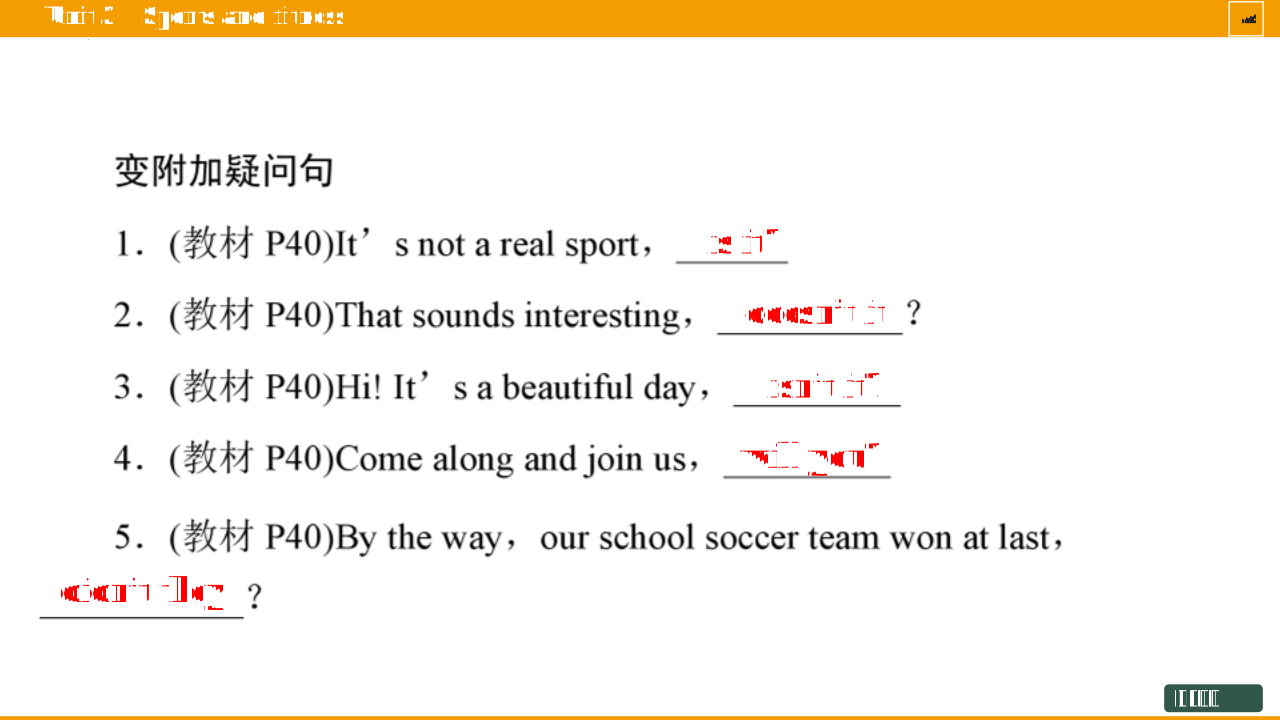
is it?
doesn’t it
isn’t it?
will you?
didn’t they
Unit 3 Sports and fitness
返回导航
1
课堂探究 互动导学
返回导航
Unit 3 Sports and fitness
返回导航
1
Unit 3 Sports and fitness
返回导航
1
Unit 3 Sports and fitness
返回导航
1
Unit 3 Sports and fitness
返回导航
1
Unit 3 Sports and fitness
返回导航
1
Unit 3 Sports and fitness
返回导航
1
Unit 3 Sports and fitness
返回导航
1
Unit 3 Sports and fitness
返回导航
1
Unit 3 Sports and fitness
返回导航
1
Unit 3 Sports and fitness
返回导航
1
Unit 3 Sports and fitness
返回导航
1
Unit 3 Sports and fitness
返回导航
1
Unit 3 Sports and fitness
返回导航
1
Unit 3 Sports and fitness
返回导航
1
Unit 3 Sports and fitness
返回导航
1
随堂演练 提分提能
返回导航
Unit 3 Sports and fitness
返回导航
1
shall
have
do
Unit 3 Sports and fitness
返回导航
1
doesn’t
does
hasn’t
did
won’t
Unit 3 Sports and fitness
返回导航
1
will you?
does she?
didn’t I?
was he?
could he?
Unit 3 Sports and fitness
返回导航
1
aren’t there?
will you?
shall we?
isn’t she?
does he?
Unit 3 Sports and fitness
返回导航
1
课时作业(十五)
点击进入
word
Unit 3 Sports and fitness
返回导航
1
谢谢观看
Unit 3 Sports and fitness
返回导航
1
变附加疑问句
1.(教材P40)It’s not a real sport,______
2.(教材P40)That sounds interesting,__________?
3.(教材P40)Hi! It’s a beautiful day,_________
4.(教材P40)Come along and join us,_________
5.(教材P40)By the way,our school soccer team won at last,
___________?
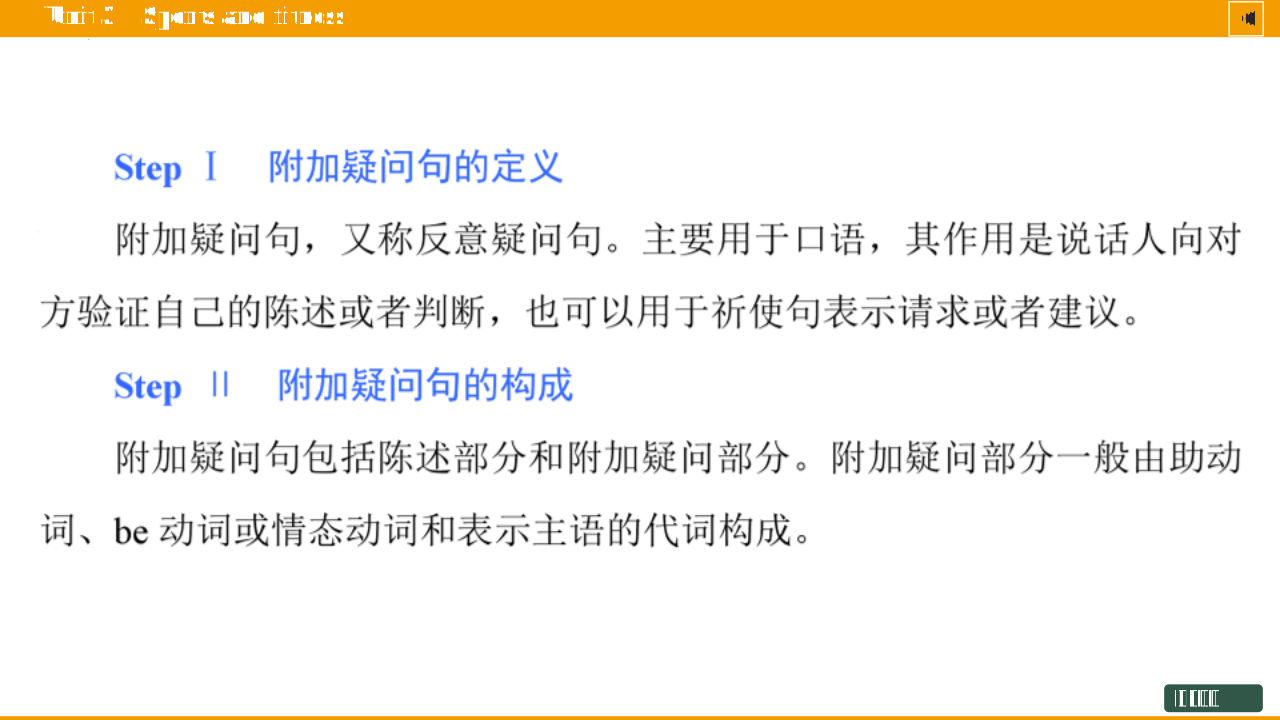
Step Ⅰ 附加疑问句的定义
附加疑问句,又称反意疑问句。主要用于口语,其作用是说话人向对方验证自己的陈述或者判断,也可以用于祈使句表示请求或者建议。
Step Ⅱ 附加疑问句的构成
附加疑问句包括陈述部分和附加疑问部分。附加疑问部分一般由助动词、be动词或情态动词和表示主语的代词构成。
组成
例句
肯定式陈述部分+否定附加疑问部分
You often play badminton,don’t you?
You’re going to the gym with me,aren’t you?
否定式陈述部分+肯定附加疑问部分
He is not a middle school student,is he?
They can’t finish it by Friday,can they?
含有否定词的陈述部分+肯定附加疑问部分
Nobody saw him walk into the room,did they?
You’ve never been to Paris,have you?
祈使句+附加疑问部分
Come along with me,will you?/can you?/won’t you?/can’t you?
Don’t make any noise,will you?
Step Ⅲ 附加疑问句的回答
附加疑问句的答语与一般疑问句类似,注意其与汉语表达习惯的差异。如:
◆—The 29th Olympic Games were held in Beijing,weren’t they?
——第29届奥运会在北京举办的,是吗?
—Yes,they were.(Yes,that’s right.)
——是的,是在北京。(是的,那是对的。)
◆—Michael Jordan started to play basketball in college,didn’t he?
——迈克尔·乔丹在大学开始打篮球,是吗?
—No,he didn’t.He first played in a team in senior high school.
——不,他不是。他最开始在一个高中球队打球。
◆—David has been to a boxing match,hasn’t he?
——大卫去过拳击比赛现场,是吗?
—No,he hasn’t.He always watches boxing on TV.
——不,他没有去过。他总是在电视上看拳击比赛。
◆—You can’t cook,can you?
——你不会做饭,是吗?
—Yes,I can.I’m good at cooking.
——不,我会。我擅长做饭。
Step Ⅳ 变附加疑问句部分时应注意的问题
1.当陈述部分含有seldom,hardly,never,rarely,few,little,nowhere,nothing等否定词或半否定词时,简短问句应用肯定形式。
◆She seldom goes to the cinema,does she?
她很少去看电影,是吗?
◆He has never been to London,has he?
他从没去过伦敦,是吗?
2.当陈述部分中有表示否定意义的(含有im,in,dis,un等否定前缀或less等否定后缀的)词时,应把陈述部分视为肯定句,简短问句要用否定式。
◆He was unsuccessful,wasn’t he?
他没成功,是吗?
◆Your mother dislikes seeing you with me,doesn’t she?
你母亲不喜欢看到你和我在一起,是吗?
3.当陈述部分是“there be+主语+其他”结构时,反意疑问部分要用“be+there”结构。
◆There are some apples in the box,aren’t there?
箱子里有一些苹果,是吗?
4.陈述部分为祈使句时。
(1)祈使句为肯定形式时,若表示“请求”,简短问句通常用will you;若表示“邀请,劝说”,简短问句用won’t you。
◆Give me a hand,will you?
帮我一把,好吗?(表示“请求”)
◆Come to have supper with us this evening,won’t you?
今晚跟我们一起吃饭,好吗?(表示“邀请”)
(2)祈使句为否定形式时,简短问句通常用will you。
◆Don’t make so much noise,will you?
别弄出这么多噪音,好吗?
(3)如果祈使句以let’s开头,简短问句用shall we;如果祈使句以let us或let me开头,简短问句用will you。
◆Let’s try another way,shall we?
我们试试别的方法,好吗?
◆Let us know your address,will you?
请把你的地址告诉我们,好吗?
5.陈述部分为含有宾语从句的主从复合句时。
(1)一般情况:当陈述部分是含有宾语从句的主从复合句时,简短问句的谓语动词和主语通常和主句中的谓语动词和主语分别保持一致。
◆They know that he is from England,don’t they?
他们知道他来自英国,是吗?
(2)特殊情况:
①若陈述部分为“I/We think/believe/suppose/consider/...+宾语从句”,简短问句的谓语和主语与宾语从句的谓语和主语分别保持一致,且简短问句用否定形式。
◆We believe she can do it better,can’t she?
我们相信她能做得更好,是吗?
②若陈述部分为“I/We don’t think/believe/suppose/consider/...+宾语从句”,简短问句的主语和谓语与宾语从句的主语和谓语保持一致,且简短问句用肯定形式。
◆I don’t think that you can do it,can you?
我认为这件事你做不了,是吗?
◆We don’t believe that the news is true,is it?
我们认为这则消息不是真的,是吗?
③若陈述部分为“主语(非第一人称)+think/believe/suppose/consider/...+宾语从句”,简短问句的主语和谓语与主句的主语和谓语保持一致,简短问句是用肯定形式还是否定形式由主句决定。
◆They all think that English is very useful,don’t they?
他们都认为英语很重要,是吗?
◆He doesn’t think that I can make it,does he?
他认为我办不到,是吗?
Step Ⅴ 附加疑问句的读法
陈述部分一般用降调,而附加疑问部分既可用升调也可用降调,但含义有所不同。通常情况下,用升调时,多表示疑问或请求;用降调时,多表示求证或希望对方同意。
Ⅰ.根据语境完成句子
1.Father:Are you free at the weekend,my dear daughter?
Mary:Yes.What are you going to do?
Father:Let’s watch the film The Day After Tomorrow,_____ we?
Mary:Good idea.
2.—So you have never worked out in a gym before,____ you?
—No,I haven’t.
3.You don’t take part in a marathon when you are ill,__ you?
4.Henry thinks you are cheating your friends,_______ he?
5.Mary never does harm to others,____ she?
6.Your sister has gone to the post office,______ she?
7.You didn’t finish your homework on time,___ you?
8.—You won’t listen to him,will you?
—No,I _____.I don’t think he is right.
Ⅱ.用附加疑问句完成句子
1.We forgot to bring our tickets,but let us enter,please,_________
2.—Jenny doesn’t think the sweater is very expensive,_________
—I’m afraid not.
3.I told them not everybody could run as fast as you did,_________
4.He wasn’t late for class,_______
5.He couldn’t finish the work ahead of time,_________
6.There are some fallen leaves on the ground,_____________
7.John,please pick up the book on the floor,_________
8.Let’s have a good rest,_________
9.Your mother is very unhappy now,__________
10.He never tells a lie,________
$$
资源预览图
1
2
3
4

5
6

相关资源
由于学科网是一个信息分享及获取的平台,不确保部分用户上传资料的 来源及知识产权归属。如您发现相关资料侵犯您的合法权益,请联系学科网,我们核实后将及时进行处理。