Unit 7 When Tomorrow Comes 课时课件-2025-2026学年人教版英语八年级上册
2025-08-19
|
6份
|
128页
|
207人阅读
|
1人下载
普通

内容正文:
Unit 7
When Tomorrow Comes
Section A Grammar Focus~ 3c
Lead-in
Question
How many jobs are mentioned in these pictures?
What are they all?
861b240d-cd4e-4b4b-87c2-161e8c2fa4ea.source.default.zh-Hans
2
Presentation
Read the sentences and notice the words in bold. Find more sentences in Section A that use the simple future tense.
3a
Translate all the sentences.
Shall we go to see the sci-fi film? Oh, I’d love to.
What will the future be like? There will be more people in cities, but
there will be fewer traffic accidents.
Will most people live in outer space? Yes, they will. / No, they won’t.
How long will people live? Well, more people will live to be over 100
years old.
shall /ʃəl; ʃæl/ modal
v. (should /ʃʊd/) 将要;将会
861b240d-cd4e-4b4b-87c2-161e8c2fa4ea.source.default.zh-Hans
3
Presentation
Read the sentences and notice the words in bold. Find more sentences in Section A that use the simple future tense.
3a
What are they?
Shall we go to see the sci-fi film? Oh, I’d love to.
What will the future be like? There will be more people in cities, but
there will be fewer traffic accidents.
Will most people live in outer space? Yes, they will. / No, they won’t.
How long will people live? Well, more people will live to be over 100
years old.
表达将来的句式
861b240d-cd4e-4b4b-87c2-161e8c2fa4ea.source.default.zh-Hans
4
一般将来时( Simple Future Tense)
一般将来时通常由“助动词+动词原形”构成,表示将来某个时间要发生的动作或存在的状态,也表示将来经常或反复发生的动作,常与表示将来的时间状语连用,如
tomorrow、next week、next year、in the future等。
常见结构:will结构;shall结构;be going to do结构
shall结构
适用人称:仅用于第一人称(I/we),表示单纯的将来动作,相当于 will 在其他人称中的用法。
肯定句:I/We + shall + 动词原形
例:We shall start the project next month.
我们下个月将启动项目。
否定句:I/We + shall not/shan’t + 动词原形
例:I shall not attend the meeting tomorrow.
我明天不会参加会议。
疑问句:Shall + I/we + 动词原形?(用于征求意见或提出建议)
例:Shall we go for a walk? 我们去散步好吗?
注意:现代英语中的淡化趋势
在日常口语和非正式场景中,shall 逐渐被 will 替代,尤其是在表示 “单纯将来” 时,例:We will start the project next month.(而非 shall)
Presentation
Read the sentences and notice the words in bold. Find more sentences in Section A that use the simple future tense.
3a
Shall we go to see the sci-fi film? Oh, I’d love to.
What will the future be like? There will be more people in cities, but
there will be fewer traffic accidents.
Will most people live in outer space? Yes, they will. / No, they won’t.
How long will people live? Well, more people will live to be over 100
years old.
Question: Can you find any similarities and differences in these sentences?
will结构的一般将来时
will be/ will do
861b240d-cd4e-4b4b-87c2-161e8c2fa4ea.source.default.zh-Hans
8
肯定句
She will study abroad next year.
We will build a new library next month.
结构:主语 + will + 动词原形 + 其他
否定句
They won’t attend the meeting tomorrow.
He won’t join the basketball game.
结构:主语 + will not/won’t + 动词原形 + 其他
will 结构
一般疑问句
Will you visit your grandparents this weekend?
Will they travel to Japan during the summer holiday?
结构:Will + 主语 + 动词原形 + 其他?
特殊疑问句
What will you do after graduation?
When will the science exam take place?
结构:
特殊疑问词 + will + 主语 + 动词原形 + 其他?
will 用法
表示预测或推测(基于主观判断或未来可能发生的事)
1
例如:I think it will rain tomorrow. 我觉得明天会下雨。
常见时间状语:tomorrow, next week/month/year, in the future, soon, later 等。
表示意愿或决定(临时决定做某事)
2
例如:I will help you with the project.
我会帮你做这个项目。(临时决定)
对比:be going to 表示 “计划好的决定”。
例如:I’m going to study tonight. 我计划今晚学习。
表示承诺或保证
3
例如:I will call you as soon as I arrive.
我一到就给你打电话。
表示请求或建议(用 “Will you...?” 提问)
4
例如:Will you pass me the book, please?
你能把书递给我吗?
will 与其他将来时结构的对比
结构 用法特点 例句
will 主观预测、临时决定、承诺 He will buy a car next month.
be going to 计划好的事、有证据的预测 It’s going to rain.(看天气)
进行时表将来 按计划安排的将来动作(常带时间状语) She is leaving tomorrow.
be to do 正式计划或义务 The meeting is to start at 9.
一般现在时表将来 仅用于 “计划好的动作” 或 “客观规律” The plane takes off at dawn.
Presentation
Read the sentences and notice the words in bold. Find more sentences in Section A that use the simple future tense.
3a
Shall we go to see the sci-fi film? Oh, I’d love to.
What will the future be like? There will be more people in cities, but
there will be fewer traffic accidents.
Will most people live in outer space? Yes, they will. / No, they won’t.
How long will people live? Well, more people will live to be over 100
years old.
861b240d-cd4e-4b4b-87c2-161e8c2fa4ea.source.default.zh-Hans
15
the simple future tense
位置 例句
1a 1. We won’t be able to live on earth.
2. There will be less food.
3. Many people will live in outer space.
4. Climate change will be worse.
5. AI and robots will take over boring work.
6. People won’t work together in big offices.
位置 例句
1b I’ll book the tickets online now ...
The film starts at 5:15 p.m.(一般现在时表将来)
1c Will climate change be worse in the future?
Some scientists believe there will be less land to grow food.
I don’t think there will be less land.
So, do you think we will still live on earth in the future?
Yes, but I believe we’ll keep on exploring space.
1d Will we be able to live on earth in 100 years?
Yes, we will. I believe people will make the earth a better place.
Will many people live in outer space?
位置 例句
2a So, what will the future be like?
Well, there will be more people in cities, but the transport system will be more efficient.
It means that there will be fewer traffic accidents.
They will study at home or any place they want.
And people will live longer.
Because we’ll have better health care technology in our homes.
Machines will tell us how to solve small health problems before they become bigger.
How long will most people live?
Well, more people will live to be over 100 years old.
Practice
Complete the conversations with the correct forms of the verbs in the box. Some verbs are used more than once.
3b
be find get live meet need see win
1. A: Do you think it’s going to rain?
B: Yes, but don’t worry. I think we _____________ home before it rains.
2. A: _________ the exam _________ difficult?
B: It _____________ (not) easy, but I’m sure you’ll pass it.
3. A: Who do you think _____________ the prize?
B: Well, I think Harry _____________ the winner.
will get
Will
be
won't be
will win
will be
pass/pɑːs/ v. 及格;通过
n. 及格;通行证
winner /ˈwɪnə(r)/
n. 优胜者;成功者
861b240d-cd4e-4b4b-87c2-161e8c2fa4ea.source.default.zh-Hans
19
4. A: Do you think scientists _____________ a cure for cancer in 50 years?
B: Yes, I do. And I believe more people _____________ up to 100 years old.
5. A: The concert begins at 7:30 p.m. _____________ we _____________ at
7:15 p.m. outside the theatre?
B: OK. I ____________ you then.
6. A: Do you think we will still use cash when shopping?
B: No, and I don’t think I _____________ a wallet either.
will find
will live
Shall
meet
will see
will need
cure /kjʊə(r)/ n. 药物;疗法
v. 治愈;治好
cancer /ˈkænsə(r)/ n. 癌症
concert /ˈkɒnsət/
n. 音乐会;演奏会
cash /kæʃ/
n. 现金;金钱 v. 兑现
wallet /ˈwɒlɪt/
n. 钱包;皮夹
Production
Write some predictions about your partner’s life in 20 years
and then make up a conversation.
3c
A: You’re so friendly and nice. I think you will be a good teacher.
B: Well, I don’t think so. I think I’ll ...
861b240d-cd4e-4b4b-87c2-161e8c2fa4ea.source.default.zh-Hans
21
Exercise-翻译题
1. 下个星期,我将和父母一起去看音乐会。
I shall visit the concert with my parents next week.
2. 科学家希望很快能找到癌症的治疗方法。
Scientists hope they will find a cure for cancer soon.
3. 如果不改掉习惯,他又会忘记带钱包。
He will forget his wallet again if he doesn’t change his habit.
4. 他们打算在慈善音乐会上演出,为癌症研究筹集资金。
They are going to perform at a charity concert to raise cash for cancer research.
Summary
New words
shall; pass; winner; cure; cancer; concert; cash; wallet
一般将来时 the simple future tense
Grammar
(1) will 结构
(2) shall结构
(3) be going to结构等
Homework
Summarize the rules and usage of the simple future tense.
It will be checked in the next class.
Homework
Summarize the rules and usage of the simple future tense.
It will be checked in the next class.
$$Unit 7
When Tomorrow Comes
Section B 1a~1e
Lead-in
There are many changes in the future.
How can we prepare for the future?
Free talk
Learn new skills
Make plans
Be creative
...
861b240d-cd4e-4b4b-87c2-161e8c2fa4ea.source.default.zh-Hans
2
Pre-reading
Let’s guess!
Look at the title of the interview below. What do you think the interview is about?
1a
3
While-reading(Fast reading)
Read the interview and see if your guess was correct.
1b
What do you think the interview is about?
It is about how life will be different in the future, including the roles of robots and AI, the jobs humans will do, and how people can prepare for these future changes.
4
1. Dr Roberts is very positive about the future.
2. In the future, robots will take over most jobs of today.
3. Robots will save lives during emergencies.
4. Humans will have more challenging jobs and do creative work.
5. Our emotional intelligence will always be important.
6. It is impossible for us to prepare for the future.
While-reading(Careful reading)
Read again and tick the statements that you can infer from the interview.
1c
confidence /ˈkɒnfɪdəns/
n. 信心;信任
861b240d-cd4e-4b4b-87c2-161e8c2fa4ea.source.default.zh-Hans
5
Complete the table with the information from the interview.
1d
Guest name
Job
Future
prediction about robots:
about jobs in the future:
about AI:
Advice
Dr Pete Roberts
author of the best-selling book Ready for Tomorrow ; futurist
Robots will work everywhere, do almost all housework and help save lives during disasters and emergencies.
Some current jobs will disappear, but there will be
more challenging jobs like space pilots and AI experts.
AI will change the world in many ways, like smart refrigerators ordering food for us when we're running out.
Accept change. Keep learning and working hard.
Host: Good evening, everyone! Our guest today is Dr Pete Roberts, author of the best-selling book Ready for Tomorrow. So welcome to our show, Dr Roberts.
Guest: Good evening. Thank you, it’s a pleasure to be here.
Host: Dr Roberts, thank you for joining us. So, as a futurist, can you tell us how life will be different in 50 years?
Guest: Well, you’ll see robots working everywhere.
Host: Can you give us some examples?
Guest: Well, we’ll have service robots. They will do almost all our housework. They will also help save lives when disasters and emergencies happen.
Let’s learn!
guest /gest/ n. 客人;宾客
author /ˈɔːθə(r)/ n. 作者;作家
/ˌbestˈselɪŋ/ adj. 畅销的
futurist /ˈfjuːtʃərɪst/ n. 未来学家
everywhere /ˈevriweə(r)/
adv., pron. & conj. 到处;所有地方
service /ˈsɜːvɪs/ n. 服务;公共服务
/dɪˈzɑːstə(r)/ n. 灾难;不幸
/iˈmɜːdʒənsi/n. 突发事件;紧急情况
时间状语从句
Host: So, what jobs will humans still do in the future?
Guest: Good question! Some jobs today will disappear in the coming years. However, there will be more challenging jobs in the future, such as space pilots and AI experts.
Host: Do you think robots will replace humans one day?
Guest: No, I don’t. Our creativity and emotional intelligence are important for relationships. AI will not replace humans for these things.
Host: You mentioned AI. How will AI change our world?
disappear /ˌdɪsəˈpɪə(r)/ v. 消失;不见
/ˈtʃælɪndʒɪŋ/ adj. 挑战性的
/ˈpaɪlət/ n. 飞行员;领航员
expert /ˈekspɜːt/ n. 专家;行家
adj. 熟练的;内行的
/rɪˈpleɪs/ v. 代替;取代
/ˌkriːeɪˈtɪvəti/ n. 创造力
/ɪˈməʊʃənl/ adj. 情感的;情绪的
intelligence /ɪnˈtelɪdʒəns/ n. 智力;智慧
emotional intelligence 情绪智力
mention /ˈmenʃn/ v. 提到;写到
Guest: It will change the world in many ways. For example, we won’t need to go to the supermarket. Smart refrigerators will understand our needs. When we are almost out of some food, they will order it for us.
Host: Wow, that’ll save us a lot of time! Now, my last question: How can we prepare for the future?
Guest: It’s simple. Just accept change. Keep learning and working hard. Today’s choices will influence your future.
Host: Thank you for your time, Dr Roberts.
refrigerator/rɪˈfrɪdʒəreɪtə(r)/
(= fridge /frɪdʒ/) n. 冰箱
accept /əkˈsept/ v. 接受;相信
influence /ˈɪnfluəns / v. 影响;对……起作用
n. 影响;作用
Post-reading
Discuss the questions.
1e
3. What do you
think we should do to prepare for
the future?
2. What do you
think are the most important qualities that people in the future should
develop?
1. Do you think
robots will replace humans one day? Why do you think so?
quality /ˈkwɒləti/ n. 素质;质量;品质
adj. 优质的;高质量的
develop /dɪˈveləp/
v. 增强;发展;开发
861b240d-cd4e-4b4b-87c2-161e8c2fa4ea.source.default.zh-Hans
10
Language Points!
1. So, as a futurist, can you tell us how life will be different in 50 years?
所以,作为一名未来学家,你能告诉我们 50 年后的生活会有怎样的不同吗?
as 是介词,意为 “作为;以…… 身份”
【拓展】as的用法
(1)连词
①当…… 时;随着,引导时间状语从句 。
例句:As the sun rose, the birds started singing. 随着太阳升起,鸟儿开始歌唱 。
②因为;由于,引导原因状语从句(表较为明显、已知的原因 ) 。
例句:As it’s raining, we can’t play outside. 因为在下雨,我们没法在外面玩 。
Language Points!
③像…… 一样;按照,引导方式状语从句或比较状语从句 。
例句:Do as I told you. 按照我告诉你的做 。
He runs as fast as his brother. 他跑得和他哥哥一样快。
(2)副词:如同;像…… 一样
常用来修饰形容词或副词的原级,一般用于 “as...as...” 结构(否定句可用 “not as/so...as...” )
不过作副词时自身意思弱,主要起辅助构成比较结构的作用 。
例句:She is as tall as her sister. 她和她姐姐一样高 。
This book isn’t as interesting as that one. 这本书没那本书有趣 。
2. Well, you’ll see robots working everywhere.嗯,你会看到机器人在各个地方工作。
see sb./sth. doing sth. 看见某人 / 某物正在做某事
强调动作 正在进行的状态。
例句:I see a bird flying in the sky. 我看见一只鸟正在天空中飞 。
see sb./sth. do sth. 看见某人 / 某物做某事
强调动作的完整过程,或动作是经常发生、已完成的状态
例句:He saw the thief steal the wallet and run away.
他看见小偷偷了钱包然后跑掉了 。
Language Points!
3. However, there will be more challenging jobs in the future, such as space pilots and AI experts. 然而,未来会有更多具有挑战性的工作,比如太空飞行员和人工智能专家。
For example, we won’t need to go to the supermarket. 例如,我们将不需要去超市(购物) 。
【拓展】“例如”对比
① like 非正式举例,直接接名词 / 动名词,可举多个例子,例子是整体的一部分。
Language Points!
例如:We study subjects like math, English and art.
② such as 正式举例,直接接名词 / 动名词,可举多个例子,强调列举具体内容。
例如:I like fruits such as apples, bananas and oranges.
③ for example 单独使用(用逗号隔开),只能举一个例子,可位于句首、句中或句尾。
例如:I love outdoor sports. For example, I often go camping.
Language Points!
4. Today’s choices will influence your future. 今天的选择将会影响你的未来。
influence v.影响;对…… 起作用
influence sb. to do sth. 影响某人做某事
例如:Her teacher influenced her to study science. 老师影响她选择学科学。
【拓展】n.影响;影响力
have an influence on/upon... 对…… 有影响
例句:
Parents have a big influence on their children.
父母对孩子有很大影响。
Language Points!
Exercise-根据句意和汉语提示完成句子
1. A guest author wrote a _______________(畅销的) book.
2. Service robots help during disasters and ____________(紧急情况).
3. Creative pilots face ________________(挑战性的) tasks.
4. Experts say AI won’t ____________(取代) human creativity.
5. ______________________________(情绪智力) helps develop valuable skills.
best-selling
emergencies
challenging
replace
Emotional intelligence
Summary
New words
Sentences
guest; author; best-selling; futurist; everywhere; service; disaster; emergency; disappear; challenging; pilot; expert; replace; creativity; emotional; intelligence; mention; refrigerator; accept; influence; creative; impossible; quality; develop; German; valuable; challenge; public; medical; industry; task; depend
So, as a futurist, can you tell us how life will be different in 50 years?
Well, you’ll see robots working everywhere.
However, there will be..., such as space pilots and AI experts.
Today’s choices will influence your future.
能够谈论并表达有关为未来做准备的相关内容
Functions
Expressions
emotional intelligence; depend on / upon
Homework
1. Interview three classmates, ask them the questions in part 1e, take notes and organize the information. We will share it in the next class.
2. Recite the key words and sentences of this lesson.
$$Unit 7
When Tomorrow Comes
Section B 2a~3c &Project
Vocabulary in Use
1. more _____________ 2. possible _____________
3. better _____________ 4. challenging _____________
5. appear _____________ 6. winner _____________
7. positive _____________ 8. everywhere _____________
Write the opposites of the words. Use your dictionary.
2a
less
impossible
worse
easy
disappear
loser
negative
nowhere
Complete the sentences with the correct forms of the words in the box.
2b
1. He ____________ a plan to learn German, but he didn’t say when he would
start.
2. It is important for young students to ____________ skills that will be valuable in the future.
3. Asimov’s ideas about robots ____________ many sci-fi writers and even some AI scientists.
4. China will take steps to improve the public health system to meet the public’s needs for medical and health ____________.
5. ____________ the challenges and don’t run away from your problems. Try to solve them and then you will find your way.
accept develop influence mention service
mentioned
develop
influenced
services
Accept
German /ˈdʒɜːmən/
n. 德语;德国人 adj. 德国的
valuable /ˈvæljuəbl/
adj. 很有用的;宝贵的
challenge /ˈtʃælɪndʒ/ n. 挑战;质疑
v. 向(某人)挑战;对……怀疑
Complete the passage with the correct forms of the words in the box.
2c
How will AI technology _______________ the future world? Many experts think AI will improve the _______________ of our future life and change many industries. For example, AI will help us build a smart public transport system and solve _______________ problems. AI will also change education. It will make learning better match what students need. While some jobs may go away, people will focus on more _______________ and difficult tasks. Will AI make our life better or _______________? It depends on how we choose to improve and use AI to meet future _______________.
challenge create influence quality traffic bad
influence
depend /dɪˈpend/ v. 取决于;依靠
depend on / upon 取决于;依靠
quality
traffic
creative
worse
challenges
public /ˈpʌblɪk/ adj. 公共的;公众的
task /tɑːsk/ n. 任务;工作
Lead-in
Think and say
What do these pictures talk about?
The Future Modes of Transportation
861b240d-cd4e-4b4b-87c2-161e8c2fa4ea.source.default.zh-Hans
6
Pre-reading
Free talk
Imagine how you will live in the future.
ways
Transportation
交通运输
Work place
工作地方
Environment
环境
Daily Life
日常生活
Education
(那时的教育情况)
...
Housing
居住
861b240d-cd4e-4b4b-87c2-161e8c2fa4ea.source.default.zh-Hans
7
While-reading
Read about Mandy’s dreams for the future and find out what she wants to be.
3a
an artist
861b240d-cd4e-4b4b-87c2-161e8c2fa4ea.source.default.zh-Hans
8
Complete the table about Mandy’s dreams and yours.
3b
Item Mandy You
Future job
Place to live
Free time activity
How to make dreams
come true
artist
in the countryside
invite friends to drop in and have fun together
study hard and keep on trying
teacher
in a big city
read books in the library
work hard and never give up
Part 3. Read and learn
What will my life be like in 20 years? It’s not an easy question, but here are a few of my predictions. I love art, so I think I will become an artist. I want to study art in France, and then I will visit all the famous art museums. I will learn a lot about different artists and their works of art, and I will create my own too.
并列句
宾语从句
所有艺术博物馆
作品
As an artist, I will live in the countryside and stay close to nature. There will be
flowers and plants around my home. Life there will give me good ideas for making art. At the weekend, I will invite friends to drop in and have fun together. I believe these dreams will come true as long as I study hard and keep on trying.
invite sb to do sth.
邀请某人做某事
实现
只要
状语从句
Post-reading(Writing)
What will your life be like in 20 years? Write a short passage about your dreams for the future. Use your notes in 3b.
3c
写作指导
文本体裁
话题分析
要求想想自己20年后的生活将会是什么样,然后写一篇关于对未来梦想的短文。
本文根据3a与3b提示的内容,可知是描述未来情况的文章,因此偏记叙文。
人称时态
以第一人称为主;以一般现在时与一般将来时为主。
861b240d-cd4e-4b4b-87c2-161e8c2fa4ea.source.default.zh-Hans
12
(1) How many paragraphs are there in the article?
(2) What is the content of this article?
two
Observe and think
Paragraph 1
Paragraph 2
future job
place to live
(3) How does the first paragraph narrate(叙述)?
First sentence: Question
Third sentence: interest+future job
Second sentence: feeling about the question
Fourth and fifth sentences: expectations (activities)
(use the simple future tense)
(4) How about paragraph 2?
First sentence: place to live
Third sentence: combine the job content
Second sentence: environmental description
Fourth sentence: expected activity
Fifth sentence: How to make dreams come true
use the simple future tense
Write your article according to the information mentioned above. Pay attention to your spelling and structure.
Checklist Self-evaluation Peer-evaluation Teacher-evaluation
Clear structure
Topic sentence
More relative information
Right linking words
Right grammar
Right spelling
Good handwriting
Great Good Try harder
Language Points!
1. I believe these dreams will come true as long as I study hard and keep on trying.
我相信只要我努力学习并持续尝试,这些梦想将会实现。
as long as只要,引导条件状语从句
例如:As long as you practice speaking English every day, you’ll make progress.
只要你每天练习说英语,就会进步 。强调 “每天练习” 是 “进步” 的条件 。
【拓展】as long as 和…… 一样长
The meeting lasted as long as three hours, which made us quite tired.
会议长达三小时,搞得我们挺累 。
2. I will learn a lot about different artists and their works of art, and I will create my own too. 我会了解很多关于不同艺术家以及他们的艺术作品的知识,而且我也会创作自己的作品。
work 作名词:
① 工作;劳动;活计(不可数)
例:I have a lot of work to do. 我有很多工作要做。
②活计;活茬儿;活(具体的工作任务等,可数)
例:The repair work took three hours. 维修活计花了三个小时。
③作品;著作(可数,常用复数 “works” ,文中 “works of art” 即艺术作品 ) ,
Language Points!
例:Shakespeare’s works are very popular. 莎士比亚的作品很受欢迎。
work 作动词:
①使工作;使干活。例:He works his workers hard. 他让工人卖力干活。
②运转;运行。例:The machine works well. 这台机器运转良好。
③起作用;有效。例:The medicine works quickly. 这药见效快。
④使奏效;使产生预期效果。
例:Can you work this plan? 你能让这个计划奏效吗?
Language Points!
Work in groups. Discuss what your city will be like in the future.
Try to think of many different ideas. For example:
4a
What will our city be like when we are 35 years old?
Our city will be very modern. There will be tall smart buildings and clean streets.
How many people will live here?
Maybe about 10 million people will live here. It’ll be more crowded.
What will the buildings be like? How will people travel around the city?
Buildings will be super tall and green. Some may have gardens on the roofs.
People will often use flying cars or fast subways to travel. It’ll be quick.
What activities will people be able to do at the weekend?
People can visit space museums or swim in ocean parks. It’s fun!
Will there be more parks and museums?
Yes, there will. More parks and museums can make our life colourful.
What will the environment be like?
The environment will get better. There’ll be more trees and less pollution.
As a group, decide which predictions are more likely to come true.
4b
Draw pictures that show these predictions.
4c
Show your pictures to other groups. Have them guess your predictions.
4d
The Best Group
The Best Group
1. What future predictions did you learn from this unit?
2. Can you use the simple future tense to talk about your future life?
3. How do you think technology will change our lives?
4. How will you get ready for the future?
Reflecting
Summary
Project
Create a picture about the future
Write a short passage about your dreams for the future.
第一段:
First sentence: Question
Second sentence: feeling about the question
Third sentence: interest + future job
Fourth and fifth sentences: expectations (activities) (use the simple future tense)
第二段:
First sentence: place to live
Second sentence: environmental description
Third sentence: combine the job content
Fourth sentence: expected activity
Fifth sentence: How to make dreams come true
Reading &
Writing
Homework
1. Finish and polish your composition for 3c and submit it in next class.
2. Recite the key words and sentences of this lesson.
$$Unit 7
When Tomorrow Comes
Section A 1a~pronunciation
Lead-in
1. What do you think of when you look at the picture?
It maybe a smart home helper robot. This robot can serve food and drinks, making our life more convenient.
2. Would you like to have a robot at home? Why?
Yes, I would like to have a robot at home. Because it can help with many things. For example, it can serve meals, clean the room, and maybe even chat with me. It would make my life easier and more interesting.
Look and guess
861b240d-cd4e-4b4b-87c2-161e8c2fa4ea.source.default.zh-Hans
2
In this unit, you will
1. make predictions about the future.
2. talk about the future using the simple future tense.
3. explore how technology will change our lives.
4. find out how to prepare for the future.
The future will be full of new technologies and green cities.
?
BIG
Question
What will the
future look like?
Pre-listening
Think and say
What can you know from this picture?
861b240d-cd4e-4b4b-87c2-161e8c2fa4ea.source.default.zh-Hans
4
Which of the predictions do you think will come true in 100 years? Tick the ones that you agree with.
1a
1. We won’t be able to live on earth.
2. There will be less food.
3. Many people will live in outer space.
4. Climate change will be worse.
5. AI and robots will take over boring work.
6. People won’t work together in big offices.
prediction /prɪˈdɪkʃn/ n. 预测;预言
outer /ˈaʊtə(r)/ adj. 外围的;外表的
outer space (= space)
太空;外层空间
worse /wɜːs/ adj. (bad 的比较级)更差的;更糟的;更坏的
adv. (badly 的比较级)更差;更糟;更坏
take over
接替;接管;接收
While-listening
Listen to the first conversation and complete the summary.
1b
A new sci-fi film is coming out. Teng Fei invited Peter to the _________________ to see it.
Teng Fei booked the tickets __________. The film starts at __________, and they will meet at the cinema at _______________.
Huaxia Cinema
online
5:15 p.m.
five o’clock
sci-fi /ˈsaɪ faɪ/ n. (= science fiction)
科幻小说(或影片等)
ticket /ˈtɪkɪt/ n. 票;券
861b240d-cd4e-4b4b-87c2-161e8c2fa4ea.source.default.zh-Hans
6
Listen to the second conversation and circle T for true or F for false.
1c
1. Peter thinks climate change will be worse in the future. T F
2. Peter thinks there will be less land to grow food. T F
3. Teng Fei believes people will find ways to solve
the food problem. T F
4. Teng Fei thinks most people will live in outer space
in the future. T F
5. Peter is quite positive about the future. T F
positive /ˈpɒzətɪv/
adj. 乐观的;积极的;良好的
Post-listening
Read and fill in the blanks according to the tapescript in 1b.
Teng Fei: Hi, Peter! Are you free tomorrow? A new sci-fi film is ____________. I know you like sci-fi films. Shall we go to see it?
Peter: Oh, I’d love to! Which ___________ shall we go to?
Teng Fei: What about the Huaxia Cinema?
Peter: Good idea!
Teng Fei: OK. I’ll _________ the tickets __________ now ... OK, done. The film starts at 5:15 p.m.
Peter: Good. Shall we meet at the cinema at five o’clock?
Teng Fei: All right. See you then!
coming out
cinema
book
online
861b240d-cd4e-4b4b-87c2-161e8c2fa4ea.source.default.zh-Hans
8
Read and fill in the blanks in according to the tapescript in 1c.
Peter: What an exciting _____________! I really loved the story.
Teng Fei: Me too. But do you think the film was right? Will climate change be ___________ in the future?
Peter: I’m afraid so. Some scientists believe there will be less land to __________ food.
Teng Fei: I don’t think there will be less land.
Peter: You seem quite ___________ about the future.
Teng Fei: I am. I read that people could plant trees and turn __________ into forests. And we can make more farmland too.
Peter: Perhaps you are right. So, do you think we will still live __________ in the future?
Teng Fei: Yes, but I believe we’ll keep on ______________ space.
sci-fi film
worse
grow
positive
deserts
on earth
exploring
Ask and answer questions about the predictions in 1a.
1d
Assessment ☆☆☆
1. I can use simple future tense well.
2. I can remember their information accurately.
3. I have good pronunciation(语音) and intonation(语调).
Will we be able to live on earth in 100 years?
Yes, we will. I believe people will make the earth a better place.
Will many people live in outer space?
Well, I don’t think …
What do you hope most will happen in the future?
different aspects
invention
education
health
wildlife protection
work
daily life
...
Language Points!
1. A new sci-fi film is coming out. 一部新的科幻电影即将上映。
coming out 上映
【拓展】come的动词短语
come across:偶然遇见;偶然发现 come along:出现;一起来;进展
come apart:破碎;散开 come around:苏醒;顺便来访
come at:攻击;冲向;达到 come back:回来;记起
come down:下降;流传下来;倒塌 come from:来自;出生于
come in:进来;起作用 come off:成功;脱落;举行
Language Points!
例如:
She came across a valuable painting at the flea market.
她在跳蚤市场偶然发现一幅珍贵的画。
The worn-out shoes began to come apart after months of walking.
穿了几个月后,这双破旧的鞋开始散开。
Memories of her childhood came back when she saw the old house.
看到这座老房子,她童年的回忆涌上心头。
Traditional customs come down through families in this region.
在这个地区,传统习俗通过家族传承下来。
Language Points!
2. I’ll book the tickets online now. 我现在要在线预订门票。
will book(将要预订),“will + 动词原形” 构成一般将来时,表达将来要发生的动作 。
【拓展】book的用法
(1)作名词:书;账簿;(歌剧等的)歌词脚本
I bought a new book about history yesterday. 我昨天买了一本关于历史的新书。
(2)作动词:预订;预约;登记
We need to book tickets for the concert in advance.
我们需要提前预订音乐会的门票。
Language Points!
3. You seem quite positive about the future.你似乎对未来相当乐观。
quite 作程度副词:相当;颇;很
(1)修饰形容词 / 副词:
例:The movie was quite interesting. 这部电影相当有趣。
“quite + 形容词 / 副词” 表示程度介于 “somewhat” 和 “very” 之间,语气比 “very” 更委婉。
(2)修饰动词:
例:I quite agree with your plan. 我很同意你的计划。
Exercise-根据句意和汉语提示完成句子
1. His ____________(预测) about outer space sounds interesting.
2. Watching sci - fi movies makes me love _____________(太空).
3. Don’t be sad—stay ___________(乐观的;积极的) even if things get worse.
4. I booked a _________(票) to the sci - fi exhibition yesterday.
5. Cars may ____________(接替;接管;接收) the roads if traffic gets too heavy.
prediction
outer space
positive
ticket
take over
Exercise-翻译题
1. 她明天会做一个关于外太空的预测。
She will make a prediction about outer space tomorrow.
2.如果我们不解决这个问题,交通会变得更糟。
Traffic will get worse if we don’t solve the problem.
3.他们这周末会买科幻展的门票。
They will buy tickets for the sci-fi exhibition this weekend.
Listen and repeat. Add one more word to each group.
1
/n/ /ŋ/ /ŋk/ /ŋɡ/ /tʃ/ /dʒ/ /f/ /r/
n, kn ng nk ng ch, tch j, ge, g f, ph r, wr
news
mind
know
____ song
hang
dying
____ ink
bank
monkey
____ hunger
angry
English
____ cheap much
watch
____ jacket
change
magic
____ face
photo
elephant
____ race
orange
write
____
Pay attention to the pronunciation!
noon
sing
think
king
teach
age
phone
read
Listen and match the emotions with the sentences.
2
1. What an exciting sci-fi film! I really loved the story. bored
2. Can you hear the wind? It sounds scary! excited
3. My test is next week, but I don’t have time to study. scared
4. It’s still raining. There’s nothing to do! tired
5. I can hardly keep my eyes open. I’m going to bed now. worried
Exercise-画线部分读音不同的一项
1. A. strong B. running C. long D. hunger
2. A. chair B. chemistry C. school D. stomach
3. A. machineB. teach C. child D. church
4. A. age B. large C. huge D. geography
5. A. song B. number C. sunny D. nice
Summary
New words
Sentences
prediction; outer; worse; sci-fi; ticket; positive; traffic
Pronunciation
—Will we be able to live on earth in 100 years?
—Yes, we will. I believe people will make the earth a better place.
—Will many people live in outer space?
—Well, I don’t think …
能够用will的将来时结构谈论和预测未来的事情
Functions
emotional adjectives
/n/ /ŋ/ /ŋk/ /ŋɡ/ /tʃ/ /dʒ/ /f/ /r/ /n/
n, kn ng nk ng ch, tch j, ge, g f, ph r, wr n, kn
outer space; take over
Expressions
Homework
1. Discuss with parents about what may happen in the future and write it down to share in the next class.
2. Recite the key words and sentences of this lesson.
$$Section A 2a~2e
Unit 7
When Tomorrow Comes
Lead-in
Think and say
What do these pictures talk about?
861b240d-cd4e-4b4b-87c2-161e8c2fa4ea.source.default.zh-Hans
2
Free talk
Do you really think there are aliens?
Well, maybe there are aliens.
Reasons: The universe is too big. There are many stars and planets.
Scientists' work: They are looking for life on other planets.
Movies/books: Many stories talk about aliens.
Conclusion: We can't be sure now, but it's interesting to think about!
Pre-reading
Question: Helen sees Jennifer watching a video about future predictions.
According to the picture prompts(提示), what might they discuss?
Jennifer
Helen
861b240d-cd4e-4b4b-87c2-161e8c2fa4ea.source.default.zh-Hans
4
While-reading(listening)
Listen to the conversation and fill in the blanks.
2a
Helen: Hi, Jennifer. What’s up?
Jennifer: Oh, hi, Helen. I’m watching a video about future predictions.
Helen: So, what will the future be like?
Jennifer: Well, ________________________________, but the transport system will be more efficient. It means that ____________________________________.
Helen: Sounds great! Any other predictions?
Jennifer: Students probably won’t go to a school in the future. They will study at home or
B. there will be more people in cities
A. there will be fewer traffic accidents B. there will be more people in cities
C. we’ll have better health care technology D. people will live longer
A. there will be fewer traffic accidents
technology /tekˈnɒlədʒi/
n. 科技;工艺
861b240d-cd4e-4b4b-87c2-161e8c2fa4ea.source.default.zh-Hans
5
any place they want.
Helen: Oh, but I really like going to school! Anything else?
Jennifer: And _________________________________.
Helen: Really? Why?
Jennifer: Because ______________________________________ in our homes. Machines will tell us how to solve small health problems before they become bigger.
Helen: That’ll be great. How long will most people live?
Jennifer: Well, more people will live to be over 100 years old. Some may even live to be 150.
Helen: Wow, that sounds wonderful!
D. people will live longer
C. we’ll have better health care technology
Read the conversation and complete the table.
While-reading(careful reading)
2b
What will the future be like?
People in cities
Transport system
Education
Health care
Length of life
There will be more people.
It will be more efficient, leading to fewer traffic accidents.
Students probably won't go to a school; they'll study at home or any place they want.
There will be better health care technology at home. Machines will solve small health problems before they get bigger.
More people will live to be over 100 years old. Some may even live to be 150.
/ˌedʒuˈkeɪʃn/
n. 教育
/leŋθ/ n. 时长;长度
861b240d-cd4e-4b4b-87c2-161e8c2fa4ea.source.default.zh-Hans
7
Read again and answer the questions.
2c
1. What is Jennifer watching?
She is watching a video about future predictions.
2. Is Helen interested in the future? How do you know?
Yes. We know this because she keeps asking questions.
3. Is the video positive about the future or not? How do you know?
The video is positive about the future.
We can tell from points like more efficient transport systems with fewer accidents, flexible education ways, better health care helping people live longer, and Helen's positive responses like “Sounds great!”, “Wow, that sounds wonderful!”.
Post-reading
Helen: Hi, Jennifer. What’s up?
Jennifer: Oh, hi, Helen. I’m watching a video about future predictions.
Helen: So, what will the future be like?
Jennifer: Well, there will be more people in cities, but the transport system will be more
efficient. It means that there will be fewer traffic accidents.
Helen: Sounds great! Any other predictions?
Jennifer: Students probably won’t go to a school in the future. They will study at home or
any place they want.
Helen: Oh, but I really like going to school! Anything else?
Let’s learn!
traffic /ˈtræfɪk/
n. 交通;运输
v. (非法)进行交易;做……买卖
定语从句
前后是并列句
宾语从句
video /ˈvɪdiəʊ/ n. 视频;录像系统
v. 录视频;给……录像
transport n. /ˈtrænspɔːt/
交通运输系统;旅行方式
v. /trænˈspɔːt/ 运输;运送
system /ˈsɪstəm/ n. 系统
efficient /ɪˈfɪʃnt/
adj. 效率高的;有功效的
861b240d-cd4e-4b4b-87c2-161e8c2fa4ea.source.default.zh-Hans
9
Jennifer: And people will live longer.
Helen: Really? Why?
Jennifer: Because we’ll have better health care technology in our homes. Machines will
tell us how to solve small health problems before they become bigger.
Helen: That’ll be great. How long will most people live?
Jennifer: Well, more people will live to be over 100 years old. Some may even live to be 150.
Helen: Wow, that sounds wonderful!
technology /tekˈnɒlədʒi/
n. 科技;工艺
状语从句
介词:
在…… 上方;越过
关于;在…… 方面
在…… 期间;遍及(一段时间或地区等)
Listen to the conversation again. Then role-play it.
2d
Helen: Hi, Jennifer. What’s up?
Jennifer: Oh, hi, Helen. I’m watching a video about future predictions.
Helen: So, what will the future be like?
Jennifer: Well, there will be more people in cities, but the transport system will be more
efficient.
What do you think life will be like in the future? Make up a conversation about your future predictions.
2e
Topic My prediction My partner’s prediction
Home
Population
Transport
Job
Free time
A: Do you think there will be more / less / fewer … in the future?
B: Yes, I think there will … / Well, I don’t think there will …
A: Do you think we will …?
B: …
topic /ˈtɒpɪk/ n. 话题;题目;标题
partner /ˈpɑːtnə(r)/ n. 搭档;同伴
Language Points!
1. What’s up? 怎么了?
What’s up? 可以翻译为“怎么了;出什么事了;近来如何”
【类似表达】
(1) How’s it going? 最近怎么样;进展如何
日常寒暄,问对方生活近况,也能用于询问工作、项目等进展,比如 “How’s it going with your new project?(你的新项目进展咋样啦? )” 。
(2) How’s everything? 一切都好吗;一切进展如何
从更全面的角度,关心对方生活各方面(工作、家庭、心情等 )的状态,比如许久未见的同学,问 “How’s everything?(一切都还好不? )” ,想了解整体情况 。
Language Points!
2. So, what will the future be like? 那么,未来会是什么样子呢?
【辨析】
(1) What...be like?:侧重询问事物的具体特征、样子或性质(如 “未来的科技、社会形态是怎样的”),回答需描述具体属性。
例:The future will be like a world full of smart technologies.
未来会像一个充满智能科技的世界。
(2) How...be?:侧重询问事物的状态、方式或程度(如 “未来会如何发展”),回答需说明过程或感受。
例:How will the future be different from now? 未来会如何与现在不同?
Language Points!
3. How long will most people live? 大多数人会活多久?
how long 多长,多久
【辨析】
疑问词 提问对象 常见回答示例 例句
how long 时间长度 / 事物长度 时间段(如 30 年、5 米) How long does a marathon last?
how far 距离 距离数值(如 10 公里、500 米) How far is the school from here?
how soon 将来的时间点(“多久之后”) “in + 时间段”(如 in a week 一周后) How soon will the project be finished?
how many 可数名词的数量 具体数字(如 5 本书、10 个人) How many students are in the class?
how much 不可数名词的数量 / 价格 数量(如 2 升水)或价格(如 $10) How much water is in the bottle?
How much is the ticket?
Language Points!
4. Well, more people will live to be over 100 years old. 嗯,更多人将活到 100 岁以上。
陈述句,使用 “will + 动词原形” 的一般将来时,表达对未来的预测。
【拓展】over词义
(1) “在…… 上方 / 超过”
①空间上的 “在…… 正上方”(不接触)
例:A bridge is over the river.(河上有一座桥。)
对比:on(接触表面),above(不一定正上方)。
②数量 / 程度上的 “超过;多于”(= more than)
Language Points!
例:over 100 people(超过 100 人)
over 50% of the population(超过 50% 的人口)
在本句中的用法:over 100 years old = 超过 100 岁,强调年龄的界限。
③时间上的 “在…… 期间”
例:Discuss it over dinner. 吃饭时讨论这事。
搭配:over the years(多年来)、over night(一夜之间)。
(2) 遍及 / 结束 / 关于
①遍及;覆盖”(= all over)
例:Snow is over the ground. 地上全是雪。
Language Points!
短语:all over the world(全世界)。
②“结束;完结”(= finished)
例:The game is over.(比赛结束了。)
搭配:over and done with(彻底结束)。
③“关于;对于”(= about)
例:They argued over money.(他们为钱争吵。)
类似用法:quarrel over sth.(为某事争吵)。
1. Traffic systems need to be more ____________(效率高的;有功效的) to reduce congestion in cities.
2. ______________(科技) helps make transport faster, like high-speed trains and self-driving cars.
3. A video about future ____________(教育) might show students learning through virtual reality.
4. Working with a partner, we discussed how efficient ______________(交通运输系统) improves daily life.
Exercise-根据句意和汉语提示完成句子
efficient
Technology
education
transport
Exercise-翻译题
1. 交通系统将变得更高效。
The traffic system will become more efficient.
2. 科技将改变未来的运输方式。
Technology will change future transport methods.
3. 这个视频将讨论教育的未来。
This video will discuss the future of education.
4. 我和搭档将设计高效的运输系统。
My partner and I will design an efficient transport system.
Summary
New words
Sentences
traffic; technology; video; transport; system; efficient; education; length; topic; partner
What’s up?
So, what will the future be like?
How long will most people live?
Well, more people will live to be over 100 years old.
能够进一步谈论和预测未来,表达自己的观点
Functions
Homework
1. After class, discuss the ten most likely things to happen in the future with your partners, then record them and share next class.
2. Recite the key words and sentences of this lesson.
$$Unit 7
When Tomorrow Comes
Reading Plus
Lead-in
There are many changes in the future.
How can we know about the future?
Watch movies about the future
Focus on new technology
Read science fiction
...
Free talk
861b240d-cd4e-4b4b-87c2-161e8c2fa4ea.source.default.zh-Hans
2
Pre-reading
Let’s guess!
Look at the title and the pictures. Guess what the text is about.
While-reading(Fast reading)
Read the text firstly and Analyze the structure of the text.
1
5
4
3
2
1
5
4
3
2
1
5
4
3
2
A
B
C
861b240d-cd4e-4b4b-87c2-161e8c2fa4ea.source.default.zh-Hans
4
While-reading(Careful reading)
Read the text and answer the questions..
1
1. What makes science fiction so popular?
2. Do you think sci-fi writers can predict the future? Why?
3. According to the text, what do you think most sci-fi writers have in common?
For one thing, science fiction gives us a chance to imagine what our future will be like.
Another reason is that sci-fi writers and their work can inspire us to create the future.
Science fiction is also popular because it can make us think about our world in new ways.
Yes, because sci-fi writers and their work can inspire us to create the future.
All of them and their work can inspire us and help us to understand what it
could be like.
861b240d-cd4e-4b4b-87c2-161e8c2fa4ea.source.default.zh-Hans
5
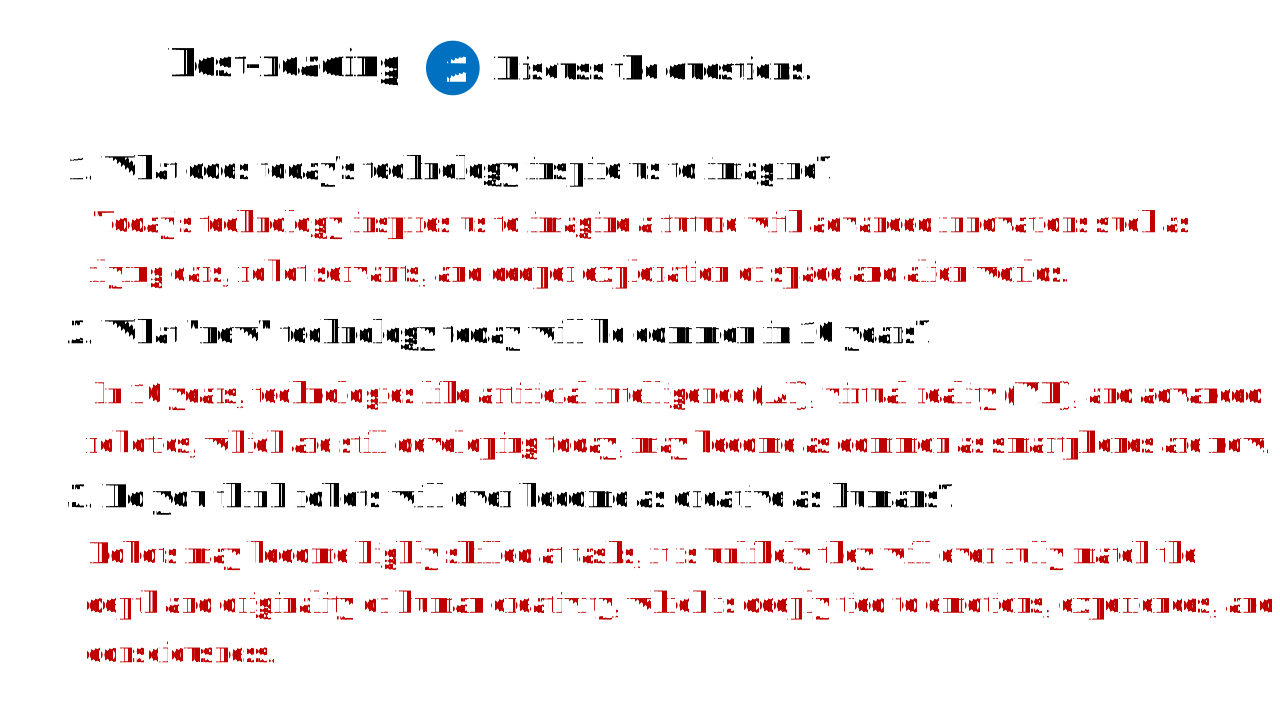
1. What does today's technology inspire us to imagine?
2. What "new" technology today will be common in 10 years?
3. Do you think robots will ever become as creative as humans?
Today's technology inspires us to imagine a future with advanced innovations such as flying cars, robot servants, and deeper exploration of space and alien worlds.
2
Discuss the questions.
In 10 years, technologies like artificial intelligence (AI), virtual reality (VR), and advanced robotics, which are still developing today, may become as common as smartphones are now.
Post-reading
Robots may become highly skilled at tasks, it is unlikely they will ever fully match the
depth and originality of human creativity, which is deeply tied to emotions, experiences, and consciousness.
Are you curious about the future? What do you think our life will be like in 50 years or more? To answer this, you can read a sci-fi book. Perhaps you will have some ideas then. Today, many young readers are interested in science fiction. But what makes it so popular?
Let’s learn!
Paragraph 1
be curious about
对...感到好奇
像...样
全世界= all over the world
in+时间段,表示一段时间后,
用“how soon”提问
目的状语
be interested in = be into 对...感兴趣
For one thing, science fiction gives us a chance to imagine what our future will be like.Anything is possible. We can dream big. Some people think there will be flying cars and robot servants. Others believe we will learn more about strange aliens and other worlds.
Paragraph 2
for one thing...for another
首先...其次...
宾语从句
Another reason is that sci-fi writers and their work can inspire us to create the future.In 1945, a sci-fi author named Arthur C. Clarke wrote about a system of space stations.In the article, he predicted the earth of the future would have many TV stations and people would send TV programmes around the world. However, this was before TV was a common item at home! In a short story by Clarke, he suggested people in the future would use a system to talk with others around the world. Amazingly, the short story was actually the inspiration for the internet!
Paragraph 3
表语从句
inspire/v. 激发;鼓舞 inspiration/n.灵感
宾语从句
item/n.项目
Science fiction is also popular because it can make us think about our world in new ways. Although many sci-fi stories are set in imaginary worlds or societies, they can help us better understand the real world. They can also make us excited when we feel like we are living in a boring world.
Paragraph 4
原因状语从句
be set 被动语态,“被设为”
imaginary/adj.想象的,假想的 imagination/n.想象力
make sb + adj.
让某人处于某种状态
feel like 感觉像
feel like doing sth
=want to do sth
=would like to do sth
想要做某事
What will the future be like? Sci-fi inspires us and helps us to understand what it could be like.
Paragraph 5
宾语从句
Exercise-根据句意和汉语提示完成句子
1. I _______________ the future(对......感到好奇).
2. Many boys _____________ (对......感兴趣).
3. __________ (首先),we should be careful.
4. Her smile ______________(感觉像) the sunshine.
5. This story _____ (启发) we should have responsibility.
am curious about
are interested in
feels like
inspires
For one thing
Homework
1. Introduce a science fiction that you are interested in, then share it with everyone in the next class.
2. Recite the key words and sentences of this lesson.
$$
资源预览图

1

2

3

4

5
6

相关资源
示范课
由于学科网是一个信息分享及获取的平台,不确保部分用户上传资料的 来源及知识产权归属。如您发现相关资料侵犯您的合法权益,请联系学科网,我们核实后将及时进行处理。