高考英语续写“说”类动词用法 讲义 -2026届高三英语上学期一轮复习专项
2025-08-16
|
6页
|
211人阅读
|
2人下载
普通
内容正文:
高考英语续写作文各种 “说” 类动词用法
第一组 一般日常 “说”
核心考点:区分动词的及物 / 不及物属性和搭配差异,避免语法错误(如 tell 后必须接双宾语,say 后接直接引语或从句)。
动词
核心用法
高考适配例句
say
不及物 / 及物;后接直接引语、从句或具体内容(不接 “人” 作宾语,除非加 to sb.)
Then the man would laugh and say to his daughter, “But to me, you'll always be my little girl.”(2023 年某省模考写作场景)
tell
及物;必须接双宾语(tell sb. sth. /tell sb. to do sth. /tell sb. that...),侧重 “告知、讲述”
We all knew where they would end up, because our parents always told us about their stories again and again.(避免原句 “told us about them” 的指代模糊,补充 “stories” 符合高考阅读清晰性要求)
speak
不及物(后接语言需加介词 in,如 speak English);及物时接 “语言 / 演讲”,侧重 “发言、讲话”
One day an expert was speaking to a group of business students about career planning.(补充 “about career planning”,贴合高考阅读理解 “专家讲座” 场景)
talk
不及物(talk to/with sb. /talk about sth.),侧重 “双向交流、闲聊”
Within seconds, he got her to talk like they were old friends—they chatted about their hobbies and childhood.(补充 “chat about...”,符合高考写作 “人际互动” 场景)
add
及物 / 不及物(add sth. /add that...),侧重 “补充说明”
After a slight pause, she added with a smile, “Thank you for your help—I really appreciate it.”(补充 “with a smile” 和具体内容,增强高考写作的画面感)
repeat
及物(repeat sth. /repeat that...),侧重 “重复说”
“Will you forgive me eventually?” she repeated softly, over and over again, hoping to get a positive reply.(补充 “softly” 和 “hoping...”,符合高考完形填空 “情感场景”)
第二组 正式场合 “说”
核心考点:区分语域正式度,此类动词多用于新闻、演讲、官方通知等场景,避免日常语境误用。
动词
核心用法
高考适配例句
state
及物(state clearly/officially that...),侧重 “正式陈述、阐明”
In her graduation speech, my mother stated clearly that life is about learning to face challenges and grow from failures.(补充 “clearly” 和 “grow from failures”,符合高考演讲类应用文场景)
declare
及物(declare publicly/officially that...),侧重 “公开宣称、宣布”(语气强于 state)
A young man went to the police station and declared that he had spotted the murderer near the park at 8 p.m. the night before.(补充时间地点,符合高考阅读理解 “案件描述” 场景)
inform
及物(inform sb. of sth. /inform sb. that...),被动语态(be informed to do sth.)常用
One afternoon, my mother was informed by the teacher to attend a parent-teacher conference on Friday afternoon.(补充动作发出者 “by the teacher” 和时间,符合高考应用文 “通知” 场景,避免原句被动语态的模糊性)
announce
及物(announce sth. to sb. /announce that...),侧重 “公开通知、宣告”(如结果、消息)
The principal announced to all students that the school would hold a sports meeting next month.(补充主语 “principal” 和具体事件,贴合高考 “校园通知” 场景)
第三组 大声 “说”(高考完形 / 情感类阅读高频)
核心考点:区分声音强度、情感色彩(如 roar 含 “愤怒 / 威严”,scream 含 “恐惧 / 激动”),避免语义混淆。
动词
核心用法
高考适配例句
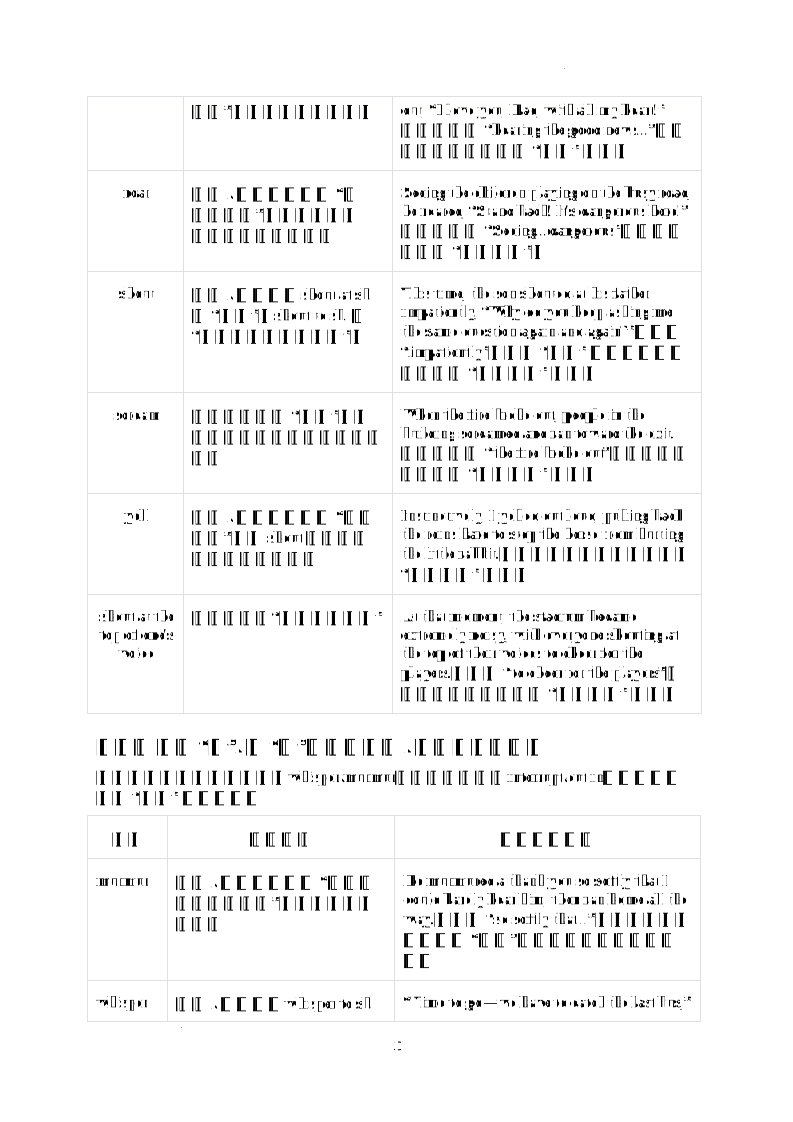
cry
及物 / 不及物;侧重 “大声喊、哭喊”(情感可褒可贬,如提醒、激动)
“Don't be late for supper!” Uncle Paul cried from the door, “and keep to the track so you won't get lost!” “OK, we will!” my dad cried back.(补充 “from the door” 和 “we will”,增强场景真实感)
cry out
不及物;侧重 “突然大喊、惊叫”(多因痛苦、惊喜)
After hearing the good news that her father had recovered, she was comforted and cried out, “I love you, Dad, with all my heart!”(补充原因 “hearing the good news...”,符合高考情感类阅读 “亲情” 场景)
roar
及物 / 不及物;侧重 “怒吼、咆哮”(含愤怒、威严,声音低沉有力)
Seeing the children playing on the busy road, he roared, “Stand back! It's dangerous here!”(补充原因 “Seeing...dangerous”,符合高考完形 “紧急场景”)
shout
及物 / 不及物(shout at sb. 含 “指责”,shout to sb. 仅 “大声喊以让对方听见”)
This time, the son shouted at his father impatiently, “Why do you keep asking me the same question again and again?”(补充 “impatiently”,明确 “指责” 的情感,符合高考完形 “家庭矛盾” 场景)
scream
不及物;侧重 “尖叫”(因恐惧、兴奋、痛苦,声音尖锐)
When the fire broke out, people in the building screamed and ran toward the exit.(补充场景 “the fire broke out”,符合高考阅读理解 “紧急事件” 场景)
yell
及物 / 不及物;侧重 “高声呼喊”(比 shout 更随意,可表激动、提醒)
Instinctively, I yelled out loud, pulling back the reins hard to stop the horse from hurting the little rabbit.(原句正确,贴合高考完形 “突发动作” 场景)
shout at the top of one's voice
固定短语,“用尽全力大喊”
At that moment, the stadium became extremely noisy, with everyone shouting at the top of their voices to cheer for the players.(补充 “to cheer for the players”,明确目的,符合高考 “体育赛事” 场景)
第四组 小声 “说”/ 插 “说”(高考完形 / 细节阅读高频)
核心考点:区分声音大小(whisper/murmur)和动作逻辑(interrupt/cut in),注意语境中 “打断” 的合理性。
动词
核心用法
高考适配例句
murmur
及物 / 不及物;侧重 “低声嘟囔、含糊地说”(声音轻且不清晰)
He murmured a thank you so softly that I could barely hear him, then ran home all the way.(补充 “so softly that...”,用结果状语从句强化 “小声”,符合高考语法填空考点)
whisper
及物 / 不及物(whisper to sb. /whisper that...);侧重 “耳语、轻声说”(声音轻但清晰,多为私密内容)
“Time to go—we have to catch the last bus,” I whispered to the girl, hoping she would follow me right away.(补充原因 “we have to catch...”,符合高考完形 “时间紧迫” 场景)
interrupt
及物(interrupt sb. /interrupt a conversation/silence);侧重 “打断(谈话、沉默)”,较正式
He interrupted the awkward silence with an important announcement: “The deadline to enter the competition is tomorrow, so please hand in your forms today.”(补充 “awkward” 和 “so please...”,明确逻辑,符合高考 “通知” 场景)
cut in
不及物(cut in on sb./sth.);侧重 “插嘴、打断”(较口语化,比 interrupt 随意)
Immediately, Daniel cut in on Joanne's attempts to reassure the child, saying, “Let me explain it to him in a simpler way.”(补充 “to reassure the child” 和具体内容,符合高考完形 “人际帮助” 场景)
第五组 许诺 / 安慰 “说”(高考写作 / 应用文高频)
核心考点:掌握情感导向的搭配(如 promise 后接 that 从句或 to do sth.,comfort 后接 sb. + 鼓励的话),贴合高考 “书信、故事” 场景。
动词
核心用法
高考适配例句
promise
及物(promise sb. sth. /promise to do sth. /promise that...)
He ran home excitedly and promised his little sister, “I will win you the new shoes in the school running race.”(补充 “little” 和 “in the school running race”,明确场景,符合高考写作 “承诺” 主题)
comfort
及物(comfort sb. /comfort sb. by saying that...)
Phil looked at the boy kindly, put a comforting hand on his shoulder, and comforted him, “Don't worry—your mother will be fine soon.”(补充 “—your mother will be fine soon”,增强安慰的具体性,符合高考 “亲情关怀” 场景)
assure
及物(assure sb. that.../assure sb. of sth.),侧重 “使确信、安心”
To calm the nervous student, the teacher assured her that as long as she tried her best, she would pass the exam.(补充 “To calm...” 和条件状语从句,符合高考 “师生鼓励” 场景)
cheer
及物 / 不及物(cheer for sb. /cheer sb. up)
When the team scored the winning goal, the audience turned to look and cheered loudly for them.(补充 “when the team scored...”,明确原因,符合高考 “体育赛事” 场景)
第六组 解释 / 道歉 / 埋怨 / 叹息 “说”(高考完形 / 情感阅读高频)
核心考点:区分负面情感的细微差异(如 complain 含 “不满”,sigh 含 “无奈 / 惋惜”),注意搭配的介词(complain to sb. about sth.)。
动词
核心用法
高考适配例句
explain
及物(explain sth. to sb. /explain that...)
The teacher explained to the students why they should avoid drinking cold water when they have a cold.(补充 “why they should...”,符合高考 “健康建议” 场景)
apologize
不及物(apologize to sb. for sth.)
He apologized to his friend for forgetting their appointment, promising to make it up later.(补充 “for forgetting...” 和 “promising...”,符合高考 “人际矛盾解决” 场景)
complain
不及物(complain to sb. about sth.)
Once, a friend of mine complained to me about feeling unwell—she said she had drunk some cold water the night before.(补充 “—she said...”,用破折号衔接原因,符合高考完形 “细节补充” 考点)
sigh
及物 / 不及物;侧重 “叹息”(表无奈、惋惜)
Looking at the broken toy, she sighed, “Oh well, better luck next time—I'll buy a new one.”(补充 “looking at the broken toy”,明确叹息原因,符合高考情感类阅读场景)
第七组 问与答 “说”(高考语法填空 / 完形高频)
核心考点:区分“问” 的正式度 (inquire 比 ask 正式)和 “答” 的动词属性(reply 不及物,需加 to;answer 及物)。
动词
核心用法
高考适配例句
ask
及物(ask sb. sth. /ask sb. to do sth. /ask that...)
His brothers asked him what he had sown in the field, and he told them, “Rice.”(补充 “in the field”,明确场景,符合高考 “农业 / 生活” 阅读场景)
inquire
及物 / 不及物(inquire of sb. about sth. /inquire if/whether...),较正式
She greeted James and inquired politely, “Are you ready for the interview?” But James didn't respond.(补充 “politely” 和 “for the interview”,符合高考 “正式场合互动” 场景)
answer
及物(answer sb. /answer a question),直接回应
A weak, elderly voice answered, “Just a minute—I'm coming to open the door.”(补充 “—I'm coming...”,增强语境,符合高考完形 “居家场景”)
reply
不及物(reply to sb. /reply that...),比 answer 更正式
When asked about his plan, he replied that he would go to college to study engineering.(补充 “when asked about...”,用省略句,符合高考语法填空 “非谓语” 考点)
respond
不及物(respond to sb. /respond that...),侧重 “回应”(可指语言或动作)
The teacher asked the student a question, but he didn't respond—he just stared at his book silently.(补充 “—he just stared...”,用动作补充 “不回应”,符合高考完形 “细节描写” 考点)
高考高频考点总结
1. 搭配必记:
0. tell sb. sth. /tell sb. to do sth.(不可说 tell sth.)
0. talk to/with sb. /talk about sth.(不可说 talk sb.)
0. complain to sb. about sth.(不可说 complain sb. sth.)
0. reply to sb.(不可说 reply sb.)
1. 语境适配:
0. 愤怒 / 威严→roar;恐惧 / 兴奋→scream;日常提醒→shout
0. 正式演讲→state/declare;日常聊天→chat/talk
0. 私密内容→whisper;含糊嘟囔→murmur
1. 语法陷阱:
0. 被动语态:be informed to do sth.(不可漏 “be”)
0. 介词搭配:apologize to sb. for sth.(不可错用介词)
0. 从句引导词:say/tell/declare + that 从句(that 可省略,但宾语从句表疑问时用 if/whether)
1
学科网(北京)股份有限公司
$$
资源预览图

1

2
3

相关资源
示范课
由于学科网是一个信息分享及获取的平台,不确保部分用户上传资料的 来源及知识产权归属。如您发现相关资料侵犯您的合法权益,请联系学科网,我们核实后将及时进行处理。