Unit 3 Same or Different period7 SectionB(4a-4d) 教学设计(表格版)2025-2026学年人教版(2024)八年级英语上册
2025-08-09
|
5页
|
360人阅读
|
321人下载
普通
资源信息
| 学段 | 初中 |
|---|---|
| 学科 | 英语 |
| 教材版本 | 初中英语人教版八年级上册 |
| 年级 | 八年级 |
| 章节 | Project |
| 类型 | 教案-教学设计 |
| 知识点 | - |
| 使用场景 | 同步教学-新授课 |
| 学年 | 2025-2026 |
| 地区(省份) | 全国 |
| 地区(市) | - |
| 地区(区县) | - |
| 文件格式 | DOCX |
| 文件大小 | 33 KB |
| 发布时间 | 2025-08-09 |
| 更新时间 | 2025-08-09 |
| 作者 | Amy1031326 |
| 品牌系列 | - |
| 审核时间 | 2025-08-09 |
| 下载链接 | https://m.zxxk.com/soft/53409020.html |
| 价格 | 0.00储值(1储值=1元) |
| 来源 | 学科网 |
摘要:
该初中英语教学设计聚焦比较级用法及友谊中异同的辩证关系,通过展示朋友互动图片激活“both like”“more...than”等旧知,搭建从个人列举(4a)到班级调研(4b)的学习支架,梳理语言知识与调研能力的脉络。
以“个人-班级-汇报-反思”闭环项目活动为特色,融合PBL与合作学习,语言能力上运用比较级和调查句型真实交流,思维品质上通过分类统计培养辩证思维,学习能力上小组协作提升调研整合能力。如4b设计结构化问题、4c数据汇报实例,助力学生巩固语言并深化友谊认知,提升教师课堂效率与教学深度。
内容正文:
2025年秋基于英语核心素养教学设计
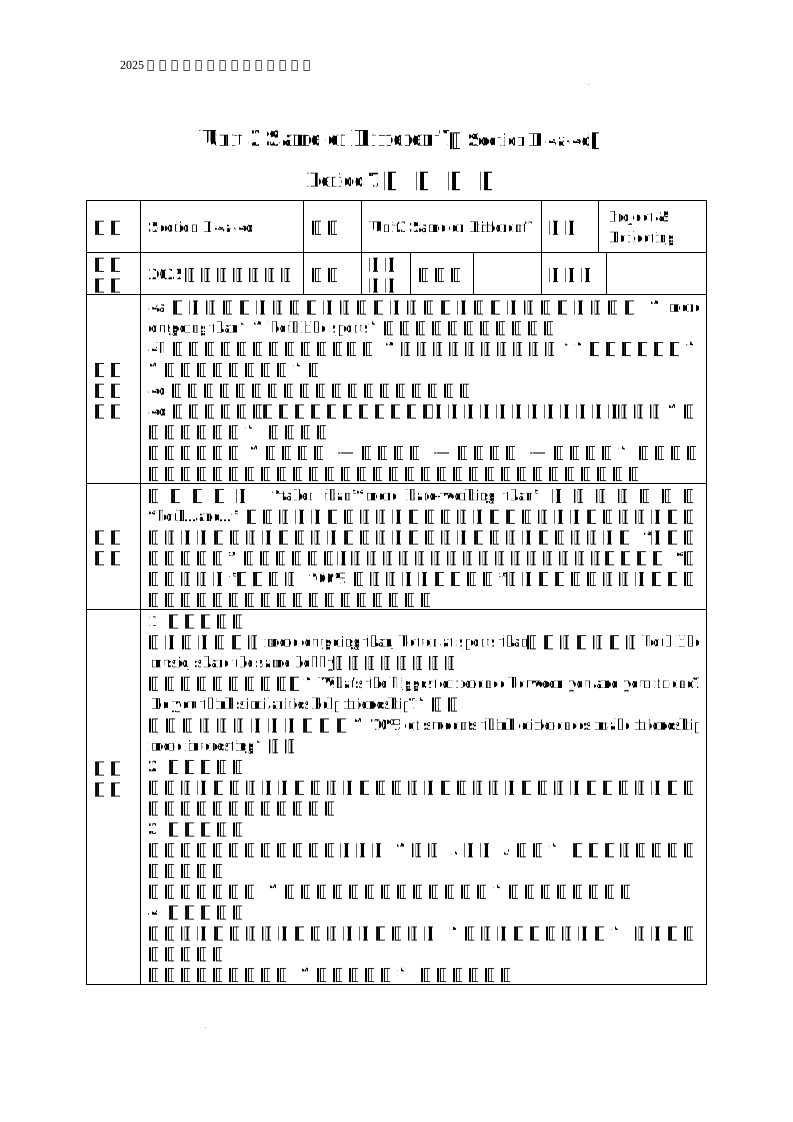
Unit 3 Same or Different?(Section B 4a-4d)
Period 7教 学 设 计
课题
Section B 4a-4d
单元
Unit3 Same or Different?
课型
Project &
Reflecting
使用
教材
2025年秋人教版英语
年级
八年
级上
备课人
复备人
学习
内容
分析
4a 要求学生从性格、能力、兴趣等维度列举自己与好友的异同(如 “more outgoing than”“both like sports”),可补充个性化特征;
4b 通过班级调查收集数据,包括 “好友间最常见的相似点”“最明显的差异”“差异对友谊的影响”;
4c 汇总调查结果并以小组为单位向班级汇报;
4d 结合反思问题(如比较级词汇的运用、相似与差异对友谊的意义)深化对 “朋友间异同价值” 的理解。
活动设计形成 “个人梳理 — 班级调研 — 汇报总结 — 反思提升” 的闭环,助力学生在真实语境中巩固比较级用法,体会友谊中异同的辩证关系。
学情
分析
学生已掌握 “taller than”“more hard-working than” 等比较级表达及 “both...and...” 等句型,但存在三方面不足:一是列举好友异同时分类混乱(如混淆性格差异与兴趣相似点);二是调查中提问缺乏针对性(如遗漏 “差异是否促进友谊” 等深度问题);三是汇报结果时缺乏数据与实例支撑(如仅说 “朋友间有差异”,未说明 “60% 的好友在兴趣上不同”)。需通过结构化调查和小组协作,提升信息整合与逻辑表达能力。
学习
目标
1. 语言能力:
能运用比较级(more outgoing than, better at sports than)和共性表达(both like music, share the same hobby)描述好友异同;
能正确使用调查句型(“What's the biggest difference between you and your friend? Do you think similarities help friendship?”);
能结合数据汇报调查结果(“70% of students think differences make friendship more interesting”)。
2. 学习能力:
通过设计调研维度、收集数据、班级汇报,提升调研与合作能力;在反思中巩固比较级及观点表达句型。
3. 思维品质:
能对好友异同进行分类统计(如按 “性格 / 兴趣 / 能力” 分类),培养数据分析能力;
能从结果中提炼 “相似与差异对友谊的双重意义”,提升辩证思维。
4. 文化意识:
了解不同友谊中异同模式的合理性,体会 “尊重差异、欣赏共性” 是友谊持久的基础;
感受中外友谊观中对 “真诚与包容” 的共通重视。
学习
重点
1. 用比较级、共性表达和句型谈论好友的相似点与差异;
2. 开展班级调查并整理结果;
3. 结合数据汇报调查发现(如最常见的相似点、差异对友谊的影响)。
学习
难点
1. 如何设计全面的调查问题(涵盖 “相似点 — 差异点 — 对友谊的影响”);
2. 用连贯的语言结合数据与实例描述调查结果(如 “Most students are more outgoing than their friends, and this helps them try new things together”);
3. 准确运用比较级与共性表达的衔接(如 “We are both quiet, but she is more patient than me”)。
教学
方法
Project-based Learning(PBL)、Cooperative Learning、Task-based Language Teaching
教学
工具
PPT(含好友互动图片、调查问题示例)、survey worksheets(4a-4c 表格)、comparative & common expression cards(比较级与共性表达卡片)、data charts(数据统计表)、reflection question lists(反思问题清单)
教学过程
教学环节
教师活动
学生活动
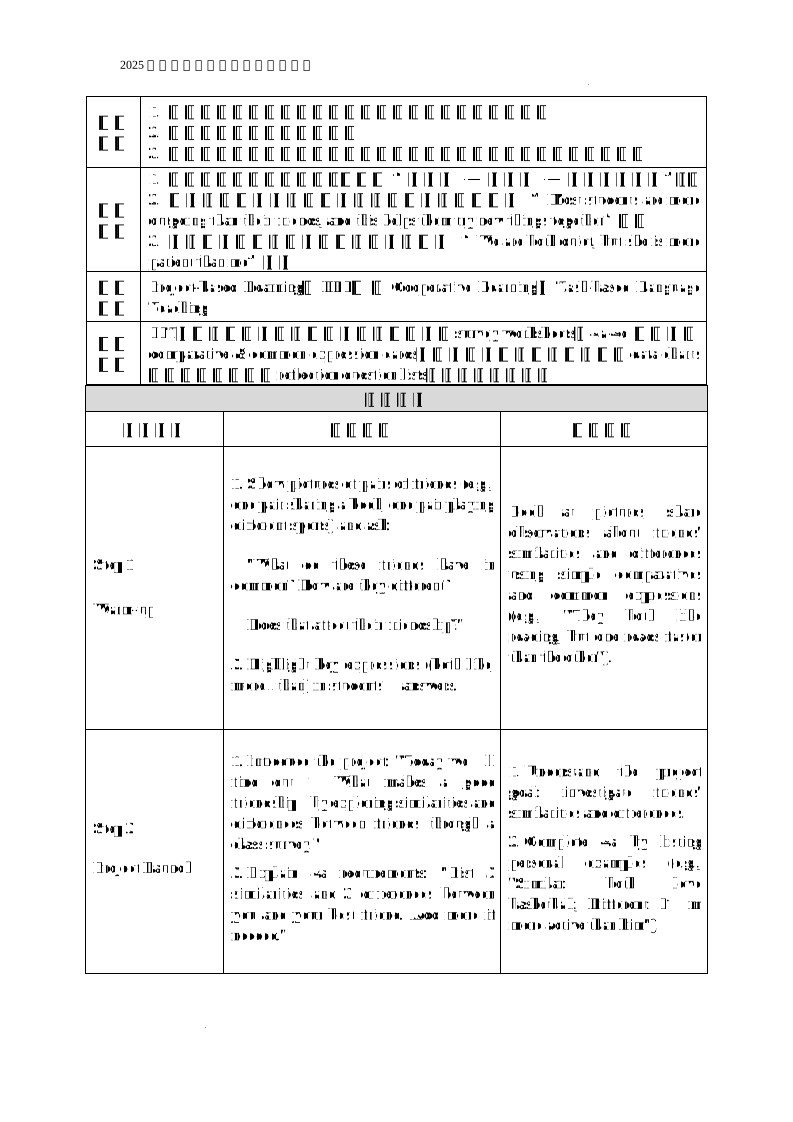
Step 1
Warm-up
1. Show pictures of pairs of friends (e.g., one pair sharing a book, one pair playing different sports) and ask:
"What do these friends have in common? How are they different?
Does that affect their friendship?"
2. Highlight key expressions (both like, more...than) in students’ answers.
Look at pictures, share observations about friends' similarities and differences using simple comparatives and common expressions (e.g., "They both like reading, but one reads faster than the other").
Step 2
Project Launch
1. Introduce the project: "Today we’ll find out ‘What makes a good friendship’ by exploring similarities and differences between friends through a class survey."
2. Explain 4a requirements: "List 3 similarities and 3 differences between you and your best friend. Add more if needed."
1. Understand the project goal: investigate friends' similarities and differences.
2. Complete 4a by listing personal examples (e.g., "Similar: both love basketball; Different: I’m more active than him").
Step 3
Survey Design & Implementation (4b)
1. Guide groups to design survey questions based on 4b:
- "What’s one similarity between you and your friend?"
- "What’s the biggest difference?"
- "Do differences help or hurt your friendship? Why?"
2. Demonstrate interview skills: "Ask clearly and note down specific examples." 3. Distribute worksheets and set a 10-minute timer for peer interviews..
1. In groups, finalize 3 survey questions.
2. Interview 5-6 classmates, recording answers in the worksheet (e.g., "Li Hua: similar—both like math; different—he’s more careful; differences help with homework").
Step 4
Data Analysis (4c)
1. Organize groups to 汇总数据: "Count the most common similarities (e.g., hobbies) and differences (e.g., personality); note opinions on how differences affect friendship."
2. Provide data charts (bar graph for similarities/differences, pie chart for opinions).
3. Explain reporting structures: "First, share the most common similarity; then the biggest difference; finally, classmates’ opinions on differences."
1. Group data and fill in charts (e.g., "25 students share hobby similarities; 18 have personality differences").
2. Analyze findings: "Hobbies are the most common similarity, and most think differences help friendship."
Step 5
Class Report & Discussion
1. Invite 2-3 groups to present findings using charts: "Use ‘We found that...’ ‘Most students...’ ‘For example...’".
2. Lead discussion: "Why are hobbies the most common similarity? How do differences like ‘active vs quiet’ help friends?"
1. Present group data with charts, using reporting sentences and examples.
2. Discuss reasons behind findings (e.g., "Hobbies let friends do things together; different personalities help solve problems").
Step 6 Reflection (4d)
1. Guide students to answer reflection questions:
- "What words helped you talk about similarities and differences? (e.g., both, more...than)"
- "Did you use ‘as...as’ for equal comparisons? Give examples."
- "What have you learned about friendship from this project?" 2. Summarize: "Good friendships need both similarities to connect and differences to grow."
1. Answer reflection questions in pairs, then share with the class.
2. Take notes on key insights (e.g., "Using ‘both’ shows common ground; differences make friendship richer").
家庭作业
1. Write a 5-sentence report: "Our Class Friendship Survey" (include the most common similarity and classmates’ opinions on differences).
2. Discuss with your best friend: "What do you think of our similarities and differences?" Take notes on 1 interesting idea.
板书设计
Unit 3 Same or Different?(Section B 4a-4d)
Useful Expressions:
- Similarities: both like..., share the same..., as...as...
- Differences: taller than, more outgoing than, better at...than...
- Survey Sentences: What's your similarity? What's the difference? How do differences affect friendship?
- Reporting: We found that... Most students think... For example...
Key Findings:
Most common similarity: ________
Biggest difference: ________
Opinion on differences: ________
教学反思
学科网(北京)股份有限公司
$$
资源预览图
1
2
相关资源
由于学科网是一个信息分享及获取的平台,不确保部分用户上传资料的 来源及知识产权归属。如您发现相关资料侵犯您的合法权益,请联系学科网,我们核实后将及时进行处理。