Unit 19 Volcanoes Lesson 37(课件)-2025-2026学年新概念英语青少版(2008)5A
2025-08-08
|
27页
|
87人阅读
|
0人下载
普通
资源信息
| 学段 | 小学 |
|---|---|
| 学科 | 英语 |
| 教材版本 | 小学英语新概念英语青少版(2008)5A |
| 年级 | - |
| 章节 | Lesson 37 |
| 类型 | 课件 |
| 知识点 | - |
| 使用场景 | 同步教学-新授课 |
| 学年 | 2025-2026 |
| 地区(省份) | 全国 |
| 地区(市) | - |
| 地区(区县) | - |
| 文件格式 | PPTX |
| 文件大小 | 18.42 MB |
| 发布时间 | 2025-08-08 |
| 更新时间 | 2025-08-08 |
| 作者 | 匿名 |
| 品牌系列 | - |
| 审核时间 | 2025-08-08 |
| 下载链接 | https://m.zxxk.com/soft/53401215.html |
| 价格 | 1.00储值(1储值=1元) |
| 来源 | 学科网 |
内容正文:
Unit 19 Volcanoes
Lesson 37
Learning Objectives
✓ Understand the volcanic explorers' achievements
✓ Master sequencing expressions
(First... Then... Finally...)
✓ Discuss the significance of the "adventurous spirit"
Warm-up
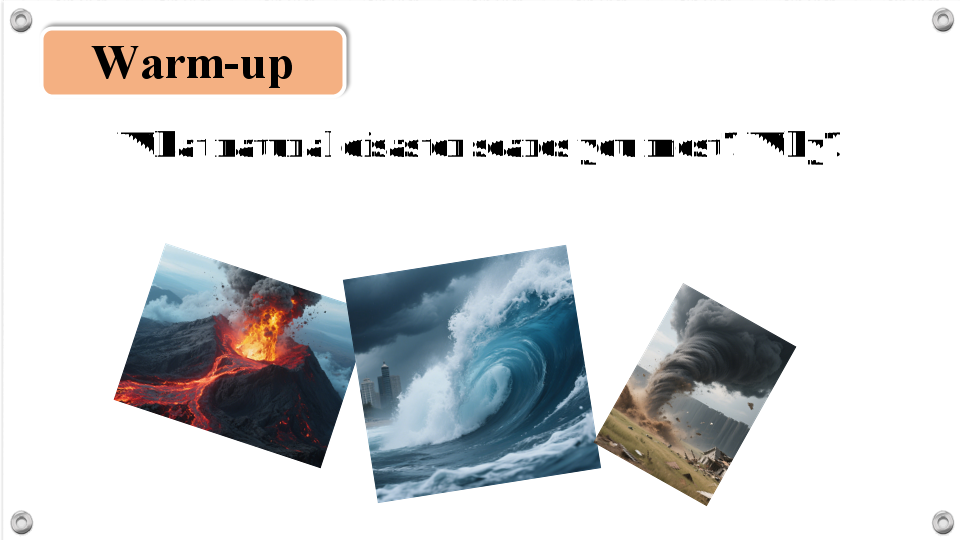
❓❓ What natural disaster scares you most? Why?
Pre-reading
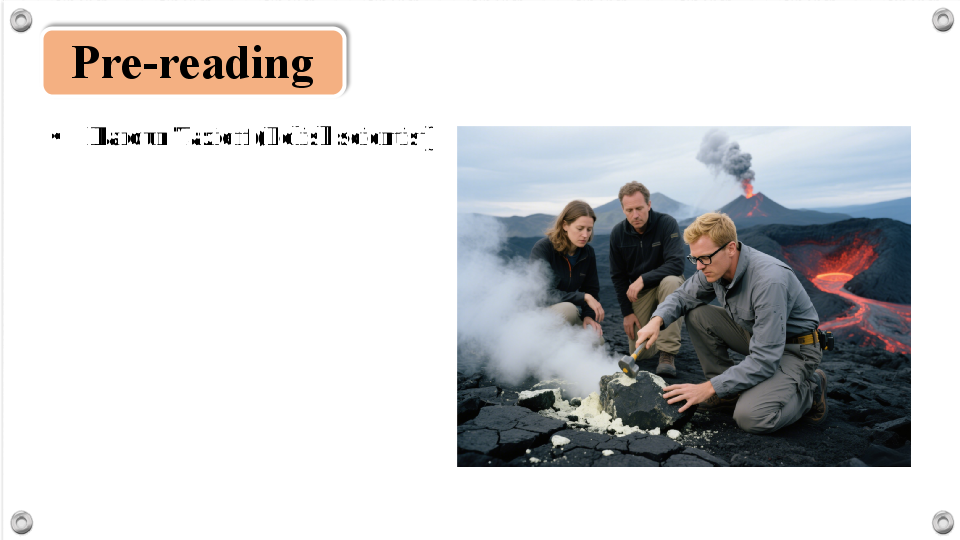
Haroun Tazieff (Polish scientist)
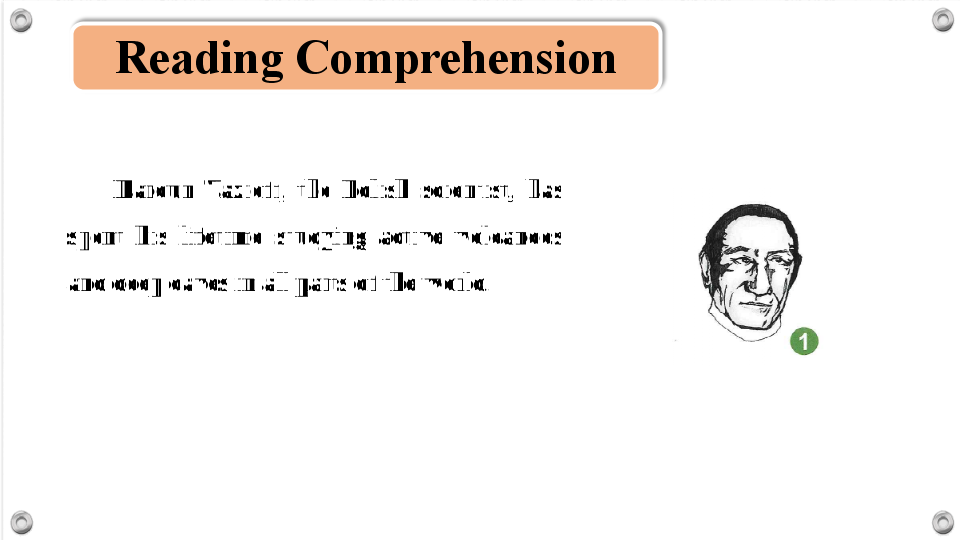
Haroun Tazieff, the Polish scientist, has spent his lifetime studying active volcanoes and deep caves in all parts of the world.
Reading Comprehension
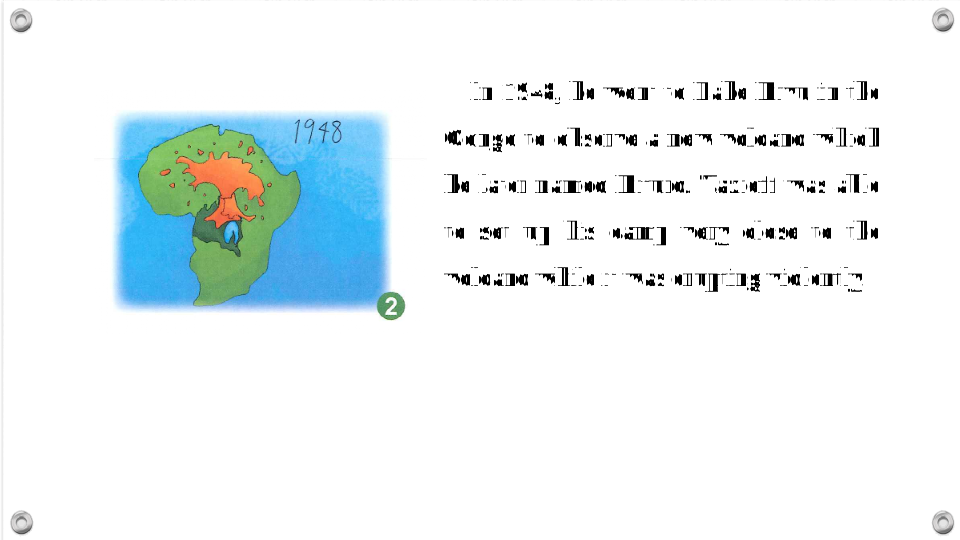
In 1948, he went to Lake Kivu in the Congo to observe a new volcano which he later named Kituro. Tazieff was able to set up his camp very close to the volcano while it was erupting violently.
Though he managed to take a number of brilliant photographs, he could not stay near the volcano for very long. He noticed that a river of liquid rock was coming towards him. It threatened to surround him completely, but Tazieff managed to escape just in time.
He waited until the volcano became quiet, and he was able to return two days later. This time, he managed to climb into the mouth of Kituro, so that he could take photographs and measure temperatures.
Tazieff has often risked his life in this way. He has been able to tell us more about active volcanoes than any man alive.
Sequence the Event Cards (Group Competition)
Card Content:
① Set up camp near erupting volcano (1948)
② Escaped from liquid rock river
③ Climbed into volcano mouth
④ Took photos & measured temperature
⑤ Named the volcano "Kituro"
2→1→4→5→3
Reading Comprehension
Scientific Discovery
↑
Help People (predict eruptions)
↑
Personal Courage
Adventure Motivation Analysis
"The greatest danger is not taking the adventure."
Words
erupting violently
Words
liquid rock
Words
measure temperatures
Words
deep caves
Connector Application
Structures:
Though ________ , ________."
Example.Though he took photos, he couldn't stay long.
"________ in order to ________."
Example: He climbed into the mouth in order to measure temperatures.
Student Task:
✍️ Rewrite textbook sentences using the target structures (Group Writing Competition)
Grammar Focus
Guided summary. Write a complete sentence in answer to each question, to make a paragraph of not more than 80 words.
1 Where did Tazieff, the Polish scientist, go in 1948? Why did he go there? What did he call it? (to... which)
2 Did he take photographs or not? Did he have to leave almost at once or not? Did a river of liquid rock threaten to surround him or not? (After taking .. because)
Grammar Focus
3 Did he escape just in time or not? When did he return? Had the volcano become quiet, or was it still active?(but .. when)
4 Where did he climb this time? Why did he do so? (in order to)
Grammar Focus
Task: Retell the story using a "Information Relay" format based on textbook Q1-Q10:
👥 Student A answers Q1 →
👥 Student B uses A's answer to begin Q2
Example:
A: "He spent his lifetime studying volcanoes."
B: "Because he studied volcanoes, he went to Lake Kivu..."
Dialogue Practice
1 What has he spent his lifetime doing?
2 Where did he go in 1948?
3 Why did he go there?
4 Where was Tazieff able to set up camp?
5 What did he manage to do?
6 He couldn't stay near the volcano for very
long, could he?
Text Detective
7 What did he notice coming towards him?
8 What did it threaten to do?
9 Was Tazieff surrounded, or did he manage
to escape?
10 When was he able to return?
Text Detective
Story Retelling
Motion: "Is it worth risking lives for scientific discovery?"
Roles:
👥 Group A: For (Support risking lives)
👥 Group B: Against (Oppose risking lives)
Sentence Frames:
"I believe... because..."
"From my perspective..."
Values Discussion - Debate Time
Example: Haroun Tazieff is Polish. (What nationality?)
i) Is Haroun Tazieff Polish?
ii) What nationality is Haroun Tazieff?
1 He is a scientist. (What?)
2 He studies active volcanoes. (What?)
3 He also studies deep caves. (What else?)
4 He's been in all parts of the world. (Where?)(Who?)
5 He went to Lake Kivu in 1948. (When?)
Ask questions about the text.
6 It's in the Congo. (Where?)(What?)
7 He went to observe a new volcano. (Why?)
8 He later named it Kituro. (What?)
9 He was able to set up his camp very close
to the volcano. (Where?)
10 It was erupting violently. (What?)
Ask questions about the text.
1 Have you ever been to the top of a mountain, or down into a deep cave? Describe your experience.
2 What thoughts come into your mind when you look at a beautiful view? Do you ever think about how mountains and caves are formed? What can you tell us about this subject?
3 What is your opinion of people who risk their lives to study volcanoes and earthquakes? Give your reasons.
Talk about you.
Thank you!
$$
资源预览图
1

2
3
4
5
6
由于学科网是一个信息分享及获取的平台,不确保部分用户上传资料的 来源及知识产权归属。如您发现相关资料侵犯您的合法权益,请联系学科网,我们核实后将及时进行处理。