Unit 1 Food for thought Starting out & Understanding ideas 课件-2024-2025学年高中英语外研版(2019)必修第二册
2025-07-15
|
36页
|
874人阅读
|
12人下载
普通
资源信息
| 学段 | 高中 |
|---|---|
| 学科 | 英语 |
| 教材版本 | 高中英语外研版必修第二册 |
| 年级 | 高一 |
| 章节 | Starting out,Understanding ideas |
| 类型 | 课件 |
| 知识点 | - |
| 使用场景 | 同步教学-新授课 |
| 学年 | 2024-2025 |
| 地区(省份) | 全国 |
| 地区(市) | - |
| 地区(区县) | - |
| 文件格式 | PPTX |
| 文件大小 | 117.40 MB |
| 发布时间 | 2025-07-15 |
| 更新时间 | 2025-07-15 |
| 作者 | 匿名 |
| 品牌系列 | - |
| 审核时间 | 2025-07-14 |
| 下载链接 | https://m.zxxk.com/soft/53048061.html |
| 价格 | 1.50储值(1储值=1元) |
| 来源 | 学科网 |
内容正文:
UNIT 1
Food for Thought
Starting out
&
Understanding ideas
Starting out
What different types of food are introduced in the video?
What does the foreigner think of the food ?
3. Have you tried any of the food in the video? What did you think of it?
Activity 1:
Watch the video and answer the questions.
crispy on the outside, soft on the inside,
delicious, juicy, go well with sweet sauce. (酱)
Han Dynasty, surprisingly good,
steam (蒸) it to keep its original flavor
200 years ago, hot, tasty, challenge, my mouth is on fire
Beijing duck
Dazhaxie
Sichuan hot pot
1.What different types of food are introduced in the video?
2.What does the foreigner think of the food ?
Have you tried any of the food in the video? What did you think of it?
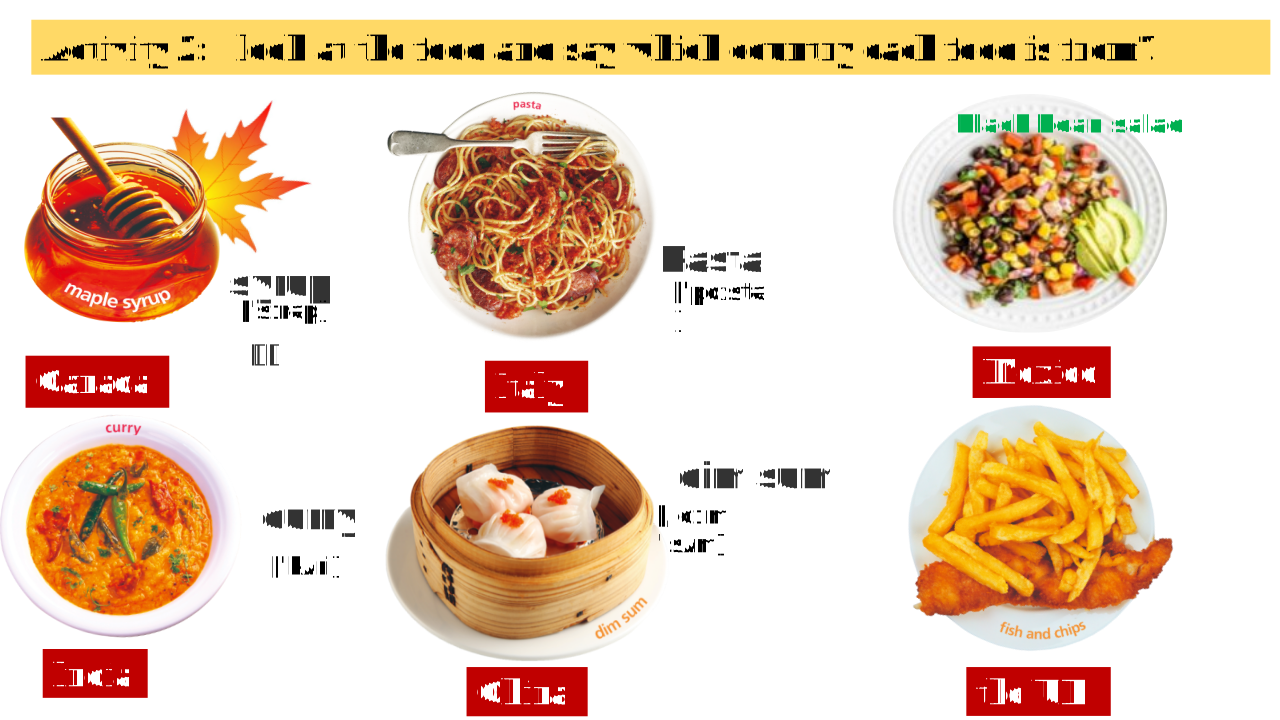
black bean salad
[ˈpɑːstə]
Pasta
dim sum
[ˌdɪm ˈsʌm]
curry
[ˈkʌri]
syrup
[ˈsɪrəp]
糖浆
Activity 2: look at the food and say which country each food is from?
Canada
Mexico
Italy
the UK
China
India
As you can see, we do have so many good-looking or scary–looking but interesting food in the world. We do have many
4
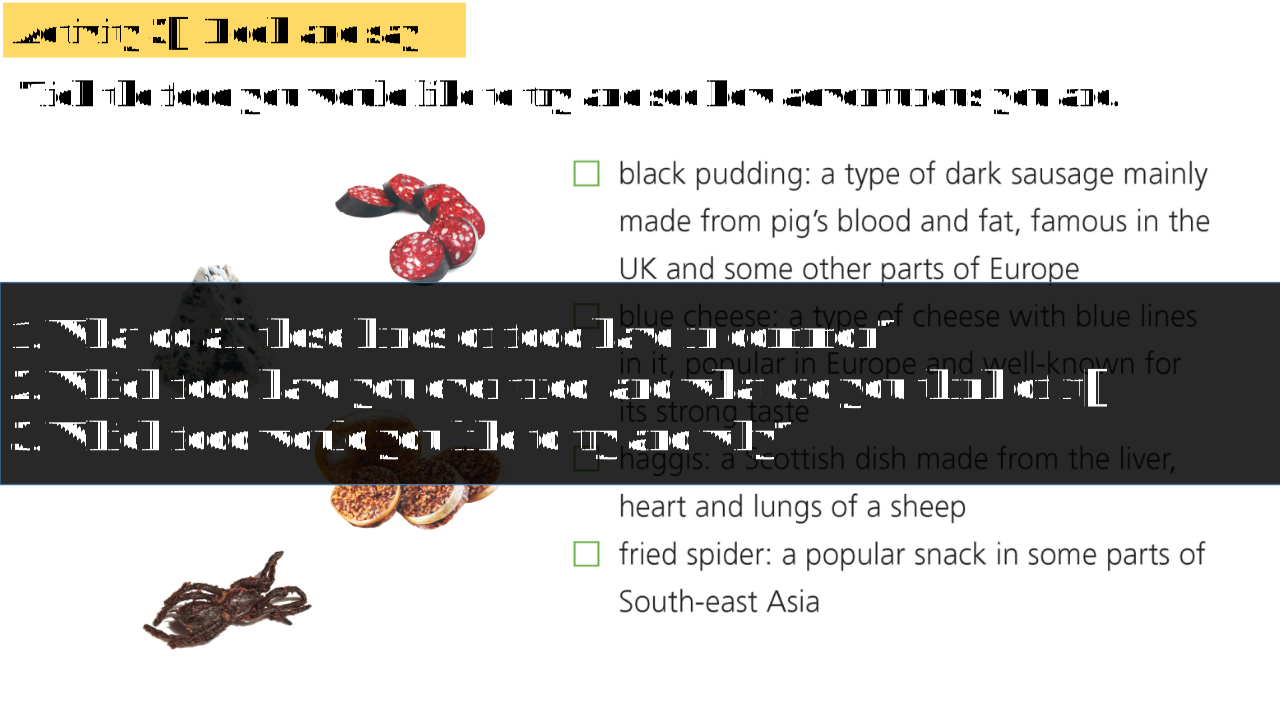
Tick the food you would like to try and see how adventurous you are.
What do all these kinds of food have in common?
Which food have you ever tried and what did you think of it?
Which food would you like to try and why?
Activity 3:Look and say
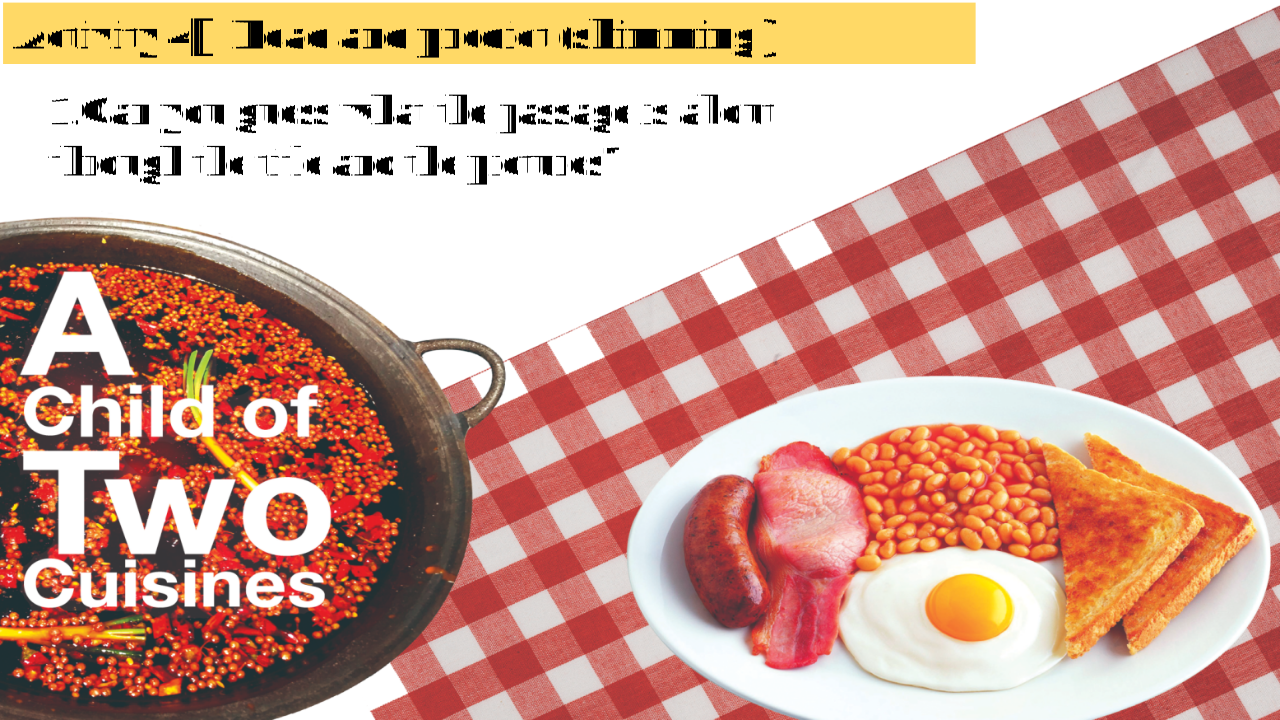
1.Can you guess what the passage is about
through the title and the pictures?
Activity 4:Read and predict (skimming )
2.Choose the main idea of the passage.
1 How the family stays healthy by eating Chinese food.
2 What the family has done to promote Chinese food.
3 How the family cooks both Chinese and English food.
4 How the family combines food from two cultures.
A child of two cuisines
3.What does the title mean?
Activity 5: Read to understand and choose (skimming)
A child of two cuisines
British cuisine
/Foreign cuisine
Chinese cuisine
3.What does the title mean?
A British father
A Chinese mother
The boy has the chance to enjoy food from two countries.
Activity 5: Read to understand and choose (skimming)
Activity 6:Read and answer (Scanning)
4.What Chinese food and British food are mentioned in the passage ?
A child of two cuisines
Chinese food
British food
Sichuan hot pot
Animal parts
Stinky tofu
Full English breakfast
Sunday roast
Read for details
5.Please choose the correct symbols and complete the table with information from the passage.
not applicable
未提及,不适用
Activity 6:Read and answer (Scanning)
While-reading
Read for details
Mom has sweet memories of ...
Thanks to this, Dad has come to love...
Even today, he still does not ...
But I enjoy ...
Mum and I just have to find a way ...
Mum and I just have to find a way ...
We all love roast beef and vegetables ...
But just when I thought I could ...
A child of two cuisines
Chinese food
British food
hot pot
Animal parts
Stinky tofu
Full English
breakfast
Sunday roast
Love
Dare not try
Be surprised
Be shocked
Doesn’t easily take to
Dad’s attitude
son’s attitude
mom’s attitude
Love
Enjoy
Horrible
Not so bad
May fall in love
Love
Had not better eat too much
Make us suffer from heat
One man’s meat is another man’s poison.
I feel at home with food from both my cultures.
Activity 7:Discuss and share
A child of two cuisines
Dad
1.Why do mom and dad have different opinion on the same food?
2.Why can the son enjoy the food from both culture?
conflicts
Mom
Son
enjoy
Different countries /cultures /lifestyles
Growing up two different cultures
Better understanding
One man’s meat is another man’s poison
He can combine food from two cultures or more than two cultures
Activity 8:Think and share
Faced with different foods, your attitudes?
1.One man’s meat is another man’s poison
2. We should combine food from two cultures or more than two cultures
What attitude should we hold when facing something different?
Have to
Had better
Need
Dare
Be able to
Tolerate 包容
understand
respect
try
Adapt to /accept /enjoy
Cultural difference
Understand
Respect
Explore
Tolerate
Cultural Fusion(融合)(融合)
“TRUE” principle(原则)
Conclusion
We should have this open mind towards different cultures. In this way, we will have the chance to create new ideas. And also, we will have the ability to accommodate (v.容纳) ourselves to cross-culture.
16
Language points
Para1: Growing up in England with a British father and a Chinese mother, I’ve enjoyed food from both countries ever since I was able to hold a knife and fork – and chopsticks.
1.Growing up in England with a British father and a Chinese mother, 此部分是现在分词短语做原因状语。
Growing up in...现在分词短语作状语,表示原因
Hearing the news,they all jumped with joy.
He fell off his bike,breaking his left leg.
Following Tom,we started to climb the mountain.
The boy ran away,shouting loudly.
Working hard,you will succeed sooner or later.
听到这个消息,他们都高兴得跳了起来。(时间状语)
他从自行车上摔下来,摔断了左腿。(结果状语)
我们跟着汤姆开始爬山。(方式状语)
那个男孩大喊着跑开了。(伴随状语)
如果你努力, 迟早会成功的。(条件状语)
ever since 自从……;从那以后,一直……
可以单独使用,也可以后接从句。
它引导的从句若用__________,主句则常用___________。
ever放在since之前是用来表达说话人强调主句的动作或状态持续时间很长。
eg I ____________(know) him ever since he was a child.
一般过去时
现在完成时
have known
Para2: Mum has sweet memories of the food from her home town in Sichuan, and often cooks spicy dishes.Thanks to this, Dad has come to love hot pot! But there are still some dishes that Dad dare not try even after many years of marriage to my mother.
1.Thanks to : because of someone or something
归功于某人/某事物; 多亏某人/某事物
2.因为,由于:because of/owing to/due to/as a result of
3.come to do sth. 开始做……
◆hot pot 火锅
古称“古董羹”,因食物投入沸水时发出的“咕咚”声而得名,它是中国独创的美食,历史悠久,是一种老少皆宜的食物。
火锅一般是指以锅为器具,以热源烧锅,以水或汤烧开来涮煮各类食物的烹调方式。
② Chongqing is well known for its spicy hot pot.
重庆以它的麻辣火锅而著称。
But there are still some dishes that Dad dare not try even after many years of marriage to my mother.
◆dare dare 在此句中是一个情态动词,没有人称和数的变化,dare not 表示 “不敢”。
在此句中,dare 也可以改为实义动词的用法:
Dad does not dare to try.
Para2: He once told me he was surprised by what he saw on the table when he first visited my mother’s parents in China. He was even shocked at their wedding when he sawhow the Chinese ate almost every part of an animal. Even today, he still does not easily take to eating things like chicken feet.
1.对……感到惊讶/震惊
be surprised/amazed/shocked/astonished at/by sth.
2.对做……感到惊讶/震惊
be surprised/amazed/shocked/astonished to do sth.
宾从
宾从
时从
3.take to doing sth习惯于做某事
Para3: But I enjoy that sort of food myself. Last week, I went to the butcher’s and asked, “Do you have pigs’ears?” “No,” the butcher said, pulling at his own ears, “just these ordinary ones.” He must have thought I was joking.
1.sort n.种类;方式 v.分类;挑选
n. all sorts of=all kinds of 各种各样的
sort of=kind of 有点,稍微
v. sort ... into 把...分类
sort out 整理,挑出,拣出
He must have thought I was joking.
Must have done 肯定做过,发生过
should/shouldn’t have done 本应该/本不应该
may/might have done 可能/也许做过某事
can/could have done 可能/也许做过某事
must have done表示对过去已经发生过的动作或状态做肯定推测。
They must have left early because the house is empty. (他们肯定早就离开了,因为房子是空的。)
You should have studied harder for the exam. (你本应该更努力学习的。)
They might have gone to the wrong address. (他们也许去错了地址。)
She could have taken the wrong bus. (她可能坐错了公交车。)
25
Para4: Dad can cook a super “full English breakfast” of bacon, eggs, beans, sausages and toast with butter – Mum and I just have to find a way to get him into the kitchen! He also does a typical Sunday roast.
1.super adj,极好的,了不起的
2.bacon n 咸猪肉,熏猪肉
3.toast n.烤面包,吐司;祝酒,干杯,敬酒
drink a toast to...为...而干杯
4. butter n.黄油
5.typical adj. 典型的,有代表性的
it is typical of sb to do sth 做某事是某人的一贯作风。
6.roast n.大块烤肉 adj.烤好的,烤制的 v.炙,烤
Full English breakfast
full English breakfast
A full English breakfast is a breakfast meal that typically includes bacon, sausages, eggs, other cooked foods and a beverage (饮料) such as coffee or tea. It is usually shortened to “full English”.
27
Para4: We all love roast beef and vegetables, but Mum says we’d better not eat too much roast food as it may make us suffer from heat inside our bodies, according to traditional Chinese medicine.
2.suffer v.受苦(身体或精神上的)
3.according to 根据
1.had better do sth: 最好做某事
had better not do sth 最好不要做某事
当主语是人称代词时,had better常可缩写为“’d better”
原从
Para5: I’ll never forget my first visit to China. Mum encouraged me to try different kinds of food, and I did! I loved everything. But just when I thought I could deal with all Chinese food,I came across stinky tofu, a horrible grey thing that looked and smelt like a burnt sports shoe.
1.stinky tofu 臭豆腐 stinky adj. 难闻的,有臭味的 tofu n. 豆腐
2.horrible adj. 糟糕的,令人恐惧的
时从
同位语
定语从句
3.偶遇:come across /encounter/run into/bump into
Para5: “You needn’t try it if you don’t want to,” Mum said, but I gathered all my courage to take a bite and was amazed to find it wasn’t so bad. It reminded me of blue cheese, a similarly strong smelling type of food you either love or hate. Maybe I’ll fall in love with stinky tofu – someday.
1.gather v.聚集;搜集; gather all my courage to do 鼓起勇气做…
2.bite n.咬 v. 咬;叮;蜇 bite-bit-bitten
3.remind sb. to do sth. 提醒某人做某事
reminder n. 引起回忆的事物,通知单
Para6: People say that one man’s meat is another man’s poison, but I feel at home with food from both my cultures.
1.poison n.毒素,毒物,毒药 poisonous adj.有毒的,引起中毒的
2.feel at home with sth 舒适自在,无拘无束
Para6: To me, there’s nothing better than a cross-cultural afternoon tea of English biscuits and a cup of Chinese oolong tea in a fine china cup!
2.cross-cultural adj 跨文化的,涉及多种文化的
3.china n.瓷,瓷料,瓷器 a china vase一个瓷花瓶
1.否定词+比较级(表最高级) “没有更...的了/再...不过了”
To me, there’s nothing better than a cross-cultural afternoon tea...
否定词+比较级=最高级
1. I have never seen a better film like this before.
= This is the best film that I’ve seen.
2. There’s nothing better than having a spicy hot pot.
= Having a spicy hot pot is the best thing.
3. ---Do you want a cream-cake? ---It couldn’t be better.
= It could be the best.
Afternoon Tea :16世纪,葡萄牙凯瑟琳公主嫁至英格兰,并随行带去一些茶叶。她常常邀请贵妇们一同饮茶聊八卦,英伦贵族的茶文化开始形成。那时候的英国人一天只吃两顿,一顿早午餐,一顿晚餐。晚餐时间一般在晚上8点以后。
可是这个普遍的“挨饿”困境直到19世纪才被一位叫安娜的公爵夫人彻底改变。因为她实在挨不了饿。
于是,公爵夫人让仆人下午4、5点左右,在会客厅准备烤面包和红茶,后来还邀请闺蜜们加入。
毕竟要招待贵妇们,安娜将茶点升级成三明治和蛋糕,并搭配上等瓷器。
“下午茶”这件事便在英国贵族圈流行起来。
Low Tea: 19世纪,只有贵族家庭才能拥有尊贵的皮沙发和奢侈的会客厅。贵妇们靠着舒服的沙发,品尝着矮脚茶几上的茶和点心。
所以英国上流社会的下午茶其实是“矮茶”——low Tea。
High Tea:随着茶叶和“下午茶”文化向平民阶层的下沉输出,出卖体力的打工人单纯为了充饥,也兴起了下午茶。
平民的下午茶,选的是普通的茶叶,普通的餐具,搭配的却是面包、火腿、牛肉、馅饼、土豆饼、焗豆等高热量食物,目的纯粹是为了充饥。
因为没有沙发,只能选择在高凳子、高脚餐桌上进行下午茶。所以,平民的下午茶叫“高茶”——High Tea。
Review
迄今,自……以来
不敢尝试
被……震惊
喜欢上;养成习惯
这种……
去肉铺
去看医生
去理发店
在肉铺
在蛋糕店
ever since
dare not try
be shocked at
take to doing sth.
that sort of… (thing)
go to the butcher’s
go to the doctor’s
go to the barber's
at the butcher’s
at the baker’s
Review
一定认为
上火
处理;对付
偶遇;偶然发现
鼓起所有勇气
萝卜青菜,各有所爱
感觉自在
跨文化的
must have thought
suffer from heat inside the bodies
deal with
come across
gather all my courage
One man’s meat is another man’s poison.
feel at home (with)
cross-cultural
Lavf58.12.100
Tencent APD MTS
$$
资源预览图

1

2

3
4
5
6
相关资源
由于学科网是一个信息分享及获取的平台,不确保部分用户上传资料的 来源及知识产权归属。如您发现相关资料侵犯您的合法权益,请联系学科网,我们核实后将及时进行处理。