第02讲 Unit 2 Amazing numbers(知识全梳理&考点精准练)-【暑假自学课】2025年新八年级英语暑假提升精品讲义(沪教版2024)
2025-06-20
|
2份
|
54页
|
969人阅读
|
189人下载
精品

资源信息
| 学段 | 初中 |
|---|---|
| 学科 | 英语 |
| 教材版本 | 初中英语沪教版八年级上册 |
| 年级 | 八年级 |
| 章节 | Unit 2 Amazing numbers |
| 类型 | 教案-讲义 |
| 知识点 | 谓语动词的时态 |
| 使用场景 | 寒暑假-暑假 |
| 学年 | 2025-2026 |
| 地区(省份) | 全国 |
| 地区(市) | - |
| 地区(区县) | - |
| 文件格式 | ZIP |
| 文件大小 | 8.82 MB |
| 发布时间 | 2025-06-20 |
| 更新时间 | 2025-06-20 |
| 作者 | 创新初高英语精品馆 |
| 品牌系列 | 上好课·暑假轻松学 |
| 审核时间 | 2025-06-20 |
| 下载链接 | https://m.zxxk.com/soft/52664290.html |
| 价格 | 4.00储值(1储值=1元) |
| 来源 | 学科网 |
内容正文:
第02讲 Unit 2 Amazing numbers(知识全梳理&考点精准练)
内容导航——预习三步曲
第一步:学
析教材 学知识:教材精讲精析、全方位预习
练习题 讲典例:教材习题学解题、快速掌握解题方法
练考点 强知识:核心考点精准练
第二步:记
串知识 识框架:思维导图助力掌握知识框架、学习目标复核内容掌握
第三步:测
过关测 稳提升:小试牛刀检测预习效果、查漏补缺快速提升
培素养 提综能:培养综能素养,提高学科综合能力
1. 单词学习
序号
英文
音标
词性及中文含义
1
flight
/flaɪt/
n. (尤指乘飞机的)航程 p. 20
2
schedule
/ˈʃedjuːl/
n. 日程安排 p. 20
3
everywhere
/ˈevriweə(r)/
adv. 到处;各个地方 p. 20
4
challenge
/ˈtʃæləndʒ/
v. 向(某人)挑战 p. 21
5
prize
/praɪz/
n. 奖赏;奖励 p. 21
6
promise
/ˈprɒmɪs/
v. 承诺;保证 p. 21
7
chessboard
/ˈtʃesbɔːd/
n. 国际象棋棋盘 p. 21
8
silver
/ˈsɪlvə(r)/
n. 银 p. 21
9
reply
/rɪˈplaɪ/
v. 回复;答复 p. 21
10
hesitation
/ˌhezɪˈteɪʃn/
n. 犹豫 p. 21
11
wonder
/ˈwʌndə(r)
v. 想知道;琢磨 p. 21
12
agree
/əˈɡriː/
v. 同意;赞成 p. 21
13
percent
/pəˈsent/
n. 百分之…… p. 24
14
currently
/ˈkʌrəntli/
adv. 目前;当前 p. 24
15
check
/tʃek/
v. 检查;核查 p. 27
16
budget
/ˈbʌdʒɪt/
n. 预算 p. 27
17
province
/ˈprɒvɪns/
n. 省份 p. 28
18
sharply
/ˈʃɑːpli/
adv. 急剧地;突然大幅度地 p. 28
19
count
/kaʊnt/
v. 计算(或清点)总数 p. 30
20
system
/ˈsɪstəm/
n. 系统 p. 30
21
symbol
/ˈsɪmbl/
n. 符号;记号 p. 30
22
represent
/ˌreprɪˈzent/
v. 代表 p. 30
23
exactly
/ɪɡˈzæktli/
adv. 准确地;确切地 p. 30
短
语
flight schedule 航班时刻表 p. 20
price tag 价格标签 p. 20
for a moment 片刻;一会儿 p. 21
without hesitation 毫不犹豫 p. 21
go up 上升 p. 28
go down 下降 p. 28
write down 写下;记下 p. 30
instead of 代替;作为……的替换 p. 30
2. 教材原文 Reading(教材P20-21)
Read the story and find out how a wise old man uses numbers to outwit1 the king.
The old man and the king
A long time ago, there was a king in India. The king’s favourite game was chess.
One day, a wise old man came to the palace and the king challenged him to a game. “You can have any prize if you win the game,” the king promised the old man.
The old man thought for a moment and said slowly, “If I win the game, I’d like one grain of rice for the first square of the chessboard, two for the second, four for the third ... I’d like you to double the amount for each of the rest of the squares.”
The king was very
(接教材P21)
surprised. "Is that all?" he asked. "Wouldn't you like gold or silver instead?"
"No, just rice," the old man replied without hesitation.
"How many grains of rice will this be?" the king wondered, "There are 64 squares on the chessboard, so there will be one, two, four, eight, sixteen, ... Perhaps a bag of rice is enough." After thinking about it for a moment, the king agreed.
The king and the old man played the game for a long time. Finally, the old man won, so the king ordered his men to collect a bag of rice. The king's men put one grain on the first square, two on the second, and so on. After a few squares, the king realized the problem—even with all the rice in the country, he would still not have enough rice to put on the chessboard!
3. 知识点梳理
考点1 One day, a wise old man came to the palace and the king challenged him to a game. 一天,一位智者来到皇宫,国王向他挑战一场比赛。(教材P20)
challenge用作名词时,意思是“挑战” 。用作动词时,意思是“挑战”。
考点2 “You can have any prize if you win the game,” the king promised the old man. “如果你赢了这场比赛,你可以得到任何奖品。”国王向老人保证。(教材P20)
①.promise用作动词时,意思是“许诺” ; 用作名词,意思是“诺言, 希望, 约定”
②win 动词:赢得;获得(win-won-won) winner n. 获胜者,赢家
【拓展辨析】win 和 beat(beat-beat-beaten)
含义及用法
例句
win
及物动词(宾语是比赛、战争、奖品、金钱等名词)
Our team won the game last night.我们队昨晚赢得了比赛。
不及物动词(意为“获胜”)
She always tries hard to win.她总是努力去获胜。
beat
及物动词(宾语是比赛或竞争的对手,即指人或团队的名词或代词)
I beat my classmate in the running race.
我在跑步比赛中击败了我的同学。
不及物动词(意为“(风雨等)拍打,(心脏)跳动”)
Her heart was beating fast with excitement.
她的心因兴奋而快速跳动。
考点3 I’d like you to double the amount for each of the rest of the squares.我希望你把剩下的每个方块的数量都翻倍。(教材P20)
1 would like(sb.)to do sth. 想要(某人)做某事= want(sb.)to do sth.
would like+名词
例:I would like you to have a cup of coffee with me. 我想要你跟我一起去喝杯咖啡。
例:Would you like a cup of coffee? 你想要来杯咖啡吗?
例:I would like to have a cup of coffee. 我想要喝杯咖啡。
②【拓展】辨析the amount of ;an amount of ;the number of;a number of
A.the amount of +不可数名词,意思为“...... 的数量”,谓语用单数。
例:The amount of milk is 250ml. 牛奶的量是250毫升。
B.an amount of +不可数名词,意为 “一定量的...”,a small/large amount of少量;大量 意为 “大量/少量的......”谓语用单数。
例:An amount of energy is required to start the machine.(启动机器需要一定量的能量。)
C.the number of+可数名词复数,意思为“...... 的数量”,谓语用单数。
例:The number of students in our class is 20. 我们班学生的数量是20。
D.a number of +可数名词复数,“若干”或“许多”, a small/large number of少量;大量 意为 “大量/少量的......”,谓语用复数。
例:A number of students have passed the exam.(许多学生通过了考试。)
③the rest of... 意为“剩余的......”,其后既可以加可数名词,也可以加不可数名词。当“the rest of +n. ”做主语时,谓语动词单复数由其后的名词决定。
例:The rest of the students are playing basketball on the playground.(剩余的学生正在操场上打篮球。)
(主语核心是复数名词students,因此谓语用复数are)
The rest of the milk is enough for breakfast.(剩余的牛奶足够当早餐。)
(主语核心是不可数名词milk,因此谓语用单数is)
【拓展】rest n. 休息 Let’s have a rest. 让我们休息一下。
v. 休息 例:We will rest for half an hour. 我们将休息半小时。
考点4 Wouldn't you like gold or silver instead?你不喜欢金或银吗?(教材P21)
instead adv. 代替;顶替 adv. 而
例句:She chose to walk to work instead of driving.她选择步行上班,而不是开车。
Instead, we can try a new method to solve the problem.相反,我们可以尝试一种新方法解决这个问题。
考点5 "No, just rice," the old man replied without hesitation. “不,就只要大米。”老人毫不犹豫地回答。(教材P21)
1 reply v. /n. 回答;回复
作不及物动词,单独使用。若加宾语,需要加介词to,即reply to+宾语。
reply to:回应,答复,如“reply to a letter”(回信)、“reply to a comment”(回复评论)
【拓展】辨析:reply 和answer
a.“answer”可自由地用作及物或不及物动词;“reply”除后接that从句或引出直接引语时是及物动词外,一般只用作不及物动词,其后若接名词或代词作宾语,应借助介词“to” 。
例如:He replied that he had changed his mind.(他回答说他改变了主意);
He didn’t answer [reply to] my question.(他没有回答我的问题)
b.“answer”除表示“回答”外,还可表示接听(电话)或对门铃等声响作出反应等(常与telephone、door、bell、door - bell等连用),“reply”不能这样用。
例如:Who answered the telephone?(谁接的电话?)
A little girl answered the door.(一个小女孩应声去开门)
C.名词用法:两者都可用作名词,要表示“对……的回答(答复、答案)”等,其后均接介词“to”(不用“of”)。不过,“answer”作名词时有“答案”的意思,“reply”作名词时一般不作“答案”讲。
例如:Have you had an answer to your letter?(你寄出的信有回音没有?)
I received no reply to my request.(我的要求没有收到任何答复)
The answer is correct.(答案是正确的)
② hesitation n. 犹豫→ hesitate v. 犹豫
常用短语: hesitate to do sth:表示犹豫做某事、不愿做某事。
without hesitation 毫不犹豫
例句:She hesitated to hurt the child's feelings.(她不想伤害孩子的感情)
He jumped into the river to save the kid without hesitation. 他毫不犹豫地跳进河里救那个孩子。
考点6 "How many grains of rice will this be?" the king wondered. “这将有多少粒米?”国王想知道。(教材P21)
wonder v.想知道;琢磨
例句:He wondered to find the right way to apologize.他想知道如何找到合适的道歉方式。
She wondered what had happened to her lost keys.她想知道她丢失的钥匙出了什么事。
I wonder if he will come to the party tonight. 我想知道他今晚是否会来参加聚会。
Tourists all wonder at the ancient building’s delicate carvings.游客们都对这座古建筑的精美雕刻赞叹不已。
It’s no wonder that she passed the exam—she studied day and night.难怪她通过了考试——她日夜苦读。
The Great Wall is one of the greatest wonders in human history.长城是人类历史上最伟大的奇迹之一。
考点7 After thinking about it for a moment, the king agreed.国王想了一会儿,同意了。(教材P21)
①agree v. 同意 反义词:disagree 不同意
② for a moment 片刻,一会儿= for a while
考点8 After a few squares, the king realized the problem... 几个方块之后,国王意识到一个问题...(教材P21)
realize v. 意识到; 用法如下
(1)realize + n.
At last she realized her mistakes. 最后她意识到了她的错误。
(2)realize + that 从句
I realized that is was time to go to school. 我意识到该上学了。
(3)realize + 疑问词+其他
I don’t think you realize how important this is to her. 我认为你没有意识到这对她多重要。
(4) realize还有“实现”的意思。
She finally realized her dream. 她终于实现了自己的梦想。
考点9 And then we need to check the train or flight schedule.然后我们需要核对火车或航班时刻表。
考点10 rise(sharply,quickly,slowly),grow,go up, double 上升(急剧、迅速、缓慢),增长,上升,翻倍
fall(sharply,quickly,slowly), drop, go down 下降(急剧、迅速、缓慢),掉落,下降(教材P28)
①sharply adv. 急剧;突然;大幅度地 → sharp adj. 锋利的;敏锐的;急剧的
2 go up/ go down 上升/ 下降
Grammar Cardinal numbers and ordinal numbers 基数词和序数词(教材P25)
知识导图
表示数目多少或顺序先后的词叫数词,数词分为基数词和序数词。基数词表示数目的多少,序数词表示顺序或等级。数词的功能相当于名词或形容词,在句中可以作主语、宾语、表语、定语、状语或同位语。
一、基数词的表示法
表示方法
示例
1~12单独记忆
one 1; two 2; three 3; four 4; five 5; six 6;
seven 7; eight 8; nine 9; ten 10; eleven 11; twelve 12
13~19的数字以-teen结尾
thirteen 13; fourteen 14; fifteen 15; sixteen 16;
seventeen 17; eighteen 18; nineteen 19
20~90等整十基数词以-ty结尾
twenty 20; thirty 30; forty 40; fifty 50; sixty 60; seventy 70; eighty 80; ninety 90
21~99之间非整十基数词是在十位数和个位数之间加连字符
twenty-two 22; thirty-three 33; forty-four 44; fifty-five 55; sixty-six 66; seventy-seven 77; eighty-eight 88; ninety-nine 99
101~999:基数词+hundred+and+整十位数+连字符+个位数
108:one hundred and eight
256:two hundred and fifty-six
908: nine hundred and eight
1,000以上的基数词:英语用千、百万等单位计数,大数字从右向左数,每隔三位加一个逗号。从右开始,第一个逗号处读thousand(千),第二个逗号处读million(百万),第三个逗号处读billion(十亿)
1,001:one thousand and one
1,813:one thousand,eight hundred and thirteen
12,345:twelve thousand,three hundred and forty-five
1,234,567 :one million,two hundred and thirty-four thousand,five hundred
and sixty-seven
5,123,456,789:five billion,one hundred and
单位词
hundred百;thousand千;million百万;billion十亿
记忆口诀:
基数词很容易,1~12词各异。
13至19,以-teen结尾不要丢。
20至90,整十后面有-ty。
几十几,也容易,先说几十再说几,中间短杠“-”加上去。
hundred是一百,百内数字记心怀。
几百几,挺容易,先说几百再说几,中间and 加上去。
thousand是一千,千内数字记心间。
易错警示:
①英语中的基数词只有表示“百""千"“百万”“十化”的单位词,没有表示“万”亿”的单位词,故常用 thousand (十)和million(百万)来表达。表示“一万”时要用ten/10 thousand;表示“一亿”时用a hundred million或100 million。②and只用在hundred后面。
二、基数词的位置
用法
例句
基数词放在another、all之后
We'll have to wait another three weeks for the results.
我们还得再等三周才能知道结果。
The boy lost all the five pencils last week.
这个男孩上周把五支铅笔全丢了。
基数词位于such、more之前
I can finish reading two such books in three days.
三天内我能读完两本这样的书。
Please give me one more banana to eat.
请再给我一个香蕉吃。
基数词可置于last、next、other之后
His last two books are written in English.
他的最后两本书是用英语写的。
Mr.Liu will teach you the next four lessons.
下面的四节课将由刘先生教你们。
★知识点2 序数词
1.序数词的表示法
第 1 ~ 第 1 0
第 1 1 ~ 第 1 9
第 2 0 ~ 第 9 0 ( 整 十 )
first
1st
eleventh
11th
twentieth
20th
second
2nd
twelfth
12th
twenty-first
21th
third
3rd
thirteenth
13th
thirtieth
30th
fourth
4th
fourteenth
14th
fortieth
40th
fifth
5th
fifteenth
15th
fiftieth
50th
sixth
6th
sixteenth
16th
sixtieth
60th
seventh
7th
seventeenth
17th
seventieth
70th
eighth
8th
eighteenth
18th
eightieth
80th
ninth
9th
nineteenth
19th
ninetieth
90th
tenth
10th
——
——
ninety-ninth
99th
2.序数词的构成
构成
示例
1~3:形式不同,需要单独记忆
one→first(1st) two→second(2nd) three→third(3rd)
4~19:由相应的基数词变形后加-th构成
four→ fourth(4th) five→fifth(5th) nine→ninth(9th)
eight→eighth(8th) twelve→twelfth(12th) sixteen→sixteenth(16th)
20~90中整十的序数词: 由相应的基数词词尾-y变为i,再加-eth
twenty→twentieth(20th) thirty→thirtieth(30th) forty→fortieth(40th)
fifty→fiftieth(50th) sixty→sixtieth(60th) seventy→seventieth(70th)
eighty→eightieth(80th) ninety→ninetieth(90th)
21~99中非整十的序数词:只将个位数变为序数词,十位数不变,中间用连字符连接
twenty-one→twenty-first(21st) thirty-two→thirty-second(32th) fifty-eight→fifty-eighth(58th) fifty-nine→fifty-ninth(59th)
eighty-nine→eighty-ninth(89th) ninety-nine→ninety-ninth(99th)
百、千、百万、十亿、万亿:均在其后加-th
hundred→hundredth thousand→thousandth million→millionth
记忆口诀:
基变序,很容易, 结尾加上-th。
一二三,特殊记, 结尾各是t,d,d 。
八去t,九去e, ve 要用f 替。
整十变化需注意,去掉y加-ieth。
若想表示第几十几,只变个位就可以。
★知识点3 数的应用
一、分数、小数、百分数和倍数的表示法
基数词表示数目的多少,大于1的基数词后接可数名词时,可数名词用复数;序数词表示事物的先后顺序时,往往与定冠词the连用,其后接可数名词单数表示分数、百分数、小数、倍数。
类别
表示方法
示例
分数
分子用基数词,分母用序数词;分子大1时,分母变复数形式;分子与分母之间可以加连字符也可以不加
a third/one third
four fifths/four-fifths
带分数用"整数+and+分数"表示
Four and a third 4
five and three fifths 5
百分数
基数词+percent(%)
twenty-five percent 25%
fifty-two percent 52
小数
基数词+point(.)+基数词
three point six two 3.62
one point five 1.5
倍数
倍数为1,用once;倍数为2,用twice/ double;倍数≥3,用"基数词+times"
once 1倍
five times 5倍
three times 3倍
倍数+the size/weight/height/depth width/ length /age of...
China is almost five times the size of Mexico in area.
在面积上,中国几乎是墨西哥的五倍大。
倍数+比较级+than..
I am twice older than you.
我的年龄是你的(年龄的)两倍大。
倍数+as...as..
This school is four times as big as that one.
这个学校是那个学校的4倍大。
易错警示:
“分数/百分数+of+名词”作主语时,谓语动词的单复数形式由of后面的名词的单复数决定。
As we ll know,71%of the surface of the earth is covered with water.
众所周知,地球表面有71%被水覆盖。
记忆口诀:
分数的表达
分子基数词,分母序数词。
分子大于1, 分母加s。
带分数莫着急,前加整数and连。
分母若是2或4, half,quarter 可代替。
二、表示时刻
类别
表示方法
示例
几点整
小时(基数词)(+o'clock)
eight o'clock 8点钟
差几分到几点
分钟数>30时,用“60-分钟”+to+“小时+1”
twenty to eight 7点40分
几点过几分
分钟数≤30时,用“分钟+ past+小时”
ten past nine9点10分
半小时
half
half past six 六点半
一刻钟
(15分钟)
quarter
①a quarter to six5点45分
② a quarter past three3点15分
三、表示年龄
类别
表示方法
示例
表示“具体年龄”
基数词+year(s)+old
nine years old 9岁
Fifteen years old 15岁
at the age of+基数词
at the age of four在4岁时
At the age of sixteen 在16岁时
冠词+基数-year-old +可数名词单数
an eight-year- old boy一个8岁的男孩
a nine-year-old girl 一个九岁的女孩
表示“大概年龄”
in+one's+整十基数词的复数形式
in his thirties 在他三十多岁时
in her fifties 在她五十多岁时
表示“几岁生日”
the/形容词性物主代词+序数词+ birthday
her ninth birthday 她的九岁生日
His eighteenth birthday 他的十八岁生日
四、表示年、月、日、世纪、年代
类别
表示方法
示例
年、月、日
“年”用基数词,“日”用序数词
(美:月/日/年; 英:日/月/年)
2024年1月11日:
美:January 11st,2024
英:11st January,2024
世纪
the+序数词+century
20世纪:the twentieth century
年代
the+整十年份+s/'s
20世纪90年代:the 1990s/1990's
五、表示编号
表示方法
示例
可数名词单数(首字母大写)+基数词(英语单词首字母需大写)
第九十页:Page Ninety
408号房间:Room 408
No.+基数词
20路公交车:Bus No.20
基数词
常用电话号码:
110公安报警电话 120急救热线 119 消防报警热线
基数词+专有名词
中山路105号:105 Zhongshan Road
北海路301号:301 Beihai Road
the+序数词+可数名词单数/专有名词
第一节课:the first lesson
第二次世界大战:the Second World War
六、表示计量
类别
表示方法
示例
长、宽、 高、面积
基数词+单位词+形容词 (long/ wide/ high等)
①5米长:five meters long =five meters in length
②8米宽:eight meters wide =eight meters in width
③2米高:two meters high=two meters in height
基数词+单位词+in+名词 (length/width/ height/ weight等)
温度
非零下温度:基数词+degree(s) (+单位词)
1℃: one degree(centigrade)
零下温度:①基数词+degree(s) +below zero(+单位词);②minus +基数词+degree(s)(+单位词)
①零下5℃:five degrees below zero (centigrade)
=minus five degrees (centigrade)
②零下10℃:minus ten degrees(centigrade)
=minus ten degrees (centigrade)
★知识点4 确切数字和概数的表达
hundred、thousand、million等的用法
类别
表示方法
短语和例句
表示确切的数字
表示确切的数字基数词+hundred/ thousand/...+可数名词复数
four hundred cars四百辆汽车
three thousand people三千人
Our school has six hundred students in total.
我们学校总共有六百名学生。
表示概数
hundreds/thousands/...+of+可数名词复数
hundreds of new tall buildings(数以百计的新高楼)
thousands of students(数以千计的学生)
The company earned millions of dollars in profit last year.
这家公司去年盈利数百万美元。
The universe is estimated to have billions of galaxies.
据估计,宇宙中有数十亿个星系。
Vocabulary practice(教材P23)
(
a
you
are very sure you will do it.
b he / she wants to see if he / she can win.
c if you come second in the race.
d you think about it with curiosity and want to know more about it.
e if you do well in the race.
)1 The words in italics are from the story on pages 20-21. Match the sentence halves.
(1) When you wonder about something,
(2) If you promise to do something,
(3) You may win a prize
(4) You will win the silver medal
(5) If your friend challenges you to
a chess game,
2. Complete the story with the words below. Change the form if necessary.
hesitation prize promise reply wonder
A poor young man came first in a running race and won some gold as a (1)______. He looked at the small piece of gold in his hand and (2) ______what to do with it. The young man decided to ask a wise old man for advice. “I have a little gold now, but I want much more,” he said. “Can you help me?”
The old man looked at him. “I can teach you how to make more money if you (3) ______to work hard,” he said.
The young man agreed without (4) ______. Then the old man pointed out of the window. “Look outside. What can you see?” he asked. “I can see nothing but an empty field,” the young man (5) ______.
“Use your money to buy this field,” said the old man, “and grow some cotton. In a year, you can sell the cotton and make a profit.”
The young man followed his advice and worked hard all year round, and in time, he became very rich.
/
考点1 instead 和 instead of
1.-- eating out, why not call some friends and have a picnic:
--That's a good idea, and I'll go fishing ___________ .
A.Instead; instead B.Instead of; instead of
C.Instead of; instead D.Instead; instead of
考点2 challenge
1.Mike challenged his classmate to a game of chess.
A.ordered... to play B.invited... to play C.beat... to play D.promised... to play
考点 3 win 及辨析prize 和price
1.They were happy to know that they ________ the first ________ last week.
A.wins; price B.won; prize C.win; prize D.won; praise
2.The Chinese table tennis team ______ the men’s team gold medal at the Tokyo Olympics.(用win/ beat的正确形式选词填空)
3.In yesterday’s football match, our class ______ Class 3 and won the championship.(用win/ beat的正确形式选词填空)
考点 4 number 和amount
1.—Miss Chen, could you tell me ________ the students in your class?
—Forty-nine.
A.the number of B.a number of
C.the amount of D.an amount of
2.Every year, Stacy pays ________ money for renting a house and buying equipment.
A.many B.a large number of C.quite a few D.huge amounts of
3.A(n) ________ of experts are looking into the matter and finding out the cause of it will take a certain ________ of time.
A.number; amount B.number; amounts C.amount; amount D.amount; number
4.You can look up ________ information on the Internet. It’s very convenient.
A.a number of B.the number of
C.an amount of D.the amount of
考点5 rest
1.—The rest of the work ________ very difficult.
—Yes, but we can finish it together.
A.is B.are C.was D.were
2.Yesterday evening Peter ate some of the pizza, and ________ was put in the fridge.
A.other B.another C.the other D.the rest
考点6 would like
1.—Would you like ________ football with us?
—Certainly. I like ________ football very much.
A.to play; play B.to play; playing C.playing; to play
2.—Would you like to go for a picnic with us?
—________, but I’m too busy.
A.No, I can’t B.I’d like C.Yes, I’d love to D.Why not
考点7 promise
1.He promised _________ us with our project as soon as he finished his tasks.
A.help B.helping C.to help D.to helping
考点8 answer和reply
1.Will you please ________ to my email by Saturday?
A.answer B.delete C.reply D.refuse
2.—Mr. Green, can you ________ some questions?
—Sorry, I’m busy. I can’t ________ them.
A.answer; answer to B.answer; reply to C.reply; answer D.reply; reply to
考点9 hesitation
1.In class I answered the question without hesitation and the teacher praised me .
A.in a hurry B.at once C.not slowly D.hurriedly
考点10. wonder
1.看那个在街上跑的人。我想知道发生了什么事。
the man running down the street. I what’s .
考点11. realize
1.那孩子的去世使我们意识到食品安全的重要性。
The death of the kid the importance of the food safety.
考点12: agree
1.—I think travelling is a good way to relax.
—________. And it can open our eyes as well.
A.That’s a pity B.I’m not sure C.I’m afraid not D.I agree with you
2.We didn’t ________ Jerry, but we ________ a date to discuss about it.
A.agree on; agreed to B.agreed with; agreed on
C.agree with; agreed on D.agree with; agreed to
3.To ________ surprise, all the passengers agreed ________ with him.
A.he; go B.his; to go C.him; going D.him; go
4.—I think drinking milk every morning is good ________ our health.
—Yes, I agree ________ you.
A.to; with B.for; to C.for; with
考点13 基数词和序数词
1.There are _________ students doing sports on the playground every morning.
A.two hundreds B.two hundred of C.hundreds of D.hundred of
2.It’s surprising that only ________ of news online ________true.
A.twenty percent, is B.twenty percents, are
C.twenty percent, are D.twenty percents, is
3.The town has ________ people, and ________ of them are young adults.
A.millions of, two million B.million of; two millions
C.millions of; two millions D.million of; two million
4.The winner of the singing competition was a __________ girl called Zhang Mei from China.
A.19-years-old B.19-year-old C.19 year old D.19 years old
5.When he was ________, he left home to work in different cities.
A.in his twenty B.at his twenty C.in his twenties D.at his twenties
6.The teaching building in our school is about ________.
A.15-metre high B.15 metres high C.15-metres-high D.15 metres’ high
7.—When is your mother’s birthday?
—Her birthday is on ________.
A.the February 25 B.the February 21st C.February 12th D.the February 12th
8.— Why is Jenny so happy?
— Because today is her ________ wedding anniversary (周年纪念日).
A.fifth B.the fifth C.five D.the five
9.I am ________ child in my family. I have an elder brother and a younger sister.
A.only one B.the first C.the second D.the third
10.There are ________ days in the year 2025.
A.three hundred and sixty-five B.three hundred and sixty-six
C.three hundred sixty-fifth D.three hundred and sixty-sixth
1、 根据提示填入恰当的单词。
1.The hamburger is a [‘sɪmbəl] of American food.
2.Pink is a very clever dog. It can /kaʊnt/.
3.To them, the most important thing is not to win a gold or a (银牌).
4.Tom got first p (奖项) in the writing competition.
5.Next month we will take a direct f (航班) to Hong Kong.
6.Doctors don’t know (exact) what causes sickness.
7.The result shows that 15 p of the students do not exercise at all.
8.If you make a p , you should keep it, or others won’t trust you.
9.To get a high score, please hand in your paper after c your answers carefully.
10.I can’t a that pupils bring their mobile phones to school.
11.He didn’t r to the question when the teacher asked him.
12.My parents and I are looking for my pet cat e , but I don’t think we can find it.
13.Lucy is so brave that she is willing to (乐于) accept c in her life.
14.I will check the (日程表) to see whether I’m free next Friday.
15.Don’t give up in the face of problems. I , find ways to solve them.
16.Some scientists believe that it may take (hundred) of years to make robots think like us.
17.The man was born in the (第二十个的) century.
18.The man in his (ninety) is in good health because he exercises every day.
19.Two of the students have passed the exam. (five)
20.The whole family will celebrate my grandma’s (一百) birthday next month.
二、完形填空
阅读短文,掌握大意,从A, B, C, D中选出可以填入空白处的最佳选项。
A long time ago, there was a king in India. The king’s favourite game was 1 . One day, a wise old man came to the palace and the king 2 him to a game. The king promised the old man, “You can have 3 prize if you win the game. ”
The old man said, “If I win the game, I’d like one grain of rice for the first square of the chessboard, two for the second, 4 for the third, and then double the amount for each of the rest of the squares. ”
“Is that all?” asked the king, “Wouldn’t you like gold 5 silver instead?”
“No, just rice”, replied the old man.
The king and the old man played the game 6 a long time. 7 the old man won. So the king ordered his men to collect a bag of rice. He put one 8 on the first square, two on the second and so on. The king quickly realized the 9 —even with all the rice in the country, he would still not have 10 rice to put on all the squares!
1.A.football B.chess C.baseball D.piano
2.A.wanted B.challenged C.promised D.asked
3.A.any B.a C.some D.many
4.A.six B.five C.four D.three
5.A.and B.or C.as well D.but
6.A.for B.since C.in D.during
7.A.At first B.At last C.At least D.At most
8.A.piece B.bar C.bunch D.grain
9.A.thing B.question C.matter D.problem
10.A.many B.any C.enough D.every
三、阅读理解
A
The Mayan number system appeared in the fourth century, which was about 1,000 years earlier than the time when the European number system was created. It is different from the Arabic number system with a base 10. The Mayan system had a base 20. This system is believed to have been used because the Mayans lived in such a warm area and there was hardly a need to wear shoes. 20 was the total number of fingers and toes, so the system was workable. Therefore, there were two important numbers in this system. Besides 20, the other important number is 5, which had a connection with the number of fingers and toes on one hand or foot.
The Mayan system used two symbols (符号). A dot (.) was used to mean the units (one to four) and a dash (—) meant five. The Mayans were also the first to create symbols of nothing (or zero). The most common symbol was that of a shell () but there were several other symbols (e.g. a head) . It is interesting to learn that with all of the great experts on Maths and scientists in ancient Greece and Rome, it was the Mayan Indians who came up with this symbol zero or nothing. The following picture is a form of different numbers and how they would have been written.
From further study, people found that the 360 day calendar (日历) also came from the Mayan. They actually used base 18 when they made the calendar. Each month included 20 days with 18 months in a year. This left five days at the end of the year which was month in itself, full of danger and bad luck. In this way, the Mayans had invented the 365 day calendar.
1.What does the underlined “It” in paragraph 1 refer to?
A.The European number system. B.The Mayan number system.
C.The Arabic number system. D.The Mayan symbol system.
2.Why could the Mayan system be used at that time?
A.People lived in such a warm area that they didn’t need to count numbers.
B.People believed that they hardly used their fingers or toes to count numbers.
C.People thought the number of fingers and toes was enough to count numbers.
D.People found that they could use the days in a year of a calendar to count numbers.
3.Which of the following symbols means sixteen?
A. B. C. D.
4.What can we learn from the article?
A.The Mayan number system had a base 10.
B.All number systems had the same symbols.
C.There were only 360 days in the Mayan calendar.
D.The symbol of zero first appeared in the Mayan number system.
5.Where can you probably find the article?
A.A diary. B.An encyclopedia. C.A travel guide. D.A geography magazine.
B
March 14 is a great day for fans of maths. It is celebrated as Pi (π) Day, a day to celebrate the number that many people know very well. The date copies from the first three numbers of Pi (π). March is the third month and the 14th means one and four. Altogether it is 3.14. Pi (π) comes wherever there are circles (圆). Pi has been known for thousands of years and gets its name from a Greek letter, π. The Greeks are believed to be the earliest to use the letter in maths. The first Pi Day was celebrated on March 14, 1988.
San Francisco’s Exploratorium Science Museum started the event. The museum marks the day with a daylong celebration. March 14 is also the birthday of the famous scientist Albert Einstein. Princeton University, where Einstein lived for many years, celebrates Pi Day as well. March 14, 2009, was celebrated as National Pi Day. And March 14, 2019 also marked the one- year anniversary (周年纪念日) of the death of Stephen Hawking. And how do people celebrate the Pi (π) Day? Maybe you can try these ideas:
Eat or make different kinds of pies (for example, apple pies, cherry pies, and even pizza pies);
Celebrate the day with a pie cut using the mathematical constant (常数) of Pi (π);
Discuss the importance of the letter π;
Watch Life of Pi in cinemas;
Look for the number 3.14 in every place (such as prices and street numbers).
1.Which of the following like to celebrate the Pi Day most probably?
A.Greek students. B.Movie fans. C.Maths lovers. D.Engineers.
2.When did the Pi Day start as a celebration?
A.About thousands of years ago. B.On March 14,1988.
C.On March 14, 2009. D.On March 14, 2019.
3.Which activity may NOT happen on Pi Day?
A.People will make apple pies.
B.Students will take photos of the price tag with $312.
C.Life of Pi is shown in cinemas.
D.People will talk about the achievements of Einstein.
4.Which of the following is NOT true according to the passage?
A.People think the Greeks are the earliest to use the letter π in maths.
B.The Greek letter a has the same pronunciation (发音) as pie.
C.Stephen Hawking died in 2018.
D.Einstein worked in San Francisco’s Exploratorium Science Museum before.
5.Why did the writer write this passage?
A.To learn a foreign language. B.To introduce Pi (π) Day.
C.To ask people to learn maths well. D.To help students work out some maths problems.
C
Welcome back to Word Up, our new programme about languages. This week, let’s learn about ideograms, pictograms and logograms.
IDEOGRAMS
They are symbols of ideas or thoughts. For example, symbols of numbers and maths are ideograms. “1, 2, 3” stand for “one, two, three” or any other language system of counting. “+” always means “addition”, and “=” always means “equal”, no matter what language you use!
PICTOGRAMS
They are pictures. They show the words they stand for. People use them to communicate, too. A new system of pictograms is still developing today. Can you guess what it is? That’s right —emoji! Do you know the pictograms below?
LOGOGRAMS
They are the symbols that stand for words or parts of words. Logograms may look like what the words mean, but many of them do not. Chinese characters are also logograms. Some of them have changed over time from pictograms, as shown here.
1.What is the passage mainly about?
A.Maths. B.Rules. C.Pictures. D.Languages.
2.Which of the following is a pictogram?
A. B. C. D.
3.How does the programme help readers understand better?
A.By listing numbers. B.By telling stories.
C.By giving examples. D.By showing reasons.
四、阅读填空
阅读短文及文后选项,选出可以填入空白处的最佳选项,并在答题卡上将该项涂黑。
Have you ever counted the number of digits(数字)in your mobile phone number? Your number has eleven digits. 1 That’s because your number is the longest mobile phone number in the world. Why is that?
2 Each part has a different meaning. The first three numbers tell you the mobile phone service provider. The fourth to the seventh digits tell you where the number is registered(注册). And the last four digits are random(随机的).
We use eleven digits because China has the most people in the world. We once had ten numbers. But later there were not enough numbers for us. 3 That’s enough for each person to have seven or eight phone numbers to use in China.
Mobile phone numbers can be used again. People can stop using their phone numbers. Then usually, the service provider will reuse the numbers after three to six months. 4
Besides China, Britain and Japan also use 11-digit mobile phone numbers. But their numbers always start with 0. 5 Countries like the United States, Australia and India use phone numbers with ten digits. Canada’s mobile phone numbers are perhaps the world’s shortest: only seven digits.
A.There are three parts of the eleven digits.
B.So they cannot create as many numbers as we can.
C.Sometimes you may find the owners of some numbers change.
D.So in 1999 we began to use eleven digits.
E.You may find it hard to remember them.
18 / 18
学科网(北京)股份有限公司
$$
第02讲 Unit 2 Amazing numbers(知识全梳理&考点精准练)
内容导航——预习三步曲
第一步:学
析教材 学知识:教材精讲精析、全方位预习
练习题 讲典例:教材习题学解题、快速掌握解题方法
练考点 强知识:核心考点精准练
第二步:记
串知识 识框架:思维导图助力掌握知识框架、学习目标复核内容掌握
第三步:测
过关测 稳提升:小试牛刀检测预习效果、查漏补缺快速提升
培素养 提综能:培养综能素养,提高学科综合能力
1. 单词学习
序号
英文
音标
词性及中文含义
1
flight
/flaɪt/
n. (尤指乘飞机的)航程 p. 20
2
schedule
/ˈʃedjuːl/
n. 日程安排 p. 20
3
everywhere
/ˈevriweə(r)/
adv. 到处;各个地方 p. 20
4
challenge
/ˈtʃæləndʒ/
v. 向(某人)挑战 p. 21
5
prize
/praɪz/
n. 奖赏;奖励 p. 21
6
promise
/ˈprɒmɪs/
v. 承诺;保证 p. 21
7
chessboard
/ˈtʃesbɔːd/
n. 国际象棋棋盘 p. 21
8
silver
/ˈsɪlvə(r)/
n. 银 p. 21
9
reply
/rɪˈplaɪ/
v. 回复;答复 p. 21
10
hesitation
/ˌhezɪˈteɪʃn/
n. 犹豫 p. 21
11
wonder
/ˈwʌndə(r)
v. 想知道;琢磨 p. 21
12
agree
/əˈɡriː/
v. 同意;赞成 p. 21
13
percent
/pəˈsent/
n. 百分之…… p. 24
14
currently
/ˈkʌrəntli/
adv. 目前;当前 p. 24
15
check
/tʃek/
v. 检查;核查 p. 27
16
budget
/ˈbʌdʒɪt/
n. 预算 p. 27
17
province
/ˈprɒvɪns/
n. 省份 p. 28
18
sharply
/ˈʃɑːpli/
adv. 急剧地;突然大幅度地 p. 28
19
count
/kaʊnt/
v. 计算(或清点)总数 p. 30
20
system
/ˈsɪstəm/
n. 系统 p. 30
21
symbol
/ˈsɪmbl/
n. 符号;记号 p. 30
22
represent
/ˌreprɪˈzent/
v. 代表 p. 30
23
exactly
/ɪɡˈzæktli/
adv. 准确地;确切地 p. 30
短
语
flight schedule 航班时刻表 p. 20
price tag 价格标签 p. 20
for a moment 片刻;一会儿 p. 21
without hesitation 毫不犹豫 p. 21
go up 上升 p. 28
go down 下降 p. 28
write down 写下;记下 p. 30
instead of 代替;作为……的替换 p. 30
2. 教材原文 Reading(教材P20-21)
Read the story and find out how a wise old man uses numbers to outwit1 the king.
The old man and the king
A long time ago, there was a king in India. The king’s favourite game was chess.
One day, a wise old man came to the palace and the king challenged him to a game. “You can have any prize if you win the game,” the king promised the old man.
The old man thought for a moment and said slowly, “If I win the game, I’d like one grain of rice for the first square of the chessboard, two for the second, four for the third ... I’d like you to double the amount for each of the rest of the squares.”
The king was very
(接教材P21)
surprised. "Is that all?" he asked. "Wouldn't you like gold or silver instead?"
"No, just rice," the old man replied without hesitation.
"How many grains of rice will this be?" the king wondered, "There are 64 squares on the chessboard, so there will be one, two, four, eight, sixteen, ... Perhaps a bag of rice is enough." After thinking about it for a moment, the king agreed.
The king and the old man played the game for a long time. Finally, the old man won, so the king ordered his men to collect a bag of rice. The king's men put one grain on the first square, two on the second, and so on. After a few squares, the king realized the problem—even with all the rice in the country, he would still not have enough rice to put on the chessboard!
3. 知识点梳理
考点1 One day, a wise old man came to the palace and the king challenged him to a game. 一天,一位智者来到皇宫,国王向他挑战一场比赛。(教材P20)
challenge用作名词时,意思是“挑战” 。用作动词时,意思是“挑战”。
考点2 “You can have any prize if you win the game,” the king promised the old man. “如果你赢了这场比赛,你可以得到任何奖品。”国王向老人保证。(教材P20)
①.promise用作动词时,意思是“许诺” ; 用作名词,意思是“诺言, 希望, 约定”
②win 动词:赢得;获得(win-won-won) winner n. 获胜者,赢家
【拓展辨析】win 和 beat(beat-beat-beaten)
含义及用法
例句
win
及物动词(宾语是比赛、战争、奖品、金钱等名词)
Our team won the game last night.我们队昨晚赢得了比赛。
不及物动词(意为“获胜”)
She always tries hard to win.她总是努力去获胜。
beat
及物动词(宾语是比赛或竞争的对手,即指人或团队的名词或代词)
I beat my classmate in the running race.
我在跑步比赛中击败了我的同学。
不及物动词(意为“(风雨等)拍打,(心脏)跳动”)
Her heart was beating fast with excitement.
她的心因兴奋而快速跳动。
考点3 I’d like you to double the amount for each of the rest of the squares.我希望你把剩下的每个方块的数量都翻倍。(教材P20)
1 would like(sb.)to do sth. 想要(某人)做某事= want(sb.)to do sth.
would like+名词
例:I would like you to have a cup of coffee with me. 我想要你跟我一起去喝杯咖啡。
例:Would you like a cup of coffee? 你想要来杯咖啡吗?
例:I would like to have a cup of coffee. 我想要喝杯咖啡。
②【拓展】辨析the amount of ;an amount of ;the number of;a number of
A.the amount of +不可数名词,意思为“...... 的数量”,谓语用单数。
例:The amount of milk is 250ml. 牛奶的量是250毫升。
B.an amount of +不可数名词,意为 “一定量的...”,a small/large amount of少量;大量 意为 “大量/少量的......”谓语用单数。
例:An amount of energy is required to start the machine.(启动机器需要一定量的能量。)
C.the number of+可数名词复数,意思为“...... 的数量”,谓语用单数。
例:The number of students in our class is 20. 我们班学生的数量是20。
D.a number of +可数名词复数,“若干”或“许多”, a small/large number of少量;大量 意为 “大量/少量的......”,谓语用复数。
例:A number of students have passed the exam.(许多学生通过了考试。)
③the rest of... 意为“剩余的......”,其后既可以加可数名词,也可以加不可数名词。当“the rest of +n. ”做主语时,谓语动词单复数由其后的名词决定。
例:The rest of the students are playing basketball on the playground.(剩余的学生正在操场上打篮球。)
(主语核心是复数名词students,因此谓语用复数are)
The rest of the milk is enough for breakfast.(剩余的牛奶足够当早餐。)
(主语核心是不可数名词milk,因此谓语用单数is)
【拓展】rest n. 休息 Let’s have a rest. 让我们休息一下。
v. 休息 例:We will rest for half an hour. 我们将休息半小时。
考点4 Wouldn't you like gold or silver instead?你不喜欢金或银吗?(教材P21)
instead adv. 代替;顶替 adv. 而
例句:She chose to walk to work instead of driving.她选择步行上班,而不是开车。
Instead, we can try a new method to solve the problem.相反,我们可以尝试一种新方法解决这个问题。
考点5 "No, just rice," the old man replied without hesitation. “不,就只要大米。”老人毫不犹豫地回答。(教材P21)
1 reply v. /n. 回答;回复
作不及物动词,单独使用。若加宾语,需要加介词to,即reply to+宾语。
reply to:回应,答复,如“reply to a letter”(回信)、“reply to a comment”(回复评论)
【拓展】辨析:reply 和answer
a.“answer”可自由地用作及物或不及物动词;“reply”除后接that从句或引出直接引语时是及物动词外,一般只用作不及物动词,其后若接名词或代词作宾语,应借助介词“to” 。
例如:He replied that he had changed his mind.(他回答说他改变了主意);
He didn’t answer [reply to] my question.(他没有回答我的问题)
b.“answer”除表示“回答”外,还可表示接听(电话)或对门铃等声响作出反应等(常与telephone、door、bell、door - bell等连用),“reply”不能这样用。
例如:Who answered the telephone?(谁接的电话?)
A little girl answered the door.(一个小女孩应声去开门)
C.名词用法:两者都可用作名词,要表示“对……的回答(答复、答案)”等,其后均接介词“to”(不用“of”)。不过,“answer”作名词时有“答案”的意思,“reply”作名词时一般不作“答案”讲。
例如:Have you had an answer to your letter?(你寄出的信有回音没有?)
I received no reply to my request.(我的要求没有收到任何答复)
The answer is correct.(答案是正确的)
② hesitation n. 犹豫→ hesitate v. 犹豫
常用短语: hesitate to do sth:表示犹豫做某事、不愿做某事。
without hesitation 毫不犹豫
例句:She hesitated to hurt the child's feelings.(她不想伤害孩子的感情)
He jumped into the river to save the kid without hesitation. 他毫不犹豫地跳进河里救那个孩子。
考点6 "How many grains of rice will this be?" the king wondered. “这将有多少粒米?”国王想知道。(教材P21)
wonder v.想知道;琢磨
例句:He wondered to find the right way to apologize.他想知道如何找到合适的道歉方式。
She wondered what had happened to her lost keys.她想知道她丢失的钥匙出了什么事。
I wonder if he will come to the party tonight. 我想知道他今晚是否会来参加聚会。
Tourists all wonder at the ancient building’s delicate carvings.游客们都对这座古建筑的精美雕刻赞叹不已。
It’s no wonder that she passed the exam—she studied day and night.难怪她通过了考试——她日夜苦读。
The Great Wall is one of the greatest wonders in human history.长城是人类历史上最伟大的奇迹之一。
考点7 After thinking about it for a moment, the king agreed.国王想了一会儿,同意了。(教材P21)
①agree v. 同意 反义词:disagree 不同意
② for a moment 片刻,一会儿= for a while
考点8 After a few squares, the king realized the problem... 几个方块之后,国王意识到一个问题...(教材P21)
realize v. 意识到; 用法如下
(1)realize + n.
At last she realized her mistakes. 最后她意识到了她的错误。
(2)realize + that 从句
I realized that is was time to go to school. 我意识到该上学了。
(3)realize + 疑问词+其他
I don’t think you realize how important this is to her. 我认为你没有意识到这对她多重要。
(4) realize还有“实现”的意思。
She finally realized her dream. 她终于实现了自己的梦想。
考点9 And then we need to check the train or flight schedule.然后我们需要核对火车或航班时刻表。
考点10 rise(sharply,quickly,slowly),grow,go up, double 上升(急剧、迅速、缓慢),增长,上升,翻倍
fall(sharply,quickly,slowly), drop, go down 下降(急剧、迅速、缓慢),掉落,下降(教材P28)
①sharply adv. 急剧;突然;大幅度地 → sharp adj. 锋利的;敏锐的;急剧的
2 go up/ go down 上升/ 下降
Grammar Cardinal numbers and ordinal numbers 基数词和序数词(教材P25)
知识导图
表示数目多少或顺序先后的词叫数词,数词分为基数词和序数词。基数词表示数目的多少,序数词表示顺序或等级。数词的功能相当于名词或形容词,在句中可以作主语、宾语、表语、定语、状语或同位语。
一、基数词的表示法
表示方法
示例
1~12单独记忆
one 1; two 2; three 3; four 4; five 5; six 6;
seven 7; eight 8; nine 9; ten 10; eleven 11; twelve 12
13~19的数字以-teen结尾
thirteen 13; fourteen 14; fifteen 15; sixteen 16;
seventeen 17; eighteen 18; nineteen 19
20~90等整十基数词以-ty结尾
twenty 20; thirty 30; forty 40; fifty 50; sixty 60; seventy 70; eighty 80; ninety 90
21~99之间非整十基数词是在十位数和个位数之间加连字符
twenty-two 22; thirty-three 33; forty-four 44; fifty-five 55; sixty-six 66; seventy-seven 77; eighty-eight 88; ninety-nine 99
101~999:基数词+hundred+and+整十位数+连字符+个位数
108:one hundred and eight
256:two hundred and fifty-six
908: nine hundred and eight
1,000以上的基数词:英语用千、百万等单位计数,大数字从右向左数,每隔三位加一个逗号。从右开始,第一个逗号处读thousand(千),第二个逗号处读million(百万),第三个逗号处读billion(十亿)
1,001:one thousand and one
1,813:one thousand,eight hundred and thirteen
12,345:twelve thousand,three hundred and forty-five
1,234,567 :one million,two hundred and thirty-four thousand,five hundred
and sixty-seven
5,123,456,789:five billion,one hundred and
单位词
hundred百;thousand千;million百万;billion十亿
记忆口诀:
基数词很容易,1~12词各异。
13至19,以-teen结尾不要丢。
20至90,整十后面有-ty。
几十几,也容易,先说几十再说几,中间短杠“-”加上去。
hundred是一百,百内数字记心怀。
几百几,挺容易,先说几百再说几,中间and 加上去。
thousand是一千,千内数字记心间。
易错警示:
①英语中的基数词只有表示“百""千"“百万”“十化”的单位词,没有表示“万”亿”的单位词,故常用 thousand (十)和million(百万)来表达。表示“一万”时要用ten/10 thousand;表示“一亿”时用a hundred million或100 million。②and只用在hundred后面。
二、基数词的位置
用法
例句
基数词放在another、all之后
We'll have to wait another three weeks for the results.
我们还得再等三周才能知道结果。
The boy lost all the five pencils last week.
这个男孩上周把五支铅笔全丢了。
基数词位于such、more之前
I can finish reading two such books in three days.
三天内我能读完两本这样的书。
Please give me one more banana to eat.
请再给我一个香蕉吃。
基数词可置于last、next、other之后
His last two books are written in English.
他的最后两本书是用英语写的。
Mr.Liu will teach you the next four lessons.
下面的四节课将由刘先生教你们。
★知识点2 序数词
1.序数词的表示法
第 1 ~ 第 1 0
第 1 1 ~ 第 1 9
第 2 0 ~ 第 9 0 ( 整 十 )
first
1st
eleventh
11th
twentieth
20th
second
2nd
twelfth
12th
twenty-first
21th
third
3rd
thirteenth
13th
thirtieth
30th
fourth
4th
fourteenth
14th
fortieth
40th
fifth
5th
fifteenth
15th
fiftieth
50th
sixth
6th
sixteenth
16th
sixtieth
60th
seventh
7th
seventeenth
17th
seventieth
70th
eighth
8th
eighteenth
18th
eightieth
80th
ninth
9th
nineteenth
19th
ninetieth
90th
tenth
10th
——
——
ninety-ninth
99th
2.序数词的构成
构成
示例
1~3:形式不同,需要单独记忆
one→first(1st) two→second(2nd) three→third(3rd)
4~19:由相应的基数词变形后加-th构成
four→ fourth(4th) five→fifth(5th) nine→ninth(9th)
eight→eighth(8th) twelve→twelfth(12th) sixteen→sixteenth(16th)
20~90中整十的序数词: 由相应的基数词词尾-y变为i,再加-eth
twenty→twentieth(20th) thirty→thirtieth(30th) forty→fortieth(40th)
fifty→fiftieth(50th) sixty→sixtieth(60th) seventy→seventieth(70th)
eighty→eightieth(80th) ninety→ninetieth(90th)
21~99中非整十的序数词:只将个位数变为序数词,十位数不变,中间用连字符连接
twenty-one→twenty-first(21st) thirty-two→thirty-second(32th) fifty-eight→fifty-eighth(58th) fifty-nine→fifty-ninth(59th)
eighty-nine→eighty-ninth(89th) ninety-nine→ninety-ninth(99th)
百、千、百万、十亿、万亿:均在其后加-th
hundred→hundredth thousand→thousandth million→millionth
记忆口诀:
基变序,很容易, 结尾加上-th。
一二三,特殊记, 结尾各是t,d,d 。
八去t,九去e, ve 要用f 替。
整十变化需注意,去掉y加-ieth。
若想表示第几十几,只变个位就可以。
★知识点3 数的应用
一、分数、小数、百分数和倍数的表示法
基数词表示数目的多少,大于1的基数词后接可数名词时,可数名词用复数;序数词表示事物的先后顺序时,往往与定冠词the连用,其后接可数名词单数表示分数、百分数、小数、倍数。
类别
表示方法
示例
分数
分子用基数词,分母用序数词;分子大1时,分母变复数形式;分子与分母之间可以加连字符也可以不加
a third/one third
four fifths/four-fifths
带分数用"整数+and+分数"表示
Four and a third 4
five and three fifths 5
百分数
基数词+percent(%)
twenty-five percent 25%
fifty-two percent 52
小数
基数词+point(.)+基数词
three point six two 3.62
one point five 1.5
倍数
倍数为1,用once;倍数为2,用twice/ double;倍数≥3,用"基数词+times"
once 1倍
five times 5倍
three times 3倍
倍数+the size/weight/height/depth width/ length /age of...
China is almost five times the size of Mexico in area.
在面积上,中国几乎是墨西哥的五倍大。
倍数+比较级+than..
I am twice older than you.
我的年龄是你的(年龄的)两倍大。
倍数+as...as..
This school is four times as big as that one.
这个学校是那个学校的4倍大。
易错警示:
“分数/百分数+of+名词”作主语时,谓语动词的单复数形式由of后面的名词的单复数决定。
As we ll know,71%of the surface of the earth is covered with water.
众所周知,地球表面有71%被水覆盖。
记忆口诀:
分数的表达
分子基数词,分母序数词。
分子大于1, 分母加s。
带分数莫着急,前加整数and连。
分母若是2或4, half,quarter 可代替。
二、表示时刻
类别
表示方法
示例
几点整
小时(基数词)(+o'clock)
eight o'clock 8点钟
差几分到几点
分钟数>30时,用“60-分钟”+to+“小时+1”
twenty to eight 7点40分
几点过几分
分钟数≤30时,用“分钟+ past+小时”
ten past nine9点10分
半小时
half
half past six 六点半
一刻钟
(15分钟)
quarter
①a quarter to six5点45分
② a quarter past three3点15分
三、表示年龄
类别
表示方法
示例
表示“具体年龄”
基数词+year(s)+old
nine years old 9岁
Fifteen years old 15岁
at the age of+基数词
at the age of four在4岁时
At the age of sixteen 在16岁时
冠词+基数-year-old +可数名词单数
an eight-year- old boy一个8岁的男孩
a nine-year-old girl 一个九岁的女孩
表示“大概年龄”
in+one's+整十基数词的复数形式
in his thirties 在他三十多岁时
in her fifties 在她五十多岁时
表示“几岁生日”
the/形容词性物主代词+序数词+ birthday
her ninth birthday 她的九岁生日
His eighteenth birthday 他的十八岁生日
四、表示年、月、日、世纪、年代
类别
表示方法
示例
年、月、日
“年”用基数词,“日”用序数词
(美:月/日/年; 英:日/月/年)
2024年1月11日:
美:January 11st,2024
英:11st January,2024
世纪
the+序数词+century
20世纪:the twentieth century
年代
the+整十年份+s/'s
20世纪90年代:the 1990s/1990's
五、表示编号
表示方法
示例
可数名词单数(首字母大写)+基数词(英语单词首字母需大写)
第九十页:Page Ninety
408号房间:Room 408
No.+基数词
20路公交车:Bus No.20
基数词
常用电话号码:
110公安报警电话 120急救热线 119 消防报警热线
基数词+专有名词
中山路105号:105 Zhongshan Road
北海路301号:301 Beihai Road
the+序数词+可数名词单数/专有名词
第一节课:the first lesson
第二次世界大战:the Second World War
六、表示计量
类别
表示方法
示例
长、宽、 高、面积
基数词+单位词+形容词 (long/ wide/ high等)
①5米长:five meters long =five meters in length
②8米宽:eight meters wide =eight meters in width
③2米高:two meters high=two meters in height
基数词+单位词+in+名词 (length/width/ height/ weight等)
温度
非零下温度:基数词+degree(s) (+单位词)
1℃: one degree(centigrade)
零下温度:①基数词+degree(s) +below zero(+单位词);②minus +基数词+degree(s)(+单位词)
①零下5℃:five degrees below zero (centigrade)
=minus five degrees (centigrade)
②零下10℃:minus ten degrees(centigrade)
=minus ten degrees (centigrade)
★知识点4 确切数字和概数的表达
hundred、thousand、million等的用法
类别
表示方法
短语和例句
表示确切的数字
表示确切的数字基数词+hundred/ thousand/...+可数名词复数
four hundred cars四百辆汽车
three thousand people三千人
Our school has six hundred students in total.
我们学校总共有六百名学生。
表示概数
hundreds/thousands/...+of+可数名词复数
hundreds of new tall buildings(数以百计的新高楼)
thousands of students(数以千计的学生)
The company earned millions of dollars in profit last year.
这家公司去年盈利数百万美元。
The universe is estimated to have billions of galaxies.
据估计,宇宙中有数十亿个星系。
Vocabulary practice(教材P23)
(
a
you
are very sure you will do it.
b he / she wants to see if he / she can win.
c if you come second in the race.
d you think about it with curiosity and want to know more about it.
e if you do well in the race.
)1 The words in italics are from the story on pages 20-21. Match the sentence halves.
(1) When you wonder about something,
(2) If you promise to do something,
(3) You may win a prize
(4) You will win the silver medal
(5) If your friend challenges you to
a chess game,
参考答案:(1)- d ;(2)-a; (3)-e ; (4)-c ; (5)-b
2. Complete the story with the words below. Change the form if necessary.
hesitation prize promise reply wonder
A poor young man came first in a running race and won some gold as a (1)______. He looked at the small piece of gold in his hand and (2) ______what to do with it. The young man decided to ask a wise old man for advice. “I have a little gold now, but I want much more,” he said. “Can you help me?”
The old man looked at him. “I can teach you how to make more money if you (3) ______to work hard,” he said.
The young man agreed without (4) ______. Then the old man pointed out of the window. “Look outside. What can you see?” he asked. “I can see nothing but an empty field,” the young man (5) ______.
“Use your money to buy this field,” said the old man, “and grow some cotton. In a year, you can sell the cotton and make a profit.”
The young man followed his advice and worked hard all year round, and in time, he became very rich.
【参考答案】
1.prize
解析:根据前文“won some gold as a...”(赢得一些金子作为...),结合“prize”(奖品)的含义,此处应填“prize”,表示“作为奖品赢得金子”。
2.wondered
解析:空格前“looked at the small piece of gold”(看着小块金子),后文“what to do with it”(该用它做什么),此处需要表达“想知道”的含义。“wonder”意为“想知道”,结合时态(故事为过去时),应填过去式“wondered”
3.promise
解析:老人说“我可以教你赚更多钱,如果你...努力工作”,此处需要“承诺”的含义。“promise to do sth”是固定搭配,表示“承诺做某事”,因此填“promise”。
4.hesitation
解析:前文“the young man agreed”(年轻人同意),后文“without...”(没有...),结合“hesitation”(犹豫)的含义,此处表示“毫不犹豫地同意”,因此填“hesitation”。
5.replied
解析:前文老人问“What can you see?”(你看到了什么?),后文是年轻人的回答内容,因此需要“回答”的含义。“reply”意为“回答”,结合时态(过去时),应填过去式“replied”。
/
考点1 instead 和 instead of
1.-- eating out, why not call some friends and have a picnic:
--That's a good idea, and I'll go fishing ___________ .
A.Instead; instead B.Instead of; instead of
C.Instead of; instead D.Instead; instead of
【答案】C
【详解】句意:为什么不叫一大群朋友去野餐来代替一个人外出聚餐呢?(一)instead意为“代替”“替代”,作副词用,通常位于句尾。如位于句首时常用逗号与后面阁开。instead 在顺接句子中作“代替”讲,而在转折(或逆转)句子中作“然而”讲。(二)instead of是介宾短语,其意与instead相同,不同之处在于它后面常接宾语,起宾语多由名词、代词、介词、短语、动词 + ing 形式充当。 结合句意和语境可知选C。
考点2 challenge
1.Mike challenged his classmate to a game of chess.
A.ordered... to play B.invited... to play C.beat... to play D.promised... to play
【答案】B
【详解】句意:Mike邀请他的同学玩国际象棋。
考查动词短语。ordered... to play命令……去玩;invited… to play邀请……去玩;beat… to play打败……去玩;promised… to play承诺……去玩。根据“challenged his classmate to a game of chess”可知,是Mike邀请同学下棋。故选B。
考点 3 win 及辨析prize 和price
1.They were happy to know that they ________ the first ________ last week.
A.wins; price B.won; prize C.win; prize D.won; praise
【答案】B
【详解】句意:他们很高兴得知他们上周得了一等奖。
考查时态和名词词义辨析。根据句中时间“last week”可知,此句时态为一般过去时态,动词win“赢得,获胜”应为过去式won。price 价格;prize 奖品,奖项;praise 表扬,赞美。first prize“一等奖”,固定短语。故选B。
2.The Chinese table tennis team ______ the men’s team gold medal at the Tokyo Olympics.(用win/ beat的正确形式选词填空)
【答案】won
【详解】:win:核心用法是“赢得(比赛、奖项、胜利等具体或抽象的成果)”,宾语通常是“比赛、奖杯、奖金、冠军”等通过努力获得的结果或荣誉。例:win the World Cup(赢得世界杯)、win first place(赢得第一名)、win a scholarship(赢得奖学金)。win的过去式是won,故填won。
3.In yesterday’s football match, our class ______ Class 3 and won the championship.(用win/ beat的正确形式选词填空)
【答案】beat
【详解】beat:核心用法是“击败(具体的竞争对手或团队)”,宾语通常是“人、队伍、对手”等对抗对象。
例:beat the defending champion(击败卫冕冠军)、beat Team Brazil(击败巴西队)。beat 的过去式是beat,故填beat。
考点 4 number 和amount
1.—Miss Chen, could you tell me ________ the students in your class?
—Forty-nine.
A.the number of B.a number of
C.the amount of D.an amount of
【答案】A
【详解】句意:——陈小姐,你能告诉我你们班的学生人数吗?——四十九。
考查短语辨析。the numebr of……的数量,后接可数名词复数;a number of大量的,修饰可数名词复数;the amount of……的数量,后接不可数名词;an amount of许多,修饰不可数名词。根据“the students”可知,此处是可数名词复数,排除CD选项;再由“Forty-nine.”可知,此处在询问班级的数量,用the number of。故选A。
2.Every year, Stacy pays ________ money for renting a house and buying equipment.
A.many B.a large number of C.quite a few D.huge amounts of
【答案】D
【详解】句意:每年,Stacy 要支付巨额钱来租房和购买设备。
考查短语辨析。many许多,修饰可数名词;a large number of大量的,修饰可数名词;quite a few非常多,修饰可数名词;huge amounts of大量的,修饰不可数名词。money是不可数名词,故选D。
3.A(n) ________ of experts are looking into the matter and finding out the cause of it will take a certain ________ of time.
A.number; amount B.number; amounts C.amount; amount D.amount; number
【答案】A
【详解】句意:许多专家正在调查此事,找出原因需要一定的时间。
考查固定短语。a number of“许多”,修饰可数名词的复数形式;an amount of“许多”,修饰不可数名词。第一空修饰复数名词“experts”,用a number of;第二空修饰不可数名词“time”,用a mounat of。故选A。
4.You can look up ________ information on the Internet. It’s very convenient.
A.a number of B.the number of
C.an amount of D.the amount of
【答案】C
【详解】句意:你可以在网上查阅许多的信息。它非常方便。
考查短语词义辨析。a number of许多,大量,后接可数名词复数,the number of……的数量,后接可数名词复数;an amount of许多,后接不可数名词;the amount of……的数量,可以修饰可数名词,也可以修饰不可数名词。根据题干所给空的名词“information”,可知是不可数名词。故选C。
考点5 rest
1.—The rest of the work ________ very difficult.
—Yes, but we can finish it together.
A.is B.are C.was D.were
【答案】A
【详解】句意:——剩下的工作非常难。——是的,但是我们可以一起完成。
考查主谓一致和时态。is主语为第三人称大数;are主语为第二人称或第一、三人称复数;was是is的过去式;were是are的过去式。work是不可数名词,且此处描述客观事实,用一般现在时,be动词用is。故选A。
2.Yesterday evening Peter ate some of the pizza, and ________ was put in the fridge.
A.other B.another C.the other D.the rest
【答案】D
【详解】句意:彼得昨晚吃了一些披萨,其余的被放进了冰箱。
考查代词辨析。other其他的,接名词;another泛指三者以上的另一个;the other两者中的另一个;the rest其余的。根据“Peter ate some of the pizza, and…was put in the fridge.”可知,此处是说其余的被放进冰箱里了,“the rest”指剩下的部分,故选D。
考点6 would like
1.—Would you like ________ football with us?
—Certainly. I like ________ football very much.
A.to play; play B.to play; playing C.playing; to play
【答案】B
【详解】句意:——你想和我们一起踢足球吗?——当然。我非常喜欢踢足球。
考查非谓语动词。空一考查would like to do sth“想要做某事,愿意做某事”,动词不定式作宾语,用to play,排除C;空二考查like doing sth“喜欢做某事”,动名词作宾语,用playing。故选B。
2.—Would you like to go for a picnic with us?
—________, but I’m too busy.
A.No, I can’t B.I’d like C.Yes, I’d love to D.Why not
【答案】C
【详解】句意:——你想和我们一起去野餐吗?——是的,我很想去,但我太忙了。
考查情景交际。No, I can’t不,我不能;I’d like语法不完整;Yes, I’d love to 是的,我想去;Why not为什么不呢。根据“Would you like to go for a picnic with us?”及“but I’m too busy.”可知,是很想去但是去不了,Would you like to的肯定回答用Yes, I’d love to。故选C。
考点7 promise
1.He promised _________ us with our project as soon as he finished his tasks.
A.help B.helping C.to help D.to helping
【答案】C
【详解】句意:他承诺一完成他的任务就帮助我们做我们的项目。
考查动词不定式。promise to do sth.“承诺做某事”,空处需用动词不定式to help作宾语。故选C。
考点8 answer和reply
1.Will you please ________ to my email by Saturday?
A.answer B.delete C.reply D.refuse
【答案】C
【详解】句意:到星期六你能回复我的电子邮件吗?A. answer回答; B. delete 删除; C. reply 回答; D. refuse拒绝;根据句意排除B/D;answer 及物动词,后直接接宾语;reply既是不及物动词,也是及物动词,通常用reply to sb/sth对---做出回答;故选C
2.—Mr. Green, can you ________ some questions?
—Sorry, I’m busy. I can’t ________ them.
A.answer; answer to B.answer; reply to C.reply; answer D.reply; reply to
【答案】B
【详解】句意:——格林先生,你能回答一些问题吗?——对不起,我很忙。我无法回答它们。
考查动词辨析。answer“回答”,及物动词,后可直接加宾语,不需要添加介词to,排除A; reply“回复”,不及物动词,后不可直接加宾语;reply to sb/sth “对……作出回复”。第一划线处后面有宾语some questions,需用及物动词answer或reply to;排除C、D。故选B。
考点9 hesitation
1.In class I answered the question without hesitation and the teacher praised me .
A.in a hurry B.at once C.not slowly D.hurriedly
【答案】B
【详解】试题分析:句意:在课上,我回答问题毫不犹豫,老师表扬了我。Without hesitation 毫不犹豫 in a hurry 立即,匆忙 at once 立刻,马上 not slowly 而不慢慢地 hurriedly 匆忙地,仓促地。
考点:考查短语辨析。
考点10. wonder
1.看那个在街上跑的人。我想知道发生了什么事。
the man running down the street. I what’s .
【答案】 Look at wonder happening
【详解】根据中英文对照可知,空处缺少了“看”,英文表达为look at,祈使句中用动词原形,句首字母大写;wonder“想知道”;happen“发生”,用现在进行时态表示正在发生的事情,happen的现在分词为happening。故填Look;at;wonder;happening。
考点11. realize
1.那孩子的去世使我们意识到食品安全的重要性。
The death of the kid the importance of the food safety.
【答案】 made/makes us realize/realise
【详解】make sb realize/realise“使某人意识到”,us“我们”,宾格作宾语;时态为一般现在时,主语是The death,动词用三单形式;时态为一般过去时也符合情景,动词用过去式。故填made/makes;us;realize/realise。
考点12: agree
1.—I think travelling is a good way to relax.
—________. And it can open our eyes as well.
A.That’s a pity B.I’m not sure C.I’m afraid not D.I agree with you
【答案】D
【详解】句意:——我认为旅行是放松的好方法。——我同意你的观点。它也能开阔我们的眼界。
考查情景交际。That’s a pity真遗憾;I’m not sure我不确定;I’m afraid not恐怕不行;I agree with you我同意你的观点。根据“And it can open our eyes as well.”可知,此处表示同意对方的观点。故选D。
2.We didn’t ________ Jerry, but we ________ a date to discuss about it.
A.agree on; agreed to B.agreed with; agreed on
C.agree with; agreed on D.agree with; agreed to
【答案】C
【详解】句意:我们不同意杰瑞的意见,但我们同意了一个讨论此事的日期。
考查动词短语。agree with sb.表示同意某人的意见;agree to sth.主要表示同意某一提议或建议,并愿意付诸实践或接受其作为决定的一部分。它涉及到对某个提议或计划的接受和承诺,通常包含了一种愿意采取行动或接受某种情况的意愿;agree on sth表示在某件事上达成一致意见。根据“We didn’t…Jerry, but we…a date to discuss about it.”可知第一空应填agree with,表示不同意杰瑞;第二空应填agreed on,表示同意了一个讨论此事的日期,强调的是双方或多方在某件事情上的共同看法或决定。故选C。
3.To ________ surprise, all the passengers agreed ________ with him.
A.he; go B.his; to go C.him; going D.him; go
【答案】B
【详解】句意:令他惊讶的是,所有的乘客都同意和他一起去。
考查物主代词和非谓语动词。to one’s surprise“令某人惊讶的是”;agree to do“同意做某事”,固定短语。故选B。
4.—I think drinking milk every morning is good ________ our health.
—Yes, I agree ________ you.
A.to; with B.for; to C.for; with
【答案】C
【详解】句意:——我认为每天早上喝牛奶对我们的健康有好处。——是的,我同意你的看法。
考查介词辨析。to朝着,到某处;with和;for为了。根据“...is good...our health.”和“...I agree...you.”可知,be good for表示“对……有好处”,排除A;又因agree with sb表示“同意某人的看法”。故选C。
考点13 基数词和序数词
1.There are _________ students doing sports on the playground every morning.
A.two hundreds B.two hundred of C.hundreds of D.hundred of
【答案】C
【详解】句意:每天早上有数百名学生在操场上做运动。
考查大数的表达。hundred前有具体数字时不加s,不与of 连用,排除A、B选项;hundred前无具体数字时加s,后与of连用,排除D选项。故选C。
2.It’s surprising that only ________ of news online ________true.
A.twenty percent, is B.twenty percents, are
C.twenty percent, are D.twenty percents, is
【答案】A
【详解】句意:令人惊讶的是,网上只有20%的新闻是真实的。
考查百分数的表达及主谓一致。percent表示“百分之……的”,没有复数形式,排除B和D选项;“百分数+of+名词”作主语时,谓语动词的数由名词决定,此处news是不可数名词,be动词用is。故选A。
3.The town has ________ people, and ________ of them are young adults.
A.millions of, two million B.million of; two millions
C.millions of; two millions D.million of; two million
【答案】A
【详解】句意:这个镇有数百万人,其中两百万是年轻人。
考查数词用法。millions of百万以上的,表概数;million表示具体的数量时,用单数形式。根据“...people.”可知,第一空表概数,需millions of;第二空表具体数字,需用two million。故选A。
4.The winner of the singing competition was a __________ girl called Zhang Mei from China.
A.19-years-old B.19-year-old C.19 year old D.19 years old
【答案】B
【详解】句意:这次歌唱比赛的获胜者是一个来自中国名叫张梅的19岁女孩。
考查年龄表达。19-years-old错误;19-year-old十九岁的;19 year old错误;19 years old十九岁。通常在句中作表语。“十九岁的”要用19-year-old,year不能用复数,且要用连字符连接,此处作定语修饰girl要用复合形容词19-year-old。故选B。
5.When he was ________, he left home to work in different cities.
A.in his twenty B.at his twenty C.in his twenties D.at his twenties
【答案】C
【详解】句意;他在二十多岁时离开家去不同的城市工作。
考查介词与时间段搭配。在英语中表示年龄时,如果是整体年龄段,需要使用复数形式并搭配介词“in”,一般用“in one’s+几十的复数形式”来表示不确切的岁数。“in his twenties”是指一个人年纪在20到29岁之间,用于表示一个人在二十多岁时的范围。根据句意,此处是“在他二十多岁的时候”英文表示为“in his twenties”符合。故选C。
6.The teaching building in our school is about ________.
A.15-metre high B.15 metres high C.15-metres-high D.15 metres’ high
【答案】B
【详解】句意:我们学校的教学楼大约15米高。
考查表示高度的表达。“数词+单位名词+形容词”形式用于表达高度。15-metre-high形式通常作定语。故选B。
7.—When is your mother’s birthday?
—Her birthday is on ________.
A.the February 25 B.the February 21st C.February 12th D.the February 12th
【答案】C
【详解】句意:——你妈妈的生日是什么时候?——她的生日是2月12日。
考查日期的表达。英语中日期的表达可以是“月份加序数词”简写,月份名词前不能加定冠词,故排除ABD。故选C。
8.— Why is Jenny so happy?
— Because today is her ________ wedding anniversary (周年纪念日).
A.fifth B.the fifth C.five D.the five
【答案】A
【详解】句意:——珍妮为什么这么开心?——因为今天是她的第五个结婚周年纪念日。
考查序数词的用法。fifth第五;the fifth第五;five五;the five五。“anniversary”是单数,此处指第五个结婚纪念日,应用序数词。因空前有代词“her”修饰,序数词前不加定冠词the。故选A。
9.I am ________ child in my family. I have an elder brother and a younger sister.
A.only one B.the first C.the second D.the third
【答案】C
【详解】句意:我是家里的第二个孩子。我有一个哥哥和一个妹妹。
考查序数词。only one只有一个;the first第一;the second第二;the third第三。根据“I have an elder brother and a younger sister.”可知,我有一个哥哥和一个妹妹,因此我是家里的第二个孩子,所以此处应用the second,表示“第二”。故选C。
10.There are ________ days in the year 2025.
A.three hundred and sixty-five B.three hundred and sixty-six
C.three hundred sixty-fifth D.three hundred and sixty-sixth
【答案】A
【详解】句意:2025年有365天。
考查基数词和序数词的用法。three hundred and sixty-five 三百六十五;three hundred and sixty-six 三百六十六;three hundred sixty-fifth 第三百六十五(序数词);three hundred and sixty-sixth 第三百六十六(序数词)。根据常识,平年有365天,闰年有366天。2025年不是闰年,因此有365天。故选A。
1、 根据提示填入恰当的单词。
1.The hamburger is a [‘sɪmbəl] of American food.
【答案】symbol
【详解】句意:汉堡包是美国食物的一种象征。根据所给音标可知,空格处需填写单词symbol“象征”,为名词,由“a”可知,此空用单数,在句中作表语。故填symbol。
2.Pink is a very clever dog. It can /kaʊnt/.
【答案】count
【详解】句意:Pink是一只非常聪明的狗。它会数数。根据所给音标提示可知,空格处需填写单词count“数数”,为动词,在句中作谓语,表示狗具备数数的能力。故填count。
3.To them, the most important thing is not to win a gold or a (银牌).
【答案】silver
【详解】句意:对他们来说,最重要的不是赢得金牌或银牌。silver“银牌”,a后跟名词单数。故填silver。
4.Tom got first p (奖项) in the writing competition.
【答案】(p)rize
【详解】句意:汤姆在写作比赛中得了第一名。根据汉语和首字母提示可知,prize“奖项”,名词作宾语。故填(p)rize。
5.Next month we will take a direct f (航班) to Hong Kong.
【答案】(f)light
【详解】句意:下个月我们将乘直飞航班去香港。flight“航班、班机”,由“a”可知用单数,故填(f)light。
6.Doctors don’t know (exact) what causes sickness.
【答案】exactly
【详解】句意:医生不知道造成疾病的确切原因。分析句子结构可知,空格处需要副词,修饰动词know,表示“确切地知道”,exact形容词,确切的,副词形式为exactly。故填exactly。
7.The result shows that 15 p of the students do not exercise at all.
【答案】(p)ercent
【详解】句意:结果显示,15%的学生根本不锻炼。根据“15 … of the students do not exercise at all”和首字母提示可知,15%的学生根本不锻炼。percent“百分比,百分之……”。故填(p)ercent。
8.If you make a p , you should keep it, or others won’t trust you.
【答案】(p)romise
【详解】句意:如果你做出一个承诺,你应该遵守它,否则别人会不信任你。空处位于a后,填可数名词单数作宾语。根据“you should keep it, or others won’t trust you”和首字母提示可知,此处指做出承诺就要遵守。promise“承诺”,可数名词。故填(p)romise。
9.To get a high score, please hand in your paper after c your answers carefully.
【答案】(c)hecking
【详解】句意:为了获得高分,请仔细检查你的答案后再交卷。根据“please hand in your paper after…your answers carefully.”可知是指仔细检查你的答案后再交卷。介词after后应填入动词check“检查”的动名词形式checking,故填(c)hecking。
10.I can’t a that pupils bring their mobile phones to school.
【答案】(a)gree
【详解】句意:我不同意学生把手机带到学校。根据“that pupils bring their mobile phones to school.”以及首字母提示,此处是说不同意学生把手机带到学校,agree“同意”,“can’t”接动词原形。故填(a)gree。
11.He didn’t r to the question when the teacher asked him.
【答案】(r)eply
【详解】句意:当老师问他问题时,他没有回答这个问题。根据“to the question”和首字母可推断此处表示“回答”。reply“回答”,动词。根据“didn’t”可知此处用动词原形。故填(r)eply。
12.My parents and I are looking for my pet cat e , but I don’t think we can find it.
【答案】(e)verywhere
【详解】句意:我的父母和我到处寻找我的宠物猫。但是我认为我们找不到它。根据首字母提示以及“but I don’t think we can find it”可知,到处都找了,everywhere“到处”。故填(e)verywhere。
13.Lucy is so brave that she is willing to (乐于) accept c in her life.
【答案】(c)hallenges
【详解】句意:露西非常勇敢,她愿意接受生活中的挑战。根据“Lucy is so brave”及首字母提示可知,此处应表达愿意接受生活中的挑战,challenge“挑战”,可数名词,此处泛指生活中的挑战应用复数形式,故填(c)hallenges。
14.I will check the (日程表) to see whether I’m free next Friday.
【答案】schedule
【详解】句意:我将查看日程表以确定我下周五是否有空。schedule“日程表”,可数名词,此处特指某一个日程表,所以用名词单数形式。故填schedule。
15.Don’t give up in the face of problems. I , find ways to solve them.
【答案】(I)nstead
【详解】句意:面对问题不要放弃。相反,要找到解决问题的方法。根据“Don’t give up in the face of problems.”和“find ways to solve them”可知,空格前后为转折关系,结合首字母提示可知,副词instead“代替,而不是”符合语境,即:不要放弃,而是要想办法解决问题。故填(I)nstead。
16.Some scientists believe that it may take (hundred) of years to make robots think like us.
【答案】hundreds
【详解】句意:一些科学家认为,使机器人像我们一样思考可能需要数百年。根据“of years”可知,空处需hundreds of,表示“成百以上的”,固定搭配,表示概数。故填hundreds。
17.The man was born in the (第二十个的) century.
【答案】twentieth
【详解】句意:这个人出生在二十世纪。第二十个的:twentieth,序数词表示顺序。故填twentieth。
18.The man in his (ninety) is in good health because he exercises every day.
【答案】nineties
【详解】句意:那位九十多岁的老人身体很好,因为他每天锻炼。in one’s+整10基数词的复数形式,表示“在某人几十多岁时”,ninety的复数形式形式是nineties。故填nineties。
19.Two of the students have passed the exam. (five)
【答案】fifths
【解析】句意:五分之二的学生已经通过了考试。考查分数的表达。five“五”,作分母,用其序数词fifth;分子two“二”大于一,所以分母加s,即fifths。故填fifths。
20.The whole family will celebrate my grandma’s (一百) birthday next month.
【答案】hundredth
【详解】句意:下个月全家将庆祝我奶奶的一百岁生日。“一百”hundred。在英语中,表示“第……个生日”时应使用序数词。hundred的序数词是hundredth。故填hundredth。
二、完形填空
阅读短文,掌握大意,从A, B, C, D中选出可以填入空白处的最佳选项。
A long time ago, there was a king in India. The king’s favourite game was 1 . One day, a wise old man came to the palace and the king 2 him to a game. The king promised the old man, “You can have 3 prize if you win the game. ”
The old man said, “If I win the game, I’d like one grain of rice for the first square of the chessboard, two for the second, 4 for the third, and then double the amount for each of the rest of the squares. ”
“Is that all?” asked the king, “Wouldn’t you like gold 5 silver instead?”
“No, just rice”, replied the old man.
The king and the old man played the game 6 a long time. 7 the old man won. So the king ordered his men to collect a bag of rice. He put one 8 on the first square, two on the second and so on. The king quickly realized the 9 —even with all the rice in the country, he would still not have 10 rice to put on all the squares!
1.A.football B.chess C.baseball D.piano
2.A.wanted B.challenged C.promised D.asked
3.A.any B.a C.some D.many
4.A.six B.five C.four D.three
5.A.and B.or C.as well D.but
6.A.for B.since C.in D.during
7.A.At first B.At last C.At least D.At most
8.A.piece B.bar C.bunch D.grain
9.A.thing B.question C.matter D.problem
10.A.many B.any C.enough D.every
【答案】
1.B 2.B 3.A 4.C 5.B 6.A 7.B 8.D 9.D 10.C
【导语】本文是一篇记叙文,讲述了印度的一个国王很喜欢下棋,一天一个老人来到皇宫与他下棋,国王说如果他能赢,什么条件都答应他,老人的要求就是棋盘的第一个格子一粒米,第二个格子两粒米,第三个格子四粒米,依此类推,每多一个格子米粒的数量都是上一个格子的两倍。国王觉得这是小事一桩,后来老人赢了,国王才意识到就算倾全国的力量,也不够付所有的米。
1.句意:国王最喜欢的游戏是国际象棋。
football足球;chess国际象棋;baseball棒球;piano钢琴。根据下文“I’d like one grain of rice for the first square of the chessboard”,可知,提到了棋盘,故这个国王很喜欢下棋。故选B。
2.句意:一天,一个老人来到王宫,国王向他挑战,要和他来一场比赛。
wanted想要;challenged挑战;promised承诺;asked问。根据“the king promised the old man”可知,老人来到王宫,国王向他挑战。故选B。
3.句意:如果你赢了比赛,你可以拥有任何奖励。
any任何;a 一个;some一些;many许多。根据“if you win the game.”可知,如果老人赢了比赛,就可以获得任何奖励。故选A。
4.句意:老人说:“如果我赢了,我想在棋盘的第一个方格放一粒米,第二个方格里放两粒米,第三个方格里放四粒米,然后在剩余的每个方格里放两倍的米。”
six六;five五;four四;three三。根据“for the first square of the chessboard, two for the second”可知,第一格放一粒米,第二个放两粒米,故第三个放四粒米。故选C。
5.句意:你不想要金子或者银子来代替吗?
and和;or或者;as well也;but但是。根据上文可知,国王认为大米的要求很简单,问智者要不要用黄金或者银子来代替。故选B。
6.句意:国王和老人比赛了很长时间。
for长达;since自从;in在……里;during在……期间。根据“...a long time”f可知,需介词for,for a long time表示“一段长的时间”。故选A。
7.句意:最后老人赢了。
At first起初;At last最后;At least至少;At most最多。根据“the old man won.”可知,老人最后获胜了。故选B。
8.句意:他在第一个方格上放一粒,在第二个方格上放两粒,以此类推。
piece块;bar条;bunch串;grain粒。根据上文可知,在方格里放大米粒。故选D。
9.句意:国王很快意识到了这个问题——即使用上国家所有的大米,他仍然没有足够的大米放进格子里。
thing事情;question问题;matter事情;problem问题。根据“he would still not have...rice to put on all the squares!”可知,这个国家的大米都不够给老人,因此国王意识到了这个问题。故选D。
10.句意:国王很快意识到了这个问题——即使用上国家所有的大米,他仍然没有足够的大米放进格子里。
many许多;any任何;enough足够的;every每一个。根据“even with all the rice in the country”可知,即使是国家所有的大米,仍然不够给老人。故选C。
三、阅读理解
A
The Mayan number system appeared in the fourth century, which was about 1,000 years earlier than the time when the European number system was created. It is different from the Arabic number system with a base 10. The Mayan system had a base 20. This system is believed to have been used because the Mayans lived in such a warm area and there was hardly a need to wear shoes. 20 was the total number of fingers and toes, so the system was workable. Therefore, there were two important numbers in this system. Besides 20, the other important number is 5, which had a connection with the number of fingers and toes on one hand or foot.
The Mayan system used two symbols (符号). A dot (.) was used to mean the units (one to four) and a dash (—) meant five. The Mayans were also the first to create symbols of nothing (or zero). The most common symbol was that of a shell () but there were several other symbols (e.g. a head) . It is interesting to learn that with all of the great experts on Maths and scientists in ancient Greece and Rome, it was the Mayan Indians who came up with this symbol zero or nothing. The following picture is a form of different numbers and how they would have been written.
From further study, people found that the 360 day calendar (日历) also came from the Mayan. They actually used base 18 when they made the calendar. Each month included 20 days with 18 months in a year. This left five days at the end of the year which was month in itself, full of danger and bad luck. In this way, the Mayans had invented the 365 day calendar.
1.What does the underlined “It” in paragraph 1 refer to?
A.The European number system. B.The Mayan number system.
C.The Arabic number system. D.The Mayan symbol system.
2.Why could the Mayan system be used at that time?
A.People lived in such a warm area that they didn’t need to count numbers.
B.People believed that they hardly used their fingers or toes to count numbers.
C.People thought the number of fingers and toes was enough to count numbers.
D.People found that they could use the days in a year of a calendar to count numbers.
3.Which of the following symbols means sixteen?
A. B. C. D.
4.What can we learn from the article?
A.The Mayan number system had a base 10.
B.All number systems had the same symbols.
C.There were only 360 days in the Mayan calendar.
D.The symbol of zero first appeared in the Mayan number system.
5.Where can you probably find the article?
A.A diary. B.An encyclopedia. C.A travel guide. D.A geography magazine.
【答案】1.B 2.C 3.A 4.D 5.B
【导语】本文主要阐述的是数字的起源和数字的不同体系。
1.词义猜测题。根据“The Mayan number system appeared in the fourth century...It is different from the Arabic number system with a base 10. The Mayan system had a base 20.”可知,代词“It”指代的是“The Mayan number system”,故选B。
2.细节理解题。根据“This system is believed to have been used because the Mayans lived in such a warm area and there was hardly a need to wear shoes. 20 was the total number of fingers and toes, so the system was workable.”可知,玛雅数字系统之所以能够使用,是因为人们认为手指和脚趾的总数足够计数,故选C。
3.细节理解题。根据“A dot (.) was used to mean the units (one to four) and a dash (—) meant five.”可知,数字16由3个“5”和1个“1”组成,所以需要3个“—”和1个“.”,故选A。
4.细节理解题。根据“The Mayans were also the first to create symbols of nothing (or zero).”可知,零的符号最早出现在玛雅数字系统。故选D。
5.推理判断题。本文主要阐述的是数字的起源和数字的不同体系,所以在百科全书中出现比较恰当,故选B。
B
March 14 is a great day for fans of maths. It is celebrated as Pi (π) Day, a day to celebrate the number that many people know very well. The date copies from the first three numbers of Pi (π). March is the third month and the 14th means one and four. Altogether it is 3.14. Pi (π) comes wherever there are circles (圆). Pi has been known for thousands of years and gets its name from a Greek letter, π. The Greeks are believed to be the earliest to use the letter in maths. The first Pi Day was celebrated on March 14, 1988.
San Francisco’s Exploratorium Science Museum started the event. The museum marks the day with a daylong celebration. March 14 is also the birthday of the famous scientist Albert Einstein. Princeton University, where Einstein lived for many years, celebrates Pi Day as well. March 14, 2009, was celebrated as National Pi Day. And March 14, 2019 also marked the one- year anniversary (周年纪念日) of the death of Stephen Hawking. And how do people celebrate the Pi (π) Day? Maybe you can try these ideas:
Eat or make different kinds of pies (for example, apple pies, cherry pies, and even pizza pies);
Celebrate the day with a pie cut using the mathematical constant (常数) of Pi (π);
Discuss the importance of the letter π;
Watch Life of Pi in cinemas;
Look for the number 3.14 in every place (such as prices and street numbers).
1.Which of the following like to celebrate the Pi Day most probably?
A.Greek students. B.Movie fans. C.Maths lovers. D.Engineers.
2.When did the Pi Day start as a celebration?
A.About thousands of years ago. B.On March 14,1988.
C.On March 14, 2009. D.On March 14, 2019.
3.Which activity may NOT happen on Pi Day?
A.People will make apple pies.
B.Students will take photos of the price tag with $312.
C.Life of Pi is shown in cinemas.
D.People will talk about the achievements of Einstein.
4.Which of the following is NOT true according to the passage?
A.People think the Greeks are the earliest to use the letter π in maths.
B.The Greek letter a has the same pronunciation (发音) as pie.
C.Stephen Hawking died in 2018.
D.Einstein worked in San Francisco’s Exploratorium Science Museum before.
5.Why did the writer write this passage?
A.To learn a foreign language. B.To introduce Pi (π) Day.
C.To ask people to learn maths well. D.To help students work out some maths problems.
【答案】1.C 2.B 3.B 4.D 5.B
【导语】本文主要介绍了圆周率日。
1.推理判断题。根据“March 14 is a great day for fans of maths.”以及“The date copies from the first three numbers of Pi (π).”可推知,数学爱好者最有可能喜欢庆祝圆周率日。故选C。
2.细节理解题。根据“The first Pi Day was celebrated on March 14, 1988.”可知,圆周率日是在1988年3月14日开始庆祝的。故选B。
3.细节理解题。根据“Eat or make different kinds of pies (for example, apple pies, cherry pies, and even pizza pies); Celebrate the day with a pie cut using the mathematical constant (常数) of Pi (π); Discuss the importance of the letter π; Watch Life of Pi in cinemas; Look for the number 3.14 in every place (such as prices and street numbers).”可知,在圆周率日学生们不会为312美元的价格标签拍照。故选B。
4.细节理解题。根据“Princeton University, where Einstein lived for many years, celebrates Pi Day as well.”可知,爱因斯坦是在普林斯顿大学居住多年,而不是在旧金山探索者科学博物馆。故选D。
5.主旨大意题。根据“The first Pi Day was celebrated on March 14, 1988.”可知,本文主要介绍了圆周率日。故选B。
C
Welcome back to Word Up, our new programme about languages. This week, let’s learn about ideograms, pictograms and logograms.
IDEOGRAMS
They are symbols of ideas or thoughts. For example, symbols of numbers and maths are ideograms. “1, 2, 3” stand for “one, two, three” or any other language system of counting. “+” always means “addition”, and “=” always means “equal”, no matter what language you use!
PICTOGRAMS
They are pictures. They show the words they stand for. People use them to communicate, too. A new system of pictograms is still developing today. Can you guess what it is? That’s right —emoji! Do you know the pictograms below?
LOGOGRAMS
They are the symbols that stand for words or parts of words. Logograms may look like what the words mean, but many of them do not. Chinese characters are also logograms. Some of them have changed over time from pictograms, as shown here.
1.What is the passage mainly about?
A.Maths. B.Rules. C.Pictures. D.Languages.
2.Which of the following is a pictogram?
A. B. C. D.
3.How does the programme help readers understand better?
A.By listing numbers. B.By telling stories.
C.By giving examples. D.By showing reasons.
【答案】1.D 2.C 3.C
【导语】本文是一篇说明文,介绍了表意文字、象形文字和徽标。
1.细节理解题。根据“Welcome back to Word Up, our new programme about languages.”可知,这篇文章主要是关于语言。故选D。
2.推理判断题。根据“They are pictures. They show the words they stand for.”可知,象形文字是图片,表示其所代表的意思,选项C的图片表示“循环”符合。故选C。
3.细节理解题。每一种语言介绍的最后,作者都给了相应的例子来帮助读者更好地理解。故选C。
四、阅读填空
阅读短文及文后选项,选出可以填入空白处的最佳选项,并在答题卡上将该项涂黑。
Have you ever counted the number of digits(数字)in your mobile phone number? Your number has eleven digits. 1 That’s because your number is the longest mobile phone number in the world. Why is that?
2 Each part has a different meaning. The first three numbers tell you the mobile phone service provider. The fourth to the seventh digits tell you where the number is registered(注册). And the last four digits are random(随机的).
We use eleven digits because China has the most people in the world. We once had ten numbers. But later there were not enough numbers for us. 3 That’s enough for each person to have seven or eight phone numbers to use in China.
Mobile phone numbers can be used again. People can stop using their phone numbers. Then usually, the service provider will reuse the numbers after three to six months. 4
Besides China, Britain and Japan also use 11-digit mobile phone numbers. But their numbers always start with 0. 5 Countries like the United States, Australia and India use phone numbers with ten digits. Canada’s mobile phone numbers are perhaps the world’s shortest: only seven digits.
A.There are three parts of the eleven digits.
B.So they cannot create as many numbers as we can.
C.Sometimes you may find the owners of some numbers change.
D.So in 1999 we began to use eleven digits.
E.You may find it hard to remember them.
【答案】1.E 2.A 3.D 4.C 5.B
【导语】本文介绍了我们国家的手机号码为什么是11位以及一些国家的手机号码的位数。
1.根据“That’s because your number is the longest mobile phone number in the world”可知,此处介绍的是因为这组最长的手机号码对人们造成的困扰,E选项“你可能会发现很难记住它们”符合,故选E。
2.根据“Each part has a different meaning”可知,此处介绍了手机号码分成了几部分,A选项“11位数字有3个部分”符合,故选A。
3.根据“We once had ten numbers. But later there were not enough numbers for us”及“That’s enough for each person to have seven or eight phone numbers to use in China”可知,曾经用的是10个数字的电话号码,但是发现不够用,所以后来改为11个数字的电话号码,D选项“1999年,我们开始使用11位数”符合,故选D。
4.根据“Then usually, the service provider will reuse the numbers after three to six months”可知,通常会在三到六个月后重新使用这些号码,所以手机号码的主人就变了,C选项“有时你可能会发现一些号码的主人改变了”符合,故选C。
5.“But their numbers always start with 0”可知,此处应是对比我们国家和别的国家的情况,B选项“所以他们不能像我们一样创造更多的号码”符合,故选B。
18 / 18
学科网(北京)股份有限公司
$$
资源预览图
1
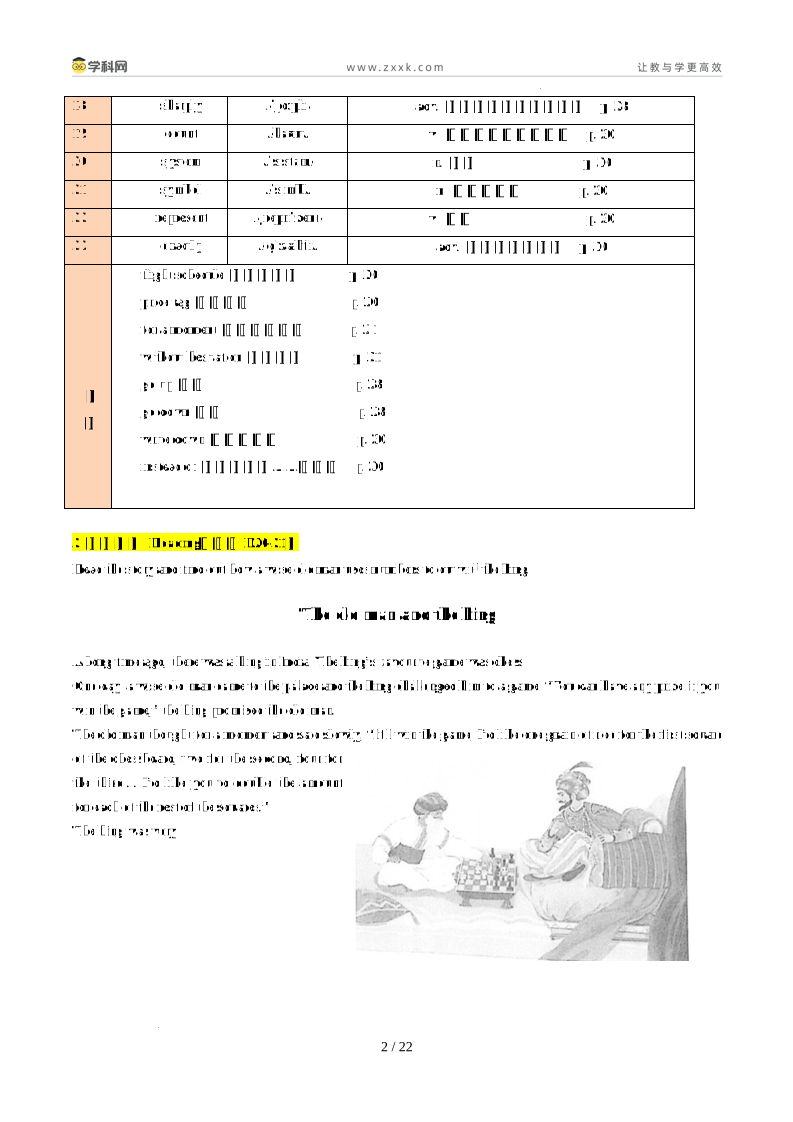
2
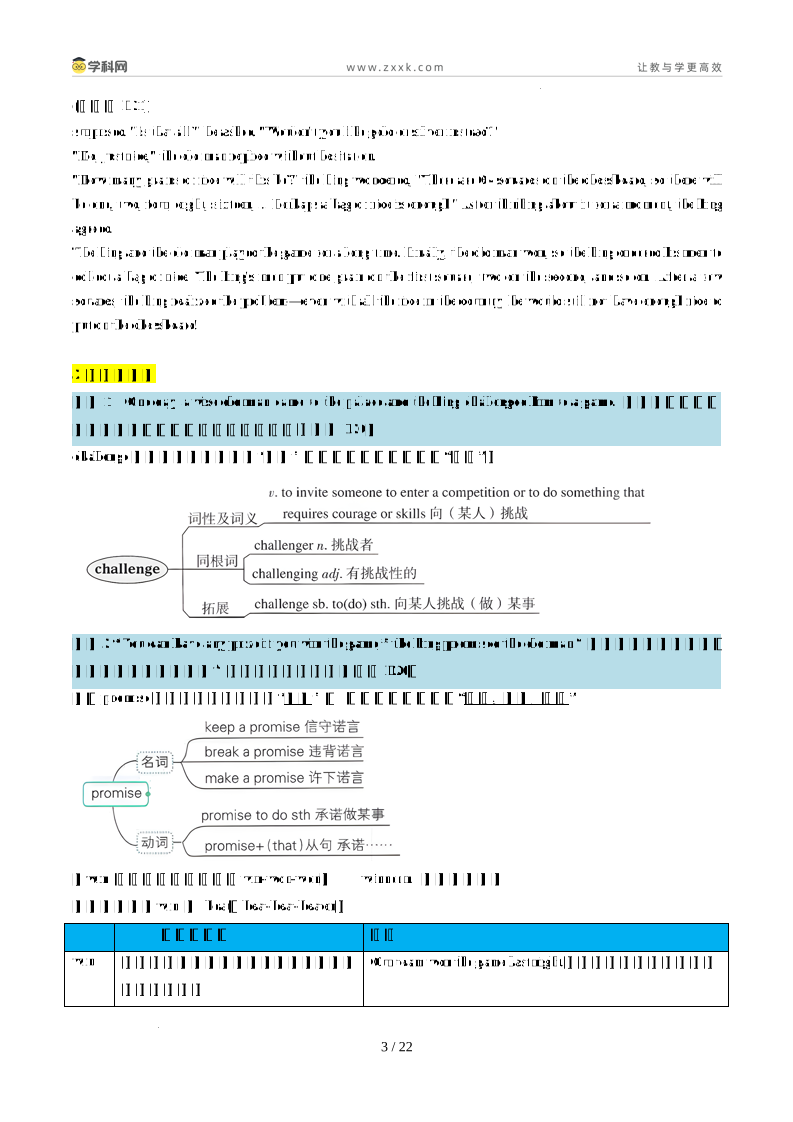
3
所属专辑

相关资源
由于学科网是一个信息分享及获取的平台,不确保部分用户上传资料的 来源及知识产权归属。如您发现相关资料侵犯您的合法权益,请联系学科网,我们核实后将及时进行处理。