语法综合练100题(期末考复习专用)2024-2025学年八年级英语下册 单元语法 重难点易错(人教版Go for it!)
2025-06-04
|
2份
|
30页
|
393人阅读
|
23人下载

资源信息
| 学段 | 初中 |
|---|---|
| 学科 | 英语 |
| 教材版本 | 初中英语人教版(2012)八年级下册 |
| 年级 | 八年级 |
| 章节 | - |
| 类型 | 题集-综合训练 |
| 知识点 | - |
| 使用场景 | 同步教学-期末 |
| 学年 | 2025-2026 |
| 地区(省份) | 全国 |
| 地区(市) | - |
| 地区(区县) | - |
| 文件格式 | ZIP |
| 文件大小 | 125 KB |
| 发布时间 | 2025-06-04 |
| 更新时间 | 2025-06-10 |
| 作者 | 乐思英语精品馆 |
| 品牌系列 | - |
| 审核时间 | 2025-06-04 |
| 下载链接 | https://m.zxxk.com/soft/52434403.html |
| 价格 | 3.00储值(1储值=1元) |
| 来源 | 学科网 |
内容正文:
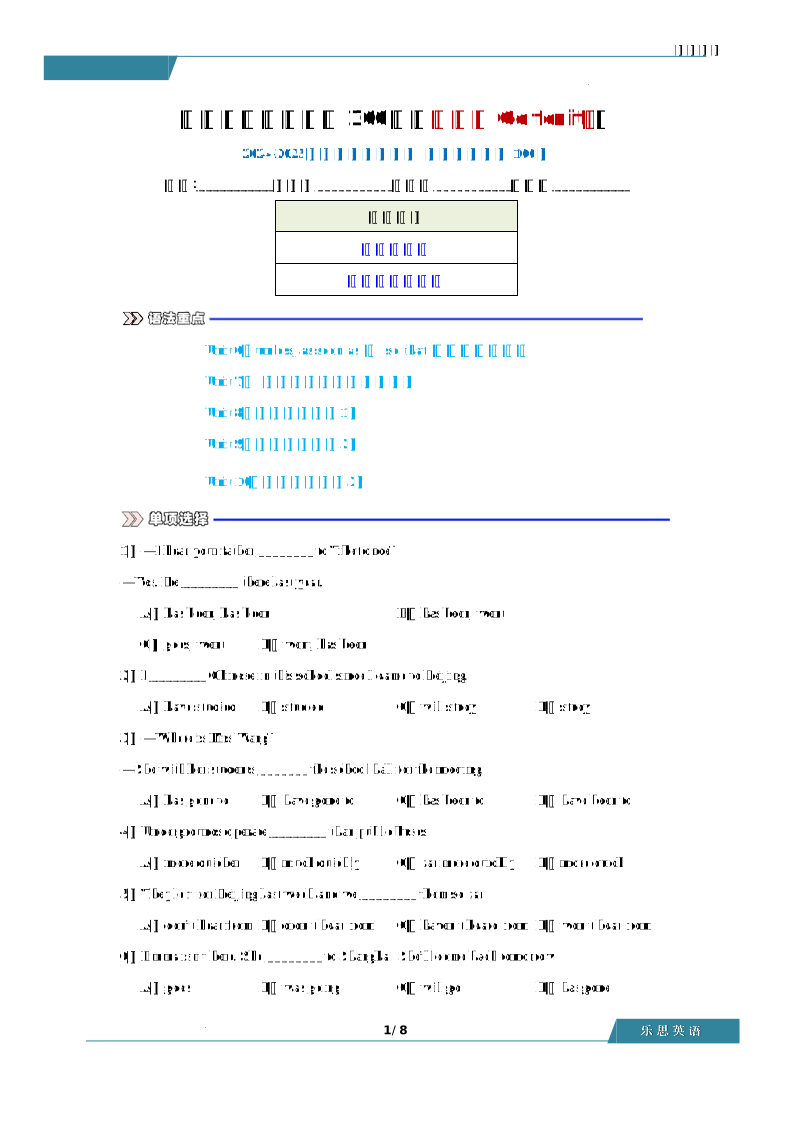
考前特训
期末考语法综合练100题(人教版Go for it!)
2024-2025学年八年级下学期 期末满分冲刺100题
学校:___________姓名:___________班级:___________考号:___________
内容提要
单项选择题
单句语法填空题
Unit 6:unless, as soon as 和 so that 引导的状语从句
Unit 7: 形容词和副词的比较等级
Unit 8:现在完成时(1)
Unit 9:现在完成时(2)
Unit 10:现在完成时(3)
1.—I hear your father ________ to Tibet once?
—Yes. He ________ there last year.
A.has been; has been B.has been; went
C.goes; went D.went; has been
2.I ________ Chinese in this school since I came to Beijing.
A.have studied B.studied C.will study D.study
3.—Where is Mrs Wang?
—She with her students _______ the school hall for the meeting.
A.has gone to B.have gone to C.has been to D.have been to
4.Undergrounds operate ________ than public buses.
A.more quicker B.much quickly C.far more quickly D.more quick
5.They left for Beijing last week and we ________ them so far.
A.don’t hear from B.didn’t hear from C.haven’t heard from D.won’t hear from
6.Emma isn’t here. She ________ to Shanghai. She’ll come back tomorrow.
A.goes B.was going C.will go D.has gone
7.Nancy ________ herself busy by running a restaurant since she moved to Atlanta.
A.keeps B.has kept C.will keep D.is keeping
8.Jim, hurry up. The film Ne Zha 2 ________ for five minutes.
A.began B.has begun C.was on D.has been on
9.Steve asked the taxi driver to drive a little ________ because there was not enough time.
A.fast B.faster C.less fast D.the fastest
10.—Does my question sound polite enough?
—I don’t think so. You can ask ________ by using “could” instead of “cam”.
A.impolitely B.more impolitely C.politely D.more politely
11.—I think his hard work will pay off.
—Of course. ________ he works, ________ he will be.
A.Hardly; luckily B.The hard; the lucky
C.The hardest; the luckiest D.The harder; the luckier
12.________ you study hard, your dream will never come true.
A.Until B.If C.Unless D.As soon as
13.—So far, three Chinese women astronauts ________ into space.
—That’s true. They’re the pride of our nation.
A.travel B.have traveled C.will travel D.traveled
14.—Hey, Lily! You look so energetic now.
—Yeah! I started my weight-management journey last year. All my efforts ______ off. I feel so much better now.
A.are paying B.will pay C.pay D.have paid
15.—Wow! You have a ticket to the Asian Cup!
—My uncle bought it for me. He ________ the ticket for three days.
A.has bought B.had bought C.has had D.had had
16.—Why are you looking for May in a hurry?
—The boss is wondering where she ________ and how long she ________ there.
A.has been; has been B.has gone; has gone
C.has been; has gone D.has gone; has been
17.—I borrowed this dictionary two weeks ago.
—You mean you ________ it for only half a month.
A.have kept B.have had C.have bought D.have taken
18.Henry’s grandfather ________ for many years, but Henry still misses him.
A.died B.has died C.is dead D.has been dead
19.The meeting ________ at 9:00 AM, and it ________ for three hours.
A.began; has been on B.began; has begun
C.has begun; was on D.has begun; has been on
20.—Where is your brother?
—He ________ to Shanghai. He ________ back in a week.
A.has gone; will come B.has been; has come
C.went; came D.went; will come
21.—Have you finished your science project yet, Danny?
—No. I ________ anything useful so far, but I won’t stop trying.
A.didn’t invent B.haven’t invented C.won’t invent D.don’t invent
22.—I Tom for two years. How is he now? Is he still often ill?
—No. He is in excellent condition.
A.don’t see B.haven’t seen C.didn’t see D.won’t see
23.—Hello. Is Lucy at home?
—No, she ________ the library. She ________ a message for you just now.
A.has been in; is leaving B.has been to; has left
C.has gone to; left D.has gone to; leaves
24.I met Lily in January and I ________ her since then.
A.don’t see B.didn’t see C.haven’t seen D.will see
25.My uncle is a writer. He ________ many books since he was young.
A.writes B.has written C.is writing D.wrote
26.Mr Smith ________ to China 10 years ago and has been there ________.
A.has gone; since then B.went; ever since
C.has gone; since than D.went; from then
27.“81192”, the number of Wang Wei’s plane, ________ up on many Chinese medias on April 1every year for 20 years, making the Chinese think of a name we won’t and can’t forget.
A.showed B.showing C.has shown D.shows
28.—How long has Mr. White ________ Joan?
—I am not sure. Maybe they got married five years ago.
A.married B.got married to
C.been married with D.been married to
29.—I haven’t seen Mark and Jane for long.
—Oh, you don’t know? The young couple ________ England for 2 months.
A.has gone to B.have been in C.have been to D.have gone to
30.Miss Gao isn’t here. She ________ London and she will get back in two weeks.
A.has gone to B.has been in C.has been to D.went to
31.—Mike isn’t at home. Do you know where he is?
—He ________the Ancient Huizhou City. He________there three times because of work.
A.has been to; has been B.has been to; has gone
C.has gone to; has been D.has gone to; has gone
32.The light is still on in Mr. Lin’s office. I’m afraid he ________ his work.
A.doesn’t finish B.didn’t finish C.hasn’t finished D.won’t finish
33.—Where is Mike?
—He ________ Shanghai for a meeting. He ________ tomorrow.
A.has been to; will come back B.has gone to; will come back
C.has gone to; came back D.has been to; came back
34.—Where is Lucy?
—She ________ to the library but she ________ back in an hour.
A.has gone; went B.has been; will be C.has been; goes D.has gone; will be
35.—You bought a pen yesterday. Where is the pen?
—Oh, I ________ it.
A.am losing B.was losing C.will lose D.have lost
36.Yesterday morning, I got up much ________ in order to get there on time.
A.early B.earlier C.earliest D.the earliest
37.The ________ kids learn to be independent, the ________ it is for their future.
A.early, good B.earlier, good C.early, better D.earlier, better
38.In the mid-term exam, the ________ you are, the ________ mistakes you’ll make.
A.careful; little B.more careful; less C.careful; few D.more careful; fewer
39.It is known to all that the Nile is longer than _________ in the world.
A.any river B.any rivers C.any other rivers D.any other river
40.I hope there will be ______ people and ______ pollution.
A.fewer, many B.less, fewer C.more, less D.less, fewer
41.Nothing is ________ than an ice cream on a hot summer day.
A.delicious B.more delicious
C.the more delicious D.the most delicious
42.Many people read newspapers ________ they can learn what’s going on in the world.
A.ever since B.so that C.even though D.as soon as
43.—Why do you look so tired and unhappy?
—I studied late every night ________ I could study better.
A.so that B.as soon as C.although D.if
44.He plans to start working after graduation ________ he won’t depend on his parents any more.
A.though B.unless C.so that D.as soon as
45.________ the times keep changing, young people in China have shown the same promise.
A.But B.Unless C.Although D.As soon as
46.I did not realize how important time management was ________ I started middle school.
A.unless B.as soon as C.if D.until
47.—Could you please help me take out the rubbish?
—Sure. I will do it ________ I finish my book report.
A.as soon as B.even though C.so that D.as far as
48.—Cathy, I don’t know if your cousin ________ tomorrow.
—I called him just now. He will come unless it ________.
A.comes; doesn’t rain B.will come; rains
C.comes; rains D.will come; doesn’t rain
49.There are no buses to the beach. It’s difficult to get there ________ you have a car.
A.since B.after C.unless D.because
50.—The novel seems a little boring.
—You won’t enjoy it ________ you put your heart into it.
A.if B.unless C.when D.as soon as
1.We (not see) that film yet.
2.I (be) to New York three times so far.
3.He (get) a job with the firm in 1970 and (work) there since.
4.Interest in golf (grow) rapidly in the last ten years.
5.— you ever (be) to America?
—Yes, I have.
6.—Tom, you (have) lunch yet?
—Yes, I (have) it half an hour ago.
7.Her sister (learn) English for six years.
8.Mum, I (grow) up. Please don’t treat me like a kid any more.
9.Mr. Green (teach) in this school since then.
10.— Amy (finish) her homework?
—Not yet, she still (do) it in her room.
11.During the past five years, there (be) great changes in our village.
12.We (learn) all the new words. We needn’t worry about the test.
13.The factory ________ (pollute) one third of the river water in the past three years.
14.Things (change) a lot over the years.
15.Great changes (take) place in our town so far.
16.—Did you see the film yesterday?
—Yes. I (see) it twice recently.
17.You (keep) me waiting for two hours. I (wait) for you since five o’clock.
18.Her health (improve) a lot since the operation.
19.He (join) the club last year. He (be) a club member since then.
20.I go to see my grandparents as I have much more schoolwork than before. (frequent)
21.His illness made him (lonely) and quieter than before.
22.They feel a bit more (confidence) of winning the final game.
23.The man lived a much (hard) life after he moved to that island.
24.Kate is looking for some (far) information about online trips.
25.I study hard (目的是) I can go to a good college in the future.
26.The man’s wife (die) for many years, but he misses her from time to time.
27.I (not hear) from him since he moved to Shanghai.
28.She got in 1999. That is, she for over twenty years. (marry)
29.— they (arrive) at school yet?
— Yes, they (be) in the classroom now.
30.Miss Black (teach) Chinese at this school since she was 20 years old.
31.My brother and I (never visit) Beijing before.
32.He (travel) around the country since he left school.
33.This is the first time that I (interview) people.
34.Daniel (marry) and he loves his wife very much.
35.The boy has (realize) his dream by working hard. How happy he was!
36.Tony eats the soup (noisily) than other students.
37.Mike cooked the fish much (well) than he did yesterday.
38.With their help, we worked out the Maths problem (easy) than before.
39.As the old saying goes, “The higher you climb, the (far) you will see.”
40.That girl wears nice clothes, but what she said makes her look even (ugly).
41.The teacher asked me to read aloud (以便于)all the students could hear me.
42.Shake the bottle well so that the milk (mix) with the tea.
43.—When will your brother arrive?
—I don’t know. He will give me a call as soon as he (get) off the train.
44.He will leave for Shanghai as soon as he (finish) his work.
45.The family will go to Yunnan as soon as the holiday (begin).
46.Monkey King can’t turn himself into a man he can hide his tail.
47. he works hard, he won’t catch up with the other students in this class.
48.We can’t get good grades we study hard.
49.The sick lady will die in a few days she is operated on immediately.
50.We (plan) to visit the Leaning Tower of Pisa in Italy, but the weather stopped us.
8 / 8
学科网(北京)股份有限公司
$$考前特训
期末考语法综合练100题(人教版Go for it!)
2024-2025学年八年级下学期 期末满分冲刺100题
学校:___________姓名:___________班级:___________考号:___________
内容提要
单项选择题
单句语法填空题
Unit 6:unless, as soon as 和 so that 引导的状语从句
Unit 7: 形容词和副词的比较等级
Unit 8:现在完成时(1)
Unit 9:现在完成时(2)
Unit 10:现在完成时(3)
1.—I hear your father ________ to Tibet once?
—Yes. He ________ there last year.
A.has been; has been B.has been; went C.goes; went D.went; has been
【答案】B
【详解】句意:——我听说你父亲曾经去过西藏? ——是的。他去年去了那里。
考查动词时态。has been to表示“去过某地(已返回)”;went用于一般过去时;goes用于一般现在时。根据“I hear your father ... to Tibet once?”可知,第一空应填has been,表示“去过某地(已返回)”,根据“last year”可知,表示过去时间,需用一般过去时,第二空应用过去式went。故选B。
2.I ________ Chinese in this school since I came to Beijing.
A.have studied B.studied C.will study D.study
【答案】A
【详解】句意:自从我来到北京,我就在这所学校学习中文。
考查动词时态。根据“since I came to Beijing”可知,本句时态为现在完成时。故选A。
3.—Where is Mrs Wang?
—She with her students _______ the school hall for the meeting.
A.has gone to B.have gone to C.has been to D.have been to
【答案】A
【详解】句意:——王老师在哪里? ——她和她的学生们已经去学校礼堂开会了。
考查现在完成时have gone to与have been to用法。has gone to表示去了某地尚未返回;have gone to是复数形式;has been to表示去过某地已返回;have been to是复数形式。根据“She with her students… the school hall for the meeting”可知,主语“She”是单数,谓语需用单数形式,排除B/D;句意强调“去开会”的动作已完成且人未返回,需用has gone to而非has been to。故选A。
4.Undergrounds operate ________ than public buses.
A.more quicker B.much quickly C.far more quickly D.more quick
【答案】C
【详解】句意:地铁运行比公共汽车快得多。
考查副词比较级。more quicker错误表达;much quickly错误表达;far more quickly快得多;more quick错误表达。根据“Undergrounds operate…than public buses.”可知,应该选择far more quickly来表示地铁比公共汽车运行得快得多,故选C。
5.They left for Beijing last week and we ________ them so far.
A.don’t hear from B.didn’t hear from C.haven’t heard from D.won’t hear from
【答案】C
【详解】句意:他们上周去了北京,到现在我们还没有他们的消息。
考查时态。so far表示“到目前为止”,常与现在完成时连用,其构成为主语+have/has+done。故选C。
6.Emma isn’t here. She ________ to Shanghai. She’ll come back tomorrow.
A.goes B.was going C.will go D.has gone
【答案】D
【详解】句意:艾玛不在这里。她去上海了。她明天会回来。
考查现在完成时。根据“Emma isn’t here.”和“She’ll come back tomorrow.”可知,此处应该表达她去上海了,应用has gone to+地点,是现在完成时,意为“去了某地还未回来”。故选D。
7.Nancy ________ herself busy by running a restaurant since she moved to Atlanta.
A.keeps B.has kept C.will keep D.is keeping
【答案】B
【详解】句意:自从搬到亚特兰大后,南希一直忙于经营一家餐馆。
考查时态。根据“since she moved to Atlanta”可知,主句应用现在完成时。故选B。
8.Jim, hurry up. The film Ne Zha 2 ________ for five minutes.
A.began B.has begun C.was on D.has been on
【答案】D
【详解】句意:Jim,快点。《哪吒2》已经开演5分钟了。
考查动词时态。began开始,begin的过去式;has begun现在完成时;was on上演,一般过去时;has been on上演,现在完成时。句中“for five minutes”表示持续的时间段,需与现在完成时态连用,且动词需具备延续性,瞬间动词begin,无法与时间段搭配;选项D中的“has been on”使用状态短语be on表示“上映中”,可与时间段连用。故选D。
9.Steve asked the taxi driver to drive a little ________ because there was not enough time.
A.fast B.faster C.less fast D.the fastest
【答案】B
【详解】句意:Steve让出租车司机开得再快一点,因为时间不够了。
考查比较级用法。fast快地,原形;faster更快地,比较级;less fast不那么快地;the fastest最快地。根据“because there was not enough time”可知,因为时间不够了,所以Steve希望司机开得更快一些,需要使用比较级。故选B。
10.—Does my question sound polite enough?
—I don’t think so. You can ask ________ by using “could” instead of “cam”.
A.impolitely B.more impolitely C.politely D.more politely
【答案】D
【详解】句意:——我的问题听起来够礼貌吗?——我不这么认为。你可以用“could”来更礼貌地问而不是“can”。
考查副词辨析和副词的比较级。impolitely不礼貌地;politely礼貌地。根据“by using ‘could’ instead of ‘cam’”,可知,此处是用“could”和用“can”相比较,表示更礼貌地问,应用比较级。故选B。
11.—I think his hard work will pay off.
—Of course. ________ he works, ________ he will be.
A.Hardly; luckily B.The hard; the lucky
C.The hardest; the luckiest D.The harder; the luckier
【答案】D
【详解】句意:——我认为他的努力会得到回报。——当然。他越努力,就越幸运。
考查比较级。根据“…he works…he will be.”的语境可知,此处为“the+比较级…, the+比较级…”结构,指他越努力,就越幸运。故选D。
12.________ you study hard, your dream will never come true.
A.Until B.If C.Unless D.As soon as
【答案】C
【详解】句意:除非你努力学习,否则你的梦想永远不会实现。
考查连词辨析。Until直到;If如果;Unless除非;As soon as一……就……。根据“you study hard, your dream will never come true.”可知,前句是后句的否定条件,应用unless引导条件状语从句。故选C。
13.—So far, three Chinese women astronauts ________ into space.
—That’s true. They’re the pride of our nation.
A.travel B.have traveled C.will travel D.traveled
【答案】B
【详解】句意:——到目前为止,已经有三名中国女宇航员进入了太空。——确实如此。她们是我们国家的骄傲。
考查现在完成时。so far常与现在完成时连用。故选B。
14.—Hey, Lily! You look so energetic now.
—Yeah! I started my weight-management journey last year. All my efforts ______ off. I feel so much better now.
A.are paying B.will pay C.pay D.have paid
【答案】D
【详解】句意:——嘿,莉莉!你现在看起来精力充沛。——耶!去年我开始了我的体重管理之旅。我所有的努力都得到了回报。我现在感觉好多了。
考查时态。pay支付,pay off得到回报。根据“I feel so much better now.”可知,我现在感觉好多了,因此表示我的体重管理已经得到了回报,因此用现在完成时,故选D。
15.—Wow! You have a ticket to the Asian Cup!
—My uncle bought it for me. He ________ the ticket for three days.
A.has bought B.had bought C.has had D.had had
【答案】C
【详解】句意:——哇!你有一张亚洲杯的门票!——我叔叔给我买的。他买这张票已经三天了。
考查现在完成时。根据“You have a ticket to the Asian Cup!”及“for three days”可知,时态为现在完成时,且动词用延续性动词,bought是短暂性动词,应改为对应的延续性动词had;该句主语是He,所以该句谓语的结构为:has+过去分词。故选C。
16.—Why are you looking for May in a hurry?
—The boss is wondering where she ________ and how long she ________ there.
A.has been; has been B.has gone; has gone C.has been; has gone D.has gone; has been
【答案】D
【详解】句意:——你为什么急着找May?——老板想知道她去了哪里以及她在那里待了多久。
考查延续性动词和非延续性动词。has gone去了某地;has been去过某地。根据“The boss is wondering where she...and how long she...there.”可知,此处是宾语从句,由where引导,has gone作谓语,意为“去了哪里”,第二空,how long引导,has been作谓语,there作地点状语,意为“待了多久”,故选D。
17.—I borrowed this dictionary two weeks ago.
—You mean you ________ it for only half a month.
A.have kept B.have had C.have bought D.have taken
【答案】A
【详解】句意:——我两周前借了这本词典。——你意思是说你只保留了半个月。
考查延续性与非延续性动词。根据“for only half a month.”可知,句子用现在完成时,且动词用延续性动词,排除C、D选项;结合“I borrowed this dictionary two weeks ago.”可知,此处是指保留了词典半个月,borrow的延续性动词是keep。故选A。
18.Henry’s grandfather ________ for many years, but Henry still misses him.
A.died B.has died C.is dead D.has been dead
【答案】D
【详解】句意:亨利的祖父去世多年了,但亨利仍然想念他。
考查现在完成时的延续性用法。根据“for many years”可知,句子用现在完成时,且动词用延续性动词,die是短暂性动词,对应的延续性动词为be dead,主语是第三人称单数,因此此处现在完成时结构为has been dead。故选D。
19.The meeting ________ at 9:00 AM, and it ________ for three hours.
A.began; has been on B.began; has begun C.has begun; was on D.has begun; has been on
【答案】A
【详解】句意:会议上午9点开始,已经持续了3个小时。
考查动词时态辨析。began; has been on一般过去时;现在完成时;began; has begun一般过去时;表述错误;has begun; was on表述错误;has begun; has been on表述错误;现在完成时。began是begin的过去式,表示过去某个时间点发生的动作;has begun是现在完成时结构,强调过去发生的动作对现在造成的影响。题干“会议在上午9点开始”是过去的一个具体时间点发生的动作,需用began;has been on表示“持续;进行”,是延续性表达;begin是短暂性动词,不能与表示一段时间的for three hours连用。这里表示会议持续了3个小时要用has been on。故选A。
20.—Where is your brother?
—He ________ to Shanghai. He ________ back in a week.
A.has gone; will come B.has been; has come
C.went; came D.went; will come
【答案】A
【详解】句意:——你弟弟在哪里?——他去上海了。他将在一周后回来。
考查时态。has gone to去了某地,还没回来;has been to去过某地,已经回来。根据“Where is your brother?”可知,第一空表示“去了上海(还没回来)”,需用现在完成时has gone to;第二句“in+一段时间”表将来,应用一般将来时will do结构。故选A。
21.—Have you finished your science project yet, Danny?
—No. I ________ anything useful so far, but I won’t stop trying.
A.didn’t invent B.haven’t invented C.won’t invent D.don’t invent
【答案】B
【详解】句意:——Danny,你的科学项目完成了吗?——不。到目前为止,我还没有发明任何有用的东西,但我不会停止尝试。
考查现在完成时。didn’t invent没有发明,一般过去时;haven’t invented还没有发明,现在完成时;won’t invent不会发明,一般将来时;don’t invent不发明,一般现在时。根据“so far”可知,时态为现在完成时,结构为have/has + 过去分词,故选B。
22.—I Tom for two years. How is he now? Is he still often ill?
—No. He is in excellent condition.
A.don’t see B.haven’t seen C.didn’t see D.won’t see
【答案】B
【详解】句意:——我已经两年没见汤姆了。他现在怎么样?还经常生病吗?——没有。他现在身体非常好。
考查现在完成时。根据“for two years”可知,时态为现在完成时have/has + 过去分词结构。故选B。
23.—Hello. Is Lucy at home?
—No, she ________ the library. She ________ a message for you just now.
A.has been in; is leaving B.has been to; has left
C.has gone to; left D.has gone to; leaves
【答案】C
【详解】句意:——你好。露西在家吗?——不在,她去图书馆了。她刚才给你留了个口信。
考查时态和短语辨析。has been in在某地待了一段时间;has been to曾经去过某地(现在已不在那里);has gone to去了某地(还没回来)。根据“No”可知露西不在家,去了图书馆还没回来,第一空用“has gone to”;根据“just now”可知第二空时态是一般过去时,用过去式“left”。故选C。
24.I met Lily in January and I ________ her since then.
A.don’t see B.didn’t see C.haven’t seen D.will see
【答案】C
【详解】句意:我在一月份遇到了莉莉,从那以后我就没见过她。
考查时态。根据“since then”可知,句子要用现在完成时,表示从过去一直持续到现在的动作。肯定结构为have/has done,否定结构为haven’t/hasn’t done。故选C。
25.My uncle is a writer. He ________ many books since he was young.
A.writes B.has written C.is writing D.wrote
【答案】B
【详解】句意:我叔叔是一位作家。他从年轻时起就已经写了很多书。
考查时态。根据“since he was young”可知,是强调从过去持续到现在的动作,用现在完成时。故选B。
26.Mr Smith ________ to China 10 years ago and has been there ________.
A.has gone; since then B.went; ever since C.has gone; since than D.went; from then
【答案】B
【详解】句意:史密斯先生10年前去了中国,从那以后一直待在那里。
考查动词时态及短语辨析。has gone已经离开,现在完成时;since then自那时起;went过去式;ever since自从;from then从那时起。根据“10 years ago ”可知,“10年前”是过去时间,用一般过去时,第一空选went;根据“has been there”可知,“从那以后”表示持续到现在,第二空用ever since。故选B。
27.“81192”, the number of Wang Wei’s plane, ________ up on many Chinese medias on April 1every year for 20 years, making the Chinese think of a name we won’t and can’t forget.
A.showed B.showing C.has shown D.shows
【答案】C
【详解】句意:20年来,王伟飞机的编号“81192”每年4月1日都会出现在中国众多媒体上,让中国人想起一个我们不会也不能忘记的名字。
考查动词时态。showed出现,一般过去时;showing现在分词;has shown现在完成时;shows一般现在时。根据“for 20 years”可知,此处强调动作从过去持续到现在,且“every year”表明这是每年重复发生的动作,符合现在完成时的用法。故选C。
28.—How long has Mr. White ________ Joan?
—I am not sure. Maybe they got married five years ago.
A.married B.got married to
C.been married with D.been married to
【答案】D
【详解】句意:——怀特先生和琼结婚多久了?——我不确定。可能他们五年前结的婚。
考查动词短语搭配。marry是及物动词,可直接接宾语;get married to表示结婚的动作;be married to表示结婚的状态。根据问句中的“how long”可知,此处询问的是持续的状态,且married后接宾语时需用介词to。故选D。
29.—I haven’t seen Mark and Jane for long.
—Oh, you don’t know? The young couple ________ England for 2 months.
A.has gone to B.have been in C.have been to D.have gone to
【答案】B
【详解】句意:——我很久没见到马克和简了。——哦,你不知道?这对年轻夫妇在英国已经两个月了。
考查动词时态。have been to表示去过某地,现已返回;have been in在某地多长时间了;have gone to表示去了某地,尚未返回,但不可与时间段连用。根据“The young couple …England for 2 months.”可知,此处表示这对年轻夫妇在英国已经两个月了,去了还未回来,应用have been in+for+一段时间。故选B。
30.Miss Gao isn’t here. She ________ London and she will get back in two weeks.
A.has gone to B.has been in C.has been to D.went to
【答案】A
【详解】句意: 高小姐不在这里。她去了伦敦,两周后会回来。
考查现在完成时。根据“London and she will get back in two weeks.”可知, 高小姐已经去了伦敦,应用现在完成时,排除D;have gone to去了(未回),have been to去过(已回),have been in在某地待一段时间。根据“she will get back in two weeks.”可知,高小姐去了伦敦,还未回。故选A。
31.—Mike isn’t at home. Do you know where he is?
—He ________the Ancient Huizhou City. He________there three times because of work.
A.has been to; has been B.has been to; has gone
C.has gone to; has been D.has gone to; has gone
【答案】C
【详解】句意:——迈克不在家。你知道他在哪里吗? ——他去了古徽州城。因为工作原因,他已经去过那里三次了。
考查has been to和has gone to的辨析。has been to表示“去过某地(现在已返回)”,强调经历,后可接次数;has gone to表示“去了某地(现在未返回,可能在路上或已到达)”,强调动作的完成。第一空:根据“Mike isn’t at home”可知,他此刻未返回,应用has gone to;第二空:根据“three times”可知,此处强调“去过三次”的经历,应用has been (to),因there为副词,省略to。故选C。
32.The light is still on in Mr. Lin’s office. I’m afraid he ________ his work.
A.doesn’t finish B.didn’t finish C.hasn’t finished D.won’t finish
【答案】C
【详解】句意:林先生办公室的灯还亮着。恐怕他还没有完成工作。
考查现在完成时。根据“The light is still on in Mr. Lin’s office.”可知,林先生办公室的灯还亮着,说明他的工作应该还没有完成,句子应用现在完成时。故选C。
33.—Where is Mike?
—He ________ Shanghai for a meeting. He ________ tomorrow.
A.has been to; will come back B.has gone to; will come back
C.has gone to; came back D.has been to; came back
【答案】B
【详解】句意:——迈克在哪儿?——他去上海开会了。他明天将会回来。
考查has gone to和has been to的区别以及一般将来时。has gone to去某地了(未返回),has been to去过某地(已返回)。根据“Where is Mike?”可知,迈克不在,即迈克还没回来,故排除A、D;根据“tomorrow”可知,此处用一般将来时。故选B。
34.—Where is Lucy?
—She ________ to the library but she ________ back in an hour.
A.has gone; went B.has been; will be C.has been; goes D.has gone; will be
【答案】D
【详解】句意:——Lucy在哪儿?——她去了图书馆,但一小时后会回来。
考查动词时态。根据“Where is Lucy?”和“she...back in an hour.”可知,Lucy去了图书馆,还没回来,因此不在这里,应用现在完成时。have been to去了已回,have gone to去了未回,这里用have gone to;根据“in an hour.”可知,第二空应用一般将来时。故选D。
35.—You bought a pen yesterday. Where is the pen?
—Oh, I ________ it.
A.am losing B.was losing C.will lose D.have lost
【答案】D
【详解】句意:——你昨天买了一支笔。笔在哪?——哦,我弄丢了。
考查现在完成时的用法。am losing现在进行时;was losing过去进行时;will lose一般将来时;have lost现在完成时。根据问句中的时间线索“yesterday”和答语中强调对现在的影响(笔现在不在),需用现在完成时表示过去发生的动作对现在造成的影响。故选D。
36.Yesterday morning, I got up much ________ in order to get there on time.
A.early B.earlier C.earliest D.the earliest
【答案】B
【详解】句意:为了准时到达那里,我昨天早上起得早得多。
考查副词比较级。early早;earlier更早;earliest最早;the earliest最早。根据空前的“much”和选项可知,应选比较级形式earlier,表示和以前相比较,much earlier“早得多”。故选B。
37.The ________ kids learn to be independent, the ________ it is for their future.
A.early, good B.earlier, good C.early, better D.earlier, better
【答案】D
【详解】句意:孩子们学会独立越早,对他们的未来就越好。
考查比较级结构。根据“The…kids learn to be independent, the…it is for their future.”可知,此处是“the + 比较级……,the + 比较级……”结构,表示“越……,就越……”,所以两个空都要用比较级。故选D。
38.In the mid-term exam, the ________ you are, the ________ mistakes you’ll make.
A.careful; little B.more careful; less C.careful; few D.more careful; fewer
【答案】D
【详解】句意:在期中考试中,你越细心,犯的错误就越少。
考查比较级的用法。careful仔细的;more careful更仔细的;little少的;less更少的;few几乎没有;fewer更少的。根据“the…you are, the…mistakes you’ll make.”可知,此处用“the+比较级…the+比较级”,意为 “越……就越……”;根据“the…mistakes you’ll make.”可知,little修饰不可数名词,则应用fewer修饰可数名词复数mistakes。故选D。
39.It is known to all that the Nile is longer than _________ in the world.
A.any river B.any rivers C.any other rivers D.any other river
【答案】D
【详解】句意:众所周知,尼罗河比世界上其他任何河流都长。
考查比较级句型。在比较级的句子中,如果表示“比其他任何……都……”,常用“比较级 + than any other + 可数名词单数”结构。“any other”意思是“其他任何一个”,强调在同一范围内进行比较时,要排除自身,所以后面接可数名词单数形式。“any river”意思是“任何一条河流”,没有排除自身,故排除;“any rivers”表述错误;“any other rivers”中“rivers”是复数形式,不符合语法规则。故选D。
40.I hope there will be ______ people and ______ pollution.
A.fewer, many B.less, fewer C.more, less D.less, fewer
【答案】C
【详解】句意:我希望有更多的人,更少的污染 。
考查比较级用法。fewer更少的,修饰可数名词;many很多,修饰可数名词;less更少的,修饰不可数名词;more更多的。根据“I hope there will be”可知,此处表示希望的情况,应该是人口更多,污染更少,people是集体名词,排除B、D。pollution是不可数名词,排除A。故选C。
41.Nothing is ________ than an ice cream on a hot summer day.
A.delicious B.more delicious
C.the more delicious D.the most delicious
【答案】B
【详解】句意:在炎热的夏天,没有什么比冰淇淋更美味了。
考查形容词比较级。delicious美味的,形容词原级;more delicious更美味的,形容词比较级;the more delicious表述有误,比较级前一般不加定冠词the;the most delicious最美味的,形容词最高级。根据“than”可知,此处应用形容词比较级形式。故选B。
42.Many people read newspapers ________ they can learn what’s going on in the world.
A.ever since B.so that C.even though D.as soon as
【答案】B
【详解】句意:许多人读报纸是为了了解世界上正在发生的事情。
考查从属连词辨析。ever since从那时起一直;so that以便,为了;even though即使;as soon as一……就……。分析句子可知,许多人喜欢读报的目的是为了去了解世界上正在发生什么。故选B。
43.—Why do you look so tired and unhappy?
—I studied late every night ________ I could study better.
A.so that B.as soon as C.although D.if
【答案】A
【详解】句意:——你为什么看起来如此疲惫又不开心?——我每晚学习到很晚,为的是我能学得更好。
考查状语从句。so that以便,为了;as soon as一……就……;although虽然;if如果,是否。根据“I studied late every night”以及“I could study better”可知,前面学习到很晚这个行为是为了后面能学得更好这个目的,所以用“so that”引导目的状语从句。故选A。
44.He plans to start working after graduation ________ he won’t depend on his parents any more.
A.though B.unless C.so that D.as soon as
【答案】C
【详解】句意:他计划毕业后就开始工作,这样就不用再依靠父母了。
考查状语从句。though虽然;unless除非;so that以便;as soon as一……就。根据“he won’t depend on his parents any more.”可知,句子表达的是“他计划毕业后开始工作”的目的,是“为了不再依赖父母”,连词so that用于引导目的状语从句,故选C。
45.________ the times keep changing, young people in China have shown the same promise.
A.But B.Unless C.Although D.As soon as
【答案】C
【详解】句意:虽然时代在不断变化,但中国的年轻人展现出了同样的希望。
考查连词辨析。But但是;Unless除非;Although虽然;As soon as一……就……。分析题干可知,这两句话是让步关系,应用Although引导此让步状语从句。故选C。
46.I did not realize how important time management was ________ I started middle school.
A.unless B.as soon as C.if D.until
【答案】D
【详解】句意:直到我开始上中学,我才意识到时间管理有多重要。
考查not...until的用法。unless除非;as soon as一……就;if如果,是否;until直到。根据“did not”可知,空处考查not...until...句型,表示“直到……才……”,故选D。
47.—Could you please help me take out the rubbish?
—Sure. I will do it ________ I finish my book report.
A.as soon as B.even though C.so that D.as far as
【答案】A
【详解】句意:——你能帮我把垃圾拿出去吗?——当然。我一完成我的读书报告就去做。
考查连词短语辨析。as soon as一……就……,引导时间状语从句,表示主句动作在从句动作之后立即发生;even though尽管,即使,引导让步状语从句;so that以便,为了,引导目的状语从句;as far as就……而言。根据“I will do it ... I finish my book report.”可知,这里表示写完报告后立即去倒垃圾,是时间上的先后关系,因此用as soon as引导时间状语从句。故选A。
48.—Cathy, I don’t know if your cousin ________ tomorrow.
—I called him just now. He will come unless it ________.
A.comes; doesn’t rain B.will come; rains C.comes; rains D.will come; doesn’t rain
【答案】B
【详解】——凯西,我不知道明天是否你的表弟会来。——我刚刚给他打电话了。除非下雨否则他就会来。
考查动词的时态。if表 “是否” 时,引导宾语从句,所用时态视具体情况而定,由时间状语“tomorrow”可知第一句中从句要用一般将来时,故排除A、C项;unless表示“如果不,除非”,引导条件状语从句,若主句为一般将来时,从句常用一般现在时表示将来;结合“He will come”可知从句部分表达为“除非下雨”,故选B。
49.There are no buses to the beach. It’s difficult to get there ________ you have a car.
A.since B.after C.unless D.because
【答案】C
【详解】句意:没有公交车去海滩。除非你有车,否则很难到达那里。
考查连词辨析。since因为,自从,表原因或时间;after在……之后,表时间;unless除非,如果不,表条件;because因为,表原因。根据“It’s difficult to get there ... you have a car.”结合语境可知,此处表示如果不满足“你有车”这个条件,就很难到那里,“you have a car”是“It’s difficult to get there”的否定条件,所以unless“除非”引导条件状语从句,符合语境。故选C。
50.—The novel seems a little boring.
—You won’t enjoy it ________ you put your heart into it.
A.if B.unless C.when D.as soon as
【答案】B
【详解】句意:——这本小说似乎有点乏味。——除非你全心投入,否则你不会喜欢它。
考查连词辨析。if如果;unless除非;when当……时候;as soon as一……就。根据语境可知,此处指的是除非用心去读,否则是不会喜欢这本小说的。此处应用unless引导条件状语从句。故选B。
1.We (not see) that film yet.
【答案】haven’t seen
【详解】句意:我们还没有看过那部电影。根据“yet”可知,本句是现在完成时的否定句,其结构为“have/has not + 动词的过去分词”,主语是“We”,所以助动词用“have”,“have not”的缩写形式为“haven't”,“see”的过去分词是“seen”。故填haven’t seen。
2.I (be) to New York three times so far.
【答案】have been
【详解】句意:到目前为止,我去过纽约三次。根据“so far”可知,句子应用现在完成时,其结构为“have/has + 过去分词”。主语为I,助动词用have,be的过去分词为been。故填have been。
3.He (get) a job with the firm in 1970 and (work) there since.
【答案】 got has worked
【详解】句意:他在1970年在这家公司找到了一份工作,从那以后一直在那里工作。第一个空,根据“in 1970”可知,这里描述的是过去的一个具体事件,即他在1970年找到了一份工作,所以应用一般过去时,get的过去式是got。第二个空,根据“since”可知,这里描述的是从过去某个时间点开始一直持续到现在的动作,即从1970年开始他一直在那里工作,所以应用现在完成时,其结构为“have/has + 过去分词”,主语是He,所以助动词用has,work的过去分词是worked。故填got;has worked。
4.Interest in golf (grow) rapidly in the last ten years.
【答案】has grown
【详解】句意:在过去十年中,人们对高尔夫的兴趣迅速增长。根据“in the last ten years”可知,本句时态为现在完成时,结构为“have/has+动词过去分词”。grow“增长”,动词,其过去分词为grown。主语Interest为不可数名词,谓语动词应用第三人称单数形式,即has grown。故填has grown。
5.— you ever (be) to America?
—Yes, I have.
【答案】 Have been
【详解】句意:——你去过美国吗?——是的,我去过。根据“…you ever…(be) to America?”及答语“Yes, I have.”可知,此处时态为现在完成时,其结构为have/has done,主语为you,助动词用have,位于句首首字母大写;be的过去分词为been。故填Have;been。
6.—Tom, you (have) lunch yet?
—Yes, I (have) it half an hour ago.
【答案】 have had had
【详解】句意:——汤姆,你已经吃过午饭了吗?——是的,我半小时前吃的午饭。根据“yet”可知此句时态为现在完成时,其结构为“have/has + 过去分词”,主语是you,所以用have,have的过去分词是had,故第一空填have,第二空填had;根据“half an hour ago”可知,答句的时态是一般过去时,所以have要用过去式had。故填have;had;had。
7.Her sister (learn) English for six years.
【答案】has learnt/has learned
【详解】句意:她的姐姐已经学习英语六年了。根据“for six years”可知,此句时态为现在完成时,结构为have/has done。主语为第三人称单数的Her sister,助动词用has;learn“学习”,动词,过去分词为learnt或learned。故填has learnt/has learned。
8.Mum, I (grow) up. Please don’t treat me like a kid any more.
【答案】 have grown
【详解】句意:妈妈,我已经长大了。请别再把我当小孩对待了。根据“Please don’t treat me like a kid any more.”可知,此处强调到现在为止“已经长大”的结果,要用现在完成时,其结构为“have/has + 过去分词” 。主语I是第一人称,用have,grow的过去分词是grown,故填have;grown。
9.Mr. Green (teach) in this school since then.
【答案】has taught
【详解】句意:格林先生从那时起就一直在这所学校教书。根据“since then”可知,此句时态为现在完成时,结构为have/has done。主语为第三人称单数的Mr. Green,助动词用has;teach“教”,动词,过去分词为taught。故填has taught。
10.— Amy (finish) her homework?
—Not yet, she still (do) it in her room.
【答案】 Has finished is doing
【详解】句意:——Amy完成她的家庭作业了吗?——还没有,她还在她的房间里做着呢。根据答语“Not yet”可知,问句时态是现在完成时,其结构为“have/has + 过去分词”,主语Amy是第三人称单数,所以填 Has;finished;根据“Not yet”可知,此时她正在房间里做,用现在进行时,其结构为“am/is/are + 现在分词”,主语she是第三人称单数,所以填is;doing。故填Has;finished;is;doing。
11.During the past five years, there (be) great changes in our village.
【答案】have been
【详解】句意:在过去的五年里,我们的村庄发生了巨大的变化。此句为there be句型,根据“During the past five years”可知,此句时态为现在完成时,结构为 there have been或there has been。主语为复数的changes,助动词用have。故填have been。
12.We (learn) all the new words. We needn’t worry about the test.
【答案】have learnt
【详解】句意:我们已经学会了所有的新单词,我们不需要担心考试。 根据“We needn’t worry about the test.”可知此处强调影响,应该用现在完成时,表示已经学会了所有的新单词,所以用 have done,learn的过去分词是learnt。故填have learnt。
13.The factory ________ (pollute) one third of the river water in the past three years.
【答案】has polluted
【详解】句意:在过去的三年里,这家工厂已经污染了三分之一的河水。“in the past three years”表明该动作从过去开始持续到现在,对现在造成了影响,所以要用现在完成时,主语“The factory”是第三人称单数,助动词用“has”,“pollute”的过去分词是“polluted”。故填has polluted。
14.Things (change) a lot over the years.
【答案】have changed
【详解】句意:这些年来,情况发生了很大变化。根据“over the years”可知,此处表示过去的事情,对现在造成的结果,应用现在完成时,主语为“Things”,应填have changed。故填have changed。
15.Great changes (take) place in our town so far.
【答案】have taken
【详解】句意:迄今为止,我们的小镇已经发生了巨大的变化。根据“so far”可知本句用现在完成时,谓语结构为“have/has+过去分词”;主语“Great changes”为复数,因此用have;take的过去分词为taken。故填have taken。
16.—Did you see the film yesterday?
—Yes. I (see) it twice recently.
【答案】have seen
【详解】句意:——你昨天看这部电影了吗?——是的。我最近已经看过两次了。根据“it twice recently.”可知,该句是现在完成时,其结构为“have/has done”,主语是“I”,助动词用have,动词填过去分词seen。故填have seen。
17.You (keep) me waiting for two hours. I (wait) for you since five o’clock.
【答案】 have kept have waited
【详解】句意:你让我等了两个小时。我从五点开始就一直在等你。根据“for two hours”和“since five o’clock.”可知,两句都是现在完成时,第一句主语是you,助动词用have;第二句主语是I,助动词用have。故填have kept;have waited。
18.Her health (improve) a lot since the operation.
【答案】has improved
【详解】句意:自从手术以来,她的健康状况已经改善了很多。根据“since the operation”可知,主句时态为现在完成时,主语是“Her health”,用现在完成时的结构“has+过去分词”,动词“improve”的过去分词是“improved”。故填has improved。
19.He (join) the club last year. He (be) a club member since then.
【答案】 joined has been
【详解】句意:他去年加入了俱乐部。从那以后,他一直是俱乐部的会员。根据“last year”可知,时态为一般过去时,第一空填join“加入”的过去式;根据“since then”可知,第二空时态为现在完成时“have/has+过去分词”,主语为He,助动词用has,be的过去分词为been。故填joined;has been。
20.I go to see my grandparents as I have much more schoolwork than before. (frequent)
【答案】less frequently
【详解】句意:由于我现在的功课比以前多得多,所以我不像以前那么频繁地去看望我的祖父母了 。此处需要一个副词来修饰动词短语 “go to see”,frequent是形容词,意为“频繁的”,其副词形式为frequently。根据 “as I have much more schoolwork than before”可知,因为功课增多,去看望祖父母的频率与以前相比降低了,此处用比较级,故填less frequently。
21.His illness made him (lonely) and quieter than before.
【答案】lonelier
【详解】句意:他的病使他比以前更孤独、更安静。make sb+形容词“使某人处于……状态”,空处填形容词,又因为空处位于than前,空处形容词用比较级形式。lonely“孤独的”,形容词,比较级为lonelier,更常用。故填lonelier。
22.They feel a bit more (confidence) of winning the final game.
【答案】confident
【详解】句意:他们对赢得最后的比赛更有一点信心了。feel是系动词,后面跟形容词构成“系表结构”,confidence名词,其形容词形式是“confident”,feel confident of...意为“对……有信心”。故填confident。
23.The man lived a much (hard) life after he moved to that island.
【答案】harder
【详解】句意:那人搬到那个岛上后,生活更加艰难了。“much”修饰比较级。故填harder。
24.Kate is looking for some (far) information about online trips.
【答案】further
【详解】句意:凯特正在寻找一些关于在线旅行的进一步的信息。空处位于名词information前,填形容词作定语。根据“information about online trips”和提示词可知,此处指寻找更进一步的信息。far“远的”,形容词,表示程度上更进一步时,用比较级的further。故填further。
25.I study hard (目的是) I can go to a good college in the future.
【答案】so that
【详解】句意:我努力学习是为了将来能上一所好大学。根据“I can go to a good college in the future”可知是一个句子,空处可填so that“目的是”,引导目的状语从句,故填so that。
26.The man’s wife (die) for many years, but he misses her from time to time.
【答案】has been dead
【详解】句意:这个男人的妻子已经去世很多年了,但他还是不时地想念她。根据“for many years”可知,此句用现在完成时,其构成为“has/have done”,此处应用延续性动词,动词die应变为be dead,主语“The man’s wife”为第三人称单数,用has构成时态,故填has been dead。
27.I (not hear) from him since he moved to Shanghai.
【答案】 haven’t heard
【详解】句意:自从他搬到上海以来,我一直没有收到他的来信。根据“since he moved to Shanghai”可知,该句的时态为现在完成时“have/has+动词过去分词”,主语为I,助动词用have,否定形式为haven’t,hear的过去分词形式为heard,故填haven’t heard
28.She got in 1999. That is, she for over twenty years. (marry)
【答案】 married has been married
【详解】句意:她在1999年结婚。那就是说,她已经结婚20多年了。根据“She got ... in 1999. That is, she ... for over twenty years.”,可知,在第一句中作谓语,get+过去分词可用来表示状态的变化,此处应用过去分词形式,即married;在第二句中作谓语,结合后面的时间状语“for over twenty years ”可知,表示“持续了多长时间”,应用现在完成时,即have+过去分词,表示某种动作或状态从过去持续到现在,且后面接时间段时,谓语应用延续性动词,marry 为实义动词,表示“结婚”,是瞬间动作,应用be married 表示持续的状态,即已婚的状态,be 的过去分词为been。故填married;has been married。
29.— they (arrive) at school yet?
— Yes, they (be) in the classroom now.
【答案】 Have arrived are
【详解】句意:——他们已经到校了吗? ——是的,他们现在在教室里。 yet意为“已经,还”,通常与现在完成时连用,其构成为“have/has+过去分词”,主语是they,助动词用have,arrive的过去分词是arrived。根据now可知,第二句为一般现在时,主语是they,be动词用are。故填Haved;arrived;are。
30.Miss Black (teach) Chinese at this school since she was 20 years old.
【答案】 has taught
【详解】句意:自从布莱克老师20岁以来,她一直在这所学校教语文。根据“since she was 20 years old”可知,since引导的时间状语从句用一般过去时,主句要用现在完成时,其结构为“have/has+动词的过去分词”,主语Miss Black是第三人称单数,助动词用has,teach的过去分词为taught,故填has;taught。
31.My brother and I (never visit) Beijing before.
【答案】 have never visited
【详解】句意:我哥哥和我以前从未去过北京。根据句中never和before可知,该句为现在完成时“have/has+动词过去分词”,主语为“My brother and I”,助动词用have,副词never放在助动词后,实义动词前,故填have;never;visited。
32.He (travel) around the country since he left school.
【答案】has travelled
【详解】句意:他离开学校后周游了全国。根据“since he left school”可知,本句时态为现在完成时,需用have/has done结构,根据主语“He”可知,需用has。故填has travelled。
33.This is the first time that I (interview) people.
【答案】have interviewed
【详解】句意:这是我第一次采访别人。根据“This is the first time that”可知,此处时态为现在完成时,结合该句主语是I,所以结构为:have+过去分词,interview的过去分词形式是interviewed,所以此处应该填入have interviewed,作谓语。故填have interviewed。
34.Daniel (marry) and he loves his wife very much.
【答案】has married
【详解】句意:丹尼尔结婚了,他非常爱他的妻子。marry“结婚”,动词,结合语境及“and he loves his wife very much”可知,此处应指丹尼尔结婚以来非常爱他的妻子,表示过去的动作对其现在的影响,应用现在完成时表示,其结构为“have/has done sth.”,Daniel为第三人称单数形式,助动词应用has。故填has married。
35.The boy has (realize) his dream by working hard. How happy he was!
【答案】realized
【详解】句意:这个男孩通过努力实现了他的梦想。他是多么高兴啊!根据“The boy has...his dream by working hard. How happy he was!”可知,时态为现在完成时,结构为have/has done,realize“实现”,过去分词形式为realized,故填realized。
36.Tony eats the soup (noisily) than other students.
【答案】more noisily
【详解】句意:托尼喝汤的声音比其他学生都大。根据“than”可知,此处应用副词的比较级,故填more noisily。
37.Mike cooked the fish much (well) than he did yesterday.
【答案】better
【详解】句意:迈克把鱼煮得比昨天好得多。根据句中的“much”和“than”可知,空格上填比较级,修饰动词cooked,well的比较级为better。故填better。
38.With their help, we worked out the Maths problem (easy) than before.
【答案】more easily
【详解】句意:在他们的帮助下,我们比以前更容易地解出了这道数学题。根据“than before”可知要用比较级。“work out”是动词短语,要用副词easily来修饰,easily的比较级是more easily。故填more easily。
39.As the old saying goes, “The higher you climb, the (far) you will see.”
【答案】farther/further
【详解】句意:俗话说得好,“爬得越高,看得越远”。“the+比较级,the+比较级”表示“越……就越……”,根据“The higher you climb, the...you will see.”可知,本空应该填写far的比较级形式。故填farther/further。
40.That girl wears nice clothes, but what she said makes her look even (ugly).
【答案】uglier
【详解】句意:那个女孩穿得很漂亮,但她说的话使她看起来更丑了。句子中“even”提示此处需用比较级,表示“更丑”。ugly的比较级是uglier。故填uglier。
41.The teacher asked me to read aloud (以便于)all the students could hear me.
【答案】 so that
【详解】句意:老师让我大声朗读,以便于所有的学生都能听到。根据“all the students could hear me”可知,所有学生都能听到,是我大声朗读的目的,因此“以便于”应用so that,引导目的状语从句。故填so;that。
42.Shake the bottle well so that the milk (mix) with the tea.
【答案】mixes/will mix
【详解】句意:把瓶子摇匀,使牛奶与茶混合。mix混合,动词;本句为so that引导的目的状语从句,由“Shake the bottle well so that the milk…”可知,从句时态可为一般现在时或一般将来时;一般现在时态时,主语the milk为不可数名词,故谓语动词用其第三人称单数形式;一般将来时态时,应为will mix。故填mixes/will mix。
43.—When will your brother arrive?
—I don’t know. He will give me a call as soon as he (get) off the train.
【答案】gets
【详解】句意:——你哥哥什么时候到?——我不知道。他一下火车就会给我打电话。as soon as意为“一……就……”,在其引导的时间状语从句中,当主句采用一般将来时,从句应用一般现在时,从句主语he为第三人称单数,故填gets。
44.He will leave for Shanghai as soon as he (finish) his work.
【答案】finishes
【详解】句意:他一完成工作就动身去上海。as soon as引导的时间状语从句遵循“主将从现”原则,主句为一般将来时,从句要用一般现在时;从句主语是he,动词应用第三人称单数形式。故填finishes。
45.The family will go to Yunnan as soon as the holiday (begin).
【答案】begins
【详解】句意:假期一开始,全家人就会去云南。as soon as引导的时间状语从句,遵循“主将从现”,从句用一般现在时,主语是第三人称单数,动词用三单形式,故填begins。
46.Monkey King can’t turn himself into a man he can hide his tail.
【答案】unless
【详解】句意:孙悟空不能把自己变成一个人,除非他能把尾巴藏起来。空格前后都是完整的句子,故需一个连词连接;根据空格前后的句意,可推测出后句是条件状语从句,表示“除非……”。unless除非,可引导条件状语从句。故填unless。
47. he works hard, he won’t catch up with the other students in this class.
【答案】Unless
【详解】句意:除非他努力工作,否则他赶不上这个班的其他学生。分析句子可知,前句是后句的否定条件,用unless引导条件状语从句。故填Unless。
48.We can’t get good grades we study hard.
【答案】unless
【详解】句意:除非我们努力学习,否则我们不可能取得好成绩。根据“We can’t get good grades...we study hard.”可知,如果不努力学习,就不会取得好成绩。unless“除非;如果不”,引导条件状语从句。故填unless。
49.The sick lady will die in a few days she is operated on immediately.
【答案】unless
【详解】句意:这位生病的女士如果不立即动手术,几天后就会死去。分析句子可知,“she is operated on immediately.”是“The sick lady will die in a few days”的否定条件,用unless“除非,如果不”引导条件状语从句。故填unless。
50.We (plan) to visit the Leaning Tower of Pisa in Italy, but the weather stopped us.
【答案】had planned
【详解】句意:我们原计划去参观意大利的比萨斜塔,但天气使我们不能去。句子描述的是过去计划做某事但被天气阻止。由于“计划(plan)”发生在“阻止(stopped)”这一过去动作之前,需用过去完成时表示“过去的过去”,其构成为had+过去分词。故填had planned。
22 / 22
学科网(北京)股份有限公司
$$
资源预览图
1

2

3

相关资源
由于学科网是一个信息分享及获取的平台,不确保部分用户上传资料的 来源及知识产权归属。如您发现相关资料侵犯您的合法权益,请联系学科网,我们核实后将及时进行处理。